Nutrient Sensing Pathways in Dogs

See How mTOR/AMPK Imbalance Shows up, and What Can Counter It

Essential Summary

Why are nutrient sensing pathways important in dogs?

Nutrient sensing pathways in dogs translate food, activity, and body fat into signals that shape repair, inflammation, and aging tempo. mTOR tends to favor building; AMPK tends to favor efficiency and maintenance. The most durable longevity strategy is balanced signaling over time: lean body condition, steady movement, and supportive nutrition that complements a complete diet.

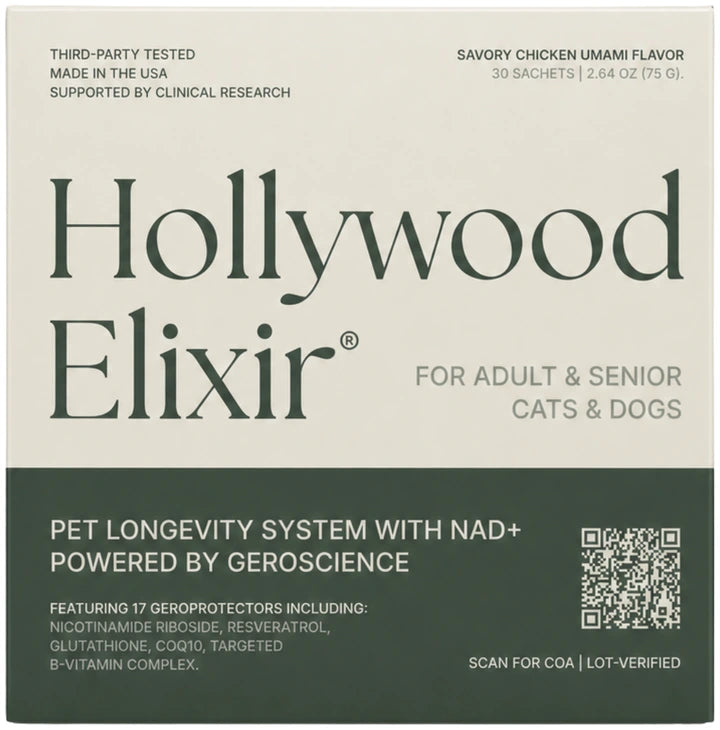
Hollywood Elixir™ is designed for system-level aging support—helping the broader metabolic network that influences resilience, recovery, and everyday vitality, even when a dog’s core nutrient needs are already met through food.

Most owners can sense when something shifts: a dog who used to stay lean now gains easily, a once-springy gait becomes careful, a nap becomes the default. These changes often get blamed on “slowing down,” but the deeper story is that the body is constantly interpreting the world through signals. Nutrient sensing pathways in dogs are the behind-the-scenes system that reads food, movement, and stored energy, then decides what to do with them—build, store, repair, or conserve. Two central players, mTOR and AMPK, are often used as shorthand for those competing priorities: growth versus maintenance.

This matters because aging is not only about years; it is about the cumulative effect of daily messages. A life of constant abundance—extra treats, oversized portions, low activity—can keep “fed-state” signaling turned up, while a life with steady movement and a lean body condition tends to support a calmer, more resilient internal rhythm. When people talk about understanding nutrient sensing pathways in dogs, they’re usually looking for a way to protect that rhythm, especially in midlife and beyond.

A complete diet can meet nutrient requirements, and that’s important. But longevity is rarely limited by a single missing vitamin. It is limited by system-level wear: oxidative stress, inflammation, and the gradual loss of metabolic flexibility that changes how a dog responds to ordinary meals and ordinary days. That’s where a thoughtful supplement can still make sense—not as a replacement for food, but as support for the broader network that shapes resilience. Hollywood Elixir™ is positioned in that system-level role: complementary support for aging physiology, rather than a narrow “fix” for one ingredient.

By La Petite Labs Editorial, ~15 min read

Featured Product:

  • Nutrient sensing pathways in dogs act like an internal budgeting system, deciding when to build, store, or repair.
  • MTOR generally rises with abundance and supports growth; AMPK tends to rise with energy demand and supports maintenance.
  • The most meaningful lever for long-term signaling is body composition: excess fat changes hormonal messages and metabolic tone.
  • Meal patterns matter because constant snacking can keep the body in a persistent “fed” state, even without overeating.
  • Movement is a signaling input: consistent activity supports flexibility in how dogs use fuel and recover across the week.
  • Specialty diets can shift signaling, but they should be chosen for the individual dog and monitored with veterinary guidance.
  • Aging support remains relevant beyond “meeting requirements”: the goal is steadier resilience in the whole network, not one nutrient.

The Quiet Biology Behind Appetite, Energy, and Long-term Canine Aging

When people talk about longevity in dogs, they often start with ingredients. The more useful starting point is the dog’s internal “decision system” for fuel: nutrient sensing pathways in dogs. These signals translate meals, fasting windows, activity, and body fat into instructions like build, store, repair, or conserve. Two names show up repeatedly because they sit near the center of that conversation: mTOR, which tends to favor growth and building, and AMPK, which tends to favor energy efficiency and cellular housekeeping (Phimister FD, 2024).

Understanding nutrient sensing pathways in dogs is less about chasing a single switch and more about noticing patterns over time. A dog that is consistently overfed, under-exercised, or carrying excess body fat sends different signals than a dog who is lean, active, and metabolically flexible. Those differences can shape inflammation, joint comfort, and the pace of age-related change (Vanelli K, 2025).

Cellular energy graphic representing oxidative balance supported by understanding nutrient sensing pathways in dogs.

Mtor and Ampk: Two Signals That Negotiate Growth and Maintenance

MTOR (mechanistic target of rapamycin) is often described as a growth-and-building hub. When nutrients are plentiful—especially amino acids—mTOR activity tends to rise, supporting protein synthesis and cellular growth (Lyu, 2025). AMPK (AMP-activated protein kinase) is often described as the counterweight: it responds to low cellular energy and encourages efficiency, fat oxidation, and repair-oriented processes (Phimister FD, 2024).

In dogs, these signals are constantly negotiating. A young dog needs robust building signals; an older dog benefits from a rhythm that still maintains muscle but leaves room for cellular maintenance. This is the practical heart of nutrient sensing mechanisms in dogs: matching the internal message to the life stage.

DNA structure visual linked to antioxidant protection mechanisms in how nutrient sensing pathways work in dogs.

Aging as Trade-offs: When Repair Time Gets Crowded Out

Aging is not a single process; it is a stack of small trade-offs. Over time, persistent “build and store” signaling can crowd out “repair and recycle” signaling. Across species, longevity research repeatedly points to the value of periodic maintenance states—often associated with lower energy intake, higher activity, and improved metabolic flexibility (Smith, 2022).

For dog owners, this doesn’t mean chasing deprivation. It means avoiding the modern default of constant abundance: free-feeding, frequent treats, and low movement. Nutrient sensing pathways and dog health are shaped by the everyday pattern more than the occasional “perfect” week.

Molecular structure graphic reflecting research-driven design behind understanding nutrient sensing pathways in dogs.

Obesity and Hormonal Noise: How Excess Weight Rewrites the Message

Body fat changes the conversation because it changes the signals. In dogs, obesity is associated with shifts in hormones that reflect energy status, including adiponectin, which has been linked to metabolic health and obesity status (Muñoz-Prieto A, 2020). This hormonal environment can influence how the body interprets meals, activity, and stress.

That is why weight management is not only about joints and stamina. It is also about restoring a more favorable internal signaling landscape—one where AMPK-like “conserve and repair” messages are not constantly drowned out by surplus.

Expressive pug face reflecting gentle aging support associated with how nutrient sensing pathways work in dogs.

Meals, Treats, and Timing: the Pattern Matters More Than the Label

Meal timing and treat frequency can matter because signaling responds to repetition. A dog who grazes all day may spend less time in a low-insulin, maintenance-oriented state than a dog who eats measured meals. While dogs are not humans and should not be pushed into rigid fasting trends, the principle is simple: fewer, more intentional eating events can reduce constant “fed-state” signaling.

If you’re exploring nutrient sensing pathways in dogs, start with the easiest audit: how many calories arrive outside the bowl. Chews, training treats, table scraps, and “just because” snacks can quietly dominate the dog’s signaling environment.

Hollywood Elixir™ is amazing and makes my 13 y/o young again!

— Jessie

We go on runs. Lately he's been keeping up with no problem!

— Cami

“Longevity is less about a single ingredient and more about the body’s long-term interpretation of abundance, stress, and recovery.”

Movement as a Signal: Activity That Keeps Energy Handling Flexible

Exercise is a nutrient-sensing input even when no food is involved. Movement changes cellular energy demand, which can favor AMPK activation and improve how tissues handle glucose and fat over time. For aging dogs, the goal is not intensity for its own sake; it is consistency that preserves muscle and keeps energy handling flexible.

Short, frequent walks; controlled play; and strength-like activities (stairs, gentle inclines, sit-to-stand games) can all contribute. The best routine is the one a dog can do most days without soreness or setbacks.

Dog headshot symbolizing resilience and calm energy supported by nutrient sensing pathways in dogs.

Inflammation, Comfort, and Food: Where Diet Can Quiet the Background

Joint disease is one of the places owners most clearly see the cost of metabolic drift. Excess weight increases load, but diet composition can also influence inflammatory signaling. Systematic reviews of dietary strategies in canine osteoarthritis describe how enriched therapeutic diets and nutraceuticals may influence nutrient sensing pathways tied to inflammation and symptom relief (Barbeau-Grégoire M, 2022).

This doesn’t mean a supplement replaces pain control, rehab, or veterinary evaluation. It means the dog’s internal signaling environment can either amplify discomfort or soften it. Nutrient sensing pathways in dog nutrition are part of that background.

Canine side view symbolizing quiet confidence supported through best nutrient sensing pathways in dogs.

Specialty Diets with Care: Big Levers That Require Monitoring

Specialty diets can be useful tools, but they are not neutral. Ketogenic-style diets, for example, may shift fuel selection and alter nutrient sensing pathways by changing how the body generates energy (THA, 2024). In dogs, the safety profile depends on the individual—especially pancreatic history, lipid handling, and concurrent disease.

If you are considering a major macronutrient shift, do it with veterinary guidance and clear monitoring goals. For many dogs, the “quiet win” is not ketosis; it is stable weight, stable appetite, and stable energy across the week.

Supplement overview graphic emphasizing quality ingredients aligned with best nutrient sensing pathways in dogs.

Weight Loss That Lasts: Consistency, Composition, and the Long View

Weight-loss plans work best when they are boring in the right way: measured portions, predictable treat budgets, and regular weigh-ins. Meta-analytic evidence supports hypocaloric diets as effective for weight loss and improved body composition in obese dogs. Those improvements can change the dog’s day-to-day comfort and may also shift the internal nutrient sensing tone that accompanies obesity.

The common failure mode is inconsistency—weekdays disciplined, weekends generous. Nutrient sensing pathways in dogs respond to averages. A plan that is 80% consistent for months usually beats a plan that is 100% consistent for ten days.

What “Best” Looks Like When Signaling Must Fit Real Life

Owners often ask for the best nutrient sensing pathways in dogs, as if there were a single ideal setting. In practice, “best” means context-appropriate signaling: growth signals when a puppy is building, steadier maintenance signals in adulthood, and a bias toward repair and resilience in later years. The same pathway can be helpful or unhelpful depending on timing, body condition, and stress load.

A useful mental model is balance. MTOR activity supports muscle maintenance and tissue renewal, while AMPK supports energy management and cellular cleanup (Phimister FD, 2024). The goal is not to “turn off” one and “turn on” the other, but to avoid chronic extremes—especially the kind that come from constant snacking, sedentary routines, and persistent excess calories (Smith, 2022).

“The most persuasive data for owners is often visible: waistline, stamina, and how quickly a dog bounces back.”

Clinical image tied to evidence-based wellness positioning for nutrient sensing pathways in dogs.

Why Joint Comfort Often Reflects Internal Signaling, Not Only Wear

Nutrient sensing pathways and dog health intersect with joint comfort more than many people expect. In osteoarthritis, diet is not a replacement for veterinary care, but it can influence inflammatory tone and body composition—two factors that change how a dog feels day to day. Reviews of therapeutic diets and nutraceutical strategies in dogs with osteoarthritis emphasize that diet composition can modulate signals tied to inflammation and pain perception (Barbeau-Grégoire M, 2022).

This is one reason weight management is often the quiet “first lever.” Less mechanical load matters, but so does the internal signaling shift that can accompany fat loss and improved metabolic health (Vanelli K, 2025). For many dogs, the most meaningful change is not a dramatic ingredient swap, but a consistent plan that supports lean mass while reducing excess energy intake.

Shop Now
Supplement box with ingredient spread showing care behind nutrient sensing pathways in dogs.

Body Fat as a Messenger: Hormones That Shape Daily Metabolic Tone

Adipose tissue is not just storage; it is an endocrine organ that talks to the rest of the body. In dogs, adiponectin is one of the hormones associated with body fat and metabolic status, and it has been discussed as a marker linked to obesity and energy regulation (Muñoz-Prieto A, 2020). That matters because nutrient sensing mechanisms in dogs are partly shaped by the hormonal “background noise” created by chronic overconditioning.

Practically, this means two dogs eating the same food can experience different internal signaling depending on body condition and activity. If you’re exploring nutrient sensing pathways in dogs for longevity, it’s worth treating body composition as a primary input—not a cosmetic outcome.

Shop Now
Woman with Hollywood Elixir box in cozy setting aligned with nutrient sensing pathways and dog health.

Protein as Signal, Not Just Ingredient, in Everyday Feeding Choices

Protein is often discussed in dog nutrition as a building block, but it is also a signal. Amino acids—especially leucine—are known to influence mTOR activity, which is one reason high-protein meals can feel “anabolic” at the cellular level (Lyu, 2025). For adult dogs, the question becomes: how do you support muscle and recovery without keeping growth signaling chronically elevated?

The answer is usually not extreme restriction. It is thoughtful distribution: adequate protein, appropriate calories, and a routine that includes resistance-like activity (hills, controlled play, strength-oriented rehab when needed). Nutrient sensing pathways in dog nutrition respond to patterns, not single meals.

Shop Now

Carbs, Fats, and Fuel Preference: When Diet Style Changes Context

Carbohydrates and fats also shape signaling, partly through insulin dynamics and cellular energy state. Some owners become curious about ketogenic-style approaches because they may shift fuel use and alter nutrient sensing pathways by changing metabolic context (THA, 2024). In dogs, these approaches require careful veterinary oversight, especially for dogs with pancreatitis risk, endocrine disease, or complex medication plans (THA, 2024).

For most households, the more durable strategy is simpler: avoid chronic overfeeding, keep treats predictable, and prioritize a diet that supports stable energy and a healthy body condition. That steadiness tends to create a calmer signaling environment than frequent spikes and crashes.

Calorie Control Without Frailty: Leaner Dogs, Stronger Later Years

Caloric restriction is sometimes framed as a longevity tool, but in real life it looks like measured portions and fewer “invisible calories.” In obese dogs, hypocaloric diets reliably support weight loss and improved body composition (Vanelli K, 2025). Alongside the scale change, there may be shifts in internal signaling that accompany improved metabolic flexibility.

The caution is that restriction without a plan can cost lean mass, which is not what you want for aging. The better target is controlled energy intake paired with adequate protein and activity, so the dog becomes leaner without becoming frail. That combination tends to align nutrient sensing pathways in dogs with resilience rather than scarcity.

Chart contrasting minimal formulas with full-spectrum support in nutrient sensing pathways in dog nutrition.

Supplements as Environment Support, Not Switch-flipping Shortcuts

Supplements are often marketed as if they “fix” a pathway (related: NAD+ for Dogs). A more honest view is that they can support the environment in which signaling happens—oxidative balance, mitochondrial function, and the stress load that pushes the system toward chronic inflammation. Reviews in canine osteoarthritis note that nutraceuticals may modulate inflammatory responses and support joint health, which can indirectly influence the broader signaling network (Barbeau-Grégoire M, 2022).

This is where system-level support stays relevant even when a dog’s basic nutrient needs are met by a complete diet. Nutrient sensing pathways in dogs are not only about vitamins and minerals; they are about how the whole organism interprets abundance, stress, movement, and recovery.

Shop Now
Open package showing attention to detail consistent with nutrient sensing mechanisms in dogs standards.

Practical Markers Owners Can Track Without Turning Life into Data

If you want a practical way to think about how nutrient sensing pathways work in dogs, watch for the signals you can actually measure: appetite stability, body condition score, waistline, energy during walks, and recovery after play. These are imperfect proxies, but they reflect the downstream consequences of signaling choices made inside cells.

Veterinarians can add more objective markers—weight trends, muscle condition, lab work when appropriate—especially for older dogs or those with endocrine concerns. The goal is not to biohack a pet; it is to keep the internal “set points” from drifting toward chronic excess or chronic stress as the years add up.

Shop Now

Why System-level Aging Support Still Matters Beyond a Complete Diet

The commercial question a careful reader asks is fair: if diet already covers essentials, why add anything? Because longevity is rarely limited by a single nutrient. It is limited by the wear-and-tear of time—oxidative stress, inflammation, and the gradual loss of metabolic flexibility that changes how a dog responds to ordinary meals and ordinary days (Smith, 2022). A product earns its place when it supports that broader network rather than pretending to replace food.

In that frame, nutrient sensing pathways in dogs become a lens for choosing routines and support that keep signaling steady: lean body composition, consistent movement, and targeted, well-formulated supplementation that complements a complete diet instead of competing with it.

“Support works best when it complements a well-run routine, not when it tries to compensate for chaos.”

Educational content only. This material is not a substitute for veterinary advice. Always consult your veterinarian about your dog’s specific needs. These statements have not been evaluated by the Food and Drug Administration. Products mentioned are not intended to diagnose, treat, cure, or prevent any disease.

Glossary

  • Nutrient Sensing: The process by which a dog’s cells detect fuel and nutrients and adjust growth, storage, and repair accordingly.
  • MTOR: A conserved signaling hub that tends to increase when nutrients are abundant, supporting protein synthesis and growth-related activity.
  • AMPK: A conserved energy sensor that responds to low cellular energy demand, encouraging efficiency and maintenance-oriented processes.
  • Metabolic Flexibility: The ability to switch smoothly between using carbohydrates and fats for energy, often associated with better energy stability.
  • Adiponectin: A hormone produced by fat tissue that is associated with metabolic status; discussed in dogs in relation to obesity and energy regulation.
  • Body Condition Score (BCS): A hands-on scoring method used by veterinarians to estimate body fat and assess whether a dog is underweight, ideal, or overweight.
  • Lean Mass: Muscle and other non-fat tissues; preserving lean mass is a key goal during weight loss and aging.
  • Hypocaloric Diet: A diet designed to provide fewer calories than a dog expends, used for controlled weight loss under veterinary guidance.
  • Nutraceutical: A nutrition-derived supplement used to support health functions (for example, joint comfort), typically as an adjunct to diet and veterinary care.

Related Reading

References

Muñoz-Prieto A. A Systematic Review and Meta-Analysis of Serum Adiponectin Measurements in the Framework of Dog Obesity.. PubMed. 2020. https://pubmed.ncbi.nlm.nih.gov/32937899/

Barbeau-Grégoire M. A 2022 Systematic Review and Meta-Analysis of Enriched Therapeutic Diets and Nutraceuticals in Canine and Feline Osteoarthritis.. PubMed. 2022. https://pubmed.ncbi.nlm.nih.gov/36142319/

THA. Ketogenic diets: A systematic review of current scientific evidence and possible applicability in dogs and cats.. PubMed. 2024. https://pubmed.ncbi.nlm.nih.gov/38091342/

Vanelli K. Impact of Hypocaloric Diets on Weight Loss and Body Composition in Obese Dogs: A Meta-Analysis.. PubMed. 2025. https://pubmed.ncbi.nlm.nih.gov/39858209/

Phimister FD. Using meta-analysis to understand the impacts of dietary protein and fat content on the composition of fecal microbiota of domestic dogs (Canis lupus familiaris): A pilot study.. PubMed Central. 2024. https://pmc.ncbi.nlm.nih.gov/articles/PMC10958101/

Smith. Metabolomic profiling in dogs with dilated cardiomyopathy eating non-traditional or traditional diets and in healthy controls. Nature. 2022. https://www.nature.com/articles/s41598-022-26322-8

Lyu. Gut Metabolome in Companion Animal Nutrition—Linking Diets to Health. 2025. https://www.mdpi.com/2076-2615/15/5/651

Linder. Status of selected nutrients in obese dogs undergoing caloric restriction.. Springer. 2013. https://link.springer.com/article/10.1186/s12917-015-0570-y

Guo. The Role of Plant Extracts in Enhancing Nutrition and Health for Dogs and Cats: Safety, Benefits, and Applications. 2024. https://www.mdpi.com/2306-7381/11/9/426

Baritugo. Perspectives on functional foods for improvement of canine health and treatment of diseases. 2023. https://www.sciencedirect.com/science/article/pii/S1756464623003444

Van Vleet. Myocardial diseases of animals.. Nature. 1986. https://www.nature.com/articles/s41598-021-94464-2

Merritt DA. Absorption, distribution, metabolism, and excretion of dirlotapide in the dog.. PubMed. 2007. https://pubmed.ncbi.nlm.nih.gov/17567511/

Raka F. Metabolic control via nutrient-sensing mechanisms: role of taste receptors and the gut-brain neuroendocrine axis.. PubMed. 2019. https://pubmed.ncbi.nlm.nih.gov/31310579/

Ratnaparkhi A. Neural pathways in nutrient sensing and insulin signaling.. PubMed. 2022. https://pubmed.ncbi.nlm.nih.gov/36439265/

Buddington. Postnatal development of nutrient transport in the intestine of dogs. PubMed. 2003. https://pubmed.ncbi.nlm.nih.gov/12755305/

Larson. Pharmacokinetics of orally administered low-dose rapamycin in healthy dogs.. PubMed Central. 2016. https://pmc.ncbi.nlm.nih.gov/articles/PMC5642271/

Pan. Nutrients, Cognitive Function, and Brain Aging: What We Have Learned from Dogs. 2021. https://www.mdpi.com/2076-3271/9/4/72

Fusaroli. The Reporting of a Disproportionality Analysis for Drug Safety Signal Detection Using Individual Case Safety Reports in PharmacoVigilance (READUS-PV): Development and Statement.. 2024. https://www.frontiersin.org/journals/pharmacology/articles/10.3389/fphar.2022.1014474/full

German. Exploratory analysis of nutrient composition of adult and senior dog diets. 2025. https://www.frontiersin.org/journals/veterinary-science/articles/10.3389/fvets.2025.1717409/full

Bilgiç B. Investigation of Trace and Macro Element Contents in Commercial Cat Foods.. PubMed Central. 2025. https://pmc.ncbi.nlm.nih.gov/articles/PMC11633335/

FAQ

What are nutrient sensing pathways in dogs, in plain terms?

Nutrient sensing pathways in dogs are the body’s internal signal system that interprets food and energy status. They help decide whether cells should prioritize building tissue, storing fuel, or focusing on repair and cleanup. Think of it as the difference between “grow now” and “maintain wisely.”

Because aging is shaped by long-term patterns, supporting the whole signaling environment can matter even with a complete diet. Hollywood Elixir™

How do mTOR and AMPK influence a dog’s aging pace?

mTOR is commonly associated with growth and building when nutrients are plentiful, while AMPK is associated with energy efficiency and cellular maintenance when energy demand is higher. Over time, a healthier rhythm is usually one that supports muscle without keeping “build” signals chronically elevated.

That rhythm is shaped by meals, activity, and body condition, not one magic ingredient. For broader aging support beyond the bowl, many owners include Hollywood Elixir™

Why does body fat affect nutrient sensing in older dogs?

Body fat is hormonally active, which means it changes the chemical messages that influence appetite, inflammation, and energy handling. In dogs, adiponectin has been associated with obesity status and metabolic health, suggesting that excess fat can shift the signaling backdrop in meaningful ways.(Muñoz-Prieto A, 2020)

Keeping a lean, stable body condition often supports steadier signaling as dogs age. For system-level support that complements diet and lifestyle, considerHollywood Elixir™

How do nutrient sensing mechanisms in dogs relate to joint comfort?

Joint comfort is influenced by mechanics (weight and load) and by inflammatory tone. Reviews of dietary strategies in canine osteoarthritis describe how therapeutic diets and nutraceutical approaches may influence signaling tied to inflammation and symptom management.(Barbeau-Grégoire M, 2022)

This doesn’t replace veterinary care, but it helps explain why weight management and diet composition can change day-to-day comfort. For broader aging and resilience support, some owners addHollywood Elixir™

Does meal timing change how nutrient sensing pathways work in dogs?

Yes, patterns can matter. Frequent snacking can keep a dog in a near-constant “fed” state, while measured meals may allow more time in maintenance-oriented physiology. The goal isn’t strict fasting; it’s avoiding a steady drip of extra calories that keeps signals skewed toward storage.

If you want a simple start, audit treats and chews before changing the main diet. For system-level support alongside those habits, consider Hollywood Elixir™

Can exercise influence nutrient sensing pathways and dog health?

Movement changes cellular energy demand, which can shift signaling toward efficiency and maintenance. Over time, consistent activity supports better fuel handling and helps preserve lean mass—both of which tend to age well. The best plan is the one your dog can do most days without soreness.

For older dogs, think consistency over intensity: walks, gentle hills, and controlled play. To complement that whole-body approach, many owners choose Hollywood Elixir™

Are ketogenic diets a good idea for canine nutrient sensing?

Ketogenic-style diets may shift fuel use and can influence signaling by changing the metabolic context. In dogs, research discussions emphasize that safety and suitability depend on the individual, and these diets should be considered carefully with veterinary oversight.

For many households, steadier wins come from portion control and consistent activity rather than extreme macronutrient shifts. For broader longevity support beyond diet style, consider Hollywood Elixir™

What’s the safest way to support nutrient sensing pathways in dog nutrition?

Start with fundamentals that are low-risk and high-impact: maintain a healthy body condition, measure meals, keep treats budgeted, and build a sustainable activity routine. In obese dogs, structured hypocaloric plans are effective for weight loss and improved body composition when done thoughtfully.

If you’re considering supplements or major diet changes, involve your veterinarian—especially for seniors or dogs on medications. For system-level aging support that complements the basics, consider Hollywood Elixir™

Can supplements “turn on” AMPK or “turn off” mTOR?

It’s more realistic to think in terms of supporting the environment in which signaling happens rather than flipping a single switch. Diet composition and nutraceutical strategies in dogs have been discussed as modulators of inflammation and comfort, which can indirectly influence the broader signaling network.(Barbeau-Grégoire M, 2022)

A well-chosen supplement should complement a complete diet and support resilience over time, not replace nutrition. For that system-level approach, considerHollywood Elixir™

Do puppies need different nutrient sensing signaling than senior dogs?

Yes. Puppies are built for growth, so “build” signaling is part of normal development. Senior dogs often benefit from a steadier balance that preserves muscle while leaving room for maintenance and repair. Across species, longevity-oriented signaling is often associated with avoiding chronic excess and supporting metabolic flexibility.

Your veterinarian can help align calories, protein, and activity with life stage. For additional whole-body aging support as dogs mature, consider Hollywood Elixir™

Do small breeds and large breeds differ in nutrient sensing needs?

They can, mostly because growth rate, lifespan, and orthopedic risk differ. Larger breeds may face earlier joint stress, while smaller breeds often live longer and accumulate age-related changes more gradually. The core idea is the same: keep signaling aligned with body condition, movement, and appropriate calories.

Breed tendencies don’t replace individual monitoring—weight trend and muscle condition matter more than labels. For system-level support across sizes, consider Hollywood Elixir™

Is this topic the same in cats, or different?

The broad concepts (energy sensing, growth signaling, maintenance signaling) are conserved, but cats and dogs differ in metabolism and dietary requirements. That’s why diet strategies—especially extreme macronutrient approaches—should not be copied across species without veterinary input. Discussions of specialized diets in dogs highlight the need for safety considerations even within one species.

If you share a home with both, keep plans species-specific and avoid cross-feeding. For dog-focused aging support, consider Hollywood Elixir™

How long does it take to see changes from better signaling?

Some changes, like steadier appetite or improved energy on walks, may appear within weeks if calories and activity become consistent. Body composition changes usually take longer and are easier to see with weigh-ins and body condition scoring. In structured weight-loss programs for obese dogs, hypocaloric diets support meaningful progress over time.

Think in months, not days, and track trends rather than single weigh-ins. For ongoing system-level support during that process, consider Hollywood Elixir™

What are quality signals of a diet that supports longevity?

Look for a diet that maintains lean mass, supports a healthy body condition, and fits your dog’s medical context. The “right” diet is often the one that makes portion control realistic and keeps energy stable. In dogs with osteoarthritis, reviews highlight that diet composition and targeted enrichment can matter for comfort and inflammation.(Barbeau-Grégoire M, 2022)

If you’re unsure, ask your veterinarian to evaluate calories, protein adequacy, and treat load. For broader aging support beyond the bowl, considerHollywood Elixir™

How should I introduce a supplement without upsetting my dog’s stomach?

Introduce one change at a time and start with a small amount mixed into a familiar meal, then increase gradually over several days if your dog tolerates it. If your dog has a sensitive stomach, a history of pancreatitis, or is on multiple medications, check with your veterinarian first.

Stop and reassess if you see vomiting, diarrhea, or appetite changes that persist. For a gentle, system-level approach to aging support, consider Hollywood Elixir™

Can nutrient sensing pathways in dogs affect weight regain after dieting?

They can. After weight loss, the body often becomes more efficient, and small “extra” calories can add up quickly. Evidence supports hypocaloric diets for weight loss in obese dogs, but long-term success usually depends on maintaining new habits—measured portions, treat budgets, and consistent activity.

A maintenance plan should feel sustainable, not punitive, or it won’t last. For ongoing support that complements a stable routine, consider Hollywood Elixir™

When should I call my vet about diet and signaling concerns?

Call your veterinarian if your dog has rapid weight change, persistent vomiting or diarrhea, marked thirst/urination changes, sudden appetite shifts, or new exercise intolerance. These can signal endocrine or systemic issues where diet changes should be guided and monitored. Weight-loss plans are effective, but they should be tailored for safety.

Bring a food-and-treat log to the appointment; it makes decisions clearer. For supportive aging nutrition alongside veterinary care, consider Hollywood Elixir™

How do I decide between diet changes and supplements first?

Start with the highest-leverage, lowest-complexity moves: portion accuracy, treat control, and a realistic activity plan. If joint comfort is a concern, evidence reviews suggest diet composition and nutraceutical strategies can play a supportive role alongside veterinary management.

Supplements make the most sense when they complement a solid baseline rather than compensate for chaos. For system-level support that fits into a well-run routine, consider Hollywood Elixir™

What’s the simplest daily habit for supporting long-term resilience?

Consistency is the habit: measured meals, a predictable treat budget, and daily movement that preserves muscle. Across longevity discussions, avoiding chronic excess and supporting metabolic flexibility tends to align with healthier aging patterns over time.

If you want to add one more layer, choose support that targets the broader aging network rather than a single nutrient. Many owners pair those basics with Hollywood Elixir™

Do nutrient-sensing pathways change as dogs age, and should diets be adjusted?

Yes—aging can alter insulin/IGF-1 signaling, AMPK activity, and mTOR responsiveness, which may affect how efficiently dogs handle glucose, protein, and energy. Many older dogs benefit from diets with controlled calories, adequate high-quality protein, and consistent meal timing, but the best adjustment depends on body condition, activity, and any diseases. Your veterinarian can tailor a plan and monitor markers like weight, muscle mass, and blood glucose.

5K+ Happy Pet Parents

Excellent 4.8

Nutrient Sensing Pathways in Dogs | Why Thousands of Pup Parents Trust Hollywood Elixir™

"He seems more happy overall. I've also noticed he has more energy which makes our walks and playtime so much more fun."

Olga & Jordan

"He's got way more energy now! We go on runs pretty often; he use to get tired halfway through, but lately, he's been keeping up without any problem."

Cami & Clifford

"I want her to live forever. She hasn't had an ear infection since!"

Madison & Azula

"It helps with her calmness, her immune system. I really like the clean ingredients. Highly recommend La Petite Labs!"

Maple & Cassidy

"He seems more happy overall. I've also noticed he has more energy which makes our walks and playtime so much more fun."

Olga & Jordan

"He's got way more energy now! We go on runs pretty often; he use to get tired halfway through, but lately, he's been keeping up without any problem."

Cami & Clifford

"I want her to live forever. She hasn't had an ear infection since!"

Madison & Azula

"It helps with her calmness, her immune system. I really like the clean ingredients. Highly recommend La Petite Labs!"

Maple & Cassidy

"He seems more happy overall. I've also noticed he has more energy which makes our walks and playtime so much more fun."

Olga & Jordan

"He's got way more energy now! We go on runs pretty often; he use to get tired halfway through, but lately, he's been keeping up without any problem."

Cami & Clifford

"I want her to live forever. She hasn't had an ear infection since!"

Madison & Azula

"It helps with her calmness, her immune system. I really like the clean ingredients. Highly recommend La Petite Labs!"

Maple & Cassidy

"He seems more happy overall. I've also noticed he has more energy which makes our walks and playtime so much more fun."

Olga & Jordan

"He's got way more energy now! We go on runs pretty often; he use to get tired halfway through, but lately, he's been keeping up without any problem."

Cami & Clifford

"I want her to live forever. She hasn't had an ear infection since!"

Madison & Azula

"It helps with her calmness, her immune system. I really like the clean ingredients. Highly recommend La Petite Labs!"

Maple & Cassidy

SHOP NOW