NAMPT and the NAD Salvage Pathway in Dogs

See how aging slows NAD recycling and what may help restore it

By La Petite Labs Editorial 15 min read

NAD is the recharge molecule your dog's cells lean on every day, and most of it is recycled, not built from scratch, through the salvage pathway. NAMPT is the narrow point in that recycling line, so when its capacity drops with age, NAD can fall behind demand even when the raw materials are present. That mismatch is one plausible reason an older dog handles a normal day fine but takes longer to bounce back from a hard one.

In plain terms, the pathway runs NAM to NMN to NAD: NAMPT converts nicotinamide into NMN, then NMNAT enzymes finish the job. Adding more precursor does not automatically speed a slow step, which is why "throughput" matters more than "how much you pour in." Canine-specific data here is still thin, so treat the mechanism as a useful framework rather than a promise, and pair any plan with your veterinarian (Cantó, 2015).

  • NAD is recycled far more than it is built new; the salvage pathway is the fast, low-cost route cells rely on.
  • NAMPT is the bottleneck step: when it is limiting, "adding more precursor" does not reliably translate into more usable NAD.
  • With age, NAD demand can rise while salvage slows, leaving less overhead for stamina and recovery.
  • NR and NMN can feed NAD biology, but they still have to be processed and may not overcome a high-drain state.
  • Lowering daily NAD "spend" (weight, pain, dental health, sleep) often matters as much as supporting the recycling.
  • Track outcome cues (walk distance, recovery time, sleep, appetite, stool) and share them with your veterinarian; canine data is still limited.

Why salvage is the default in dogs: efficiency, tissue demand, and NAM feedback inhibition

In dogs, salvage is typically the default route for maintaining NAD because it offers high efficiency: it reuses NAM generated by NAD-consuming reactions and minimizes the energetic and nitrogen costs associated with building the pyridine nucleotide ring from scratch (Cantó, 2015). This efficiency becomes more consequential in tissues with high, variable tissue demand—for example, skeletal muscle during activity cycles and liver during continuous metabolic processing—where NAD turnover can be rapid.

A key regulatory feature is NAM feedback inhibition. NAM is not only the substrate entering salvage; it can also inhibit several NAD-dependent enzymes, creating a scenario where rising NAM signals high NAD consumption while simultaneously suppressing parts of the system that rely on NAD. In that context, an enzyme bottleneck at NAMPT can limit how quickly NAM is cleared into NMN, constraining overall flux through NAM → NMN → NAD.

Age-related regulation hypotheses in mammals include reduced NAMPT expression in specific cell types, altered circadian control of NAMPT transcription, changes in substrate transport/compartmentalization, and stress/inflammatory signaling that shifts cells toward lower salvage throughput. These mechanisms are plausible in dogs but require direct validation across canine tissues and ages (Cantó, 2015).

Key enzymes and control points: NAMPT, NMNAT, and where inflammation may interfere

The salvage pathway has two main gates. NAMPT runs the first one (NAM to NMN) and is usually the rate-setting step. NMNAT enzymes run the second (NMN to NAD), and because different NMNAT versions sit in different parts of the cell, NAD can be restored unevenly even when total ingredients look fine.

That means the limiting factor is rarely "how much NAM is floating around." In hard-working tissues like muscle and liver, NAD turns over fast, so any drop in NAMPT capacity is felt sooner. Inflammation may make this worse by shifting which salvage enzymes the cell makes and how it spends energy, lowering effective throughput. This idea is better supported in general mammalian biology than in dogs specifically, so treat it as a working framework rather than a settled canine conclusion (Unknown, 2021).

What Is NAMPT and Why Does It Matter for Older Dogs?

NAMPT performs the key conversion in the salvage pathway, turning NAM into NMN on the way back to NAD, and it is widely described as the rate-limiting bottleneck for that step (Sharma, 2022). Rate-limiting means the whole recycling line moves only as fast as this one step allows, the hidden detail behind most "support NAD" advice.

Picture a sink with a slow drain. Water (daily NAD use) keeps flowing, but if the drain (the NAMPT step) is slow, the basin backs up and the routine gets out of rhythm. In a dog, that backup can look like less stamina on walks or slower recovery after play. It is not proof of a NAMPT problem, but it explains why "more ingredients" does not automatically equal "more results."

NAD Spending Versus NAD Recycling: the Daily Balance

NAMPT and the NAD Salvage Pathway in Dogs also intersects with how NAD is spent. Enzymes involved in DNA repair and stress responses can consume NAD, and some age-related patterns appear to shift the balance between NAD use and NAD recycling (Lautrup, 2019). In plain terms, older cells may be asked to do more “maintenance work” while having a slower renewal rate for the same fuel. That mismatch is one reason salvage efficiency becomes a central concept in aging biology.

Owners often notice the mismatch during transitions: a senior dog handles a normal day fine, but a slightly harder day leads to a bigger dip afterward. Examples include a longer hike, a day at daycare, or a stressful thunderstorm night. The dog may eat and drink normally yet seem “worn out” for a day or two. Those dips are worth documenting, because they help a veterinarian judge whether the dog’s baseline is shifting.

Why Does NAD Recycling Slow Down With Age?

Why salvage efficiency declines with age is not one single switch. Aging is associated with changes in NAD levels and NAD-dependent processes across tissues, especially in the brain, and the reasons can include higher demand, slower recycling, and competing pathways that drain NAD (Lautrup, 2019). This is the heart of NAD salvage pathway in aging dogs explained: the same “precursor” may behave differently in a young dog versus a senior dog because the recycling machinery and the drain are both changing.

At home, this is why “age 10” is not a single category. Two dogs of the same age can have very different overhead depending on weight, sleep quality, chronic pain, and inflammation. A dog that wakes often at night or has untreated dental disease may spend more NAD on stress responses than an otherwise similar dog. Addressing those basics can make any cellular-support plan feel gentler and more balanced.

“Recycling speed matters as much as the ingredient list.”

A Realistic Senior-dog Scenario Owners Recognize

Case vignette: A 12-year-old Labrador still greets the family with enthusiasm but now slows halfway through the usual neighborhood loop. The dog sleeps hard after errands and seems less interested in puzzle toys in the evening, yet bloodwork is mostly normal and appetite is steady. This is a common setup where owners start asking what is NAMPT and why does it matter for older dogs, because the change feels like “capacity,” not a clear illness.

In this scenario, the most useful next step is not guessing at a single pathway. It is tightening the observations: note when slowing starts, whether heat makes it worse, and whether stiffness or panting is the limiting factor. Those details help a veterinarian separate joint discomfort, heart/lung limitations, and deconditioning from a broader “renewal rate” issue. The pathway explanation then becomes a tool for choosing changes thoughtfully.

NR and NMN: How Precursors Feed the Recycling Line

NAD precursors are often discussed as “inputs” to the recycling system. Two common ones are nicotinamide riboside (NR) and nicotinamide mononucleotide (NMN). NR can be orally bioavailable in mice and humans, supporting the idea that it can reach the body and feed into NAD-related pathways (Trammell, 2016). NMN sits downstream of NAMPT in the salvage sequence (NAM → NMN → NAD), which is why it is sometimes framed as a way to bypass a bottleneck—though real biology is rarely that simple.

For dog owners, the key is expectation-setting. A precursor is not a stimulant, and it should not create a sudden “wired” energy. If anything is noticed, it is more often described as better stamina on routine days or less uneven recovery after activity. If a dog becomes restless, loses appetite, or develops loose stool, that is a reason to pause and talk with the veterinarian rather than pushing forward.

Safety Mindset for Seniors with Other Health Issues

Safety is part of the NAD precursor conversation, especially for seniors with other diagnoses. A subacute toxicity study of orally administered NMN in an animal model was designed specifically to look for safety signals with repeated use, which is relevant when owners consider daily routines (You, 2020). That does not replace dog-specific data, but it supports a cautious, veterinary-guided approach: start low, change one thing at a time, and monitor digestion, thirst, and behavior.

Older dogs often have less “wiggle room” for stomach upset or appetite changes. If a dog already has pancreatitis history, inflammatory bowel disease, kidney disease, or is on multiple medications, any new supplement deserves extra care. Keep a simple log for the first two weeks: stool form, vomiting, appetite, water intake, and sleep. Those are the household signals that matter most for safety.

When Chronic Stressors Raise Demand on the Pathway

How dogs recycle NAD with age also depends on competing “drain” pathways. Inflammation and chronic stress signaling can shift NAD use, and some research in non-dog contexts reports dysregulation of markers that include NAMPT and other NAD-related proteins in chronic disease states (Huwaimel, 2025). The point for owners is not to map a human disease paper onto a dog, but to understand the direction: when the body is busy managing ongoing stressors, the recycling line may have less overhead.

This is why the best senior-dog plan often starts with basics that reduce daily “spend”: weight management, pain control, dental care, and sleep routine. When those are addressed, any NAD-focused strategy is easier to judge because the dog is not constantly paying extra costs. If those basics are ignored, owners may keep switching supplements, when the real limiting factor is a persistent drain.

The Misconception: Precursors Always Convert to NAD

A common misconception is that giving an NAD precursor automatically “turns into NAD” in a predictable way. In reality, precursors still have to enter cells, be processed by enzymes, and compete with ongoing NAD drain. If NAMPT is the bottleneck, flooding the system with upstream material may not fully translate into usable NAD, especially in older dogs. That is why NAD salvage pathway in aging dogs explained properly always includes the idea of conversion steps, not just ingredients.

What this looks like in real life is uneven results: one senior dog seems more comfortable on a routine, while another shows no obvious change. That difference does not prove a product “worked” or “failed”; it often means the limiting factor was elsewhere (pain, thyroid disease, kidney changes, sleep disruption, or simply low activity). A useful approach is to keep expectations modest and track outcome cues rather than chasing a single “energy” feeling.

“Track recovery, not hype, when evaluating senior-dog changes.”

La Petite Labs

DVM Voice: Clinical Vignette of a Common Pattern in Senior Dog Aging

Case provided by JoAnna Pendergrass, DVM

Rex, a 7-year-old Labrador Retriever, was brought in after his owner noticed he was slower to rise, hesitant on stairs, and less able to play as before. Examination showed stiffness and reduced hip mobility; radiographs confirmed degenerative joint changes.

His care required weight management, veterinary-guided pain control, nutritional support, and rehabilitation — a comprehensive plan, but one started only after visible decline appeared.

Clinical takeaway: Rex’s case reflects the value of proactive aging support: maintaining lean body condition, monitoring mobility early, and supporting cellular resilience, antioxidant defense, and healthy inflammatory balance before decline becomes obvious.

Single-case vignette. Not generalizable. Veterinary oversight is essential for pain, stiffness, or suspected joint disease.

Explore Hollywood Elixir Research →
Rate-Limiting Enzyme Bottlenecks In Aging Biology - 9

Owner Checklist for Subtle “Recycling Is Slower” Clues

Owner checklist: signs that may fit a “recycling is slower” pattern in older dogs are usually subtle and overlap with other issues. Look for (1) shorter play bursts with longer rest afterward, (2) slower warm-up on walks, (3) more stiffness after inactivity, (4) less interest in training sessions that require focus, and (5) more sensitivity to schedule changes like late meals or missed naps. None of these are specific to NAD, but they help frame the conversation.

These checks work best when paired with a stable routine. Keep walk length and terrain consistent for a week, then note whether the dog’s “second half” of the walk looks different from the first half. Also note if the dog rebounds by the next morning or carries fatigue into the next day. This kind of household pattern is often more informative than a single “good day” or “bad day.”

Rate-Limiting Enzyme Bottlenecks In Aging Biology - 10

What to Track so Changes Are Not Guesswork

What to track over time (rubric): (1) minutes of comfortable walking before slowing, (2) recovery time after activity (hours to baseline), (3) number of naps and whether they are restorative, (4) willingness to climb stairs or jump into the car, (5) appetite consistency, (6) stool quality, and (7) “focus minutes” during training or puzzle toys. These markers reflect stamina and renewal rate without pretending to measure NAD directly.

Documenting matters because older dogs often compensate quietly. A simple phone note with dates, weather, and activity can reveal trends that memory misses. If a supplement is added, keep everything else as steady as possible for two to four weeks so changes are easier to interpret. If the dog has arthritis, track pain-control changes separately so mobility improvements are not mistakenly credited to “cellular energy.”

Rate-Limiting Enzyme Bottlenecks In Aging Biology - 11

Vet Visit Prep: Make the NAD Conversation Useful

Vet visit prep for questions about NAMPT and the NAD Salvage Pathway in Dogs should focus on ruling out common, fixable drains on energy first. Useful questions include: “Could pain be limiting activity more than stamina?”, “Do labs suggest kidney, liver, thyroid, or anemia issues?”, “Are any medications likely to affect appetite or sleep?”, and “Would weight loss or conditioning change the picture?” This keeps the NAD conversation grounded in whole-dog health.

Bring concrete observations: the tracking rubric, a short video of gait after rest, and a list of supplements with brand and dose. If NAD precursors are being considered, ask how to monitor for digestive upset and whether the dog’s current conditions make “trialing” a new supplement unwise. A good handoff helps the veterinarian separate normal aging from a treatable medical problem.

What Not to Do When Trying NAD Precursors

What not to do: (1) do not stack multiple NAD precursors at once, because it becomes impossible to interpret outcome cues; (2) do not replace pain control, dental care, or sleep hygiene with a “cellular” plan; (3) do not assume “more is better,” especially for sensitive stomachs; and (4) do not start during an acute illness, when appetite and hydration are already unstable. The goal is a gentler, more balanced routine, not a dramatic experiment.

Also avoid chasing day-to-day fluctuations. Older dogs often have uneven weeks due to weather, arthritis flare-ups, or household disruption. If a new supplement is introduced, keep the timeline long enough to see a trend, and stop if vomiting, diarrhea, new itchiness, or appetite drop appears. Those signs are more actionable than trying to “push through” for a hoped-for energy change.

Why This Pathway Matters for Stamina and Recovery

Practical relevance is where the pathway becomes real: NAD recycling touches muscles, brain, and the “cleanup crews” that keep cells functional. When salvage efficiency is lower, dogs may have less overhead for recovery after exercise, less depth for learning new routines, and a narrower comfort zone during stress. This connects naturally to other aging topics, including CD38 and NAD decline in aging dogs and PARPs and NAD drain in aging dogs, because both can increase NAD demand while salvage tries to keep up (Lautrup, 2019).

At home, the most useful framing is not “energy” but recovery. Notice whether the dog rebounds after a longer walk, a grooming appointment, or visitors in the home. A dog with good renewal rate often returns to baseline by the next morning. A dog with less overhead may need two days, seem “flat,” or sleep more deeply after mild excitement.

Where Mitophagy Fits into the Same Aging Story

Mitophagy in dogs—how cells clear worn-out mitochondria—often comes up in the same conversation as NAD recycling. The link is practical: mitochondria are where much of the day-to-day energy work happens, and older tissues can accumulate more “tired” parts that need cleanup. NAD is used in signaling and repair reactions that help coordinate that maintenance, so a slower salvage pathway can make the whole renewal process feel less responsive (Cantó, 2015).

Owners may notice this as a dog that can still do an activity, but looks older afterward—panting longer, sleeping harder, or seeming stiff the next day. That pattern is especially common when a dog is under-conditioned or overweight, because the same walk costs more effort. Conditioning plans, joint comfort support, and consistent sleep can reduce the “spend,” which may matter as much as trying to increase the “recycle.”

Why Blood Markers Don’t Equal Tissue Recycling Speed

What is NAMPT and why does it matter for older dogs is also a question about measurement. In dogs, NAMPT is sometimes discussed alongside “visfatin,” a circulating protein linked to metabolic and inflammatory states, but blood levels do not directly reveal how well cells are recycling NAD in specific tissues (Slon, 2025). That gap is why the best decisions still rely on clinical context: exam findings, lab work, and the dog’s day-to-day function.

A practical takeaway is to avoid over-interpreting single biomarkers or internet panels. If a dog has diabetes, kidney disease, or chronic inflammation, the body’s NAD “budget” can be pulled in multiple directions, and the limiting step may shift over time. Owners can help most by keeping records of appetite, thirst, urination, weight, and activity—because those are the signals veterinarians can act on.

How Should I Support an Aging Dog's NAD, Realistically?

The most honest way to use this topic is as a decision framework: recycling matters, bottlenecks matter, and aging changes the conversion steps. NAD precursors like NR or NMN may be part of a plan, but they are not guaranteed to overcome a slow salvage step or a high-drain state. Most safety data for NR and NMN comes from human and rodent work, so veterinary guidance is appropriate for seniors with other conditions (Brakedal, 2022).

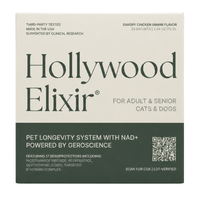
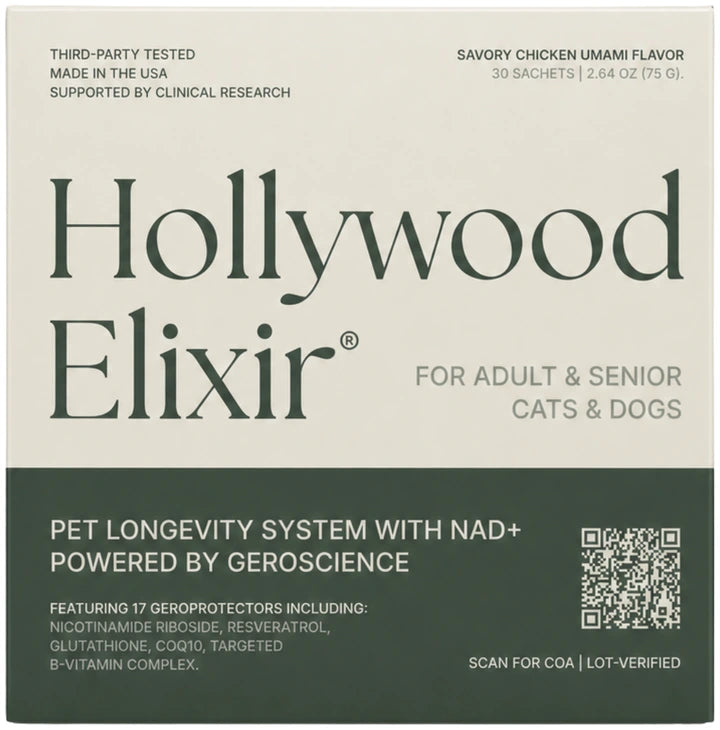
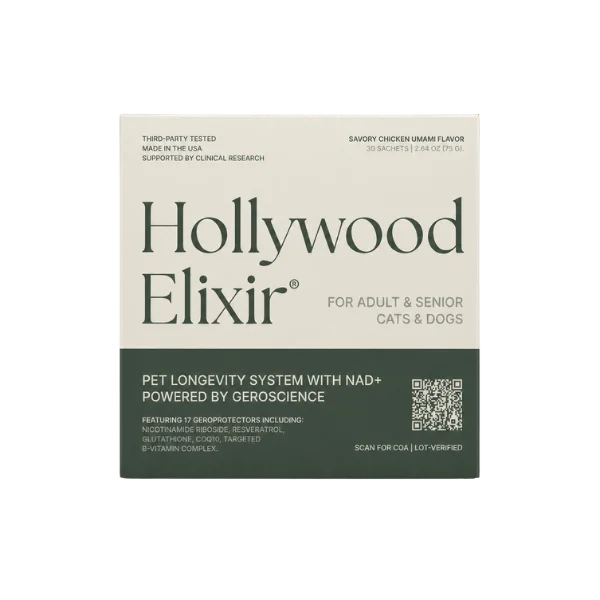
If you are comparing daily longevity formulas, the practical question is whether the NAD actives are shown in readable amounts. Hollywood Elixir uses two B3 routes, nicotinamide riboside at 60 mg plus niacin at 2 mg per serving, mixed into food rather than hidden in a proprietary blend, so you and your vet can see what your dog is getting and start or pause it cleanly. It supports normal cellular energy; it does not "restore" NAD or reverse aging. Address comfort, sleep, and mobility first, change one thing at a time, and track outcome cues so any cellular-support strategy is easier to judge. Review Hollywood Elixir →

“A bottleneck step can limit results even with plenty of input.”

Educational content only. This material is not a substitute for veterinary advice. Always consult your veterinarian about your dog’s specific needs. These statements have not been evaluated by the Food and Drug Administration. Products mentioned are not intended to diagnose, treat, cure, or prevent any disease.

Glossary

  • NAD (Nicotinamide Adenine Dinucleotide) - A helper molecule cells use for energy work and maintenance reactions.
  • NAD Salvage Pathway - The recycling route that rebuilds NAD from used components rather than making it from scratch.
  • NAMPT - An enzyme that converts nicotinamide toward NMN; often the bottleneck step in NAD recycling.
  • Nicotinamide (NAM) - A common “spent” form produced when NAD is used; a starting point for salvage recycling.
  • NMN (Nicotinamide Mononucleotide) - A molecule on the pathway toward NAD; downstream of the NAMPT step.
  • NR (Nicotinamide Riboside) - An NAD precursor that can feed into NAD biology after oral intake.
  • Rate-Limiting Step - The slowest step in a pathway that sets the overall speed of the process.
  • NAD Drain - Ongoing processes that consume NAD, such as stress-response and repair reactions.
  • Mitophagy - A cellular cleanup process that removes worn-out mitochondria to support healthier energy production.

Related Reading

References

Huwaimel. Dysregulation of Niacin-Derived NAD(+) Salvage Pathway Markers (CD38, NAMPT, SIRT1) Across Albuminuria Stages in Type 2 Diabetes. PubMed. 2025. https://pubmed.ncbi.nlm.nih.gov/41470091/

Brakedal. The NADPARK study: A randomized phase I trial of nicotinamide riboside supplementation in Parkinson's disease. PubMed. 2022. https://pubmed.ncbi.nlm.nih.gov/35235774/

Lautrup. NAD<sup>+</sup> in Brain Aging and Neurodegenerative Disorders. Nature. 2019. https://www.nature.com/articles/s41467-023-43514-6

Sharma. Inhibition of nicotinamide phosphoribosyltransferase (NAMPT), the rate-limiting enzyme of the nicotinamide adenine dinucleotide (NAD) salvage pathway, to target glioma heterogeneity through mitochondrial oxidative stress. PubMed Central. 2022. https://pmc.ncbi.nlm.nih.gov/articles/PMC8804900/

Trammell. Nicotinamide riboside is uniquely and orally bioavailable in mice and humans. PubMed. 2016. https://pubmed.ncbi.nlm.nih.gov/27721479/

You. Subacute Toxicity Study of Nicotinamide Mononucleotide via Oral Administration. PubMed. 2020. https://pubmed.ncbi.nlm.nih.gov/33384603/

Cantó. NAD(+) Metabolism and the Control of Energy Homeostasis: A Balancing Act between Mitochondria and the Nucleus. Nature. 2015. https://www.nature.com/articles/s41467-023-39392-7

Slon. Alterations in serum concentrations of visfatin and betatrophin in dogs with diabetes mellitus. 2025. https://www.sciencedirect.com/science/article/pii/S0739724025000037

Unknown. Fig. 9.4, [NAD biosynthetic pathways. Three independent...]. 2021. https://www.ncbi.nlm.nih.gov/books/NBK585707/figure/ch9.Fig4

FAQ

What is NAMPT in a dog’s body?

NAMPT is an enzyme that helps recycle a used NAD building block (nicotinamide) back toward NAD. It is often described as the rate-limiting step in the NAD salvage pathway, meaning the recycling line can only move as fast as NAMPT allows(Sharma, 2022).

For owners, this matters because “supporting NAD” is not only about providing ingredients. It is also about whether the dog’s cells can convert those ingredients efficiently, especially in older dogs with less overhead for recovery.

What does NAD do for older dogs?

NAD is a helper molecule used in energy production and in reactions tied to cellular maintenance. Aging research links changes in NAD levels and NAD-dependent processes with brain aging and other age-related shifts.

At home, owners usually notice this topic through stamina and recovery: shorter play bursts, slower warm-up on walks, or needing longer rest after normal activity. Those signs are not specific to NAD, but they fit the “less renewal rate” pattern.

How is NAD recycled in dogs as they age?

Cells commonly recycle NAD through a salvage route that rebuilds NAD from nicotinamide and related inputs rather than starting from scratch(Unknown, 2021). The key idea in how dogs recycle NAD with age is that the same pathway can become less efficient when demand rises or bottlenecks tighten.

Owners can support clearer decision-making by tracking recovery time after activity and sharing trends with a veterinarian. A pattern of “two-day recovery after normal events” is often more meaningful than a single low-energy afternoon.

Why is NAMPT called a bottleneck enzyme?

NAMPT is called a bottleneck because it controls a key conversion step in the salvage pathway and is widely described as rate-limiting(Sharma, 2022). When a step is rate-limiting, adding more upstream material does not always speed the final output.

This is why some senior dogs show uneven responses to NAD precursor supplements. The limiting factor may be conversion capacity, ongoing NAD drain, pain, sleep disruption, or another health issue that changes daily “spend.”

Is the NAMPT–NAD salvage pathway well-established in dogs?

The pathway itself is established biology across mammals, and NAMPT’s bottleneck role is well described. What is less certain is how specific age-related changes in NAMPT activity play out in different dog tissues, because dog-focused mechanistic studies are limited.

That uncertainty is why this topic is best used as a framework rather than a diagnosis. It helps owners ask better questions and avoid assuming that a precursor will automatically translate into noticeable day-to-day changes.

What is the difference between NR and NMN?

NR (nicotinamide riboside) and NMN (nicotinamide mononucleotide) are both NAD precursors. NR has been reported as orally bioavailable in mice and humans, supporting its ability to reach the body after swallowing(Trammell, 2016). NMN sits closer to NAD in the salvage sequence, which is why it is sometimes discussed as a more direct input.

For dogs, the practical difference is not a guaranteed “better” option. The right choice depends on the dog’s health history, digestive sensitivity, and what outcome cues are being tracked over time.

Are NAD precursors safe for senior dogs?

Safety information for NAD precursors comes mostly from non-dog studies. For example, repeated oral NMN administration has been evaluated in a subacute toxicity design to look for safety signals with ongoing use(You, 2020). This supports a cautious approach, but it is not the same as dog-specific long-term data.

Senior dogs with kidney disease, pancreatitis history, or multiple medications should involve a veterinarian before starting. Owners should watch for vomiting, diarrhea, appetite drop, or restlessness and stop if those appear.

Can NAD supplements replace my dog’s medications?

No. NAMPT and the NAD Salvage Pathway in Dogs is an education topic, not a substitute for diagnosis or treatment. Pain control, heart medications, thyroid therapy, and kidney care address specific medical problems that supplements cannot replace.

If a supplement is added, it should be part of a plan that keeps core treatments stable. That stability makes it easier to interpret outcome cues and reduces the risk of missing a worsening medical issue.

How soon would an owner notice any changes?

If a dog shows noticeable changes, they are usually gradual and best detected through tracking rather than “feeling it” day to day. Because NAD recycling is part of ongoing cellular work, it is reasonable to think in weeks, not days, while keeping expectations modest.

Track walk duration before slowing, recovery time after activity, and sleep quality. If nothing changes after a consistent trial, the limiting factor may be pain, conditioning, or another health issue rather than salvage input.

What side effects should be watched at home?

The most actionable side effects to watch are digestive and behavior changes: vomiting, diarrhea, softer stool, appetite drop, unusual thirst, or new restlessness. These signs matter more than trying to interpret subtle “energy” shifts.

If a dog has chronic disease, even mild appetite changes can be important. Stop the new supplement and contact the veterinarian if symptoms persist beyond a day, or sooner if the dog is weak, dehydrated, or refusing food.

Do NAD precursors interact with other supplements or drugs?

Specific interaction data in dogs is limited, so the safest assumption is that interactions are possible, especially in seniors on multiple medications. The main risk for owners is stacking too many new items at once, which makes it hard to identify what caused a problem.

Bring a full list of products and doses to the veterinarian. Ask whether any current medications affect appetite, sleep, or liver/kidney workload, because those factors can change how a dog tolerates new supplements.

Is this topic different for large-breed versus small-breed dogs?

The core biology of recycling is similar, but aging timelines differ. Large-breed dogs often show “senior” patterns earlier, which can make owners seek NAD salvage pathway in aging dogs explained sooner in life.

Practically, size changes what owners track: big dogs may show mobility limits and recovery dips more clearly because stairs, car entry, and long walks are more physically demanding. Small dogs may show changes in play bursts, sleep, and tolerance of routine disruptions.

How does inflammation relate to NAD recycling in older dogs?

Inflammation can increase the body’s “maintenance workload,” which can raise NAD demand. In non-dog contexts, markers tied to the niacin-derived NAD salvage pathway have been reported as dysregulated in chronic disease states(Huwaimel, 2025).

For owners, the actionable step is to identify common inflammation drivers: dental disease, untreated arthritis pain, obesity, and chronic skin or ear issues. Lowering daily stressors can make the dog’s overall routine feel more balanced.

Is visfatin the same thing as NAMPT in dogs?

NAMPT can be discussed in different contexts, including as a circulating protein sometimes called visfatin. In dogs with diabetes mellitus, altered serum visfatin concentrations have been reported, showing that this marker can shift with disease state(Slon, 2025).

However, blood visfatin does not directly measure how efficiently a dog’s cells recycle NAD in muscle, brain, or liver. It is better viewed as one piece of context rather than a stand-alone answer about salvage efficiency.

How does this connect to CD38 and PARPs pages?

CD38 and PARPs are often discussed as NAD “drain” pathways, while NAMPT is a key “recycle” bottleneck. Aging research links NAD changes with brain aging and stress responses, which is why these topics are commonly taught together.

For owners, the practical link is decision-making: if a dog has high ongoing stressors (pain, inflammation, poor sleep), reducing drain can be as important as adding inputs. That is where a whole-dog plan usually outperforms a single supplement focus.

Can diet alone provide what the salvage pathway needs?

Diet provides niacin-related nutrients that contribute to NAD biology, and dogs can store and handle niacin at different intake levels(Smith, 1943). Even with adequate diet, the salvage pathway still depends on enzyme steps and the dog’s current demand.

That is why “usually met by diet” does not mean “no need to think about it.” In older dogs, the question often becomes whether recycling speed and daily drain are balanced, which is influenced by sleep, pain, weight, and chronic disease.

Should NAD precursors be given every day or cyclically?

There is no universal schedule proven for dogs. Because the goal is usually to support normal daily function, many owners prefer consistent routines so outcome cues can be tracked cleanly. Cycles can make it harder to interpret whether changes are real or just normal week-to-week variation.

A veterinarian can help decide based on the dog’s digestion, other medications, and health history. Whatever schedule is chosen, change only one variable at a time and document appetite, stool, sleep, and activity recovery.

What quality signals matter when choosing an NAD product?

Look for clear labeling of ingredients, lot numbers, and third-party testing when available. Avoid products that promise disease outcomes or claim to “restore” enzymes like NAMPT, because that is not an appropriate claim for pet supplements.

Also consider practicality: a product a dog reliably eats is safer than one that causes daily food refusal. Consistency supports clearer tracking, which is the only realistic way to judge whether a routine is helping a senior dog feel less uneven.

How can Hollywood Elixir™ fit into an aging plan?

It should be paired with basics that reduce daily drain—pain control, weight management, dental care, and consistent sleep—so any change is easier to interpret. Owners get the most value by tracking outcome cues (walk endurance, recovery time, appetite, stool) and sharing them with a veterinarian. This keeps expectations realistic and avoids treating supplements like a stand-alone fix.

Is the NAMPT–NAD salvage pathway relevant to cognition in dogs?

Yes, as a general aging framework. NAD biology is discussed in relation to brain aging and age-associated cellular maintenance, which is why cognition is often included in NAD education. That does not mean an NAD precursor will predictably change behavior in any one dog.

At home, track practical cognition cues: willingness to engage with puzzle toys, ability to settle at night, and responsiveness to familiar cues. Sudden confusion, pacing, or nighttime distress should prompt a veterinary visit rather than a supplement-only approach.

When should a veterinarian be contacted about low stamina?

Contact a veterinarian promptly if low stamina is sudden, rapidly worsening, or paired with coughing, fainting, heavy panting at rest, pale gums, vomiting, diarrhea, or refusal to eat. Those signs point to medical problems that need direct evaluation.

For gradual changes, bring a short log: walk duration before slowing, recovery time, sleep quality, and any stiffness after rest. That information helps the veterinarian decide whether the pattern fits pain, heart/lung limits, endocrine disease, or general aging.

How is this different in cats versus dogs?

The core salvage pathway concept is shared across mammals, but species differ in aging patterns, common diseases, and how owners observe change. Dogs often show mobility and stamina shifts that are easy to document with walks, while cats may show changes in jumping, grooming, and hiding behavior.

That is why a dog-focused page like NAMPT and the NAD Salvage Pathway in Dogs emphasizes walk endurance and recovery. For cats, the same mechanism needs different household markers and different veterinary priorities.

La Petite Labs

Discover LPL-01: How This Fits Into a Larger Canine Longevity System

Aging in dogs is not driven by a single pathway. It’s the result of interacting biological systems—energy metabolism, oxidative stress, immune signaling, and structural integrity—changing over time.

This article explores one piece of that puzzle. If you want to understand how these pieces connect—and what actually moves the needle—you need to zoom out.

Start with the underlying science: