
The 12 Hallmarks of Aging in Dogs
Read full insightNAD+ Precursors for Cats
See How NAD+ Decline Affects Energy, Metabolism, and Aging—and What to Do
By La Petite Labs Editorial 15 min read

NAD+ precursors for cats are best approached as a supplement category to evaluate—not a single ingredient to “try.” In practice, a “precursor” on a label usually means nicotinamide riboside (NR), nicotinamide mononucleotide (NMN), niacin (nicotinic acid), or nicotinamide (NAM). Because feline-specific research and dosing conventions are limited, the safest path is to focus on label reading and quality signals: exact ingredient name and salt/form, milligrams per serving, inactive ingredients, and whether the manufacturer provides third-party testing.
Quality for cats also includes practical fit: a product that is hard to administer or disrupts eating routines can create avoidable risk. Look for third-party testing backed by a recent certificate of analysis (COA) that confirms identity and purity, and avoid products that hide amounts behind blends. Finally, plan for contraindications and vet coordination up front—especially if your cat is on prescription medications, has chronic kidney disease, liver disease, a history of pancreatitis or GI sensitivity, or is pregnant/nursing. (Watson PE, 2023)
- NAD+ precursors are “inputs” the body can use to maintain NAD, a widely used cellular cofactor.
- In cats, the most meaningful constraint is often acceptance: smell, taste, and routine determine consistency.
- Niacin forms are familiar dietary nutrients; NR and NMN are newer, with limited feline-specific data.
- Safety should lead the decision: introduce slowly, avoid stacking similar products, and involve your veterinarian.
- Outside cats, oral NMN has been evaluated in subacute safety work, but species differences still matter (You Y, 2020).
- Even when diets include B vitamins, owners may choose supplements to support the broader aging network, not replace food.
- The best outcomes come from modest expectations, consistent use, and a formula built for whole-body resilience over time.
How to choose an NAD precursor for a cat: form, purity, dose transparency, and risk controls
Use a simple decision framework that prioritizes clarity and controllability over “more ingredients.” Start by identifying which precursor family you’re actually buying: NR vs NMN vs niacin/NAM. These are not interchangeable on a label, and the form matters (for example, different salts or stabilized forms). If the product doesn’t state the exact form and the milligrams per serving, move on.
Next, check dose transparency. Avoid proprietary blends and “complexes” that list multiple NAD-related ingredients without individual amounts—this makes it hard to coordinate with your veterinarian or adjust if your cat doesn’t tolerate it.
Then evaluate purity and verification. Prefer brands that publish a recent certificate of analysis (COA) for the finished product or lot, not just a generic statement. A useful COA confirms identity and screens for contaminants.
Finally, scrutinize excipients. Cats can be sensitive to flavors, sweeteners, and unnecessary fillers; choose minimal excipients and a delivery format you can administer consistently (capsule you can open, measured powder, or small chew if tolerated). When in doubt, pick a single-ingredient product first rather than multi-ingredient stacks so you can attribute any reaction to one variable.

Safety and suitability checklist: meds, liver/kidney context, and monitoring after starting
Before starting, do a medication interaction check with your veterinarian or pharmacist, including prescriptions, supplements, and flea/tick preventives. This is especially important for cats with chronic conditions where small changes in appetite, hydration, or GI tolerance can have outsized effects.
Use extra caution if your cat has kidney disease or suspected kidney impairment: prioritize conservative choices (single ingredient, transparent dose, minimal excipients) and coordinate timing of follow-ups and lab work with your vet. Do the same for liver disease or a history of elevated liver enzymes, since tolerance and metabolism can be less predictable.
After starting, monitor for GI upset (reduced appetite, vomiting, diarrhea, drooling, or food aversion). Also watch for behavior changes that suggest your cat simply feels unwell after dosing. Keep notes on start date, product, amount, and any changes so your vet can interpret patterns.
Stop-and-call-vet triggers: repeated vomiting, refusal to eat for a day, marked lethargy, worsening diarrhea, signs of dehydration, or any sudden decline after introducing the supplement. If your cat is medically fragile, ask your vet in advance what monitoring schedule they prefer and whether to pause the supplement before procedures or medication changes.

The Main Precursor Families You’ll See on Labels
The main families you’ll see discussed are niacin (nicotinic acid), nicotinamide, nicotinamide riboside (NR), and nicotinamide mononucleotide (NMN). In broad terms, these are different entry points into the body’s NAD pool. Evidence in cats is limited, so it’s more responsible to treat these as “ingredients with plausibility” rather than guaranteed outcomes. When you see confident claims, ask what species the data comes from and whether the product is designed for feline tolerance and daily use.

Niacin in Context: Familiar, Dietary, and Still Worth Respect
Niacin is the older, familiar option. It’s a recognized nutrient, and it’s commonly present in complete diets. Still, form and dose matter. In horses, supraphysiological nicotinic acid supplementation increased the bioavailability of NAD(+) precursors, showing that “precursor support” can be manipulated by formulation choices (Pollard CL, 2021). That doesn’t tell us what to do in cats, but it does underline why cat-specific products should be conservative and why veterinary guidance matters if your cat has medical complexity.

NR and NMN: Modern Alternatives with Limited Feline Specificity
NR and NMN are often framed as modern alternatives to niacin. The reality is that safety and tolerability are the first questions, not “which is strongest.” Oral NMN has been evaluated in subacute toxicity work outside feline medicine, with investigators monitoring multiple biological parameters to assess safety margins (You Y, 2020). That kind of evidence can be reassuring at a high level, but it’s not a substitute for feline trials, and it shouldn’t encourage high-dose experimentation in a species known for unique sensitivities.
“In cats, consistency is a form of safety: if it disrupts eating, it isn’t supportive.”
The Overlooked Variable: Intake, Digestion, and Real-world Use
A more useful way to think about NAD precursors supplements for cats is as part of a network: food intake, protein adequacy, hydration, and gut comfort all influence whether a cat can actually use what you provide. Even single amino acids can shift intake and gastric emptying in adult cats, which is a reminder that “metabolism” is inseparable from eating behavior (Lambie JG, 2024). If a supplement changes meal patterns, the downstream effects may outweigh any theoretical NAD benefit.
Safety First: Contraindications, Medications, and Conservative Choices
Safety conversations should include what not to combine casually. If your cat is on multiple medications, has a history of pancreatitis, or is prone to GI upset, introduce any new supplement slowly and with your veterinarian’s input. In mouse research, diets lacking NAD precursors increased susceptibility to acetaminophen-related liver injury, highlighting that NAD status can matter during toxic stress (Kröger H, 1996). The takeaway for cat owners is not to self-treat, but to respect the liver’s workload and avoid stacking products.

How to Compare the Best NAD Precursors Supplement for Cats
For owners trying to choose the best NAD precursors supplement for cats, the most practical differentiators are: feline-friendly flavoring, transparent sourcing, and a formula that doesn’t rely on a single “miracle” claim. Cats’ sensory perception strongly shapes acceptance, and palatability is a real biological constraint, not a minor inconvenience. A product that respects that constraint—without overpromising—tends to be the one you can keep using long enough to evaluate.

NMN Specifically: What Safety Studies Suggest, and What They Don’t
If you’re considering NMN specifically, keep expectations measured. Subacute oral NMN studies have evaluated safety markers and found a tolerable margin in tested subjects, but species differences remain a central limitation (You Y, 2020). For cats, the decision is less about chasing a trend and more about choosing a product philosophy: gentle, consistent support for aging physiology. That’s where multi-ingredient, system-level formulas can remain relevant even when the exact “best” precursor is uncertain.
Quality Signals That Matter More Than Trendy Ingredient Names
If you’re comparing the best NAD precursors supplement for cats, quality is less about hype and more about restraint. Look for clear labeling, conservative serving sizes, and a manufacturer that can answer basic questions about identity testing and contaminants. Cats can be sensitive to taste and smell, so a product that is theoretically “perfect” but refused at the bowl is functionally useless (Watson PE, 2023). For multi-ingredient formulas, favor those that support the larger cellular environment—antioxidant balance, mitochondrial support, and healthy aging—without stacking multiple NAD-like ingredients at once.
“The best choice is rarely the boldest claim; it’s the routine you can keep.”

DVM Voice: Clinical Vignette of a Common Pattern in Senior Cat Aging
Case provided by JoAnna Pendergrass, DVM
Sasha, a 12-year-old cat, was brought in after her owner noticed increased thirst and urination, lethargy, vomiting, and a generally unkempt appearance. Examination showed weight loss, elevated blood pressure, and reduced vitality.
Diagnostic testing revealed elevated kidney markers, poorly concentrated urine, and protein loss in the urine — findings consistent with chronic kidney disease, one of the most common chronic conditions in senior cats.
Her care required a kidney-focused diet, blood pressure management, targeted supplementation, medication support, and regular monitoring — a necessary plan, but one started after clinical signs were already visible.
Clinical takeaway: Sasha’s case reflects why senior-cat wellness should begin before obvious decline. Earlier monitoring, body-condition tracking, hydration awareness, antioxidant support, and daily cellular resilience may help support quality of life as cats age.
Single-case vignette. Not generalizable. Veterinary diagnosis and monitoring are essential for increased thirst, urination, vomiting, lethargy, weight loss, or suspected kidney disease.

Food First, Then Supplements: a Practical Sourcing Perspective
Owners often ask where to find NAD precursors for cats, and the practical answer is: start with the diet, then decide whether a supplement adds meaningful, low-risk support. Many precursors (like niacin forms) are present in complete-and-balanced foods, but that doesn’t make the “system” irrelevant. Aging, stress, and medication exposures can all increase demand for repair and resilience; in other species, low NAD-precursor status has been linked with vulnerability under toxic stressors (Kröger H, 1996). A supplement can be a way to support the broader metabolic network without trying to micromanage one nutrient.

Shopping Online Without Guesswork: Traceability, Testing, and Restraint
If you plan to buy NAD precursors for cats online, treat it like buying anything that will be consumed daily: verify the company, confirm lot tracking, and avoid products that hide behind “proprietary blends.” Be especially cautious with products that promise dramatic behavioral or disease outcomes. Safety data for NMN exists in non-feline settings and suggests a tolerable margin in subacute oral studies, but that is not the same as feline-specific proof (You Y, 2020). A careful brand will acknowledge this gap and position its formula as supportive, not curative.

Making It Work Daily: Taste, Texture, and Routine Compliance
Administration matters more than most ingredient debates. Cats have strong sensory preferences, and smell can decide compliance before “benefits” ever enter the conversation (Watson PE, 2023). If a NAD precursors supplement for cats is a powder, consider whether it clumps in wet food or changes aroma; if it’s a liquid, consider whether it can be mixed without bitterness. Start with the smallest practical amount, keep the routine consistent, and watch for subtle signals: reduced interest in food, loose stool, or new fussiness around meals.
When Health Conditions Change the Risk-benefit Conversation
Cats with chronic conditions deserve extra caution. Liver disease, kidney disease, hyperthyroidism, and diabetes can all change how nutrients are handled, and “more” is not automatically safer. In other species, NAD precursor status has been shown to matter during liver stress, which is a reminder to keep your veterinarian in the loop when adding anything that could shift hepatic workload (Kröger H, 1996). The goal is not to push a pathway; it’s to support steadier day-to-day function with minimal downside.
Niacin, NR, NMN: Why Form Matters More Than Hype
It’s also worth separating “precursor” from “support.” Niacin forms are classic NAD-related nutrients, while NR and NMN are newer entries in the conversation. Outside feline medicine, nicotinic acid has been used to increase the availability of NAD(+) precursors in large animals, illustrating that precursor form and dose can change what actually becomes available to tissues (Pollard CL, 2021). For cats, that’s a reason to prioritize gentle, well-tolerated formulas and to avoid stacking multiple precursor types unless your veterinarian has a clear rationale.

Choosing a Formula That Supports the Whole Aging Network
If you’re looking for the best NAD precursors supplements for cats, it helps to define “best” as: consistent intake, low GI disruption, and a formula that supports aging biology broadly. Some owners want a single hero ingredient; others want a blend that supports the environment in which NAD is used—energy handling, oxidative balance, and cellular housekeeping. A system-level product can stay relevant even when diet already supplies baseline vitamins, because it’s designed around resilience rather than replacement.

What to Expect over Time, and When to Stop
Timeline expectations should be modest. Supplements that support cellular maintenance tend to show up as “small wins”: steadier appetite, more consistent engagement, or fewer off-days—if they show up at all. If you notice vomiting, diarrhea, or a sudden change in drinking or urination, stop and call your veterinarian. Research on oral NMN safety markers in subacute settings exists outside cats, but it’s still not a license to experiment aggressively at home (You Y, 2020). The safest plan is slow changes, one variable at a time.
Why a System-level Product Still Makes Sense for Careful Owners
A science-minded owner may reasonably ask: if complete diets already include B vitamins, why choose a supplement at all? The honest answer is that you’re not buying a single nutrient—you’re buying a coherent approach to supporting the aging network: appetite consistency, oxidative balance, and everyday cellular energy. That’s why a thoughtfully formulated option can make sense even when “precursors” are technically present in food. The best choice is the one your cat will take, your veterinarian is comfortable with, and you can keep consistent over time.
“Think network support, not a single nutrient doing all the work.”
Educational content only. This material is not a substitute for veterinary advice. Always consult your veterinarian about your dog’s specific needs. These statements have not been evaluated by the Food and Drug Administration. Products mentioned are not intended to diagnose, treat, cure, or prevent any disease.
Glossary
- NAD+: A cofactor used by cells to support energy handling and repair processes.
- NAD Precursors: Nutrients the body can convert into NAD+, often discussed in aging support.
- Niacin (Nicotinic Acid): A vitamin B3 form that can contribute to the body’s NAD pool.
- Nicotinamide: Another vitamin B3 form; often used in nutrition contexts as an NAD-related nutrient.
- Nicotinamide Riboside (NR): A newer NAD-related ingredient discussed as an alternative precursor form.
- Nicotinamide Mononucleotide (NMN): A compound discussed as an NAD precursor; feline-specific data is limited.
- Palatability: How appealing a food or supplement is to a cat’s senses, affecting consistent intake.
- Complete-and-Balanced Diet: A diet formulated to meet established nutrient requirements for a life stage.
- System-Level Support: A formulation approach that supports multiple aspects of healthy aging rather than one nutrient.
Related Reading
Aging & Senior Cat Guidance
• Cat Age Calculator: Cat Years to Human Years
• Lethargy in Cats
• Senior Cat Not Eating
• Cat Drinking A Lot
• Why Is My Senior Cat Withdrawn?
Healthy Aging Support
• NAD+ for Cats
• NMN for Cats
• Vitamins For Older Cats
• Senior Cat Food
References
Watson PE. Drivers of Palatability for Cats and Dogs-What It Means for Pet Food Development. PubMed Central. 2023. https://pmc.ncbi.nlm.nih.gov/articles/PMC10093350/
Lambie JG. Phenylalanine requirements using the direct amino acid oxidation technique, and the effects of dietary phenylalanine on food intake, gastric emptying, and macronutrient metabolism in adult cats. PubMed. 2024. https://pubmed.ncbi.nlm.nih.gov/38198741/
You Y. Subacute Toxicity Study of Nicotinamide Mononucleotide via Oral Administration. PubMed. 2020. https://pubmed.ncbi.nlm.nih.gov/33384603/
Kröger H. Influence of diet free of NAD-precursors on acetaminophen hepatotoxicity in mice. PubMed. 1996. https://pubmed.ncbi.nlm.nih.gov/8742498/
Pollard CL. Nicotinic acid supplementation at a supraphysiological dose increases the bioavailability of NAD(+) precursors in mares. PubMed. 2021. https://pubmed.ncbi.nlm.nih.gov/34117670/
Dhuguru. Defining NAD(P)(H) Catabolism. 2023. https://www.mdpi.com/2072-6643/15/13/3064
Canto. NAD+ Precursors: A Questionable Redundancy. 2022. https://www.mdpi.com/2218-1989/12/7/630
Grant CE. Dietary intake of amino acids and vitamins compared to NRC requirements in obese cats undergoing energy restriction for weight loss. PubMed. 2020. https://pubmed.ncbi.nlm.nih.gov/33160364/
Sun M. Considerations on amino acid patterns in the natural felid diet: a review. PubMed Central. 2024. https://pmc.ncbi.nlm.nih.gov/articles/PMC11603590/
Bilgiç B. Investigation of Trace and Macro Element Contents in Commercial Cat Foods. PubMed Central. 2025. https://pmc.ncbi.nlm.nih.gov/articles/PMC11633335/
Summers. Evaluation of iron, copper and zinc concentrations in commercial foods formulated for healthy cats. PubMed Central. 2021. https://pmc.ncbi.nlm.nih.gov/articles/PMC10812249/
Bilgiç B. The Values of Potentially Toxic Elements (PTEs) in Prescription and Non-prescription Dry Cat and Dog Diets in Turkey. PubMed. 2025. https://pubmed.ncbi.nlm.nih.gov/40442459/
Zafalon. Toxic element levels in ingredients and commercial pet foods. Nature. 2021. https://www.nature.com/articles/s41598-021-00467-4
Kruhlak. Determining recommended acceptable intake limits for N-nitrosamine impurities in pharmaceuticals: Development and application of the Carcinogenic Potency Categorization Approach (CPCA). 2024. https://www.sciencedirect.com/science/article/pii/S0273230024000813
Peloquin. Presumed Choline Chloride Toxicosis in Cats With Positive Ethylene Glycol Tests After Consuming a Recalled Cat Food. 2021. https://www.sciencedirect.com/science/article/pii/S1938973621000416
FAQ
What are NAD precursors, and why do cat owners discuss them?
NAD precursors are nutrients the body can use to maintain its NAD pool, which supports everyday cellular work. Owners usually bring up nad precursors for cats when they’re thinking about aging, energy steadiness, and resilience rather than a single symptom.
Because feline-specific research is limited, the safest mindset is supportive and conservative, with your veterinarian’s input. For system-level daily support that fits this philosophy, consider Hollywood Elixir™.
Which ingredients count as NAD precursors in cat supplements?
Commonly discussed NAD-related ingredients include niacin (nicotinic acid), nicotinamide, nicotinamide riboside (NR), and nicotinamide mononucleotide (NMN). They’re often grouped together, but they differ in how they’re handled by the body and in how much species-specific data exists.
For cats, the practical priority is tolerability and consistent intake, not chasing the newest label. A network-support approach is one reason owners look at Hollywood Elixir™.
Are NAD precursors for cats the same as human NR or NMN?
They’re discussed in the same family, but cats are not small humans. Human-focused NR or NMN products may not be formulated for feline taste, serving size, or safety margins, and feline-specific evidence is limited.
If you’re considering a precursor-style product, prioritize cat-appropriate formulation and a conservative posture. Many owners prefer system-level aging support rather than a single isolated precursor, which is the intent behind Hollywood Elixir™.
What makes the best NAD precursors for cats in practice?
In practice, the “best” option is the one your cat will take consistently and comfortably. Cats’ sensory preferences can strongly determine acceptance, so palatability and routine matter as much as ingredient theory.
Look for transparent labeling, conservative positioning, and a formula that supports healthy aging broadly. If you want that wider, system-level approach rather than a single-ingredient bet, consider Hollywood Elixir™.
Is an NAD precursors supplement for cats safe for daily use?
Daily use depends on the specific ingredient, your cat’s health status, and the product’s formulation. Outside feline medicine, oral NMN has been evaluated in subacute safety studies that monitored multiple biological parameters(You Y, 2020).
That said, cats can have unique sensitivities, so introduce any supplement slowly and involve your veterinarian—especially for seniors or cats with chronic disease. For a conservative, system-support option, many owners choose Hollywood Elixir™.
What side effects should I watch for with NAD precursors?
The most common issues owners notice with new supplements are gastrointestinal: softer stool, vomiting, reduced appetite, or new food refusal. With cats, appetite disruption is a meaningful signal because intake can change quickly when smell or taste shifts.
Stop the new product and contact your veterinarian if signs persist or your cat seems unwell. For a formula designed to fit a gentle daily routine, consider Hollywood Elixir™.
Can NAD precursors interact with my cat’s medications?
Potential interactions depend on the ingredient and your cat’s medical context. The safest assumption is that anything affecting cellular energy handling or liver workload deserves a quick veterinary check-in, particularly if your cat takes multiple prescriptions.
Research in other species suggests NAD-precursor status can matter during toxic stress, which supports a cautious approach rather than stacking supplements. For a measured, system-level option to discuss with your veterinarian, consider Hollywood Elixir™.
Do kittens or pregnant cats need NAD precursor supplements?
In most cases, kittens and pregnant or nursing cats should rely on a complete-and-balanced life-stage diet unless your veterinarian recommends otherwise. These life stages are sensitive to nutrient imbalances, and supplements can unintentionally crowd out appetite or alter intake patterns.
If you’re considering support for a specific reason, make it a vet-guided decision and choose conservative formulations. For adult and senior cats where aging support is the goal, many owners look at Hollywood Elixir™.
Are NAD precursors supplements for cats helpful for senior cats?
Senior cats are the most common reason owners explore nad precursors for cats, largely because aging can make “good days” less predictable. The goal is usually gentle support for energy steadiness and cellular upkeep, not a dramatic transformation.
Because seniors often have concurrent kidney, thyroid, or dental issues, introduce any supplement slowly and keep your veterinarian involved. For a system-level aging formula built for daily consistency, consider Hollywood Elixir™.
How long does it take to notice changes from NAD precursors?
If you notice anything, it’s usually subtle and gradual—more consistent appetite, steadier engagement, or fewer “off” days. It’s also possible you won’t see a clear change, which is common with supportive supplements.
Give any new routine time, but stop sooner if you see GI upset or appetite disruption. A steady, system-support product designed for long-term use is one reason owners choose Hollywood Elixir™.
What should I ask my vet before starting NAD precursors?
Ask whether your cat’s current diet already covers key B vitamins, whether there are liver or kidney concerns, and whether any medications make supplement changes risky. Also ask what signs would mean “stop and reassess,” especially around appetite and stool.
A good plan includes a baseline, a single change at a time, and a follow-up window. For a conservative, system-level option to bring into that conversation, consider Hollywood Elixir™.
Is NMN a good alternative to nicotinamide riboside for cats?
NMN is often discussed as an alternative to NR, but feline-specific comparisons are not well established. Outside cats, oral NMN has been evaluated in subacute toxicity work with a tolerable safety margin in tested subjects.
For cats, the better question is whether the product is formulated for feline tolerance and daily compliance. If you prefer a broader aging-support formula rather than choosing between NR and NMN, consider Hollywood Elixir™.
Can I use the same NAD precursor product for cats and dogs?
It’s usually better not to assume cross-species fit. Cats have distinct sensory preferences and feeding behaviors that can make “one product for all pets” unrealistic in daily life. Formulation differences also matter: serving size, flavoring, and excipients may be fine for dogs but poorly tolerated by cats.
Choose a cat-intended product and keep the goal supportive rather than aggressive. For feline-friendly system support, consider Hollywood Elixir™.
What quality signals matter when choosing NAD precursors for cats?
Look for transparent ingredient lists, lot tracking, and a company that can speak clearly about identity testing and contaminants. Avoid products that rely on vague “proprietary blends” or dramatic promises.
Also consider whether the product is realistically usable for cats—palatability and routine drive consistency. For a system-level formula designed around daily use, consider Hollywood Elixir™.
Where to find NAD precursors for cats beyond supplements?
The most reliable “source” is a complete-and-balanced diet, which typically includes niacin forms as part of vitamin premixes. That said, diet sufficiency doesn’t always address the broader aging context—stress, appetite variability, and recovery demands can still shift what a cat seems to need day to day.
That’s where a gentle, system-support supplement can be a reasonable add-on. For that broader approach, consider Hollywood Elixir™.
Should I buy NAD precursors for cats from marketplaces or vets?
Either can work, but prioritize traceability and storage conditions. Marketplace listings can be legitimate, yet they can also introduce uncertainty about handling, expiration, or seller authenticity. Veterinary clinics may offer more confidence in sourcing, though selection can be smaller.
Wherever you purchase, choose brands that are transparent and conservative in their claims. For a product positioned as system-level aging support, consider Hollywood Elixir™.
Can NAD precursors affect appetite or digestion in cats?
They can, mostly indirectly—through taste, smell, and GI tolerance. Cats’ sensory perception strongly influences whether they approach or avoid a food bowl, and small changes in aroma can matter.
Because intake stability is so important, introduce any new supplement slowly and monitor stool and appetite closely. If you want a formula designed to fit a consistent daily routine, consider Hollywood Elixir™.
Do NAD precursors help with liver support in cats?
It’s better to avoid disease framing. What we can say is that NAD-precursor status has been linked, in other species, to vulnerability during certain toxic stresses, including acetaminophen-related liver injury in mice.
For cats, that supports a cautious, veterinarian-guided approach—especially if there’s known liver disease or medication use. For gentle, whole-system aging support to discuss with your vet, consider Hollywood Elixir™.
What’s a reasonable decision framework for best NAD precursors supplements for cats?
Start with three filters: (1) Will my cat reliably take it? (2) Is the brand transparent and conservative? (3) Does my veterinarian see any reason to avoid it given my cat’s conditions and medications? Palatability is not a minor detail in cats.
Then choose a product that supports the broader aging network rather than betting everything on one precursor. Many owners land on that system-level approach with Hollywood Elixir™.
When should I stop NAD precursors and call my veterinarian?
Stop and call your veterinarian if you see repeated vomiting, diarrhea lasting more than a day, refusal to eat, marked lethargy, or any sudden change in drinking or urination. With cats, appetite disruption is especially important to take seriously.
If your cat has chronic disease, it’s also wise to check in before starting, not just after a problem. For a conservative daily formula meant to support aging broadly, consider Hollywood Elixir™.

Discover LPL-01: How This Fits Into a Larger Feline Longevity System
Aging in cats unfolds quietly. It’s not driven by a single failure, but by gradual shifts across interconnected systems — cellular energy, oxidative balance, immune tone, and tissue integrity — each influencing the others over time.
This article explores one layer of that system. To understand what actually shapes long-term health, you need to step back and look at how these layers interact.
Start with the underlying science:
- Feline Geroscience Framework →
A structured view of how aging progresses across cellular energy, inflammation, and resilience systems. - Senior Biological Defense Coverage (BDC) Modeling →
A systems-level map of which biological pathways decline first, and how layered interventions can support them. - Feline Geroscience Evidence Framework →
A breakdown of what is strongly supported in the literature versus what is still emerging. - LPL-01 Standard →
The formulation system that translates these models into real-world supplementation—covering multiple pathways in a coordinated way.
Essential Summary
Why are NAD+ precursors important for cats?
NAD+ precursors are nutrients the body can use to maintain its NAD pool, a core part of everyday cellular function. For cats, the smartest approach is conservative: prioritize palatability, avoid aggressive dosing, and treat supplements as support for healthy aging rather than a single-ingredient fix. Veterinary guidance is especially important for cats with chronic disease.
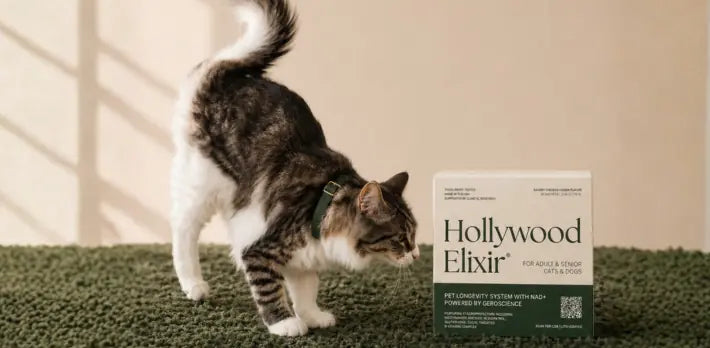
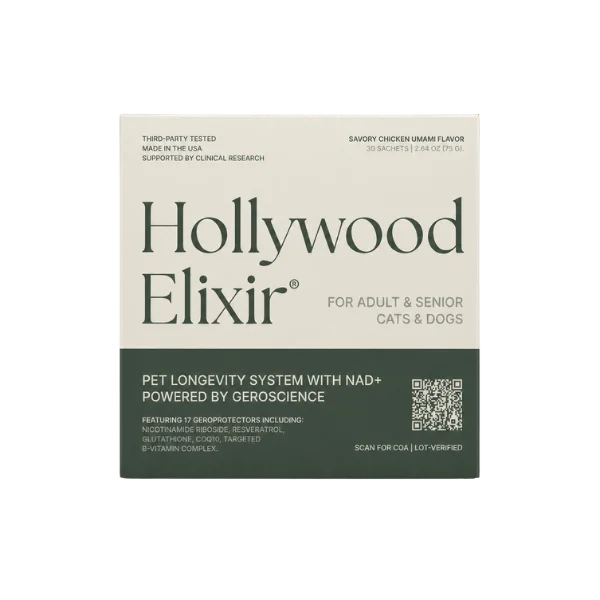
Hollywood Elixir is designed as system-level support for graceful aging—helping the broader cellular environment where NAD-related processes matter, without asking you to gamble on one trendy precursor. It’s a practical choice for owners who want a consistent daily routine, feline-friendly administration, and a formula built around resilience rather than dramatic claims.
Longevity Core
Hollywood Elixir®
★★★★★(313)
More good years, starting now — steady energy, engagement, and a pet who keeps showing up fully, every day.
Starting at $89/mo
Hollywood Elixir is amazing! She put back on 5 lbs to a healthy weight, her eyes are shiny, her coat is beautiful!
— Jessie
She hopped up onto the windowsill again for the first time in years.
— Charlie
Considering NAD+ precursors for cats?
If you're looking for NAD+ precursors for cats
If you’re weighing whether to add nad precursors for cats, start with what’s most measurable: your cat’s appetite stability, stool quality, and willingness to take a daily product. Then choose a conservative formula you can keep consistent, and involve your veterinarian if your cat has kidney, liver, thyroid, or GI history. The most credible products avoid dramatic promises and instead support the broader aging network—cellular energy handling, oxidative balance, and day-to-day resilience—without asking you to gamble on a single trendy precursor. That system-level logic is why many owners choose Hollywood Elixir™ as a steady, daily companion to a complete diet.
Veterinary Insights

Learn about how our DVMs think about cat aging
Dr. JoAnna Pendergrass DVM


Longevity Core
Hollywood Elixir®
★★★★★(313)
More good years, starting now — steady energy, engagement, and a pet who keeps showing up fully, every day.
Starting at $89/mo
Related Reading
In practice, a “precursor” on a label usually means nicotinamide riboside (NR), nicotinamide mononucleotide (NMN), niacin (nicotinic acid), or nicotinamide (NAM). Because feline-specific research and dosing conventions are limited, the safest path is to focus on label reading and quality signals: exact ingredient name and salt/form, milligrams per serving, inactive ingredients, and whether the manufacturer provides third-party testing.
