The 12 Hallmarks of Aging in Dogs, Explained
Read full insightEpigenetics and Aging in Cats
By La Petite Labs Editorial 15 min read
Aging in cats sneaks up on you—one year your cat is simply “mature,” the next you notice smaller jumps, longer naps, a pickier appetite, or a coat that’s lost some plush. The reassuring news is that epigenetics points away from one magic fix and toward the repeatable things you already control: diet quality, consistency, stress, sleep, and gentle activity, which shape how the body reads its genetic instructions over time. Nutrition sits at the center—studies link healthy aging in cats with better nutrient and mineral digestibility, so what matters isn’t only what’s in the bowl, but what the body can actually use. This is also the honest reason a careful owner might still consider a daily supplement while feeding well: a complete diet covers essentials, but aging is multi-factorial—metabolism shifts, routines change, and resilience thins at the edges. The best support is system-level, helping the broader network behind everyday vitality, not promising to rewrite biology.
- Epigenetics is about how daily life influences long-term gene activity—without changing your cat’s DNA.
- Diet quality matters because aging cats may use nutrients differently, making “absorbed” as important as “offered.”
- Gut comfort and consistency count, since food shapes the microbiota and age-related metabolic signals.
- Lifestyle inputs—routine, stress, sleep, gentle play—often decide whether an older cat feels steady day to day.
- Credible supplements support normal cellular maintenance; they don’t reverse aging or treat disease.
- Choose cat-appropriate formulas that are easy to give and compatible with veterinary oversight.
- A system-level supplement can still earn its place even on a strong diet, because aging is broader than one nutrient.
A Quiet Force Shaping Longevity Across Your Cat’s Whole Life
When people talk about epigenetics and aging for cats, they’re usually pointing to something quietly powerful: the way a cat’s daily environment can influence how genes are “read” over time. Genes don’t change, but the signals around them can. Those signals are shaped by food quality, stress, sleep, activity, and the slow accumulation of small exposures. In older cats, the stakes feel higher because the margin for error narrows—digestion, appetite, and resilience can shift even when lab work still looks “fine.”(Stockman J, 2024)
This is also why owners who already feed well still look for epigenetics and aging products for cats. A thoughtful supplement isn’t a replacement for a complete diet; it’s a way to support the broader network that helps an aging body stay steady—energy, cellular upkeep, and recovery after ordinary stressors. The best epigenetics and aging supplements for cats fit into a lifestyle that’s already careful, not chaotic.
Epigenetics in Plain Language: Genes, Environment, and Time
Epigenetics is often described as the layer of “switches” and “dimmers” that influence gene activity without changing the DNA itself. In plain terms, it’s one way the body records experience—food, stress, sleep, and exposures—and translates it into long-term patterns. In cats, aging is associated with metabolic changes and shifting nutrient needs, and epigenetic changes may be part of that broader story.(Stockman J, 2024)
For owners, the value of epigenetics and aging for cats is not a new obsession with biology. It’s a calmer, more strategic view of daily choices. You can’t control everything, but you can control the inputs that repeat: what goes in the bowl, how predictable the household feels, and whether support is consistent enough to matter.
Why Does Nutrient Absorption Matter More as Cats Age?

Aging cats don’t just “slow down.” Their digestion, absorption, and appetite can shift in ways that change how well they use nutrients—which is why two cats on the same food can age differently. Research linking healthy aging in cats with better nutrient and mineral digestibility shows why diet quality and tolerability sit at the center of longevity (Schauf, 2021).
This is also where a supplement earns a clear role. If your cat’s diet is already complete and balanced, a daily support isn’t about filling one gap—it’s about backing the broader system that turns nutrients into steady energy, recovery, and everyday comfort.
The Microbiome Connection: Daily Food Choices with Long Shadows
The gut is one of the most responsive interfaces between lifestyle and aging. In cats, nutrition can significantly influence age-related metabolic markers and the gut microbiota, and those shifts can affect overall health as cats get older.(Ephraim E, 2021)
For owners exploring epigenetics and aging benefits for cats, this is a useful mental model: support the environment in which the body does its work. That means consistent feeding, minimizing abrupt diet changes, and choosing support that doesn’t disrupt appetite. The “best” choice is often the one that keeps the whole system calm.
Lifestyle Inputs That Add up: Routine, Stress, Sleep, and Play
Lifestyle sounds vague until you list it: light, noise, routine, play, and the emotional weather of a home. These shape your cat’s stress response, which in turn influences whether the body spends its resources on immediate coping or long-term maintenance. Epigenetics and aging is partly about reducing how often the body has to choose urgency over repair.
A small, repeatable routine—short play sessions, predictable meals, quiet resting spots—usually does more than a complicated plan. A daily supplement can fit here as a steady signal, but only if it’s easy to give and doesn’t create friction around feeding, which is the first thing to protect in an older cat.
“Aging support is often less about adding more, and more about keeping life steady.”
Why Cat-specific Formulation Matters in Aging Supplement Choices
Owners sometimes assume cats are “simple” eaters, but cats have unique nutrient requirements that reflect their dietary adaptations. Those needs can influence health and aging, which is why cat-specific formulation matters when considering epigenetics and aging supplements for cats.(Morris JG, 2002)
A supplement designed for cats should respect palatability, portion size, and the reality that seniors may eat less. The best epigenetics and aging products for cats are the ones that integrate into a cat’s existing diet without pushing them off their food—because maintaining intake is often the first priority in older cats.
What Research Suggests About Nutrition, Epigenetics, and Longevity
When people cite epigenetics and aging research for cats, they’re often borrowing from a broader scientific theme: nutritional factors can influence epigenetic modifications, changing gene expression in ways that track with aging and longevity.(Park JH, 2017)
That doesn’t mean every supplement is meaningful, or that more inputs are better. It means the daily environment is biologically relevant. A well-chosen epigenetics and aging supplement for cats can be seen as a consistent nudge toward stability—supporting the body’s normal maintenance—while diet and veterinary care remain the foundation.
Common Senior Shifts That Make “System Support” Feel Relevant
Senior cats often live with multiple small issues rather than one dramatic diagnosis: mild arthritis, dental sensitivity, intermittent constipation, or a thinner coat. Aging is associated with changes in metabolism and nutrient requirements, and dietary adjustments can help manage age-related conditions in a way that supports quality of life. (see our Cat Life Stages →)
This is where the “system-level” idea becomes practical. Instead of chasing each symptom with a separate product, many owners prefer one steady, well-tolerated option that supports overall aging resilience. That’s the conceptual space where epigenetics and aging products for cats can fit—without overpromising.
Do You Need a Supplement If Your Cat Already Eats Well?
Not every cat needs a supplement, and not every supplement suits every cat. The decision comes down to risk, simplicity, and whether you can measure “better” realistically. In cats, healthy aging has been linked to better nutrient and mineral digestibility, so the first question is always whether the current diet is being used well (Schauf S, 2021).
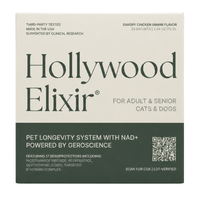
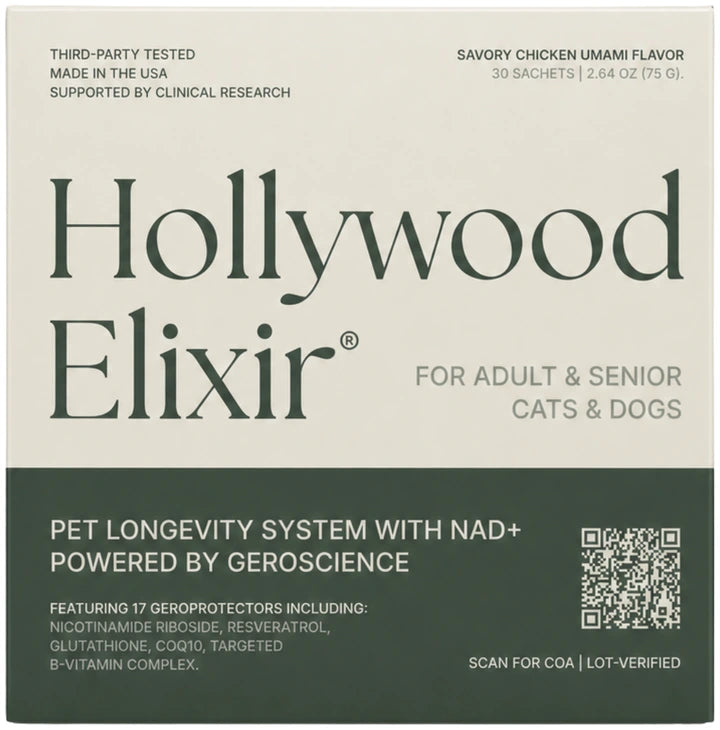
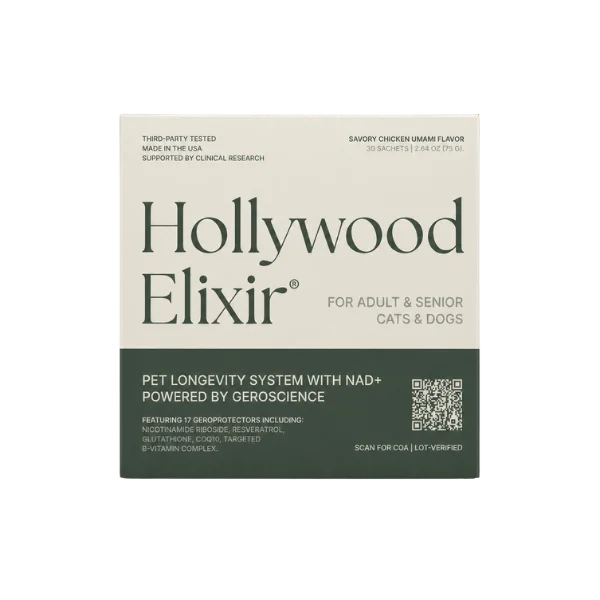
If the diet is solid and your vet is comfortable, a daily aging supplement can be a reasonable layer. Hollywood Elixir is built for that role: a food-mixed routine with NAD+ support from nicotinamide riboside, plus antioxidant and cellular-energy actives, every amount printed on the label. Cats are obligate niacin requirers, so a cat-appropriate NAD+ approach makes sense—as broad daily support that complements veterinary care and a complete diet, never replaces them.
How to Evaluate Quality When Choosing Aging Support Products
If you’re comparing the best epigenetics and aging for cats options, start with what a product does not do: it does not “rewrite” genes, reverse time, or replace veterinary care. A credible approach supports normal cellular maintenance and everyday vitality while respecting feline biology. Cats have distinct nutrient needs shaped by their evolutionary diet, and that context matters when evaluating any epigenetics and aging supplement for cats.(Morris JG, 2002)
Quality signals are often boring: clear labeling, conservative claims, consistent manufacturing, and a formula designed for cats rather than repurposed from human trends. Look for products that position themselves as system-level support—helping the body manage the wear of time—rather than promising a single “magic” ingredient. That framing is usually where the best epigenetics and aging supplements for cats begin.
“The most meaningful changes in senior cats are frequently the quiet ones: appetite, comfort, and predictability.”
DVM Voice: Clinical Vignette of a Common Pattern in Senior Cat Aging
Case provided by JoAnna Pendergrass, DVM
Sasha, a 12-year-old cat, was brought in after her owner noticed increased thirst and urination, lethargy, vomiting, and a generally unkempt appearance. Examination showed weight loss, elevated blood pressure, and reduced vitality.
Diagnostic testing revealed elevated kidney markers, poorly concentrated urine, and protein loss in the urine — findings consistent with chronic kidney disease, one of the most common chronic conditions in senior cats.
Her care required a kidney-focused diet, blood pressure management, targeted supplementation, medication support, and regular monitoring — a necessary plan, but one started after clinical signs were already visible.
Clinical takeaway: Sasha’s case reflects why senior-cat wellness should begin before obvious decline. Earlier monitoring, body-condition tracking, hydration awareness, antioxidant support, and daily cellular resilience may help support quality of life as cats age.
Single-case vignette. Not generalizable. Veterinary diagnosis and monitoring are essential for increased thirst, urination, vomiting, lethargy, weight loss, or suspected kidney disease.
Why the Gut Often Becomes the Center of Aging Conversations
Aging is not only about birthdays; it’s also about how well the body handles ordinary demands. In cats, nutrition can influence age-related metabolic markers and the composition of the gut microbiota, which in turn can shape comfort, appetite, and consistency over time.(Ephraim E, 2021)
This is one reason epigenetics and aging research for cats often circles back to food: diet is a daily input, and daily inputs add up. Still, even an excellent diet can’t control every variable—stress, indoor lifestyle, and individual aging pace all matter. The practical goal is steadiness: fewer swings, more predictable days, and support that complements what you already do well.
Cognitive Changes: Subtle Signs That Deserve a Thoughtful Response
Cognitive aging can be subtle in cats: a change in nighttime restlessness, a shorter fuse, a little less curiosity. Epigenetic changes have been discussed as one factor that may influence brain aging and cognitive function in pets, echoing themes seen in human aging research.(Pan, 2021)
Owners looking into epigenetics and aging supplements for cats often do so because they want to preserve a cat’s “self”—the familiar routines and social ease that make a home feel calm. Lifestyle still leads: predictable schedules, gentle play, and reduced household stress. Supplements can be a supporting character, not the plot.
Safety First: When Supplements Need a Slower, Vet-guided Start
Safety is the non-negotiable. Senior cats are more likely to have hidden kidney, liver, thyroid, or dental issues that change how they tolerate new products. Aging is associated with shifts in metabolism and nutrient requirements, which is why “more” is not automatically “better.”(Stockman J, 2024)
If your cat takes prescription diets or medications, ask your veterinarian before starting any epigenetics and aging supplement for cats. Watch for appetite changes, vomiting, diarrhea, or unusual lethargy during the first weeks. The best epigenetics and aging products for cats are the ones your cat can take consistently, without drama, and with your vet’s awareness.
What Results Can Look Like When the Goal Is Stability
Timing expectations matter. Epigenetics and aging for cats is a long-game idea: you’re supporting the conditions that allow the body to keep doing ordinary repair and housekeeping. That doesn’t always show up as a dramatic “before and after.” It’s more often a quieter pattern—stable weight, steady appetite, and fewer off-days.
Nutrition is one of the strongest levers owners can control, and healthy aging in cats has been linked to better nutrient and mineral digestibility when fed appropriate diets.(Schauf, 2021) Supplements can complement this by supporting broader resilience rather than trying to replace what a complete diet already provides. The best epigenetics and aging supplements for cats are built for that supporting role.
A Simple Decision Framework for Science-minded Cat Owners
A practical decision framework is simple: start with fundamentals, then add support where your cat is most vulnerable. Fundamentals include hydration, dental care, appropriate calories, and a diet your cat digests well. Healthy aging has been associated with better nutrient and mineral digestibility, reinforcing that “tolerated and absorbed” matters as much as “high quality.”(Schauf S, 2021)
Then consider targeted, conservative support. If you’re choosing among epigenetics and aging products for cats, prioritize formulas that aim to support normal energy metabolism and cellular maintenance rather than chasing a single trend. This is where a system-level supplement can make sense even for owners who already feed thoughtfully.
How to Track Progress Without Turning Life into a Spreadsheet
It’s easy to over-focus on ingredients and under-focus on the cat. The best epigenetics and aging for cats plan is the one your cat will actually live with: a calm feeding routine, a product they accept, and changes introduced one at a time. That last point is especially important in seniors, where appetite is both a health signal and a fragile asset.
Keep notes for two weeks before and after any change: stool quality, water intake, energy, grooming, and sleep. This turns “I think it helped” into something you can discuss with your veterinarian. Epigenetics and aging benefits for cats are often about preserving normalcy, not chasing a dramatic transformation.
Why Diet Still Leads, Even When Supplements Enter the Picture
Diet remains the anchor because it is the most frequent input into an aging body. Nutritional factors can influence epigenetic modifications by altering gene expression in ways that track with aging themes, which is part of why food quality and consistency matter so much.(Park JH, 2017)
But diet alone can’t guarantee steadiness across a life. Stress, indoor inactivity, and individual differences still shape outcomes. A well-designed epigenetics and aging supplement for cats can be a rational add-on when it supports the broader metabolic network—helping the body manage ordinary wear—rather than trying to “outsmart” biology.
Putting It Together: a Calm, Sustainable Plan for Later Years
The most science-minded reason to consider epigenetics and aging supplements for cats is not because diet is “insufficient,” but because aging is multi-factorial. Nutritional interventions may have potential to influence age-associated epigenetic patterns, yet the real-world goal is modest: support normal function, comfort, and consistency as your cat gets older.(Park JH, 2017)
If you want a product to earn a place in your routine, it should align with that modest goal—system support, not promises. Pair it with regular veterinary check-ins, a stable home rhythm, and a diet your cat digests well. That combination is where the best epigenetics and aging products for cats tend to make sense.
“A good supplement earns its place by supporting the whole system, not by promising a shortcut.”
Educational content only. This material is not a substitute for veterinary advice. Always consult your veterinarian about your dog’s specific needs. These statements have not been evaluated by the Food and Drug Administration. Products mentioned are not intended to diagnose, treat, cure, or prevent any disease.
Glossary
- Epigenetics: Chemical tags and structural changes that influence how genes are turned on or off without changing DNA.
- Gene Expression: The process by which information in a gene is used to make functional products, shaping how cells behave.
- Biological Aging: The gradual change in function over time, which may not match a cat’s chronological age.
- Digestibility: How well a cat can break down and absorb nutrients from food; often changes with age.
- Gut Microbiota: The community of microbes in the digestive tract that can influence digestion, comfort, and overall health.
- Oxidative Stress: An imbalance between reactive molecules and the body’s ability to manage them; commonly discussed in aging contexts.
- Homeostasis: The body’s ability to keep internal conditions stable (energy, hydration, temperature) despite outside changes.
- Resilience: The capacity to recover from stressors such as routine changes, minor illness, or environmental disruption.
- Senior Cat: A life stage (often around 10+ years) when age-related changes become more likely, though timing varies by individual.
Related Reading
Aging & Senior Cat Guidance
• Cat Age Calculator: Cat Years to Human Years
• Lethargy in Cats
• Senior Cat Not Eating
• Cat Drinking A Lot
• Why Is My Senior Cat Withdrawn?
Healthy Aging Support
• NAD+ for Cats
• NMN for Cats
• Vitamins For Older Cats
• Senior Cat Food
References
Schauf S. Healthy Ageing Is Associated with Preserved or Enhanced Nutrient and Mineral Apparent Digestibility in Dogs and Cats Fed Commercially Relevant Extruded Diets. PubMed. 2021. https://pubmed.ncbi.nlm.nih.gov/34359256/
Morris JG. Idiosyncratic nutrient requirements of cats appear to be diet-induced evolutionary adaptations. PubMed. 2002. https://pubmed.ncbi.nlm.nih.gov/19087402/
Ephraim E. Effect of Nutrition on Age-Related Metabolic Markers and the Gut Microbiota in Cats. PubMed. 2021. https://pubmed.ncbi.nlm.nih.gov/34946032/
Stockman J. Nutrition and Aging in Dogs and Cats. PubMed. 2024. https://pubmed.ncbi.nlm.nih.gov/38625530/
Park JH. Epigenetics: Linking Nutrition to Molecular Mechanisms in Aging. PubMed. 2017. https://pubmed.ncbi.nlm.nih.gov/28702424/
Pan. Nutrients, Cognitive Function, and Brain Aging: What We Have Learned from Dogs. 2021. https://www.mdpi.com/2076-3271/9/4/72
Suchodolski. The fecal microbiome in cats with diarrhea. Nature. 2015. https://www.nature.com/articles/srep34668
Protopopov VA. Influence of a diet with potential geroprotectors on blood biochemistry and aging-associated markers in domestic cats: a pilot study. PubMed. 2025. https://pubmed.ncbi.nlm.nih.gov/40728602/
Choi BY. Epigenetics-Based Age Acceleration Associated with 2,3,7,8 TCDD Exposure in Older Americans. PubMed. 2025. https://pubmed.ncbi.nlm.nih.gov/40003942/
Abudahab S. Epigenetic regulation of drug metabolism in aging: utilizing epigenetics to optimize geriatric pharmacotherapy. PubMed. 2024. https://pubmed.ncbi.nlm.nih.gov/38126340/
Kobayashi. Age-related obesity and inflammaging in cats. 2025. https://www.frontiersin.org/journals/veterinary-science/articles/10.3389/fvets.2025.1639055/full
Hall. Comparison of serum concentrations of symmetric dimethylarginine and creatinine as kidney function biomarkers in cats with chronic kidney disease. 2014. https://www.mdpi.com/2076-2607/9/12/2430
Eyre. Twenty-Four-Hour Feeding Patterns of In-Home Healthy Aging Cats Fed Wet, Dry, or a Combination of Wet and Dry Diets Ad Libitum. 2025. https://www.mdpi.com/2076-2615/16/1/45
Summers S. Evaluation of iron, copper and zinc concentrations in commercial foods formulated for healthy cats. PubMed Central. 2022. https://pmc.ncbi.nlm.nih.gov/articles/PMC10812249/
National Academies of Sciences, Engineering, and Medicine; Division on Earth and Life Studies; Food and Nutrition Board; Board on Agriculture and Natural Resources; Committee on Heritable Genetic Modification in Food Animals. Potential Hazards to Animals and Consumers. 2025. https://www.ncbi.nlm.nih.gov/books/NBK614289
Ahmed. Bioaccumulation of heavy metals in some commercially important fishes from a tropical river estuary suggests higher potential health risk in children than adults. Nature. 2019. https://www.nature.com/articles/s41598-021-00467-4
FAQ
What does epigenetics and aging for cats mean in practice?
In practice, epigenetics and aging for cats is about how repeated daily inputs can influence long-term patterns in the body—without changing your cat’s DNA. Think of it as the difference between having a blueprint and how the house is maintained over time. Owners usually focus on steady routines, high-quality food, and low stress, then consider supportive products that fit that lifestyle.
Why does epigenetics matter more as cats get older?
As cats age, small stressors can have a bigger effect: appetite dips last longer, sleep gets lighter, and recovery from change can slow. Epigenetics is one lens for understanding why long-term patterns—diet quality, stress load, and routine—can shape how resilient an older body feels. The goal is not perfection; it’s steadiness.
How is epigenetics and aging for cats connected to diet?
Diet is a daily signal, and daily signals accumulate. Healthy aging in cats has been linked to better nutrient and mineral digestibility when fed appropriate diets, which helps explain why food choice can shape aging trajectories.(Schauf, 2021)
Even with an excellent diet, owners may still want broader support for everyday vitality and consistency.
Do epigenetics and aging supplements for cats replace a good diet?
No. Epigenetics and aging supplements for cats are best viewed as complementary support, not a substitute for complete and balanced nutrition. A strong diet provides the foundation; a supplement may support broader resilience—especially in seniors where appetite, digestion, and stress tolerance can fluctuate.
What are realistic epigenetics and aging benefits for cats?
Realistic epigenetics and aging benefits for cats are subtle: steadier routines, fewer “off” days, and support for normal energy and comfort as the years add up. Because aging is gradual, changes are often noticed as consistency rather than a dramatic shift. Track simple signals—appetite, stool quality, grooming, sleep—so you can judge whether support is helping.
How long do epigenetics and aging products for cats take to show?
With epigenetics and aging products for cats, think in weeks, not days. You’re supporting ongoing maintenance, so the most meaningful signal is often stability over time—more predictable appetite, calmer days, and fewer minor disruptions. Introduce one change at a time and keep notes for a month so you can separate coincidence from trend.
Is an epigenetics and aging supplement for cats safe daily?
Daily use can be appropriate, but “safe” depends on your cat’s health status, diet, and medications. Older cats may have hidden kidney, liver, or thyroid changes that affect tolerance, so it’s smart to involve your veterinarian before starting something new. Start conservatively, watch appetite and stool, and stop if anything seems off.
What side effects should I watch for with aging supplements?
The most common early issues are digestive: softer stool, vomiting, reduced appetite, or food refusal. Behavioral changes like unusual sleepiness can also matter, especially in seniors where small shifts can signal intolerance. Introduce supplements when life is otherwise stable, so you can attribute changes accurately.
Can epigenetics and aging supplements for cats interact with medications?
They can. Interactions depend on ingredients and your cat’s prescriptions, including thyroid medication, pain control, or special diets. Because seniors are more likely to be on long-term therapies, it’s best to review any new supplement with your veterinarian before starting. Bring the label and your cat’s full medication list to the conversation so the decision is straightforward.
At what age should I consider epigenetics and aging for cats?
Many owners start thinking about epigenetics and aging for cats in midlife, before obvious senior changes appear. That’s often when routines are still stable and it’s easier to measure whether a supportive habit improves consistency. That said, it’s never “too late” to improve diet quality, reduce stress, and add gentle support with veterinary guidance.
Do certain breeds benefit more from aging-focused support?
Breed can influence size, temperament, and risk patterns, but aging support is usually more individual than breed-based. A cat’s weight history, activity level, dental health, and stress sensitivity often matter more than pedigree when deciding on supportive routines. If your cat tends to lose weight easily, has a sensitive stomach, or struggles with change, prioritize gentleness and consistency.
Is epigenetics and aging for cats different than for dogs?
The concept is similar—daily inputs shaping long-term biology—but cats are not small dogs. Cats have unique nutrient requirements and dietary adaptations, so products and feeding strategies should be cat-specific rather than borrowed from canine trends.(Morris JG, 2002)
If you’re shopping in the aging category, look for formulations designed with feline needs and palatability in mind.
What should I look for in the best epigenetics and aging for cats?
The best epigenetics and aging for cats approach is conservative and cat-centered: clear labeling, reasonable claims, and a formula that supports overall maintenance rather than promising age reversal. Palatability matters, because consistency is the whole point. Also look for a product that complements a good diet instead of implying the diet is irrelevant.
How do I give an aging supplement to a picky cat?
With picky cats, the method matters as much as the product. Mix into a small “test” portion first, offer at a calm time, and avoid changing multiple things at once. If your cat refuses, don’t escalate into a feeding battle—protecting appetite is especially important in seniors. Ask your veterinarian if the supplement can be paired with your cat’s preferred texture or topper.
Can I use epigenetics and aging supplements for cats with kidney disease?
If your cat has kidney disease, supplementation should be veterinarian-guided. Seniors often have overlapping conditions, and aging is associated with metabolic shifts that can change how cats tolerate new inputs. Bring the product label to your vet and ask specifically about compatibility with your cat’s renal diet and lab trends.
Does gut health relate to epigenetics and aging for cats?
Yes, in a practical sense: the gut is where diet meets the body. Nutrition can influence the gut microbiota and age-related metabolic markers in cats, which can shape comfort and consistency as cats get older.(Ephraim E, 2021)
That’s why abrupt diet changes can feel so disruptive in seniors.
What does epigenetics and aging research for cats actually show?
The most consistent theme is that nutrition and aging are tightly linked. Healthy aging has been associated with better nutrient and mineral digestibility, and dietary choices can influence the aging process and overall health in cats.(Schauf S, 2021)
Epigenetics adds a framework for why long-term inputs may matter, but it doesn’t turn supplements into miracles.
When should I call my vet about aging changes?
Call your vet if you notice rapid weight loss, persistent vomiting or diarrhea, marked thirst changes, hiding, breathing changes, or sudden behavior shifts. With seniors, “small” symptoms can be early signals, and it’s better to check sooner than later. Once medical issues are addressed, you can talk about lifestyle and supportive options that fit your cat’s plan.
How do I choose the best epigenetics and aging supplements for cats?
Choose the best epigenetics and aging supplements for cats by prioritizing cat-specific formulation, conservative claims, and a product your cat will take consistently. Avoid stacking multiple new products at once; it makes tolerance and results hard to interpret. A good choice should complement a strong diet and stable routine, not compete with them.
Is there a simple daily routine for epigenetics and aging for cats?
A simple routine is usually the most sustainable: consistent mealtimes, fresh water, gentle play, and a quiet resting space. Because nutrition influences aging themes, keep the diet stable and introduce changes slowly. If you add a supplement, make it the same time each day and track a few signals like appetite and stool.
Discover LPL-01: How This Fits Into a Larger Feline Longevity System
Aging in cats unfolds quietly. It’s not driven by a single failure, but by gradual shifts across interconnected systems — cellular energy, oxidative balance, immune tone, and tissue integrity — each influencing the others over time.
This article explores one layer of that system. To understand what actually shapes long-term health, you need to step back and look at how these layers interact.
Start with the underlying science:
- Feline Geroscience Framework →
A structured view of how aging progresses across cellular energy, inflammation, and resilience systems. - Senior Biological Defense Coverage (BDC) Modeling →
A systems-level map of which biological pathways decline first, and how layered interventions can support them. - 2026 Market Research: Best Cat Longevity Supplements →
A feline-specific review of longevity supplements. 2026 Industry report created by LPL-01 Research. - LPL-01 Standard →
The formulation system that translates these models into real-world supplementation—covering multiple pathways in a coordinated way.
Essential Summary
Why are epigenetics and aging important for cats?
Epigenetics and aging for cats is the idea that daily inputs—diet, stress, routine, and environment—can influence how genes are expressed over time. The goal isn’t to “change” your cat, but to preserve steadiness: appetite, comfort, and resilience as the years add up. Supplements can support this broader system alongside excellent nutrition.
Hollywood Elixir is designed as system-level support for graceful aging—meant to complement a high-quality diet by supporting the broader network behind everyday vitality, recovery, and consistency in senior cats.
Hollywood Elixir®
Starting at $89/mo
Hollywood Elixir is amazing! She put back on 5 lbs to a healthy weight, her eyes are shiny, her coat is beautiful!
— Jessie
She hopped up onto the windowsill again for the first time in years.
— Charlie
Considering epigenetics and aging for cats?
If you're searching to understand epigenetics and aging in cats
If you’re exploring epigenetics and aging for cats, start with the basics you can repeat: a diet your cat digests well, stable mealtimes, hydration, and a calmer home rhythm. Then add support only where it stays simple. The best epigenetics and aging products for cats are cat-specific, easy to give, and designed for system-level aging support rather than single-ingredient promises. Introduce one change at a time, track appetite and stool for a few weeks, and keep your veterinarian in the loop—especially for seniors or cats on medications. Hollywood Elixir is a practical option for owners who want a consistent daily layer that complements strong fundamentals without turning care into a project.
Learn about how our DVMs think about cat aging
Dr. JoAnna Pendergrass DVM
Hollywood Elixir®
Starting at $89/mo
Explore your cat’s changing needs over time
Related Reading
Aging in cats can feel deceptively ordinary. One year your cat is simply “mature,” and the next you notice smaller jumps, longer naps, a pickier appetite, or a coat that looks a little less plush.