
The 12 Hallmarks of Aging in Dogs, Explained
Read full insightCognitive Supplements for Cats
Separate the ingredients that help aging brains from the empty claims.
By La Petite Labs Editorial 15 min read

Yes, there are cognitive supplements for cats—but the credible ones are built on familiar nutrition, not stimulants or dramatic promises. The categories with the most plausible biology are omega-3 fatty acids (brain-cell structure), antioxidants (protecting neural tissue from oxidative stress), B vitamins (everyday neural housekeeping), SAMe (neurotransmitter chemistry), and MCTs (an alternate brain fuel). One feline study of a blend with fish oil, B vitamins, antioxidants, and arginine reported improved cognitive measures in older cats, which anchors the category in real research.
This hub orients you to those categories rather than ranking products. Some cats won't need supplementation at all—and changes that look "cognitive" can actually be pain, thyroid disease, hypertension, kidney disease, or sensory loss that needs a veterinarian first.
If you're specifically dealing with age-related change, the senior-focused cognition page covers how these categories are used when the brain is older and more vulnerable (Blanchard T, 2025).
- Do cognitive supplements for cats work? The evidence-backed ones support brain *structure and protection*—omega-3s, antioxidants, B vitamins—rather than promising a dramatic turnaround.
- Which ingredients have evidence: a feline study of fish oil + B vitamins + antioxidants + arginine reported better cognitive scores in older cats; the strongest formulas echo those building blocks.
- Which labels to trust: named actives with amounts, lot numbers, expiration dates, and oxidation control on omega-3s—not "proprietary blend" language that can hide low doses.
- Rule out look-alikes first: arthritis, dental pain, hyperthyroidism, hypertension, and kidney disease all mimic cognitive decline and deserve an exam and labs.
- Safety over novelty: avoid essential oils, xylitol, and stimulant botanicals; bring the label to your vet if your cat is medicated or on a therapeutic diet.
- Expect a weeks-long timeline—track sleep-wake rhythm, grooming, appetite, engagement, and any new vocalizing.
Cognitive Support Categories: What Each Type of Nutrient Actually Does
When people talk about “brain supplements,” they’re often mixing together nutrient categories that work in very different ways. Keeping those categories separate helps set realistic expectations and reduces the temptation to treat every behavior change as a supplement problem.
Antioxidants are typically framed around neuroprotection. The brain is metabolically active and rich in lipids, which makes it vulnerable to oxidative stress. Antioxidant nutrients are used to support the body’s own defense systems and to help limit oxidative damage that can accumulate in neural tissue over time. This category overlaps with broader whole-body antioxidant support, but the intent here is specifically to support brain resilience (Blanchard T, 2025).
Omega-3s are most often discussed in terms of membrane health. Neurons rely on flexible, functional cell membranes for signaling, receptor activity, and synaptic communication. Omega-3 fatty acids are used to support that structural foundation, which is why they’re frequently included in cognitive formulas rather than treated as a separate “skin and coat only” nutrient.
SAMe is generally positioned as support for methylation-dependent processes that influence neurotransmitter balance and cellular function. In cognitive contexts, it’s used with the aim of supporting normal neurotransmitter activity and overall brain chemistry stability.
MCTs are distinct because they’re discussed as an alternative brain fuel source. By providing medium-chain triglycerides that can be converted into ketone bodies, this category is used to support energy availability in the brain when glucose metabolism may be less efficient. Each category addresses a different bottleneck—protection, structure, signaling chemistry, or fuel—so combining them should be a deliberate choice, not a default (Blanchard T, 2025).

Do Cognitive Supplements for Cats Work? What the Evidence Supports
Do cognitive supplements for cats actually work? The evidence-backed ones support brain structure and cellular protection—not a quick fix. When people say "cognitive supplements for cats," they usually mean formulas meant to support normal brain function with age. The most credible focus on omega-3 fats, certain B vitamins, and antioxidant support rather than trendy stimulants.
The anchor study is concrete: in older cats, a blend including fish oil, B vitamins, antioxidants, and arginine was associated with improved cognitive measures (Pan Y, 2013).
That does not make every product on the shelf effective—it grounds the category in plausible biology and real feline research, and it tells you which ingredients to look for when you read a label.

Rule out Look-alikes Before You Blame the Brain
It also helps to separate “cognitive decline” from “something else that looks like it.” Hearing loss, arthritis, dental pain, hypertension, kidney disease, and hyperthyroidism can all change behavior and sleep. A supplement should never be used to paper over a new pattern of yowling, house-soiling, or sudden irritability. Those are reasons to schedule an exam and basic lab work. Once medical causes are addressed, supportive nutrition can make more sense as part of a long view of aging (Summers S, 2022).

Omega-3s and the Brain’s Structural Needs
Omega-3 fatty acids are often the headline ingredient because the brain is, in a literal way, built from fats. DHA is a structural component of neuronal membranes, and dietary omega-3s have been linked with brain health in felines (McGrath, 2024). The practical takeaway: if a cognitive supplement includes omega-3s, quality and stability matter as much as the label claim. Look for clear sourcing and storage guidance, and expect your veterinarian to weigh in if your cat has pancreatitis history or needs a fat-restricted diet.

Antioxidants as Part of a Broader Aging Strategy
Antioxidant support is another common thread. Aging brains face cumulative oxidative stress, and antioxidants in companion animal nutrition are often discussed as part of a broader strategy for healthy aging (Bilgiç B, 2025). This is where marketing can get slippery: antioxidants are not a promise of protection from disease, and more is not always better. The better question is whether a formula is balanced, appropriately dosed for cats, and designed for steady use—supporting the overall environment in which brain cells operate.
“The goal isn’t to rewind age. It’s to protect rhythm, comfort, and familiarity.”
B Vitamins and Everyday Neural Housekeeping
B vitamins show up frequently in cognitive formulas because they’re involved in everyday cellular housekeeping, including processes relevant to nervous system function. In the feline study using a multi-nutrient blend, B vitamins were part of the combination associated with cognitive benefits in older cats (Pan Y, 2013). For owners, the key is not to chase megadoses. It’s to choose a product that fits the cat’s overall diet, avoids unnecessary extremes, and is easy to administer consistently.
Amino Acids Like Arginine: Useful, Not Magical
You’ll also see amino acids like arginine in some blends. In cats, arginine is essential, and it appears in research-focused combinations aimed at supporting cognitive function (Pan Y, 2013). That said, single-ingredient logic can be misleading: a cat can have adequate arginine intake and still benefit from broader aging support. The more coherent approach is to view these ingredients as parts of a network—supporting circulation, cellular energy handling, and resilience—rather than as a one-to-one fix for forgetfulness.

What We Know, What We Don’t, and Why Claims Vary
The feline evidence is thinner than the dog evidence, so the honest standard is modest claims over confident ones. Owners routinely meet marketing that outpaces what studies show. In dogs, supplement use for cognitive dysfunction is common, but outcomes vary and owner perception strongly drives adoption (Haake J, 2023).
For cats, that translates into a calm rule: prefer products that make restrained claims, align with known nutritional roles, and are meant to be used alongside environmental enrichment.
If a label promises a dramatic turnaround or frames normal aging as a crisis, it is selling certainty, not support. The supplements worth trusting tend to sound understated precisely because they are built for steady, long-term use.

Who Might Benefit Beyond the Obvious Senior Cat
Aging is the most common reason owners consider cognitive support, but it’s not the only one. Cats recovering from stress, routine disruption, or a household change may seem “less sharp,” even when the issue is more about sleep and security than brain aging. Supplements won’t replace stability, but they can be part of a gentler baseline—especially when they’re designed to support whole-body aging rather than a single symptom. Reviews of feline cognitive nutrition emphasize the potential role of enriched diets and nutraceuticals in older cats.
Why System-level Support Often Beats Single-ingredient Thinking
Some cats benefit most from a supplement that doesn’t chase a single ingredient, but instead supports the broader conditions that allow the brain to do its work: steady energy availability, balanced oxidative load, and a calmer inflammatory background. Research in aging pets points to nutrition as one of the few levers owners can adjust consistently over time (Pan, 2021). This is also where expectations should stay realistic. Supplements may support normal cognitive function, but they won’t override untreated pain, uncontrolled thyroid disease, or chronic stress in the home.
“A good supplement sounds restrained because it’s built for long-term use.”

DVM Voice: Clinical Vignette of a Common Pattern in Senior Cat Aging
Case provided by JoAnna Pendergrass, DVM
Sasha, a 12-year-old cat, was brought in after her owner noticed increased thirst and urination, lethargy, vomiting, and a generally unkempt appearance. Examination showed weight loss, elevated blood pressure, and reduced vitality.
Diagnostic testing revealed elevated kidney markers, poorly concentrated urine, and protein loss in the urine — findings consistent with chronic kidney disease, one of the most common chronic conditions in senior cats.
Her care required a kidney-focused diet, blood pressure management, targeted supplementation, medication support, and regular monitoring — a necessary plan, but one started after clinical signs were already visible.
Clinical takeaway: Sasha’s case reflects why senior-cat wellness should begin before obvious decline. Earlier monitoring, body-condition tracking, hydration awareness, antioxidant support, and daily cellular resilience may help support quality of life as cats age.
Single-case vignette. Not generalizable. Veterinary diagnosis and monitoring are essential for increased thirst, urination, vomiting, lethargy, weight loss, or suspected kidney disease.

When a Good Diet Still Leaves Room for Support
If your cat already eats a complete senior diet, it’s fair to wonder whether supplements are redundant. Diets can cover minimum requirements, yet cognitive aging is not only about avoiding deficiency. It’s about supporting a network under higher demand: older brains may be less flexible under oxidative pressure and less tolerant of metabolic “noise”(Blanchard T, 2025). A well-designed supplement can be a system-level add-on—supporting the overall aging landscape—rather than a narrow attempt to “top up” one vitamin.

Safety First: What to Avoid and What to Prefer
Safety matters more than novelty. Cats have unique sensitivities, and “natural” is not a safety guarantee. Avoid products that include essential oils, xylitol, or stimulant-style botanicals, and be cautious with high-dose fat-soluble vitamins unless your veterinarian is supervising. When in doubt, choose supplements with transparent labeling, clear daily serving guidance, and quality controls that reduce the risk of contamination. Owner enthusiasm can outpace data, which is one reason vet-guided choices are worth the extra step (Haake J, 2023).

Medication and Condition Interactions Worth Discussing
Medication and supplement interactions are easy to overlook because cognitive support often feels “gentle.” Still, older cats are commonly on thyroid medication, pain control, or kidney-support plans. Fish oil can affect bleeding tendency in some contexts, and antioxidants can be complicated when layered on top of therapeutic diets. This doesn’t mean you should avoid supplements; it means you should bring the label to your veterinarian and ask a simple question: does this fit the rest of my cat’s plan? That conversation is especially important for cats with chronic disease (Summers S, 2022).
Making It Easy: Formats, Routines, and Acceptance
Administration is often the deciding factor. Powders can be refused; capsules can become a daily struggle; liquids can be either effortless or impossible depending on the cat. The best supplement is the one your cat will take calmly, consistently, and without disrupting trust. Many owners do well by pairing supplements with a predictable ritual—same time, same small treat, same quiet corner—so the experience becomes familiar rather than negotiated. Consistency is also what makes it possible to notice subtle changes over weeks, instead of guessing day to day.
What to Track During a Trial Without Overreading It
A reasonable timeline is measured in weeks, not days. Nutrients that support brain health tend to work by shaping the environment the brain operates in—membrane composition, oxidative balance, and steady energy handling—rather than producing an immediate “effect” you can see overnight (McGrath, 2024). If you trial a supplement, keep a short log: sleep-wake pattern, social engagement, appetite, grooming, and any new vocalization. This record helps you and your veterinarian decide whether the change is meaningful or whether another medical issue needs attention.

Which Labels Indicate Real Cognitive Support (and Which Don't)
Which labels actually indicate cognitive support? Look for named actives with amounts, not vague benefit copy. A genuine cognitive formula prints its ingredients and doses—omega-3s, specific B vitamins, defined antioxidants—rather than hiding them inside a "proprietary blend," which can mask low amounts or uneven quality. Lot numbers and expiration dates should be visible, and the company should explain its sourcing and testing.
For omega-3 products specifically, freshness and oxidation control matter: rancid oils are not supportive and can upset the stomach (Zulauf-McCurdy CA, 2023).
The quieter the label, the better the sign. Restrained, transparent products are usually the ones built for daily use—while sweeping promises are a cue to step back and re-read what the label actually contains.

Supplements Plus Environment: the Combination That Feels Humane
Cognitive support works best when it’s not isolated. Food puzzles, gentle play, predictable lighting at night, and easy access to litter boxes reduce the daily friction that can make an older cat seem “confused.” Supplements can complement these changes, but they can’t replace them. In studies and reviews of aging pets, dietary enrichment is often discussed alongside environmental enrichment for a reason: the brain responds to both inputs over time (Blanchard T, 2025). Think of supplements as one quiet layer in a broader, kinder setup.
A Calm Decision Framework for Choosing a Cognitive Supplement
If you’re choosing between several options, prioritize a formula that respects complexity: multiple supportive ingredients, conservative claims, and a clear role in an aging plan. That’s the practical answer to why a careful, science-minded owner might still choose a product even when diet is “good enough.” Aging is not a single-nutrient problem; it’s a systems problem. A supplement designed for whole-body aging support can be a rational addition—especially when your goal is steadiness, not a dramatic change. When you pair that with veterinary oversight, you get the best version of “doing something” without overpromising.
“Aging is a systems problem; the smartest support respects that complexity.”
Educational content only. This material is not a substitute for veterinary advice. Always consult your veterinarian about your dog’s specific needs. These statements have not been evaluated by the Food and Drug Administration. Products mentioned are not intended to diagnose, treat, cure, or prevent any disease.
Glossary
- Cognitive Dysfunction: Age-associated changes in memory, learning, sleep-wake rhythm, and behavior that can resemble confusion.
- Nutraceutical: A food-derived product used to support normal body function, often positioned between diet and medication.
- Omega-3 Fatty Acids: Dietary fats (commonly EPA and DHA) associated with brain structure and inflammatory balance.
- DHA (Docosahexaenoic Acid): An omega-3 fat concentrated in neural tissue and cell membranes.
- Antioxidant: A compound that helps manage oxidative stress by neutralizing reactive molecules.
- Oxidative Stress: An imbalance where reactive molecules outpace the body’s protective systems, often discussed in aging.
- B Vitamins: A group of water-soluble vitamins involved in cellular energy handling and nervous system support.
- Arginine: An essential amino acid for cats, important for normal metabolism and included in some cognitive-support blends.
- Palatability: How readily a cat accepts a product’s taste, smell, and texture—often the deciding factor for consistency.
Related Reading
Aging & Senior Cat Guidance
• Cat Age Calculator: Cat Years to Human Years
• Lethargy in Cats
• Senior Cat Not Eating
• Cat Drinking A Lot
• Why Is My Senior Cat Withdrawn?
Healthy Aging Support
• NAD+ for Cats
• NMN for Cats
• Vitamins For Older Cats
• Senior Cat Food
References
Pan Y. Cognitive enhancement in middle-aged and old cats with dietary supplementation with a nutrient blend containing fish oil, B vitamins, antioxidants and arginine. PubMed. 2013. https://pubmed.ncbi.nlm.nih.gov/23211671/
Blanchard T. Enhancing cognitive functions in aged dogs and cats: a systematic review of enriched diets and nutraceuticals. PubMed. 2025. https://pubmed.ncbi.nlm.nih.gov/39827310/
McGrath. Feline Cognition and the Role of Nutrition: An Evolutionary Perspective and Historical Review. PubMed. 2024. https://pubmed.ncbi.nlm.nih.gov/38998079/
Haake J. Investigating Owner Use of Dietary Supplements in Dogs with Canine Cognitive Dysfunction. PubMed. 2023. https://pubmed.ncbi.nlm.nih.gov/37835662/
Crimmins. Lifespan and Healthspan: Past, Present, and Promise. Springer. 2015. https://link.springer.com/article/10.1007/s11357-025-01521-z
Pan. Nutrients, Cognitive Function, and Brain Aging: What We Have Learned from Dogs. 2021. https://www.mdpi.com/2076-3271/9/4/72
Zulauf-McCurdy CA. Systematic Review and Meta-Analyses: Safety and Efficacy of Complementary and Alternative Treatments for Pediatric Attention-Deficit/Hyperactivity Disorder. PubMed. 2023. https://pubmed.ncbi.nlm.nih.gov/37084312/
Bilgiç B. The Values of Potentially Toxic Elements (PTEs) in Prescription and Non-prescription Dry Cat and Dog Diets in Turkey. PubMed. 2025. https://pubmed.ncbi.nlm.nih.gov/40442459/
Summers S. Evaluation of iron, copper and zinc concentrations in commercial foods formulated for healthy cats. PubMed Central. 2022. https://pmc.ncbi.nlm.nih.gov/articles/PMC10812249/
Bilgiç B. Investigation of Trace and Macro Element Contents in Commercial Cat Foods. PubMed Central. 2025. https://pmc.ncbi.nlm.nih.gov/articles/PMC11633335/
RVA. Vitamin-mineral supplements do not guarantee the minimum recommendations and may imply risks of mercury poisoning in dogs and cats. PubMed. 2021. https://pubmed.ncbi.nlm.nih.gov/33901261/
Ahmed. Bioaccumulation of heavy metals in some commercially important fishes from a tropical river estuary suggests higher potential health risk in children than adults. Nature. 2019. https://www.nature.com/articles/s41598-021-00467-4
FAQ
What are cognitive supplements for cats, in plain terms?
They’re nutritional products intended to support normal brain function as cats age, often using ingredients like omega-3 fats, antioxidants, and supportive vitamins. The goal is usually steadier daily rhythms and maintained engagement, not a dramatic personality change.
Because behavior changes can have medical causes, it’s best to pair any supplement plan with a veterinary check-in. Many owners choose a system-level option such as Hollywood Elixir™.
Why do older cats seem confused or restless at night?
Nighttime vocalizing or pacing can reflect cognitive aging, but it can also come from pain, hearing loss, high blood pressure, or thyroid disease. A new pattern is worth a medical workup before you assume it’s “just age”(Summers S, 2022).
Once medical issues are addressed, owners often add gentle nutritional support and environmental consistency to reduce friction in the day. For broader aging support that can complement those steps, consider Hollywood Elixir™.
How do cognitive supplements for cats generally support brain health?
Most aim to support the brain’s “operating environment” over time: healthy cell membranes, protection from oxidative stress, and steadier cellular energy handling. Reviews of aging cats discuss dietary enrichment and nutraceuticals as potentially supportive in this context.
That’s why many owners prefer formulas designed as network support rather than a single-ingredient bet. A system-level option in that spirit is Hollywood Elixir™.
Are cognitive supplements for cats safe for daily use?
Many are used daily, but safety depends on the specific ingredients, your cat’s health conditions, and what else they take. Cats can be sensitive to certain additives, and “natural” doesn’t automatically mean low-risk.
Bring the label to your veterinarian, especially if your cat has kidney disease, thyroid disease, or is on long-term medication. If you want a conservative, aging-focused approach, look at Hollywood Elixir™.
When should I avoid starting a new brain supplement?
Avoid starting anything new during an acute illness, right before anesthesia, or when your cat’s symptoms are rapidly changing. Sudden disorientation, appetite loss, or new house-soiling should be evaluated first, since medical problems can masquerade as cognitive change.
Once your veterinarian has clarified the picture, you can choose a supplement that fits the long view of aging rather than reacting to a crisis. Many owners keep it simple with Hollywood Elixir™.
How long until I notice changes after starting supplements?
For most cats, a fair trial is measured in weeks, not days. Nutritional support tends to work gradually by shaping the background conditions the brain relies on, rather than producing an immediate, obvious effect(Pan, 2021).
Track small markers like sleep-wake rhythm, grooming, and ease of settling, and share that log with your veterinarian. For steady, system-level support during that trial, consider Hollywood Elixir™.
Can I combine cognitive supplements with a senior cat diet?
Often, yes—but it should be intentional. A complete diet covers minimum requirements, yet aging support isn’t only about avoiding deficiency; it’s also about supporting resilience under higher demand.
Ask your veterinarian whether the combination duplicates certain nutrients or conflicts with a therapeutic diet. If you want a broader aging layer that’s not framed as a single-nutrient replacement, consider Hollywood Elixir™.
What ingredients are most studied for feline cognitive aging?
In cats, research and reviews commonly discuss omega-3 fats, antioxidant support, and certain vitamins, often as part of multi-nutrient strategies rather than single ingredients(McGrath, 2024). One study in older cats used a blend including fish oil, B vitamins, antioxidants, and arginine with cognitive benefits reported.
Because real-world products vary, prioritize transparent labeling and a coherent, aging-focused design. Many owners choose a system-oriented formula like Hollywood Elixir™.
Do omega-3 supplements help cats’ brains as they age?
Omega-3s are frequently used because DHA is a key component of brain cell membranes, and dietary omega-3s have been linked to brain health in felines. The practical issue is quality: freshness, sourcing, and oxidation control matter.
If your cat has a history of pancreatitis, GI sensitivity, or needs a special diet, check with your veterinarian before adding oils. For broader aging support beyond a single ingredient, consider Hollywood Elixir™.
Could antioxidants be useful in cognitive supplements for cats?
They can be part of a sensible formula because oxidative stress is one of the pressures that increases with age, and antioxidants are often discussed in companion animal aging nutrition(Bilgiç B, 2025). The nuance is dosing and balance; “more” is not automatically better.
Choose products that sound restrained and provide clear serving guidance for cats, and confirm fit if your cat is on a therapeutic diet. For system-level aging support that includes more than one lever, consider Hollywood Elixir™.
What side effects might occur with brain supplements in cats?
The most common issues are gastrointestinal—soft stool, vomiting, or appetite changes—especially with oily ingredients or sudden diet changes. Less commonly, a cat may become more finicky if the supplement alters food smell or texture.
Stop the product and call your veterinarian if symptoms persist, or if you see lethargy, facial swelling, or breathing changes. If you want a conservative formula designed for steady use, consider Hollywood Elixir™.
Can supplements interact with my cat’s medications or conditions?
Yes. Senior cats often take thyroid medication, pain control, or kidney-support therapies, and adding supplements can complicate the overall plan. Even seemingly mild ingredients can be a poor fit depending on the cat’s diagnosis and diet.
Bring the full ingredient panel to your veterinarian and ask whether anything duplicates, conflicts, or adds unnecessary risk. For a system-level approach that’s meant to complement—not replace—good care, consider Hollywood Elixir™.
At what age do cats typically benefit from cognitive support?
There isn’t a single cutoff. Many owners start thinking about support in the senior years, especially when small routine changes appear. The more important factor is whether your veterinarian has ruled out medical causes and whether your cat can take the product consistently.
Starting earlier can be reasonable if the formula is conservative and designed for long-term use, but it should still fit the whole health picture. For broader aging support across a life, consider Hollywood Elixir™.
Do certain cat breeds need different cognitive supplement approaches?
Breed is usually less important than individual health status, diet, and tolerance. A large, active cat and a small, sedentary cat may respond differently to the same product simply because of appetite, GI sensitivity, and concurrent conditions.
Your veterinarian can help you choose a formula that matches your cat’s medical history and feeding routine. For a broadly framed aging-support option that isn’t breed-specific, consider Hollywood Elixir™.
Are cognitive supplements for cats the same as dog products?
No. Cats have distinct nutritional requirements and sensitivities, so dog products aren’t automatically appropriate. While dog research can offer hints, outcomes vary and owner perceptions often shape supplement use more than data(Haake J, 2023).
Choose cat-appropriate formulations and serving guidance, and confirm fit with your veterinarian if your cat has chronic disease. For a product positioned around whole-body aging support, consider Hollywood Elixir™.
What should I look for on a supplement quality label?
Look for clear ingredient amounts, a daily serving direction for cats, lot numbers, and an expiration date. Be cautious with vague “proprietary blends,” which can hide low doses or uneven sourcing.
For oils, freshness and oxidation control are especially important because rancid fats can undermine the intended benefit(Zulauf-McCurdy CA, 2023). If you want a restrained, system-level approach, consider Hollywood Elixir™.
What’s the easiest way to give supplements to picky cats?
The easiest method is the one that preserves trust: a small, consistent ritual and a format your cat tolerates. Some cats accept a flavored liquid; others do better with a tiny portion of wet food used only for supplements.
Avoid turning it into a daily wrestling match, because stress can erase the benefit you’re trying to create. If you’re looking for a supplement designed to fit routine rather than disrupt it, consider Hollywood Elixir™.
Should I use cognitive supplements for cats every day?
If your veterinarian agrees the product is appropriate, daily use is often the most sensible approach because nutritional support tends to be cumulative and routine-dependent. Irregular dosing makes it hard to judge whether anything is changing.
That said, any new GI upset or appetite change is a reason to pause and reassess. For a steady, system-level daily option that fits long-term aging goals, consider Hollywood Elixir™.
Can supplements support both cognition and overall senior cat comfort?
They can, when they’re framed as whole-body aging support rather than a narrow “brain pill.” Aging affects sleep, mobility, appetite, and stress tolerance, and nutrition is one of the few consistent levers owners can adjust over time.
The best results usually come from pairing supplements with environmental ease—ramps, predictable routines, and accessible litter boxes. For a system-level aging formula that aligns with that approach, consider Hollywood Elixir™.
What does research say about supplements and aging cat cognition?
The cat-specific evidence is still developing, but there are signals worth taking seriously. A study in older cats found a multi-nutrient blend (including fish oil, B vitamins, antioxidants, and arginine) associated with improved cognitive measures. Reviews also discuss enriched diets and nutraceuticals as potentially supportive in aging cats.
The responsible takeaway is cautious optimism paired with good product selection and veterinary oversight. For system-level aging support that fits that mindset, consider Hollywood Elixir™.

Discover LPL-01: How This Fits Into a Larger Feline Longevity System
Aging in cats unfolds quietly. It’s not driven by a single failure, but by gradual shifts across interconnected systems — cellular energy, oxidative balance, immune tone, and tissue integrity — each influencing the others over time.
This article explores one layer of that system. To understand what actually shapes long-term health, you need to step back and look at how these layers interact.
Start with the underlying science:
- Feline Geroscience Framework →
A structured view of how aging progresses across cellular energy, inflammation, and resilience systems. - Senior Biological Defense Coverage (BDC) Modeling →
A systems-level map of which biological pathways decline first, and how layered interventions can support them. - 2026 Market Research: Best Cat Longevity Supplements →
A feline-specific review of longevity supplements. 2026 Industry report created by LPL-01 Research. - LPL-01 Standard →
The formulation system that translates these models into real-world supplementation—covering multiple pathways in a coordinated way.
Essential Summary
Why are cognitive supplements for cats important?
Cognitive supplements can be a quiet, practical layer of support for aging cats—especially when they focus on nutrients associated with brain structure, cellular protection, and steady energy. They are not a substitute for veterinary evaluation, pain control, or a calmer home routine. The best choices are conservative, cat-appropriate, and designed for consistent use over time.
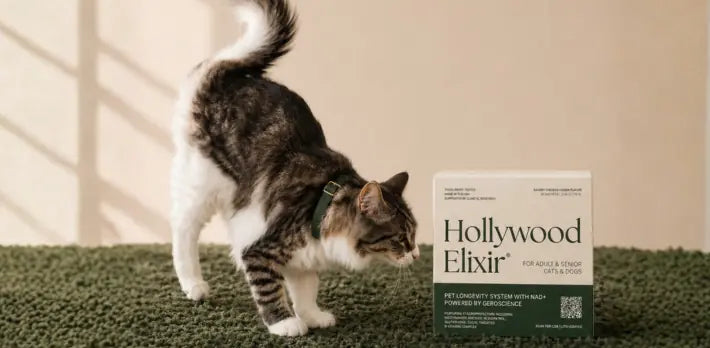
Hollywood Elixir is positioned for owners who want system-level aging support—helping the broader metabolic and cellular environment that the brain depends on—rather than chasing a single “smart” ingredient. It fits well when your goal is steadier days, easier routines, and a supplement you can use consistently alongside good nutrition and veterinary care.

Longevity Core
Hollywood Elixir®
★★★★★(313)
More good years, starting now — steady energy, engagement, and a pet who keeps showing up fully, every day.
Starting at $89/mo
Hollywood Elixir is amazing! She put back on 5 lbs to a healthy weight, her eyes are shiny, her coat is beautiful!
— Jessie
She hopped up onto the windowsill again for the first time in years.
— Charlie
Considering cognitive supplements for cats?
If you're looking for cognitive supplements for cats
If you’re considering cognitive supplements for cats, start with two quiet priorities: medical clarity and daily consistency. Ask your veterinarian to rule out common look-alikes (pain, thyroid disease, kidney issues), then choose a product with transparent labeling and conservative claims. Look for a formula that supports the broader aging landscape—cellular protection, steady energy, and resilience—rather than betting everything on a single ingredient. That system-level framing is also why many owners choose Hollywood Elixir: it’s designed to support the metabolic network that underpins healthy aging, so you’re not forced into a narrow, one-nutrient story.
Veterinary Insights

Learn about how our DVMs think about cat aging
Dr. JoAnna Pendergrass DVM


Longevity Core
Hollywood Elixir®
★★★★★(313)
More good years, starting now — steady energy, engagement, and a pet who keeps showing up fully, every day.
Starting at $89/mo
Wellness Tools
Explore your cat’s changing needs over time


Related Reading
Cognitive supplements for cats are often discussed in the context of aging, but brain support can be relevant across life stages. A young adult cat may benefit from nutritional foundations that protect neural tissue over time, while a middle-aged cat might need support during periods of stress, illness recovery, or environmental change.
