Cognitive Support for Senior Cats

Spot Early Cognitive Changes and Use Targeted Nutrition to Protect Brain Function

Essential Summary

Why is cognitive support for senior cats important?

Cognitive changes in senior cats can show up as altered sleep, confusion, or shifts in social behavior. Because medical issues can mimic these signs, a veterinary check is a smart starting point. From there, the most reliable support is layered: predictable routines, gentle enrichment, and nutrition that supports aging bodies over time.

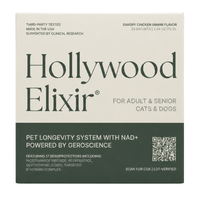
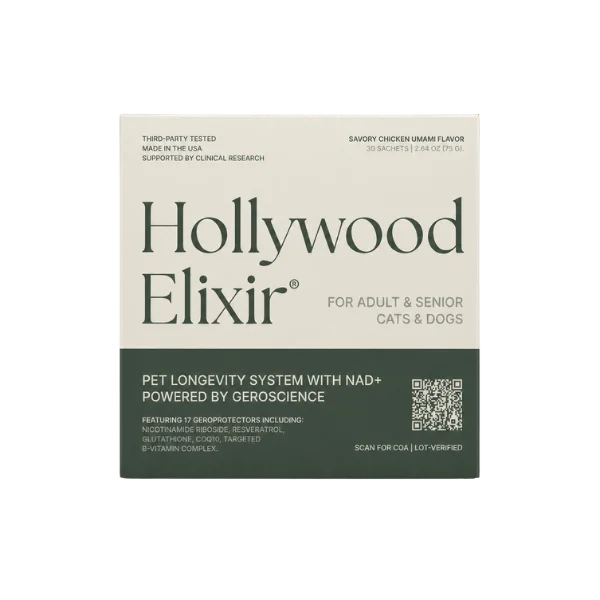
Hollywood Elixir™ is designed as system-level support for graceful aging—helping you back up daily routines with a formula that fits real life, not perfect schedules. Rather than chasing one “magic” ingredient, it’s built to support the broader network that influences energy, resilience, and day-to-day steadiness in older cats.

Cognitive support for senior cats is most relevant when a cat’s behavior changes in ways that suggest cognitive decline rather than a primary medical or emotional trigger. Feline cognitive decline is typically expressed as altered awareness and routines: a cat seems briefly lost in familiar rooms, forgets why it entered a space, or becomes unsettled at predictable times of day. Because these signs can overlap with pain, hyperthyroidism, hypertension, kidney disease, sensory loss, or anxiety, the first step is differential diagnosis—confirming whether the pattern fits cognitive change or whether another condition is driving the behavior (Denenberg S, 2024).

Targeted support matters because “brain-like” behaviors are not all the same problem. A cat vocalizing at night may be disoriented, but it may also be responding to hearing loss or discomfort; a cat missing the litter box may be confused, but it may also be avoiding a painful posture. When cognitive decline is the best fit, ingredient-level interventions are chosen for how they influence neuronal membranes, neurotransmitter signaling, oxidative load, and cerebral blood flow, with attention to form, dosing windows, and safety margins rather than broad promises.

By La Petite Labs Editorial, ~15 min read

Featured Product:

  • Cognitive changes in senior cats often appear as subtle shifts in sleep, orientation, and social behavior.
  • Because illness and pain can mimic “brain aging,” rule-outs and comfort come first.
  • The best cognitive care for senior cats is layered: environment, routine, enrichment, and nutrition.
  • Enriched diets and nutraceutical approaches may support cognitive function in older cats over time.
  • Expect gradual, individualized change; track sleep, appetite, and engagement to judge progress.
  • Choose cognitive supplements for older cats that are easy to give, consistent, and compatible with medications.
  • A system-level product can complement a good diet by supporting resilience across ordinary, imperfect days.

How Feline Cognition Changes with Age: What Owners Actually See

Owners usually notice cognitive change as a shift in patterns, not a single dramatic event. Night vocalization is one of the most reported behaviors: a cat may yowl or call out after settling, often sounding “lost” rather than demanding. Disorientation can show up as pausing in corners, staring at walls, entering a room and stopping as if the purpose was forgotten, or hesitating at familiar thresholds. Sleep-wake changes are also common, with more daytime sleeping and increased nighttime restlessness, pacing, or repeated waking.

Litter box confusion can look like approaching the box and then eliminating nearby, entering and leaving without using it, or seeming uncertain about location even when the box is unchanged. Reduced social engagement may present as less greeting behavior, less interactive play, or a quieter response to familiar people, while still eating and moving normally. Some cats show altered learning or routine adherence, such as forgetting previously consistent feeding-time behaviors or becoming distressed when minor household cues change.

A tracking checklist helps separate occasional odd moments from a consistent cognitive pattern. Note the specific behavior, time of day, duration, and what preceded it (noise, visitors, schedule changes). Record frequency per week and whether episodes cluster at night. Bring this log to a veterinary visit to support differential diagnosis, since similar signs can be produced by medical conditions that require different treatment pathways (Denenberg S, 2024).

Close-up mitochondria render visualizing cellular resilience supported by best cognitive support for senior cats.

Recognizing Cognitive Changes While Respecting Medical Look-alikes

Cognitive aging in cats is typically described through everyday signs: altered sleep-wake cycles, increased vocalization, changes in social interaction, house-soiling, or seeming disoriented in familiar spaces. Senior cats often experience cognitive decline that can affect behavior and how they relate to their environment. Importantly, these signs are not specific; they can overlap with arthritis pain, vision or hearing loss, and internal disease.

That’s why the best cognitive support for senior cats begins with context. If your cat’s “confusion” appears alongside weight loss, thirst, vomiting, or a new reluctance to jump, treat it as a whole-body story. Once medical contributors are addressed, supportive routines and carefully selected cognitive supplements for older cats can be considered as part of a broader plan.

DNA strand illustration representing antioxidant support pathways in cognitive supplements for older cats.

Nutrition as a Daily Lever for Senior Brain and Behavior Support

Nutrition is one of the few levers you can pull every day without adding stress. In senior cats, enriched diets and nutraceutical strategies have been discussed as potentially beneficial for cognitive function, with certain nutrients thought to play a role in mitigating age-related decline (Blanchard T, 2025). That doesn’t mean every cat needs a long ingredient list; it means the overall dietary pattern matters.

If your cat already eats a complete and balanced diet, you may still choose a system-level product because aging changes how the body uses resources over time. The best cognitive care for senior cats often supports resilience broadly—energy, stress response, and recovery—rather than trying to “target” one symptom. This is where a well-designed supplement can fit without pretending to replace food.

Structural biology image symbolizing ingredient integrity supported by best cognitive support for senior cats.

Enrichment That Feels Calm, Not Complicated, for Older Cats

Enrichment is sometimes dismissed as optional, but it’s one of the most humane forms of support. Cognitive stimulation has been shown to improve cognitive function in people with dementia, with benefits noted in areas like attention and memory (RMT, 2021). While cats are not small humans, the principle translates: the brain responds to gentle novelty and meaningful engagement.

For older cats, the best cognitive support is often low effort and high consistency: a short play session at the same time each day, a window perch with traction, or a simple food puzzle that doesn’t create frustration. Pairing enrichment with nutrition and cognitive supplements for older cats can be a way to support both behavior and overall vitality without overcomplicating your home.

Dog portrait capturing warmth and companionship supported through best cognitive products for senior cats.

What “Best” Means When Every Senior Cat Ages Differently

The phrase “best cognitive support supplements for senior cats” can imply a single winner, but the better question is: best for which cat? A cat with kidney disease, hyperthyroidism, or hypertension may need a different approach than a healthy 12-year-old who is simply slowing down. Physical diseases can exacerbate cognitive dysfunction signs, so tailoring matters.

When evaluating cognitive supplements for older cats, prioritize products that are transparent about intended use, avoid exaggerated promises, and fit your cat’s medical profile. If your cat is on medications or has chronic disease, your veterinarian should be part of the decision, especially because older cats can be more sensitive to changes in appetite and digestion (Rodriguez-Rodríguez, 2024).

Hollywood Elixir™ is amazing and makes my 13 y/o kitty young again!

— Jessie

She hopped up onto the windowsill again—first time in years.

— Charlie

“The most convincing results are often modest: calmer nights, steadier routines, and a cat who seems more at ease.”

Safety, Tolerance, and Vet-guided Choices for Older Bodies

Safety is not a footnote with senior cats; it’s the main event. Even “natural” products can cause GI upset, change appetite, or interact with medications. The effectiveness and tolerability of cognitive-oriented strategies can vary by individual health conditions and intervention type, a pattern also seen in broader aging research (Gavelin HM, 2020).

If your cat has liver or kidney disease, is underweight, or is taking prescription drugs, ask your veterinarian before starting new cognitive supplements for older cats. Watch for vomiting, diarrhea, hiding, or reduced eating, and stop the product if these appear. Thoughtful monitoring and label transparency are key parts of responsible supplement use (Muñoz-Perete, 2025).

Elegant canine photo emphasizing gentle vitality supported through cognitive supplements for older cats.

When to Worry, When to Watch, and When to Recheck

It’s easy to miss the moment when “normal aging” becomes “something we should check.” A useful rule is pattern change: new disorientation, sudden vocalizing, getting stuck in corners, or forgetting the litter box—especially if it appears quickly. Senior cat cognitive decline can affect behavior, but medical issues can look similar, and they deserve a workup.

A veterinary visit can help rule out pain, blood pressure issues, thyroid disease, and sensory decline. Once those are addressed, cognitive support for senior cats becomes more straightforward: stabilize routines, reduce stressors, and consider supportive nutrition and supplements that match your cat’s needs and temperament.

Canine side view symbolizing quiet confidence supported through best cognitive support supplements for senior cats.

Why Combining Routine, Movement, and Support Can Matter

Owners often want a clean explanation for why combined approaches feel more effective. In older adults, combining physical and cognitive therapies has been associated with improved outcomes compared with single approaches, suggesting that multiple inputs can reinforce function (Muñoz-Perete JM, 2025). In a home with a senior cat, “combined” might simply mean: gentle movement, predictable cues, and supportive nutrition working together.

This is also why a system-level supplement can make sense even when diet is already adequate. Aging is not just about what’s present in the bowl; it’s about how the body handles stress, recovery, and day-to-day variability. The best cognitive support for senior cats is often the plan that holds up on ordinary days, not just on perfect ones.

Product info graphic highlighting testing and standards behind best cognitive care for senior cats.

Tracking Small Wins so You Can Tell What’s Actually Helping

If you’re comparing options, it helps to define what “better” would look like. For some cats, it’s calmer nights. For others, it’s steadier litter box habits, more social interest, or less startle and pacing. Cognitive interventions in aging populations can produce meaningful benefits, but results differ across individuals (Gavelin HM, 2020). That’s a reminder to measure progress in your cat’s own baseline, not someone else’s story.

Keep a simple weekly log: sleep, appetite, hydration, play, and any disorientation moments. This makes it easier to decide whether a change in diet, environment, or cognitive supplements for older cats is worth continuing. It also gives your veterinarian better information if you need to adjust the plan.

How to Judge Quality in Cognitive Products Without Guesswork

Quality is the unglamorous part of shopping for cognitive supplements for older cats, but it’s where many outcomes are decided. Look for clear labeling, lot identification, and a company that can explain sourcing and manufacturing without evasiveness. In practice, the “best cognitive support supplements for senior cats” are often the ones that are consistent from bottle to bottle, easy to administer, and designed with older bodies in mind.

A cautious approach is also a scientific one: introduce one new product at a time, keep notes on appetite, stool, sleep, and behavior, and stop if something feels off. Adverse effects are usually nonspecific (GI upset, appetite changes), which is why tracking matters (Muñoz-Perete, 2025). If your cat takes prescription medications, ask your veterinarian to screen for potential interactions before you commit to a routine (Vásquez-Carrasco, 2025).

“When behavior changes, start by assuming there’s a reason—then work backward with your veterinarian.”

Lab coat with La Petite Labs logo symbolizing science-backed standards for cognitive support for senior cats.

Making Supplements Easy to Give, Even for Sensitive Eaters

Administration is where good intentions can fail. Many older cats are sensitive to smell, texture, and change, so the best cognitive products for senior cats are often the ones you can give without turning every day into a negotiation. If a supplement is a liquid, start with a tiny amount mixed into a highly preferred food, then slowly increase toward the labeled serving over several days.

Aim for calm consistency: same time, same bowl, same setting. If your cat is on a prescription diet, confirm with your veterinarian that mixing is acceptable and won’t reduce intake of the therapeutic food (Rodriguez-Rodríguez, 2024). And if your cat refuses, don’t force it—stress can worsen sleep and appetite, which are part of the cognitive picture you’re trying to support.

Shop Now
Curated ingredient scene highlighting bioactive blend supporting best cognitive support supplements for senior cats.

What a Realistic Timeline Looks Like for Subtle Improvements

People often ask how quickly cognitive support “works.” With senior cats, timelines are rarely dramatic. If a plan is helping, you may notice small shifts first: fewer nighttime vocalizations, a steadier appetite, slightly more engagement, or less confusion around routines. In human research, cognition-oriented interventions can show variable effectiveness depending on the individual and the type of intervention (Gavelin HM, 2020). That variability is a useful expectation to bring into pet care.

Give any new routine enough time to be fairly judged, but don’t wait indefinitely if things are worsening. If disorientation, accidents, or agitation escalate, it’s a reason to re-check for pain, blood pressure changes, or other medical contributors that can amplify cognitive dysfunction signs (Denenberg S, 2024).

Shop Now
Lifestyle shot of dog owner and Hollywood Elixir aligned with cognitive supplements for older cats.

Home Design Choices That Reduce Confusion and Build Confidence

The most effective cognitive support for senior cats usually doesn’t live in a single bottle. It lives in the environment. Keep pathways wide and predictable. Add night lights in hallways. Use low-entry litter boxes in more than one location. Place water and food where your cat already likes to rest, not where you wish they would go.

Cognitive stimulation is also a form of care, not entertainment. In people with dementia, structured cognitive activities can improve aspects of function like memory and attention (RMT, 2021). For cats, that translates to short, low-pressure “thinking” moments: a treat puzzle that’s easy to solve, a sniff walk around one room, or a gentle play session that ends before fatigue. The goal is engagement without frustration.

Shop Now

Sleep, Nighttime Vocalizing, and the Comfort-first Approach

Sleep changes are among the most emotionally taxing senior-cat shifts. Nighttime wakefulness, pacing, and vocalizing can be part of cognitive decline, but they can also be driven by pain, hunger, high blood pressure, or sensory loss (Denenberg S, 2024). Before you label it “just aging,” it’s worth checking the basics with your veterinarian.

At home, think in cues and comfort: a warm bed in a quiet spot, a predictable evening routine, and gentle daytime activity so sleep pressure builds naturally. If you use cognitive supplements for older cats, pair them with these sleep-supportive habits so you’re not asking a product to do the job of the whole household.

Appetite, Hydration, and Why the Basics Shape Brain Health

Appetite and hydration are not side notes in cognitive aging; they’re part of the foundation. Dehydration, nausea, dental pain, and constipation can all make a cat seem withdrawn or “not themselves,” and those changes can be misread as purely cognitive. Physical disease can exacerbate cognitive dysfunction signs in senior cats, which is why whole-body assessment matters.

If you’re choosing the best cognitive support for senior cats, prioritize options that don’t reduce food intake. A supplement that smells too strong or changes texture may backfire. The best cognitive care for senior cats respects the basics: calories, protein, water, comfort, and a feeding routine your cat will actually keep.

Benchmark graphic emphasizing formulation depth and rigor behind best cognitive support supplements for senior cats.

Why Layered Plans Often Feel Stronger Than Single Changes

There’s a quiet logic to combining approaches. In older adults, integrated physical and cognitive therapies have been associated with improvements across both domains, suggesting that “body” and “mind” supports can reinforce each other (Muñoz-Perete JM, 2025). For cats, the parallel is simple: movement supports circulation, joints, and confidence; engagement supports attention and routine.

That doesn’t mean intense exercise or complicated training. It means a few minutes of gentle play, a short climb to a low perch, or a slow grooming session that doubles as sensory input. When paired with a consistent nutrition plan and well-chosen cognitive supplements for older cats, these small daily inputs can add up to a steadier week.

Shop Now
Open package showing attention to detail consistent with cognitive support for senior cats standards.

A Clear Decision Framework for Choosing Support with Confidence

A practical decision framework helps when the market feels noisy. Start with a veterinary visit if changes are new, sudden, or worsening; medical issues can mimic cognitive decline and deserve first attention (Rodriguez-Rodríguez, 2024). Next, adjust the environment for safety and predictability. Then consider nutrition and supplements as a supportive layer, not a replacement for the first two.

When comparing the best cognitive products for senior cats, ask: Is it easy to give? Does it fit my cat’s health profile and medications? Can I track whether it’s helping? And does the brand speak in realistic terms—supporting normal function over time—rather than promising a reversal? That restraint is often a sign you’re in the right category.

Shop Now

Keeping the Bond Intact While Your Cat’s Needs Quietly Change

The emotional core of this topic is simple: you want your cat to feel oriented, comfortable, and themselves for as long as possible. The science points toward multi-factor support—dietary enrichment, daily stimulation, and individualized plans—rather than a single lever (Blanchard T, 2025).

If you’re building a long-term routine, choose tools that respect the reality of aging: variability, sensitivity, and the need for consistency. With that mindset, cognitive support becomes less about chasing a dramatic change and more about protecting the small, meaningful moments—quiet mornings, familiar rooms, and a cat who still seeks you out.

“The best cognitive products for senior cats are the ones you can give consistently, without stress.”

Educational content only. This material is not a substitute for veterinary advice. Always consult your veterinarian about your cat’s specific needs. These statements have not been evaluated by the Food and Drug Administration. Products mentioned are not intended to diagnose, treat, cure, or prevent any disease.

Glossary

  • Cognitive Dysfunction (Cats): An age-associated pattern of behavior changes that may include disorientation, altered sleep, and shifts in social interaction.
  • Disorientation: Appearing lost in familiar spaces, staring at walls, or hesitating at thresholds without an obvious reason.
  • Sleep-Wake Cycle Changes: Increased nighttime wakefulness or vocalizing, and more daytime sleeping than usual.
  • Environmental Enrichment: Low-stress activities and setup changes that encourage engagement, exploration, and confidence.
  • Predictable Routine: Consistent timing and placement of food, water, litter, and rest areas to reduce cognitive load.
  • Nutraceutical: A food-derived product used to support normal function; in senior cats, often discussed alongside enriched diets.
  • Palatability: How acceptable a product is to a cat’s senses (smell, taste, texture), which strongly affects consistency of use.
  • System-Level Support: A whole-body approach that aims to support resilience and daily steadiness rather than targeting one isolated symptom.
  • Rule-Outs: Veterinary evaluation to check for medical conditions (pain, thyroid disease, hypertension) that can mimic cognitive changes.

Related Reading

References

Blanchard T. Enhancing cognitive functions in aged dogs and cats: a systematic review of enriched diets and nutraceuticals.. PubMed. 2025. https://pubmed.ncbi.nlm.nih.gov/39827310/

Gavelin HM. Cognition-Oriented Treatments for Older Adults: a Systematic Overview of Systematic Reviews.. PubMed. 2020. https://pubmed.ncbi.nlm.nih.gov/32266520/

Muñoz-Perete JM. Combined Physical-Cognitive Therapies for the Health of Older Adults with Mild Cognitive Impairment: A Systematic Review and Meta-Analysis.. PubMed. 2025. https://pubmed.ncbi.nlm.nih.gov/40150441/

RMT. Effectiveness of cognitive stimulation for dementia: A systematic review and meta-analysis.. PubMed. 2021. https://pubmed.ncbi.nlm.nih.gov/34292011/

Denenberg S. Behavior and Cognition of the Senior Cat and Its Interaction with Physical Disease.. PubMed. 2024. https://pubmed.ncbi.nlm.nih.gov/37865588/

Rodriguez-Rodríguez. Cognitive Enhancement Strategies for Older Adults: An Evaluation of Different Training Modalities to Improve Executive Function—A Systematic Review and Meta-Analysis. 2024. https://www.mdpi.com/2077-0383/13/5/1301

Vásquez-Carrasco. Effectiveness of Combined Cognitive Stimulation and Physical Activity Interventions on Activities of Daily Living, Cognitive Function, and Physical Function in Older People with Mild Cognitive Impairment: A Systematic Review with Meta-Analysis. 2025. https://www.mdpi.com/2077-0383/14/7/2261

Barbeau-Grégoire. A 2022 Systematic Review and Meta-Analysis of Enriched Therapeutic Diets and Nutraceuticals in Canine and Feline Osteoarthritis. 2022. https://www.mdpi.com/1422-0067/23/18/10384

Crimmins. Lifespan and Healthspan: Past, Present, and Promise.. Springer. 2015. https://link.springer.com/article/10.1007/s11357-025-01521-z

Pan Y. Cognitive enhancement in middle-aged and old cats with dietary supplementation with a nutrient blend containing fish oil, B vitamins, antioxidants and arginine.. PubMed. 2013. https://pubmed.ncbi.nlm.nih.gov/23211671/

Landsberg G. Therapeutic options for cognitive decline in senior pets.. PubMed. 2006. https://pubmed.ncbi.nlm.nih.gov/17088386/

Landsberg GM. Cognitive dysfunction in cats: a syndrome we used to dismiss as 'old age'.. PubMed Central. 2010. https://pmc.ncbi.nlm.nih.gov/articles/PMC11220932/

Bermingham EN. Nutritional needs and health outcomes of ageing cats and dogs: is it time for updated nutrient guidelines?. PubMed Central. 2024. https://pmc.ncbi.nlm.nih.gov/articles/PMC11188961/

Pittari J. American association of feline practitioners. Senior care guidelines.. PubMed Central. 2009. https://pmc.ncbi.nlm.nih.gov/articles/PMC11135487/

Summers S. Evaluation of iron, copper and zinc concentrations in commercial foods formulated for healthy cats.. PubMed Central. 2022. https://pmc.ncbi.nlm.nih.gov/articles/PMC10812249/

FAQ

What counts as cognitive support for senior cats day to day?

It usually means reducing confusion and stress while protecting normal routines: stable feeding times, easy access to litter and water, gentle play, and predictable sleep cues. Many behavior changes in older cats can overlap with medical issues, so support starts with noticing patterns and checking health when changes are new.

Once basics are covered, some families add a system-level supplement to reinforce daily steadiness as cats age. Hollywood Elixir™

Why does cognitive support matter more once cats reach senior years?

Small cognitive shifts can ripple into quality of life: disrupted sleep, reduced confidence, and less engagement with family. Senior cats can experience cognitive decline that changes how they interact with their environment, and those changes may be amplified by concurrent disease.

Supporting comfort, routine, and resilience early can be gentler than reacting later to a crisis. Many owners pair environmental changes with a consistent supplement routine such as Hollywood Elixir™

How do cognitive supplements for older cats generally fit a plan?

They’re best viewed as one layer in a broader routine: rule out pain and illness, simplify the environment, then add nutrition and supplements that are easy to give. Enriched diets and nutraceutical approaches have been discussed as potentially supportive for cognitive function in senior cats.

A system-level formula can be useful when you want steady support across multiple aspects of aging, not just a single ingredient focus. That’s the role many families choose for Hollywood Elixir™

Are cognitive support products safe for senior cats long term?

Safety depends on the cat’s health status, medications, and the product’s quality. Older cats can be more sensitive to appetite and GI changes, and some supplements can interact with prescriptions, so it’s worth checking with your veterinarian before long-term use(Vásquez-Carrasco, 2025).

Choose products with transparent labeling and introduce them gradually while monitoring stool, appetite, and behavior. For owners who want a consistent daily option, consider Hollywood Elixir™

When should I avoid starting cognitive supplements for older cats?

Avoid starting anything new when your cat is acutely ill, not eating, vomiting, or losing weight without explanation. Sudden behavior changes deserve medical evaluation first because physical disease can worsen cognitive-type signs and can be missed if you assume it’s “just aging”.

Once your veterinarian has clarified the health picture, you can choose a supplement that fits the plan and won’t disrupt intake. Many owners then add Hollywood Elixir™

How do I choose the best cognitive support for senior cats?

Start with what you can sustain: a calm routine, easy environmental upgrades, and a product your cat will reliably take. Look for label clarity, lot tracking, and realistic claims. Monitoring for mild adverse effects like GI upset is part of responsible supplement use(Muñoz-Perete, 2025).

The best choice is often the one that supports the broader aging picture without complicating feeding or medications. For system-level daily support, many families choose Hollywood Elixir™

What side effects can happen with cognitive supplements for older cats?

The most common issues are nonspecific: softer stool, vomiting, reduced appetite, or a cat simply refusing food if the smell or texture changes. That’s why introducing one product at a time and tracking changes is recommended when using supplements in pets.

If you notice persistent GI signs or behavior changes, stop the product and check in with your veterinarian. For a daily option designed to be easy to integrate, consider Hollywood Elixir™

Can cognitive support for senior cats interact with prescription medications?

Yes. Older cats are more likely to be on thyroid medication, pain control, blood pressure drugs, or kidney-support plans, and supplements can sometimes alter tolerance or effects. It’s prudent to have your veterinarian review the full list, including treats and toppers, before adding anything new(Vásquez-Carrasco, 2025).

A careful match between product and medical profile is part of choosing the best cognitive care for senior cats. If you want a consistent, system-level option to discuss with your vet, look at Hollywood Elixir™

At what age should I start cognitive support for senior cats?

There isn’t a single age, because cats age at different rates. Many owners start when they notice early changes—sleep disruption, mild disorientation, or reduced engagement—after medical causes are considered. Senior cat cognitive decline can be subtle and gradual, which is why early observation matters.

Starting earlier often means you can keep interventions gentle and routine-based rather than reactive. A daily, system-level supplement some owners add at this stage is Hollywood Elixir™

Do certain breeds need different cognitive support as they age?

Breed can influence body size, temperament, and common health issues, but cognitive aging is usually more about the individual cat’s medical history and environment. Because physical disease can intensify cognitive-type behaviors, the most meaningful “breed difference” is often which health screenings your veterinarian prioritizes.

Focus on a plan that fits your cat’s appetite, stress sensitivity, and medication list. For owners who want a simple daily layer to complement that plan, consider Hollywood Elixir™

Is cognitive support for senior cats different from support for dogs?

Yes, mostly because cats have different feeding habits, stress responses, and medication tolerances. What works for a dog’s routine may be too disruptive for a cat, especially if it changes food acceptance. In general, enriched diets and nutraceutical strategies are discussed as potentially supportive in senior cats, but delivery and consistency are key.

For cats, the “best” approach is often the quietest one: minimal friction, steady cues, and careful monitoring. A cat-friendly daily option many owners use is Hollywood Elixir™

How long until I notice changes with cognitive support routines?

Expect gradual change, not a sudden switch. In broader aging research, cognition-oriented interventions can improve functioning, but effectiveness varies by individual and approach. For cats, that often means you’re watching for small wins: calmer nights, steadier appetite, or more interest in familiar activities.

Track a few simple markers weekly so you can judge whether the routine is helping. If you want a consistent supplement layer to pair with those habits, consider Hollywood Elixir™

What quality signs matter most in cognitive supplements for older cats?

Look for manufacturing transparency, lot identification, clear serving instructions, and a brand willing to discuss sourcing and testing. Avoid products with vague proprietary blends and dramatic promises. Monitoring and reporting of adverse effects is part of responsible supplement culture, and reputable brands take it seriously.

Also consider palatability and ease of use, because consistency is what makes any plan meaningful. A system-level option designed for daily routines is Hollywood Elixir™

What is the easiest way to give cognitive supplements daily?

Choose a format your cat accepts, then keep the routine identical each day. Many cats do best when a supplement is mixed into a small amount of a favorite food first, then followed by the regular meal. If your cat is on a therapeutic diet, confirm mixing won’t reduce intake of the prescribed food.

Introduce changes slowly to avoid food refusal, and stop if appetite drops. For a supplement designed to fit smoothly into daily feeding, consider Hollywood Elixir™

Can my cat take cognitive support every day without breaks?

Many owners use daily routines because consistency is what makes changes measurable. Whether breaks are needed depends on the product, your cat’s health, and how well it’s tolerated. Because older cats can have changing medical needs, periodic veterinary review is sensible, especially if medications are involved.

If you keep a simple log of appetite, stool, and sleep, you’ll spot tolerance issues early. For a daily system-level option to discuss with your veterinarian, consider Hollywood Elixir™

Does cognitive support for senior cats also help with nighttime vocalizing?

It can, but nighttime vocalizing has multiple causes. Cognitive decline can contribute, yet pain, hypertension, thyroid disease, hunger, or sensory loss can look similar, so it’s worth checking health first when the pattern is new. Once medical issues are addressed, routine and environmental cues (night lights, predictable bedtime) can reduce stress.

Some owners add a supplement layer to support overall steadiness alongside those changes. A system-level option often used for aging support is Hollywood Elixir™

What does research suggest about cognitive care approaches in aging?

Across aging research, cognitive stimulation and structured interventions can improve aspects of function, including attention and memory, though results vary by person and program(RMT, 2021). In older adults, combining physical and cognitive approaches may improve outcomes more than either alone, suggesting a layered model(Muñoz-Perete JM, 2025).

For cats, that supports a balanced plan: enrichment, movement, and nutrition rather than a single “fix.” Many owners complement that plan with a daily system-level supplement such as Hollywood Elixir™

When should I call the vet about cognitive changes?

Call if changes are sudden, rapidly worsening, or paired with weight loss, vomiting, increased thirst, accidents, or signs of pain. Because physical disease can exacerbate cognitive dysfunction signs, a medical evaluation helps prevent missing treatable contributors.

After you have a health baseline, you can build a calmer home routine and consider supportive nutrition and supplements that fit your cat’s profile. A system-level option to discuss is Hollywood Elixir™

How do I decide between diet changes and supplements?

Diet is the foundation because it affects calories, hydration, and daily acceptance. Enriched diets and nutraceutical approaches have been discussed as potentially supportive for cognitive function in senior cats, so some families start by optimizing food first. Supplements can then be added if they don’t disrupt intake and if they fit the medical picture.

A system-level supplement can be appealing when you want broader aging support without repeatedly changing foods. Many owners choose Hollywood Elixir™

What makes the best cognitive support for senior cats feel realistic?

Realistic support respects variability. Some weeks will be steadier than others, and progress is often measured in small quality-of-life markers rather than dramatic change. In aging research, intervention effectiveness can vary based on individual health conditions and treatment types, which is a helpful expectation to carry into pet care.

Choose routines you can keep on busy days: simple enrichment, stable feeding, and a supplement your cat accepts without stress. For a consistent daily layer, consider Hollywood Elixir™

5K+ Happy Pet Parents

Excellent 4.8

Cognitive Support for Senior Cats | Why Thousands of Pet Parents Trust Hollywood Elixir™

"My go-to nutrient-dense topper. Packed with 16 powerful anti-aging actives and superfoods!"

Chanelle & Gnocchi

"We go on runs pretty often; he use to get tired halfway through, but lately, he's been keeping up without any problem."

Cami & Clifford

"He seems more happy overall. I've also noticed he has more energy which makes our walks and playtime so much more fun."

Olga & Jordan

"I want her to live forever. She hasn't had an ear infection since!"

Madison & Azula

"My go-to nutrient-dense topper. Packed with 16 powerful anti-aging actives and superfoods!"

Chanelle & Gnocchi

"We go on runs pretty often; he use to get tired halfway through, but lately, he's been keeping up without any problem."

Cami & Clifford

"He seems more happy overall. I've also noticed he has more energy which makes our walks and playtime so much more fun."

Olga & Jordan

"I want her to live forever. She hasn't had an ear infection since!"

Madison & Azula

"My go-to nutrient-dense topper. Packed with 16 powerful anti-aging actives and superfoods!"

Chanelle & Gnocchi

"We go on runs pretty often; he use to get tired halfway through, but lately, he's been keeping up without any problem."

Cami & Clifford

"He seems more happy overall. I've also noticed he has more energy which makes our walks and playtime so much more fun."

Olga & Jordan

"I want her to live forever. She hasn't had an ear infection since!"

Madison & Azula

"My go-to nutrient-dense topper. Packed with 16 powerful anti-aging actives and superfoods!"

Chanelle & Gnocchi

"We go on runs pretty often; he use to get tired halfway through, but lately, he's been keeping up without any problem."

Cami & Clifford

"He seems more happy overall. I've also noticed he has more energy which makes our walks and playtime so much more fun."

Olga & Jordan

"I want her to live forever. She hasn't had an ear infection since!"

Madison & Azula

SHOP NOW