Autophagy & SIRT1 for Dogs

Why your dog's cells stop clearing damage with age and what helps

By La Petite Labs Editorial 15 min read

Autophagy in dogs is the body's built-in cleanup system: cells identify worn-out parts, break them down, and recycle the pieces so daily wear doesn't pile up. SIRT1 is a regulator that helps coordinate how cells respond to stress and shifting resources, and it has been linked to the regulation of autophagy and cellular balance. With age, this housekeeping tends to slow and damaged proteins and mitochondria accumulate — which is why owners start looking for ways to support cellular repair.

The most useful framing isn't a switch to flip but a network to support. Diet quality, sleep, movement, and body composition all shape the conditions under which repair happens; research suggests dietary components can influence SIRT1 activity and autophagy-related gene expression in dogs. That's why a careful owner can do everything right and still add daily support — not to replace nutrition, but to back the broader system that decides how well nutrition gets used. That's where Hollywood Elixir fits: system-level support for graceful aging.

  • Autophagy is cellular housekeeping — in dogs it builds long-term resilience, not overnight change.
  • SIRT1 is a regulator, not a switch; it helps coordinate stress responses that influence autophagy and cellular balance.
  • Diet is the practical lever: nutrient composition can influence SIRT1 activity and autophagy-related gene expression in dogs.
  • Fasting isn't a safe DIY tool for many dogs — small breeds, puppies, seniors, and medicated dogs especially; restriction needs veterinary oversight (Linder, 2013).
  • There's no mg/kg 'autophagy dose': follow label and veterinary guidance, not drug-style improvisation.
  • Best fit is system-level: support energy, oxidative balance, and recovery rhythms rather than chasing one ingredient.

Autophagy and SIRT1: the Quiet Work That Sustains Healthy Aging

Autophagy is the body’s quiet housekeeping: cells identify worn components, break them down, and reuse the parts. In dogs, that matters most where time accumulates—joints, brain, liver, and the immune system. SIRT1 is often discussed alongside autophagy because it helps coordinate stress responses that can influence cellular cleanup and resilience (Kim JY, 2022). The nuance is that “turning on” autophagy is not a single switch, and it is not always desirable to push it hard. The goal for most dogs is steadier support for the conditions that allow normal repair to keep pace with daily wear.

What Is Autophagy in Dogs?

SIRT1 is a regulatory protein often described as a “sensor” of cellular conditions. When resources are tight or stress is present, SIRT1 activity can shift how cells prioritize repair, including autophagy (German K, 2025). For dogs, that connection is interesting because aging is not one problem—it is many small pressures adding up. Supporting the conditions that keep these repair systems responsive may matter more than chasing a dramatic “activation.” In practice, that means focusing on steady routines, healthy body composition, and supplement choices that support resilience rather than extremes.

SIRT1 as a Regulator: Why Context Matters More Than Activation

It is also worth separating two ideas that get blended online: autophagy as a normal maintenance process, and autophagy as a target to “boost.” SIRT1 helps regulate autophagy as part of cellular homeostasis and stress response (Kim JY, 2022). That does not mean more is always better. In a healthy dog, the aim is to avoid chronic overload—excess weight, poor sleep, sedentary days—so the body’s existing repair rhythms can do their work. Supplements can be a supportive nudge, not a replacement for fundamentals.

Food Composition and Cellular Maintenance: the Understated Foundation

Diet is the most practical lever you control for cellular maintenance. Research suggests dietary components can influence SIRT1 activity and that nutrient composition may affect autophagy-related gene expression in dogs. You don't need a perfect 'longevity diet,' but you do need consistency and adequacy — a complete, balanced food supplies the raw materials repair depends on.

A well-chosen supplement then supports the broader metabolic network that determines how well those materials get used over time. That is the realistic frame: food sets the foundation, and steady daily support backs the system around it.

Fasting and Restriction: Why Caution Is Often the Kindest Choice

Owners sometimes ask whether fasting is required for autophagy SIRT1 for dogs. In reality, fasting is not a safe or appropriate strategy for many pets, especially small breeds, puppies, seniors with medical issues, or dogs on certain medications. Calorie restriction in obese dogs can change nutrient status, so plans need careful oversight to avoid deficiencies (Linder, 2013). If weight management is part of your dog’s story, work with your veterinarian on a structured plan, and think of supplements as supportive during the process—not as a shortcut.

“The goal isn’t to push cellular cleanup harder. It’s to make life easier for the systems already doing it.”

When an Autophagy SIRT1 Supplement for Dogs Makes Sense

If you are considering an autophagy SIRT1 supplement for dogs, the most important first step is to define the goal. Is it graceful aging? Support during weight loss? A senior dog who is slowing down? Different goals change what “best” means. A product designed for system-level aging support may include ingredients that address oxidative stress, mitochondrial function, and healthy inflammatory balance—factors that shape how repair processes behave. This is also why a supplement can remain relevant even when the diet is already solid.

Avoiding Overreach: the Limits of “Activator” Language in Pets

Be cautious with products that imply they can “switch on” SIRT1 the way a drug might. Compounds designed as SIRT1 activators have been studied for pharmacokinetics and tolerability in humans, but that evidence does not establish canine dosing or long-term safety (Hoffmann E, 2013). For dogs, a conservative approach is usually the most responsible: choose formulas with a safety-minded profile, avoid stacking multiple new supplements, and involve your veterinarian if your dog has endocrine disease, liver issues, or is on chronic medications.

Protecting the Whole Dog: Avoiding Tradeoffs During Lifestyle Changes

Aging support is also about avoiding unintended tradeoffs. In weight-loss studies, researchers emphasize monitoring nutrient adequacy so dogs do not drift into deficiencies while calories are reduced (German AJ, 2015). That principle applies broadly: any plan that changes intake—whether fewer calories, fewer treats, or a new supplement—should be evaluated for the whole dog, not just one biomarker idea. If your dog’s coat dulls, stools change, or energy drops, those are signals to reassess the plan rather than pushing forward.

What “Best” Really Means for Long-term Supplement Use

When people say they want the best autophagy SIRT1 supplements for dogs, they often mean “something I can trust for the long run.” Trust comes from manufacturing standards, clear labeling, and a formula that makes sense for daily life. The best products are also easy to administer consistently—because consistency is what turns a good idea into a real-world outcome. Look for a supplement that supports cellular resilience broadly, rather than promising to micromanage autophagy as if it were a single dial.

How to Recognize Quality in Autophagy SIRT1 Supplements

Owners searching for the best autophagy SIRT1 supplement for dogs are often trying to solve a practical problem: how to support aging without chasing a single miracle molecule. Quality signals start with transparency—clear ingredient list, meaningful amounts, and a rationale that fits canine physiology. Be cautious with products that imply drug-like outcomes or rely on proprietary blends that hide doses. Also consider whether the formula supports the broader network that tends to travel with SIRT1 conversations—energy balance, oxidative stress, and healthy inflammatory tone—rather than one narrow “activator” claim.

“Best usually means consistent, tolerable, and transparent—built for months, not moments.”

La Petite Labs

DVM Voice: Clinical Vignette of a Common Pattern in Senior Dog Aging

Case provided by JoAnna Pendergrass, DVM

Rex, a 7-year-old Labrador Retriever, was brought in after his owner noticed he was slower to rise, hesitant on stairs, and less able to play as before. Examination showed stiffness and reduced hip mobility; radiographs confirmed degenerative joint changes.

His care required weight management, veterinary-guided pain control, nutritional support, and rehabilitation — a comprehensive plan, but one started only after visible decline appeared.

Clinical takeaway: Rex’s case reflects the value of proactive aging support: maintaining lean body condition, monitoring mobility early, and supporting cellular resilience, antioxidant defense, and healthy inflammatory balance before decline becomes obvious.

Single-case vignette. Not generalizable. Veterinary oversight is essential for pain, stiffness, or suspected joint disease.

Explore Hollywood Elixir Research →
autophagy and SIRT1 for dogs - 9

Weight Loss, Calorie Restriction, and Nutrient Adequacy Considerations

If your dog is on a weight-loss plan, the autophagy conversation can become confusing. Calorie restriction is sometimes framed as a longevity lever, but in real dogs it can also change nutrient status and increase the risk of shortfalls if the plan is not carefully designed (Linder, 2013). That matters because cellular maintenance depends on adequate protein, essential fatty acids, and micronutrients. A thoughtful approach is to keep the diet complete and balanced, then use supplements to support the system around aging—rather than using restriction as the primary tool.

autophagy and SIRT1 for dogs - 10

Why Human SIRT1 Activator Research Doesn’t Translate Directly to Dogs

Some owners ask whether “SIRT1 activators” used in research translate directly to pets. Human studies have evaluated compounds designed to activate SIRT1 and reported tolerability in that context, but that does not automatically establish safety or appropriate use in dogs (Hoffmann E, 2013). Canine metabolism, dosing, and long-term effects can differ. For pet supplements, the safer, more realistic aim is to support the upstream conditions that influence SIRT1 and autophagy—sleep-wake rhythm, body composition, and antioxidant capacity—without treating your dog like a small human trial.

autophagy and SIRT1 for dogs - 11

What Benefits Owners Commonly Look for over Months, Not Days

Autophagy SIRT1 benefits for dogs are usually discussed in terms of “cellular renewal,” but the owner-facing translation is simpler: steadier energy, more comfortable movement, and a calmer recovery curve after normal stressors. It is important to keep expectations grounded. Autophagy is a normal process, not a promise of reversal. What you can reasonably look for is whether your dog seems to maintain day-to-day function more consistently over time, especially in senior years. Pair any supplement plan with regular veterinary monitoring so subtle changes are noticed early.

Diet, Routines, and Why Supplements Still Matter with Good Food

When people compare autophagy SIRT1 supplements for dogs, they often focus on one ingredient. A more durable way to choose is to ask: does this formula support the whole aging network? SIRT1 is involved in cellular regulation, including autophagy, and diet can influence its activity (German K, 2025). That means a supplement can be valuable even when a dog eats a good diet—because it is not replacing “nutrition,” it is supporting the broader context in which nutrition is used. Look for formulations that respect that complexity.

Safety, Sensitivities, and When to Slow down or Stop

Safety is less about fear and more about fit. Dogs with chronic disease, those taking multiple medications, or those with a history of GI sensitivity deserve a slower, more deliberate approach. Because SIRT1 is tied to stress-response regulation, it is wise to avoid stacking multiple “activating” products at once without veterinary input (Kim JY, 2022). Start with one well-designed product, track stool quality, appetite, sleep, and demeanor, and reassess after a few weeks. If anything feels off, pause and speak with your veterinarian.

What's the Right Autophagy and SIRT1 Dosage for Dogs?

There is no universal, evidence-backed mg/kg 'autophagy dose' for dogs — treat dosage as label-guided and veterinarian-informed, never improvised. Trying to force the biology can backfire. The most responsible dosing strategy is to follow the manufacturer's canine directions, account for your dog's size and sensitivity, and keep the rest of the routine stable so you can interpret any changes.

If your dog is pregnant, nursing, very young, or medically complex, ask your veterinarian before starting anything new. The goal is steady support, not a drug-style dose chasing a lab-sounding promise.

Timeline and Tracking: Noticing Subtle Changes Without Over-interpreting

A common question is timeline: when should you notice anything? Cellular maintenance is slow, and the most meaningful changes are often subtle—less stiffness after rest, steadier appetite, a more even mood. If you change three variables at once (diet, exercise, supplements), you will not know what helped. Keep notes for 30–60 days, then review with your veterinarian. For dogs on calorie restriction, remember that nutrient adequacy must be protected during weight loss, or “longevity” efforts can become counterproductive (German AJ, 2015).

Choosing the Best Fit for Your Dog’s Life and Long View

The best autophagy and SIRT1 support for dogs is rarely the most aggressive option — it's the one that fits your dog's life. Think in layers: a complete diet, consistent movement, sleep and stress routines, and then a daily supplement that backs the aging network without medical promises. SIRT1 is part of the cellular-regulation story, including autophagy, but it sits inside a larger system that includes energy availability and resilience (German K, 2025).

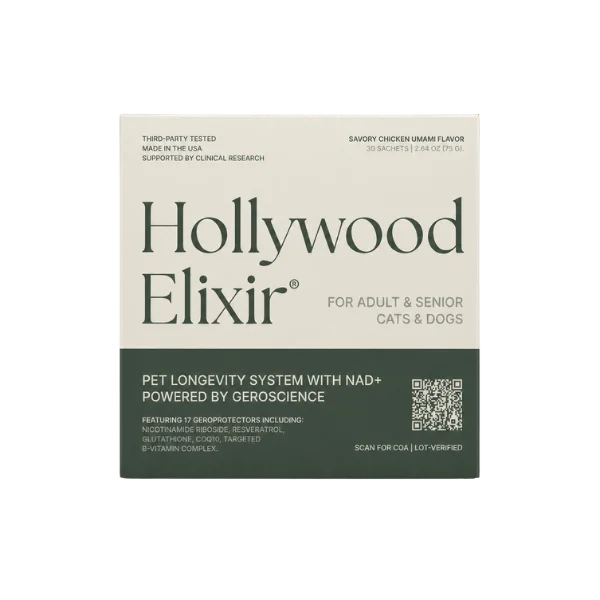
That is the lane Hollywood Elixir is built for. It discloses its amounts, including resveratrol at 15 mg per serving — a compound studied alongside SIRT1 biology — plus nicotinamide riboside and a glutathione-led antioxidant group, so you support cellular energy and oxidative balance daily rather than trying to 'switch on' one pathway. Choose support that respects the whole system and is easy to use every day.

“A strong diet is the foundation; system-level supplementation is the scaffolding around it.”

Educational content only. This material is not a substitute for veterinary advice. Always consult your veterinarian about your dog’s specific needs. These statements have not been evaluated by the Food and Drug Administration. Products mentioned are not intended to diagnose, treat, cure, or prevent any disease.

Glossary

  • Autophagy: A normal cellular cleanup process that breaks down worn components and recycles materials.
  • SIRT1: A regulatory protein involved in cellular stress responses and processes that can influence autophagy.
  • Cellular Homeostasis: The steady-state balance cells maintain to function well under changing conditions.
  • Oxidative Stress: An imbalance between reactive molecules and antioxidant defenses that can contribute to cellular wear over time.
  • Mitochondria: Structures inside cells that produce energy; often discussed in aging because energy production affects resilience.
  • Calorie Restriction: Reduced calorie intake; in dogs it must be managed to preserve nutrient adequacy.
  • Nutrient Adequacy: Meeting essential nutrient needs even when calories are reduced, especially during weight loss.
  • SIRT1 Activator: A compound designed to increase SIRT1 activity; research exists in humans, but it does not define canine use (Hoffmann E, 2013).
  • System-Level Support: A supplement approach that supports multiple connected aging factors rather than targeting one single molecule.

Related Reading

References

German K. Exploratory analysis of nutrient composition of adult and senior dog diets. PubMed Central. 2025. https://pmc.ncbi.nlm.nih.gov/articles/PMC12757753/

Mansilla WD. Adult dogs of different breed sizes have similar threonine requirements as determined by the indicator amino acid oxidation technique. PubMed Central. 2020. https://pmc.ncbi.nlm.nih.gov/articles/PMC7085255/

Roberts LJ. Amino acid digestibility and nitrogen-corrected true metabolizable energy of mildly cooked human-grade vegan dog foods using the precision-fed cecectomized and conventional rooster assays. PubMed Central. 2023. https://pmc.ncbi.nlm.nih.gov/articles/PMC10025581/

Kim JY. SIRT1 and Autophagy: Implications in Endocrine Disorders. PubMed. 2022. https://pubmed.ncbi.nlm.nih.gov/35909524/

German AJ. Assessing the adequacy of essential nutrient intake in obese dogs undergoing energy restriction for weight loss: a cohort study. PubMed Central. 2015. https://pmc.ncbi.nlm.nih.gov/articles/PMC4597434/

Linder. Status of selected nutrients in obese dogs undergoing caloric restriction. Springer. 2013. https://link.springer.com/article/10.1186/s12917-015-0570-y

Hoffmann E. Pharmacokinetics and tolerability of SRT2104, a first-in-class small molecule activator of SIRT1, after single and repeated oral administration in man. PubMed. 2013. https://pubmed.ncbi.nlm.nih.gov/22616762/

Zhao S. Sirtuin 1 activator alleviated lethal inflammatory injury via promotion of autophagic degradation of pyruvate kinase M2. PubMed. 2023. https://pubmed.ncbi.nlm.nih.gov/37101542/

Kitaoka Y. Axonal protection by a small molecule SIRT1 activator, SRT2104, with alteration of autophagy in TNF-induced optic nerve degeneration. PubMed. 2020. https://pubmed.ncbi.nlm.nih.gov/32157485/

Wang Y. The PGC-1α/SIRT3 pathway mediates the effect of DON on mitochondrial autophagy and liver injury in mice. PubMed. 2025. https://pubmed.ncbi.nlm.nih.gov/40668539/

Feng L. SIRT1 deacetylates and stabilizes p62 to promote hepato-carcinogenesis. PubMed. 2021. https://pubmed.ncbi.nlm.nih.gov/33854041/

Fusaroli. The Reporting of a Disproportionality Analysis for Drug Safety Signal Detection Using Individual Case Safety Reports in PharmacoVigilance (READUS-PV): Development and Statement. 2024. https://www.frontiersin.org/journals/pharmacology/articles/10.3389/fphar.2023.1092943/full

Al-Kuraishy. Differential effect of metformin and/or glyburide on apelin serum levels in patients with type 2 diabetes mellitus: Concepts and clinical practice. Springer. 2018. https://link.springer.com/article/10.1007/s10787-022-01125-5

Finno CJ. Veterinary Pet Supplements and Nutraceuticals. PubMed Central. 2020. https://pmc.ncbi.nlm.nih.gov/articles/PMC7802882/

Han. Anti-aging strategies for dogs: current insights and future directions. PubMed Central. 2025. https://pmc.ncbi.nlm.nih.gov/articles/PMC12520853/

Zhang. Unveiling the regulatory role of SIRT1 in the oxidative stress response of bovine mammary cells. 2024. https://www.sciencedirect.com/science/article/pii/S0022030224009251

FAQ

What is autophagy sirt1 for dogs in plain terms?

Autophagy is a cell’s recycling and cleanup routine, while SIRT1 is a regulator that helps cells respond to stress and resource availability. They’re often discussed together because SIRT1 can influence how cells prioritize maintenance, including autophagy.

Why do owners care about autophagy and SIRT1 in aging?

Because aging is largely cumulative wear. Autophagy is one way the body clears damaged components, and SIRT1 helps coordinate cellular responses during stress, which can shape that cleanup. The goal is not to “force” longevity, but to support steadier resilience—especially in senior dogs.

Does autophagy sirt1 for dogs mean fasting is required?

Not necessarily, and fasting isn’t appropriate for many dogs. Online discussions often borrow from human trends, but canine needs vary by size, age, and medical history. If weight loss is part of the plan, nutrient adequacy still has to be protected during calorie reduction.

What are realistic autophagy sirt1 benefits for dogs?

Realistic benefits are subtle and long-horizon: steadier day-to-day function, more consistent recovery after normal activity, and support for healthy aging routines. SIRT1 is involved in cellular regulation, including autophagy, which is part of normal maintenance. No supplement can promise outcomes, but a well-chosen formula can support the broader conditions that help maintenance systems do their job.

Is an autophagy sirt1 supplement for dogs safe daily?

“Safe daily” depends on the dog and the formula. Dogs with chronic disease, those on multiple medications, or those with sensitive stomachs should start cautiously and involve a veterinarian. Because SIRT1 is tied to stress-response regulation, it’s wise to avoid stacking multiple new products at once.

What side effects might occur with these supplements?

Most supplement side effects, when they happen, are gastrointestinal: softer stools, gas, or reduced appetite. Any new lethargy, vomiting, or persistent diarrhea is a reason to stop and call your veterinarian. Introduce one change at a time so you can interpret what your dog is telling you.

Can these products interact with my dog’s medications?

They can. Any supplement may alter appetite, digestion, or absorption, and some ingredients can be inappropriate with certain prescriptions. If your dog takes thyroid meds, seizure meds, NSAIDs, or has liver or kidney disease, ask your veterinarian first. Bring the full ingredient label to the appointment so your vet can assess fit in context.

What is a sensible autophagy sirt1 dosage for dogs?

Use the product’s canine label directions and your veterinarian’s guidance. There isn’t a universal “autophagy dose,” and trying to engineer cellular processes with improvised dosing is not a safe strategy. If your dog is very small, elderly, or medically complex, a slower start is often prudent.

Are autophagy sirt1 supplements for dogs appropriate for puppies?

Usually, puppies don’t need longevity-style supplementation unless a veterinarian recommends it for a specific reason. Growth is a unique physiological stage, and “adult aging” goals don’t map neatly onto it. If you’re considering any supplement for a young dog, prioritize a complete growth diet and discuss timing with your vet.

Do senior dogs benefit more from this kind of support?

Seniors are often the best fit because aging is when cellular maintenance demands rise. Autophagy is part of normal cleanup, and SIRT1 is involved in regulating cellular processes that respond to stress and time. That said, seniors also have more medical complexity, so conservative choices and veterinary oversight matter.

Does breed size change how I approach these supplements?

Yes. Small dogs can be more sensitive to changes in routine, while giant breeds often have different aging timelines and joint demands. Size also affects how carefully you should follow label directions and monitor tolerance. Regardless of size, the best approach is consistent use, simple tracking, and avoiding multiple new products at once.

Is autophagy sirt1 for dogs the same idea for cats?

The concepts exist across mammals, but cats and dogs differ in metabolism, diet requirements, and supplement tolerances. A product formulated for dogs should not be assumed appropriate for cats. If you have both species at home, treat them as separate decisions and ask your veterinarian before sharing anything.

How long before I notice changes after starting a supplement?

With cellular-support supplements, changes are usually gradual. Many owners look over 30–60 days for subtle shifts like steadier energy, easier mornings, or improved recovery after normal activity. Keep notes and avoid changing diet, treats, and exercise all at once, or you won’t know what mattered.

What makes the best autophagy sirt1 supplements for dogs?

The best products are transparent, consistent, and designed for long-term use: clear labeling, sensible serving sizes, and a formula that supports aging systems broadly rather than promising to “activate” one target. Also look for practicality—if it’s hard to give, it won’t be used consistently.

Should I choose an autophagy sirt1 supplement for dogs or diet changes?

Start with diet and routine because they set the baseline. Nutrient composition can influence SIRT1 activity and autophagy-related gene expression in dogs, so food quality and consistency matter. A supplement becomes valuable when it supports the broader aging network beyond what a diet alone can reliably optimize day to day.

Can overweight dogs use these supplements during weight loss?

Often yes, but weight loss should be structured. Studies in obese dogs emphasize monitoring nutrient adequacy during energy restriction to avoid deficiencies(German AJ, 2015). That’s a key point: “less food” must still be complete nutrition. If your veterinarian approves supplementation, choose something that supports overall resilience while the plan progresses.

Are there dogs who should avoid these products entirely?

Some dogs should avoid new supplements unless a veterinarian specifically approves: pregnant or nursing dogs, very young puppies, and dogs with complex endocrine, liver, or kidney disease. Dogs with a history of supplement sensitivity also deserve extra caution. If you’re unsure, treat it like any other health decision—bring the label to your vet and decide together.

What research supports the SIRT1 and autophagy connection?

The connection is supported by research describing SIRT1 as a regulator of cellular processes, including autophagy, and by work highlighting SIRT1’s role in cellular homeostasis during stress. What’s less settled is how to translate that into a single “activation” strategy for pets.

How do I evaluate the best autophagy sirt1 for dogs?

Use a simple framework: safety first, transparency second, and “fits daily life” third. Avoid products that imply drug-like outcomes or hide doses behind proprietary blends. Then ask whether the formula supports the broader aging network—energy balance, oxidative stress, and recovery—rather than one narrow claim.

When should I call my vet after starting a supplement?

Call promptly if you see vomiting, persistent diarrhea, hives, facial swelling, marked lethargy, or behavior changes. Also check in if your dog has a chronic condition and you notice appetite shifts or changes in thirst or urination. For non-urgent questions, schedule a quick review with the ingredient label and your notes on stool, appetite, and energy.

La Petite Labs

Discover LPL-01: How This Fits Into a Larger Canine Longevity System

Aging in dogs is not driven by a single pathway. It’s the result of interacting biological systems—energy metabolism, oxidative stress, immune signaling, and structural integrity—changing over time.

This article explores one piece of that puzzle. If you want to understand how these pieces connect—and what actually moves the needle—you need to zoom out.

Start with the underlying science: