The 12 Hallmarks of Aging in Dogs
Read full insightThermoregulation in Cats
By La Petite Labs Editorial 15 min read
Thermoregulation in Cats often shows up first as a schedule change: longer daytime sleep, shorter play bursts, and a sudden preference for cooler surfaces. Those shifts are not “laziness”; they are the body protecting its temperature margin by reducing internal heat production and changing where heat is gained or lost. Cats rely heavily on behavior—where they lie, how tightly they curl, when they groom, and when they move—to keep core temperature within a safe range.
For worried owners, the practical goal is to separate normal heat strategy from early overheating risk. Normal feline body temperature is roughly 38.0–39.2 °C (100.4–102.5 °F), which helps frame what “too hot” might mean when paired with behavior changes. This page follows a mechanism-first path: how cats move heat, why sleep and activity patterns shift in warm weather or stuffy rooms, what to notice over days and weeks, and when to call the veterinarian. It also connects thermoregulation to aging, chronic inflammation, and bounce-back after stress—because older cats and cats with less resilience may lose headroom faster during heat.
- Thermoregulation in Cats is the body’s coordination of heat production and heat loss, and it commonly shifts sleep and activity to avoid overheating.
- Cats are “heat strategists”: they change posture, location, grooming, and timing of movement to protect core temperature headroom.
- Warm rooms can cause an activity collapse that looks like low motivation; the mechanism is reduced voluntary movement to limit internal heat generation.
- Paw-pad sweating exists but is limited; panting is not a reliable cooling plan in cats, so environment and routine matter.
- Track a small set of observation signals—resting spots, play duration, respiratory effort, hydration, and recovery time after activity.
- Act sooner for seniors, brachycephalic cats, long-haired cats, and cats with chronic disease; their margin can be smaller in heat.
- A vet conversation is most productive when it includes timing, ambient conditions, and what changed in sleep, appetite, and breathing.
Heat Balance: the Core Mechanism Owners Can See
Thermoregulation in Cats is a constant balancing act between heat made inside the body and heat released to the environment. When ambient temperature rises, the body leans on vasodilation (more blood flow to skin) and on behavior—choosing cooler microclimates, stretching out to increase surface area, and reducing activity that would generate additional heat. Because cats are small predators designed for short bursts, they protect their temperature margin by spacing effort and recovery rather than pushing through discomfort.
At home, this looks like a cat that relocates from a sunny perch to tile, a bathtub, or a shaded closet, then sleeps longer and plays in shorter, more intense bursts. Owners often notice grooming increases; saliva spread across fur can help heat loss as it evaporates, especially when airflow is present. A useful mindset is that location choice is a temperature decision, not a mood swing, and it becomes more informative when paired with breathing effort and recovery time.
Why Sleep Shifts First When Rooms Get Warm
Sleep is one of the fastest ways a cat reduces internal heat production. Muscle activity generates heat, and even low-level movement adds load when the environment is already warm. In a thermoneutral zone, the body spends minimal energy maintaining temperature; outside that zone, it must work harder, and seasonal acclimatization can shift where that “easy range” sits over time (Arieli, 1980). When heat pushes a cat outside its comfortable range, longer rest periods are a protective adjustment. (see our Cat Sleep Calculator →)
Owners may see a pattern: early-morning zoomies, then a midday “shutdown,” then a second small activity window after sunset. That rhythm is often a heat-management strategy, especially in apartments that trap warmth. A practical response is to schedule play and feeding for cooler hours and to add airflow where the cat already chooses to rest, rather than trying to coax activity at the hottest time of day.
Fur, Skin Blood Flow, and Heat Release

A cat’s coat is both insulation and a heat-management tool. In cool conditions it slows heat loss; in warm conditions it can trap a layer of air that becomes a barrier unless airflow moves through it. Vasodilation brings warm blood closer to the skin surface, but the coat can limit how efficiently that heat leaves the body. This is why a long-haired cat may look comfortable yet still run a tighter margin during heat, particularly if the air is still.
Household clues include a cat that seeks fans, lies belly-up, or presses against cool objects like a ceramic bowl. Brushing can reduce matting that blocks airflow, but shaving is not automatically safer; the coat also protects from radiant heat and sun exposure. The most consistent approach is environmental: create a cool zone with shade, ventilation, and a surface that stays cooler than the surrounding air.
Paw Pads: Limited Sweating, Real Signals
Cats do have eccrine sweat glands, but they are concentrated in the foot pads, not spread across the body like in people (Foster, 1966). Paw-pad sweating can occur with heat or stress, yet it is a limited cooling pathway and should not be treated as a primary heat-release system (Adelman, 1975). The pads themselves are specialized tissue designed for traction and contact with surfaces, which helps explain why pad moisture is noticeable even when overall sweating is minimal (Yasui, 2010).
In a warm home, damp paw prints on a windowsill or floor can be an early observation signal that the cat is working harder to offload heat. It is also a reminder that stress and temperature often overlap; a noisy gathering plus a warm room can push the same signs. If paw sweating appears alongside open-mouth breathing, weakness, or a “can’t settle” restlessness, the situation should be treated as urgent rather than quirky.
Normal Temperature, Fever, and Overheating Risk
A cat can feel hot to the touch without being dangerously overheated, and a true fever is a different problem than environmental heat load. Normal feline rectal temperature is approximately 38.0–39.2 °C (100.4–102.5 °F). Overheating risk rises when the environment prevents heat loss and the cat cannot behaviorally compensate—especially with high humidity, poor airflow, or confinement. The key is pairing any temperature reading with breathing effort, responsiveness, and the ability to recover after moving.
Owners sometimes take a temperature after a cat has been hiding in a warm spot, then panic at a borderline number. A better routine is to note context: recent play, sun exposure, and whether the cat is calm or distressed. If a thermometer is used, it should be done safely and only if the cat tolerates it; struggling can raise heat and stress. When uncertainty remains, a call to the veterinary clinic is safer than repeated at-home checks.
“A cat’s schedule change is often a temperature decision, not a mood change.”
Case Vignette: the “Lazy” Cat in a Third-floor Apartment
A 9-year-old indoor cat becomes “lazy” every July: play stops after breakfast, naps stretch into the afternoon, and the cat relocates from the couch to the bathtub. By evening, appetite is smaller and grooming is heavier, with brief bursts of activity only after midnight. This pattern is a classic heat-strategy profile—reduced movement to limit internal heat, plus microclimate hunting for cooler surfaces—rather than a sudden personality change.
In this scenario, the most useful household change is not forcing exercise; it is reshaping the environment. A fan aimed across (not directly at) the cat’s preferred cool zone, fresh water in multiple locations, and play sessions moved to early morning can make the day feel smoother. If the cat also shows faster breathing, drooling, or delayed bounce-back after minimal exertion, the plan should shift from comfort to urgent evaluation.
Owner Checklist: Quick Heat-handling Signals to Scan
A short checklist helps separate normal thermoregulation from early overheating risk. Look for: (1) repeated moves to tile, tub, or shaded corners; (2) stretched-out posture with belly exposed; (3) damp paw prints or sweaty pads; (4) reduced play duration with longer recovery; (5) faster or more effortful breathing at rest. These are observation signals that the cat is spending more of its margin on temperature control, leaving less headroom for activity and digestion.
The checklist works best when paired with a simple “before and after” comparison: what the cat did in a cooler week versus a warmer week. Owners can also note whether the cat can settle comfortably or seems unable to find a good spot. If multiple checklist items appear together, it is reasonable to treat the day as a heat-risk day: reduce exertion, increase access to cool zones, and monitor closely.
What to Track over Weeks: a Practical Rubric
Thermoregulation in Cats becomes easier to manage when patterns are tracked rather than guessed. Useful markers include: resting location map (where the cat chooses at different times), daily play minutes (and time of day), resting respiratory rate, water intake habits (which bowl, how often), litter box urine clump size, and bounce-back time after a short play burst. These markers capture both heat load and the cat’s resilience—how quickly the body returns to baseline after mild stress.
Tracking should stay lightweight: a note in a phone once daily during warm weeks is often enough to reveal trends. A common pattern is “activity collapse” before obvious distress, which can be missed if only dramatic signs are watched for. If the rubric shows a steady drift—less play, more hiding, smaller meals, and slower recovery—this is a strong reason to discuss aging, chronic inflammation, or underlying disease with a veterinarian rather than assuming it is only weather.
Unique Misconception: Panting Means a Cat Is Cooling Safely
A common misunderstanding is that panting in cats is the same as panting in dogs—an efficient, routine cooling method. In cats, open-mouth breathing is more often a red-flag sign of heat stress, pain, anxiety, or respiratory compromise, not a comfortable “cooling mode.” Cats primarily rely on behavioral thermoregulation and environmental control, such as seeking cooler areas and changing posture, rather than sustained respiratory evaporation as a default strategy.
Owners sometimes wait to act because the cat “is just panting a little.” A safer interpretation is that panting indicates the cat is running out of margin and switching to a less-preferred pathway. The response should be immediate cooling and calm: move the cat to a cooler, quiet room, offer water, and reduce handling. If panting persists, or if the cat seems weak or confused, urgent veterinary care is warranted.
Heat Seeking vs. Cold Sensitivity: Two Sides of the Same System
Thermoregulation is not only about heat; it also explains why some cats become intense heat seekers in winter and then struggle in summer. Young kittens have limited ability to regulate body temperature and are more vulnerable to hypothermia, while older cats may show cold sensitivity due to lower muscle mass, arthritis-related inactivity, or reduced resilience. These shifts can coexist: a cat may seek heat aggressively in cool months, then lose headroom quickly when the house becomes stuffy.
At home, a heat-seeking cat may camp on vents, laptops, or sunny windows, then later appear “washed out” during warm spells. The practical takeaway is to build flexible microclimates: a warm bed option in winter and a reliably cool zone in summer. This is also where aging pages connect naturally—older cats often need more environmental tailoring to keep daily routines smoother and less volatile across seasons.
“Location choice is data: it shows where heat feels manageable.”
DVM Voice: Clinical Vignette of a Common Pattern in Senior Cat Aging
Case provided by JoAnna Pendergrass, DVM
Sasha, a 12-year-old cat, was brought in after her owner noticed increased thirst and urination, lethargy, vomiting, and a generally unkempt appearance. Examination showed weight loss, elevated blood pressure, and reduced vitality.
Diagnostic testing revealed elevated kidney markers, poorly concentrated urine, and protein loss in the urine — findings consistent with chronic kidney disease, one of the most common chronic conditions in senior cats.
Her care required a kidney-focused diet, blood pressure management, targeted supplementation, medication support, and regular monitoring — a necessary plan, but one started after clinical signs were already visible.
Clinical takeaway: Sasha’s case reflects why senior-cat wellness should begin before obvious decline. Earlier monitoring, body-condition tracking, hydration awareness, antioxidant support, and daily cellular resilience may help support quality of life as cats age.
Single-case vignette. Not generalizable. Veterinary diagnosis and monitoring are essential for increased thirst, urination, vomiting, lethargy, weight loss, or suspected kidney disease.
Humidity, Airflow, and Why Fans Sometimes Fail
Heat stress risk is not only about the thermostat; humidity and airflow determine whether evaporation can carry heat away. Grooming spreads saliva across fur, but evaporation slows when air is humid or stagnant, leaving the cat with fewer options besides reducing activity and seeking cooler surfaces. This is why a cat may look comfortable at 78°F one day and struggle at the same temperature on a muggy day. The mechanism is simple: less evaporative heat loss means less headroom.
A fan helps most when it moves air across the cat’s chosen resting area and when the cat can move away if it dislikes the airflow. If the home is humid, a dehumidifier or air conditioning can change comfort more than stronger fans. Owners can test effectiveness by watching behavior: if the cat stops relocating repeatedly and settles into longer, calmer rest, the environment is supporting thermoregulation rather than forcing constant adjustment.
What Not to Do During Hot Days
Common mistakes during heat events often come from good intentions. Avoid: (1) forcing vigorous play to “keep them active,” which adds internal heat; (2) trapping the cat in a sunny room or closed carrier without airflow; (3) applying ice-cold water baths that can cause stress and peripheral vasoconstriction; (4) assuming a shaved coat guarantees safety. These missteps can make thermoregulation more volatile by adding stress and reducing the cat’s ability to choose a workable microclimate.
A safer approach is gradual cooling and choice: shade, ventilation, cool surfaces, and quiet. If wetting fur is used, it should be light and paired with airflow, and only if the cat tolerates it without panic. The goal is to reduce heat load while preserving calm, because stress alone can push breathing and temperature control in the wrong direction.
When Heat Looks Like Illness (and When It Is)
Heat-driven behavior changes can mimic illness: hiding, reduced appetite, and low activity are shared signals. The difference is context and recovery. With heat strategy, the cat often rebounds when the environment cools—late-night play returns, appetite improves, and the cat chooses normal social spaces again. With illness, the pattern may persist across cooler periods, or additional signs appear, such as vomiting, diarrhea, coughing, or sustained lethargy.
Owners can use a simple rule: if cooling the environment does not bring a noticeable bounce-back within a reasonable window, the problem may not be heat alone. This is especially important for seniors, where aging, chronic inflammation, and reduced resilience can make small stressors cascade into bigger setbacks. A short log of timing and ambient conditions can help a veterinarian separate primary heat stress from secondary medical causes.
Vet Visit Prep: Bring the Right Observations
A productive veterinary visit for thermoregulation concerns depends on specific, time-stamped observations rather than general worry. Bring: (1) when the sleep shift started and whether it tracks with temperature or humidity; (2) any episodes of open-mouth breathing, drooling, or collapse; (3) resting respiratory rate trends; (4) appetite and water changes; (5) what environmental changes helped or failed. Cats benefit from low-stress handling and quiet spaces, which supports physiologic stability during evaluation (Taylor, 2022).
Useful questions to ask include: “Could this be heat stress versus fever?”, “Does age or coat type change risk for this cat?”, and “What home thresholds should trigger an urgent call?” Owners can also ask whether screening for underlying disease is appropriate if heat sensitivity is new or worsening. The goal is a plan that keeps daily routines more consistent while protecting safety during warm spells.
Cooling the Home: Microclimates Beat One Thermostat Setting
Cats do not experience a home as one temperature; they experience a patchwork of microclimates. Sunlit windows, top-floor rooms, and enclosed cat trees can run much warmer than the hallway floor. Because cats rely on behavioral thermoregulation, giving them multiple options is more effective than chasing a perfect thermostat number. A cool zone should include shade, airflow, and a surface that stays cool, such as tile or a cooling mat designed for pets.
Owners can “audit” the home by placing a simple thermometer in the cat’s favorite spots at different times of day. If the hottest spot is also where the cat insists on resting, the cat may be heat seeking for comfort reasons (pain, anxiety, habit) and may need a safer alternative that still feels secure. Covered beds placed in cooler rooms can preserve the sense of hiding while reducing heat load.
Hydration and Feeding Timing During Heat
Hydration supports thermoregulation because evaporative cooling and normal circulation depend on adequate fluid balance. Heat can also blunt appetite, which indirectly reduces water intake in cats that rely on food moisture. Rather than focusing on forcing large meals, it is often more effective to offer smaller, cooler-hour feedings and to increase access points for water. A cat’s willingness to drink is also influenced by stress and location, so quiet placement matters.
Practical routines include adding an extra bowl in the cat’s preferred cool zone, refreshing water more often, and considering wet food at the times the cat is naturally more active. Litter box output becomes a useful parallel signal: smaller urine clumps alongside heat avoidance behaviors suggest hydration support should be prioritized. If dehydration signs appear or the cat stops eating, veterinary guidance is appropriate rather than prolonged home troubleshooting.
Stress, Handling, and Temperature Control
Temperature control and stress control are tightly linked in cats. Stress can raise respiratory rate, increase muscle tension, and push a cat to hide in locations that are emotionally safe but thermally risky, such as cramped closets or behind appliances. Cat-friendly handling and quiet spaces are not just “nice”; they support physiologic stability and can keep thermoregulation from becoming more volatile during already-warm conditions (Taylor, 2022).
Owners can reduce heat-plus-stress stacking by limiting chasing, avoiding forced cuddling on hot days, and providing a predictable cool retreat. If guests are over, a closed, cooled room with water, litter, and a hiding option can prevent a spiral of overheating risk. This is also relevant for cats with chronic inflammation or age-related decline, where bounce-back after stress may be slower and the margin for error smaller.
Special Risk Groups: Seniors, Flat-faced Cats, and Kittens
Not all cats carry the same heat-handling headroom. Seniors may have reduced resilience due to muscle loss, pain-limited movement, or concurrent disease, making it harder to relocate or recover after mild exertion. Brachycephalic (flat-faced) cats can have less efficient airflow, which can make any heat-related breathing change more concerning. Kittens are vulnerable at the other end of the spectrum, with limited temperature regulation capacity compared with adults.
For these groups, prevention is the main strategy: keep cool zones available before heat peaks, avoid car trips during the hottest hours, and watch for subtle early signals like reduced play and longer recovery. If a high-risk cat shows open-mouth breathing, weakness, or confusion, that is not a “monitor at home” moment. Rapid cooling and urgent veterinary care are the safer path.
“Heat risk rises when a cat cannot choose a cooler microclimate.”
Educational content only. This material is not a substitute for veterinary advice. Always consult your veterinarian about your dog’s specific needs. These statements have not been evaluated by the Food and Drug Administration. Products mentioned are not intended to diagnose, treat, cure, or prevent any disease.
Glossary
- Thermoregulation - The body’s coordination of heat production and heat loss.
- Thermoneutral Zone - Ambient range where minimal energy is needed to maintain body temperature.
- Vasodilation - Widening of blood vessels that increases skin blood flow to release heat.
- Microclimate - A small area with a different temperature or airflow than the rest of the home.
- Paw-Pad Eccrine Glands - Sweat glands in cat foot pads that can produce moisture.
- Evaporative Cooling - Heat loss that occurs when moisture (saliva or sweat) evaporates.
- Resting Respiratory Rate - Breaths per minute at rest; a useful observation signal in heat.
- Bounce-Back - How quickly a cat returns to baseline after mild activity or stress.
Related Reading
Aging & Senior Cat Guidance
• Cat Age Calculator: Cat Years to Human Years
• Lethargy in Cats
• Senior Cat Not Eating
• Cat Drinking A Lot
• Why Is My Senior Cat Withdrawn?
Healthy Aging Support
• NAD+ for Cats
• NMN for Cats
• Vitamins For Older Cats
• Senior Cat Food
References
Foster. Composition of the secretion from the eccrine sweat glands of the cat's foot pad. PubMed. 1966. https://pubmed.ncbi.nlm.nih.gov/5922325/
Adelman. Sweating on paws and palms: what is its function?. PubMed. 1975. https://pubmed.ncbi.nlm.nih.gov/1200160/
Yasui. Functional properties of feline foot pads as studied by lectin histochemical and immunohistochemical methods. 2010. https://www.sciencedirect.com/science/article/abs/pii/S0065128108001037
(EFSA). Scientific and technical assistance on welfare aspects related to housing and health of cats and dogs in commercial breeding establishments. PubMed Central. 2023. https://pmc.ncbi.nlm.nih.gov/articles/PMC10500269/
Institute of Medicine (US) Committee on Use of Dietary Reference Intakes in Nutrition Labeling. Reference Tables. 2003. https://www.ncbi.nlm.nih.gov/books/NBK208874
Arieli. The thermoneutral temperature zone and seasonal acclimatisation in the hen. PubMed. 1980. https://pubmed.ncbi.nlm.nih.gov/7260693/
Taylor. 2022 ISFM/AAFP Cat Friendly Veterinary Environment Guidelines. PubMed Central. 2022. https://pmc.ncbi.nlm.nih.gov/articles/PMC10845436/
FAQ
What is Thermoregulation in Cats in plain terms?
Thermoregulation in Cats is how a cat keeps core body temperature in a safe range while the environment changes. It combines internal adjustments (like changing skin blood flow) with behavior (choosing cooler spots, stretching out, resting more).
Because cats rely heavily on behavior, the earliest signs are often routine changes: different sleeping locations, shorter play bursts, and more daytime rest. Those shifts can be normal heat strategy when the home is warm.
Why do cats sleep more during hot weather?
Sleeping more reduces muscle activity, which reduces internal heat production. When the room is warm, that reduction protects a cat’s temperature margin and helps prevent overheating.
Many cats shift activity to cooler hours, such as early morning or late evening. If the cat rebounds when the home cools, the pattern is more consistent with heat strategy than with illness.
Do cats sweat to cool down like people?
Cats have eccrine sweat glands mainly in their foot pads, so sweating is limited compared with people(Foster, 1966). Paw-pad moisture can appear with heat or stress, but it is not a primary cooling system.
Cats depend more on behavior—seeking cool surfaces, changing posture, and reducing activity—plus grooming that supports evaporation when airflow is available. Damp paw prints can be a useful early observation signal.
Is panting normal for cats in heat?
Panting is not a routine, comfortable cooling mode for most cats. Open-mouth breathing more often signals heat stress, pain, anxiety, or respiratory strain, especially if it happens at rest.
If panting occurs, move the cat to a cooler, quiet area, offer water, and reduce handling. If it persists or the cat seems weak, confused, or cannot settle, urgent veterinary care is the safer choice.
What temperature is normal for a cat?
Normal feline rectal temperature is approximately 38.0–39.2 °C (100.4–102.5 °F) [E7]. A cat can feel warm to the touch without having a dangerous internal temperature.
Temperature readings are most meaningful when paired with behavior and breathing effort. If a cat is distressed, struggling, or cannot be safely handled, repeated at-home temperature checks can add stress and are less helpful than calling a clinic.
How can owners tell heat stress from fever?
Heat stress is driven by environmental heat load and limited heat loss, while fever is a regulated increase in body temperature due to inflammation or infection. Both can cause lethargy and reduced appetite, so context matters.
With heat strategy, cats often show bounce-back when the home cools. With fever or illness, signs may persist across cooler periods or include additional symptoms (vomiting, diarrhea, coughing). When uncertain, veterinary guidance is appropriate.
Which cats are at higher risk of overheating?
Seniors, brachycephalic (flat-faced) cats, long-haired cats, and cats with heart or airway disease may have less headroom in heat. Kittens are also vulnerable because their temperature regulation capacity is limited compared with adults.
For higher-risk cats, prevention matters: cool microclimates before the day heats up, avoid car trips in peak heat, and watch for early signals like reduced play and longer recovery. Escalate quickly if breathing changes appear.
How does humidity change Thermoregulation in Cats?
Humidity reduces evaporation, which is one of the few ways cats can shed heat when the air is warm. Grooming spreads saliva across fur, but that moisture evaporates more slowly in humid air.
On humid days, cats may show earlier activity collapse and more frequent relocation to cool surfaces. Dehumidifying and improving airflow can make routines smoother than relying on fans alone, especially in small apartments.
Should a cat be shaved to prevent overheating?
Shaving is not automatically safer. Fur can protect against radiant heat and sun exposure, and removing it can change how a cat experiences drafts and surfaces.
A more consistent plan is coat maintenance (brushing to reduce mats) plus environmental control: shade, airflow, and cool resting surfaces. If grooming is difficult or mats are severe, a veterinarian or professional groomer can advise on the safest approach.
What are safe ways to cool a cat at home?
Move the cat to a cooler, quiet room, provide fresh water, and increase airflow across the resting area. Offer cool surfaces (tile, cooling mat) and reduce activity until breathing and behavior normalize.
Avoid ice baths or aggressive handling that increases stress. If the cat shows open-mouth breathing, weakness, or cannot settle, home cooling is not enough and urgent veterinary care is warranted.
What signs mean a vet should be called urgently?
Urgent signs include open-mouth breathing at rest, collapse or severe weakness, confusion, persistent drooling, or a cat that cannot settle even in a cool room. These suggest the cat’s margin is failing and overheating risk is high.
Call a veterinarian or emergency clinic while starting gentle cooling and minimizing stress. Provide the timeline, the room conditions (temperature/humidity), and what changed in sleep, appetite, and breathing to support faster triage.
How should owners track heat-related behavior changes?
Track a few observation signals over days and weeks: preferred resting spots, play minutes and time of day, resting respiratory rate, water habits, litter box output, and bounce-back time after short activity.
Patterns matter more than single days. A steady drift toward more hiding, smaller meals, and slower recovery—especially in a senior cat—should prompt a veterinary conversation about underlying disease and age-related resilience.
How does aging affect Thermoregulation in Cats?
Aging can shrink a cat’s margin for heat handling. Reduced muscle mass, pain-limited movement, and chronic disease can make it harder to relocate to cooler areas and harder to bounce back after mild exertion.
Owners often first notice a “summer personality change” in older cats: longer daytime sleep and less interest in play. That can be normal heat strategy, but a new or worsening pattern deserves evaluation, especially when paired with appetite or breathing changes.
Can supplements support cats that struggle with heat?
Supplements cannot replace cooling, hydration, and veterinary care when a cat is overheated. Their role, when appropriate, is broader: supporting normal cellular energy and whole-body coordination that may help support resilience over time.
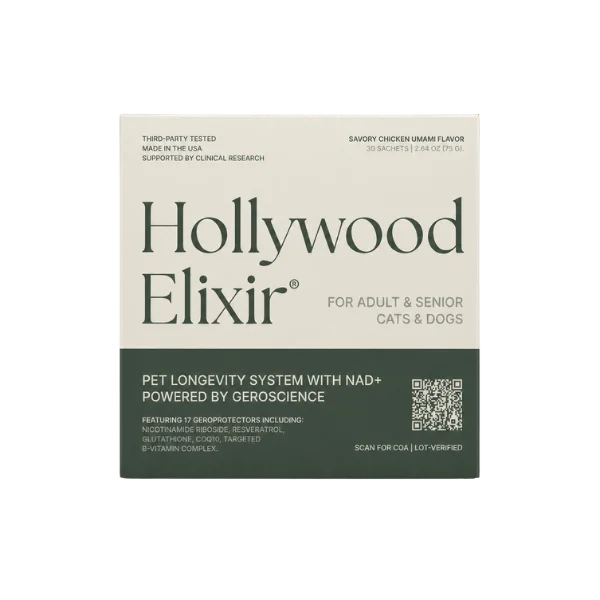
As part of a daily plan for seniors, Hollywood Elixir™ is designed to support normal cellular energy and healthy aging processes. A veterinarian can help decide whether it fits the cat’s overall health picture and medications.
How long does it take to see routine changes?
Environmental changes can show effects quickly: a cat may settle sooner and relocate less within a day when airflow and cool surfaces are added. Behavior that tracks temperature and humidity is often the fastest to shift.
For longer-term resilience goals—especially in older cats—changes are typically assessed over weeks using observation signals like play duration, recovery time, and sleep timing. Any sudden decline, regardless of timeline, warrants veterinary input.
Is Thermoregulation in Cats different from dogs?
Yes. Cats rely more on behavioral thermoregulation—microclimate selection, posture changes, and activity timing—than on sustained panting as a default cooling strategy. That makes the home environment and routine design especially important.
Owners should not assume a cat will “self-cool” the way many dogs do after exercise. In cats, open-mouth breathing is more likely to be a warning sign, and earlier environmental intervention is often the safer approach.
What should be discussed with a vet about heat sensitivity?
Bring specific observations: when the sleep shift started, whether it tracks with humidity, any panting or drooling episodes, resting respiratory rate trends, appetite and water changes, and what home cooling steps helped.
Ask whether screening for underlying disease is appropriate, especially in seniors. Also ask for clear thresholds for urgent care and for a home plan that keeps routines more consistent during warm spells.
Can Hollywood Elixir™ be used daily in summer months?
Daily use decisions should be individualized with a veterinarian, especially for cats with chronic disease or those taking medications. The primary summer safety tools remain cooling, hydration, and stress reduction.
If a veterinarian agrees it fits the plan, Hollywood Elixir™ is designed to support normal cellular energy and healthy aging processes as part of a routine. Track observation signals over weeks to judge whether daily routines feel smoother.
Are there side effects or interactions to consider?
Any supplement can cause individual sensitivity, including gastrointestinal upset, especially when introduced abruptly. Cats with complex medical histories should have supplement choices reviewed to avoid ingredient overlap with prescribed diets or medications.
For Hollywood Elixir™, a veterinarian can advise on fit for senior cats, cats with kidney or heart disease, and cats on long-term medications. Introduce any new product gradually and monitor appetite, stool, and behavior.
What quality signals matter when choosing a cat supplement?
Look for clear labeling, consistent manufacturing standards, and a company willing to share sourcing and quality controls. Avoid stacking multiple products with overlapping ingredients without veterinary review, since “more” can become less predictable.
A supplement should fit a broader plan: hydration, cool microclimates, and monitoring of observation signals. If the goal is aging support alongside seasonal heat sensitivity, discuss options with a veterinarian to keep the routine simpler and more consistent.
How should Hollywood Elixir™ be given to picky cats?
Picky cats do best with minimal disruption. Mix any new supplement into a small “test portion” of familiar wet food first, then offer the rest of the meal once acceptance is confirmed.
If a veterinarian recommends it, Hollywood Elixir™ can be introduced gradually to support normal cellular energy as part of a daily plan. Avoid mixing into an entire meal on day one, which can create food aversion if the cat refuses it.
What is a simple decision framework for hot-day management?
Start with environment: can the cat choose a cool, shaded, ventilated spot and settle? If yes, support with water access and schedule activity for cooler hours. If no, escalate cooling and reduce stimulation immediately.
Then check risk: senior age, flat face, long coat, or chronic disease lowers headroom. Finally, watch for red flags—open-mouth breathing, weakness, confusion—which shift the decision from home management to urgent veterinary care.
Discover LPL-01: How This Fits Into a Larger Feline Longevity System
Aging in cats unfolds quietly. It’s not driven by a single failure, but by gradual shifts across interconnected systems — cellular energy, oxidative balance, immune tone, and tissue integrity — each influencing the others over time.
This article explores one layer of that system. To understand what actually shapes long-term health, you need to step back and look at how these layers interact.
Start with the underlying science:
- Feline Geroscience Framework →
A structured view of how aging progresses across cellular energy, inflammation, and resilience systems. - Senior Biological Defense Coverage (BDC) Modeling →
A systems-level map of which biological pathways decline first, and how layered interventions can support them. - Feline Geroscience Evidence Framework →
A breakdown of what is strongly supported in the literature versus what is still emerging. - LPL-01 Standard →
The formulation system that translates these models into real-world supplementation—covering multiple pathways in a coordinated way.
Essential Summary
Why Is Thermoregulation in Cats Important?
Thermoregulation in Cats shapes sleep, appetite, hydration, and bounce-back after activity. When heat pushes a cat to spend more margin on cooling, daily routines can become less consistent and early distress can be missed. Understanding the mechanism helps owners act earlier with environment and monitoring.
For owners building a daily plan around aging and heat sensitivity, Hollywood Elixir can be part of a routine that supports normal cellular energy and whole-body coordination. It is designed to support resilience over time, which may help support smoother bounce-back during seasonal stressors when paired with environmental cooling and veterinary guidance.
Hollywood Elixir®
Starting at $89/mo
Hollywood Elixir is amazing! She put back on 5 lbs to a healthy weight, her eyes are shiny, her coat is beautiful!
— Jessie
She hopped up onto the windowsill again for the first time in years.
— Charlie
Considering Heat-Safety Routines?
If You’re Researching Cat Heat Handling, Here’s What Matters Most
A practical thermoregulation plan focuses on environment first: cool microclimates, airflow, and predictable rest. Nutrition and supplements can sit in the background as whole-body support, especially for seniors whose resilience is smaller in heat. Hollywood Elixir is designed to support normal cellular energy and healthy aging processes as part of a daily routine. Pair any supplement plan with tracking (sleep timing, play minutes, resting breathing) and a veterinarian’s input when heat sensitivity is new or worsening.
Learn about how our DVMs think about cat aging
Dr. JoAnna Pendergrass DVM
Hollywood Elixir®
Starting at $89/mo
Explore your cat’s changing needs over time
Related Reading
Thermoregulation in Cats often shows up first as a schedule change: longer daytime sleep, shorter play bursts, and a sudden preference for cooler surfaces. Those shifts are not “laziness”; they are the body protecting its temperature margin by reducing internal heat production and changing where heat is gained or lost.