Leap Years Vs Hollywood Elixir

Compare Senolytic Ideas and Transparent Labels for Brain, Joints, and Recovery

Essential Summary

Why is comparing longevity supplements for aging dogs important?

Senolytic ideas are promising, but for aging dogs the most useful comparison is whether a veterinarian can interpret the label and whether the household can run a clean, trackable trial. Choose the format your dog will take consistently, then record daily readouts for 6–8 weeks.

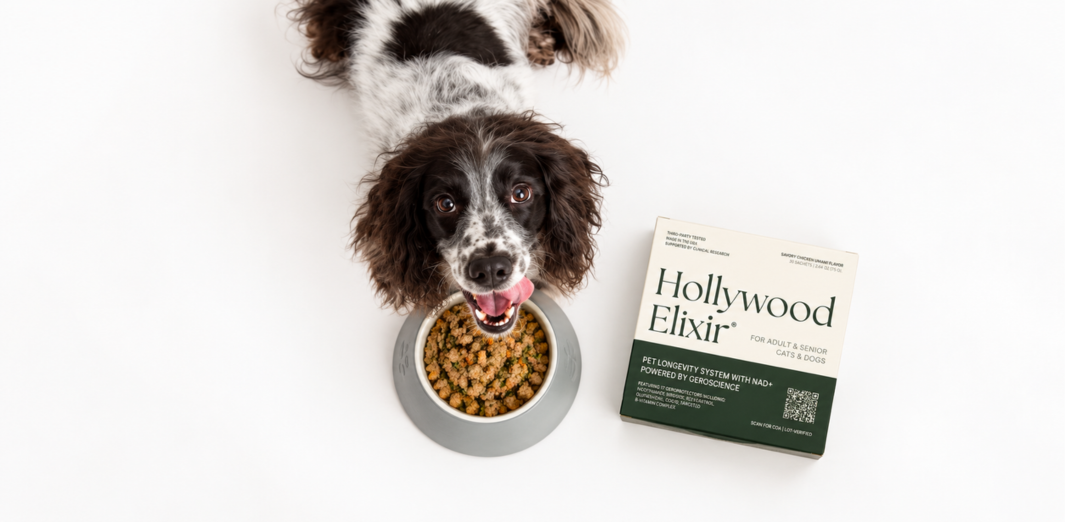
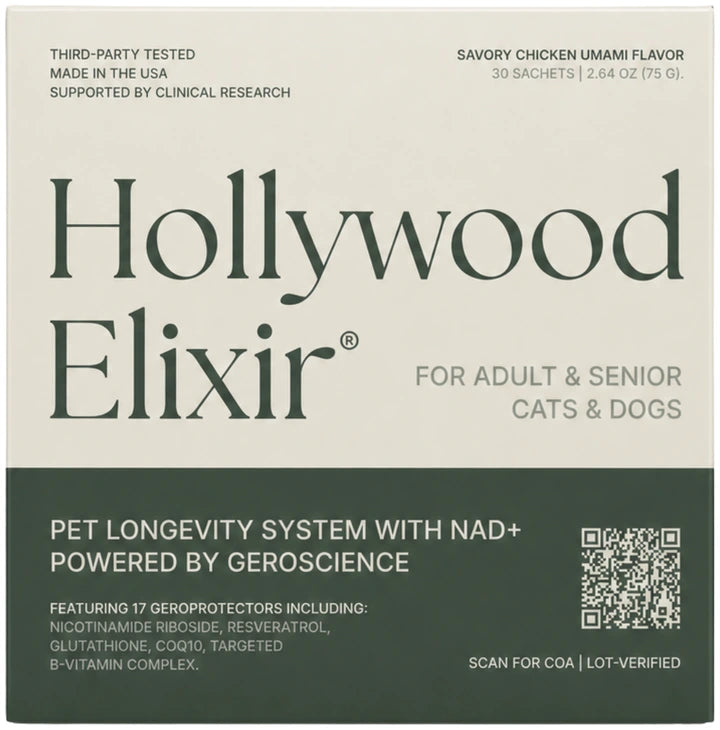
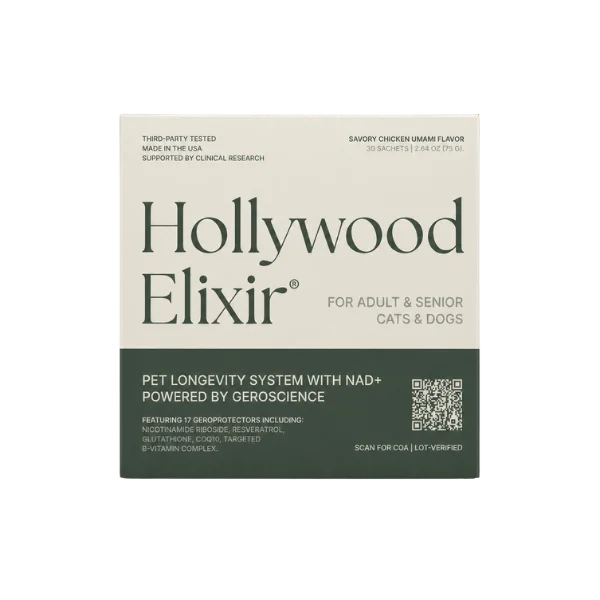
Hollywood Elixir™ is a disclosed-ingredient powder designed to support normal cellular aging pathways with third-party testing available.

When a dog starts aging, the hardest part is not finding options—it is choosing something that can be evaluated without guessing. Senolytic chews and NAD+ style “cellular” supplements can sound similar, but they create very different real-world problems: one is about an exciting mechanism, and the other is about whether a label is interpretable when a senior dog’s stomach or behavior changes.

Senolytics aim to target senescent (“zombie”) cells, which is a real concept in aging biology, but canine safety and long-term outcome data are still early. Meanwhile, multi-ingredient powders built around disclosed actives are often less glamorous, yet easier to run as a clean trial because the household can measure, pause, and restart. That difference matters when the goal is not a miracle, but a more sustained routine and clearer daily readouts.

This page compares Leap Years vs Hollywood Elixir as a decision problem: what can be verified, what can be tracked, and what a veterinarian can safely interpret. Expect a calm look at what senolytic science promises, where it hits limits in dogs, and how to set up a 60-day trial that produces usable information instead of hope and confusion.

By La Petite Labs Editorial, ~15 min read

Featured Product:

  • For Leap Years dog supplement review questions, the most practical answer is to compare label transparency and run a clean 6–8 week trial, not to chase the newest mechanism.
  • Senolytics target senescent (“zombie”) cells, a real aging concept, but dog-specific safety and long-term outcome data are still limited.
  • A randomized controlled senior-dog trial supports the plausibility of a senolytic + NAD+ precursor approach for owner-scored cognition, but it does not prove broad longevity outcomes.
  • Proprietary blends make it harder to interpret side effects, interactions, and whether a dose is meaningful for Leap Years aging dogs.
  • Disclosed-ingredient powders are easier for veterinarians to review and easier to pause/restart if appetite or stool changes.
  • Track daily readouts: stool quality, appetite, water intake, morning mobility, and engagement; keep diet and treats unchanged.
  • Avoid stacking multiple “longevity” products; one change at a time creates more uniform results and safer troubleshooting.

What Senolytic Science Promises—and What Dogs Still Haven’t Proven

Senolytics are designed to target senescent (“zombie”) cells—older cells that stop dividing but keep sending inflammatory signals. In theory, clearing some of these cells could create more room to recover after stress and support more sustained function as dogs age. The catch is that “senolytic” is a mechanism, not a guarantee, and the dog-specific evidence base is still small compared with the size of the claims owners see online. A randomized, controlled trial in senior dogs did report better owner-scored cognitive function using a senolytic plus an NAD+ precursor combination, which is encouraging but not the same as proving broad longevity outcomes (Simon, 2024).

At home, the question is usually simpler: is an older dog acting more engaged, sleeping more normally, and recovering from walks with less irregular “next-day” stiffness? Those are the kinds of daily readouts that matter more than a buzzword. For Leap Years aging dogs, owners do best when they treat any supplement as a trial with a start date, a clear baseline, and a plan to stop if appetite, stool, or energy shifts in the wrong direction.

Cellular energy graphic representing oxidative balance supported by Leap Years supplement longevity.

Decision Snapshot: Choose Based on Transparency, Not Hype

Decision snapshot (60 seconds): the decision axis is dose-per-ingredient transparency—how clearly a label tells a veterinarian what a dog is actually getting. If a product uses proprietary blends and does not disclose amounts, then it is harder to interpret side effects or interactions. If a dog has a sensitive stomach or pancreatitis history, then chew bases and higher-fat formats deserve extra caution and a slower trial start. If a household wants the most uniform day-to-day plan, then a simple format with disclosed actives is easier to keep consistent and to pause if needed.

Persona verdicts: skeptical owner—prioritize verifiable labels and trackable changes over novelty. Convenience-first owner—choose the format the dog will take every day, but still insist on a label photo and a stop-plan if stools change. Vet-guided owner—bring both labels and pick the option your veterinarian can interpret ingredient-by-ingredient. Micro-CTA: Compare labels in 3 minutes by photographing the front, back, and supplement facts panel.

DNA strand visualization representing cellular protection supported by Leap Years supplement longevity.

Verify-it-now Checklist: What You Can Confirm in Minutes

Verify-it-now comparison checklist (verifiable criteria only). Leap Years: dose disclosure—partial or blend-based; number of proprietary blends—often one or more; format base—chew; trial clarity—limited public detail; vet interpretability—harder without amounts. Hollywood Elixir: dose disclosure—disclosed actives; number of proprietary blends—none or clearly separated; format base—powder; trial clarity—supports a clean start/stop; vet interpretability—easier to review ingredient-by-ingredient.

This table is not about which idea is “better,” but which label can be checked quickly in a kitchen and then discussed in a clinic. A Leap Years dog supplement review often focuses on before-and-after stories, but the most useful first step is verifying what can be measured: exact amounts, format, and whether a veterinarian can make sense of it if vomiting, itch, or lethargy shows up. Micro-CTA: Run a clean 6-week trial by changing only one variable at a time.

Protein model representing bioactive synergy and support found in Leap Years aging dogs.

What Leap Years Gets Right About Senescent Cells

Leap Years gets a few important things right. First, it points owners toward a real concept in aging biology: senescent cells can contribute to chronic inflammation signals, and reducing that burden is a plausible strategy. Second, it frames aging as more than “arthritis only,” which matches what owners see—older dogs often show a cluster of slower mending speed, shorter play windows, and less latitude after excitement. Third, the chew format can improve adherence, which matters because inconsistent use makes any plan look “irregular” and confusing.

In a household, the strength of a chew is simple: it can become part of a routine without mixing, measuring, or negotiating. That convenience is real, especially for dogs that refuse powders. The tradeoff is that chews add extra ingredients (binders, flavors, sometimes higher fat) that can complicate troubleshooting when a senior dog suddenly has soft stool or skips breakfast.

Pug image representing loving care routines supported by Leap Years senolytic chews dogs.

Where Senolytics Hit Limits: Safety, Opacity, and Format

Where the senolytic approach can hit limits is not the concept—it is the practical uncertainty. Senolytic ingredients used in pet products are often borrowed from lab and human discussions, while dog-specific safety and long-term data remain limited. Some senolytic candidates overlap with compounds like quercetin or related polyphenols; toxicity screening in mice helps with plausibility but does not replace canine safety data or answer questions about chronic use in older dogs with liver or kidney changes (Cunningham, 2022). When a label uses proprietary blends, it can be impossible to verify whether the dose is meaningful or simply symbolic.

Owners also have to think about format concerns: chews can be richer, and some dogs do fine until they do not—especially when another treat, a new food, or a pain medication is added the same week. A common mistake is changing three things at once, then blaming “aging” when appetite drops. The safer approach is one change at a time, with a written stop-rule if vomiting, diarrhea, or new restlessness appears.

Hollywood Elixir™ is amazing and makes my 13 y/o young again!

— Jessie

We go on runs. Lately he's been keeping up with no problem!

— Cami

“Aging support works best when the label is interpretable and the trial is clean.”

What a Disclosed Multi-pathway Formula Offers Instead

Hollywood Elixir is built around a different logic: multiple pathways that support normal cellular upkeep, with disclosed actives that can be checked. NAD+ precursors are often discussed as one piece of cellular energy and repair biology; in humans, NMN/NR trials show mixed but measurable shifts in some muscle-related outcomes, which supports biological plausibility without proving “longevity” (Prokopidis, 2025). Antioxidant ingredients are also easier to reason about when amounts are listed, and dog absorption data exist for some compounds such as astaxanthin, including species-specific uptake patterns (Park, 2010).

Proof objects are what make this usable in real life: disclosed dosing, a powder format that can be split and adjusted, and third-party testing/COA availability that a cautious owner can request before committing. For Leap Years supplement longevity discussions, this is the practical pivot—less guessing, more uniform day-to-day inputs. A powder also makes it easier to pause for 72 hours if a dog has loose stool, then restart at a smaller amount under veterinary guidance.

Dog headshot symbolizing resilience and calm energy supported by Leap Years senolytic chews dogs.

Why Disclosed Dosages Matter More Than Mechanism Labels

Disclosed dosages matter because they turn a supplement from a story into something a veterinarian can evaluate. When a dog is older, the question is rarely “Is this ingredient interesting?” and more often “Is this amount reasonable for this dog’s size, diet, and medication list?” Proprietary blends block that conversation. They also make it harder to interpret side effects: if a dog becomes itchy, gassy, or unusually sleepy, the household cannot isolate which component might be responsible.

In the kitchen, transparency looks like this: the label can be read aloud over the phone to a clinic, and the clinic can say, “Stop ingredient X for a week,” instead of “Stop everything.” That reduces panic and helps keep the plan more sustained. It also makes it easier to compare two products honestly, including a Leap Years dog supplement review, without relying on influencer summaries.

Canine profile image reflecting strength and steadiness supported by Leap Years supplement longevity.

Who Should Consider Leap Years, Honestly

Who should consider Leap Years, in a trust-building way: dogs that reliably take chews when powders fail; households that can keep treats and table scraps tightly controlled; owners who can commit to a short, well-tracked trial and stop quickly if stools change; and dogs without a history of pancreatitis or frequent vomiting. The best fit is an owner who is comfortable with the experimental feel of senolytic chews dogs, and who accepts that the mechanism is promising but still early in canine longevity science.

In practice, this means setting guardrails before starting: no new treats for two weeks, no food switch, and no “extra chew because it’s cute.” If a dog is already on pain control, thyroid medication, or seizure medication, the plan should be vet-guided from day one. A chew can still be a reasonable choice, but only when the household can keep the rest of the routine less irregular.

Supplement breakdown graphic emphasizing no fillers approach within Leap Years aging dogs.

Who Should Consider a Disclosed Powder Approach

Who should consider Hollywood Elixir: older dogs with a “cluster” pattern—slower mending speed after activity, shorter play windows, and a little less engagement—when the household wants a plan that is easy to audit. It can also fit dogs that need a lower-confusion approach because they have multiple medications or a history of food reactions. The key is that the ingredient list is disclosed, so a veterinarian can interpret it alongside lab work and diet.

At home, a powder works best when it is treated like a measured part of breakfast, not a “topper buffet.” Mix into a small amount of wet food first, then add the rest of the meal so the dog finishes the dose. If the goal is Leap Years supplement longevity in a practical sense, the win is consistency: same time, same carrier food, and a written note of stool quality and appetite for the first two weeks.

Common Objections, Calm Answers, and the Next Step

Common objections—and the calm answer. “But senolytics are cutting-edge”: cutting-edge can be real, but it also means fewer canine safety answers; next step: take a clear label photo and ask the clinic to review it. “But it says clinically studied”: check whether the study matches the exact formula and dose; next step: request the study link and compare ingredients line-by-line. “But chews are easier”: ease matters, but so does troubleshooting; next step: do a 6-week trial with no other changes.

“But my dog seemed fine on it”: “fine” can miss slow changes like thirst or softer stool; next step: write down daily readouts for two weeks, then decide. “But it targets the root cause”: aging has multiple roots, and one pathway rarely explains everything; next step: talk to the vet about the dog’s biggest limitation (mobility, cognition, appetite) and choose one trackable goal. Micro-CTA: See full ingredient amounts before committing to a long run.

“Mechanisms are interesting; daily readouts are what guide safe decisions.”

Lab coat detail emphasizing vet-informed standards supporting Leap Years senolytic chews dogs.

Chew Vs Powder: the Daily Routine That Decides Success

Format story—chew vs powder in daily reality. Chew requirements: (1) extra base ingredients and flavors, (2) fixed dose per piece, (3) harder to split precisely, (4) can blur the line between “treat” and “supplement.” Powder simplicity: (1) measured scoop, (2) easier to taper up slowly, (3) easier to pause and restart, (4) fewer non-actives competing with sensitive stomach routines.

Micro-vignette: a 10–25 second routine looks like this—put a spoon of wet food in the bowl, stir in the powder, wait for the dog to take a few bites, then add kibble. For picky eaters, use a consistent carrier (plain canned food or a measured spoon of yogurt if tolerated) rather than rotating “surprises,” because rotating makes reactions harder to interpret. The best format is the one that stays more sustained without turning stools or appetite irregular.

Shop Now
Hollywood Elixir with foods symbolizing nutrient synergy aligned with Leap Years senolytic chews dogs.

From Worry to a Plan You Can Actually Track

The relief point in this comparison is not picking the “perfect” anti-aging idea—it is picking a plan that can be checked, adjusted, and stopped without drama. Owners often feel stuck between exciting mechanisms and fear of upsetting a senior dog’s stomach. A transparent label lowers that stress because it gives the household and veterinarian shared language for what is happening.

A simple next action: see the full label + dosing, then choose one product and one goal for 6–8 weeks. For sensitive dogs, start with a smaller amount and keep the carrier food identical every day. Soft CTA: See full label + dosing so the plan can be reviewed ingredient-by-ingredient.

Shop Now
Lifestyle shot of dog owner and Hollywood Elixir aligned with Leap Years dog supplement review.

Case Vignette: When Senolytic Chews Complicate the Picture

Case vignette (senolytic choice): A 12-year-old mixed breed starts senolytic chews after the owner reads about “zombie cell clearance.” Week two looks promising—slightly more interest in evening play—then week three brings softer stool and a skipped breakfast after a weekend with extra treats. The owner cannot tell whether the change came from the chew base, the active ingredients, or the holiday snacks, so the trial becomes confusing instead of informative.

The practical lesson is not that senolytics “failed,” but that the trial was not clean. A better setup would have been: no new treats, one consistent diet, and a written stop-rule for GI signs. For Leap Years senolytic chews dogs, the household needs a stricter routine than most owners expect, because the dog’s gut is often the first place “too much change” shows up.

Shop Now

Case Vignette: a Transparent Plan for a Senior Dog

Case vignette (multi-pathway support): A 13-year-old Labrador has slower mending speed after walks, mild nighttime pacing, and a narrower window before getting tired. The veterinarian rules out painful flare-ups and checks baseline labs, then the owner chooses a disclosed-ingredient powder to keep inputs uniform. Over six weeks, the owner tracks daily readouts and notices the dog’s “next-day” stiffness is less irregular, even though the dog still has old-joint limitations.

This kind of outcome is realistic: not a transformation, but a small shift in room to recover that shows up as better mornings and fewer “off” days. The key is that the owner can describe what changed in plain language and can show a calendar of notes to the clinic. That makes the plan easier to refine, whether the next step is diet adjustment, pain control, or stopping the supplement.

Owner Checklist: Five Questions Before Choosing a Product

Owner decision checklist (before choosing): (1) Can the label be read ingredient-by-ingredient with amounts? (2) Is the format likely to upset this dog’s stomach or trigger treat-seeking? (3) What is the single goal—mobility recovery, engagement, or sleep pattern—being tested first? (4) What is the stop-rule for vomiting, diarrhea, itch, or restlessness? (5) Can the household keep food, treats, and exercise consistent for six weeks?

Unique misconception to correct: “If it’s natural, it can’t cause problems.” Natural compounds can still cause reactions, interact with medications, or irritate a sensitive gut. Even beta-glucans, often viewed as gentle, have been linked to allergic reactions in a dog case report (Marchi, 2025). The safest mindset is to treat any new supplement like a new food: introduce slowly, watch closely, and keep notes.

Side-by-side chart contrasting bioactives and fillers relative to Leap Years senolytic chews dogs.

Vet Visit Prep: Labels, Labs, and the Right Questions

Vet visit prep: bring photos of the front label, supplement facts, and full ingredient list for any product being considered, plus the dog’s current medication list and diet brand. Ask: “Which ingredients worry you with my dog’s history?” “What lab values should be checked before and after a trial?” and “If stools change, what is the first thing to stop?” If the product uses proprietary blends, ask the clinic how that limits interpretation and whether a disclosed alternative would be safer.

Also bring concrete observations, not just “slowing down.” Examples: time to rise from bed, number of nighttime wake-ups, appetite consistency, and whether walks lead to next-day stiffness. Those details help the veterinarian separate normal aging from pain, thyroid changes, or cognitive shifts that deserve direct treatment. A good handoff turns supplement talk into a broader senior-dog plan.

Shop Now
Hollywood Elixir box in open packaging, showing premium presentation for Leap Years dog supplement review.

What Neither Option Can Do—and the Proof Checks That Matter

What neither supplement can do: neither can replace pain control for arthritis, treat cognitive dysfunction, or “reset” an older dog’s organs. Supplements also cannot compensate for an unbalanced diet, untreated dental disease, or a new heart murmur. Another misconception is that more antioxidants are always better; compounds like resveratrol have documented potential adverse effects in broader literature, especially when stacked or dosed aggressively (Shaito, 2020). The safest approach is one product at a time, with a clear reason for each ingredient.

Proof stack (verifiable checks owners can do): (1) full ingredient amounts disclosed, (2) no proprietary blend hiding totals, (3) lot number present, (4) COA or third-party testing available on request, (5) clear serving instructions, (6) simple format that can be paused, (7) a customer service channel that answers label questions. These checks do not prove results, but they do make the plan safer and more interpretable.

Shop Now

How to Run a Fair 60-Day Trial and Judge Results

How to run a fair 60-day trial: pick one product, keep diet and treats unchanged, and choose 3–5 daily readouts to record. What to track rubric: stool quality (1–5), appetite (finished/not), water intake changes, morning mobility (time to stand), and engagement (initiates play or not). Add one weekly marker: weight or body condition photos from the same angle. If anything becomes more irregular—vomiting, diarrhea, itch, or unusual sleepiness—pause and call the clinic.

What not to do: do not start during travel or holidays, do not stack two “longevity” products at once, do not add new treats to “help it work,” and do not ignore subtle GI changes for weeks. A fair trial is boring by design, and that is what makes the results believable. Final micro-CTA: Shop only after the label and trial plan are ready.

“If you can’t verify the dose, you can’t troubleshoot the reaction.”

Educational content only. This material is not a substitute for veterinary advice. Always consult your veterinarian about your dog’s specific needs. These statements have not been evaluated by the Food and Drug Administration. Products mentioned are not intended to diagnose, treat, cure, or prevent any disease.

Glossary

  • Senolytic - A compound intended to target and remove senescent (“zombie”) cells.
  • Senescent cell - An aged cell that no longer divides normally and can send inflammatory signals.
  • SASP (senescence-associated secretory phenotype) - The mix of signals senescent cells release that may affect nearby tissues.
  • NAD+ - A molecule cells use for energy handling and repair-related reactions.
  • NAD+ precursor - A nutrient (such as NR or NMN) the body can use to make NAD+.
  • Proprietary blend - A label grouping that lists ingredients but hides the amount of each one.
  • COA (certificate of analysis) - A document showing test results for a specific manufacturing lot.
  • Daily readouts - Simple at-home observations recorded consistently (stool, appetite, mobility, sleep).
  • Washout period - A short break between products to reduce confusion about what caused a change.

Related Reading

References

Prokopidis. The Effect of Nicotinamide Mononucleotide and Riboside on Skeletal Muscle Mass and Function: A Systematic Review and Meta-Analysis.. PubMed. 2025. https://PubMed.ncbi.nlm.nih.gov/40275690/

Simon. A randomized, controlled clinical trial demonstrates improved owner-assessed cognitive function in senior dogs receiving a senolytic and NAD+ precursor combination.. PubMed Central. 2024. https://pmc.ncbi.nlm.nih.gov/articles/PMC11137034/

Cunningham. Sub-chronic oral toxicity screening of quercetin in mice.. PubMed. 2022. https://PubMed.ncbi.nlm.nih.gov/36274141/

Park. Astaxanthin uptake in domestic dogs and cats.. PubMed Central. 2010. https://pmc.ncbi.nlm.nih.gov/articles/PMC2898833/

Shaito. Potential Adverse Effects of Resveratrol: A Literature Review. 2020. https://www.mdpi.com/1422-0067/21/6/2084

Marchi. Allergic Reaction to Beta-Glucans in an Obese Dog: A Case Report of Confirmed and Suspected Sources.. PubMed. 2025. https://PubMed.ncbi.nlm.nih.gov/40078087/

FAQ

What is the main difference between these two supplements?

The core difference is decision clarity. Leap Years emphasizes senolytic chews (aimed at senescent cell clearance), while the alternative approach emphasizes disclosed ingredients that support normal cellular upkeep across multiple pathways.

For most households, the practical divider is whether the label lists exact amounts and whether the format is easy to pause if stool or appetite changes. Take photos of both labels and ask the clinic which one is easier to interpret for your dog.

Are senolytic chews proven to extend dog lifespan?

No supplement can be said to extend lifespan in pet dogs based on current evidence. Senolytics are a plausible aging mechanism, but “plausible” is not the same as proven outcomes over years.

One randomized controlled trial in senior dogs reported improved owner-assessed cognitive scores using a senolytic plus an NAD+ precursor combination, which supports the idea that the pathway can matter in dogs(Simon, 2024). Ask your veterinarian what outcome you are actually trying to support—mobility recovery, sleep pattern, or engagement—then track it.

What does “senescent cell clearance” mean in plain language?

Senescent cells are older cells that no longer do their original job well, but they can keep sending “irritation” signals to nearby tissues. Senescent cell clearance is the idea of nudging the body to remove some of those cells.

Owners sometimes expect a quick, obvious change, but aging changes are usually subtle. If you try a senolytic-style product, write down daily readouts (stool, appetite, morning mobility) so the trial is interpretable.

What are NAD+ precursors and why are they discussed?

NAD+ is a molecule cells use for energy handling and repair tasks. “NAD+ precursors” are nutrients the body can use to make more NAD+, which is why they show up in longevity conversations.

Human trials of NMN/NR show mixed results depending on the outcome measured, which supports plausibility but not a guaranteed effect in dogs(Prokopidis, 2025). If your dog is older, focus on trackable goals like recovery after walks and sleep pattern, then review the plan with your veterinarian.

Is one option safer for sensitive stomachs?

Sensitive stomachs usually do better with fewer moving parts: fewer non-active ingredients, a dose that can be tapered up slowly, and a plan to pause quickly if stool changes. Chews can add extra bases and flavors that complicate troubleshooting.

Whatever you choose, start during a calm week (no travel, no food switch) and keep treats unchanged. If vomiting, diarrhea, or appetite drop appears, stop and call the clinic with the label photo as your reference.

Can these supplements interact with my dog’s medications?

They can. The risk is not always a dramatic reaction; it can be subtle changes in appetite, sleepiness, or stool that show up after a new supplement is added to an already complex routine.

Bring a full medication list (including flea/tick and joint products) and a photo of the supplement facts panel to your veterinarian. The next step is to ask which ingredients are the highest concern for your dog’s specific meds and health history.

How long should a fair trial last for aging support?

A fair trial is usually 6–8 weeks, because many changes owners care about—recovery after walks, sleep pattern, engagement—shift slowly. Short trials can be misleading, especially if the dog has good and bad days naturally.

Pick 3–5 daily readouts and keep diet and treats unchanged. The next step is to set a stop-rule in advance (vomiting, diarrhea, new itch, unusual sleepiness) so the trial stays safe.

What should owners track during a longevity supplement trial?

Track what you can see, not what you hope. Useful daily readouts include stool quality, appetite, water intake changes, morning mobility (time to stand), and engagement (initiates play or not).

Add one weekly marker like weight or a body-condition photo from the same angle. The next step is to bring those notes to your veterinarian so the conversation stays grounded in observable change.

Why do proprietary blends matter in a supplement comparison?

Proprietary blends hide the amount of each ingredient. That makes it hard to judge whether a dose is meaningful, and it makes side effects harder to interpret because the household cannot isolate what changed.

This is especially important for leap years aging dogs, who may already have less digestive flexibility. The next step is to ask the company for exact amounts or choose a product that lists them clearly for your veterinarian to review.

Do antioxidants always help older dogs feel better?

Not always. Antioxidants are part of normal cellular housekeeping, but more is not automatically safer or better—especially when multiple products are stacked.

Resveratrol is a good example of a “popular” compound with documented potential adverse effects in broader literature, particularly at higher or combined exposures(Shaito, 2020). The next step is to use one product at a time and review the full ingredient list with your veterinarian.

What side effects should prompt stopping the supplement?

Stop and call the clinic if vomiting, diarrhea, repeated gagging, refusal of meals, new itch/hives, or unusual sleepiness appears after starting. Senior dogs can dehydrate faster, so GI signs deserve quicker action than “wait and see.”

Have the label photo ready and note the start date and any other changes (new treats, new meds). The next step is to ask your veterinarian whether to restart at a smaller amount later or switch formats.

Can my dog be allergic to supplement ingredients?

Yes. Dogs can react to plant extracts, flavorings, and even ingredients that are often described as “gentle.” Reactions can look like itch, ear redness, paw chewing, hives, or sudden GI upset.

A case report describes an allergic reaction to beta-glucans in a dog, showing that unexpected ingredients can matter(Marchi, 2025). The next step is to stop the new product and bring the ingredient list to your veterinarian for a structured re-challenge plan, if appropriate.

Is this comparison relevant for puppies or young adult dogs?

Usually not. Most “longevity” positioning is aimed at middle-aged to senior dogs, where owners notice slower recovery, sleep pattern changes, or reduced engagement. In young dogs, those signs often point to training, diet balance, parasites, or orthopedic issues—not aging biology.

If a young dog seems low-energy or has irregular stools, the next step is a veterinary exam and basic screening rather than adding a longevity supplement. Bring a stool log and diet history to make the visit efficient.

Do large breeds need a different approach for aging support?

Large breeds often show aging patterns earlier—mobility changes, shorter play windows, and more obvious next-day stiffness. That does not automatically mean they need more supplements; it means they need clearer goals and closer monitoring.

The next step is to prioritize fundamentals first (weight management, joint pain plan, appropriate exercise) and then add one transparent supplement trial if the veterinarian agrees. Keep daily readouts so changes are not guessed.

Does chew versus powder format change results?

Format mainly changes consistency and troubleshooting. Chews can be easier to give, but they add base ingredients and a fixed dose per piece. Powders can be measured and tapered, which can help sensitive dogs.

The next step is to choose the format your dog will take every day without extra treats or bargaining. Then keep the carrier food the same so any stool or appetite changes are easier to interpret.

What does a “clean trial” mean for supplements?

A clean trial means only one meaningful change at a time. No new treats, no food switch, no new joint chew, and no new exercise program during the first few weeks. That keeps the results more uniform and believable.

It also means having a stop-rule in advance for vomiting, diarrhea, itch, or unusual sleepiness. The next step is to write your trial start date on a calendar and record daily readouts for at least 14 days.

Is there any dog research supporting senolytic combinations?

There is some supportive dog research, but it is still early. A randomized controlled trial in senior dogs reported improved owner-assessed cognitive function using a senolytic and NAD+ precursor combination(Simon, 2024).

That is helpful for plausibility, but it does not answer long-term safety for every dog or prove lifespan effects. The next step is to use the study as a discussion tool with your veterinarian and decide what outcome you are tracking at home.

How should owners switch from one product to another?

Switching is safest when it is separated by a short “washout” period, especially if the dog had any GI changes. Stopping one product and starting another the next day can blur cause-and-effect.

The next step is to pause for several days (or as your veterinarian advises), return to baseline diet and routine, then introduce the new product slowly. Keep the same daily readouts so the comparison is fair.

How does this relate to leap years supplement longevity claims?

Longevity claims are emotionally compelling, but they are hard to prove in pet dogs. The more useful approach is to translate “longevity” into trackable, near-term goals: more sustained recovery after walks, less irregular sleep, and stable appetite.

The next step is to choose one goal, run a clean 6–8 week trial, and bring your notes to the clinic. That turns a leap years dog supplement review question into a decision your veterinarian can actually support.

What quality signals should owners look for on the label?

Look for exact ingredient amounts, a clear serving size, and a full list of non-active ingredients (flavors, binders, sweeteners). A lot number and an easy way to request a COA or third-party testing results are also meaningful.

Avoid labels that rely on proprietary blends when you are trying to compare products or troubleshoot side effects. The next step is to take a label photo and ask your veterinarian which parts are interpretable and which are not.

Where does Hollywood Elixir™ fit in this decision?

It fits when the household wants a disclosed-ingredient powder that supports normal cellular aging pathways and is easier for a veterinarian to review ingredient-by-ingredient. Proof objects to look for include disclosed dosing and third-party testing/COA availability.

The next step is to review the label at Hollywood Elixir™ and bring it to your veterinarian along with your dog’s medication list so the plan can be personalized.

When should a vet be called during a supplement trial?

Call promptly for repeated vomiting, diarrhea lasting more than a day, refusal of multiple meals, hives/facial swelling, collapse, or any sudden behavior change. Older dogs can lose hydration and appetite quickly, so waiting a week can make recovery harder.

The next step is to stop the supplement, keep water available, and send the clinic the label photo and your daily readouts (stool, appetite, energy). That helps the veterinarian decide whether this is a supplement reaction or something unrelated.

5K+ Happy Pet Parents

Excellent 4.8

Leap Years Vs Hollywood Elixir | Why Thousands of Pup Parents Trust Hollywood Elixir™

"He seems more happy overall. I've also noticed he has more energy which makes our walks and playtime so much more fun."

Olga & Jordan

"He's got way more energy now! We go on runs pretty often; he use to get tired halfway through, but lately, he's been keeping up without any problem."

Cami & Clifford

"I want her to live forever. She hasn't had an ear infection since!"

Madison & Azula

"It helps with her calmness, her immune system. I really like the clean ingredients. Highly recommend La Petite Labs!"

Maple & Cassidy

"He seems more happy overall. I've also noticed he has more energy which makes our walks and playtime so much more fun."

Olga & Jordan

"He's got way more energy now! We go on runs pretty often; he use to get tired halfway through, but lately, he's been keeping up without any problem."

Cami & Clifford

"I want her to live forever. She hasn't had an ear infection since!"

Madison & Azula

"It helps with her calmness, her immune system. I really like the clean ingredients. Highly recommend La Petite Labs!"

Maple & Cassidy

"He seems more happy overall. I've also noticed he has more energy which makes our walks and playtime so much more fun."

Olga & Jordan

"He's got way more energy now! We go on runs pretty often; he use to get tired halfway through, but lately, he's been keeping up without any problem."

Cami & Clifford

"I want her to live forever. She hasn't had an ear infection since!"

Madison & Azula

"It helps with her calmness, her immune system. I really like the clean ingredients. Highly recommend La Petite Labs!"

Maple & Cassidy

"He seems more happy overall. I've also noticed he has more energy which makes our walks and playtime so much more fun."

Olga & Jordan

"He's got way more energy now! We go on runs pretty often; he use to get tired halfway through, but lately, he's been keeping up without any problem."

Cami & Clifford

"I want her to live forever. She hasn't had an ear infection since!"

Madison & Azula

"It helps with her calmness, her immune system. I really like the clean ingredients. Highly recommend La Petite Labs!"

Maple & Cassidy

SHOP NOW