Polyphenols for Dogs

Learn How Polyphenols Temper Oxidative Stress to Slow Age-Related Decline

Essential Summary

Why are polyphenols for dogs important?

Polyphenols are plant compounds that can support antioxidant balance and overall resilience in dogs. Their effects depend on source, processing, and dose, so consistency and tolerance matter more than chasing potency. A smart plan treats polyphenols as part of a broader longevity routine—diet, movement, and system-level support—rather than a single-ingredient solution.

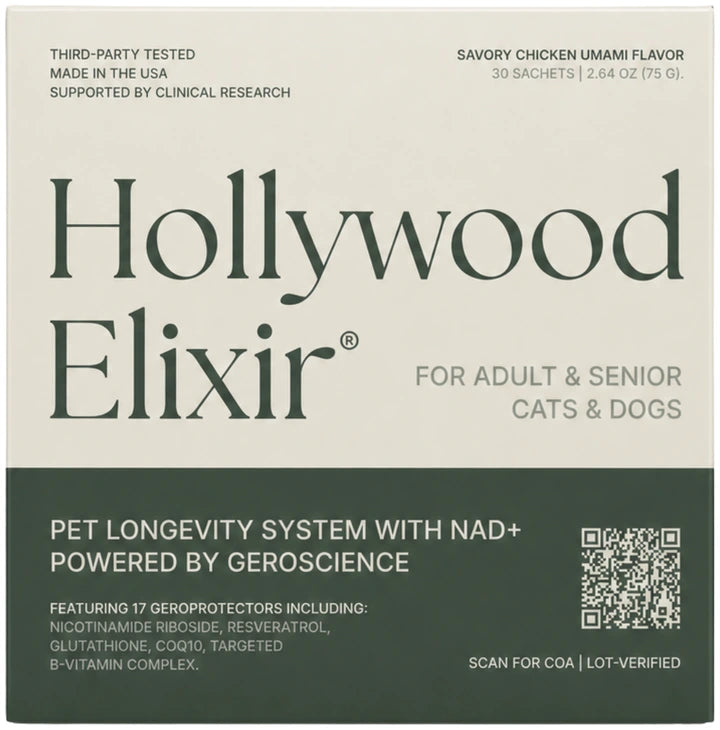
Hollywood Elixir™ is designed for system-level aging support—helping the body manage everyday oxidative wear and recovery demands—so polyphenol-rich ingredients can work as part of a wider metabolic network, not as a one-off “antioxidant add-on.”

The appeal of polyphenols for dogs is easy to understand: they’re natural, they’re associated with vibrant plant foods, and they sit at the intersection of modern longevity talk and old-fashioned common sense. But polyphenols aren’t a single ingredient you can “add” and be done. They’re a wide family of compounds, each with its own behavior in the body—how well it’s absorbed, how it’s transformed, and how it plays with the rest of the diet. That complexity is exactly why the topic deserves a calmer, more precise conversation.

For most owners, the real intent isn’t novelty; it’s time. You want your dog to stay bright-eyed, comfortable, and capable across the years. Polyphenols benefits for dogs are best framed as supportive: helping the body manage oxidative wear and supporting normal immune function, rather than acting like a targeted treatment. Research is still ongoing in canine nutrition, and the most honest approach respects what we know, what we suspect, and what we don’t yet have clean answers for.

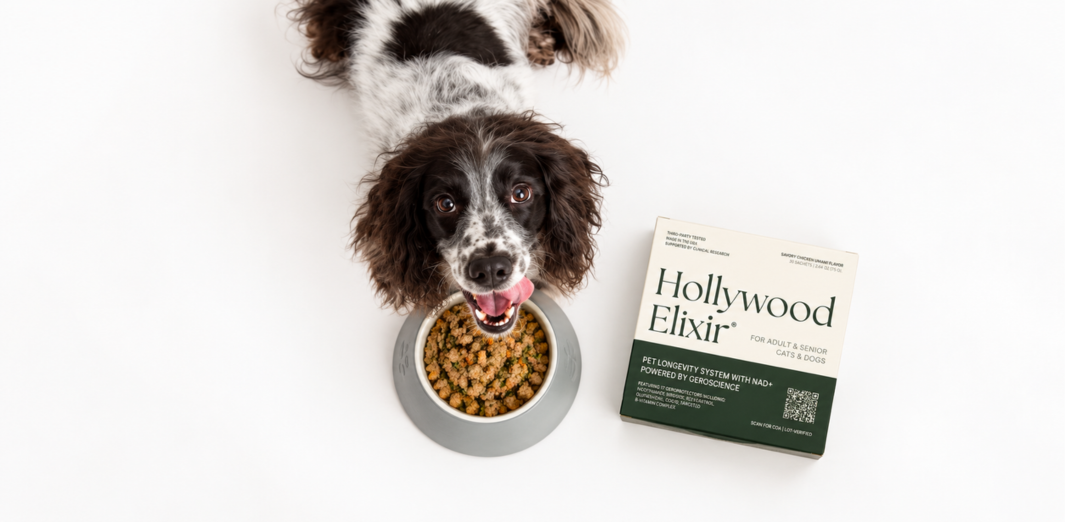
So why would a science-minded owner still choose a product, rather than just “feed well”? Because even good diets vary, and because longevity is a system problem, not a single-nutrient problem. A well-designed daily formula can reduce variability, prioritize safety, and support the broader metabolic network that underwrites aging—without forcing you to chase the “best polyphenols for dogs” headline of the week. That’s the role of Hollywood Elixir™: system-level support that makes polyphenols one part of a coherent, repeatable routine.

By La Petite Labs Editorial, ~15 min read

Featured Product:

  • Polyphenols are a large family of plant compounds; outcomes depend on which ones you choose.
  • In dogs, they’re most often used for antioxidant support and long-horizon resilience.
  • Bioavailability varies by source and processing, so labels alone don’t tell the full story.
  • Some extracts (notably concentrated green tea) require extra caution around safety and dosing.
  • Diet provides polyphenols, but food formulas vary; supplementation can reduce day-to-day variability.
  • The best choices are consistent, tolerable, and designed to fit a dog’s life stage and routine.
  • A system-level product can stay relevant by supporting aging biology broadly, beyond any single polyphenol.

Polyphenols in Canine Wellness, with a Clearer Sense of Purpose

Polyphenols are a broad family of plant compounds that show up in colorful foods—berries, herbs, cocoa, and many fruits and vegetables. In dogs, they’re often discussed for their antioxidant “buffering” role: helping the body manage everyday oxidative wear that accumulates with exercise, stress, and age (Tanprasertsuk J, 2022). That said, polyphenols aren’t one ingredient with one predictable effect; they’re a category with different absorption rates, different metabolites, and different tolerances depending on the source and processing (Tanprasertsuk J, 2022).

For a careful owner, the practical question is less “Do polyphenols exist?” and more “Which ones, in what form, and for what purpose?” Some polyphenols are simply part of a normal diet; others are concentrated into a polyphenols supplement for dogs, where quality control and dose discipline matter. Research in canine nutrition is still evolving, so the most responsible approach is to treat polyphenols as supportive—useful for resilience and healthy aging—rather than as a stand-alone fix (Mansilla WD, 2019).

Mitochondria artwork highlighting longevity science connected to best polyphenols supplement for dogs.

Polyphenols Benefits for Dogs: Antioxidant Support Without Overpromising

When people talk about polyphenols benefits for dogs, they’re usually pointing to antioxidant support and immune resilience. In broad terms, polyphenols may help neutralize reactive compounds produced during normal metabolism and environmental exposure, which can support overall health and immune function. This is not the same as “boosting” immunity; it’s more like helping the body keep its balance when life is busy—travel, weather changes, training seasons, or the slow shift into the senior years.

Because polyphenols are diverse, benefits can be uneven across different sources. Some are better studied than others, and many questions remain about which combinations are most useful for dogs and at what concentrations. A good rule of thumb: prioritize gentle, well-characterized ingredients and a formulation that respects canine sensitivity, rather than chasing the most exotic plant on the label.

Close-up DNA helix tied to cellular integrity and support from polyphenols supplements for dogs.

Absorption and Bioavailability: Why Source and Processing Change Outcomes

It’s tempting to treat polyphenols as a single “antioxidant score,” but the body doesn’t work like a leaderboard. Different polyphenols are absorbed differently, transformed by gut microbes, and distributed to tissues in different ways. In dogs, bioavailability can vary based on the source and processing of plant ingredients, which is one reason results can feel inconsistent from one product to another.

This variability is also why food-based polyphenols and concentrated extracts can behave differently. A blueberry powder in a treat is not the same as a standardized extract in a capsule. If you’re choosing polyphenols supplements for dogs, look for a formulation philosophy that favors steady, tolerable exposure over time—because that’s how antioxidant support is most likely to matter in a real dog’s life.

Protein model representing bioactive synergy and support found in polyphenols for dogs.

Polyphenols in Dog Food: Present, but Not Always Predictable

Polyphenols already appear in many commercial foods, but the amount and type can be hard to predict. Studies note that polyphenols are present in various dog diets and may contribute to antioxidant activity, while overall nutrient composition varies significantly between brands and formulations (German K, 2025). That means two “similar” kibbles can deliver very different plant-compound profiles.

For owners trying to make a consistent plan, this is one rationale for a polyphenols supplement for dogs: it can provide steadier exposure than relying on whatever plant ingredients happen to be in a given bag of food. The goal isn’t to outsmart the diet; it’s to reduce variability and support the broader network that helps dogs stay comfortable and capable as they age.

Pug looking up, symbolizing trust and attentive care supported by polyphenols benefits for dogs.

Senior Dogs and Daily Resilience: Where Subtle Support Matters Most
Senior dogs are often where the conversation becomes more personal. Aging changes appetite, digestion, activity, and recovery. Senior dog diets often contain different nutrient profiles compared to adult diets, which can shift the background “canvas” that supplements are painted onto. In that context, polyphenols for dogs are usually considered for general resilience—supporting the body’s ability to handle everyday oxidative stress rather than targeting a single symptom.

If your dog is older, start with conservative amounts and prioritize tolerance. The best polyphenols supplement for dogs is the one your dog can take consistently without digestive drama. Think of it as a long-term companion to good nutrition, movement, and veterinary care—not a replacement for any of them.

Hollywood Elixir™ is amazing and makes my 13 y/o young again!

— Jessie

We go on runs. Lately he's been keeping up with no problem!

— Cami

“Polyphenols aren’t a single promise; they’re a category where source, dose, and tolerance decide the story.”

Tea Polyphenols: Promising Findings Paired with Needed Caution

Tea-derived polyphenols are a useful case study in both promise and caution. In research involving dogs fed a high-fat diet, tea polyphenols reduced liver inflammation and were linked to down-regulation of inflammatory markers such as COX-2 and iNOS (Rahman SU, 2020). That kind of finding helps explain why polyphenols are often framed as “cellular housekeeping” support.

But tea extracts also illustrate why concentration matters. Green tea polyphenols can be toxic to dogs, and absorption and metabolism can vary depending on whether dogs are fasted or non-fasted. In practice, this means owners should avoid DIY dosing with human products and choose canine-appropriate formulations that respect safety margins.

Dog portrait symbolizing confidence and healthy aging support from polyphenols dosage for dogs.

Best Polyphenols Supplements for Dogs: Quality Signals That Actually Matter

If you’re evaluating polyphenols supplements for dogs, it helps to separate “plant-rich” from “plant-concentrated.” Plant-rich formulas tend to be gentler and may be easier on sensitive stomachs. Plant-concentrated formulas can be more targeted, but they raise the stakes on sourcing and dosing—especially for ingredients with known toxicity concerns at higher exposures.

A practical quality signal is specificity: named extracts, clear amounts, and a reason for each inclusion. Another is restraint. The best polyphenols supplements for dogs rarely look like a maximalist label; they look like a deliberate one. And they should fit into a system-level plan that supports aging biology broadly, not just “adding antioxidants” as a checkbox.

Canine profile image reflecting strength and steadiness supported by polyphenols for dogs.

If Diet Is Complete, Why Consider Added System-level Support?

Owners sometimes ask whether polyphenols for dogs are “necessary” if a dog eats a complete and balanced diet. Many dogs do get meaningful plant compounds through food, and polyphenols are present in various diets. Still, diet alone doesn’t always address the owner’s real goal: supporting the whole aging system—energy, recovery, and resilience—especially when life stage, stress, and environment change.

This is where a thoughtfully formulated daily product can remain relevant even for careful feeders. A good supplement isn’t trying to replace food; it’s trying to support the metabolic network that food fuels. In other words, it’s less about “more polyphenols” and more about helping the body use its resources well over time.

Supplement breakdown graphic emphasizing no fillers approach within polyphenols supplement for dogs.

Polyphenols Dosage for Dogs: Practical Guardrails and Vet-led Decisions

The phrase “polyphenols dosage for dogs” can sound precise, but real-world dosing is usually about ranges and response. Because research is ongoing and the role of polyphenols in canine health is not fully understood, dosing should be conservative and label-led, with veterinary input for dogs with medical conditions. Avoid combining multiple products that each contain concentrated botanicals, since the total exposure can add up quickly.

If you’re introducing a new polyphenols supplement for dogs, start low, give with food, and watch stool quality and appetite for the first week. If your dog is fasted for any reason, be extra cautious with tea-derived extracts because feeding status influences absorption and toxicity risk.

Choosing What Fits Your Dog, Not a Trend Cycle

Owners often ask about “best polyphenols for dogs,” but the better question is “best for this dog, right now.” A young, active dog may do well with gentle, food-like sources; a senior dog may benefit from broader antioxidant coverage because aging diets and nutrient profiles can differ from adult formulations (German K, 2025). If your dog is on a therapeutic diet, has liver concerns, or takes multiple supplements, the decision becomes more about compatibility than chasing a trend.

It’s also worth remembering that polyphenols can interact with other dietary compounds, changing how nutrients are absorbed or utilized (Tanprasertsuk J, 2022). That doesn’t make them “bad”—it makes them powerful. The most dependable results tend to come from consistent, moderate use, paired with a stable diet and a clear goal (comfort, vitality, coat quality, or graceful aging), rather than rotating through the newest polyphenols supplements for dogs every month.

“The best results tend to look quiet: steadier recovery, fewer rough days, a dog who stays themselves.”

Clinical branding image reflecting trust and validation behind polyphenols dosage for dogs.

What to Look for in a High-quality Polyphenols Formula

If you’re comparing a polyphenols supplement for dogs, look for transparency: named plant sources, standardized extracts when appropriate, and clear guidance for different sizes. “Proprietary blend” isn’t automatically wrong, but it can make it harder to evaluate safety—especially when certain concentrated sources (like green tea extracts) have a narrower margin for error in dogs (Kapetanovic IM, 2009).

Also consider the form. Whole-food powders may be gentler but less consistent; extracts can be more predictable but more potent. Because bioavailability varies by source and processing, two products with the same label claim can behave differently in the body. For many households, the “best polyphenols supplement for dogs” is the one that is well-tolerated, easy to give daily, and designed as part of a broader longevity strategy rather than a single-ingredient bet.

Shop Now
Ingredients around product reflecting antioxidant support within best polyphenols supplement for dogs.

Polyphenols Dosage for Dogs: Why Conservative, Label-led Matters

Polyphenols dosage for dogs is where responsible language matters. Because polyphenols are a large category and dogs vary widely in size, diet, and sensitivity, there isn’t one universal target that fits every dog (Mansilla WD, 2019). The safest approach is to follow the product’s label directions, avoid stacking multiple concentrated polyphenol products, and ask your veterinarian for guidance if your dog is pregnant, has chronic disease, or takes prescription medications.

Be especially cautious with highly concentrated green tea polyphenols: studies in dogs show toxicity concerns that depend on dose and whether the dog is fasted or fed (Kapetanovic IM, 2009). Practically, that means you should not improvise with human extracts, and you should treat “more” as a risk factor, not a shortcut. A thoughtful polyphenols supplements for dogs plan is consistent, measured, and built around tolerance.

Shop Now
Pet owner presenting supplement, highlighting home wellness supported by polyphenols supplement for dogs.

Side Effects and Tolerance: Reading Your Dog’s Signals Early

Side effects from polyphenols for dogs are usually about the dose, the source, or the dog’s individual sensitivity. The most common issues owners notice are digestive: softer stool, gas, or a temporary change in appetite. These are often signals to reduce the amount, switch formats, or give with food—especially since feeding status can influence absorption and tolerance for certain extracts (Kapetanovic IM, 2009).

Less commonly, a dog may react to a specific plant ingredient (for example, a fruit powder) the way they would to any new food. If you see vomiting, marked lethargy, or persistent diarrhea, stop the product and contact your veterinarian. The goal with polyphenols benefits for dogs is quiet support over time, not a dramatic “kick” that comes with tradeoffs.

Shop Now

Interactions and Stacking: When More Ingredients Create Less Clarity

Interactions are the under-discussed part of the polyphenols conversation. Polyphenols can bind or influence other compounds in the diet, potentially changing how nutrients and botanicals behave together. That’s one reason “kitchen sink” supplement stacks can backfire—especially when multiple products contain overlapping plant extracts.

If your dog takes medications, has a history of pancreatitis, or is on a veterinary diet, treat any new polyphenols supplement for dogs as a change worth mentioning to your vet. The aim is compatibility: a supplement should fit into a stable routine without forcing constant adjustments. When in doubt, choose fewer, better-formulated products rather than many single-ingredient add-ons.

Notable Polyphenols: Resveratrol, Tea Compounds, and Realistic Expectations

Some of the most interesting polyphenols are the ones you’ve heard about in human wellness—like resveratrol. In the scientific literature, resveratrol is discussed for potential cancer-preventive properties, though translating that into practical canine outcomes is not straightforward (Johnson WD, 2011). In real life, it’s best viewed as one member of a larger antioxidant “cast,” not the star of a one-ingredient show.

Another example is tea-derived polyphenols. In dogs fed a high-fat diet, tea polyphenols have been associated with reduced liver inflammation and changes in inflammatory gene expression (Rahman SU, 2020). That’s promising, but it also underscores why source and concentration matter: tea extracts can be helpful in the right context and risky when overly concentrated or used casually.

Visual breakdown contrasting competitors and quality standards in polyphenols supplement for dogs.

Diet Versus Supplements: Consistency, Variability, and the Daily Baseline

Food comes first, but it isn’t always enough for the outcome owners want. Polyphenols are present in many dog diets and may contribute to antioxidant activity, yet nutrient composition varies widely between brands and formulations (German K, 2025). Even a “good” food can be inconsistent in polyphenol content because plant ingredients change with season, sourcing, and processing.

This is where a well-designed polyphenols supplements for dogs approach can make sense: not as a replacement for diet, but as a way to smooth out variability and support the broader aging system—energy, recovery, and cellular housekeeping—over time. The most credible products don’t promise miracles; they aim for steady, cumulative support that fits a dog’s life.

Shop Now
Open box with Hollywood Elixir inside, reinforcing polyphenols supplements for dogs premium cues.

Timeline and Tracking: What Changes Tend to Look Like

A reasonable timeline for noticing changes is measured in weeks, not days. Antioxidant support tends to show up subtly: steadier energy, easier recovery after activity, or a coat that looks a little more polished. Because research is ongoing and the role of polyphenols in canine health is not fully understood, it’s wise to track simple markers you can observe at home rather than expecting a single dramatic sign (Mansilla WD, 2019).

If you want to evaluate whether you’ve found the best polyphenols for dogs in your routine, keep the rest of the variables stable for a month: same food, same treat load, same exercise rhythm. Consistency is what lets you see whether the addition is genuinely supportive or just lost in the noise of daily life.

Shop Now

A Longevity Frame: Polyphenols as Part of a Wider System

The most science-minded reason to consider polyphenols for dogs is not that they’re rare—it’s that they’re context-dependent. Their benefits depend on source, dose, processing, and the dog’s individual biology, including how well those compounds are absorbed and metabolized. That’s why “best polyphenols supplements for dogs” usually means a formula designed for consistency and tolerance, not maximum potency.

If you’re building a longevity routine, think in systems: oxidative balance, recovery capacity, and the quiet metabolic work that keeps a dog feeling like themselves across the years. Polyphenols can be one part of that picture—especially when they’re integrated into a broader, thoughtfully formulated daily supplement rather than treated as a single-ingredient solution.

“Quality is often restraint: clear sourcing, conservative dosing, and a formula built for daily life.”

Educational content only. This material is not a substitute for veterinary advice. Always consult your veterinarian about your dog’s specific needs. These statements have not been evaluated by the Food and Drug Administration. Products mentioned are not intended to diagnose, treat, cure, or prevent any disease.

Glossary

  • Polyphenols: A large group of plant compounds often discussed for antioxidant and resilience support in dogs.
  • Antioxidant Activity: The ability of compounds to help neutralize reactive molecules associated with oxidative wear.
  • Oxidative Stress: An imbalance between reactive molecules and the body’s ability to manage them over time.
  • Bioavailability: How much of a compound is absorbed and becomes available for the body to use.
  • Extract: A concentrated form of a plant ingredient, often more potent than a whole-food powder.
  • Standardized Extract: An extract adjusted to contain a consistent amount of a target compound.
  • Resveratrol: A polyphenol found in certain plants; commonly discussed in longevity research contexts.
  • Catechins: A class of tea-derived polyphenols; concentrated forms require careful canine safety consideration.
  • Feeding Status: Whether a dog is fasted or fed, which can influence absorption and tolerance of some extracts.

Related Reading

References

Mansilla WD. Adult dogs of different breed sizes have similar threonine requirements as determined by the indicator amino acid oxidation technique.. PubMed Central. 2020. https://pmc.ncbi.nlm.nih.gov/articles/PMC7085255/

Tanprasertsuk J. Roles of plant-based ingredients and phytonutrients in canine nutrition and health.. PubMed Central. 2022. https://pmc.ncbi.nlm.nih.gov/articles/PMC9291198/

Mansilla WD. Special topic: The association between pulse ingredients and canine dilated cardiomyopathy: addressing the knowledge gaps before establishing causation.. PubMed Central. 2019. https://pmc.ncbi.nlm.nih.gov/articles/PMC6396252/

German K. Exploratory analysis of nutrient composition of adult and senior dog diets.. PubMed Central. 2025. https://pmc.ncbi.nlm.nih.gov/articles/PMC12757753/

Rahman SU. Tea polyphenols attenuate liver inflammation by modulating obesity-related genes and down-regulating COX-2 and iNOS expression in high fat-fed dogs.. PubMed. 2020. https://pubmed.ncbi.nlm.nih.gov/32641048/

Kapetanovic IM. Exposure and toxicity of green tea polyphenols in fasted and non-fasted dogs.. PubMed. 2009. https://pubmed.ncbi.nlm.nih.gov/19464566/

Johnson WD. Subchronic oral toxicity and cardiovascular safety pharmacology studies of resveratrol, a naturally occurring polyphenol with cancer preventive activity.. PubMed. 2011. https://pubmed.ncbi.nlm.nih.gov/21939727/

Martineau AS. A mixed grape and blueberry extract is safe for dogs to consume.. PubMed. 2016. https://pubmed.ncbi.nlm.nih.gov/27487916/

National Toxicology Program. Introduction. 2016. https://www.ncbi.nlm.nih.gov/books/NBK561004

Cladis DP. (Poly)phenol toxicity in vivo following oral administration: A targeted narrative review of (poly)phenols from green tea, grape, and anthocyanin-rich extracts.. PubMed. 2022. https://pubmed.ncbi.nlm.nih.gov/34725890/

Cladis DP. A 90 day oral toxicity study of blueberry polyphenols in ovariectomized sprague-dawley rats.. PubMed. 2020. https://pubmed.ncbi.nlm.nih.gov/32165232/

Muršec A. Antioxidant Strategies for Age-Related Oxidative Damage in Dogs.. PubMed Central. 2025. https://pmc.ncbi.nlm.nih.gov/articles/PMC12567870/

Jewell DE. Feeding Fiber-Bound Polyphenol Ingredients at Different Levels Modulates Colonic Postbiotics to Improve Gut Health in Dogs.. PubMed Central. 2022. https://pmc.ncbi.nlm.nih.gov/articles/PMC8909809/

Baritugo. Perspectives on functional foods for improvement of canine health and treatment of diseases. 2023. https://www.sciencedirect.com/science/article/pii/S1756464623003444

Guldenpfennig. Evaluation of a Natural Olive Extract as a Flavor Component in Dry and Wet Dog Foods. 2025. https://www.mdpi.com/2813-9372/2/1/14

FAQ

What are polyphenols, and why do they matter for dogs?

Polyphenols are naturally occurring plant compounds found in many fruits, vegetables, herbs, and teas. In dogs, they’re mainly discussed for antioxidant support—helping the body handle everyday oxidative wear that accumulates with age and activity.

They’re not a single nutrient with one predictable effect, so the goal is steady, tolerable support rather than dramatic changes. For system-level longevity support that fits into daily life, considerHollywood Elixir™

Do polyphenols for dogs work the same as in humans?

Not exactly. Dogs absorb and metabolize plant compounds differently, and even within dogs, bioavailability can vary by source and processing. That’s why a trendy human extract isn’t automatically a good canine choice.

A dog-focused formula should prioritize safety, consistency, and tolerance over maximal potency. If you want a broader aging-support approach that doesn’t rely on one ingredient behaving perfectly, look toHollywood Elixir™

What are the most realistic polyphenols benefits for dogs?

The most realistic benefits are subtle and cumulative: support for antioxidant balance and overall resilience, which can matter more as dogs age. Some owners also notice secondary changes like steadier energy or a more polished coat over time.

Because research is still developing, it’s best to treat polyphenols as supportive rather than as a stand-alone solution. For a daily routine built around whole-body aging support, considerHollywood Elixir™

Are polyphenols safe for dogs to take every day?

Many dogs tolerate food-like polyphenol sources well, but safety depends on the specific compound, the concentration, and the dog’s health status. Daily use is typically about choosing moderate, well-formulated products and avoiding excessive stacking.

Extra caution is warranted with highly concentrated tea extracts, where canine toxicity concerns have been reported. For a balanced, system-level daily option, considerHollywood Elixir™

What is a sensible polyphenols dosage for dogs?

There isn’t a single universal polyphenols dosage for dogs because “polyphenols” covers many different compounds with different potencies and absorption patterns. The safest approach is to follow the product label and use your veterinarian as the tie-breaker for dogs with medical conditions.

Avoid combining multiple concentrated botanical products, since total exposure can add up quickly. For a longevity-focused daily routine that’s designed as a system, considerHollywood Elixir™

Can polyphenols supplements for dogs cause side effects?

Yes. The most common side effects are digestive—soft stool, gas, or appetite changes—often tied to dose or a specific plant ingredient. Some extracts are also more sensitive to whether they’re given with food.

If symptoms are persistent or severe, stop the supplement and contact your veterinarian. For a gentler, system-level approach that’s designed for daily use, considerHollywood Elixir™

Which dogs should avoid a polyphenols supplement for dogs?

Dogs with complex medical histories, those on multiple medications, and dogs that are pregnant or nursing should only use concentrated botanicals with veterinary guidance. Polyphenols can interact with other dietary compounds, which can matter more in medically managed dogs.

If your dog has had sensitivity to plant-based supplements before, start conservatively and monitor closely. For a broader aging-support option designed to fit into a careful routine, considerHollywood Elixir™

Do polyphenols interact with medications or other supplements?

They can. Polyphenols may interact with other nutrients and compounds in the diet, potentially changing how ingredients are absorbed or utilized. That’s one reason it’s wise to avoid stacking multiple products with overlapping plant extracts.

If your dog takes prescription medications, ask your veterinarian before adding a concentrated botanical. For a streamlined, system-level daily formula that reduces the need for a large supplement stack, considerHollywood Elixir™

Are green tea polyphenols safe for dogs?

Green tea polyphenols require caution in dogs. Research indicates green tea polyphenols can be toxic, and absorption and metabolism can differ depending on whether dogs are fasted or fed. That makes casual use of human green tea extracts a poor idea.

If a canine product includes tea-derived ingredients, it should be formulated with conservative dosing and clear guidance. For broader longevity support that doesn’t depend on high-dose tea extracts, considerHollywood Elixir™

How long does it take to see results from polyphenols?

Most owners who notice changes describe them as gradual—often over several weeks—because antioxidant support tends to be cumulative rather than immediate. It can help to track simple markers like recovery after activity, stool quality, and coat appearance.

Because research is ongoing and effects vary by compound, consistency matters more than intensity. For a daily routine built around long-horizon aging support, considerHollywood Elixir™

What makes the best polyphenols for dogs in practice?

In practice, the best polyphenols for dogs are the ones your dog tolerates well and can take consistently. Look for named sources, reasonable concentrations, and a formulation that doesn’t rely on one ultra-potent extract to do all the work.

Also consider your dog’s life stage and diet, since baseline nutrient profiles can vary across foods. For a system-level longevity formula that fits into a stable routine, considerHollywood Elixir™

Is a polyphenols supplement for dogs necessary on good food?

Not always, but it can be useful. Polyphenols are present in many dog diets, yet the nutrient composition of foods varies significantly between brands and formulations. Even with a high-quality food, the polyphenol profile may be inconsistent over time.

A supplement can provide steadier support and can be designed to support aging biology beyond any single nutrient. For a system-level daily option, considerHollywood Elixir™

Can puppies take polyphenols supplements for dogs?

For puppies, the priority is a complete, growth-appropriate diet and a simple routine. Because polyphenol research in canine diets is still developing, concentrated supplements for very young dogs should be discussed with a veterinarian first.

If you do use a supplement, choose gentle, conservative formulas and avoid high-potency extracts. For a longevity-oriented option typically suited to adult and senior routines, considerHollywood Elixir™

Do senior dogs benefit more from polyphenols for dogs?

Often, yes—mainly because aging increases the value of resilience and recovery. Senior diets can differ from adult diets, and overall nutrient profiles may shift with life stage. Polyphenols are commonly considered as part of an antioxidant-support strategy for older dogs.

The best approach is gentle, consistent use with careful monitoring for digestion and appetite changes. For system-level support designed around graceful aging, considerHollywood Elixir™

Are polyphenols supplements for dogs different for small breeds?

Small breeds often have less margin for error with concentrated extracts simply because a small change in amount can be a big change relative to body size. That makes clear labeling and conservative formulation especially important.

Choose products with straightforward serving guidance and avoid combining multiple botanical supplements. For a daily longevity routine that emphasizes system support and sensible dosing, considerHollywood Elixir™

Can I give my dog berries instead of supplements?

Berries can be a pleasant, food-based way to add plant compounds, and many dogs enjoy them. The limitation is consistency: the type and amount of polyphenols can vary with the fruit, ripeness, and serving size, and it’s easy to under- or overshoot calories.

A supplement can offer more predictable daily exposure without changing the diet dramatically. For a system-level approach that complements a good food and sensible treats, considerHollywood Elixir™

What should I look for on a polyphenols supplement label?

Look for named plant sources, clear amounts, and a rationale that feels deliberate rather than maximalist. Because bioavailability varies by source and processing, transparency helps you compare products more meaningfully.

Be cautious with vague “tea extract” claims or very high-potency concentrates, given known safety concerns in dogs. For a longevity-focused formula designed as a broader system, considerHollywood Elixir™

Should polyphenols be given with food or on an empty stomach?

For many dogs, giving botanicals with food is gentler on the stomach. It can also matter for absorption and tolerance: research on green tea polyphenols in dogs shows feeding status influences absorption and toxicity risk.

Unless a veterinarian advises otherwise, a meal-time routine is often the simplest and most consistent. For a daily supplement designed to fit naturally into feeding time, considerHollywood Elixir™

Are polyphenols for dogs helpful for liver support discussions?

Some research in dogs suggests tea polyphenols can reduce liver inflammation in a high-fat diet context(Rahman SU, 2020). That’s a specific scenario, though, and it doesn’t mean any polyphenol product is appropriate for every dog with liver concerns.

If liver values are involved, decisions should be veterinarian-led, with careful attention to ingredient sources and concentrations. For broader aging support that stays within a system-level frame, considerHollywood Elixir™

Can cats use the same polyphenols supplements for dogs?

It’s best not to assume. Cats and dogs can differ in how they metabolize various compounds, and products formulated for dogs may not be appropriate for cats. When botanicals are concentrated, species differences can matter even more.

If you’re considering a polyphenol product for a cat, consult your veterinarian for a cat-specific recommendation. For your dog’s longevity routine, considerHollywood Elixir™

When should I call my vet about polyphenols supplements?

Call your vet if your dog has persistent vomiting or diarrhea, marked lethargy, or if you suspect accidental ingestion of a concentrated human extract. This is especially important with tea-derived products, where canine toxicity concerns have been documented.

Also check in before starting if your dog is on medications or has chronic disease, since interactions can be relevant. For a carefully formulated daily option, considerHollywood Elixir™

How do I choose the best polyphenols supplements for dogs?

Choose based on clarity, restraint, and fit. The best polyphenols supplements for dogs use transparent sourcing, conservative concentrations, and serving guidance that matches your dog’s size and sensitivity. Avoid products that lean heavily on one highly concentrated extract without clear safety framing.

Finally, pick a formula that supports aging as a whole system, not just “adding antioxidants.” For that broader, daily longevity orientation, considerHollywood Elixir™

5K+ Happy Pet Parents

Excellent 4.8

Polyphenols for Dogs | Why Thousands of Pup Parents Trust Hollywood Elixir™

"He seems more happy overall. I've also noticed he has more energy which makes our walks and playtime so much more fun."

Olga & Jordan

"He's got way more energy now! We go on runs pretty often; he use to get tired halfway through, but lately, he's been keeping up without any problem."

Cami & Clifford

"I want her to live forever. She hasn't had an ear infection since!"

Madison & Azula

"It helps with her calmness, her immune system. I really like the clean ingredients. Highly recommend La Petite Labs!"

Maple & Cassidy

"He seems more happy overall. I've also noticed he has more energy which makes our walks and playtime so much more fun."

Olga & Jordan

"He's got way more energy now! We go on runs pretty often; he use to get tired halfway through, but lately, he's been keeping up without any problem."

Cami & Clifford

"I want her to live forever. She hasn't had an ear infection since!"

Madison & Azula

"It helps with her calmness, her immune system. I really like the clean ingredients. Highly recommend La Petite Labs!"

Maple & Cassidy

"He seems more happy overall. I've also noticed he has more energy which makes our walks and playtime so much more fun."

Olga & Jordan

"He's got way more energy now! We go on runs pretty often; he use to get tired halfway through, but lately, he's been keeping up without any problem."

Cami & Clifford

"I want her to live forever. She hasn't had an ear infection since!"

Madison & Azula

"It helps with her calmness, her immune system. I really like the clean ingredients. Highly recommend La Petite Labs!"

Maple & Cassidy

"He seems more happy overall. I've also noticed he has more energy which makes our walks and playtime so much more fun."

Olga & Jordan

"He's got way more energy now! We go on runs pretty often; he use to get tired halfway through, but lately, he's been keeping up without any problem."

Cami & Clifford

"I want her to live forever. She hasn't had an ear infection since!"

Madison & Azula

"It helps with her calmness, her immune system. I really like the clean ingredients. Highly recommend La Petite Labs!"

Maple & Cassidy

SHOP NOW