RestoraPet Vs Hollywood Elixir

Compare Supplement Formats and Labels to Support Joints, Gut, and Energy

Essential Summary

Why is comparing these longevity supplements important?

RestoraPet vs Hollywood Elixir longevity decisions matter most when a dog is older, on medications, or gaining weight, because label transparency and format can change what is safe and trackable.

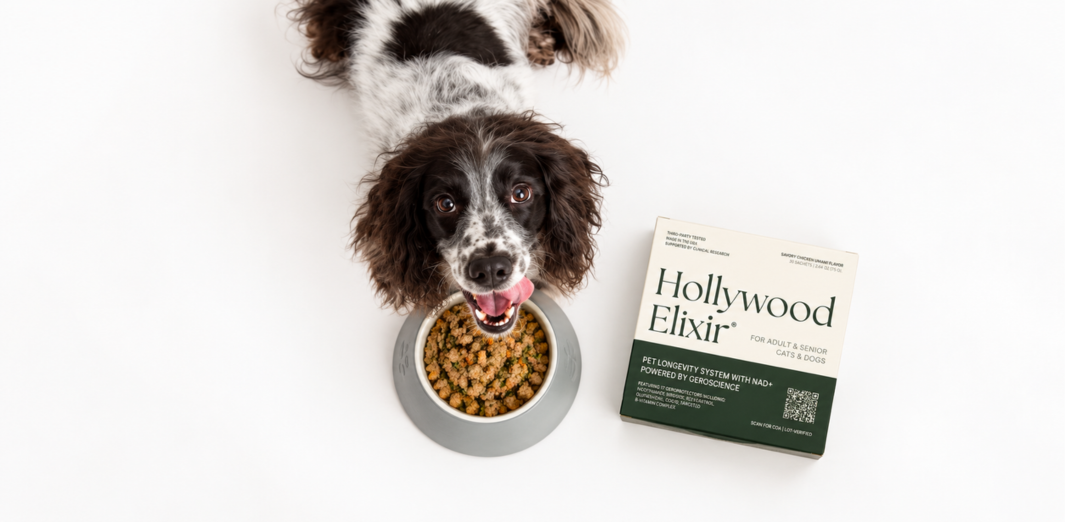
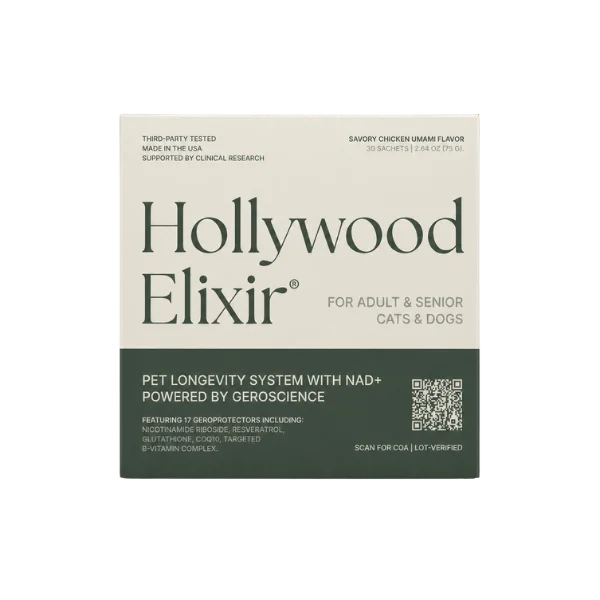
Hollywood Elixir™ is a disclosed-ingredient powder designed to support normal aging functions in dogs.

When a dog starts aging, owners usually aren’t looking for hype—they’re looking for something they can trust, tolerate, and track. The most practical way to compare these products is simple: can the label be verified, and does the format fit your dog’s digestion and calorie needs? That is the real hinge point in RestoraPet vs Hollywood Elixir longevity decisions.

RestoraPet is often described as an oil for dogs built around a proprietary RestoraPet vitalitrol blend. The oil format can be easy to give and may suit dogs that refuse powders, but it can also add calories and trigger soft stool in fat-sensitive dogs. The proprietary blend structure creates a transparency gap: without per-ingredient amounts, it is hard for a veterinarian to evaluate overlap with other supplements or to troubleshoot side effects with confidence.

Hollywood Elixir is positioned as a disclosed-ingredient powder with testing claims, which makes it easier to review in a clinic and easier to measure week over week. Neither approach replaces veterinary care or a full aging plan. The goal here is to help owners choose a more measured, more orderly supplement trial—one that produces clear information instead of more questions.

By La Petite Labs Editorial, ~15 min read

Featured Product:

  • In RestoraPet vs Hollywood Elixir longevity comparisons, the most important difference is verifiability: disclosed ingredient amounts versus a proprietary blend.
  • RestoraPet is commonly used as an oil for dogs, which can be easy to give but can add calories and trigger soft stool in sensitive dogs.
  • The RestoraPet vitalitrol blend being proprietary limits dose-level review with a veterinarian and makes overlap with other supplements harder to avoid.
  • A disclosed powder format is often easier for week-over-week tracking because it can be measured and logged more consistently.
  • Expect modest, individual response patterns; nutraceutical evidence in dogs (especially for joints) is mixed, so tracking matters more than testimonials.
  • Owners get the clearest answers by changing one thing at a time for 2–4 weeks and monitoring stool, appetite, mobility tasks, and recuperation speed.
  • Bring labels and a short log to the vet so ingredient overlap, calorie impact, and stop-sign side effects can be reviewed safely.

What All-in-one Longevity Blends Promise—and What to Verify

All-in-one “longevity” blends sound reassuring because they promise coverage across joints, brain, gut, and immune function. The catch is that aging is not one switch; it is many small stressors adding up, and different dogs show different weak spots first. That is why the most useful question is not “does it work,” but “what exactly is in it, and does that match what this dog needs?” A RestoraPet dog supplement review often reads like a single story, but real-life response patterns vary.

At home, “longevity support” usually means a dog that gets up with less hesitation, has more orderly stools, and recovers faster after a long walk. Owners also notice the opposite: new gassiness, loose stool, or a picky appetite after starting a supplement. Those early signals matter because they help decide whether to keep going, adjust timing with meals, or stop and call the veterinarian.

Energy production graphic tied to antioxidant protection supported by RestoraPet vs Hollywood Elixir longevity.

Decision Snapshot: Can You Verify What’s Inside?

Decision snapshot: can the label be verified? A supplement is easier to evaluate when it lists each active ingredient and its amount, because that allows a veterinarian to compare it to known safety ranges and to your dog’s other products. Proprietary blends make that harder because the total blend weight can hide very small or very large doses of individual ingredients. That transparency gap is the core practical issue in RestoraPet vs Hollywood Elixir longevity comparisons.

In a kitchen-cabinet reality, verification means simple checks: can the owner tell what the “active” ingredients are, how much the dog gets per day, and whether the product adds meaningful calories? If a dog is on arthritis meds, seizure meds, or thyroid medication, the ability to show a clear label at the vet visit is not a luxury—it is basic safety planning.

Genetic imagery reflecting cellular wellness supported by RestoraPet dog supplement review.

RestoraPet Vs Hollywood Elixir: Compare Verifiable Criteria

A practical comparison uses verifiable criteria: disclosed ingredient list, disclosed per-ingredient amounts, third-party testing, and a format that fits the dog’s digestion and calorie budget. RestoraPet is commonly described as an oil for dogs with a proprietary RestoraPet vitalitrol blend, which limits dose-level evaluation. Hollywood Elixir is positioned as a powder with disclosed actives and testing claims, which makes it easier to discuss in a vet appointment.

Owners can compare how each fits daily life: oils can be simple to drizzle but may leave residue, while powders can be mixed into wet food but may be refused by picky eaters. The “best” choice is the one a dog will take consistently without upsetting the stomach and without confusing the rest of the health plan. Consistency is what allows week-over-week tracking instead of guesswork.

Protein visualization highlighting formulation depth and rigor in RestoraPet dog supplement review.

What an Oil-based Approach Can Offer

An oil-based approach can make sense for fat-soluble compounds, because absorption can depend on dietary fat. For example, astaxanthin is a fat-soluble carotenoid, and oral dosing has been shown to raise blood levels in dogs, consistent with systemic uptake after ingestion (Park, 2010). That general principle is why some owners gravitate toward an oil format: it feels “ready to absorb.”

In the bowl, though, oils change the meal. Some dogs lick the food faster and leave kibble behind; others develop soft stool if the added fat is too much too soon. If an owner is already using fish oil, adding another oil product can quietly double up the “slick” part of the diet. That is not automatically wrong, but it needs to be deliberate and monitored.

Pug portrait highlighting companionship and steady support from RestoraPet vitalitrol blend.

The Proprietary Blend Problem: What You Can’t Check

The proprietary blend question is not about accusing a brand of doing something unsafe; it is about what cannot be checked. When a label lists a proprietary RestoraPet vitalitrol blend without per-ingredient amounts, a veterinarian cannot easily judge whether a dog is getting a meaningful amount of a given compound or just a “label presence.” It also makes it harder to avoid overlap with other supplements that contain similar ingredients.

At home, this shows up as uncertainty: if a dog gets diarrhea, is it the oil load, one botanical, or a flavoring? If a dog seems more orderly for a week, is it the supplement, a change in treats, or a calmer routine? Transparent dosing does not guarantee results, but it makes troubleshooting more direct. That clarity is the main reason owners compare proprietary supplement blends transparency across products.

Hollywood Elixir™ is amazing and makes my 13 y/o young again!

— Jessie

We go on runs. Lately he's been keeping up with no problem!

— Cami

“If you can’t verify amounts, you can’t troubleshoot with confidence.”

Oil Format Risks: Calories, Stool Changes, and Reflux

Oil format has two practical concerns: calories and digestion. Even small daily amounts can matter for dogs that gain weight easily, and extra calories can work against joint comfort over time. Digestion is the second issue—some dogs handle added fat well, while others get loose stool, reflux, or a “greasy burp” smell after meals. These are not rare owner observations; they are common reasons a supplement trial ends early.

What not to do: do not start an oil supplement at full label amount on day one, do not add it on top of multiple other oils, and do not ignore repeated vomiting or black/tarry stool. Do not “push through” a week of diarrhea assuming the gut will adjust. If a dog has a history of pancreatitis or fat-sensitive digestion, any oil-based product should be cleared with the veterinarian first.

Weimaraner image reflecting strength and companionship supported by RestoraPet oil for dogs.

Transparency Signals and Proof Objects That Matter

Multi-pathway transparency means the owner can see which levers are being pulled: antioxidant ingredients, gut-focused ingredients, and joint-support ingredients, each with a stated amount. That matters because evidence in dogs for nutraceuticals is often mixed and modest, so choosing a product becomes a matter of matching the dog’s main problem and monitoring response patterns (Barbeau-Grégoire, 2022). When a formula is disclosed, it is also easier to avoid doubling up on the same ingredient across treats, chews, and powders.

Proof objects are the boring but helpful details: a lot number, an expiration date, a clear supplement facts panel, and third-party testing statements that can be shown to a clinic. Owners comparing pet longevity supplements compared often overlook these basics and focus only on testimonials. The most useful “proof” is what can be verified without guessing.

Dog looking ahead, capturing presence and calm energy supported by RestoraPet dog supplement review.

Who Might Reasonably Consider an Oil-based Blend

Some dogs are reasonable candidates for an oil-based proprietary blend: dogs that refuse powders, dogs already eating a very dry diet that needs a palatability helper, or owners who can only manage one simple step per day. In those homes, the main goal is adherence—getting something taken consistently so the owner can observe whether the dog’s day-to-day comfort looks less turbulent. This is where a RestoraPet oil for dogs can fit as a routine tool rather than a “solution.”

The honest tradeoff is that the owner gives up dose-level clarity. That can still be acceptable when the dog is otherwise healthy, not on multiple medications, and the household can watch stool quality and appetite closely. If the dog has a complicated medical history, the same lack of detail becomes a bigger downside because the vet cannot easily rule ingredients in or out.

Ingredient showcase image explaining core components and support from RestoraPet vs Hollywood Elixir longevity.

Who Might Prefer a Disclosed Powder Formula

A disclosed powder formula tends to fit dogs whose owners want a more measurable plan: one that can be adjusted, paused, or compared to other products without guessing. It also fits dogs on weight management plans, because powders can add minimal calories compared with oils. If the household is already tracking walks, stairs, and stool, a powder can be easier to keep consistent while changing only one variable at a time.

The main challenge is acceptance. Some dogs reject a new smell or texture, especially if it is mixed into a familiar food. A practical approach is to mix into a small “test bite” first, then add to the full meal once the dog accepts it. If a dog skips meals, the plan should change—missed meals create noisy data and make week-over-week comparisons unreliable.

Common Objections Owners Raise (and Calm Next Steps)

Common objections deserve calm answers. “But my dog loves the oil taste” is valid—palatability is part of adherence—but taste does not confirm what the dog is actually receiving in each ingredient. “But it covers multiple species” is not automatically a benefit; dogs have their own dosing and safety considerations, and multi-species marketing can blur those details. “But the blend is proprietary for a reason” may be true, yet it still prevents dose-level review in a clinic.

“But it’s been around a long time” can reflect popularity, not necessarily transparency or fit for a specific dog. “But simpler is better” is often correct—fewer moving parts can mean fewer stomach surprises—but “simple” should still be verifiable. The next step after any objection is the same: choose one product, change nothing else for two weeks, and measure response patterns instead of relying on hope.

“Format is not cosmetic; it changes calories, digestion, and adherence.”

Branded lab coat reflecting precision and trust supporting RestoraPet vs Hollywood Elixir longevity.

Oil Vs Powder: How Format Changes the Daily Routine

Format story: oil vs powder is really a story about the daily routine. Oils are fast—drizzle, stir, serve—but they can cling to bowls, attract dust, and make it harder to tell if the dog ate the full dose. Powders can be pre-measured and logged, but they may clump in cold food or settle at the bottom. Neither format is “better” in the abstract; the best format is the one that stays consistent in your household.

Owners often get clearer results when they pick a dosing time that matches the dog’s digestion: with a full meal for sensitive stomachs, or split between morning and evening if the dog tends to reflux. If a dog is prone to soft stool, sudden format changes (adding oil plus new treats plus a new chew) can make the gut the loudest variable, masking any other changes the owner hoped to see.

Shop Now
Premium ingredient tableau framing Hollywood Elixir aligned with RestoraPet oil for dogs.

Build a Measured Plan Instead of Chasing Testimonials

Conversion bridge, education-first: the goal is not to “pick the winner,” but to pick the most checkable plan. Start by naming the primary focus area for the next month—most families are really trying to support joint comfort and digestion, with energy as a secondary goal. Evidence for nutraceutical strategies in canine osteoarthritis tends to show modest average effects, so the dog’s individual response is what matters most (Barbeau-Grégoire, 2022).

Then choose the format that the dog will reliably take, and set a tracking method before starting. A calendar note, a simple stool log, and a weekly “stairs test” can turn a vague trial into something measurable. If the dog is on prescription medications, bring the full label (or a photo) to the clinic so the veterinarian can check for overlap and avoid accidental stacking.

Shop Now
Woman with Hollywood Elixir box in cozy setting aligned with RestoraPet vitalitrol blend.

Case Vignette: When Oil Simplicity Helps Adherence

Case vignette: a 9-year-old Labrador mix refuses powders and starts skipping breakfast when anything “new” is mixed in. The owner tries an oil format because it disappears into the food and the dog finishes meals again. Over the next two weeks, the owner notices stools become less orderly if the oil is given on an empty stomach, but settle when it is given with dinner.

This kind of story is common: the first win is not a dramatic change in mobility, but a routine that the dog accepts. The practical lesson is to treat the first week as a digestion check, not a performance test. If the dog’s appetite drops or stool loosens, the owner can adjust timing, reduce added fatty treats, and decide whether the oil format is truly workable.

Shop Now

Case Vignette: Switching for Verifiable Dosing

Case vignette: a 12-year-old small-breed dog is on arthritis medication and a prescription diet, and the owner wants “longevity support” without muddying the plan. After reading a RestoraPet dog supplement review, the owner realizes the proprietary blend makes it hard to show exact amounts to the veterinarian. The owner switches to a disclosed formula so the clinic can review ingredients alongside current meds and supplements.

The household outcome is not a miracle change; it is cleaner decision-making. When the dog has a week of soft stool, the owner can quickly rule out added oil calories and focus on other variables like new treats or stress. When the dog has a better week, the owner can keep the plan stable long enough to see whether the pattern repeats. That is what “verifiable dosing” buys: fewer unknowns.

Owner Checklist and What to Track Week over Week

Owner checklist (topic-specific): before starting any longevity supplement, check (1) whether the label lists each active ingredient and its amount, (2) whether the format adds noticeable calories, (3) whether your dog already gets oils or joint chews that could overlap, (4) whether your dog has a history of pancreatitis, reflux, or fat-sensitive stool, and (5) whether you can commit to a two-week “no other changes” window.

What to track week over week: stool score and frequency, appetite and meal completion, willingness to jump or climb stairs, post-walk recuperation speed, and any new itching or ear debris that could signal a food/supplement sensitivity. Write down the exact start date and whether doses were given with food. Without this, RestoraPet vs Hollywood Elixir longevity decisions can turn into a cycle of switching products without learning anything.

Side-by-side supplement comparison designed around RestoraPet oil for dogs expectations.

Vet Visit Prep: Questions That Make the Visit Efficient

Vet visit prep: bring photos of the front and back labels, a list of all current supplements (including fish oil and joint chews), and a two-week log of stool and appetite. Ask: “Are there any ingredients here that overlap with what my dog already gets?” “Does the oil format change the calorie plan for weight control?” and “What side effects should trigger stopping immediately?” These questions keep the visit focused on safety and clarity.

Also ask what success should look like for your dog’s primary focus area. For joint comfort, the clinic may suggest a consistent walk test and a pain-score diary; for digestion, they may suggest a stool scoring chart and a treat audit. If the dog has kidney, liver, or endocrine disease, the veterinarian may recommend avoiding certain add-ons or monitoring labs before and after any new supplement trial.

Shop Now
Open package showing attention to detail consistent with RestoraPet vitalitrol blend standards.

What Neither Can Do, Plus a Practical Proof Stack

What neither product can do: no supplement can replace diagnosis, pain control planning, dental care, parasite prevention, or a diet that fits the dog’s medical needs. For joint disease, nutraceuticals and enriched diets may be associated with modest average benefits, but they are not a substitute for a full osteoarthritis plan that includes weight management and veterinarian-guided medications when needed (Barbeau-Grégoire, 2022). For gut goals, postbiotic research in dogs suggests measurable changes in some gastrointestinal and immune-related outcomes, but results depend on the specific product and context (Bonel-Ayuso, 2025).

Proof stack (what can be checked): a complete supplement facts panel, third-party testing statements, lot/expiry, and a routine that produces interpretable response patterns. Unique misconception: “proprietary” does not mean “more potent”; it mainly means the owner cannot see per-ingredient amounts. If a claim leans on complex biology but the label cannot be reviewed ingredient by ingredient, the most responsible stance is cautious and measurement-focused.

Shop Now

A 30-Day Trial Plan and a Clear Final Decision Rule

Trial plan: pick one product and one primary goal (usually joint comfort or digestion) for 21–30 days. Start low if the format is oily or if the dog has a sensitive stomach, and give with a full meal. Keep treats, exercise, and other supplements unchanged so the trial stays interpretable. If any vomiting, persistent diarrhea, marked lethargy, or refusal to eat appears, stop and contact the veterinarian.

Final CTA, without hype: choose the option that is easiest to verify and easiest for your dog to take consistently. If the deciding factor is transparency, prioritize disclosed ingredients and testing details; if the deciding factor is adherence, prioritize the format your dog reliably accepts. Either way, the most meaningful “longevity” step is a measured plan with week-over-week tracking and a clear handoff to your veterinary team.

“A good trial changes one thing and measures it week over week.”

Educational content only. This material is not a substitute for veterinary advice. Always consult your veterinarian about your dog’s specific needs. These statements have not been evaluated by the Food and Drug Administration. Products mentioned are not intended to diagnose, treat, cure, or prevent any disease.

Glossary

  • Proprietary blend - A combined ingredient mix where individual amounts are not disclosed.
  • Disclosed dosing - A label that lists each active ingredient and the amount per serving.
  • Oil-based supplement format - A liquid fat-based carrier that can add calories and affect digestion.
  • Powder supplement format - A dry mix-in that can be measured and logged but may affect palatability.
  • Palatability - How willingly a dog eats a product based on taste, smell, and texture.
  • Calorie load - The extra energy a supplement adds that can influence weight over time.
  • Response patterns - Repeatable week-over-week changes (or lack of changes) after a single controlled adjustment.
  • Stool score - A simple rating of stool firmness used to track digestion changes at home.
  • Postbiotic - Non-living microbial products or metabolites intended to support normal gut function.
  • Third-party testing - Independent lab checks used to verify identity, purity, or contaminants.

Related Reading

References

Barbeau-Grégoire. A 2022 Systematic Review and Meta-Analysis of Enriched Therapeutic Diets and Nutraceuticals in Canine and Feline Osteoarthritis.. PubMed Central. 2022. https://pmc.ncbi.nlm.nih.gov/articles/PMC9499673/

Bonel-Ayuso. Effects of Postbiotic Administration on Canine Health: A Systematic Review and Meta-Analysis. 2025. https://www.mdpi.com/2076-2607/13/7/1572

Park. Astaxanthin uptake in domestic dogs and cats.. PubMed Central. 2010. https://pmc.ncbi.nlm.nih.gov/articles/PMC2898833/

FAQ

What is the main difference between these two supplements?

The main difference is how much can be verified from the label. A proprietary blend can list ingredients without listing each amount, which limits dose-level review with your veterinarian. A disclosed formula lists each active and its amount, which makes it easier to compare to your dog’s other supplements and medications.

The second difference is format: oil versus powder. Oils can be simple to give but can add calories and may be harder on fat-sensitive digestion. Powders can be easier to measure and track, but some dogs refuse the taste or texture.

Why does label transparency matter for older dogs?

Older dogs are more likely to be on arthritis medications, heart medications, or prescription diets. When ingredient amounts are disclosed, a clinic can more easily check for overlap and decide whether a supplement trial is reasonable. With proprietary blends, the vet may be forced to make decisions with missing information.

Transparency also helps troubleshooting. If appetite drops or stool loosens, it is easier to pause one clearly defined ingredient plan than to guess which part of a blend is responsible.

Is an oil supplement easier for dogs to absorb?

Some ingredients are fat-soluble, meaning dietary fat can support absorption. Astaxanthin, for example, is fat-soluble, and oral dosing has been shown to increase blood levels in dogs, consistent with systemic uptake(Park, 2010). That supports the general idea that fat can matter for certain compounds.

But “oil” is not automatically better. The added fat can also change digestion and calorie intake, which may be a bigger day-to-day issue than absorption for many households.

Can an oil-based supplement upset a dog’s stomach?

Yes. Owners commonly report soft stool, reflux, or decreased appetite when a new oil is added quickly or given on an empty stomach. Dogs with a history of pancreatitis or fat-sensitive digestion deserve extra caution with any oil-based product.

A safer routine is to introduce slowly, give with a full meal, and avoid stacking multiple oils at once (for example, adding an oil supplement on top of fish oil and high-fat treats). If vomiting or persistent diarrhea occurs, stop and contact the veterinarian.

How long should a supplement trial last before judging it?

Most households get clearer information from a 21–30 day trial, because day-to-day variation can be misleading. The first week is often a digestion and acceptance check, not a performance test. If a dog cannot keep the product down or refuses meals, the trial is not interpretable.

Pick one primary goal (usually joint comfort or digestion), change nothing else, and track the same markers weekly. That approach prevents the common cycle of switching products too fast to learn what actually fits.

What should owners track week over week during a trial?

Track concrete markers that show up in daily life: stool score and frequency, appetite and meal completion, willingness to climb stairs or jump into the car, and post-walk recuperation speed. Also note any new itching, ear debris, or paw licking that could signal a sensitivity.

Write down the start date, whether doses were given with food, and any days the dog missed a dose. Missed doses and changing treats create noisy data that can hide real response patterns.

Are proprietary blends always a bad sign?

Not always. Proprietary blends can exist for business reasons, and some dogs may do fine on them. The practical downside is that owners and veterinarians cannot evaluate per-ingredient amounts, which matters most when a dog is medically complex or already on multiple products.

A useful mindset is: proprietary blends are harder to troubleshoot. If a dog develops diarrhea, reflux, or behavior changes, it is harder to identify what to pause or avoid next time.

Does “all-in-one longevity” mean it covers joints and gut equally?

Not necessarily. “All-in-one” is a marketing idea, not a guarantee of meaningful amounts for each target area. Evidence for nutraceutical approaches in dogs, especially for osteoarthritis, tends to show modest average effects, and results depend on the specific ingredients and doses.

That is why the best plan starts with one primary focus area. If the dog’s main problem is joint discomfort, the tracking plan should be mobility tasks; if the main problem is digestion, tracking should center on stool and appetite.

What side effects should trigger stopping a new supplement?

Stop and contact a veterinarian if there is repeated vomiting, persistent diarrhea, marked lethargy, refusal to eat, facial swelling, hives, or sudden weakness. Black/tarry stool is also an urgent sign. These are not “normal adjustment” symptoms.

For milder changes—slightly softer stool or extra gas—pause, review what else changed (treats, chews, table scraps), and consider restarting more slowly only if your veterinarian agrees.

Can supplements interact with prescription medications in dogs?

They can. Some plant compounds can affect how the body handles drugs, and interactions are hard to predict when ingredient amounts are not disclosed. Resveratrol, for example, has been reported to inhibit certain cytochrome P450 enzymes and transporters in experimental settings, which is one reason medication reviews matter(Shaito, 2020).

The safest step is to bring a full list of everything the dog gets—chews, oils, powders, and “calming” treats—to the vet. That allows a more orderly plan and reduces accidental stacking.

Is it okay to combine an oil supplement with fish oil?

Sometimes, but it should be deliberate. Combining oils can increase total fat intake and calories, which may affect weight goals and digestion. If a dog already has soft stool, reflux, or a history of pancreatitis, stacking oils can be a common reason symptoms flare.

A practical approach is to use one oil at a time during a trial period. If the household wants to keep fish oil, consider choosing a non-oil supplement format for the rest of the plan and review it with the veterinarian.

Do postbiotics matter when choosing a longevity supplement?

They can, especially if the dog’s main issue is stool quality, gas, or stress-related digestive changes. A systematic review and meta-analysis in dogs found postbiotic administration was associated with changes in gastrointestinal and immune-related measures, though results vary by product and study design(Bonel-Ayuso, 2025).

The key is matching the tool to the goal. If digestion is the priority, a gut-focused ingredient strategy may be more relevant than a broad “longevity” label.

Are NAD+ precursors necessary for canine longevity support?

They are not “necessary,” and they are not a requirement for a responsible aging plan. NAD-related biology is often discussed in longevity circles, but translating that into dog outcomes is not straightforward. Even in microbiome research, responses to nicotinamide riboside have shown species differences, which is a reminder not to over-extrapolate(Peluso, 2023).

For most dogs, the most meaningful steps remain basic: weight control, dental care, pain management planning, and a supplement trial that is measurable and well tolerated.

Is NADH considered safe in general supplement use?

Safety depends on dose and context, and dog-specific data may be limited for many “longevity” ingredients. A safety-focused review of NADH concluded it was generally well tolerated in the contexts discussed, while emphasizing that conclusions depend on dose and study setting(Birkmayer, 2004).

For dogs, the practical takeaway is to avoid stacking multiple products with overlapping “energy” ingredients and to involve a veterinarian if the dog has chronic disease or takes daily medications.

What’s a common misconception in restorapet dog supplement review posts?

A common misconception is that “proprietary blend” means the formula is automatically more potent or more targeted. In reality, it mainly means the owner cannot see per-ingredient amounts, which limits verification and makes it harder to compare products fairly.

Another misconception is that a good week proves the supplement caused it. Dogs have natural ups and downs, so a measured trial with tracking is more reliable than a single before-and-after impression.

How should a picky eater start a powder supplement?

Start with a tiny amount mixed into a small “test bite,” then offer the rest of the meal plain. If the dog accepts the test bite for a few days, gradually increase toward the full amount. This protects appetite and prevents the dog from forming a negative association with the entire bowl.

Avoid changing foods at the same time. When food and supplement change together, it becomes impossible to tell whether refusal or soft stool is due to the new diet or the new add-on.

What questions should owners bring to the vet about supplements?

Bring label photos and ask: “Do any ingredients overlap with my dog’s current chews or oils?” “Does this add calories that matter for weight control?” and “What symptoms mean I should stop immediately?” These questions keep the discussion focused on safety and a workable routine.

Also ask what success should look like for your dog’s main goal. A clinic can suggest a simple mobility task or stool scoring method so the trial produces interpretable response patterns.

When should an owner call the vet during a supplement trial?

Call promptly for repeated vomiting, persistent diarrhea, collapse, severe weakness, facial swelling, hives, or black/tarry stool. Call within 24–48 hours for appetite loss lasting more than a day, worsening limping, or behavior changes that feel out of character.

If the dog has chronic disease (kidney, liver, endocrine) or takes daily medications, it is reasonable to check in before starting. That prevents avoidable overlap and keeps the plan more orderly.

How can owners compare quality signals between brands?

Look for a complete supplement facts panel, clear daily directions, lot number, expiration date, and a way to contact the company. Third-party testing statements can be helpful, especially when paired with transparent ingredient amounts.

Also consider whether the format fits your dog’s digestion and calorie plan. A “high quality” product that a dog cannot tolerate or will not eat is not usable, no matter how good the marketing looks.

Is this comparison relevant for large-breed versus small-breed dogs?

Yes, but mostly because daily routines and calorie budgets differ. Large-breed dogs may have more obvious mobility goals to track (stairs, car entry), while small-breed dogs may be more sensitive to small calorie additions if they gain weight easily. The format (oil vs powder) can matter as much as the ingredient list.

Regardless of size, the safest approach is the same: one change at a time, track week over week, and bring labels to the veterinarian if the dog is on medications or has chronic disease.

5K+ Happy Pet Parents

Excellent 4.8

RestoraPet Vs Hollywood Elixir | Why Thousands of Pup Parents Trust Hollywood Elixir™

"He seems more happy overall. I've also noticed he has more energy which makes our walks and playtime so much more fun."

Olga & Jordan

"He's got way more energy now! We go on runs pretty often; he use to get tired halfway through, but lately, he's been keeping up without any problem."

Cami & Clifford

"I want her to live forever. She hasn't had an ear infection since!"

Madison & Azula

"It helps with her calmness, her immune system. I really like the clean ingredients. Highly recommend La Petite Labs!"

Maple & Cassidy

"He seems more happy overall. I've also noticed he has more energy which makes our walks and playtime so much more fun."

Olga & Jordan

"He's got way more energy now! We go on runs pretty often; he use to get tired halfway through, but lately, he's been keeping up without any problem."

Cami & Clifford

"I want her to live forever. She hasn't had an ear infection since!"

Madison & Azula

"It helps with her calmness, her immune system. I really like the clean ingredients. Highly recommend La Petite Labs!"

Maple & Cassidy

"He seems more happy overall. I've also noticed he has more energy which makes our walks and playtime so much more fun."

Olga & Jordan

"He's got way more energy now! We go on runs pretty often; he use to get tired halfway through, but lately, he's been keeping up without any problem."

Cami & Clifford

"I want her to live forever. She hasn't had an ear infection since!"

Madison & Azula

"It helps with her calmness, her immune system. I really like the clean ingredients. Highly recommend La Petite Labs!"

Maple & Cassidy

"He seems more happy overall. I've also noticed he has more energy which makes our walks and playtime so much more fun."

Olga & Jordan

"He's got way more energy now! We go on runs pretty often; he use to get tired halfway through, but lately, he's been keeping up without any problem."

Cami & Clifford

"I want her to live forever. She hasn't had an ear infection since!"

Madison & Azula

"It helps with her calmness, her immune system. I really like the clean ingredients. Highly recommend La Petite Labs!"

Maple & Cassidy

SHOP NOW