

GABA for Cats

Why "gaba" at the vet usually means gabapentin, what is known about the supplement in cats, and what has been tested for vet-visit stress.

By La Petite Labs Editorial 11 min read

As Seen On

  • AVMA, American Veterinary Medical Association
  • Today’s Veterinary Business
  • Petfood Industry
Woman cuddling an orange-and-white cat and a silver tabby while holding a Hollywood Elixir box
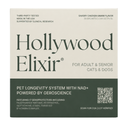
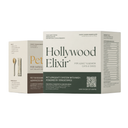
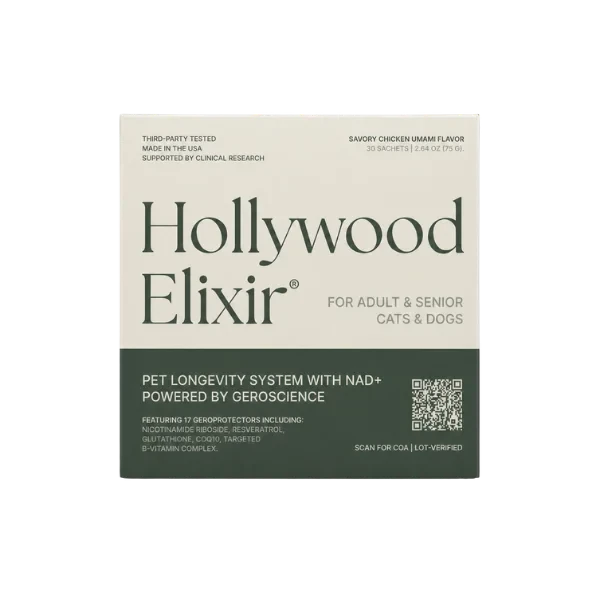
Hollywood Elixir® Senior Cat Supplement

17 science-backed actives

From$50/moSave up to 47%Save up to 44%Shop Now
Contents
GABA is a calming supplement with no cat studies that we could find, and it is not gabapentin, the medicine vets prescribe. Many people who search for GABA for cats mean gabapentin, which has real trials in cats for travel and vet-visit stress. GABA itself (gamma-aminobutyric acid) is a natural brain messenger sold in chews and powders. The only pet studies of it are two small ones in dogs.

This guide sorts out which is which, what is known about safety and amounts, and what has actually been tested for a stressed cat.

  • What it is: GABA (gamma-aminobutyric acid) is a natural brain messenger that quiets nerve cells. It's sold as a supplement.9
  • Not gabapentin: "Gaba" at the vet almost always means gabapentin, a prescription drug. It doesn't bind to GABA receptors.3
  • Cat evidence: We found no trial of a GABA supplement in cats. The cat trials are of gabapentin and pregabalin.2, 5
  • How long it lasts: Swallowed GABA has a half-life of about 20 minutes in cats. Gabapentin's is about 3.6 hours.1, 4
  • Amount: None is established for cats. No study has tested one.
  • For vet visits: Ask your vet about gabapentin or pregabalin. Both beat placebo in cat trials.2, 5
  • In Hollywood Elixir: No. Hollywood Elixir contains no GABA. It's daily nutrition.

What is GABA for cats: a supplement or a medicine?

GABA is a supplement, not a medicine. The letters stand for gamma-aminobutyric acid, the main inhibitory neurotransmitter in the mammalian brain, which means it slows nerve cells down.9 Every cat makes it. The body builds GABA from glutamate with an enzyme that depends on vitamin B6.1

The trouble is the nickname. People often shorten gabapentin, a prescription drug, to "gaba". So two very different things share one search.

  • GABA, the supplement: an amino acid sold in calming chews, powders and capsules. A US label database listed 644 supplement products with GABA on the label in 2021.1
  • Gabapentin, the drug: a prescription medicine that vets give cats before stressful events, and the one most often prescribed for long-term joint and muscle pain in cats.6, 4

This page is about the first one. Where the second has the evidence you came for, we say so and point you to it.

Woman kneeling with two long-haired tabby cats while holding a Hollywood Elixir box beside a food bowl

Is GABA the same as the gabapentin my vet prescribed?
GABA and gabapentin are different substances, and one can't replace the other. Gabapentin was designed as a look-alike of GABA, yet it doesn't bind to GABA receptors.3 Researchers trace its effects to a part of certain calcium channels on nerve cells.10

So check the label on the bottle. If it says gabapentin, give it as your vet directed, and don't swap in a GABA chew because it sounds gentler. If you're unsure what the clinic meant by "gaba", call and ask for the full name.

Our guide to gabapentin for cats covers the medicine in detail.

Woman exercising beside a tabby cat, with a Hollywood Elixir box and food bowl on a small table

Are there any studies of GABA in cats?

GABA supplements have no published trial in cats that we could find. We searched for studies of GABA given by mouth to cats for stress, sleep, travel or behavior, and none turned up.

What exists sits one step away.

  • Dogs: two small studies, one in four Shih Tzus and one in aged dogs scored by their owners.7, 8
  • People: a systematic review of 14 placebo-controlled trials found limited evidence for stress and very limited evidence for sleep.9
  • Cats, different compound: placebo-controlled trials of gabapentin and pregabalin.2, 5

If a cat chew cites research, check which species and which compound that research tested.

Orange-and-white cat reaching toward a woman holding a Hollywood Elixir box while sitting in a chair

What does the cat research on gabapentin show?

Gabapentin, not GABA, is what the best-known cat study tested. Twenty pet cats with a history of stress at the vet each got a 100 mg capsule of gabapentin before one visit and a placebo before another. Owners gave it 90 minutes ahead of putting the cat in the carrier.2

On gabapentin, owners scored less stress during travel and the exam, and vets found the cats easier to handle. Sedation was common. Some cats were wobbly, drooled or vomited, and every effect had passed within eight hours.2

That result belongs to the prescription drug. None of it carries over to a GABA supplement.

Gray-haired man holding a Hollywood Elixir box while two cats rest beside him in an armchair

How long does GABA last in a cat?

GABA doesn't stay in a cat's body for long. A safety review reports that swallowed GABA was cleared quickly in cats, rabbits and rats, with a half-life of about 20 minutes.1 A half-life is the time the body takes to remove half of a substance.

Gabapentin behaves very differently. In a study of eight cats, nearly all of a swallowed amount was absorbed, blood levels peaked at about one hour, and the half-life was about 3.6 hours.4

So if you came here asking how long "gaba" lasts after a vet-visit capsule, you want the gabapentin numbers. In the 20-cat trial, its effects had passed within eight hours.2

That result belongs to the prescription drug.

Can a GABA supplement reach a cat's brain?

GABA from a supplement probably reaches the brain in tiny amounts at best, and no one has checked in cats. The brain sits behind the blood-brain barrier, a lining that blocks many substances carried in the blood.

A United States Pharmacopeia safety review sums up the animal work this way: very little GABA passes from the blood into the brain, whether it is swallowed or injected.1 In one rat experiment it describes, a 1,250-fold increase in the injected amount raised GABA in the fluid around the brain only 30-fold.1

Researchers who reviewed the human supplement studies were blunt. They called the way GABA supplements work "far from clear". Any real effect, they suggested, might come from a little GABA crossing the barrier or, less directly, through the nerves of the gut.11

Add the 20-minute half-life in cats, and the case for a brain effect from a chew looks weak.1 That is reasoning from other species, not a cat result. It's the honest state of things until a cat study exists.

Tabby cat looking up at a Hollywood Elixir sachet held above it, with the product box on a small table

Is GABA safe for cats?

GABA's safety in cats has not been studied, as far as we could find. What's known comes from other species. Long-term studies in rats and dogs, at up to 1 g per kg a day, showed no signs of toxicity, and human trials recorded no serious adverse events.1

That's reassuring about the molecule and silent about cats. We found no tolerance study of GABA in cats, at any amount.

Treat it as untested. That matters most for kittens, pregnant cats, and cats with an illness or on daily medicine.

Hand gently petting an orange-and-white cat beside a food bowl and Hollywood Elixir box

What side effects could GABA cause in a cat?

GABA's side effects in cats are unrecorded, so the human list is the best guide. In people, the reported effects were mild to moderate: stomach discomfort, headache, drowsiness and a short burning feeling in the throat.1 Some human studies also saw a brief, moderate drop in blood pressure, of less than 10%.1

By inference, watch a cat for unusual sleepiness, a wobbly walk, vomiting or a skipped meal. Stop the supplement and call your vet if any of these appear.

A cat that goes off its food needs attention quickly, whatever the cause.

Man holding a Hollywood Elixir box beside a black cat, an orange tabby and a food bowl

How much GABA can a cat have?

No amount of GABA has been tested in cats, so there is no figure to give. The numbers that circulate come from elsewhere.

  • Dogs: 1 to 4 mg per kg once in one study, and 30 mg per kg a day for two weeks in another.7, 8
  • People: servings of 20 to 100 mg in the stress trials of manufactured GABA.9

Neither translates to a cat by simple math. Human capsules are made for adults, and splitting one gives a guess, not a measured amount.

If your vet agrees to a trial, use a cat product that prints its GABA content, and settle the amount with the vet first.

Which cats should not have GABA?

GABA is a poor fit for several groups of cats. Speak to your vet before giving it to a cat that:

  • takes blood pressure medicine, since GABA lowered blood pressure a little in some human studies and the effects could stack;1
  • takes seizure medicine, since a safety review flags a possible interaction with drugs for epilepsy;1
  • is pregnant or nursing, since no studies exist and GABA can change hormone levels;1
  • has liver disease, since the liver is the main place GABA is broken down outside the brain;1
  • is a kitten, since the only pet studies used adult and aged dogs.7, 8

One more group is easy to miss: the cat with a vet visit coming up. If the clinic has prescribed gabapentin or pregabalin for the trip, don't add a GABA chew on top without asking. Sedation was already common with gabapentin alone in the 20-cat trial, and we found no test of the combination.2

Older cats can carry more than one of these risks at once. High blood pressure, kidney disease and thyroid disease are all on the Merck Veterinary Manual's list of illnesses to rule out in a senior cat whose behavior changes.6

That's reassuring about the molecule and silent about cats.

Silver tabby sitting beside a food bowl and a Hollywood Elixir box held in a person's hand

DVM Voice: Clinical Vignette of a Common Pattern in Senior Cat Aging

Case provided by JoAnna Pendergrass, DVM

Sasha, a 12-year-old cat, was brought in after her owner noticed increased thirst and urination, lethargy, vomiting, and a generally unkempt appearance. Examination showed weight loss, elevated blood pressure, and reduced vitality.

Diagnostic testing revealed elevated kidney markers, poorly concentrated urine, and protein loss in the urine — findings consistent with chronic kidney disease, one of the most common chronic conditions in senior cats.

Her care required a kidney-focused diet, blood pressure management, targeted supplementation, medication support, and regular monitoring — a necessary plan, but one started after clinical signs were already visible.

Clinical takeaway: Sasha’s case reflects why senior-cat wellness should begin before obvious decline. Earlier monitoring, body-condition tracking, hydration awareness, antioxidant support, and daily cellular resilience may help support quality of life as cats age.

Single-case vignette. Not generalizable. Veterinary diagnosis and monitoring are essential for increased thirst, urination, vomiting, lethargy, weight loss, or suspected kidney disease.

Explore Hollywood Elixir Research →
Woman holding a Hollywood Elixir box toward a brown cat perched on the back of a sofa

Can GABA help a cat with vet visits or car travel?

GABA has not been tested for vet visits or travel in cats, but two prescription medicines have.

  • Gabapentin: in 20 cats, a 100 mg capsule given 90 minutes before the carrier lowered stress scores against placebo.2
  • Pregabalin: in 209 cats, an oral solution given about 90 minutes before travel reduced anxiety during the car ride and the exam. Only a few cats showed slight wobbliness or tiredness.5

Pregabalin is approved in the US for this exact use in cats, and gabapentin is used extra-label.6

Tell the clinic about your cat's past reactions when you book. Our guide to carriers for senior cats can make the trip itself easier.

Woman leaning toward a fluffy orange cat beside a Hollywood Elixir box and green food bowl

Can GABA help a stressed or hiding cat at home?

GABA has no evidence for everyday stress in cats, and hiding is a sign to investigate before you reach for any chew. Fear in cats can show as avoidance, hiding, a low crouched posture, lowered ears, vocalizing or spraying.6

Illness can look the same. The Merck Veterinary Manual is firm that medical problems must be ruled out before a problem is called behavioral.6

Start with what changed around the time the hiding began. Our guides to the signs of a stressed cat and to why a cat starts hiding can help you narrow it down.

Tabby cat licking its nose beside a food bowl and Hollywood Elixir box

Can GABA help a senior cat that cries at night?

GABA has not been studied for night crying in senior cats. Increased vocalizing is the behavior change reported most often in aging cats, so the question comes up a lot.6

Medical causes come first on a vet's list: high blood pressure, kidney disease, an overactive thyroid and diabetes. Cognitive decline is the other suspect. In one study, about 35% of cats over 11 years old showed at least one sign of it.6

No drug or diet is licensed for cognitive dysfunction in cats, so a checkup comes before any supplement.6 Our guide to night vocalizing in senior cats explains what vets check.

How do you read a calming chew label for a cat?

GABA on a cat chew label tells you less than you'd hope, so read past the front of the pack.

Look for:

  • the amount of GABA per chew, in milligrams, not a "proprietary blend" total;
  • every other active and its amount, if the chew combines several;
  • a product made for cats, with a feeding guide by weight;
  • ingredients your vet has cleared against your cat's medicines.

Then ask what the evidence is for. The calming aids for cats that the Merck Veterinary Manual names are pheromone products, L-theanine, alpha-casozepine, and a diet with alpha-casozepine and L-tryptophan.6 GABA is not on that list. Merck does say that alpha-casozepine appears to work in a way similar to GABA.6

Printed amounts are the standard we hold our own product to. Hollywood Elixir lists each of its 17 actives with an amount, and GABA is not among them.

Powder, chew or capsule matters less than whether your cat will take it calmly. A supplement that needs a wrestling match defeats its purpose.

Is GABA different for cats and dogs?

GABA has a thin record in dogs and none in cats, and that is the main difference.

  • Studies: dogs have two small ones.7, 8 We found no GABA supplement trial in cats.
  • How long it lasts: the 20-minute half-life after swallowing was reported for cats, rabbits and rats.1
  • Approved options: cats have pregabalin, approved in the US for anxiety and fear around travel and vet visits.6
  • Xylitol: the sweetener in some human supplements is a known danger to dogs. The FDA notes it does not seem to be as dangerous for cats, who tend to ignore sweets.13

The dog findings are too small to lean on even for dogs. Passing a dog's chew to a cat adds a species gap on top. Our guide to GABA for dogs covers those two studies in full.

Tabby cat sitting at a table with a food bowl and Hollywood Elixir box

When does a stressed cat need the vet, not GABA?

GABA should wait if your cat shows any sign that points to illness. Book a visit if your cat:

  • stops eating, or eats much less, for a day;
  • hides for more than a day or two;
  • urinates outside the box, strains, or cries in it;
  • starts howling at night or seems lost in familiar rooms;
  • turns aggressive when touched.

These can be early signs of pain or disease. Our guide to how cats hide illness lists more. A calming chew given first can cost a sick cat time.

Woman cuddling a silver tabby and a cream-colored cat while holding a Hollywood Elixir box

What are the alternatives to GABA for a stressed cat?

Alternatives to GABA with at least some cat evidence do exist.

  • For vet visits and travel: pregabalin or gabapentin from your vet.5, 2
  • A calming diet: in a study of 24 fearful cats, a diet with alpha-casozepine and L-tryptophan eased anxiety in an unfamiliar room. Fear of an unfamiliar person stayed the same.12
  • Pheromones and L-theanine: the Merck Veterinary Manual lists both as aids that might help calm a cat.6
  • Training: pairing a trigger, such as the carrier, with treats or play, a little at a time.6

Our guide to L-theanine for cats covers that supplement and its evidence.

Is GABA in Hollywood Elixir?

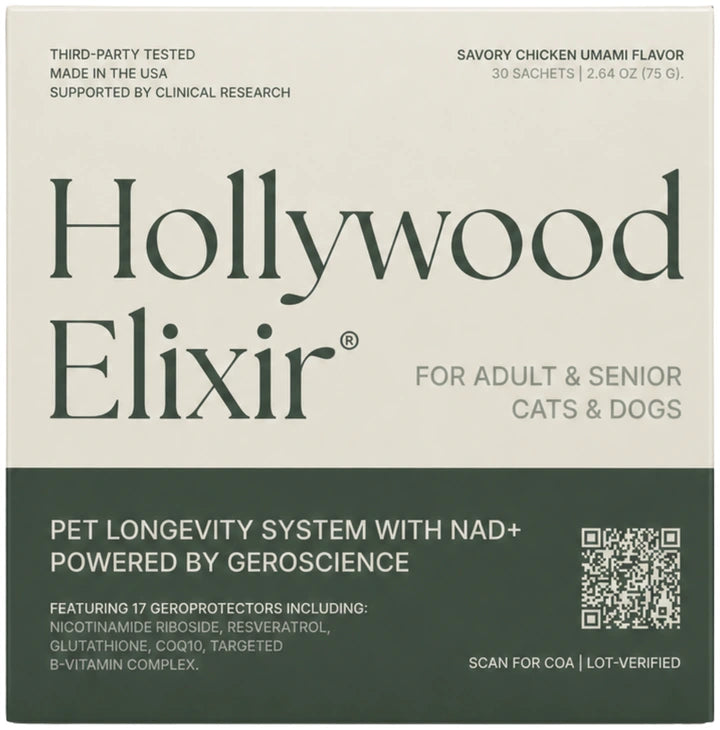
No. Hollywood Elixir has no GABA in it, and it isn't sold to calm cats.

The honest link between the two is small. A cat's body makes GABA itself, and the enzyme that does the job depends on vitamin B6.1

One sachet provides 1 mg of vitamin B6 and 25 mg of reishi mushroom, among 17 actives that each have their amount on the label. Another is 60 mg of nicotinamide riboside, an NAD+ precursor. None of that makes it a calming aid.

Think of Hollywood Elixir as daily nutrition for adult and senior cats. It's a powder mixed into food, half a sachet for cats under 7 lb and one sachet from 7 to 30 lb. Nobody has tested it for stress, vet-visit fear, sleep or seizures.

If your interest is general care for an aging cat, start with our guides to vitamin B6 for cats and the best supplements for senior cats. See the full Hollywood Elixir formula and serving guide.

A calming chew given first can cost a sick cat time.

Educational content only. This material is not a substitute for veterinary advice. Always consult your veterinarian about your cat’s specific needs. These statements have not been evaluated by the Food and Drug Administration. Products mentioned are not intended to diagnose, treat, cure, or prevent any disease.

Glossary

GABA: Gamma-aminobutyric acid, a natural messenger that quiets nerve cells, also sold as a supplement.

Gabapentin: A prescription drug designed to resemble GABA that acts on calcium channels, not GABA receptors.

Pregabalin: A prescription drug related to gabapentin, approved in the US for travel and vet-visit anxiety in cats.

Half-life: The time the body takes to clear half of a substance.

Blood-brain barrier: The lining of the brain's blood vessels that keeps many substances out of the brain.

Alpha-casozepine: A calming ingredient used in some cat diets and supplements.

Related Reading

References

Numbered references identify the sources used for specific claims. Read the study design, species and evidence boundaries alongside each finding.

FAQ

Does GABA work for cat anxiety?

Nobody knows yet. We found no trial of a GABA supplement in cats, and the human evidence for stress is rated as limited. For vet visits and travel, prescription gabapentin and pregabalin have cat trials behind them.

Does Hollywood Elixir contain GABA?

No. Hollywood Elixir has no GABA and isn't a calming product. It's daily nutrition for adult and senior cats, with 1 mg of vitamin B6 and 25 mg of reishi mushroom among its 17 actives.

Is GABA toxic to cats?

No toxicity has been reported, and none has been looked for in cats. Rats and dogs given large amounts of GABA long term showed no signs of toxicity, but that work didn't include cats. Treat it as untested.

Can I give my cat GABA and gabapentin together?

Ask your vet first. We found no test of GABA with gabapentin in cats, and sedation was already common with gabapentin alone in a 20-cat trial. Don't add a chew to a prescribed plan on your own.

Which foods contain GABA?

Tea, tomatoes, soybeans, germinated rice and some fermented foods contain GABA naturally. None of them belongs in a cat's bowl for that purpose. A cat makes its own GABA.

Can kittens have GABA?

GABA has not been studied in kittens or in adult cats. The only pet studies used adult and aged dogs. A kitten that seems anxious or restless needs a vet's advice before any supplement.

Is GABA a natural gabapentin for cats?

No. GABA is a messenger the body makes, and gabapentin is a man-made prescription drug. Gabapentin doesn't act on GABA receptors, so a GABA chew can't do its job for pain or vet-visit stress.

Will GABA make my cat sleepy?

It could. Drowsiness is one of the mild effects reported in people who took GABA. No one has recorded its effects in cats, so a cat that seems dull, wobbly or off its food after a chew should see the vet.

Can GABA help a cat with seizures?

We found no study of GABA supplements for seizures in cats. Seizures need a diagnosis and prescription care. A safety review also warns that GABA may interact with epilepsy medicines, so never add it without your vet.

Does GABA help cats sleep?

There's no cat study of GABA and sleep that we could find. In people, a review of placebo-controlled trials rated the evidence for sleep as very limited. A cat that's newly restless at night needs a checkup first.

Orange-and-white cat beside a Hollywood Elixir box held in a person's hand

Discover LPL-01: How This Fits Into a Larger Feline Longevity System

Aging in cats unfolds quietly. It’s not driven by a single failure, but by gradual shifts across interconnected systems — cellular energy, oxidative balance, immune tone, and tissue integrity — each influencing the others over time.

This article explores one layer of that system. To understand what actually shapes long-term health, you need to step back and look at how these layers interact.

Start with the underlying science:

Keep exploring

What would you like to understand next?

Search practical guides about healthy aging, cellular energy, ingredients, and daily support for cats.