

Carriers for Senior Cats: Easier Entry and Better Fit

An extra opening helps only if it changes how your cat can enter, rest and be reached.

By La Petite Labs Editorial 6 min read

As Seen On

Woman cuddling an orange-and-white cat and a silver tabby while holding a Hollywood Elixir box
Hollywood Elixir® Senior Cat Supplement

17 science-backed actives

From$50/moSave up to 44%Shop Now
Contents

For a senior cat, choose a carrier by access and usable interior space before judging it by a weight label. A top door can help you reach the cat; a removable upper shell can let the veterinary team work with the cat resting in the base. Those are different features, and a carrier advertised as top-loading may provide only the first. 1

Compare internal measurements with internal measurements; an exterior length is not the sleeping floor.

A familiar carrier can stay available at home before a necessary trip. 1

A seatbelt feature or travel label does not, by itself, establish crash-test performance or airline acceptance.

Separate a top door from an open examination base

A front door allows voluntary walking in and out. A top hatch gives another way to reach a cat without pulling through that front opening. A shell that separates around the middle provides a third possibility: leaving the cat on the familiar base while the upper enclosure comes away. Feline guidance specifically calls out this removable-top feature for veterinary examinations. 1

Try the latches and fasteners while the carrier is empty. Count the steps required to open it fully, identify any loose parts and confirm that everything locks again. A convenient hatch does not mean the whole top lifts away quickly. Ask the veterinary practice which configuration will help with your cat’s handling needs.

New sensitivity to lifting or a changed movement pattern deserves its own assessment. Our guide to subtle signs of pain in cats helps you describe what has changed; a larger opening cannot diagnose or treat that discomfort. 4

Compare the actual space and the access mechanism

Petmate’s Two Door Top Load Kennel provides separate interior measurements for its 19-inch and 24-inch versions. Its published construction uses wingnut bolts and spring-loaded latches. 2 Catit’s Cabrio opens from the front, while the upper sections open to either side. 3 These are concrete access arrangements to compare, rather than assuming every hard carrier works the same way.

The table keeps the size basis visible. Catit’s listed overall size cannot be compared directly with Petmate’s interior size to decide which has more usable room. Ask for the missing inside dimensions, then account for the bedding you will actually use. Catit explicitly says the cat must have room to stand. 2 3

A cat’s weight alone says little about body length or posture. A thick cushion can reduce headroom, while a rolled blanket can reduce the turning space. Judge the complete setup with the cat able to enter voluntarily; do not force the cat into a too-small carrier to see whether the latch closes.

Carrier access and size: compare like with like

Compare the access opening and the space available inside with bedding in place.

ModelAccess to inspectPublished size basisWhat remains to check
Petmate Two Door Top Load, 19-inch 2Top/front access; wingnut-bolt assemblyInterior 16.75 × 11 × 9.25 inRoom with bedding; how upper assembly removes
Petmate Two Door Top Load, 24-inch 2Same product family, larger stated interiorInterior 21 × 14.5 × 13.5 inExact version, carrying grip and complete setup
Catit Cabrio 3Front door plus top opening to either sideOverall 20 × 13 × 13.75 inUsable inside size and full access sequence

Current manufacturer dimensions and access features, read alongside feline carrier guidance. 1 2 3

No claim of comparative comfort, escape resistance, crash performance or airline approval. Check exact model instructions.

Tabby cat looking up at a Hollywood Elixir sachet held above it, with the product box on a small table

Build a steady, familiar place before the trip

Choose an easy-clean carrier with a leak-proof base and room for absorbent bedding. 1 That combination matters when an accident occurs: the lining should be removable, and the floor beneath it should still support the cat. Check that a cushion does not bunch into a ridge across the entrance.

Leave the carrier in a familiar room with bedding the cat knows. Feline guidance suggests offering treats or toys inside to encourage voluntary exploration. 1 Leaving it out turns entry into an ordinary household option; bringing it out only at departure leaves the unfamiliar object and the journey arriving together.

Before carrying, check every latch and support the enclosure so it remains level. Consider your own grip, stairs and doorways as well as the cat’s size. If lifting a loaded carrier is difficult, arrange help or discuss the transfer with the practice. A wheeled accessory is not automatically a suitable substitute; the cat-stroller guide considers enclosure, transitions and route control separately.

Hand gently petting an orange-and-white cat beside a food bowl and Hollywood Elixir box

Check the transport plan independently

The Cabrio page describes a conventional seatbelt attachment and tells owners to check the specific transport provider’s rules. 3 An attachment feature is not a crash-test result. This comparison has not established crash certification for either model, so it does not give a universal vehicle-restraint recommendation. Obtain the current carrier instructions and the transport guidance appropriate to the journey.

For flying, verify the airline’s current cabin or cargo requirements for the exact trip, carrier and cat. A general airline-friendly label cannot establish acceptance by every operator or fit under every seat. 3

For recurring veterinary visits, the useful choice is the carrier your cat can enter, occupy and be reached in without an avoidable handling struggle. For accessible resting places and routes between visits, see home modifications for senior cats.

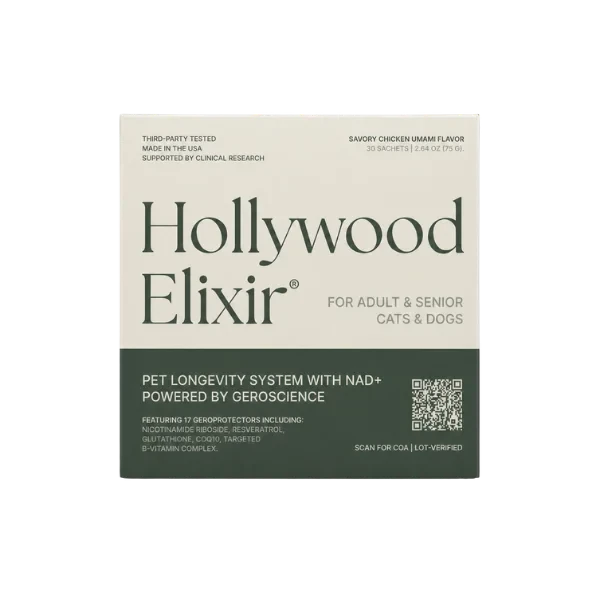
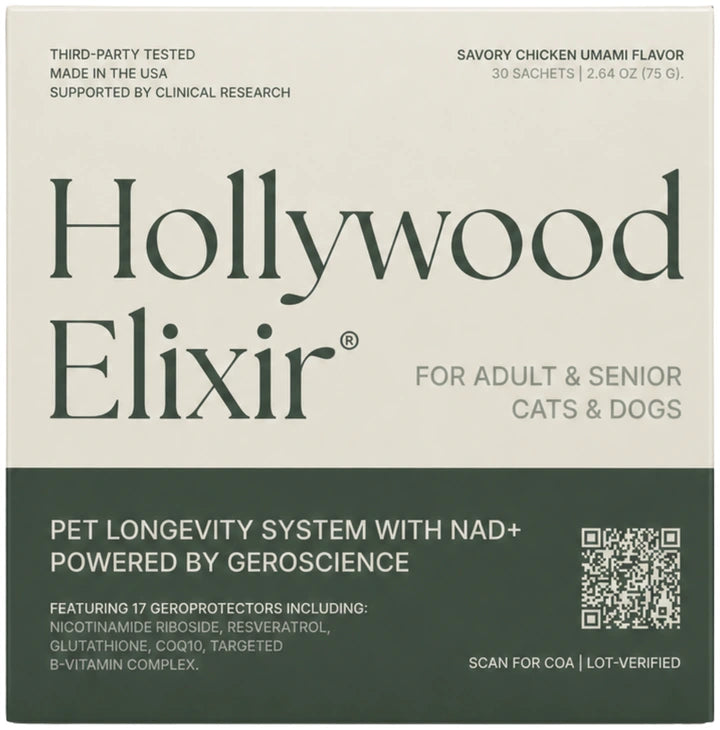
A familiar carrier supports the practical side of regular care. For the daily nutrition routine between visits, Hollywood Elixir® combines NAD+ precursors, CoQ10 and antioxidant nutrients in a powder made for adult and senior cats. The sachet mixes into the usual food, while the disclosed formula gives you something concrete to review alongside existing supplements. Explore the full formula and serving guide when planning healthy-aging nutrition. 5

Silver tabby sitting beside a food bowl and a Hollywood Elixir box held in a person's hand

DVM Voice: Clinical Vignette of a Common Pattern in Senior Cat Aging

Case provided by JoAnna Pendergrass, DVM

Sasha, a 12-year-old cat, was brought in after her owner noticed increased thirst and urination, lethargy, vomiting, and a generally unkempt appearance. Examination showed weight loss, elevated blood pressure, and reduced vitality.

Diagnostic testing revealed elevated kidney markers, poorly concentrated urine, and protein loss in the urine — findings consistent with chronic kidney disease, one of the most common chronic conditions in senior cats.

Her care required a kidney-focused diet, blood pressure management, targeted supplementation, medication support, and regular monitoring — a necessary plan, but one started after clinical signs were already visible.

Clinical takeaway: Sasha’s case reflects why senior-cat wellness should begin before obvious decline. Earlier monitoring, body-condition tracking, hydration awareness, antioxidant support, and daily cellular resilience may help support quality of life as cats age.

Single-case vignette. Not generalizable. Veterinary diagnosis and monitoring are essential for increased thirst, urination, vomiting, lethargy, weight loss, or suspected kidney disease.

Explore Hollywood Elixir Research →

Educational content only. This material is not a substitute for veterinary advice. Always consult your veterinarian about your cat’s specific needs. These statements have not been evaluated by the Food and Drug Administration. Products mentioned are not intended to diagnose, treat, cure, or prevent any disease.

Glossary

Top-loading: Providing an opening above the cat for access from the top; this does not necessarily mean the whole upper shell detaches.

Removable upper shell: An upper carrier half that separates from the base, allowing the cat to remain in the lower half when it is opened.

Interior measurements: Dimensions of the space inside the carrier, rather than its outside outline; these are the relevant starting point when allowing for bedding.

Related Reading

References

Numbered references identify the sources used for specific claims. Read the study design, species and evidence boundaries alongside each finding.

  1. Choosing the Perfect Cat Carrier. FelineVMA / Cat Friendly Homes · Not statedSpecies/context: catEvidence boundary: First-party feline guidance; care advice, not an experimental equipment comparison.↩ 1 · ↩ 2 · ↩ 3 · ↩ 4 · ↩ 5 · ↩ 6 · ↩ 7 · ↩ 8
  2. Petmate Two Door Top Load Kennel. Petmate · Not statedSpecies/context: catEvidence boundary: Current source-reported specifications and instructions; not independent performance testing.↩ 1 · ↩ 2 · ↩ 3 · ↩ 4 · ↩ 5 · ↩ 6
  3. Catit Cabrio Carrier. Catit · Not statedSpecies/context: catEvidence boundary: Current source-reported specifications and instructions; not independent performance testing.↩ 1 · ↩ 2 · ↩ 3 · ↩ 4 · ↩ 5 · ↩ 6 · ↩ 7 · ↩ 8
  4. Senior Cats Have Special Needs. Feline Veterinary Medical Association · Not statedSpecies/context: catEvidence boundary: First-party feline guidance; care advice, not an experimental equipment comparison.↩
  5. Hollywood Elixir formula and serving guide. La Petite Labs · Not statedSpecies/context: dog, catEvidence boundary: Current source-reported specifications and instructions; not independent performance testing.↩

FAQ

Is a top-loading carrier enough for an older cat?

It can help with access, but it does not answer every handling need. Feline guidance also recommends a carrier whose upper half can be removed, allowing some examinations while the cat remains in the base. Inspect both functions. 1

Can I choose carrier size from my cat’s weight?

Use the maker’s weight guidance as one limit, then check body length, standing space and room to turn with bedding installed. The compared Petmate sizes give interior dimensions; Cabrio’s listed size is overall, so it is a different measurement basis. 2 3

Should the carrier stay out between vet visits?

Feline guidance recommends leaving it in a familiar place with familiar soft bedding and encouraging voluntary entry. It can become a resting option before it needs to become transport. 1

Are these carriers approved for every airline?

No universal airline approval is established here. Catit itself directs owners to check the specific operator’s requirements. Confirm the exact journey and carrier before booking or traveling. 3

Orange-and-white cat beside a Hollywood Elixir box held in a person's hand

Discover LPL-01: How This Fits Into a Larger Feline Longevity System

Aging in cats unfolds quietly. It’s not driven by a single failure, but by gradual shifts across interconnected systems — cellular energy, oxidative balance, immune tone, and tissue integrity — each influencing the others over time.

This article explores one layer of that system. To understand what actually shapes long-term health, you need to step back and look at how these layers interact.

Start with the underlying science:

Keep exploring

What would you like to understand next?

Search practical guides about healthy aging, cellular energy, ingredients, and daily support for cats.