The 12 Hallmarks of Aging in Dogs, Explained
Read full insightCellular Detoxification for Dogs
By La Petite Labs Editorial 15 min read
Detox in a dog is not a flush. It is enzyme-driven clearance the body already runs every hour through the liver, gut, kidneys, and glutathione systems, processing normal metabolic byproducts and keeping oxidative balance steady. Most owners arrive here worried that something unseen is accumulating; the more useful question is not "how do I detox my dog?" but "how do I support the systems that keep my dog steady?"
The internet answers with extremes, cleanses, binders, dramatic promises, but a healthy dog does not need a rescue plan. What helps is reducing friction in the background: a complete diet, stable routines, and support for the antioxidant and elimination pathways that already do the work. Certain plant phytonutrients fit here because they can support oxidative balance.
This is also where a careful owner's skepticism and supplementation can coexist. Even on a complete diet, life stage and stress shape how a dog uses what it eats, so a well-designed formula can support the broader metabolic network rather than chasing a single nutrient.
- Cellular detoxification for dogs is steady cellular housekeeping, not a dramatic purge.
- The meaningful goal is resilience: smoother recovery, fewer fluctuations, and a more consistent baseline.
- Plant phytonutrients support oxidative balance, which is why "natural" approaches focus there.
- Avoid cleanse-style products; tools like activated charcoal have specific veterinary uses and real risks (Young, 2025).
- Even on a complete diet, supplements can support the network across seasons of life (Bilgiç B, 2025).
- Choose transparent, conservative formulas designed for long-term use, not a one-time reset.
Cellular Support That Keeps Pace with Real Life, Not Trends
Cellular detoxification for dogs is less about dramatic “cleanses” and more about the quiet work happening in the liver, gut, kidneys, skin, and—most importantly—inside cells. Every day, normal metabolism creates byproducts that need to be neutralized, packaged, and moved out. When that system is supported, dogs tend to look and feel more steady over time: consistent energy, resilient skin and coat, and fewer “mystery” off days.
Diet quality matters, but it is not the whole story. Even a well-formulated food can’t fully account for aging, stress, environmental exposures, or individual differences in how dogs process nutrients. Senior formulas also differ meaningfully from adult diets, reflecting how needs shift with age (German K, 2025). That is why owners often look for natural cellular detoxification for dogs that supports the broader network—without turning supplementation into a medical project.
The most credible cellular detoxification products for dogs focus on system-level support: cellular resilience, oxidative balance, and the metabolic “throughput” that keeps everyday byproducts from piling up. This is also the reason a science-minded owner might still choose a supplement even when the basics are covered—because the goal is not to replace food, but to reinforce the whole operating system that helps dogs age with fewer rough edges.
What Does 'Cellular Detox' Actually Mean for a Dog?

"Cellular detox" sounds like marketing, but the underlying idea is ordinary biology: cells constantly manage reactive byproducts, repair damage, and recycle components. Oxidative stress is part of that story, because it can rise with age, inflammation, or environmental load. Certain plant phytonutrients show up in canine nutrition because they may help reduce oxidative stress and support overall wellness (Tanprasertsuk J, 2022).
So the credible version of "detox" looks like support for resilience, not a promise to remove named toxins. A good test: does this product back the systems that already do the work, cellular antioxidant balance, healthy digestion, and normal liver function, without pushing the body into extremes? If a label promises a flush, that is the wrong direction.
How Aging Shifts Needs and Narrows the Margin for Stress
Age changes the conversation. Senior diets often differ from adult diets in nutrient composition, reflecting shifting priorities as dogs get older (German K, 2025). Even when a food is well designed, older dogs can have narrower margins: less tolerance for dietary swings, slower recovery after stress, and more sensitivity to environmental irritants.
That is where cellular detoxification supplements for dogs can make sense as a steadying influence. The goal is not to “fix” aging, but to support the metabolic network that helps dogs stay comfortable in their bodies. For many owners, the best outcome is subtle: fewer fluctuations, a coat that stays glossy, and energy that feels more even across the week.
Why Cleanse-style Detox Can Backfire in Otherwise Healthy Dogs
Not all “detox” strategies are benign. Some trends borrow from human wellness culture and do not translate well to dogs. Products that rely on strong laxative effects, extreme restriction, or frequent use of binders can create new problems while chasing a vague goal.
Activated charcoal is a good example of something that has a real veterinary use—adsorbing toxins in acute ingestion cases—but it is not a routine wellness tool. In dogs treated with a single dose, hypernatremia has been observed in retrospective analysis (Young, 2025). For everyday cellular detoxification for dogs, a gentler, supportive approach is the more responsible choice.
When Owners Start Looking for a Cellular Detoxification Supplement

When owners search for a cellular detoxification supplement for dogs, they are often responding to a pattern: a dog who seems “older than their age,” a coat that has lost some shine, or a sense that recovery takes longer than it used to. These are not diagnoses, but they are meaningful signals that the body’s day-to-day load may be rising.
The most credible supplements meet that moment with restraint. They aim to support cellular housekeeping and oxidative balance, often with plant-derived compounds that contribute phytonutrients (Tanprasertsuk J, 2022). In practice, this looks like a formula designed for consistency—something you can use alongside a stable diet and routine, without turning your dog’s life into a constant experiment.
“The most credible detox support is quiet: it reinforces what the body already does well.”
If Diet Meets Requirements, Why System-level Support Still Matters
A careful owner will ask: if my dog eats a complete-and-balanced diet, why add anything? It is a fair question. Many nutrient needs can be met through diet, and established references outline what adequacy looks like (Bilgiç B, 2025). But adequacy is not the same as optimization for an individual dog’s season of life.
Supplements are most defensible when they support the broader system rather than chasing a single deficiency. Stress, aging, and environmental exposures can increase oxidative load and change how a dog “uses” their nutrition. In that sense, cellular detoxification products for dogs can be viewed as network support—helping the body keep pace with normal demands, not replacing what food already does.
Choosing Supplements That Fit a Veterinary-respectful Nutrition Lens
There is also a decision-quality issue: the supplement market is noisy. One way to stay grounded is to prioritize products that align with mainstream nutrition principles—transparent labeling, realistic claims, and compatibility with veterinary care. Global nutrition guidance emphasizes selecting reputable manufacturers and evaluating diets and add-ons with a critical eye (Rumbeiha W, 2011).
If a brand frames its formula as the “only” answer, or implies that normal physiology is failing without it, that is a red flag. The best cellular detoxification for dogs should feel like an elegant addition: supportive, low-drama, and easy to maintain over time.
Who Should Be Cautious with Detox Support and Why
Some dogs deserve extra caution: those with chronic disease, those on multiple medications, and those with a history of pancreatitis or sensitive digestion. In these cases, “natural” does not automatically mean “safe.” The liver is central to processing many compounds, and when liver function is compromised, detoxification capacity can be reduced (Scanlan N, 2001).
A responsible approach is to treat supplements as part of the health record. Bring the label to your veterinarian, introduce one product at a time, and stop if you see vomiting, diarrhea, itchiness, or behavior changes. Effective cellular detoxification for dogs should be compatible with stability, not a source of new variability.
What Realistic Results Look Like When Support Is Working
Results, when they appear, are usually quiet. Owners might notice a steadier appetite, a coat that looks more polished, or a dog who seems less “wired and tired” after stimulation. These are subjective observations, but they are often the most relevant ones in daily life.
Give any new routine time, and keep expectations realistic. Cellular support is not a quick fix; it is more like maintenance. If you want to evaluate a supplement fairly, keep notes on stool quality, scratching, energy, and sleep for a few weeks, and discuss any concerns with your veterinarian—especially if your dog’s diet or health status is changing.
How to Spot Serious, Safe Cellular Detoxification Products
If you are comparing the best cellular detoxification supplements for dogs, look for signals of seriousness rather than hype. That includes clear ingredient disclosure, conservative positioning (support, not promises), and manufacturing standards you can verify. A product should also make sense as part of a dog’s life, not as a temporary “reset.”
Be cautious with products that lean on aggressive binders or “pulling toxins” language. Activated charcoal, for example, has a legitimate role in acute toxicant ingestion under veterinary direction, but it is not a casual daily strategy; adverse effects like hypernatremia have been reported after administration in dogs (Young, 2025). For everyday support, prioritize gentle, food-adjacent ingredients and a formulation designed for long-term use.
“Avoid dramatic cleanses; choose consistency that fits a dog’s real life.”
DVM Voice: Clinical Vignette of a Common Pattern in Senior Dog Aging
Case provided by JoAnna Pendergrass, DVM
Rex, a 7-year-old Labrador Retriever, was brought in after his owner noticed he was slower to rise, hesitant on stairs, and less able to play as before. Examination showed stiffness and reduced hip mobility; radiographs confirmed degenerative joint changes.
His care required weight management, veterinary-guided pain control, nutritional support, and rehabilitation — a comprehensive plan, but one started only after visible decline appeared.
Clinical takeaway: Rex’s case reflects the value of proactive aging support: maintaining lean body condition, monitoring mobility early, and supporting cellular resilience, antioxidant defense, and healthy inflammatory balance before decline becomes obvious.
Single-case vignette. Not generalizable. Veterinary oversight is essential for pain, stiffness, or suspected joint disease.
Why Detox Is a Whole-body Conversation, Not One Organ
A common misconception is that “detox” is a single organ’s job. In reality, effective cellular detoxification for dogs depends on coordination: the liver’s processing capacity, the gut’s barrier and motility, the kidneys’ filtration, and the cellular antioxidant systems that keep normal chemistry from turning irritating. When one piece is strained, the whole experience can feel off—especially in older dogs.
Plant-derived compounds are often discussed here because they can contribute phytonutrients that help maintain oxidative balance and overall wellness (Tanprasertsuk J, 2022). The point is not to “flush” anything, but to support the conditions that let the body do its ordinary work smoothly. That framing keeps expectations realistic and keeps you focused on steady, observable wellbeing.
When Liver Concerns Change the Detoxification Conversation
If your dog has known liver disease or suspected liver compromise, “detox” language can be misleading. Compromised liver function can reduce normal detoxification capacity, and the right plan is medical management plus carefully chosen nutrition—not a generic cleanse (Scanlan N, 2001). In these cases, even well-intended supplements should be reviewed with your veterinarian, because dosing, ingredient tolerance, and concurrent medications matter.
For healthy dogs, the goal is support, not correction. A cellular detoxification supplement for dogs should be gentle enough for routine use, and it should not encourage you to ignore symptoms that deserve a workup. If appetite changes, vomiting, jaundice, or unusual lethargy appear, treat that as a clinical question first, and a supplementation question second.
Amino Acids, Repair, and Why Single Nutrients Aren’t the Point
Owners often ask whether amino acids belong in a cellular support conversation. They can, because amino acids are foundational to repair and renewal. But the practical takeaway is not to chase single numbers. Adult dogs across breed sizes can share similar requirements for certain essential amino acids, and those needs can be assessed with established methods (Mansilla WD, 2020).
Where supplements can still matter is in supporting the broader metabolic network that uses those building blocks—especially as dogs age, when diet composition and needs can shift (German K, 2025). The best cellular detoxification for dogs is rarely a single ingredient; it is a formulation that respects how many systems have to cooperate for a dog to look and feel “easy” in their body.
Diet Quality First, Then Supplements That Respect the Baseline
Food quality is the baseline. Still, nutrition is not only about meeting minimums; it is also about avoiding unintended tradeoffs. Recent concerns around diet-associated dilated cardiomyopathy have underscored how formulation choices can have downstream effects, and how nutrients like taurine may be relevant in some contexts (McCauley SR, 2020).
This matters for detox conversations because “support” should never come at the expense of overall dietary integrity. If you are changing foods while adding cellular detoxification supplements for dogs, do it thoughtfully: one change at a time, with attention to body condition, stool quality, and energy. A supplement should complement a sound diet, not compensate for a risky one.
What to Watch for When You Add a New Support Routine
For many households, the most useful “detox” metric is not a lab value—it is consistency. Is your dog’s appetite steady? Is their stool predictable? Do they recover quickly after a long walk or a busy day? These are the lived signs that the body is processing normal demands without friction.
If you introduce a new cellular detoxification product for dogs, keep the rest of the routine stable for a few weeks. That makes it easier to notice subtle changes without attributing everything to the supplement. And if nothing changes, that can still be informative: sometimes the best outcome is simply maintaining a good baseline as a dog moves through middle age and beyond.
Quality Control Signals That Matter More Than Buzzwords
Quality control is not glamorous, but it is the difference between a thoughtful supplement and a gamble. Look for brands that can speak clearly about sourcing, testing, and stability. If a company cannot explain why an ingredient is included, or how the formula is intended to be used, that is a signal to move on.
It is also reasonable to align supplements with established nutrition guidance: complete-and-balanced diets, transparent labeling, and a willingness to answer questions about formulation and manufacturing (Rumbeiha W, 2011). The best cellular detoxification supplements for dogs fit into that ecosystem—quietly, consistently, and without asking you to suspend common sense.
Capacity, Aging, and the Quiet Logic of Daily Support
A practical way to think about cellular detoxification for dogs is as “capacity.” Capacity is shaped by sleep, stress, age, activity, and diet. When capacity is high, small exposures and normal metabolic byproducts are handled without drama. When capacity is lower, the same inputs can feel heavier.
That is why a system-level supplement can be appealing to careful owners: it is not a claim to remove specific toxins, but a way to support the cellular conditions that help a dog stay resilient. If you are already feeding a solid diet that meets established nutrient requirements, a supplement can still be relevant as a layer of support for aging and everyday oxidative load (Bilgiç B, 2025).
A Calm, Long-term Approach to Cellular Resilience in Dogs
The grounded approach is simple: feed a high-quality diet, keep your veterinarian in the loop, and use supplements to support the whole system rather than chasing a single "detox" lever. For everyday support, prioritize gentle, well-formulated products built for long-term use, not a harsh cleanse.
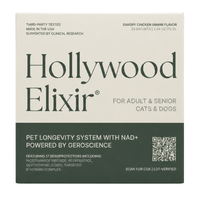
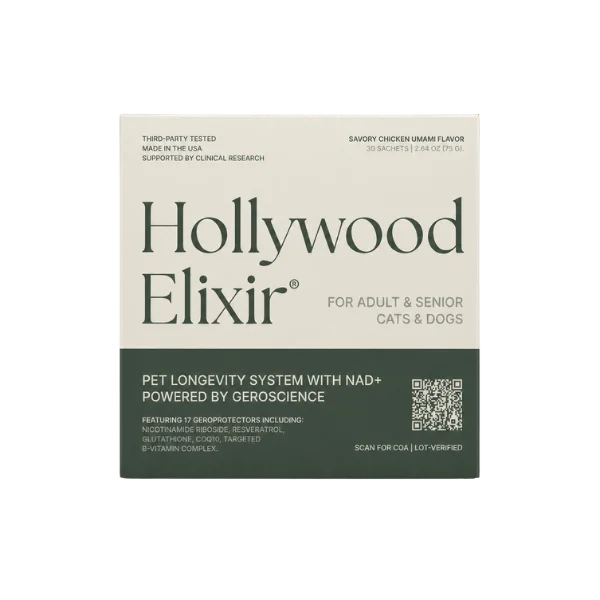
Glutathione is the on-topic active here, and reading it on the label matters. Hollywood Elixir discloses glutathione at 50 mg per sachet alongside an antioxidant network, astaxanthin at 2 mg, vitamin C at 10 mg, vitamin E at 15 IU, and resveratrol at 15 mg, with no proprietary blend and a lot-level COA you can look up. It is a food-mixed daily companion that supports cellular antioxidant balance and graceful aging rather than acting as a flush. For discerning owners, that is the point: not a dramatic before-and-after, but a steadier baseline, and for dogs with liver disease or on medication, a plan to clear with the vet first.
“System-level support matters most when aging narrows the margin for stress.”
Educational content only. This material is not a substitute for veterinary advice. Always consult your veterinarian about your dog’s specific needs. These statements have not been evaluated by the Food and Drug Administration. Products mentioned are not intended to diagnose, treat, cure, or prevent any disease.
Glossary
- Cellular Detoxification: The ongoing process of managing normal metabolic byproducts and maintaining cellular balance.
- Oxidative Stress: An imbalance between reactive compounds and the body’s ability to keep them in check.
- Antioxidant Defense: The body’s internal systems that help neutralize reactive byproducts and support cellular stability.
- Phytonutrients: Bioactive compounds from plants that can support wellness and oxidative balance.
- Liver Support: Nutritional and lifestyle choices that help maintain normal liver function and processing capacity.
- Gut Barrier: The lining of the intestines that helps regulate what is absorbed and supports immune balance.
- Binders: Ingredients (like charcoal) that can adsorb compounds in the gut; typically used for specific situations, not daily wellness.
- Complete and Balanced: A pet food formulation standard intended to meet a dog’s nutrient needs for a given life stage.
- System-Level Support: A formulation approach that supports multiple connected functions rather than targeting a single nutrient.
Related Reading
Aging & Senior Dog Guidance
• Dog Age Calculator
• Dog Dementia
• Lethargy in Dogs
• My Dog Won't Eat
• Dog Pacing At Night
• Dog Licking Paws
• Can Dogs Dehydrate
Healthy Aging Support
• NAD+ for Dogs
• NMN for Dogs
• Antioxidants Supplements for Dogs
• Best Senior Dog Supplements & Vitamins
• Rapamycin for Dogs
References
Mansilla WD. Adult dogs of different breed sizes have similar threonine requirements as determined by the indicator amino acid oxidation technique. PubMed Central. 2020. https://pmc.ncbi.nlm.nih.gov/articles/PMC7085255/
Tanprasertsuk J. Roles of plant-based ingredients and phytonutrients in canine nutrition and health. PubMed Central. 2022. https://pmc.ncbi.nlm.nih.gov/articles/PMC9291198/
German K. Exploratory analysis of nutrient composition of adult and senior dog diets. PubMed Central. 2025. https://pmc.ncbi.nlm.nih.gov/articles/PMC12757753/
McCauley SR. Review of canine dilated cardiomyopathy in the wake of diet-associated concerns. PubMed Central. 2020. https://pmc.ncbi.nlm.nih.gov/articles/PMC7447921/
Young. Incidence of hypernatremia in dogs treated with single dose activated charcoal for acute toxicant ingestion: multi-center retrospective study (2018-2023). PubMed Central. 2025. https://pmc.ncbi.nlm.nih.gov/articles/PMC11897026/
Scanlan N. Compromised hepatic detoxification in companion animals and its correction via nutritional supplementation and modified fasting. PubMed. 2001. https://pubmed.ncbi.nlm.nih.gov/11591171/
Bilgiç B. Investigation of Trace and Macro Element Contents in Commercial Cat Foods. PubMed Central. 2025. https://pmc.ncbi.nlm.nih.gov/articles/PMC11633335/
Rumbeiha W. A review of class I and class II pet food recalls involving chemical contaminants from 1996 to 2008. PubMed Central. 2011. https://pmc.ncbi.nlm.nih.gov/articles/PMC3614097/
FAQ
What does cellular detoxification for dogs actually refer to?
It refers to the everyday work of managing normal metabolic byproducts, maintaining oxidative balance, and moving waste out through the liver, kidneys, gut, and skin. It is not a single event, and it is not a cleanse. For most dogs, the practical goal is steadiness over time—supporting resilience rather than chasing dramatic changes.
Why do owners care about cellular detoxification in older dogs?
As dogs age, recovery can slow and tolerance for stress can narrow. Nutrition also shifts: senior diets often differ from adult formulas, reflecting changing needs. Owners notice this as more “off” days, slower bounce-back, or a coat that looks less polished. Support is most useful when it is consistent and gentle, aimed at cellular resilience rather than quick fixes.
How is cellular detoxification for dogs different from a cleanse?
A cleanse implies a short, intensive intervention. Cellular support is the opposite: it is about reinforcing normal daily processing and recovery, without forcing the body through extremes. Cleanse-style tactics can create avoidable variability in appetite and stool.
Are plant ingredients relevant to cellular detoxification support?
They can be. Certain phytonutrients are discussed in canine nutrition because they may help reduce oxidative stress and support overall wellness. That is a different claim than “removing toxins,” and it is a more realistic way to think about benefits.
Is a cellular detoxification supplement for dogs safe daily?
Daily use can be reasonable when the product is formulated for long-term support, has transparent labeling, and your dog tolerates it well. Safety also depends on health status, other supplements, and medications. If your dog has chronic disease or takes prescriptions, confirm compatibility with your veterinarian first.
When should I avoid detox-style products for my dog?
Avoid products that rely on aggressive binders, laxative effects, or “pulling toxins” language—especially without veterinary guidance. Activated charcoal, for instance, is used for acute toxicant ingestion, but adverse effects like hypernatremia have been observed after administration.
Can supplements replace a high-quality diet for detox support?
No. A complete-and-balanced diet is the foundation, and established references outline baseline nutrient needs. Supplements are best viewed as complementary support, not a substitute for sound formulation and consistent feeding. The most sensible role for a supplement is system-level reinforcement—supporting resilience and oxidative balance alongside good food, like a disclosed aging-support formula.
How long until I notice results from cellular support?
When changes happen, they are usually subtle: steadier energy, a more polished coat, or fewer digestive fluctuations. Because this is maintenance-oriented support, it is reasonable to evaluate over a few weeks while keeping diet and routine stable. If you see new symptoms, treat that as a veterinary question rather than waiting it out.
What are common side effects of detox supplements in dogs?
The most common issues are gastrointestinal: softer stool, gas, or occasional vomiting—often from introducing something new too quickly or from ingredients that don’t suit a particular dog. Behavioral changes or itchiness can also occur with sensitivities. Introduce one product at a time and stop if your dog seems worse.
Can detox supplements interact with medications my dog takes?
Yes, potential interactions are possible, especially with products that affect absorption in the gut or that contain multiple bioactive compounds. Dogs with liver compromise may also process compounds differently, which can change tolerance(Scanlan N, 2001). Bring the full ingredient list to your veterinarian and avoid stacking multiple new supplements at once.
Is cellular detoxification for dogs helpful for puppies too?
Puppies typically do best with a high-quality growth diet and a simple routine. Unless your veterinarian recommends otherwise, adding multiple supplements early can complicate feeding and make sensitivities harder to identify. If you are considering cellular support for a young dog, keep it conservative and vet-guided.
Do small and large breeds need different detox support?
Breed size can influence metabolism, lifespan, and how aging shows up day to day, but “detox” support is still about the same core systems. Nutrient requirements for some essentials can be similar across breed sizes in adult dogs(Mansilla WD, 2020). The more meaningful differences are individual: sensitivity, activity level, and health history.
Can cats take dog detox supplements or Hollywood Elixir™?
Cats and dogs have different nutritional requirements and tolerances, so products are not automatically interchangeable. Even when ingredients overlap, the formulation and intended use matter. If you are considering a cellular support product for a cat, ask your veterinarian for a cat-specific recommendation.
What quality signals matter in cellular detoxification products for dogs?
Prioritize transparency: full ingredient lists, clear intended use, and manufacturing standards you can verify. It also helps when a brand aligns with mainstream nutrition principles and is willing to answer formulation questions(Rumbeiha W, 2011). Be wary of products that promise to “remove toxins” without defining what that means.
How should I introduce a new cellular detoxification supplement?
Introduce one new product at a time, keep the rest of the routine stable, and watch stool, appetite, and scratching for changes. This makes it easier to tell what is helping and what is not. If your dog has a sensitive stomach or takes medications, check with your veterinarian before starting.
Is it okay to combine multiple detox supplements together?
Stacking multiple products can increase the chance of GI upset and makes it harder to identify what is causing a change. It can also create ingredient overlap you did not intend. A cleaner approach is to choose one well-designed formula and evaluate it over time.
Does cellular detoxification support relate to heart health concerns?
Indirectly. The bigger issue is overall diet quality and formulation choices. Diet-associated dilated cardiomyopathy concerns have highlighted how certain diets may be linked to cardiac outcomes, and nutrients like taurine can be relevant in some contexts(McCauley SR, 2020). If you are changing foods, do it thoughtfully and involve your veterinarian.
What does research say about oxidative stress and detox support?
In canine nutrition, oxidative stress is often discussed as a normal pressure that can rise with age and environmental load. Certain plant phytonutrients may help reduce oxidative stress in canine cells and support wellness. That framing supports a gentle, long-term approach rather than a “toxin removal” narrative.
When should I call my vet about detox-related symptoms?
Call promptly for repeated vomiting, refusal to eat, marked lethargy, yellowing of the gums/eyes, or sudden behavior changes. If your dog has known liver issues, be especially cautious because detoxification capacity can be impaired. Supplements should not delay evaluation when something feels wrong.
How do I choose the best cellular detoxification for dogs?
Start with the basics: a reputable complete-and-balanced diet, stable routine, and clarity about your goal (coat, energy steadiness, digestive consistency). Then choose a supplement with transparent labeling, conservative claims, and a design meant for long-term use.
Discover LPL-01: How This Fits Into a Larger Canine Longevity System
Aging in dogs is not driven by a single pathway. It’s the result of interacting biological systems—energy metabolism, oxidative stress, immune signaling, and structural integrity—changing over time.
This article explores one piece of that puzzle. If you want to understand how these pieces connect—and what actually moves the needle—you need to zoom out.
Start with the underlying science:
- Canine Geroscience Framework →
A structured view of how aging progresses across cellular energy, inflammation, and resilience systems. - Senior Biological Defense Coverage (BDC) Modeling →
A systems-level map of which biological pathways decline first, and how layered interventions can support them. - 2026 Market Research: Best Dog Longevity Supplements →
A 2026 industry report and review of leading senior-dog and cellular-aging formulas. - LPL-01 Standard →
The formulation system that translates these models into real-world supplementation—covering multiple pathways in a coordinated way.
Essential Summary
Why is cellular detoxification for dogs important?
Cellular detoxification is the body’s everyday work of managing normal byproducts, oxidative load, and recovery. For dogs, the most credible support is gentle and consistent: sound nutrition, stable routines, and carefully chosen supplements that reinforce resilience rather than promising dramatic “cleanses.” The goal is a steadier baseline that holds up with age.
Hollywood Elixir is designed as system-level support for graceful aging—helping reinforce cellular resilience and everyday oxidative balance without relying on harsh binders or cleanse-style tactics.
Hollywood Elixir®
Starting at $89/mo
Hollywood Elixir is amazing! She put back on 5 lbs to a healthy weight, her eyes are shiny, her coat is beautiful!
— Jessie
We go on runs. Lately he's been keeping up with no problem!
— Cami
Considering cellular detoxification for dogs?
If you're searching to understand cellular detoxification in dogs
If you’re weighing cellular detoxification for dogs, start with the least dramatic, most reliable steps: a reputable complete-and-balanced diet, steady hydration, predictable exercise, and fewer abrupt changes. Then, if you want an added layer, choose one supplement and evaluate it calmly for a few weeks. Avoid cleanse-style products and harsh binders; daily wellness should not mimic emergency toxicology. The best cellular detoxification supplements for dogs are the ones you can use consistently, that don’t create new digestive variability, and that fit alongside veterinary care. Hollywood Elixir is designed for that role—system-level support for cellular resilience and graceful aging, without asking you to treat your dog like a project.
Learn about how our DVMs think about dog aging
Dr. JoAnna Pendergrass DVM
Hollywood Elixir®
Starting at $89/mo
Explore your dog’s changing needs over time
Related Reading
Most people arrive at cellular detoxification for dogs with a quiet worry: that something unseen is accumulating, and that time is moving faster than it used to. The internet answers with extremes—cleanses, binders, dramatic promises.