





Taurine for Cats

Why cats need it, how much their food must supply, and when a supplement is worth it.

By La Petite Labs Editorial 10 min read

As Seen On

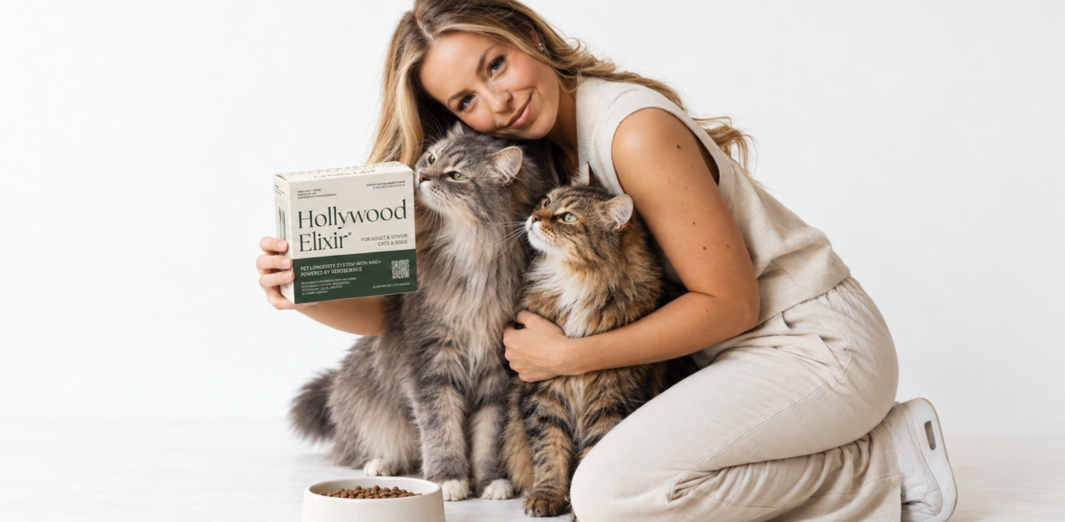
Woman cuddling an orange-and-white cat and a silver tabby while holding a Hollywood Elixir box
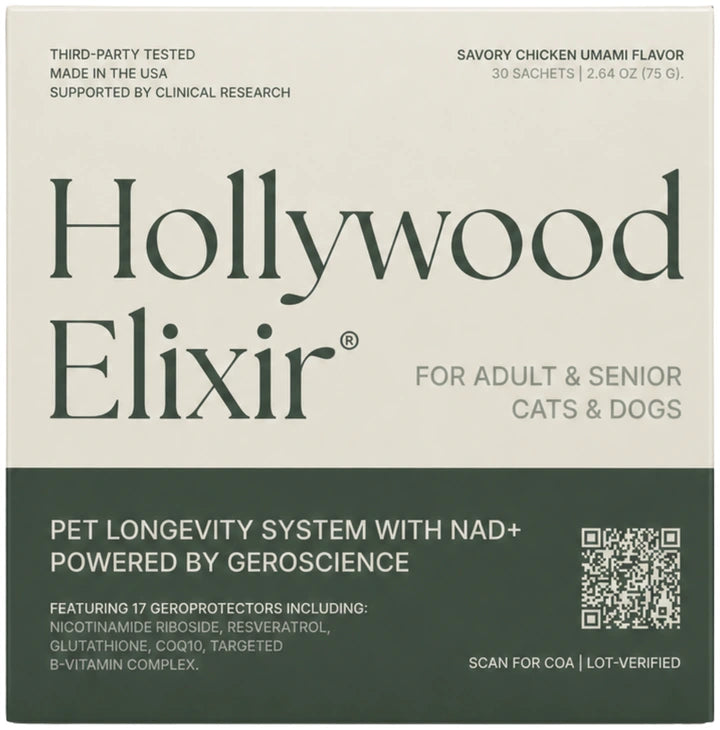
Hollywood Elixir® Senior Cat Supplement

17 science-backed actives

From$50/moSave up to 47%Save up to 44%Shop Now
Contents
Taurine is an essential nutrient for cats: they can't make enough of it, so it has to come from food every day. Too little damages the heart and eyes over months. A complete cat food already contains what a healthy cat needs, so most cats don't need a supplement.

This guide covers how much taurine cat food must contain, the signs of a shortfall, the diets that fall short, and what a supplement can and can't do.

  • What it is: An amino acid cats use for the heart, eyes, digestion and reproduction. Their bodies make very little.1
  • How much: Complete cat food must contain at least 0.10% taurine on a dry matter basis for dry food and 0.20% for canned.9
  • Deficiency signs: Vision loss, a weak heart and poor litters. Signs take months to appear.15
  • Who needs a supplement: Cats on homemade, raw, vegetarian or dog-food diets, and cats whose vet has found a shortfall.15
  • Safety: Cats fed 20 times the normal level showed no harm.17
  • Food sources: Meat and seafood are rich in taurine. Plants have little or none.12
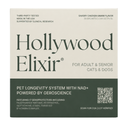
  • In Hollywood Elixir: No. Hollywood Elixir has no taurine, because complete cat food supplies it. It adds CoQ10 and an NAD+ precursor.

What is taurine, and why do cats need it?

Taurine is an amino acid found in meat and seafood. Most animals make their own from other amino acids. Cats make very little, because the enzyme that finishes the job is barely active in a cat's liver.1

Cats also spend taurine faster than other animals do. A cat binds its bile acids almost entirely to taurine, so some leaves the body with every meal it digests.2 Low supply and steady loss add up to one rule: a cat has to eat taurine every day.

That's why taurine goes into every complete cat food. Researchers showed it was essential for cats in the 1970s, and food standards have required it for decades.1, 9

Woman kneeling with two long-haired tabby cats while holding a Hollywood Elixir box beside a food bowl

What does taurine do for cats?

Taurine supports four systems in a cat's body.

  • Heart: heart muscle holds taurine at about 100 times the level found in blood plasma, and it needs that supply to pump strongly.3
  • Eyes: the light-sensing cells of the retina depend on it.4
  • Digestion: taurine forms the bile salts that help digest fat.2
  • Reproduction: queens short on taurine lose litters or have small, weak kittens.8

A cat with enough taurine shows no sign of any of this. The work goes on quietly, which is why a shortfall is easy to miss.

Woman exercising beside a tabby cat, with a Hollywood Elixir box and food bowl on a small table

What are the signs of taurine deficiency in cats?

Taurine deficiency in cats shows up in the eyes, the heart, the gut and the litters of a breeding queen. Watch for:

  • bumping into things or hesitating in dim light;
  • fast or labored breathing, weakness or collapse;
  • ongoing digestive upsets;
  • small litters, stillbirths or kittens that fail to grow.15, 8

None of these signs is unique to taurine. Each one calls for a vet visit, and labored breathing is an emergency. Your vet can examine the eyes, scan the heart and measure taurine in the blood.

Orange-and-white cat reaching toward a woman holding a Hollywood Elixir box while sitting in a chair

How long does taurine deficiency take to show?

Taurine deficiency develops slowly. VCA Animal Hospitals notes that signs can take several months to appear, depending on the cat's life stage.15

A diet that is only slightly low can take far longer. In the study that first tied taurine to heart failure, two of 11 cats on a marginally low-taurine diet developed heart muscle failure after four years.6

The eyes are the reason not to wait. Retinal damage can go unnoticed until it's advanced, and the central damage doesn't heal.5 Prevention through the daily diet is the only reliable fix.

Gray-haired man holding a Hollywood Elixir box while two cats rest beside him in an armchair

How much taurine does a cat need per day?

A cat's taurine need is set through its food. The AAFCO Cat Food Nutrient Profiles, the US standard for complete cat food, list these minimums on a dry matter basis:9

  • Dry (extruded) food: 0.10% taurine, which is 100 mg in every 100 g of dry matter;
  • Canned food: 0.20% taurine, or 200 mg in every 100 g of dry matter.9

A food sold as "complete and balanced" for cats is expected to meet them or to pass a feeding trial. For cats with taurine-related heart failure, vets have used far more: 500 to 1,000 mg a day in the main clinical study.7

Low supply and steady loss add up to one rule: a cat has to eat taurine every day.

Why does canned cat food need more taurine than dry?

Canned cat food needs more taurine because of what heat processing does inside the cat's gut. Cooking food in a sealed can creates compounds that feed gut bacteria, and those bacteria break taurine down before the cat can recycle it.22

Researchers measured the effect directly. Cats fed a heat-processed diet lost far more taurine through the intestine than cats fed the same food frozen.11 Compared with purified diets, commercial dry food roughly doubles a cat's taurine requirement, and canned food raises it about fourfold.10

Pet food makers learned this the hard way. In 1987, researchers found low taurine in 21 cats with heart muscle failure that had been eating commercial cat foods.6 Most manufacturers now add enough taurine, and the standard for canned food is twice that for dry.16, 9 You don't need to adjust anything yourself, as long as the label says the food is complete.

Tabby cat looking up at a Hollywood Elixir sachet held above it, with the product box on a small table

Does my cat need a taurine supplement?

Most cats don't need a taurine supplement. A healthy cat eating a complete cat food made for its life stage already gets enough.15

A supplement makes sense when the diet can't be trusted to supply it:

  • homemade or raw diets without a professional recipe;
  • vegetarian or vegan cat foods;
  • a cat eating mostly dog food or table scraps;
  • a cat whose vet has found low taurine or taurine-related heart disease.15

In those cases, fix the diet first and let your vet set the amount. Our overview of cat vitamins and supplements explains what a complete food already covers.

Hand gently petting an orange-and-white cat beside a food bowl and Hollywood Elixir box

Which foods are high in taurine?

Taurine is found in animal tissue and almost nowhere else. When researchers measured feed ingredients, animal muscle was rich in taurine, with seafood the richest, while plant ingredients had little or none.12

Cooking matters as well. Boiling or basting, where the food sits in liquid, washes more taurine out. Baking and frying keep more of it in.12

For your cat, the practical source of taurine is a complete cat food. Meat scraps add some, but you can't measure how much, and they don't balance the rest of the diet. Our guide to the longevity diet for senior cats covers what a good one looks like.

Man holding a Hollywood Elixir box beside a black cat, an orange tabby and a food bowl

Is homemade or raw food enough taurine for cats?

Homemade and raw diets supply enough taurine only when the recipe is designed to. Meat alone isn't a complete diet.

A published case shows the risk. A five-month-old kitten fed nothing but raw chicken developed bone disease and retinal damage of the kind taurine deficiency causes. Vets managed it with a complete kitten food and added taurine.13

If you cook for your cat, use a recipe from a board-certified veterinary nutritionist and follow its supplement list exactly. Swapping cuts or cooking methods changes how much taurine your cat gets.12

Is taurine safe for cats? Can they have too much?

Taurine is one of the safest supplements a cat can be given. No harmful level has been found.

  • In a breeding study, cats ate diets with up to 1% taurine, 20 times the level in the normal diet, with no harmful effects in the adults or their kittens.17
  • Cats with heart failure received 500 to 1,000 mg a day in a clinical study.7
  • VCA Animal Hospitals reports no known problems from excess dietary taurine in cats.15

A healthy cat on complete food gains nothing from extra taurine. The real risk is the product. Supplement quality varies between makers, so choose one that states the milligrams of taurine per serving.15

Keep human energy drinks away from cats, too. The taurine in them isn't the problem. The caffeine is.

Prevention through the daily diet is the only reliable fix.

Silver tabby sitting beside a food bowl and a Hollywood Elixir box held in a person's hand

DVM Voice: Clinical Vignette of a Common Pattern in Senior Cat Aging

Case provided by JoAnna Pendergrass, DVM

Sasha, a 12-year-old cat, was brought in after her owner noticed increased thirst and urination, lethargy, vomiting, and a generally unkempt appearance. Examination showed weight loss, elevated blood pressure, and reduced vitality.

Diagnostic testing revealed elevated kidney markers, poorly concentrated urine, and protein loss in the urine — findings consistent with chronic kidney disease, one of the most common chronic conditions in senior cats.

Her care required a kidney-focused diet, blood pressure management, targeted supplementation, medication support, and regular monitoring — a necessary plan, but one started after clinical signs were already visible.

Clinical takeaway: Sasha’s case reflects why senior-cat wellness should begin before obvious decline. Earlier monitoring, body-condition tracking, hydration awareness, antioxidant support, and daily cellular resilience may help support quality of life as cats age.

Single-case vignette. Not generalizable. Veterinary diagnosis and monitoring are essential for increased thirst, urination, vomiting, lethargy, weight loss, or suspected kidney disease.

Explore Hollywood Elixir Research →
Woman holding a Hollywood Elixir box toward a brown cat perched on the back of a sofa

What are the side effects of taurine in cats?

Taurine has no documented side effects in cats at the amounts used in foods and supplements.15, 17 When a taurine product causes trouble, the cause is usually something else in it, such as flavorings, fillers or other active ingredients.

Give a new taurine supplement with food, and watch for vomiting, loose stools or food refusal in the first week. If your cat takes heart medication, tell your vet before adding anything, taurine included. A supplement is an addition to the treatment plan and never a swap for it.

Woman leaning toward a fluffy orange cat beside a Hollywood Elixir box and green food bowl

Can taurine reverse heart disease or blindness in cats?

Taurine can reverse heart muscle failure when low taurine caused it. In the original 1987 report, heart function returned to normal after taurine was added.6

Recovery isn't guaranteed. Of 37 cats with severe heart muscle failure given taurine alongside standard care, 14 died within the first month, while 22 improved markedly and lived more than 240 days.7 Today this form of heart disease is rare, and most feline heart disease has other causes.16

Blindness is different. Taurine stops further retinal damage, but the central damage already done doesn't heal.5

Tabby cat licking its nose beside a food bowl and Hollywood Elixir box

Is the taurine in dog food enough for cats?

Dog food doesn't contain enough taurine for a cat.15 The reason is a real difference between the two species.

Dogs make their own taurine from other amino acids. Researchers have measured how fast, and found that large dogs make it more slowly than small ones.19 Because dogs make their own, dog foods aren't built around a cat's taurine needs.

A cat that steals a mouthful of dog food is fine. A cat that lives on dog food is headed for a shortfall in taurine and in several other nutrients. Our guide to taurine for dogs covers the canine side.

Are vegan and vegetarian cat foods low in taurine?

Vegan and vegetarian cat foods have to add lab-made taurine, because plants contain little or none.12 Whether they add enough is the question.

When researchers tested 24 commercial vegetarian diets for dogs and cats, six fell short of the minimum for one or more amino acids, and three of those six were low in taurine.14 Labels weren't a reliable guide either, because most of the diets failed at least one labeling rule.14

Cats are obligate carnivores, and taurine is only one of the nutrients they normally get from animal tissue. If you want to feed a plant-based diet, ask your vet about checking your cat's blood taurine, and choose a food that has passed a feeding trial.

How do vets test a cat's taurine level?

Vets measure taurine with a blood test, usually on whole blood and plasma together. Published reference ranges for domestic cats are 300 to 600 nmol per mL in whole blood and 80 to 120 nmol per mL in plasma.18 Whole blood reflects the body's stores, while plasma shows the effect of recent meals.18

A blood test is one part of the picture. For a suspected heart problem your vet will scan the heart with ultrasound, and for vision changes an eye exam looks at the retina.

See a vet promptly if your cat breathes fast or with effort, tires easily, goes off food or starts misjudging jumps. Open-mouth breathing in a cat is an emergency. Bring the food label, or a list of everything your cat eats, because the diet history is half the diagnosis.

Tabby cat sitting at a table with a food bowl and Hollywood Elixir box

Does taurine help cats live longer? What do studies show?

Taurine's proven benefit in cats is preventing deficiency. No study has tested whether extra taurine lengthens a healthy cat's life.

The longevity headlines come from other species. A 2023 study reported that taurine levels fell with age and that supplements lengthened healthy life in mice.20 A 2025 study then found that taurine levels held steady or rose with age when the same people and animals were followed over time.21

For a cat on complete food, the takeaway is simple: make sure taurine never runs short. If healthy aging is your goal, our guide to NAD+ for cats covers a different route.

Woman cuddling a silver tabby and a cream-colored cat while holding a Hollywood Elixir box

How do you choose a taurine supplement for a cat?

A good taurine supplement for cats is plain. Taurine is a single ingredient, so the label should be short. Look for:

  • milligrams of taurine per scoop or capsule, stated clearly;
  • a powder or capsule you can mix into food;
  • no added flavors, sweeteners or stimulants;
  • a maker that will share its test results.

Taurine covers one job. For an older cat's heart and energy, our CoQ10 guide for cats and heart support guide for cats cover what else is studied. Hollywood Elixir, our own daily formula, prints the amount of every active on its ingredients page.

Is taurine in Hollywood Elixir?

No. Hollywood Elixir doesn't contain taurine. A complete cat food already has to supply it, and Hollywood Elixir is built to add nutrients that food usually leaves out.

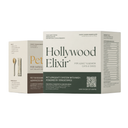
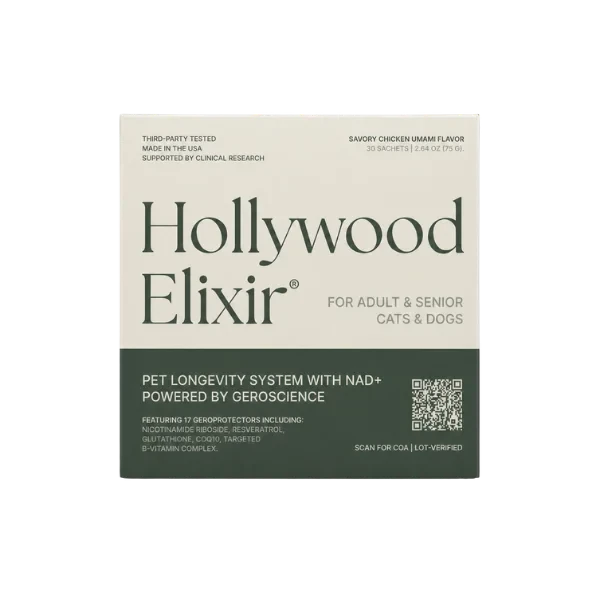
Each sachet has 40 mg of CoQ10, which heart and muscle cells use to make energy, and 60 mg of nicotinamide riboside, an NAD+ precursor. Glutathione, astaxanthin and 13 more actives bring the total to 17, with every amount printed on the label.

It's a daily powder for adult and senior cats and dogs: half a sachet stirred into food for a cat under 7 lb, and one sachet from 7 to 30 lb. Hollywood Elixir is a supplement. It's no substitute for a complete diet or for heart medication, and it hasn't been tested for lifespan.

If your cat's food is complete, taurine is covered. Hollywood Elixir is for what comes next, and our guide to the best supplements for senior cats shows how it compares. See the full Hollywood Elixir formula and serving guide.

If your cat's food is complete, taurine is covered.

Educational content only. This material is not a substitute for veterinary advice. Always consult your veterinarian about your cat’s specific needs. These statements have not been evaluated by the Food and Drug Administration. Products mentioned are not intended to diagnose, treat, cure, or prevent any disease.

Glossary

Taurine: An amino acid cats must get from food. It supports the heart, eyes, digestion and reproduction.

Dilated cardiomyopathy (DCM): A disease in which the heart muscle weakens and the heart chambers enlarge.

Feline central retinal degeneration: Retinal damage caused by taurine deficiency that can lead to blindness.

Dry matter basis: A way to compare nutrients in wet and dry foods by setting the water aside.

AAFCO: The Association of American Feed Control Officials, which publishes US nutrient standards for pet food.

Bile salts: Compounds made in the liver that help digest fat. Cats build theirs with taurine.

Related Reading

References

Numbered references identify the sources used for specific claims. Read the study design, species and evidence boundaries alongside each finding.

FAQ

Do kittens and pregnant cats need more taurine?

They need a steady supply more than a bigger one. Queens fed too little taurine lose litters or have small kittens that grow slowly, and the standard sets the same taurine minimums for growth and reproduction as for adult cats. Feed a complete food made for that life stage.

Is there taurine in dry cat food?

Yes. A complete dry cat food has to contain at least 0.10% taurine on a dry matter basis, and most makers add taurine during production. The nutritional adequacy statement on the label tells you the food is complete.

Can I give my cat human taurine capsules?

Plain taurine is the same compound whoever it's sold for, but human capsules can be large and may include other ingredients. Ask your vet for the right amount for your cat, and avoid any taurine product with stimulants or sweeteners.

Does cooking destroy taurine?

Cooking in water removes the most taurine, because it washes out into the liquid. Baking and frying keep more. That matters for homemade cat diets, where the recipe has to make up the loss.

How quickly does taurine work for a cat with heart disease?

In the main clinical study of taurine, the first 30 days were the most dangerous, and the cats that pulled through went on to live more than 240 days. Heart disease needs a vet's care, with taurine as one part of the plan.

What can I use instead of a taurine supplement?

A complete cat food. It already contains taurine at the required level, along with everything else your cat needs. A separate taurine supplement is for cats whose diet can't be made complete or whose vet has found a shortfall.

Does Hollywood Elixir contain taurine?

No. Hollywood Elixir has no taurine, because a complete cat food already supplies it. It adds CoQ10, nicotinamide riboside, glutathione and 14 more actives, with every amount printed on the label.

Can taurine deficiency happen on commercial cat food?

It's rare today. Cornell's Feline Health Center notes that most manufacturers now add enough taurine, which has made taurine-related heart disease uncommon. The cats at risk are those on incomplete, homemade or poorly formulated diets.

Is taurine good for older cats?

Older cats need taurine as much as any cat, and a complete adult or senior food supplies it. No study has tested extra taurine for slower aging in cats. An older cat that is losing weight or eating poorly should see a vet.

Do cats need taurine every day?

Yes. Cats make very little taurine and lose some in bile each day, so the diet has to replace it daily. A complete cat food fed every day does that.

Orange-and-white cat beside a Hollywood Elixir box held in a person's hand

Discover LPL-01: How This Fits Into a Larger Feline Longevity System

Aging in cats unfolds quietly. It’s not driven by a single failure, but by gradual shifts across interconnected systems — cellular energy, oxidative balance, immune tone, and tissue integrity — each influencing the others over time.

This article explores one layer of that system. To understand what actually shapes long-term health, you need to step back and look at how these layers interact.

Start with the underlying science:

Keep exploring

What would you like to understand next?

Search practical guides about healthy aging, cellular energy, ingredients, and daily support for cats.