




Taurine for Dogs

Why most dogs make enough, which breeds and diets fall short, and what the heart studies found.

By La Petite Labs Editorial 9 min read

As Seen On

Woman hugging a golden retriever while holding a Hollywood Elixir box
Hollywood Elixir® Senior Dog Supplement

17 science-backed actives

From$50/moSave up to 47%Save up to 44%Shop Now
Contents

Most dogs don't need extra taurine, because a healthy dog makes its own from the protein in its food. Some breeds and some diets leave a dog short, and low taurine can weaken the heart muscle. That kind of heart disease often improves once the taurine and the diet are corrected.

This guide covers which dogs are at risk, what the grain-free investigation found, how vets test taurine, and when a supplement is worth giving.

  • What it is: An amino acid the heart muscle depends on. Dogs make it from other amino acids, so dog food isn't required to contain it.1
  • Who runs low: Golden Retrievers, American Cocker Spaniels, Newfoundlands and other large dogs, and dogs on certain diets.3, 5, 7
  • Why it matters: Low taurine can cause dilated cardiomyopathy (DCM), a weak, enlarged heart. Many of these cases improve with taurine and a diet change.3
  • Grain-free diets: The FDA logged 524 DCM reports by April 2019. More than 90% of the foods were grain-free, and no cause has been proven.1
  • Testing: A vet can measure taurine in blood. UC Davis treats whole blood under 200 nmol per mL as low in at-risk breeds.13
  • Supplements: UC Davis cardiologists advise against taurine for dogs with no sign of deficiency or heart disease.13
  • In Hollywood Elixir: No. Hollywood Elixir has no taurine. It adds CoQ10 and an NAD+ precursor to a complete diet.

What is taurine, and do dogs need it?

Taurine is an amino acid found in meat and seafood. Dogs need it, and a healthy dog makes its own. The FDA notes that taurine isn't considered essential in a dog's diet, because dogs build it from two other amino acids, cysteine and methionine.1

That makes dogs different from cats, which must eat taurine every day. A dog's supply depends on two things instead: enough of those building blocks in the food, and a body that converts them well.

Size affects the second part. When researchers measured taurine production directly, large dogs made it more slowly for their size than small dogs.8 In one comparison, Newfoundlands made taurine at about half the rate of Beagles.7

Most dogs still make enough. A few breeds and a few diets leave little margin.

Woman holding a Hollywood Elixir box beside a pug, a terrier and a food bowl

What does taurine do for a dog's heart?

Taurine is packed into heart muscle at about 100 times the level found in blood plasma, where it helps the muscle contract.17 When a dog's taurine falls too low, the heart can weaken and stretch. Vets call that dilated cardiomyopathy, or DCM.

Most DCM in dogs is inherited and gets worse over time.18, 4 The taurine-related form is the exception. In 12 dogs with low taurine and DCM, heart function improved with treatment and taurine, and seven survivors needed no heart drugs beyond the taurine itself.6

Woman in sportswear holding a Hollywood Elixir box beside a black-and-tan dog outdoors

Which dog breeds are prone to low taurine?

Three breeds turn up again and again in taurine research.

  • Golden Retrievers: the breed most often reported with taurine-deficient DCM, including a family of five related dogs.3, 4
  • American Cocker Spaniels: all 14 spaniels with DCM in one trial had plasma taurine below the normal range.5
  • Newfoundlands: 8% of 216 pet Newfoundlands had low plasma taurine, and three of the nine low dogs examined had DCM that reversed with taurine.7

Large and giant dogs in general make taurine more slowly.8 UC Davis applies its stricter taurine ranges to all three breeds.13

Woman holding a Hollywood Elixir box above her forehead beside a Bernese mountain dog outdoors

Does grain-free dog food cause heart disease?

Grain-free dog food and taurine became linked in July 2018, when the FDA began investigating DCM in dogs eating certain diets. By April 2019 it had received 524 reports. More than 90% of the foods involved were labeled grain-free, and 93% contained peas or lentils.1

A cause has not been proven. The FDA says reports of this kind can't establish that a food caused the disease, and in December 2022 it stopped routine updates until new science arrives.1 As of November 2026, that's still where the question stands.

Golden retriever nuzzling a woman holding a Hollywood Elixir box on the grass beside a food bowl

Is low taurine the reason behind diet-related DCM?

Taurine explains some diet-related DCM cases and leaves others unexplained. The findings point in different directions.

  • Among the pets with DCM that the FDA's lab network tested, about 42% had one or more low blood taurine values. The rest were normal or high.2
  • The FDA found similar taurine levels in grain-free and grain-containing foods.1
  • In 48 dogs with DCM, none of the dogs on grain-free diets was taurine deficient, yet seven improved after a diet change.11
  • In a six-month feeding study of 65 dogs, grain-free and grain-inclusive diets all kept taurine in the normal range on average.12

So taurine is one piece. The diet itself seems to matter beyond it.

Most dogs still make enough. A few breeds and a few diets leave little margin.

What are the signs of low taurine or DCM in dogs?

Low taurine has no outward signs of its own. What an owner sees, if anything, is the heart struggling. UC Davis lists four signs that call for a vet visit:13

  • trouble breathing;
  • tiring quickly on walks or during play;
  • fainting or collapse;
  • coughing.

Many dogs show nothing at first. In the family of Golden Retrievers with taurine-deficient DCM, the most common finding was a heart murmur picked up on examination.4 That's a reason to keep up routine checks, especially for an at-risk breed.

Fast, labored breathing or a collapse is an emergency. Go straight to a vet or an emergency clinic, and take a list of everything your dog eats, including treats and supplements.

Overhead view of a black-and-white dog beside a food bowl and Hollywood Elixir box

How do vets test a dog's taurine level?

Vets test taurine with a blood sample. UC Davis recommends sending whole blood and plasma together, and whole blood if only one can be sent, because plasma can read falsely high.13

For Golden Retrievers and other sensitive breeds, UC Davis uses these ranges:13

  • Low: whole blood under 200 nmol per mL, or plasma under 60;
  • Borderline: whole blood 200 to 250, or plasma 60 to 70;
  • Normal: whole blood over 250, or plasma over 70.13

A low result leads to a heart ultrasound with a cardiologist. In a survey of 131 healthy dogs, average whole blood taurine was 266 nmol per mL.9

Woman smiling beside a golden retriever, a green food bowl and a Hollywood Elixir box

How much taurine should a dog with DCM get?

Taurine for a dog with DCM is prescribed by a vet, and the amount depends on body weight. For dogs diagnosed with DCM, UC Davis cardiologists typically recommend:13

  • Dogs over 50 lb: 1,000 mg of taurine every 12 hours;
  • Dogs under 50 lb: 500 mg of taurine every 12 hours.13

They pair it with L-carnitine and a diet change, and recheck blood taurine after three months.13 These are amounts for sick dogs under specialist care. No official daily amount exists for healthy dogs, because healthy dogs make their own.

Man holding a Hollywood Elixir box while sitting on an outdoor sofa with a golden retriever

Should I give my healthy dog a taurine supplement?

A healthy dog with normal taurine has no known need for a supplement. The UC Davis cardiology lab says plainly that it doesn't recommend giving taurine to dogs without evidence of DCM or a significant deficiency.13

If you're worried, the order is diet first, then testing. Check whether your dog's food matches the diets of concern below. If it does, or your dog is an at-risk breed, ask your vet about a blood taurine test before you buy anything.

Which diets raise the risk of low taurine?

Taurine problems in dogs have followed certain kinds of diet, and the list has changed over time.

  • Legume-heavy and grain-free foods: 23 of 24 Golden Retrievers with taurine deficiency and DCM ate diets that were grain-free, legume-rich or both.3 UC Davis is most concerned when peas, lentils or potatoes sit in the first five ingredients.13
  • Lamb meal and rice foods: in an earlier wave, all 12 dogs with low taurine and DCM ate dry foods based on lamb meal, rice or both.6
  • High-fiber recipes: in an 18-dog feeding study, beet pulp lowered taurine in blood within 12 weeks.10

None of this means one ingredient is poison. It means the whole recipe decides how much taurine a dog ends up with. UC Davis suggests choosing a food that meets the World Small Animal Veterinary Association's nutrition guidelines.13 Our guide to the best dog food for longevity covers how to read a label.

So taurine is one piece. The diet itself seems to matter beyond it.

Woman sitting with a beagle in a kitchen while holding a Hollywood Elixir box

DVM Voice: Clinical Vignette of a Common Pattern in Senior Dog Aging

Case provided by JoAnna Pendergrass, DVM

Rex, a 7-year-old Labrador Retriever, was brought in after his owner noticed he was slower to rise, hesitant on stairs, and less able to play as before. Examination showed stiffness and reduced hip mobility; radiographs confirmed degenerative joint changes.

His care required weight management, veterinary-guided pain control, nutritional support, and rehabilitation — a comprehensive plan, but one started only after visible decline appeared.

Clinical takeaway: Rex’s case reflects the value of proactive aging support: maintaining lean body condition, monitoring mobility early, and supporting cellular resilience, antioxidant defense, and healthy inflammatory balance before decline becomes obvious.

Single-case vignette. Not generalizable. Veterinary oversight is essential for pain, stiffness, or suspected joint disease.
Explore Hollywood Elixir Research →
Spotted gray dog beside a Hollywood Elixir box held in a person's hand

Can taurine reverse DCM in dogs? What did the studies find?

Taurine can reverse DCM when low taurine is behind it. In 24 Golden Retrievers with taurine deficiency and DCM, 23 improved on heart scans after a diet change and taurine. Nine of the 11 dogs in congestive heart failure cleared their congestion.3

A placebo-controlled trial in American Cocker Spaniels showed the same thing. Hearts improved on taurine with L-carnitine and stayed unchanged on placebo.5

Recovery is slow. UC Davis describes steady improvement over 6 to 12 months.13 Inherited DCM, the common kind in Dobermans and Great Danes, doesn't respond this way.18

Golden retriever nuzzling a man holding a Hollywood Elixir box beside a food bowl

Which foods are high in taurine?

Taurine comes from animal tissue. When researchers measured feed ingredients, animal muscle was rich in it, seafood most of all, and plant ingredients had little or none.14

Cooking changes the amount. Boiling and basting wash taurine out into the liquid, while baking and frying keep more of it.14

For dogs, the building blocks count as much as the taurine itself. A complete food with enough quality animal protein supplies the methionine and cysteine a dog turns into taurine.1

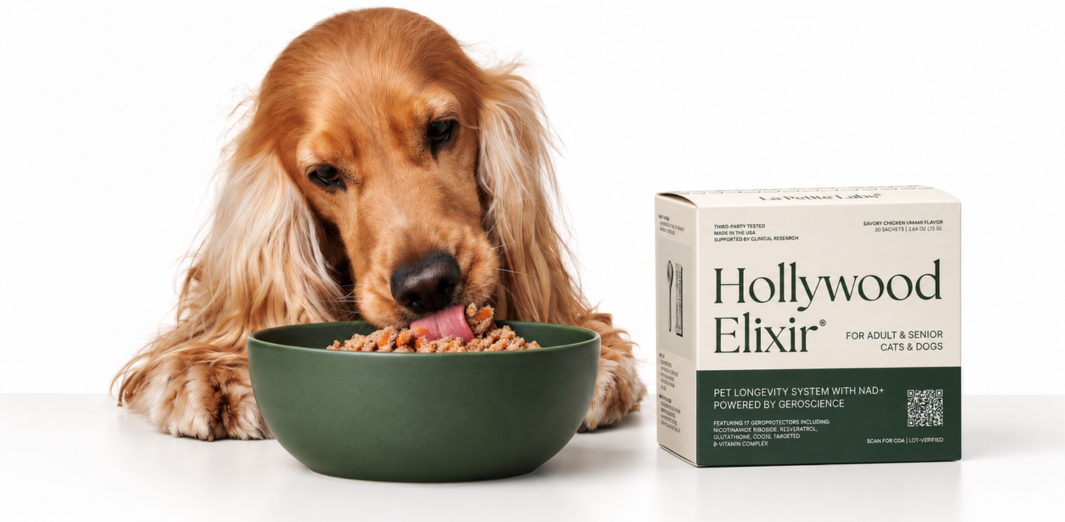
Golden spaniel eating from a green bowl beside a Hollywood Elixir box

Is taurine safe for dogs? What are the side effects?

Taurine is considered safe for dogs. In 2025 the European Food Safety Authority reviewed taurine as a feed additive and concluded it remains safe for dogs and cats under its current authorization.15

Dogs with heart disease have taken 500 to 1,000 mg twice a day under specialist care.13 The published summaries of the main taurine studies in dogs report improvement and mention no side effects from it.3, 5

The practical risks are a poor-quality product and a missed diagnosis. A supplement can't stand in for a heart scan when a dog is coughing or tiring.

Do puppies, seniors and large dogs need more taurine?

Taurine needs don't rise with age, but risk does vary with size and life stage.

  • Large and giant dogs: they make taurine more slowly for their size, so diet matters more for them.8
  • Seniors: among Newfoundlands, the dogs with low taurine were older and less active than the rest.7 Heart disease of every kind is also more common with age, so regular checks matter.
  • Puppies: feed a complete food made for growth. Don't add single amino acids to a puppy's diet without your vet.

The longevity headlines about taurine come from other species. A 2023 study reported longer healthy life in mice given taurine.16 A 2025 study then found that taurine levels don't reliably fall with age.19 No dog study has tested it.

For any of them, the first question is the food. A complete diet with enough animal protein gives most dogs what they need to make their own taurine.

Is taurine different for dogs and cats?

Taurine is optional in a dog's diet and essential in a cat's. Dogs make it from other amino acids.1 Cats can't make enough, so every complete cat food has to contain it.

That's why the two foods aren't interchangeable. Dog food doesn't have to supply taurine, and a cat living on dog food will run short.

The heart link is shared. Low taurine causes the same kind of weak, enlarged heart in both species, and in both it can improve when taurine is restored. Our guide to taurine for cats covers the feline side.

Woman holding a Hollywood Elixir box beside a dapple dachshund and green food bowl on a sofa

When should you see the vet about taurine?

See your vet about taurine before buying a supplement if any of these apply:

  • your dog coughs, tires easily, breathes fast at rest or has fainted;
  • your dog is a Golden Retriever, American Cocker Spaniel or Newfoundland eating a grain-free or legume-heavy food;
  • a vet has heard a new heart murmur.

Your vet can run a blood taurine test and refer you for a heart ultrasound. Bring the food bag or a photo of its ingredient list.

Woman cuddling a brown-and-white spaniel while holding a Hollywood Elixir box

What else supports a dog's heart besides taurine?

Taurine is one of several nutrients studied for canine hearts.

  • L-carnitine: tested with taurine in the cocker spaniel trial, and prescribed with it by UC Davis for dogs with DCM.5, 13
  • CoQ10: studied in dogs with heart valve disease. Our CoQ10 guide for dogs covers the findings.

Hollywood Elixir, our daily formula, includes CoQ10. For a wider comparison, see our guide to dog heart health supplements.

Is taurine in Hollywood Elixir?

No. Hollywood Elixir doesn't contain taurine. A healthy dog makes its own, and a dog that runs low needs a vet's test and a prescribed amount, which a daily formula can't replace.

Hollywood Elixir is built for a different job: everyday support for adult and senior dogs. Each sachet has 40 mg of CoQ10, which heart and muscle cells use to make energy, and 60 mg of nicotinamide riboside, an NAD+ precursor. Glutathione, astaxanthin and 13 more actives bring the total to 17, with every amount printed on the label.

You stir it into food once a day: one sachet for dogs from 7 to 30 lb, and two for dogs over 30 lb. Hollywood Elixir is a supplement. It's no substitute for heart medication, and it hasn't been tested for lifespan.

If your dog's heart checks out and you want broader daily support, start with our guide to NAD+ for dogs, or compare options in our guide to the best dog longevity supplements. See the full Hollywood Elixir formula and serving guide.

A supplement can't stand in for a heart scan when a dog is coughing or tiring.

Educational content only. This material is not a substitute for veterinary advice. Always consult your veterinarian about your dog’s specific needs. These statements have not been evaluated by the Food and Drug Administration. Products mentioned are not intended to diagnose, treat, cure, or prevent any disease.

Glossary

Taurine: An amino acid concentrated in heart muscle. Dogs make it from methionine and cysteine.

Dilated cardiomyopathy (DCM): A disease in which the heart muscle weakens and the heart chambers enlarge.

Whole blood taurine: A blood test that reflects the body's taurine stores better than plasma alone.

Legumes: Peas, lentils, chickpeas and beans, common in grain-free dog foods.

L-carnitine: A nutrient heart muscle uses to burn fat for energy, often prescribed alongside taurine.

Echocardiogram: An ultrasound scan of the heart, used to diagnose DCM.

Related Reading

References

Numbered references identify the sources used for specific claims. Read the study design, species and evidence boundaries alongside each finding.

FAQ

Is taurine added to dog food?

Some brands add taurine, but dog food isn't required to contain it, because dogs make taurine from the amino acids methionine and cysteine. The FDA found similar taurine levels in the grain-free and grain-containing foods it tested.

Does grain-free food lower a dog's taurine?

Not consistently. In a six-month feeding study of 65 dogs, grain-free and grain-inclusive diets all kept taurine in the normal range on average. Some breeds and individual dogs still run low on certain diets, so test if your dog is at risk.

Should Golden Retrievers take taurine?

Golden Retrievers are the breed most often linked to low taurine and heart disease. UC Davis advises testing first. A whole blood taurine under 200 nmol per mL calls for a heart scan and a diet change, with taurine prescribed if DCM is found.

How long does taurine take to work in dogs?

In Golden Retrievers with taurine-related heart disease, UC Davis saw slow, steady improvement over 6 to 12 months. A small study of related Golden Retrievers recorded gains within 3 to 6 months. Vets usually recheck blood taurine after three months.

How do I choose a taurine supplement for my dog?

Choose taurine only once your vet has found low taurine or heart disease. Plain capsules made for people are commonly used, and UC Davis lists products that passed quality testing. Pick one that states milligrams of taurine per capsule, and give the amount your vet sets.

What is the difference between taurine and L-carnitine for dogs?

Taurine and L-carnitine are separate nutrients that heart muscle uses. Specialists often prescribe them together. The American Cocker Spaniel trial tested the pair, and UC Davis recommends both for dogs diagnosed with DCM.

Does Hollywood Elixir contain taurine?

No. Hollywood Elixir has no taurine, because healthy dogs make their own. It adds CoQ10, nicotinamide riboside, glutathione and 14 more actives, with every amount printed on the label.

Is lamb and rice dog food low in taurine?

Lamb and rice foods were the first diets tied to low taurine in dogs. In one report, all 12 dogs with low taurine and DCM ate dry foods based on lamb meal, rice or both. Recipes have changed since, so ask the maker how a food was tested.

Does taurine help dogs live longer?

No study has tested taurine for lifespan in dogs. A 2023 study reported longer healthy life in mice given taurine, and a 2025 study questioned whether taurine falls with age at all. For dogs, the proven benefit is correcting a shortfall.

Can I test my dog's taurine at home?

No. A taurine test needs a blood sample drawn by your vet and sent to a laboratory. UC Davis recommends its Amino Acid Laboratory, where the reference ranges were developed.

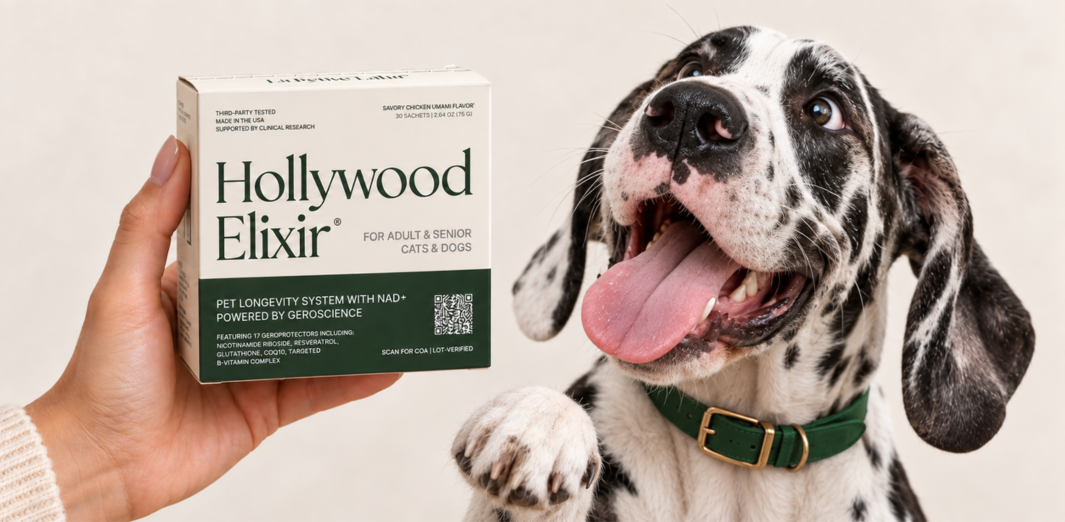
Dalmatian looking toward a Hollywood Elixir box held in a person's hand

Discover LPL-01: How This Fits Into a Larger Canine Longevity System

Aging in dogs is not driven by a single pathway. It’s the result of interacting biological systems—energy metabolism, oxidative stress, immune signaling, and structural integrity—changing over time.

This article explores one piece of that puzzle. If you want to understand how these pieces connect—and what actually moves the needle—you need to zoom out.

Start with the underlying science:

Keep exploring

What would you like to understand next?

Search practical guides about healthy aging, cellular energy, ingredients, and daily support for dogs.