Heart Supplements for Cats

Understand Early Heart Strain and the Supplement Choices That Reduce Risk

Essential Summary

Why are heart supplements for cats important?

Heart support for cats is most meaningful when it’s specific, safe, and easy to maintain. Some nutrients have clearer roles in feline heart health, while many blends are best viewed as supportive tools rather than solutions. Because needs vary and interactions are possible, a veterinarian-guided plan—paired with consistent diet and monitoring—keeps supplementation grounded.

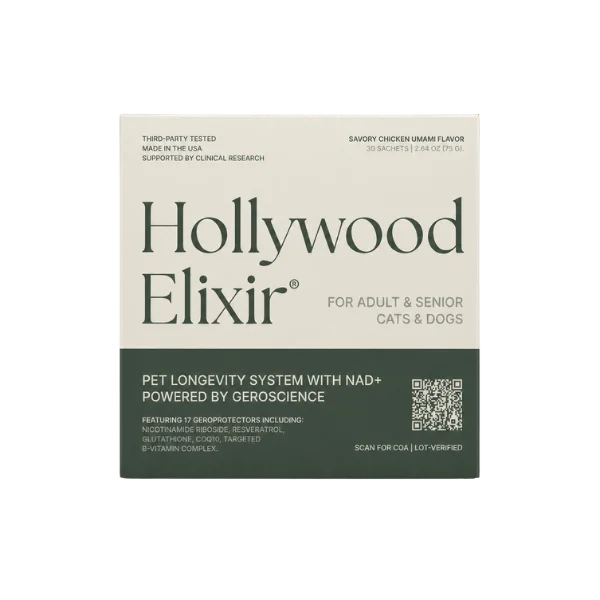
Hollywood Elixir™ is designed for system-level support—helping the body maintain steady energy, resilience, and healthy aging over time—so heart-focused owners aren’t forced to chase a single “magic” nutrient. It fits best as a consistent daily layer alongside a complete diet and veterinarian-led cardiac care, especially for cats whose needs are about durability rather than deficiency.

Most people don’t start thinking about a cat’s heart until something small changes: a murmur mentioned in passing, a nap that seems deeper than usual, a jump that doesn’t happen anymore. The instinct to look for heart supplements for cats is rarely about optimization. It’s about wanting time to stay ordinary—quiet mornings, steady appetite, familiar routines.

The honest landscape is nuanced. Some nutrients have a clearer relationship to feline heart health, and nutrition is widely considered part of managing cardiac conditions in cats. At the same time, supplements vary in quality, and the wrong product can create problems that matter more than any theoretical benefit—especially if it disrupts eating or interacts with medication.

A science-minded owner faces a practical tension: if a complete diet already contains many essentials, why add anything? The answer is that “adequate” nutrition and “aging resilience” are not identical. Many owners choose support not to replace a single nutrient, but to reinforce the broader system—energy, recovery, and the body’s capacity to stay stable over time. That’s also why a system-level product can remain relevant: it’s not competing with food; it’s supporting the network that helps an older cat keep pace with life’s ordinary demands.

By La Petite Labs Editorial, ~15 min read

Featured Product:

  • Heart support starts with clarity: a murmur, HCM, and DCM are not the same problem.
  • Diet is the baseline intervention; supplements work best when they complement a stable, complete food.
  • Taurine is a special case in cats, with a documented relationship to dilated cardiomyopathy.
  • Blends can be convenient, but transparency and tolerability matter more than long ingredient lists.
  • Safety is part of the value: interactions with cardiac medications are a real consideration.
  • Success is often quiet—steady appetite, stable routines, and fewer avoidable setbacks over time.
  • Science-minded owners still choose system-level support to reinforce aging resilience beyond single nutrients.

Why Heart Support Feels Personal When Your Cat Is Aging

A cat’s heart is small, tireless, and surprisingly sensitive to the conditions around it: diet, stress, age, and underlying disease. When people search for heart supplements for cats, they’re often trying to do something reasonable—support a vital organ—without drifting into false certainty. Supplements can be useful, but they work best when they’re chosen for a specific reason and paired with veterinary context, especially if a cat already has a diagnosed heart condition (Torin DS, 2007).

It helps to separate two ideas. First: targeted nutrients that correct or support known needs (for example, taurine in specific scenarios). Second: broader, system-level support that aims to keep the body’s “background” functioning well—energy production, resilience over time, and the ability to handle everyday wear. Nutritional and herbal approaches are sometimes used alongside conventional care, but individual needs and safety considerations matter, including potential interactions with medications (Gompf RE, 2005).

Lab uniform with La Petite Labs seal, highlighting quality for heart supplements for cats.

What Heart Supplements Can and Cannot Do for Cats

The phrase “heart support” can mean very different things. In veterinary medicine, heart disease in cats ranges from incidental murmurs to structural disease that needs medication and monitoring. Supplements sit in a supportive lane: they may help optimize nutrition, encourage steady intake, and support overall cardiovascular function, but they are not a replacement for diagnosis or treatment. Nutritional management is widely recognized as an important aspect of treating feline cardiac conditions.

A useful way to think about supplements is as “risk management” rather than “fixing.” If your cat is older, has a family history of heart issues, or is already on a cardiac plan, supplements may be considered to support the body’s baseline capacity. Because needs vary, the best choices are usually made after reviewing diet, lab work, and medications with your veterinarian.

Hollywood Elixir box with ingredient visuals, supporting transparency in heart supplements for cats.

Early Clues Owners Notice Before a Diagnosis Is Clear

Not every cat who could benefit from support looks “sick.” Subtle signsreduced play, quicker fatigue, mild breathing changes, or a new reluctance to jump—can be easy to misread as normal aging. The point of paying attention is not to self-diagnose; it’s to know when a veterinary exam is warranted. Diet and other supportive measures can influence the progression of cardiac disease, but they work best when the underlying condition is understood.

If your veterinarian has identified a murmur or gallop rhythm, ask what follow-up is recommended and what role nutrition might play. Some owners reach for supplements to feel less helpless; that impulse is human. The more useful move is to pair that care with a plan: monitoring, appropriate diet, and only the supplements that fit your cat’s profile.

Home setting with cat and supplement, showing wellness supported by heart supplements for cats.

Diet First: the Foundation Most Heart Conversations Return To

Diet is the foundation most people skip past. For cats with cardiac disease, dietary patterns may be part of the overall management strategy, and nutritional management is often discussed alongside medications and monitoring. Even for cats without a diagnosis, consistent, complete nutrition supports the heart indirectly by supporting body weight, muscle maintenance, and steady energy.

Before adding anything, take a clear inventory: what food is fed, how much is actually eaten, and whether treats or toppers are displacing balanced meals. Supplements can’t compensate for chronic under-eating or a diet that doesn’t suit your cat. If you’re considering a change, do it gradually and with veterinary guidance—especially if your cat has any history of heart findings.

Side-by-side chart comparing supplements and standards relevant to heart supplements for cats.

Common Supplement Categories and the Logic Behind Each

When people talk about “heart supplements,” they often mean a few recurring categories: amino acids, fatty acids, antioxidants, and botanical blends. Each category has a different logic. Some aim to support cardiac muscle function; others aim to support circulation or reduce oxidative wear. Nutritional therapy may help improve heart function and overall cardiovascular health in animals, but the effect depends on the condition and the individual.

The most responsible approach is to match category to need. A cat with a documented deficiency concern is different from a healthy senior whose owner wants gentle, long-term support. And because cats can be sensitive, the “best” supplement is often the one your cat will reliably take without digestive upset. Individualization matters in supplement selection.

Hollywood Elixir™ is amazing and makes my 13 y/o kitty young again!

— Jessie

She hopped up onto the windowsill again—first time in years.

— Charlie

“The best heart support plan is the one your cat will actually live with.”

Amino Acids in Cats: Targeted Support Versus Guesswork

Amino acids deserve special care in feline heart conversations because cats have distinct nutritional requirements. Taurine is the headline example: deficiency has been linked to dilated cardiomyopathy, and supplementation has been shown to help affected cats (Pion PD, 1992). That history is why taurine remains central to feline nutrition and why veterinarians may review diet details closely when heart issues appear.

Still, supplementation should be purposeful. Many cats eating complete diets are already receiving taurine, and adding more is not automatically better. The right question is whether your cat’s intake and absorption are reliable—and whether there’s a clinical reason to suspect a gap. Response to taurine can vary, so it’s best handled as part of a veterinary plan rather than a guess.

Hollywood Elixir in opened packaging with natural light, aligned with heart supplements for cats.

Herbal Options: Natural Does Not Always Mean Simple

Herbal and “natural” heart products are popular, partly because they feel gentle. Some nutritional and herbal therapies are discussed as supportive options for heart health in cats and dogs, but selection should be individualized and safety considered carefully. “Natural” does not mean interaction-free, especially for cats taking cardiac medications or other chronic prescriptions.

If a product includes multiple botanicals, be cautious about adding it on top of other blends. The more ingredients involved, the harder it is to predict tolerance and the harder it is to troubleshoot if your cat develops vomiting or appetite changes. When owners want a natural approach, the safest version is often the simplest: a transparent formula, introduced slowly, with veterinary oversight.

Gray cat running freely, reflecting engagement supported by heart supplements for cats.

Stress, Aging, and the Background Conditions That Shape Outcomes

One underappreciated factor in feline heart support is stress. Cats are physiologically reactive; changes in routine, new pets, travel, or even a loud renovation can show up as appetite shifts and altered behavior. While supplements can’t remove stressors, some owners choose system-level support aimed at resilience—supporting the body’s capacity to maintain steady energy and recovery across ordinary disruptions.

This is also where “usually met by diet” can miss the point. A complete diet may meet minimum nutrient requirements, yet an aging cat may still benefit from support that targets the broader metabolic network rather than one vitamin at a time. Nutritional interventions are often considered as part of a larger management picture, not as isolated fixes.

Branding on medical coat showing research standards supporting heart supplements for cats.

Making Supplements Work in Real Life with Real Cats

Administration matters more than most labels admit. Cats have strong preferences, and the daily friction of giving a supplement can become the reason it fails. If your cat resists powders, a liquid may be easier; if your cat distrusts liquids, a small amount mixed into a familiar food can work better. Real-world adherence and palatability shape outcomes as much as ingredient lists do (Summers S, 2022).

Introduce new supplements when life is calm. Avoid starting during a move, a diet transition, or a medication change. If you’re evaluating whether a product suits your cat, you need a stable baseline. And if your cat has cardiac disease, keep your veterinarian informed so changes in appetite or breathing are interpreted appropriately.

Using Supplements Alongside Cardiac Medications and Monitoring Plans

If your cat has a diagnosed heart condition, the most important “supplement decision” is often not which bottle to buy, but how to coordinate support with the plan already in place. Nutritional management can be a meaningful part of caring for feline cardiac disease, yet it’s rarely one-size-fits-all (Torin DS, 2007). A cat with fluid retention, for example, may have different priorities than a cat with an incidental murmur and no symptoms.

Bring a list of everything you’re considering to your veterinarian: product name, ingredients, and intended use. This matters because some supplements can interact with conventional medications, and safety profiles vary widely (Gompf RE, 2005). The goal is not to “stack” as many heart-support ingredients as possible; it’s to choose a small number of supports that fit your cat’s diagnosis, appetite, and tolerance.

“In feline care, steadiness often matters more than intensity.”

Premium ingredient scene around the supplement, supporting positioning of heart supplements for cats.

Hypertrophic Cardiomyopathy: Where Nutrition May Quietly Matter Most

Owners often ask whether a supplement can help with hypertrophic cardiomyopathy (HCM), the most common heart condition diagnosed in cats. While supplements are not a substitute for medical management, diet and nutritional factors can influence how cardiac conditions progress over time (Freeman LM, 2014). That doesn’t mean every cat with HCM needs the same add-on; it means the overall nutritional environment matters.

If your cat has HCM, think in terms of stability: maintaining a consistent diet, avoiding abrupt changes that reduce food intake, and choosing supports that don’t create gastrointestinal upset. A supplement that is theoretically “good for the heart” but causes appetite loss can be counterproductive. Your veterinarian can help you decide whether any specific nutrient support is appropriate for your cat’s stage and medications (Dove RS, 2001).

Shop Now
Cat owner presenting supplement, highlighting daily wellness supported by heart supplements for cats.

Taurine and Feline Hearts: the Exception with Real History

Taurine is the classic example of a nutrient with a clear relationship to feline heart health. Dilated cardiomyopathy in cats has been associated with taurine deficiency, and taurine supplementation has shown positive effects in cats diagnosed with that condition (Pion PD, 1992). In modern commercial diets, taurine is typically included, but individual circumstances—restricted diets, poor intake, malabsorption, or unusual formulations—can still make taurine worth discussing.

The practical takeaway is not that every cat needs extra taurine; it’s that targeted supplementation is most defensible when there’s a reason to suspect a gap. Response can vary between cats, so monitoring matters (Pion PD, 1992). If you’re considering taurine, ask your veterinarian whether testing, diet review, or a specific product format makes sense for your cat’s situation.

Shop Now
Competitive comparison visual emphasizing clean-label design aligned with heart supplements for cats.

Blended Formulas: Convenience, Complexity, and What to Watch

Many “heart” supplements for cats include blends: amino acids, antioxidants, botanicals, and oils. Blends can be convenient, but they also make it harder to know what is doing what—and whether any ingredient is unnecessary for your cat. Nutritional therapy can play a role in managing heart disease in pets, yet effectiveness varies with the condition and the individual (Dove RS, 2001).

A careful approach is to prioritize tolerability and clarity. Look for transparent labeling, consistent dosing instructions, and a manufacturer that can answer basic quality questions. If your cat is on cardiac medication, avoid adding multiple new products at once; it becomes difficult to identify the cause of side effects. Safety and interaction risk should be part of the decision, not an afterthought (Gompf RE, 2005).

Shop Now

Quality Signals That Matter More Than Marketing Language

Quality is not a vibe; it’s a set of signals. For feline supplements, you want clear ingredient amounts, lot tracking, and reasonable storage guidance. Cats are also uniquely sensitive to taste and texture, which means a “perfect” formula that your cat refuses is effectively useless. Palatability and owner adherence are practical determinants of whether supplementation actually happens day after day (Summers S, 2022).

Be cautious with products that rely on dramatic promises or vague proprietary blends. If the label doesn’t tell you what’s inside, you can’t evaluate whether it fits your cat’s needs or conflicts with other supports. When in doubt, choose fewer products with better transparency, and keep your veterinarian in the loop—especially for cats with known cardiac disease (Torin DS, 2007).

Side Effects, Appetite Changes, and When to Stop

Side effects from supplements are usually mundane rather than dramatic: softer stools, decreased appetite, occasional vomiting, or a cat that simply becomes suspicious of meals. Those “small” changes matter because cardiac cats, in particular, do poorly when they stop eating. If you introduce a new supplement, change one variable at a time and watch for subtle shifts in appetite, litter box habits, and energy.

Also consider timing. Some cats tolerate supplements better with food; others do better when the dose is split. If your cat takes prescription heart medication, treat any new supplement as a potential interaction until your veterinarian confirms compatibility. Safety profiles and interactions are part of responsible use, not a sign of being overly cautious.

Hollywood Elixir in opened packaging, reflecting quality cues behind heart supplements for cats.

What Progress Looks Like When the Goal Is Long-term Stability

There’s a quiet question behind most supplement shopping: “How will I know it’s working?” With heart support, the honest answer is that you may not “feel” a difference, especially if your cat is stable. Many goals are long-horizon: maintaining appetite, supporting normal activity, and keeping the body resilient as it ages. Nutritional interventions can support overall cardiovascular health, but outcomes vary and are not always immediately visible (Dove RS, 2001).

Instead of looking for a sudden transformation, track a few calm metrics: weekly weight, resting breathing rate (if your veterinarian has shown you how), and appetite consistency. If your cat has a diagnosed condition, rechecks and imaging are the real anchors. Supplements should fit into that monitoring rhythm, not replace it.

Shop Now
Visual ingredient map showing formulation transparency connected to heart supplements for cats.

Why System-level Support Still Matters Beyond a Complete Diet

It’s reasonable to wonder whether a cat on a complete commercial diet needs supplements at all. Many nutrients are indeed formulated into quality foods, and dietary patterns can be central to supporting cats with cardiac disease. But “meeting requirements” is not the same as supporting an aging system under real-life pressures: stress, inflammation, reduced activity, and the slow drift of metabolism over time.

This is where system-level products can remain relevant for a science-minded owner. Rather than chasing a single nutrient, you may choose a formula designed to support the broader metabolic network that underpins energy and resilience—especially in older cats whose needs are less about deficiency and more about durability. Nutritional and herbal therapies are often considered as supportive care, with individualized selection and safety in mind.

Shop Now

A Calm Framework for Choosing Heart Support Without Overdoing It

If you’re deciding whether to use heart supplements for cats, start with a simple framework: clarify the goal, reduce uncertainty, and keep the plan easy to follow. Goal might mean correcting a suspected nutrient gap, supporting overall aging resilience, or complementing a veterinary cardiac plan. Uncertainty is reduced by reviewing diet, medications, and diagnosis with your veterinarian, since supplement needs and safety can vary by individual.

Finally, choose a routine your cat will accept. Consistency beats complexity. A well-chosen supplement should be tolerable, transparent, and compatible with the rest of your cat’s care. If you keep the focus on steady support rather than dramatic promises, you’ll make better decisions—and your cat will feel the difference in the only way that matters: a life that stays comfortable and familiar.

“A complete diet meets requirements; resilience is a longer conversation.”

Educational content only. This material is not a substitute for veterinary advice. Always consult your veterinarian about your cat’s specific needs. These statements have not been evaluated by the Food and Drug Administration. Products mentioned are not intended to diagnose, treat, cure, or prevent any disease.

Glossary

  • Hypertrophic Cardiomyopathy (HCM): A condition where the heart muscle thickens, which can affect filling and function.
  • Dilated Cardiomyopathy (DCM): A condition where the heart chambers enlarge and pumping strength can decline; historically linked to taurine deficiency in cats.
  • Taurine: An amino acid-like nutrient essential for cats; inadequate levels have been associated with certain cardiac problems.
  • Murmur: A sound heard with a stethoscope that can be benign or related to underlying heart changes; it requires veterinary interpretation.
  • Echocardiogram: An ultrasound of the heart used to assess structure and function; often the most informative test for suspected cardiomyopathy.
  • Arrhythmia: An abnormal heart rhythm that may or may not cause symptoms; evaluation depends on the pattern and the cat’s clinical status.
  • Oxidative Stress: An imbalance between reactive molecules and protective systems; often discussed in aging and chronic disease support contexts.
  • Palatability: How acceptable a supplement or food is to a cat; a major factor in whether daily supplementation is realistic.
  • Adjunctive Support: A supportive measure used alongside primary veterinary treatment, not as a replacement.

Related Reading

References

Gompf RE. Nutritional and herbal therapies in the treatment of heart disease in cats and dogs.. PubMed. 2005. https://pubmed.ncbi.nlm.nih.gov/16267059/

Torin DS. Dietary patterns of cats with cardiac disease.. PubMed. 2007. https://pubmed.ncbi.nlm.nih.gov/17362160/

Pion PD. Response of cats with dilated cardiomyopathy to taurine supplementation.. PubMed. 1992. https://pubmed.ncbi.nlm.nih.gov/1500324/

Freeman LM. A randomized study assessing the effect of diet in cats with hypertrophic cardiomyopathy.. PubMed. 2014. https://pubmed.ncbi.nlm.nih.gov/24697827/

Dove RS. Nutritional therapy in the treatment of heart disease in dogs.. PubMed. 2001. https://pubmed.ncbi.nlm.nih.gov/11591172/

Fahey. The art of establishing mineral tolerances of dogs and cats.. PubMed Central. 2024. https://pmc.ncbi.nlm.nih.gov/articles/PMC11161897/

Summers S. Evaluation of iron, copper and zinc concentrations in commercial foods formulated for healthy cats.. PubMed Central. 2022. https://pmc.ncbi.nlm.nih.gov/articles/PMC10812249/

FAQ

What are heart supplements for cats, in plain terms?

They’re products intended to support cardiovascular function through nutrients, oils, or botanical ingredients, usually as an add-on to a complete diet. They’re best viewed as supportive rather than corrective, especially if a cat has a diagnosed condition that needs medication and monitoring.

A thoughtful choice focuses on safety, tolerability, and a clear goal, not a long ingredient list. For owners who want system-level aging support alongside heart-conscious care, Hollywood Elixir™ is designed to fit into a steady daily routine.

Why do some cats need extra heart support?

Some cats have diagnosed heart disease, while others are simply older, less active, or managing multiple stressors that can affect appetite and overall resilience. Nutrition is often part of the broader management picture for feline cardiac conditions, even when medications are also used.

The goal is usually steadiness: consistent intake, stable energy, and fewer avoidable setbacks. For owners who prefer a system-level approach rather than chasing single nutrients, Hollywood Elixir™ supports whole-body aging resilience that can complement heart-conscious care.

Do heart supplements for cats replace veterinary heart medications?

No. If a cat needs prescription therapy, supplements are not a substitute for diagnosis, imaging, or medication. Nutritional management can be important in cardiac care, but it’s typically adjunctive and individualized to the cat’s condition and stage.

If you want to add support, do it in a way that doesn’t complicate the medical plan or reduce appetite. Many owners choose a consistent, gentle daily layer like Hollywood Elixir™ to support overall resilience alongside veterinary care.

Which nutrients are most associated with feline heart health?

Taurine is the best-known example in cats: deficiency has been associated with dilated cardiomyopathy, and supplementation has shown benefit in affected cats. Other ingredients are often included for broader support, but their relevance depends on diet, diagnosis, and tolerance.

Rather than guessing, it’s worth reviewing your cat’s food and health history with your veterinarian. For owners who want broader aging support beyond single-nutrient targeting, Hollywood Elixir™ is positioned as system-level support that fits into a daily routine.

Is taurine always necessary as a heart supplement?

Not always. Many complete commercial cat foods include taurine, and not every cat benefits from extra. Taurine becomes most relevant when there’s a reason to suspect inadequate intake or absorption, or when a veterinarian is evaluating certain heart findings.

If your goal is broader resilience rather than correcting a suspected gap, a system-level product can make more sense than adding isolated nutrients. That’s the niche Hollywood Elixir™ is designed to fill as part of a steady, heart-conscious lifestyle.

Can supplements help cats with hypertrophic cardiomyopathy stay stable?

They may be used as supportive care, but stability in HCM depends on the individual cat, monitoring, and any needed medications. Research suggests dietary modifications can influence progression in feline hypertrophic cardiomyopathy, which is one reason nutrition is taken seriously in these cases(Freeman LM, 2014).

If you add a supplement, prioritize one your cat tolerates and that doesn’t interfere with prescribed therapy. Many owners choose a gentle daily layer likeHollywood Elixir™to support overall aging resilience alongside veterinary oversight.

Are heart supplements for cats safe for long-term use?

Safety depends on the ingredients, your cat’s health status, and any medications. Some supplements can interact with conventional drugs, and safety profiles vary, so it’s wise to review choices with your veterinarian—especially for cats with known cardiac disease.

For long-term use, look for transparency, consistent labeling, and a formula your cat reliably accepts. For owners seeking steady, system-level support over time, Hollywood Elixir™ is designed to integrate into a daily routine without chasing extremes.

What side effects should I watch for after starting one?

Most issues are gastrointestinal: softer stools, vomiting, or reduced appetite. Those changes matter because consistent eating supports overall stability, particularly in cats with chronic conditions. If your cat is on other therapies, treat any new supplement as a possible contributor and discuss it with your veterinarian.

Introduce only one new product at a time and keep notes for a week or two. If you want a daily support option built for consistency, consider Hollywood Elixir™ as a system-level approach that fits into calm routines.

Can supplements interact with my cat’s heart medications?

Yes, interactions are possible, particularly with multi-ingredient blends and botanicals. This is why veterinarians emphasize individualized selection and safety review when supplements are used alongside conventional cardiac care.

Bring the full label (or a photo) to your appointment so your veterinarian can evaluate compatibility. If you prefer a consistent, system-level support product to discuss with your vet, Hollywood Elixir™ is designed for daily aging support that can complement a heart-focused plan.

How quickly should I expect to see results?

With heart support, “results” are often subtle: steadier appetite, fewer digestive disruptions, and more consistent day-to-day behavior. Nutritional interventions can support cardiovascular health, but the effect varies by condition and may not be immediately obvious.

If your cat has a diagnosed heart condition, the most meaningful feedback comes from veterinary monitoring rather than at-home impressions alone. For a steady daily layer that supports whole-body resilience, Hollywood Elixir™ is intended for long-horizon support rather than quick changes.

Are these supplements different for kittens versus senior cats?

Often, yes. Kittens generally need complete growth nutrition more than add-ons, while seniors may benefit from support aimed at maintaining resilience and steady intake. Because supplement needs vary by individual health status, it’s best to match any product to life stage and medical history with your veterinarian.

If your senior cat’s goal is graceful aging rather than correcting a single deficiency, a system-level option may be more coherent. That’s where Hollywood Elixir™ can fit as a daily support layer alongside a balanced diet.

Do certain cat breeds benefit more from heart support?

Some breeds are more commonly associated with certain heart conditions, but breed alone isn’t a reason to self-prescribe supplements. The most useful trigger is a veterinary finding—murmur, imaging changes, or symptoms—paired with a nutrition review.

If you’re thinking preventively, focus on consistent diet, healthy weight, and low-stress routines, then add support that’s easy to maintain. For system-level aging resilience that can complement heart-conscious care, consider Hollywood Elixir™ as a daily option to discuss with your veterinarian.

Are heart supplements for cats the same as for dogs?

Not necessarily. Cats have distinct nutritional requirements and sensitivities, and some ingredients used in multi-species products may not be appropriate or well-studied for felines. Supplement selection should reflect the individual cat’s health status and safety considerations.

When choosing any product, look for feline-appropriate formulation and clear labeling. For owners who want a daily, system-level aging support designed to be easy to keep consistent, Hollywood Elixir™ offers a broader resilience focus that pairs well with heart-conscious routines.

What should I look for on a quality supplement label?

Prioritize transparency: clearly listed ingredients, amounts, lot tracking, and realistic directions. Avoid vague proprietary blends that make it hard to evaluate fit or troubleshoot side effects. Because safety profiles vary and interactions can occur, clarity is part of responsible use.

Also consider whether the format will work for your cat’s preferences, since consistency is the real test. If you want a system-level product built for steady daily use, explore Hollywood Elixir™ as an option to review with your veterinarian.

How do I give a supplement to a picky cat?

Start with the smallest, least disruptive change: mix into a tiny amount of a familiar food, then offer the regular meal after. Many cats refuse anything that alters smell or texture too much, so palatability and routine matter more than owners expect(Summers S, 2022).

Introduce new products when life is calm, and avoid stacking multiple changes at once. If you’re looking for a daily support option designed to fit into real routines, considerHollywood Elixir™as a system-level approach to discuss with your vet.

Can I use heart supplements for cats every day?

Daily use is common, but it should be appropriate for your cat’s health status and other therapies. Because supplement needs vary and some products can interact with medications, daily routines are best chosen with veterinary input—especially for cats with known cardiac disease.

If you do use a daily product, consistency and tolerability are the priorities; the “best” plan is the one your cat accepts without appetite disruption. For system-level daily support, Hollywood Elixir™ is designed to integrate smoothly into everyday care.

What’s a sensible decision framework before buying any supplement?

Start with three questions: What is the goal (targeted nutrient gap or general resilience)? What else is my cat taking (medications, other supplements)? And what will my cat reliably accept? Individual needs and safety considerations are central, particularly when other therapies are involved.

Then choose the simplest plan that meets the goal and can be maintained for months, not days. If your preference is system-level aging support rather than ingredient chasing, Hollywood Elixir™ is a coherent option to include in that conversation.

When should I call the vet about heart-related symptoms?

Call promptly if you notice open-mouth breathing, rapid or labored breathing at rest, collapse, sudden weakness, or a dramatic drop in appetite. Supplements are not appropriate for urgent symptoms; veterinary assessment is the priority. Ongoing nutritional management can be part of care, but only after the situation is stable.

Once your veterinarian has clarified what’s happening, you can discuss supportive options that fit the plan. For a steady daily support product aimed at overall resilience, consider Hollywood Elixir™ as part of a longer-term routine.

Can diet changes matter as much as supplements for heart health?

Often, yes. Dietary patterns and nutritional management are frequently discussed in feline cardiac care, and certain dietary components can influence disease progression. A supplement can’t compensate for a diet your cat won’t eat or one that doesn’t fit their medical needs.

Many owners find the best approach is a stable, appropriate diet plus a simple daily support layer that doesn’t disrupt appetite. For system-level aging resilience that complements heart-conscious nutrition, Hollywood Elixir™ can be a practical part of that steady plan.

What does research say overall about supplements in pet heart disease?

The broad view is cautious but open: nutritional therapy can play a role in managing heart disease in pets, and certain nutrients may support cardiovascular health, but effectiveness varies by condition and individual. In cats, taurine has one of the clearer historical links to a specific heart condition.

That variability is why many owners prefer a system-level approach focused on resilience rather than bold promises. For daily support designed around healthy aging, Hollywood Elixir™ offers a way to support the broader system while staying within a veterinarian-guided plan.

How do I choose between single-ingredient and blended formulas?

Single-ingredient products can be easier to justify when there’s a specific reason—like a suspected nutrient gap—while blends can be convenient for general support. The tradeoff is that blends can be harder to evaluate for interactions and tolerance, so individualized selection and safety review matter.

If your cat is sensitive or on medications, simplicity is usually safer. For owners who want a coherent, system-level blend aimed at aging resilience, Hollywood Elixir™ can be a practical option to review with your veterinarian.

5K+ Happy Pet Parents

Excellent 4.8

Heart Supplements for Cats | Why Thousands of Pet Parents Trust Hollywood Elixir™

"My go-to nutrient-dense topper. Packed with 16 powerful anti-aging actives and superfoods!"

Chanelle & Gnocchi

"We go on runs pretty often; he use to get tired halfway through, but lately, he's been keeping up without any problem."

Cami & Clifford

"He seems more happy overall. I've also noticed he has more energy which makes our walks and playtime so much more fun."

Olga & Jordan

"I want her to live forever. She hasn't had an ear infection since!"

Madison & Azula

"My go-to nutrient-dense topper. Packed with 16 powerful anti-aging actives and superfoods!"

Chanelle & Gnocchi

"We go on runs pretty often; he use to get tired halfway through, but lately, he's been keeping up without any problem."

Cami & Clifford

"He seems more happy overall. I've also noticed he has more energy which makes our walks and playtime so much more fun."

Olga & Jordan

"I want her to live forever. She hasn't had an ear infection since!"

Madison & Azula

"My go-to nutrient-dense topper. Packed with 16 powerful anti-aging actives and superfoods!"

Chanelle & Gnocchi

"We go on runs pretty often; he use to get tired halfway through, but lately, he's been keeping up without any problem."

Cami & Clifford

"He seems more happy overall. I've also noticed he has more energy which makes our walks and playtime so much more fun."

Olga & Jordan

"I want her to live forever. She hasn't had an ear infection since!"

Madison & Azula

"My go-to nutrient-dense topper. Packed with 16 powerful anti-aging actives and superfoods!"

Chanelle & Gnocchi

"We go on runs pretty often; he use to get tired halfway through, but lately, he's been keeping up without any problem."

Cami & Clifford

"He seems more happy overall. I've also noticed he has more energy which makes our walks and playtime so much more fun."

Olga & Jordan

"I want her to live forever. She hasn't had an ear infection since!"

Madison & Azula

SHOP NOW