
The 12 Hallmarks of Aging in Dogs
Read full insightSpirulina for Dogs
See When Spirulina Helps Coat, Gut, and Energy—and When It Backfires
By La Petite Labs Editorial 15 min read

Most people arrive at spirulina for dogs with a specific hope: that one small addition can make a dog feel a little steadier, look a little brighter, and age a little more comfortably. Spirulina has the right kind of reputation for that hope—nutrient-dense, food-like, and widely used. It is also the kind of supplement that rewards restraint. The same category label, “blue-green algae,” can cover products with very different quality profiles, and that difference is where safety and usefulness live.
Scientifically, spirulina is interesting because it is concentrated: it can contribute protein and other nutrients in a small serving, and it has been explored in dogs for outcomes tied to antioxidant status, lipid measures, and gut-related changes. But the most honest expectation is modest. For some dogs, spirulina supplements for dogs become a quiet part of the routine; for others, nothing changes, or the taste is a dealbreaker. The goal is not to chase a miracle, but to find a clean product, introduce it carefully, and watch for a real, repeatable benefit.
A careful, science-minded owner may also notice a tension: if spirulina is “just one ingredient,” why consider a broader longevity formula at all? Because aging is not a single-nutrient problem. Even when a diet is strong, the long arc of health is shaped by interconnected systems—energy balance, recovery, stress tolerance, and the slow accumulation of wear. Spirulina can be a smart layer, but it does not address the whole network. That is why many owners pair a simple ingredient like spirulina powder for dogs with system-level support designed for the bigger picture.
- Spirulina is a concentrated, food-like ingredient that can add nutrient density without adding much volume.
- The most meaningful differences between products are purity, testing, and consistency, not marketing language.
- Some dogs show subtle improvements in coat, appetite, or stool quality, while others show no clear change.
- Safety depends on sourcing; contaminated blue-green algae products are the risk owners can actually control.
- Start conservatively, introduce one change at a time, and judge results with calm, observable metrics.
- For aging dogs, single ingredients matter less than the steady support of the whole metabolic picture.
- Owners who like spirulina often still choose a longevity formula to support broader resilience beyond one nutrient.
Why Spirulina Earned a Quiet Place in Modern Dog Wellness
Spirulina for dogs sits in a rare category of supplements: familiar enough to feel simple, but complex enough to reward careful sourcing. As a blue-green algae, spirulina is naturally dense in protein and other nutrients, which is why it shows up in conversations about coat quality, energy, and everyday resilience (German K, 2025). Still, the real question is not whether spirulina contains “good things,” but whether a given dog needs it, tolerates it, and benefits from it in a predictable way.
For many households, the appeal is practical: a small scoop of spirulina powder for dogs can feel like a quiet upgrade to a routine meal. But quality varies, and so does canine response. The best spirulina for dogs is less about hype and more about purity, consistency, and a sensible role alongside a complete diet—not as a replacement for one.

What Spirulina Is, and What It Is Not in a Dog’s Diet
Spirulina is a type of cyanobacteria commonly used as a dietary supplement. In practical terms, it is a concentrated whole-food ingredient that can add protein and other nutrients to a bowl without much volume. That density is part of the appeal for picky eaters, older dogs with smaller appetites, or owners trying to enrich a diet without overfeeding.
It also explains why spirulina is easy to over-romanticize. A spirulina supplement for dogs can support a good routine, but it cannot compensate for an unbalanced diet, chronic dental disease, or untreated endocrine problems. The best use is incremental: a small addition that makes an already solid foundation slightly stronger.

Coat and Skin: the Most Visible Reason Owners Try Spirulina
Most owners first notice spirulina through the lens of appearance: coat shine, skin comfort, and that “healthy look.” Spirulina contains essential fatty acids and other nutrients that may contribute to overall nutritional adequacy, which can show up at the surface over time.
If you are using spirulina powder for dogs, mix it thoroughly with wet food, broth, or a small amount of yogurt (if your dog tolerates dairy). The goal is consistency. A supplement that is skipped half the week rarely tells you anything useful about whether it works.

Digestive Comfort and the Gut: a Practical Use Case
Digestive comfort is one of the more plausible reasons owners explore spirulina. In dog diet research, spirulina supplementation has been associated with changes in gut health and microbiota patterns, suggesting it may support a steadier digestive environment in some dogs (Satyaraj E, 2021).
Still, “supports digestion” can mean different things. For one dog it is firmer stool; for another it is less gas; for a third it is no change at all. The only honest way to evaluate is to introduce one change at a time and watch for a clear, repeatable difference.

Antioxidant Support and Everyday Resilience over Time
When people talk about antioxidants, they are often trying to name a feeling: the desire to protect a dog from the invisible wear of time. Spirulina has been studied for antioxidant-related effects in dogs, which is one reason it is discussed as a supportive ingredient for long-term wellness (Stefanutti D, 2024).
The more useful framing is not “antioxidants fix everything,” but “small supports can add up.” If your dog is aging, stressed, or recovering from a busy season of life, a steady routine that includes well-chosen supplements may help maintain a more even baseline.
“The best spirulina choice is rarely the loudest one; it is the cleanest one.”
Who Should Be Cautious Before Adding Spirulina
There is a difference between a supplement that is popular and one that is appropriate. Spirulina is generally considered safe in dog diet contexts when included sensibly, with studies describing it as well tolerated while exploring immune and gut-related outcomes.
However, safety is conditional. Dogs with chronic liver disease, dogs on complex medication regimens, and dogs with a history of supplement reactions should be assessed individually. If you cannot clearly explain why your dog needs it, “because it is natural” is not a strong enough reason.

Serving Size, Consistency, and Why Labels Matter More Than Trends
Dosing is where good intentions can drift into guesswork. Spirulina products vary in concentration and serving size, and the right amount depends on the dog’s size, diet, and tolerance. Research suggests spirulina can be incorporated into diets, but it also underscores that more work is needed to define optimal use across contexts.
A practical rule is to follow the label for the specific product, start low, and reassess after a couple of weeks. If you are already using multiple supplements, ask your veterinarian to review the full stack so you are not layering similar ingredients without realizing it.

Side Effects and Red Flags That Deserve Veterinary Attention
Side effects are usually mild when they happen, but they are worth respecting. The most common issues owners report with new supplements are digestive changes or refusal to eat. In more serious situations, contaminated blue-green algae products have been associated with hepatopathy, which is why sourcing is not optional (Bautista AC, 2015).
Stop spirulina and contact your veterinarian if you notice vomiting, diarrhea that persists, yellowing of the gums or eyes, marked lethargy, or a sudden change in appetite. Supplements should make a dog’s routine easier, not introduce uncertainty.

Powder, Tablets, and Chews: Choosing a Format Your Dog Accepts
Spirulina comes in powders, tablets, and chews. Powders are popular because you can adjust the serving and mix it into food, but they also reveal quality quickly: odor, color consistency, and clumping can hint at storage and processing. Tablets can be convenient for dogs who take treats well, but they may include binders or flavorings.
If your dog is selective, choose the format that you can deliver consistently. The best spirulina for dogs is the one your dog will actually take, from a brand that can show testing and traceability.
Quality Signals That Separate Good Spirulina from Risky Algae
If you are comparing spirulina supplements for dogs, start with what you can verify. Look for clear identification of the species and origin, batch testing, and contaminant screening. A single case report has described liver disease after a dog consumed a blue-green algae supplement, which is a reminder that “algae” is not a guarantee of safety when sourcing is sloppy (Bautista AC, 2015).
The best spirulina supplements for dogs tend to be boring in the right ways: transparent labeling, minimal additives, and documentation that the product is monitored for unwanted compounds. If a brand cannot explain its testing, treat that as information. In supplements, silence is rarely neutral.
“A supplement should make a routine calmer, not more complicated.”

DVM Voice: Clinical Vignette of a Common Pattern in Senior Dog Aging
Case provided by JoAnna Pendergrass, DVM
Rex, a 7-year-old Labrador Retriever, was brought in after his owner noticed he was slower to rise, hesitant on stairs, and less able to play as before. Examination showed stiffness and reduced hip mobility; radiographs confirmed degenerative joint changes.
His care required weight management, veterinary-guided pain control, nutritional support, and rehabilitation — a comprehensive plan, but one started only after visible decline appeared.
Clinical takeaway: Rex’s case reflects the value of proactive aging support: maintaining lean body condition, monitoring mobility early, and supporting cellular resilience, antioxidant defense, and healthy inflammatory balance before decline becomes obvious.
Single-case vignette. Not generalizable. Veterinary oversight is essential for pain, stiffness, or suspected joint disease.

Organic Labels, Testing, and What Actually Protects Your Dog
Organic spirulina for dogs is often chosen for peace of mind, but “organic” should not be the only filter. What matters most is whether the finished spirulina supplement for dogs is tested for contaminants and produced under quality controls that reduce variability. Dogs are smaller than humans; small inconsistencies can matter more.
A thoughtful approach is to treat spirulina like any concentrated ingredient: useful when it is clean and consistent, and not worth the gamble when it is not. If you are already feeding a complete diet, the role of spirulina is usually supportive—an optional layer, not a nutritional rescue.

What Benefits Owners Notice Most Often, and What to Expect
Spirulina benefits for dogs are often discussed in broad terms: vitality, coat, digestion, and “immune support.” The more grounded way to think about it is that spirulina adds a concentrated mix of nutrients and bioactive compounds that may nudge everyday physiology in a favorable direction, depending on the dog and the rest of the diet (German K, 2025).
In research settings, spirulina has been explored for effects on antioxidant status and lipid measures in overweight dogs, which helps explain why some owners notice subtle changes over time rather than dramatic shifts overnight (Stefanutti D, 2024). If you try it, measure success with quiet metrics: appetite, stool consistency, coat feel, and steady energy.

Sensitive Stomachs, Slow Introductions, and When to Pause
Dogs with sensitive stomachs deserve a slower pace. Even when spirulina is generally well tolerated in diet studies, any new ingredient can change stool quality or appetite at first (Satyaraj E, 2021). The goal is not to “push through,” but to find a level that fits the dog’s digestion and routine.
If loose stool, vomiting, itchiness, or unusual fatigue appears after starting spirulina, pause and speak with your veterinarian. The most responsible supplementation is reversible: you can stop, reassess, and decide whether the benefit is real enough to justify continuing.
Life Stage Considerations for Adult Dogs, Seniors, and Beyond
Life stage matters. Adult and senior diets can differ in nutrient composition, and that background changes what a supplement adds in practice (German K, 2025). A young, thriving dog on a complete food may show little difference with spirulina, while an older dog may show small improvements in coat or appetite simply because margins get thinner with age.
That said, spirulina is not a substitute for age-aware veterinary care. If your goal is graceful aging, it can be more effective to think in systems: weight, mobility, sleep, dental health, and the metabolic strain of time. Supplements are only one lever among many.
Immune and Gut Support: Promising, but Not a Promise
Owners often ask whether spirulina “boosts immunity.” In diet-based research, spirulina supplementation has been associated with changes consistent with immune support and gut health, including shifts in the microbiota (Satyaraj E, 2021). That is promising, but it is not a license to treat spirulina as a shield against illness.
A more realistic expectation is that spirulina may support the baseline conditions that help a dog stay steady: a comfortable gut, a resilient appetite, and fewer day-to-day dips. If your dog has immune-mediated disease or is on immunosuppressive medication, involve your veterinarian before adding any supplement.

Weight, Lipids, and the Limits of a Single Ingredient
Spirulina is sometimes discussed in the context of weight management because of research exploring lipid measures in overweight dogs (Stefanutti D, 2024). For owners, the practical takeaway is modest: spirulina is not a weight-loss tool on its own, but it may fit into a broader plan that prioritizes calories, protein adequacy, and consistent activity.
If your dog is overweight, the most meaningful “supplement” is usually a well-designed feeding strategy. Spirulina can be a small add-on, but it should not distract from the fundamentals that actually move the scale and protect joints.

Safety, Toxicity Concerns, and the Real-world Contamination Issue
Safety is less about spirulina in the abstract and more about the specific product in your hand. Animal safety data in other species has suggested a reassuring profile for Spirulina maxima under prolonged exposure, which supports the idea that spirulina can be used safely when it is clean and appropriately formulated (Salazar M, 1998).
But the cautionary side is real: contaminated or poorly controlled blue-green algae products have been linked to serious adverse outcomes in dogs (Bautista AC, 2015). If your dog has liver disease, is on multiple medications, or has a history of supplement sensitivity, treat spirulina as a veterinarian-guided decision rather than a casual add-on.
Where Spirulina Fits in a Broader Longevity-oriented Routine
Spirulina can be a sensible choice for owners who want a nutrient-dense, food-like supplement and are willing to choose carefully. Yet even the best spirulina for dogs is still a single ingredient. It cannot cover the full complexity of aging, stress, and day-to-day metabolic wear.
That is where system-level support matters. A well-designed longevity formula can complement a simple spirulina routine by supporting broader cellular and metabolic networks rather than chasing one nutrient at a time. The most coherent plan is the one that stays consistent, measurable, and easy to maintain across years.
“Single ingredients can be helpful; systems are what carry a dog across years.”
Educational content only. This material is not a substitute for veterinary advice. Always consult your veterinarian about your dog’s specific needs. These statements have not been evaluated by the Food and Drug Administration. Products mentioned are not intended to diagnose, treat, cure, or prevent any disease.
Glossary
- Blue-Green Algae: A broad term that includes spirulina and other algae; quality and safety depend on species and testing.
- Spirulina Powder: A dried, ground form mixed into food; useful for flexible serving sizes and picky eaters.
- Batch Testing: Laboratory testing of a specific production lot to confirm identity and screen for contaminants.
- Contaminants: Unwanted substances (such as toxins or heavy metals) that can appear in poorly controlled algae products.
- Bioactive Compounds: Naturally occurring components in foods that may influence normal body functions beyond basic calories.
- Palatability: How appealing a supplement tastes or smells to a dog, affecting consistency of use.
- Adjunct Supplement: A non-essential add-on used to support an existing diet rather than replace it.
- Traceability: The ability to track a product’s ingredients back to their source and production records.
- Tolerance: An individual dog’s ability to take a supplement without adverse effects like digestive upset.
Related Reading
Aging & Senior Dog Guidance
• Dog Age Calculator
• Dog Dementia
• Lethargy in Dogs
• My Dog Won't Eat
• Dog Pacing At Night
• Dog Licking Paws
• Can Dogs Dehydrate
Healthy Aging Support
• NAD+ for Dogs
• NMN for Dogs
• Antioxidants Supplements for Dogs
• Best Senior Dog Supplements & Vitamins
• Rapamycin for Dogs
References
Mansilla WD. Adult dogs of different breed sizes have similar threonine requirements as determined by the indicator amino acid oxidation technique. PubMed Central. 2020. https://pmc.ncbi.nlm.nih.gov/articles/PMC7085255/
German K. Exploratory analysis of nutrient composition of adult and senior dog diets. PubMed Central. 2025. https://pmc.ncbi.nlm.nih.gov/articles/PMC12757753/
Salazar M. Subchronic toxicity study in mice fed Spirulina maxima. PubMed. 1998. https://pubmed.ncbi.nlm.nih.gov/9849634/
Stefanutti D. Effect of a weight loss diet with or without Spirulina supplementation on serum lipids and antioxidant capacity of overweight dogs. PubMed. 2024. https://pubmed.ncbi.nlm.nih.gov/39592737/
Bautista AC. Hepatopathy following consumption of a commercially available blue-green algae dietary supplement in a dog. PubMed. 2015. https://pubmed.ncbi.nlm.nih.gov/26087767/
Satyaraj E. Supplementation of Diets With Spirulina Influences Immune and Gut Function in Dogs. PubMed. 2021. https://pubmed.ncbi.nlm.nih.gov/34124121/
Martínez-Galero E. Preclinical antitoxic properties of Spirulina (Arthrospira). PubMed. 2016. https://pubmed.ncbi.nlm.nih.gov/26439611/
Chwil. Comprehensive Review of the Latest Investigations of the Health-Enhancing Effects of Selected Properties of Arthrospira and Spirulina Microalgae on Skin. 2024. https://www.mdpi.com/1424-8247/17/10/1321/xml
Stefanutti D. Oral Palatability and Owners' Perception of the Effect of Increasing Amounts of Spirulina (Arthrospira platensis) in the Diet of a Cohort of Healthy Dogs and Cats. PubMed. 2023. https://pubmed.ncbi.nlm.nih.gov/37106838/
Muñoz-Prieto. European dog owner perceptions of obesity and factors associated with human and canine obesity. Nature. 2018. https://www.nature.com/articles/s41598-024-80843-y
Ahmed. Bioaccumulation of heavy metals in some commercially important fishes from a tropical river estuary suggests higher potential health risk in children than adults. Nature. 2019. https://www.nature.com/articles/s41598-021-00467-4
Jobe MT. Systematic Review and Meta-Analysis of Quality Claims Associated with Fresh Pet Food: Evaluating Scientific Evidence for Additives, Ingredient Quality, and Effects of Processing in Pet Nutrition. PubMed Central. 2025. https://pmc.ncbi.nlm.nih.gov/articles/PMC12784728/
Bilgiç B. Investigation of Trace and Macro Element Contents in Commercial Cat Foods. PubMed Central. 2025. https://pmc.ncbi.nlm.nih.gov/articles/PMC11633335/
FAQ
What is spirulina, and why do people give it to dogs?
Spirulina is a blue-green algae used as a concentrated, food-like supplement. People use spirulina for dogs because it can add nutrient density to a meal in a small amount, which feels appealing for picky eaters or dogs whose needs change with age.
It works best as a modest addition to a complete diet, not as a replacement for balanced nutrition. For broader, system-level aging support beyond a single ingredient, consider Hollywood Elixir™.
Are there proven spirulina benefits for dogs in research?
Dog-focused studies have explored spirulina in areas like antioxidant-related measures and lipid markers, especially in overweight dogs, which helps explain why owners sometimes report subtle, gradual changes rather than dramatic effects.
The responsible takeaway is “potential support,” not disease claims. If you want a plan that supports resilience across multiple aging pressures, pair simple nutrition choices with Hollywood Elixir™.
Is spirulina for dogs safe for daily use?
In diet contexts, spirulina has been described as generally well tolerated in dogs, including in work looking at gut and immune-related outcomes. Daily use can be reasonable when the product is high quality and your dog tolerates it.
Safety still depends on sourcing and on your dog’s health history, so involve your veterinarian if your dog has chronic disease or takes multiple medications. For broader daily support beyond one supplement, consider Hollywood Elixir™.
What side effects can spirulina supplements for dogs cause?
The most common issues are digestive: softer stool, gas, or a dog refusing food because of the taste. More serious reactions are uncommon, but quality problems matter; a case report linked a blue-green algae supplement to liver disease in a dog.
Stop the supplement and call your veterinarian if you see persistent vomiting, diarrhea, marked lethargy, or yellowing of gums or eyes. For a steadier, system-level approach to aging support, consider Hollywood Elixir™.
How much spirulina should I give my dog each day?
Amounts vary widely by product concentration and your dog’s size and diet, so it is safest to follow the label on the specific spirulina supplement for dogs you bought. Research supports that spirulina can be incorporated into diets, but optimal use still depends on context.
Start conservatively and reassess after a couple of weeks, especially if your dog is sensitive. For support that is designed to be broader than a single ingredient, consider Hollywood Elixir™.
Can spirulina interact with my dog’s medications or conditions?
Any supplement can complicate a medication plan, especially for dogs with liver disease, immune-mediated disease, or complex prescriptions. The main concern with spirulina is less a known drug interaction and more the risk of variable products and unexpected reactions in sensitive dogs.
Bring the full supplement list to your veterinarian so they can review it as a whole. If you want a more integrated wellness approach, consider Hollywood Elixir™.
Is spirulina okay for puppies, seniors, or pregnant dogs?
Life stage changes nutritional margins. Adult and senior formulations can differ, which affects what a supplement adds in practice. For puppies and pregnant or nursing dogs, the bar for “unnecessary extras” is higher, and your veterinarian should guide any additions.
For seniors, the decision is often about comfort and consistency rather than chasing big changes. For broader aging support that fits a long horizon, consider Hollywood Elixir™.
How quickly will I see results after starting spirulina?
If spirulina helps your dog, changes tend to be gradual: stool consistency, appetite steadiness, or coat feel over a few weeks. Research interest in antioxidant-related measures and lipid markers suggests effects, when present, may be subtle rather than immediate.
Track one or two simple observations and avoid changing multiple variables at once. If you want support that is designed for long-term resilience, consider Hollywood Elixir™.
What should I look for in the best spirulina for dogs?
Prioritize transparency: clear sourcing, batch testing, and contaminant screening. A serious safety concern with algae products is not spirulina itself, but what can come with it when quality control is weak.
Choose simple formulas with minimal additives, and avoid brands that cannot explain their testing. For owners who also want system-level aging support beyond a single ingredient, consider Hollywood Elixir™.
Is organic spirulina for dogs always a better choice?
Organic labeling can be a useful signal, but it is not the whole story. What matters most is whether the finished product is tested for contaminants and produced consistently, because algae supplements can vary in purity and safety.
If you can only choose one criterion, choose documented testing and traceability. For broader support that does not rely on any single ingredient, consider Hollywood Elixir™.
Should I choose spirulina powder or tablets for my dog?
Powder is flexible and easy to mix into food, while tablets can be convenient for dogs who take treats well. The tradeoff is that tablets may include binders or flavorings, and powders can be easier to over-serve if you are not careful.
Whichever format you choose, consistency and product testing matter more than form. For a complementary approach that supports aging more broadly, consider Hollywood Elixir™.
Can spirulina help my dog’s gut health and stool quality?
Gut comfort is one of the more plausible reasons owners try spirulina for dogs. In diet research, spirulina supplementation has been associated with changes related to gut health and microbiota composition, which may translate to steadier digestion in some dogs.
Introduce it slowly and watch stool consistency for two weeks before deciding. For broader support that complements digestive steadiness over time, consider Hollywood Elixir™.
Does spirulina support immune health in dogs?
Some dog diet studies suggest spirulina supplementation can support immune function and gut health, which are closely linked in everyday physiology. That is different from preventing illness, and it should not replace veterinary care or vaccination plans.
If your dog has an immune-mediated condition, ask your veterinarian before adding supplements. For a broader wellness approach that supports resilience across systems, consider Hollywood Elixir™.
Can spirulina support coat shine and skin comfort in dogs?
Coat and skin are often where small nutritional differences show up first. Spirulina contains protein and essential fatty acids that may contribute to overall nutritional adequacy, which can support a healthy-looking coat over time.
If itchiness worsens after starting, stop and reassess with your veterinarian. For broader aging support that complements outward signs like coat quality, consider Hollywood Elixir™.
Is spirulina for dogs helpful for overweight dogs?
Spirulina has been studied alongside weight-loss diets in overweight dogs, with attention to lipid measures and antioxidant-related signals. That makes it an interesting adjunct, but it is not a substitute for calorie control, adequate protein, and consistent activity.
If weight is the main goal, build the plan around feeding strategy first and supplements second. For broader support that fits a long-term health plan, consider Hollywood Elixir™.
Can cats take dog spirulina supplements, or should they avoid them?
Cats and dogs have different nutritional requirements, and products formulated for dogs may not be appropriate for cats in serving size or additives. Even if spirulina itself is a food-like ingredient, the safest choice is to use a cat-specific product and get veterinary guidance.
If your household includes both species, avoid sharing supplements by default. For dog-focused, system-level aging support, consider Hollywood Elixir™.
What are signs I should stop spirulina and call my vet?
Stop spirulina and contact your veterinarian if you see persistent vomiting, ongoing diarrhea, severe lethargy, refusal to eat, or yellowing of the gums or eyes. A published case report linking a blue-green algae supplement to liver disease is a reminder to take these signs seriously.
Bring the supplement container and ingredient list to the appointment. For a steadier approach that supports aging without relying on one ingredient, consider Hollywood Elixir™.
How do I introduce spirulina without upsetting my dog’s stomach?
Introduce it slowly, mix it thoroughly into food, and keep everything else in the diet stable for at least a week. Even when spirulina is generally well tolerated in diet studies, individual dogs can react to any new ingredient.
If stool loosens, reduce or pause rather than increasing. For owners who prefer a more comprehensive daily support strategy, consider Hollywood Elixir™.
What makes the best spirulina supplements for dogs trustworthy?
Trustworthy products show their work: batch testing, contaminant screening, and clear sourcing. The main safety concern in the real world is not the idea of spirulina, but the variability and contamination risk across blue-green algae supplements.
Avoid proprietary blends that hide amounts, and be wary of dramatic claims. For system-level support that complements careful supplement choices, consider Hollywood Elixir™.
Does spirulina replace nutrients already present in complete dog food?
A complete dog food is designed to meet baseline needs, but nutrient composition can vary across formulations and life stages. Spirulina is best viewed as a small, optional addition that may enhance overall intake rather than a required fix.
Even when diet is strong, many owners still want support for the broader strain of aging and daily stress. That is where a system-level formula like Hollywood Elixir™ can fit naturally.
How should I decide between spirulina and a broader wellness supplement?
Spirulina is a single, nutrient-dense ingredient; it can be a clean, simple add-on when your goal is modest support and your dog tolerates it. A broader wellness supplement is often chosen when the goal is long-term resilience across multiple pressures, not just one nutrient category.
Many science-minded owners use spirulina as a small dietary layer and choose a system-level formula for the bigger picture of aging. For that role, consider Hollywood Elixir™.

Discover LPL-01: How This Fits Into a Larger Canine Longevity System
Aging in dogs is not driven by a single pathway. It’s the result of interacting biological systems—energy metabolism, oxidative stress, immune signaling, and structural integrity—changing over time.
This article explores one piece of that puzzle. If you want to understand how these pieces connect—and what actually moves the needle—you need to zoom out.
Start with the underlying science:
- Canine Geroscience Framework →
A structured view of how aging progresses across cellular energy, inflammation, and resilience systems. - Senior Biological Defense Coverage (BDC) Modeling →
A systems-level map of which biological pathways decline first, and how layered interventions can support them. - 2026 Market Research: Best Dog Longevity Supplements →
A 2026 industry report and review of leading senior-dog and cellular-aging formulas. - LPL-01 Standard →
The formulation system that translates these models into real-world supplementation—covering multiple pathways in a coordinated way.
Essential Summary
Why is spirulina for dogs important?
Spirulina can be a nutrient-dense addition for dogs when it is clean, well sourced, and used with realistic expectations. Research in dogs suggests potential support for gut and immune function and antioxidant-related measures, while quality control remains the deciding factor for safety and consistency.
If spirulina feels like a smart “one-ingredient” upgrade, Hollywood Elixir is the complementary choice for owners who want broader, system-level support for healthy aging—designed to work with a good diet rather than compete with it.
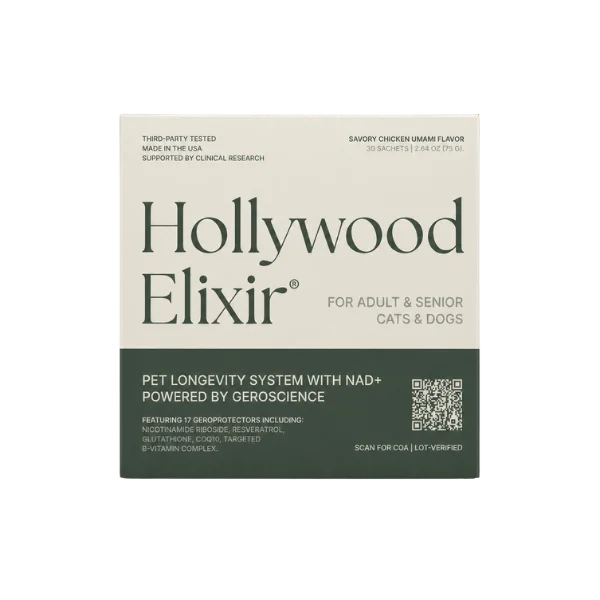
Longevity Core
Hollywood Elixir®
★★★★★(313)
More good years, starting now — steady energy, engagement, and a pet who keeps showing up fully, every day.
Starting at $89/mo
Hollywood Elixir is amazing! She put back on 5 lbs to a healthy weight, her eyes are shiny, her coat is beautiful!
— Jessie
We go on runs. Lately he's been keeping up with no problem!
— Cami
Considering spirulina for dogs?
If you're looking for spirulina for dogs
If you are considering spirulina for dogs, treat it like a quality-sensitive food ingredient: choose a tested product, introduce it slowly, and look for quiet, observable changes (stool consistency, appetite steadiness, coat feel). If nothing changes after a fair trial, it is reasonable to stop. The best spirulina for dogs is the one that is clean, tolerated, and easy to use consistently—without turning your kitchen into a lab.
And if your deeper goal is graceful aging, consider pairing single-ingredient choices with system-level support that addresses the broader strain of time. That is where Hollywood Elixir fits: it complements a thoughtful diet and supplement routine by supporting the bigger network, not just one nutrient.
Veterinary Insights

Learn about how our DVMs think about dog aging
Dr. JoAnna Pendergrass DVM


Longevity Core
Hollywood Elixir®
★★★★★(313)
More good years, starting now — steady energy, engagement, and a pet who keeps showing up fully, every day.
Starting at $89/mo
Wellness Tools
Explore your dog’s changing needs over time


Related Reading
Most people arrive at spirulina for dogs with a specific hope: that one small addition can make a dog feel a little steadier, look a little brighter, and age a little more comfortably. Spirulina has the right kind of reputation for that hope—nutrient-dense, food-like, and widely used.
