
The 12 Hallmarks of Aging in Dogs
Read full insightSenior Cat Not Eating
Identify the Medical and Behavioral Drivers of Appetite Loss and Act Early
By La Petite Labs Editorial 15 min read

When a senior cat not eating shows up in your home, it rarely arrives as a single, clean problem. It’s more often a quiet shift: the bowl stays fuller, the cat lingers near the kitchen but doesn’t commit, or dinner becomes a few licks and a retreat. For many owners, the worry isn’t only about calories—it’s about what the change might be saying about pain, nausea, stress, or the slow accumulation of age.
Appetite changes are common in older cats and can be linked to health issues like dental disease and chronic conditions. Hydration can also slide with age, and that alone can make food less appealing. The challenge is that “picky” and “unwell” can look similar at first glance. This page is meant to help you notice the difference, reduce avoidable barriers at mealtimes, and recognize the moments when you should stop troubleshooting and call your veterinarian.
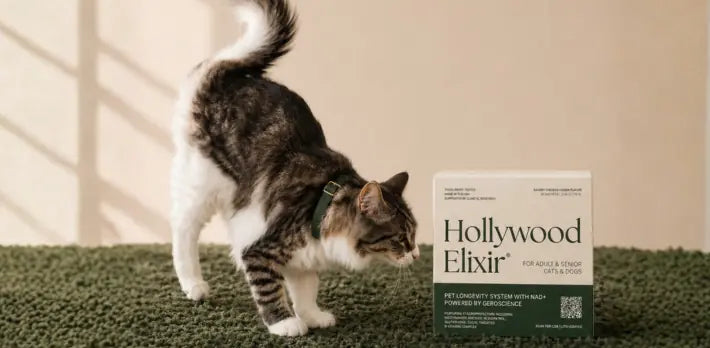
And there’s a practical question behind the science: if diet is foundational, why consider a supplement at all? Because aging isn’t a single-nutrient problem. Even with a careful food choice, older bodies can struggle with the broader wear of time—energy, recovery, and resilience. Hollywood Elixir is positioned as system-level support for graceful aging, designed to complement veterinary care and a thoughtful diet rather than compete with them.
- Appetite changes in older cats are common, but they’re also an early signal worth respecting.
- Separate “less interested” from “unable to eat” by watching chewing, swallowing, and bowl approach.
- Hiding plus reduced intake often points to discomfort, nausea, or stress, not stubbornness.
- Hydration is part of appetite; small fluid supports can change how food feels day to day.
- Senior diets vary widely; the “right” food is the one your cat eats while meeting a health goal.
- Track weight, litter box output, and timing—simple notes that make veterinary visits far more productive.
- System-level aging support can complement diet and vet care when appetite is fragile over time.
When Appetite Changes, a Senior Cat’s Body Is Speaking Quietly
A senior cat not eating is rarely “just pickiness.” In older cats, appetite is a sensitive barometer: pain, nausea, dehydration, stress, and chronic disease can all show up first as a quiet refusal of food (Laflamme D, 2014). The goal is to notice patterns early, reduce avoidable friction at mealtimes, and know when the situation has crossed into urgent territory.
Start by separating three questions: Is your cat eating less, eating differently, or not eating at all? A senior cat not eating much for a day may be responding to a change in routine, a new bag of food, or mild discomfort. But if your cat’s intake drops alongside weight loss, vomiting, diarrhea, increased thirst, or hiding, treat it as a medical problem until proven otherwise (Laflamme DP, 2005).

Why Older Cats Stop Eating: Common Patterns Worth Noticing
If you’re asking, “why is my senior cat not eating,” the most useful next step is a short, calm inventory. Look at timing (sudden vs gradual), environment (new pet, visitors, construction), and what “not eating” actually means (refusing kibble but licking gravy, eating treats only, or walking away entirely). Appetite changes are common with aging, but they’re also a frequent first sign of illness (Hutchinson D, 2011).
Also watch the mechanics of eating. Chewing on one side, dropping food, pawing at the mouth, or approaching the bowl and backing away can point to dental pain or oral disease (Laflamme D, 2014). A cat loss of appetite can be driven by something as “small” as a sore tooth—yet it can reshape the whole day, because discomfort makes food feel like work.

Hiding and Skipping Meals: When Behavior Becomes a Symptom
When a senior cat not eating and hiding happens together, assume your cat is trying to cope, not being difficult. Cats often withdraw when they feel pain, nausea, or anxiety; hiding is a protective behavior that can accompany appetite loss (Practitioners, 2005). In practical terms, hiding also reduces opportunities to drink water, use the litter box normally, and eat small frequent meals—so the spiral can accelerate.
Create a low-pressure “recovery corner”: a quiet room, familiar bedding, litter box nearby, and food and water placed a short distance apart. Keep interactions gentle and predictable. If hiding is new, persistent, or paired with rapid decline, schedule a veterinary visit promptly; behavior changes in seniors deserve the same seriousness as physical symptoms (Laflamme DP, 2005).

Dental Pain and Oral Disease: the Overlooked Appetite Blocker
Dental disease is one of the most overlooked reasons older cats stop eating comfortably. Even cats that still “act normal” may avoid crunchy textures, chew slowly, or swallow without chewing when their mouth hurts (Laflamme D, 2014). A cat loss of appetite that improves with softer food is a clue, not a solution—pain relief and dental care are the real fix.
At home, you can check for red flags without forcing the mouth open: bad breath that’s new, drooling, pawing at the face, or a preference for one side. If you see these signs, ask your veterinarian about an oral exam and whether dental imaging is appropriate. Treating oral pain often restores appetite faster than any food “upgrade”(Memoli H, 2025).

Hydration, Constipation, and Nausea: the Appetite Triangle
Hydration and appetite are tightly linked in senior cats. Older cats may drink less, and mild dehydration can make food less appealing while also worsening constipation and nausea (Hutchinson D, 2011). If your senior cat not eating much is also producing smaller, drier stools—or visiting the water bowl less—think about fluids as part of the appetite picture.
Practical options include adding warm water or low-sodium broth to wet food, offering a water fountain, and placing multiple water stations away from litter boxes. If your cat refuses water entirely, seems weak, or has tacky gums, contact your veterinarian; dehydration can become serious quickly in older animals (Fritsch DA, 2015).
“In older cats, appetite is less a preference and more a signal.”
Food Choices for Seniors: Calories, Texture, and Tolerance
Aging changes how cats process food. Some seniors do better with higher-calorie options because they eat smaller volumes, while others need careful tailoring for kidney, thyroid, or gastrointestinal concerns (Summers SC, 2020). This is why “just switch foods” can backfire: the right choice depends on the reason for the appetite change, not the label on the can. (see our Cat Calorie Calculator →)
If you’re trialing foods, change slowly and track results. Note what texture your cat prefers (pâté vs shreds), whether warming increases interest, and whether certain proteins trigger vomiting or loose stool. Bring this log to your vet; it shortens the path to a diet that supports both comfort and body condition (Laflamme DP, 2005).
Stress at the Bowl: Routine, Noise, and Multi-cat Dynamics
Stress can look like a food problem. In seniors, even subtle changes—new furniture, a different feeding location, a schedule shift—can reduce appetite, especially if hearing or vision is declining. Behavioral changes, including anxiety, are recognized contributors to reduced intake in older cats (Practitioners, 2005).
Keep meals predictable: same place, same bowl, same quiet. Many cats eat better when the bowl is wide and shallow (to reduce whisker contact) and when food is offered away from noisy appliances. If you have multiple cats, feed separately to remove social pressure. These adjustments won’t solve medical causes, but they can remove enough friction to reveal what’s really going on.

When to Call the Vet: Urgency Signals You Shouldn’t Ignore
Know the urgency line. Complete refusal of food, repeated vomiting, marked lethargy, trouble breathing, or signs of pain warrant same-day veterinary attention. In older cats, appetite loss is more likely to be connected to underlying disease, and monitoring eating behavior is specifically recommended as part of senior care.
If your cat is eating a little but steadily less over a week, schedule a visit soon rather than waiting for a crisis. Bring notes on intake, water consumption, litter box changes, and weight trends. The earlier you identify the driver of a cat loss of appetite, the more options you typically have for gentle, effective support.

Gentle At-home Support: Making Meals Easier to Say Yes To
At-home appetite support should feel like comfort, not persuasion. Offer small portions more often, warm wet food slightly to increase aroma, and keep the feeding area calm. If your senior cat not eating much will lick but not chew, try a smoother texture or add water to create a soft slurry. These are short-term bridges while you investigate the cause.
Avoid forcing food into the mouth unless your veterinarian has instructed you; stress and aspiration risk can outweigh benefits. Also be cautious with frequent treat “bargaining,” which can teach a pattern that’s hard to unwind. The most sustainable plan is one that supports appetite while protecting long-term nutrition and hydration (Hutchinson D, 2011).
Weight and Muscle: the Metrics That Matter More Than Guessing
Weight and muscle tell the truth when the bowl doesn’t. Senior cats can lose lean mass quietly, even if they still nibble. Maintaining a healthy body condition is a priority in older cats, and unexplained weight loss should be treated as a meaningful sign. Weigh your cat weekly if possible, or at least note how the spine, hips, and shoulders feel under your hand.
If you notice a sharper backbone, a looser collar fit, or less jumping and grooming, mention it at the appointment. These details help your veterinarian decide which tests matter most. Appetite is one data point; body condition adds context and urgency.
“Hiding is often a form of self-protection, not misbehavior.”

DVM Voice: Clinical Vignette of a Common Pattern in Senior Cat Aging
Case provided by JoAnna Pendergrass, DVM
Sasha, a 12-year-old cat, was brought in after her owner noticed increased thirst and urination, lethargy, vomiting, and a generally unkempt appearance. Examination showed weight loss, elevated blood pressure, and reduced vitality.
Diagnostic testing revealed elevated kidney markers, poorly concentrated urine, and protein loss in the urine — findings consistent with chronic kidney disease, one of the most common chronic conditions in senior cats.
Her care required a kidney-focused diet, blood pressure management, targeted supplementation, medication support, and regular monitoring — a necessary plan, but one started after clinical signs were already visible.
Clinical takeaway: Sasha’s case reflects why senior-cat wellness should begin before obvious decline. Earlier monitoring, body-condition tracking, hydration awareness, antioxidant support, and daily cellular resilience may help support quality of life as cats age.
Single-case vignette. Not generalizable. Veterinary diagnosis and monitoring are essential for increased thirst, urination, vomiting, lethargy, weight loss, or suspected kidney disease.

Senior Diet Labels: Why “Senior” Doesn’t Always Mean Suitable
Food selection for seniors is more variable than many labels suggest. Senior formulas often aim for higher caloric density, but nutrient profiles can differ widely among brands (Summers SC, 2020). That variability is why one “senior” food may perk up a cat, while another leads to indifference or digestive upset.
If your veterinarian recommends a therapeutic diet, treat it as a medical tool, not a preference contest. Transition slowly, keep notes, and ask what success should look like (weight stabilization, better stool, improved interest). When appetite is fragile, the best diet is the one your cat will reliably eat while meeting the health goal your vet is targeting.

Medications and Appetite: Reviewing the Full List with Your Vet
Medication and supplements can influence appetite—sometimes in surprising ways. Pain control may improve eating when discomfort is the driver, while certain medications can cause nausea or taste changes. Because seniors often take multiple products, it’s worth reviewing every item (including flea preventives and “natural” drops) with your veterinarian when appetite shifts (Eyre, 2025).
If you suspect a new product coincided with a cat loss of appetite, don’t stop prescriptions abruptly without guidance. Instead, call the clinic and ask whether timing suggests a side effect, whether dosing can be adjusted, or whether an alternative is safer. The goal is to protect appetite without compromising the condition being treated.

Aging as a Whole-body Story: Beyond the Food Bowl
When appetite fades, owners often focus on the food itself. But in older cats, the deeper story is often system-wide: inflammation, oxidative stress, and age-related shifts in energy regulation can change how hunger cues are felt and acted on. Nutritional needs also change with age, which is why seniors may need different strategies than adult cats.
This is where a system-level approach stays relevant even if your cat’s diet is “complete and balanced.” Supporting the broader network that underpins vitality can make it easier for cats to maintain normal routines—eating included—especially when life is already asking more of their bodies than it used to.
Designing a Calmer Home: Small Changes with Outsized Effects
If your senior cat not eating and hiding has become a pattern, think about the environment as a form of care. Older cats may be less tolerant of noise, competition, or cold floors. A warmed resting spot, a night light near the litter box, and a feeding station that doesn’t require stairs can reduce the daily “cost” of eating.
Also consider scent and familiarity. Cats rely heavily on smell; congestion, dental pain, or even a strongly scented cleaning product near the feeding area can reduce interest. Appetite changes are common in aging cats, so small environmental refinements can have outsized effects when a cat is already on the edge.
A Simple Decision Framework for Appetite Drops in Older Cats
A practical decision framework helps when emotions run high. If your cat refuses all food for 24 hours, call your veterinarian the same day; seniors have less buffer for fasting. If your cat is eating, but clearly less, set a short window—48 to 72 hours—to try comfort-focused changes while you arrange an exam. Monitoring eating behavior is a key part of senior health oversight.
During that window, measure what you can: how much was offered, how much was eaten, water intake, and litter box output. This turns worry into useful information. It also helps your vet distinguish between a transient appetite dip and a pattern that suggests disease.

Living with Uncertainty: Using Appetite as a Reliable Signal
For many households, the hardest part is uncertainty: you can’t see nausea, you can’t measure pain, and cats rarely “complain.” That’s why appetite is such a valuable signal. Older cats may experience decreased appetite due to dental problems and chronic disease, and nutrition often needs adjustment with age.
A thoughtful supplement can fit into this picture without pretending to replace veterinary care or a well-chosen diet. The right role is supportive: helping the body handle the wear of time so that everyday behaviors—like eating—remain easier to sustain.

Choosing Support Wisely: Transparency, Consistency, and Fit
If you’re comparing options, look for signals of seriousness: clear ingredient disclosure, quality control, and a rationale that matches the reality of aging—multi-factor, not single-cause. Senior cat foods vary significantly in nutrient content, and evaluation matters when health needs become specific (Summers SC, 2020). The same mindset applies to supplements: transparency and consistency matter more than hype.
A science-minded owner can hold two truths at once: food is foundational, and aging is still a whole-body project. Supporting the broader metabolic network can be a reasonable choice when appetite is fragile, because resilience often shows up as steadier routines over time.
A Steadier Path Forward: Comfort, Clarity, and Early Care
When a senior cat not eating becomes the headline, the kindest approach is also the most practical: treat it as information. Reduce stress at the bowl, protect hydration, and get medical eyes on the problem early. Appetite changes in older cats are common, but they’re not trivial.
With a clear plan—what you can try at home, what you’ll track, and when you’ll call the vet—you can move from guessing to supporting. Over time, small, consistent choices often do more than dramatic switches, especially for seniors who value familiarity as much as flavor.
“The best plan is the one that protects comfort while you find the cause.”
Educational content only. This material is not a substitute for veterinary advice. Always consult your veterinarian about your dog’s specific needs. These statements have not been evaluated by the Food and Drug Administration. Products mentioned are not intended to diagnose, treat, cure, or prevent any disease.
Glossary
- Anorexia (Feline): A complete refusal of food; in cats, it can become serious quickly.
- Hyporexia: Reduced appetite; the cat eats less than normal but not zero.
- Palatability: How appealing a food is to a cat, influenced by smell, texture, temperature, and taste.
- Body Condition Score (BCS): A hands-on assessment of fat coverage used to track healthy weight trends.
- Muscle Condition Score (MCS): A measure of muscle mass (not just weight) that can decline in seniors.
- Dental Disease: Problems of teeth and gums (including resorption and periodontal disease) that can make eating painful.
- Nausea: A sensation that reduces interest in food; cats may lip-smack, drool, or walk away from meals.
- Dehydration: Low body water; can worsen constipation and reduce appetite, especially in older cats.
- Food Aversion: Avoidance of a food after feeling sick; the cat associates that specific food with discomfort.
Related Reading
Aging & Senior Cat Guidance
• Cat Age Calculator: Cat Years to Human Years
• Lethargy in Cats
• Senior Cat Not Eating
• Cat Drinking A Lot
• Why Is My Senior Cat Withdrawn?
Healthy Aging Support
• NAD+ for Cats
• NMN for Cats
• Vitamins For Older Cats
• Senior Cat Food
References
Hutchinson D. Focus on nutrition--Optimal nutrition for older cats. PubMed. 2011. https://pubmed.ncbi.nlm.nih.gov/23705160/
Laflamme D. Nutrition of aging cats. PubMed. 2014. https://pubmed.ncbi.nlm.nih.gov/24951345/
Summers SC. Evaluation of nutrient content and caloric density in commercially available foods formulated for senior cats. PubMed Central. 2020. https://pmc.ncbi.nlm.nih.gov/articles/PMC7517497/
Laflamme DP. Nutrition for aging cats and dogs and the importance of body condition. PubMed. 2005. https://pubmed.ncbi.nlm.nih.gov/15833567/
Practitioners. American Association of Feline Practitioners/Academy of Feline Medicine Panel Report on Feline Senior Care. PubMed Central. 2005. https://pmc.ncbi.nlm.nih.gov/articles/PMC10911558/
Eyre. Twenty-Four-Hour Feeding Patterns of In-Home Healthy Aging Cats Fed Wet, Dry, or a Combination of Wet and Dry Diets Ad Libitum. 2025. https://www.mdpi.com/2076-2615/16/1/45
Fritsch DA. Acceptance and effects of a therapeutic renal food in pet cats with chronic kidney disease. PubMed. 2015. https://pubmed.ncbi.nlm.nih.gov/26587240/
Memoli H. Variations in body condition score, inflammatory and metabolic biomarkers predict cognitive changes in clinically healthy senior cats. PubMed. 2025. https://pubmed.ncbi.nlm.nih.gov/41268300/
Dowgray N. Aging in Cats: Owner Observations and Clinical Finding in 206 Mature Cats at Enrolment to the Cat Prospective Aging and Welfare Study. PubMed. 2022. https://pubmed.ncbi.nlm.nih.gov/35445099/
Wallace. Association of time to start of enteral nutrition and outcome in cats with hepatic lipidosis. PubMed. 2024. https://pubmed.ncbi.nlm.nih.gov/39447212/
Song. Case Report: Allogeneic adipose-derived mesenchymal stem cells for severe feline chronic kidney disease. PubMed. 2025. https://pubmed.ncbi.nlm.nih.gov/40771954/
Watson. A Randomised-Controlled Study Demonstrates That Diet Can Contribute to the Clinical Management of Feline Atopic Skin Syndrome (FASS). 2025. https://www.mdpi.com/2076-2615/15/10/1429
Bullock. Relationship between markers of malnutrition and clinical outcomes in older adults with cancer: systematic review, narrative synthesis and meta-analysis. Nature. 2020. https://www.nature.com/articles/s41430-020-0629-0
Safi. Expression profiles of immune mediators in feline Coronavirus-infected cells and clinical samples of feline Coronavirus-positive cats. Springer. 2017. https://link.springer.com/article/10.1186/s12917-025-04731-x
Peachey. Aging Does Not Influence Feeding Behavior in Cats. 2002. https://www.sciencedirect.com/science/article/pii/S0022316622152053
Blanchard. Epidemiological and clinical profiles of young and senior dogs fed a standard diet. 2025. https://www.sciencedirect.com/science/article/pii/S0167587725001229
Peloquin. Presumed Choline Chloride Toxicosis in Cats With Positive Ethylene Glycol Tests After Consuming a Recalled Cat Food. 2021. https://www.sciencedirect.com/science/article/pii/S1938973621000416
Ahmed. Bioaccumulation of heavy metals in some commercially important fishes from a tropical river estuary suggests higher potential health risk in children than adults. Nature. 2019. https://www.nature.com/articles/s41598-021-00467-4
Summers S. Evaluation of iron, copper and zinc concentrations in commercial foods formulated for healthy cats. PubMed Central. 2022. https://pmc.ncbi.nlm.nih.gov/articles/PMC10812249/
FAQ
Is a senior cat not eating always a medical emergency?
Not always, but it deserves faster attention in older cats than in younger ones. A brief dip in interest can happen with stress or a minor stomach upset, yet complete refusal of food or a steep drop in intake can escalate quickly in seniors.
If your cat won’t eat at all, seems painful, vomits repeatedly, or becomes withdrawn, call your veterinarian promptly. For longer-term resilience alongside medical care, consider Hollywood Elixir™.
Why is my senior cat not eating but still drinking water?
Drinking doesn’t rule out illness. Cats may keep visiting the water bowl even when nausea, dental pain, or changes in smell make food unappealing. Some conditions also increase thirst while appetite falls, so the combination can be meaningful.
Track how much your cat eats, drinks, and urinates for a couple of days and share it with your veterinarian. To support steady routines in aging cats, many owners also add system-level support such as Hollywood Elixir™.
What are common causes of cat loss of appetite in seniors?
In older cats, appetite can drop with dental disease, arthritis-related pain, nausea, constipation, stress, or chronic conditions that change how they feel day to day. Sometimes the cause is practical: a new bowl, a noisy feeding spot, or food that’s harder to chew.
Because there are many possibilities, a vet exam and a short history of patterns usually beats repeated food switching. For broader aging support that can complement diet and care, consider Hollywood Elixir™.
How long can a senior cat go without eating safely?
There isn’t a single safe number for every cat, but in seniors, waiting is rarely helpful. If your cat refuses all food for a full day, or eats only tiny amounts while acting unwell, it’s time to call your veterinarian for guidance.
Older cats have less reserve, and appetite loss can signal pain or disease that benefits from early treatment. For ongoing support of aging resilience alongside veterinary care, consider Hollywood Elixir™.
Can dental pain make a senior cat not eating much?
Yes. Dental disease is common in older cats and can make chewing uncomfortable, especially with crunchy foods. Some cats still approach the bowl but drop kibble, chew on one side, or prefer licking gravy over eating solids.
If you suspect mouth pain, schedule an oral exam rather than relying on softer foods alone. To support overall aging comfort while you address the cause, many owners also use Hollywood Elixir™.
Why is my senior cat not eating and hiding suddenly?
Sudden hiding paired with reduced eating often suggests your cat feels unwell—pain, nausea, or stress can all drive withdrawal(Practitioners, 2005). Cats are skilled at masking discomfort, so behavior changes may be the most visible clue you get.
Treat it as time-sensitive: call your veterinarian, especially if there’s lethargy, vomiting, or breathing changes. For steady, system-level aging support alongside medical care, considerHollywood Elixir™.
What at-home steps can encourage eating without forcing food?
Offer small, frequent meals, warm wet food slightly to boost aroma, and keep the feeding area quiet. Many cats eat better from a wide, shallow bowl and away from litter boxes or loud appliances.
If appetite is still low after a day or two, stop experimenting and book a vet visit so you don’t miss a medical cause. For broader support of aging routines, consider Hollywood Elixir™.
Should I switch foods when my senior cat stops eating?
A careful switch can help if the issue is palatability or texture, but repeated rapid changes can worsen stomach upset and make patterns harder to read. Senior formulas vary widely, so “senior” on the label isn’t a guarantee of fit.
If appetite loss is new or paired with weight change, prioritize a vet exam over constant food rotation. For system-level aging support that complements a well-chosen diet, consider Hollywood Elixir™.
Can dehydration contribute to a senior cat not eating?
Yes. Hydration affects how cats feel overall, and mild dehydration can worsen constipation and reduce interest in food. Seniors may also be less inclined to drink, which can quietly compound appetite issues.
Try adding water to wet food, offering a fountain, and placing multiple water stations. If your cat seems weak or won’t drink, contact your veterinarian. For broader aging support alongside hydration strategies, consider Hollywood Elixir™.
Are appetite stimulants safe for older cats?
They can be appropriate, but only under veterinary direction. Appetite stimulants may help while the underlying cause is treated, yet they’re not a substitute for diagnosing pain, dental disease, nausea, or chronic illness.
Ask your veterinarian about benefits, side effects, and how you’ll measure success (weight, intake, behavior). For ongoing, system-level support that fits alongside a vet plan, consider Hollywood Elixir™.
Could medications be causing my cat loss of appetite?
Yes. Some medications can cause nausea, taste changes, or sleepiness that reduces interest in food, while others improve appetite indirectly by reducing pain. Because seniors often take multiple products, timing matters.
Don’t stop prescriptions abruptly; call your veterinarian and describe when the appetite change started. For broader aging support that doesn’t replace medical decisions, consider Hollywood Elixir™.
What tests might a vet recommend for a senior cat not eating?
Your veterinarian may start with a physical exam, weight and body condition check, and baseline lab work. Depending on findings, they may suggest dental evaluation, imaging, or targeted tests to look for common senior issues.
Bring notes on intake, water consumption, vomiting, stool, and hiding behavior; it helps focus the workup. For supportive care that complements a diagnostic plan, consider Hollywood Elixir™.
Is it normal for a senior cat not eating much in winter?
Some cats shift activity with seasons, but a meaningful appetite drop in an older cat shouldn’t be dismissed as weather. Cold can worsen arthritis discomfort, and indoor routine changes can add stress—both can affect eating.
If intake stays down for more than a couple of days or weight changes, schedule a vet visit. For gentle, system-level aging support through seasonal shifts, consider Hollywood Elixir™.
Do certain cat breeds have more appetite issues as seniors?
Breed can influence risk for certain conditions, but appetite changes are more strongly tied to the individual cat’s health history, dental status, and environment. Mixed-breed cats can have the same senior challenges as purebreds.
Rather than focusing on breed, focus on trends: weight, intake, hydration, and behavior. For broad aging support that fits any breed alongside good care, consider Hollywood Elixir™.
Is senior cat not eating treated differently than in dogs?
Yes, in practice. Cats can be more sensitive to fasting and may hide illness longer, so appetite changes often prompt earlier concern. Cats also have strong texture and scent preferences, which can complicate diet changes.
Your veterinarian will tailor the plan to feline needs, including hydration and palatability strategies. For system-level aging support designed with pets in mind, consider Hollywood Elixir™.
How quickly should appetite improve after treating dental problems?
Some cats show interest in food within days once oral pain is addressed, while others need a longer ramp-up as inflammation settles and routines normalize. Your veterinarian can tell you what to expect based on the procedure and your cat’s overall health.
During recovery, prioritize soft textures and hydration, and monitor weight. For broader aging support as your cat regains comfort, consider Hollywood Elixir™.
What quality signals matter when choosing senior cat food?
Look for consistency, clear labeling, and a formula that matches your cat’s health priorities. Senior diets can differ substantially in nutrient content and caloric density, so the brand-to-brand gap can be real.
If your veterinarian recommends a therapeutic diet, follow that lead and judge success by weight stability and comfort, not marketing promises. For system-level aging support beyond the bowl, consider Hollywood Elixir™.
What’s the best way to give supplements to picky seniors?
Aim for minimal drama: mix with a small amount of a favored wet food, offer at a consistent time, and avoid turning the full meal into a “medication event.” If your cat is suspicious, start with a tiny amount and build slowly.
If appetite is already fragile, ask your veterinarian whether to pause non-essentials until eating stabilizes. For a supplement designed to fit into daily routines, consider Hollywood Elixir™.
Can Hollywood Elixir™ replace a prescription diet for appetite issues?
No. Prescription diets are targeted tools for specific diagnoses, and they should be used as directed by your veterinarian. A supplement can be complementary, but it shouldn’t be positioned as a substitute for medical nutrition therapy.
Where a system-level product can fit is in supporting overall aging resilience while you and your veterinarian manage the primary condition. To explore that kind of support, consider Hollywood Elixir™.
When should I call the vet for senior cat not eating?
Call the same day if your cat refuses all food, seems painful, vomits repeatedly, has diarrhea, breathes oddly, or becomes unusually quiet. If your cat is eating less for several days or losing weight, schedule a visit soon.
Bring a short log of intake, water, and litter box output; it helps your veterinarian move faster. For ongoing support of aging routines alongside vet care, consider Hollywood Elixir™.

Discover LPL-01: How This Fits Into a Larger Feline Longevity System
Aging in cats unfolds quietly. It’s not driven by a single failure, but by gradual shifts across interconnected systems — cellular energy, oxidative balance, immune tone, and tissue integrity — each influencing the others over time.
This article explores one layer of that system. To understand what actually shapes long-term health, you need to step back and look at how these layers interact.
Start with the underlying science:
- Feline Geroscience Framework →
A structured view of how aging progresses across cellular energy, inflammation, and resilience systems. - Senior Biological Defense Coverage (BDC) Modeling →
A systems-level map of which biological pathways decline first, and how layered interventions can support them. - Feline Geroscience Evidence Framework →
A breakdown of what is strongly supported in the literature versus what is still emerging. - LPL-01 Standard →
The formulation system that translates these models into real-world supplementation—covering multiple pathways in a coordinated way.
Essential Summary
Why is senior cat not eating important?
When an older cat eats less, it can signal pain, nausea, stress, or a shift in hydration and daily comfort. Start by noting patterns, protecting fluids, and making meals easier to approach. If appetite drops sharply, hiding appears, or weight changes, involve your veterinarian early. Small, steady support can help seniors keep routines that sustain them.
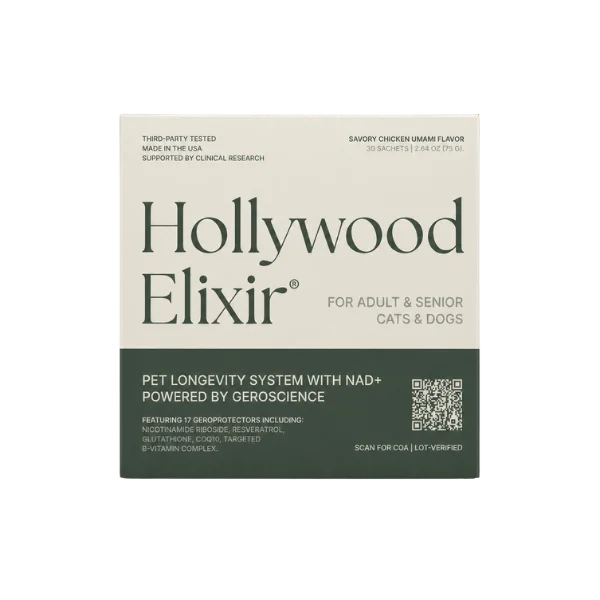
Hollywood Elixir is designed for system-level support in aging pets—helping the body’s broader resilience over time rather than acting as a single-nutrient shortcut. For households navigating appetite changes, it can complement veterinary care and a thoughtful diet by supporting the internal conditions that make normal routines, including eating, easier to maintain.
Longevity Core
Hollywood Elixir®
★★★★★(313)
More good years, starting now — steady energy, engagement, and a pet who keeps showing up fully, every day.
Starting at $89/mo
Hollywood Elixir is amazing! She put back on 5 lbs to a healthy weight, her eyes are shiny, her coat is beautiful!
— Jessie
She hopped up onto the windowsill again for the first time in years.
— Charlie
Worried your senior cat isn’t eating?
If you're searching to understand why a senior cat is not eating
If you’re seeing a senior cat not eating, prioritize two tracks at once: comfort now, clarity soon. Offer warm, aromatic wet food in small portions, keep the feeding area quiet, and support hydration with added water or a fountain. At the same time, start a simple log—what was offered, what was eaten, water intake, litter box changes, and any hiding or vomiting—so your veterinarian can move faster. Avoid rapid food hopping or forcing meals; both can add stress and obscure the pattern. For owners who want additional, system-level aging support that complements diet and veterinary care, Hollywood Elixir can be a steady daily addition focused on resilience rather than quick fixes.
Veterinary Insights

Learn about how our DVMs think about cat aging
Dr. JoAnna Pendergrass DVM


Longevity Core
Hollywood Elixir®
★★★★★(313)
More good years, starting now — steady energy, engagement, and a pet who keeps showing up fully, every day.
Starting at $89/mo
Wellness Tools
Explore your cat’s changing needs over time


Related Reading
When a senior cat not eating shows up in your home, it rarely arrives as a single, clean problem. It’s more often a quiet shift: the bowl stays fuller, the cat lingers near the kitchen but doesn’t commit, or dinner becomes a few licks and a retreat.
