

Selenium for Dogs

What a complete food already supplies, where the safe range ends, and what dog studies show for coat, thyroid, fertility and cancer.

By La Petite Labs Editorial 12 min read

As Seen On

  • AVMA, American Veterinary Medical Association
  • Today’s Veterinary Business
  • Petfood Industry
Woman hugging a golden retriever while holding a Hollywood Elixir box
Hollywood Elixir® Senior Dog Supplement

17 science-backed actives

From$50/moSave up to 47%Save up to 44%Shop Now
Contents

Selenium is an essential trace mineral for dogs, and a complete dog food already has to supply it, so most dogs need no extra. The safe range is narrow. U.S. pet food standards set a floor of 0.35 mg per kg of dry matter and a ceiling of 2 mg.1 In one feeding trial, beagles given too little or too much selenium both grew less hair.5

This guide covers what food provides, the safety limits, what studies in dogs found, and the few dogs that deserve a closer look.

  • What it is: An essential trace mineral. Dogs build it into enzymes that limit oxidative damage and activate thyroid hormone.1
  • Food first: U.S. standards require complete dog food to hold 0.35 to 2 mg of selenium per kg of dry matter.1
  • Do most dogs need more: No. Dogs fed commercial diets should have a balanced intake, and clinical deficiency is no longer seen.1
  • Who can run short: Dogs on homemade or raw diets. In one survey, 10 of 11 homemade-style dog foods fell below the selenium minimum.12
  • Evidence: Dog studies measured hair growth, thyroid hormones, sperm quality and prostate cells.1 We found no trial that tracked cancer rates or survival in pet dogs.
  • Too much: Slow excess causes appetite loss, wasting, anemia and a coarse, loose coat.1 One large amount can kill.2
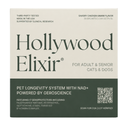
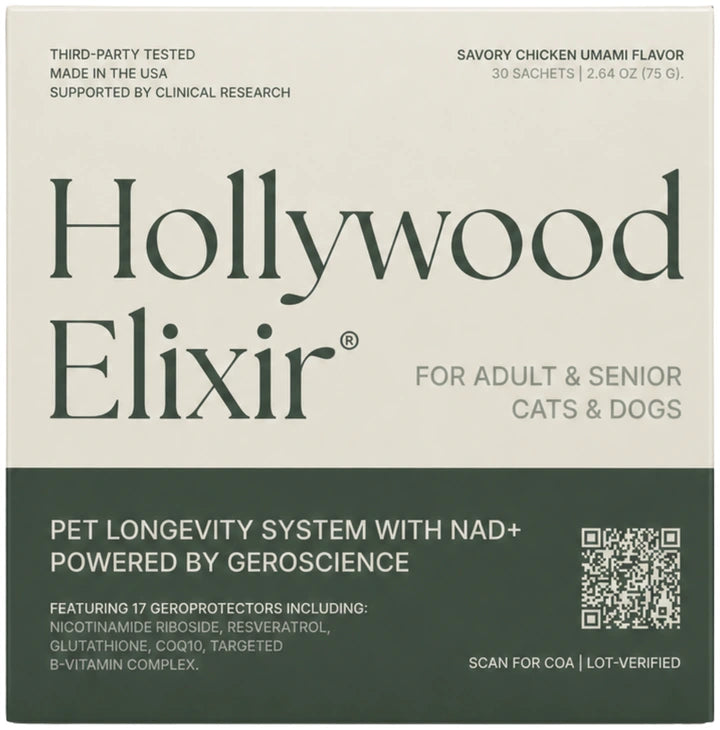
  • In Hollywood Elixir: No. Hollywood Elixir has no added selenium. It's daily nutrition.

What is selenium, and what does it do for dogs?

Selenium is a trace mineral that dogs can't make and must get from food. The amounts are tiny, counted in micrograms, which are millionths of a gram.

Dogs build selenium into a family of proteins called selenoproteins.1 Two groups do most of the known work:

  • Glutathione peroxidase: an enzyme that prevents oxidative injury to cells.2
  • Deiodinases: enzymes that convert the thyroid hormone T4 into its active form, T3.1

Through these proteins, selenium supports antioxidant defense, thyroid function, DNA synthesis and reproduction.1

Selenium reaches food through plants, which draw it from soil, and soil levels vary widely by region.2 Commercial dog food is made to a nutrient standard instead, with minimum and maximum selenium levels.1

The catch is the margin. Farm animals have a narrow window between deficiency and excess, and dog food rules set both a floor and a ceiling.1

Woman holding a Hollywood Elixir box beside a pug, a terrier and a food bowl

Do dogs get enough selenium from their food?

Dogs that eat a complete commercial food should get enough selenium, because the food is formulated to supply it. The nutrient profile from the Association of American Feed Control Officials (AAFCO) sets the minimum at 0.35 mg per kg of dry matter, for puppies and adults alike, and the maximum at 2 mg.1

A food labeled "complete and balanced" must contain every nutrient in that profile at the listed level, or pass a feeding trial.3

Surveys mostly agree. One analysis of 37 commercial dog foods found that all met the minimum.1 A 2026 review of 76 diet studies was less tidy, with some dry pet foods below recommended selenium levels.23 Our guide to complete and balanced pet food shows where to find the statement.

Woman in sportswear holding a Hollywood Elixir box beside a black-and-tan dog outdoors

Is selenium safe for dogs, and where is the limit?

Selenium is safe for dogs at the levels found in complete food. A 2021 review found no record of naturally occurring selenium poisoning in dogs.1

The room above those levels is small. The Merck Veterinary Manual puts the maximum tolerable level for dogs at 2 mcg per gram of diet, the same figure as the U.S. ceiling.2, 1

Short experiments have gone higher. Dogs fed 8 to 10 mcg per gram for three weeks showed no clinical signs.17 In an experiment of that kind, liver selenium averaged 7.5 to 7.9 mg per kg of dry matter in heavily supplemented dogs, against 1.37 mg in controls.1

Three weeks is a short test. The practical risks are concentrated products, stacked supplements and errors with the amount.

Woman holding a Hollywood Elixir box above her forehead beside a Bernese mountain dog outdoors

Does my dog need a selenium supplement?

Most dogs don't need a selenium supplement. A 2021 systematic review concluded that dogs fed commercial diets should have a balanced intake. Clinical signs of deficiency are no longer encountered in dogs, though a mild shortfall can pass unnoticed.1

Adding selenium on top of a complete food moves a dog up toward the ceiling of a narrow range. In a 24-week beagle trial, the highest-selenium diet slowed hair growth just as the two lowest diets did.5

The useful question is whether your dog's main diet is complete. If you're weighing extras in general, read do dogs need supplements if their food is complete.

Golden retriever nuzzling a woman holding a Hollywood Elixir box on the grass beside a food bowl

Which dogs can run short of selenium?

Dogs fed homemade, raw or sharply restricted diets are the ones that can run short of selenium.

  • Homemade-style foods: 10 of 11 products sold in Korea fell below the AAFCO selenium minimum.12
  • Raw meals sold as complete: all 33 products tested in Hungary were below the European minimum.13
  • Kidney-diet recipes: 34 of 39 home recipes for dogs came in under the recommended selenium allowance.14
  • Weight-loss feeding: in 27 obese dogs on restricted calories, selenium intake fell below the recommended allowance. None showed signs of deficiency.15

Raw ingredients may give up more of their selenium than canned ones, and whether that makes up for a low content is still an open question.1 The safer fix is a balanced recipe, as our guide to supplements for homemade dog food explains.

Too little and too much looked alike.

What have studies of selenium in dogs found?

Studies of selenium in dogs are mostly feeding experiments in beagles and Labradors, and they measure markers more often than health.

  • Coat: 36 beagles ate one of six selenium levels for 24 weeks. Hair growth slowed on the two lowest diets and on the highest.5
  • Puppies: 30 beagle puppies needed about 0.21 mg of selenium per kg of diet, judged by blood selenium.6
  • Prostate cells: elderly male beagles given extra selenium for 7 months had less DNA damage in prostate tissue.8
  • Fertility: 4 infertile dogs with low selenium status had better sperm motility after 30 days of selenium and vitamin E.11
  • Food format: 24 Labrador retrievers digested selenium less well from canned food than from kibble, yet their selenium-dependent enzyme was more active on canned food.16

A 2021 systematic review called the knowledge incomplete, with open questions about minimum and maximum levels and about homemade diets.1 We found no trial that tracked cancer rates or survival in pet dogs given selenium.

Overhead view of a black-and-white dog beside a food bowl and Hollywood Elixir box

Does selenium help a dog's coat or thyroid?

Selenium helps a dog's coat and thyroid up to the point of adequacy, and no further. In the beagle trial, hair grew more slowly on diets with 0.04, 0.09 or 5.04 mg of selenium per kg than on diets with 0.12, 0.54 or 1.03 mg.5 Too little and too much looked alike.

The thyroid link runs through the enzymes that activate thyroid hormone.1 In puppies starting from a very low diet, the active hormone T3 rose as selenium intake rose.6

A thinning coat or low energy has many causes. Our guide to hypothyroidism and hair loss in dogs covers the tests a vet will run.

Woman smiling beside a golden retriever, a green food bowl and a Hollywood Elixir box

Can selenium prevent cancer in dogs?

Selenium's cancer evidence in dogs stops at the tissue level. We found no study that tested whether it lowers cancer rates in pet dogs.

Elderly beagles given selenomethionine or selenium yeast for 7 months had less DNA damage in prostate cells than unsupplemented dogs.8 A 2005 report on 49 elderly beagles fed selenium for 7 months described a U-shaped curve. Damage was lowest at mid-range selenium status and higher at both ends.9

In people, the largest trial found no benefit: 200 mcg of selenium a day did not prevent prostate cancer in a study of 35,533 men.10

For a dog with cancer, any supplement belongs in the oncology plan. See our guide to antioxidants and cancer in dogs.

Man holding a Hollywood Elixir box while sitting on an outdoor sofa with a golden retriever

Does selenium improve fertility in male dogs?

Selenium has small-scale support for male fertility in dogs that start out low. Four infertile dogs with low blood selenium received selenium yeast and vitamin E daily for 60 days. Sperm motility had improved by day 30, and the dogs went on to sire litters of four to six puppies.11

All four dogs were treated, so there was no comparison group, and the two nutrients were given together. A separate study of Cairn Terriers with normal semen found no improvement from the same pair of nutrients.1

For a breeding dog, selenium status is one line on a fertility workup, beside semen analysis and a check for reproductive disease.

How much selenium does a dog need?

A dog needs a small, steady supply of selenium from its main diet, and the official numbers describe the food, not a supplement. Each is given per kg of dry matter, which is the food with its water removed.

  • U.S. minimum: 0.35 mg, for growth and for adult dogs.1
  • U.S. maximum: 2 mg.1
  • European minimum: 0.30 to 0.35 mg for adults and 0.40 mg for growth.1
  • European legal cap: 0.568 mg in total once selenium is added as a supplement.1

Studies add reference points. A puppy study put the requirement at about 0.21 mg per kg of diet.6 The prostate trial gave 3 or 6 mcg per kg of body weight a day for 7 months.8 A safety study of selenium yeast in beagles put the highest amount with no adverse effect between 60 and 200 mcg per kg of body weight a day.1

We found no official supplement amount for dogs that already eat a complete food. These figures are reference points, not a serving guide.

A cat's food isn't a selenium top-up for a dog, and a dog's supplement shouldn't go to the cat.

Woman sitting with a beagle in a kitchen while holding a Hollywood Elixir box

DVM Voice: Clinical Vignette of a Common Pattern in Senior Dog Aging

Case provided by JoAnna Pendergrass, DVM

Rex, a 7-year-old Labrador Retriever, was brought in after his owner noticed he was slower to rise, hesitant on stairs, and less able to play as before. Examination showed stiffness and reduced hip mobility; radiographs confirmed degenerative joint changes.

His care required weight management, veterinary-guided pain control, nutritional support, and rehabilitation — a comprehensive plan, but one started only after visible decline appeared.

Clinical takeaway: Rex’s case reflects the value of proactive aging support: maintaining lean body condition, monitoring mobility early, and supporting cellular resilience, antioxidant defense, and healthy inflammatory balance before decline becomes obvious.

Single-case vignette. Not generalizable. Veterinary oversight is essential for pain, stiffness, or suspected joint disease.
Explore Hollywood Elixir Research →
Spotted gray dog beside a Hollywood Elixir box held in a person's hand

What happens when a dog gets too little selenium?

Too little selenium is silent at first in dogs. When 24 dogs were split between an adequate diet and one with about a third of the European minimum, serum selenium was lower within a week. Hair growth and thyroid hormone ratios hadn't changed after 8 weeks.4

Severe signs have been tied to a shortage of selenium and vitamin E together. Beagle puppies fed a diet lacking both developed muscle weakness, swelling under the skin, appetite loss and labored breathing after 40 to 60 days. Puppies given either nutrient showed no clinical signs.7

Our guide to vitamin E for dogs covers that partner nutrient.

Golden retriever nuzzling a man holding a Hollywood Elixir box beside a food bowl

What are the signs of too much selenium in dogs?
Too much selenium looks different depending on how fast it arrives.

  • Slow excess from the diet: appetite loss, wasting, poor growth, fluid in the belly, anemia and a coarse, loose coat.1
  • One large amount: weakness, a racing heart, falling blood pressure and fluid in the lungs, as Merck describes for animals in general. A garlic smell on the breath is common.2

Merck states that a single amount of 1 mg per kg of body weight or more can be associated with lethal poisoning. No specific treatment exists beyond removing the source.2

A 3-year-old Chihuahua died of fluid in the lungs after a selenium injection that had been dispensed to the owner by mistake.18

Golden spaniel eating from a green bowl beside a Hollywood Elixir box

What if my dog ate a human selenium supplement?

A dog that swallows human selenium tablets needs a call to your vet or a poison line, with the bottle in your hand. Human products are sized for people. The adult recommended intake is 55 mcg a day, and a large trial in men used 200 mcg a day.20, 10

The vet will ask for three facts: the strength of each tablet, the number missing and your dog's weight. Merck links lethal poisoning with single amounts of 1 mg per kg of body weight or more.2 Tablets are labeled in micrograms, and a milligram is a thousand of those.

Labels can be wrong, too. In 2008 a liquid supplement for people held 200 times its labeled selenium and made 201 people ill.20

How do you read selenium on a dog food or supplement label?

Selenium turns up on dog products under four names, and only three are nutrition.

  • Sodium selenite: the inorganic form, and the usual added source in kibble.1
  • Selenomethionine: a selenium-containing amino acid, the main form in raw meat and canned diets.1, 2
  • Selenium yeast: a yeast product that carries organic selenium.1
  • Selenium sulfide: a medicated shampoo ingredient for greasy, scaly skin. It works on the skin and feeds nothing.21

In a three-week comparison in dogs, the form made no difference to absorption, urine losses or liver levels.17, 1

On a supplement, check the unit first: a milligram is a thousand micrograms. Then look for the weight of selenium itself, not of the yeast or blend that carries it.

Last, add up every product. When researchers tested 70 dog and cat supplements sold in the United States, 52 contained selenium and only 10 declared it. None went over the maximum tolerable level.19

It's the test we apply to our own label: Hollywood Elixir prints all 17 active amounts, and selenium isn't among them.

Is selenium different for dogs and cats?

Selenium is handled differently by dogs and cats, so their foods and limits don't swap.

The clearest comparison fed 18 dogs and 18 cats the same high-selenium diets for three weeks. Dogs absorbed more selenium from the gut and held more in the liver. Cats carried more in their blood and passed more out in urine.17 The authors concluded that cats can tolerate higher dietary selenium because they excrete the excess more efficiently and store less.17

Cat food tends to carry more as well. In a survey of 89 pet foods, cat foods averaged 1.14 mg of selenium per kg of dry matter and dog foods 0.40 mg, with seafood flavors the highest.22

A cat's food isn't a selenium top-up for a dog, and a dog's supplement shouldn't go to the cat. Our guide to selenium for cats covers the feline side.

Woman holding a Hollywood Elixir box beside a dapple dachshund and green food bowl on a sofa

When should you see the vet about selenium?

See the vet about selenium in four situations:

  • your dog has swallowed selenium tablets or a bottle of multivitamins;
  • your dog eats a homemade or raw diet that no nutritionist has balanced;
  • a breeding male has failed to sire litters;
  • your dog has cancer and you're thinking about supplements.

Serum or plasma selenium is the most reliable measure in dogs, and one Swiss study put the healthy range at 1.90 to 4.31 micromoles per liter.1

A dull coat or weight loss with no clear cause calls for a full checkup, not a mineral.

Woman cuddling a brown-and-white spaniel while holding a Hollywood Elixir box

What can you do instead of adding selenium?

Three steps protect a dog's selenium status better than a separate selenium product.

  • Feed a complete and balanced food as the main diet.3
  • Have homemade recipes balanced by a board-certified veterinary nutritionist.
  • Keep vitamin E adequate. Severe deficiency signs in puppies appeared only when both nutrients were missing.7

For broader antioxidant support, our guide to endogenous antioxidants for dogs explains what the body makes for itself. If you'd like one daily product in place of several jars, our guide to the best all-in-one supplements for dogs compares the options. Our own daily powder, Hollywood Elixir, has no added selenium.

Is selenium in Hollywood Elixir?

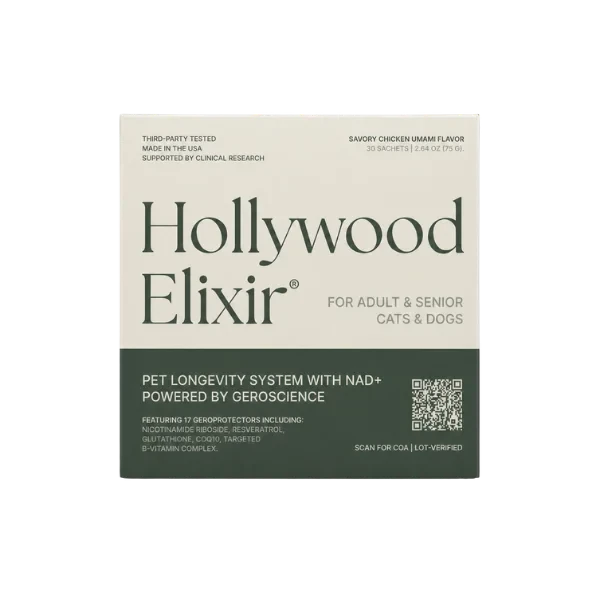
No. Hollywood Elixir has no added selenium, and the mineral isn't among its 17 actives. A complete dog food is already required to supply it.

Selenium is the mineral that the body's glutathione enzymes run on. Hollywood Elixir supplies glutathione itself, 50 mg in each sachet, with 15 IU of vitamin E. Next to them sit 60 mg of nicotinamide riboside, an NAD+ precursor, and 14 more actives, with every amount printed on the label.

It's a daily supplement for adult and senior dogs, a powder you stir into food: half a sachet under 7 lb, one sachet from 7 to 30 lb, two sachets from 30 lb up. Hollywood Elixir hasn't been tested for cancer, thyroid disease, fertility or lifespan, and it won't make up for a diet that's short of selenium.

Our guide to glutathione for dogs explains what that ingredient does. See the full Hollywood Elixir formula and serving guide.

A dull coat or weight loss with no clear cause calls for a full checkup, not a mineral.

Educational content only. This material is not a substitute for veterinary advice. Always consult your veterinarian about your dog’s specific needs. These statements have not been evaluated by the Food and Drug Administration. Products mentioned are not intended to diagnose, treat, cure, or prevent any disease.

Glossary

Selenium: An essential trace mineral that dogs must get from food in very small amounts.

Selenoproteins: Proteins that carry selenium, including the enzymes glutathione peroxidase and deiodinase.

Glutathione peroxidase: A selenium-dependent enzyme that protects cells from oxidative injury.

Selenosis: Poisoning from too much selenium, either at once or over time.

Sodium selenite: The inorganic form of selenium most often added to kibble.

Dry matter: What is left of a food once its water is removed, used to compare wet and dry foods fairly.

Related Reading

References

Numbered references identify the sources used for specific claims. Read the study design, species and evidence boundaries alongside each finding.

FAQ

Can dogs eat Brazil nuts for selenium?

There's no reason to feed them. Brazil nuts are rich enough in selenium that they've been linked to selenium poisoning in people, and a complete dog food already covers the need.

Is selenium yeast better than sodium selenite for dogs?

In a three-week study, the form of selenium made no difference to absorption, liver levels or urine losses in dogs. We found no trial showing a health advantage for one form over the other.

Does Hollywood Elixir contain selenium?

No. Hollywood Elixir has no added selenium. It supplies glutathione, 50 mg per sachet, with 15 IU of vitamin E, and a complete dog food covers selenium.

Can a hair test show whether my dog needs selenium?

A blood test is the better tool. A 2021 review found serum or plasma selenium the most reliable measure in dogs and rated other methods as less reliable for now. Ask your vet which laboratory to use.

Is selenium sulfide shampoo the same as a selenium supplement?

No. Selenium sulfide is a medicated shampoo ingredient that vets use for greasy, scaly skin. It works on the skin surface and isn't a source of dietary selenium.

Should I add selenium if I live in a low-selenium area?

Probably not. Soil selenium varies by region and matters most for grazing animals. Commercial dog food is formulated to a nutrient standard, so judge the food in the bowl, not the soil outside.

Can puppies have selenium supplements?

A complete puppy food already covers selenium. A study in 30 beagle puppies put the requirement at about 0.21 mg per kg of diet, and U.S. standards set the minimum for growth at 0.35 mg.

Does selenium help senior dogs?

The trials in older dogs measured prostate cells in laboratory beagles, not vitality in pets. One long-term Labrador study saw blood selenium fall between 5 and 10 years of age, yet the lowest average stayed inside the range reported for healthy dogs.

Do selenium and vitamin E work together in dogs?

Yes. In a puppy experiment, severe signs such as muscle weakness appeared only on a diet lacking both. Puppies that received either selenium or vitamin E showed no clinical signs, which is why the two are often discussed as a pair.

Can dogs get selenium poisoning from dog food?

No naturally occurring case has been reported in dogs, according to a 2021 systematic review. U.S. standards cap complete dog food at 2 mg of selenium per kg of dry matter.

Dalmatian looking toward a Hollywood Elixir box held in a person's hand

Discover LPL-01: How This Fits Into a Larger Canine Longevity System

Aging in dogs is not driven by a single pathway. It’s the result of interacting biological systems—energy metabolism, oxidative stress, immune signaling, and structural integrity—changing over time.

This article explores one piece of that puzzle. If you want to understand how these pieces connect—and what actually moves the needle—you need to zoom out.

Start with the underlying science:

Keep exploring

What would you like to understand next?

Search practical guides about healthy aging, cellular energy, ingredients, and daily support for dogs.