
Do Dogs Need Supplements If Their Food Is Complete and Balanced?

For most healthy dogs on an appropriate complete diet, routine vitamin and mineral stacking is unnecessary; a targeted adjunct still needs a defined door.

By La Petite Labs Editorial 13 min read

Short answer: most healthy dogs eating an appropriate complete-and-balanced food do not need routine extra vitamins or minerals to make that food complete. A supplement becomes defensible only when it has a different, clearly defined job and passes checks for dose, overlap, evidence, safety, measurement, and a stop rule. [1] [3]

The useful question is therefore not “supplements: yes or no?” It is “which of five doors, if any, does this exact product enter for this exact dog?” Demonstrated diet problems, therapeutic adjuncts, defined risks, and transparent optional goals face different burdens of proof. Vague insurance belongs behind the fifth door: do not add.

  • Most healthy complete-fed dogs do not need routine vitamin or mineral stacking.
  • Complete and balanced is a nutritional foundation, not proof of perfect individualized outcomes.
  • A legitimate add-on must enter through a demonstrated, therapeutic, risk-based, or transparent optional door.
  • An unformulated homemade diet needs whole-recipe formulation, not a generic multivitamin.
  • Assess the finished product, canine dose, outcome, and route—not ingredient fame.
  • Count total daily exposure across food, treats, chews, powders, oils, and medicines.
  • Write a goal, baseline, measure, review date, and stop rule before starting.
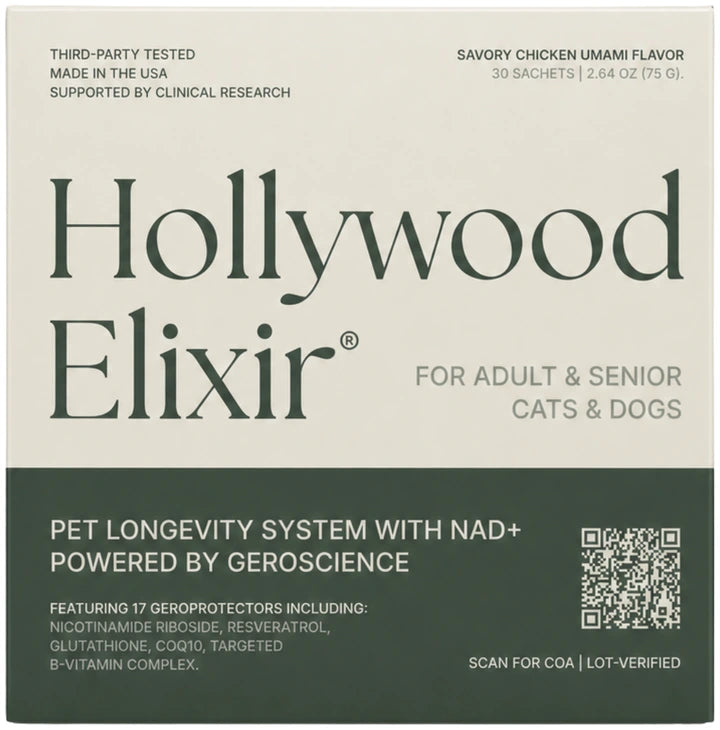
  • Hollywood Elixir sits only in the optional complementary branch and is not universally needed.

Start With the Answer Most Dogs Actually Need

Most healthy dogs eating an appropriate complete-and-balanced diet do not need routine extra vitamins or minerals to make the food complete. The dog vitamins and supplements guide catalogs supplement types; this page answers the earlier decision: whether anything should be added at all. [1] [3]

That answer is not “supplements never help.” A targeted adjunct can be legitimate when it has a defined indication, relevant evidence and dose, overlap review, measurement plan, and stop rule. It must enter through a demonstrated diet problem, therapeutic use, documented risk, or a transparent optional goal.

Woman sitting poolside with a black-and-white dog and a Hollywood Elixir box

Understand What Complete and Balanced Does—and Does Not—Mean

Complete and balanced describes nutritional adequacy for a named species and life stage, not perfection for every individual outcome. In U.S. labeling, the adequacy statement indicates whether the food is intended as a sole diet and the life stage it covers. Treats, snacks, and many supplements are generally supplementary rather than complete foods. [1]

That foundation matters because it changes the burden of proof. If the dog already receives required nutrients in appropriate proportions from the base diet, “more” is not automatically corrective. A new product must name a different job. Completeness does not promise maximal longevity; it does remove vague nutrient insurance as a sufficient rationale.

Man running on grass beside a golden retriever

Separate Adequacy From Individualized Care

A food can be adequate and a dog can still have a diagnosed condition, medication, calorie constraint, absorption problem, or other defined need. Those facts do not invalidate the adequacy statement; they change the clinical question. The correct comparison is not “complete food versus supplements” but “what job remains after the complete diet is accounted for?” [3] [8]

Use two sentences. First: “The base diet supplies the required nutrient foundation for this dog’s labeled life stage.” Second: “The proposed add-on is intended to address this specific goal.” If the second sentence cannot be completed without words such as general, overall, or just in case, the decision has not yet earned complexity.

Person running beside a black-and-white dog

Do Not Treat Stacking as Nutritional Insurance

Routine nutrient stacking can duplicate the complete diet without creating a defined benefit. The total daily exposure includes the base food, treats, fortified chews, powders, oils, dental products, and flavored medication. Reading each label separately hides the combined dose. [3] [4] [8]

The risk is not that every extra nutrient is toxic. It is that duplication can add calories, distort nutrient ratios, create medication or disease conflicts, cause adverse effects, or make later troubleshooting impossible. A five-product routine also makes attribution weak: when the dog improves or develops diarrhea, which change mattered?

Dog jumping to catch a green flying disc

Door One: Correct a Demonstrated Diet Problem

Door one opens when the nutritional foundation is demonstrably incomplete or a deficiency has been identified. An unformulated home-prepared recipe is the classic example. The dog supplement for homemade food guide explains why recipe analysis—not a generic scoop—is the correct starting point. [5]

An incomplete or unformulated home-prepared diet should be corrected as a whole recipe rather than with a generic multivitamin. Nutrients interact, ingredients vary, and adding one product may oversupply some nutrients while leaving others deficient. The formulation should specify exact ingredients, preparation, supplement product, dose, substitutions, and monitoring. [5]

Most healthy complete-fed dogs do not need routine vitamin or mineral stacking.

Door Two: Use a Therapeutic Adjunct Under Oversight

Door two opens for a diagnosed condition when a veterinarian recommends an adjunct with a defined therapeutic role. A diagnosed-condition supplement belongs under veterinary oversight and does not replace medication or therapeutic diet when those are indicated. The nutrition versus medication guide helps keep those jobs distinct. [3] [4]

Ask what outcome matters, what dose and formulation were studied, how long a trial should run, what other treatments remain essential, and what finding would stop use. “Supports joints” is not yet a clinical plan; a specific mobility measure, reassessment date, and adverse-effect rule make the decision testable.

Runner's shoes and dog paws beside a Hollywood Elixir box

Door Three: Address a Defined Risk or Intake Constraint

Door three opens when the dog has a credible risk or intake problem and evidence supports a particular intervention. Examples might include a clinician-confirmed nutrient shortfall, a calorie-restricted plan needing deliberate nutrient density, or an ingredient with a patient-specific indication. The evidence must match dogs, the route, the daily dose, and the intended outcome.

“Breed is prone to problems” is not enough by itself. Define the risk, baseline probability or finding, proposed mechanism, evidence level, expected magnitude, and trade-offs. Then decide what can actually be measured. A risk-based adjunct without a measurement or review date easily becomes permanent habit rather than evidence-informed care. [4] [8]

Woman running outdoors with two dogs

Door Four: Choose an Optional Wellness Layer Transparently

Door four is optional complementary nutrition: no diagnosed deficiency, no claim to treat disease, and no fiction that the product is required. It can be a reasonable consumer choice when the goal is specific, the label discloses a daily amount, the base diet and medications are inventoried, the cost and burden are acceptable, and uncertainty is stated plainly.

The standard is not “prove nothing could go wrong.” It is honest proportionality. A small, tolerable intervention for a modest optional goal may justify a time-limited trial; a costly kitchen-sink formula with hidden doses and sweeping claims may not. Optional should remain optional, including a comfortable decision to decline. [4]

Two women running outdoors with their dogs

Door Five: Know When Not to Add Anything

Door five is not failure; it is the correct result when there is no defined goal, the daily dose is hidden, nutrients overlap materially, a medication or disease creates concern, calories displace the ration, adverse effects appear, or no plausible measure can show value. In these cases, “do not add” protects clarity and safety.

It can also be temporary. Pause while the veterinary team diagnoses a symptom, while a diet transition settles, or while one existing intervention is evaluated. The fewer simultaneous changes, the stronger the information gained from each. A clean baseline is often more valuable than one more broadly positioned product. [4] [8]

Read the Daily Dose, Not the Ingredient Parade

The relevant dose is the total daily amount from every product, not the serving on one label in isolation. Record the ingredient form, amount per serving, number of servings for the dog’s weight, calories, inactive ingredients, lot information, and every overlapping source. “Proprietary blend” may prevent an ingredient-level dose assessment. [4] [7]

Use the pet supplement claims decoder to separate identity, amount, mechanism, and outcome. Fifty ingredients at token amounts do not create fifty evidence-based interventions. Conversely, a short formula is not automatically effective. The question is whether the finished product delivers a relevant, tolerable dose for the chosen job.

An unformulated homemade diet needs whole-recipe formulation, not a generic multivitamin.

Black dog resting its chin in a person's hand beside a senior-dog clinical vignette

DVM Voice: Clinical Vignette of a Common Pattern in Senior Dog Aging

Case provided by JoAnna Pendergrass, DVM

Rex, a 7-year-old Labrador Retriever, was brought in after his owner noticed he was slower to rise, hesitant on stairs, and less able to play as before. Examination showed stiffness and reduced hip mobility; radiographs confirmed degenerative joint changes.

His care required weight management, veterinary-guided pain control, nutritional support, and rehabilitation — a comprehensive plan, but one started only after visible decline appeared.

Clinical takeaway: Rex’s case reflects the value of proactive aging support: maintaining lean body condition, monitoring mobility early, and supporting cellular resilience, antioxidant defense, and healthy inflammatory balance before decline becomes obvious.

Single-case vignette. Not generalizable. Veterinary oversight is essential for pain, stiffness, or suspected joint disease.

Explore Hollywood Elixir Research →
Woman walking with a brown-and-white dog on grass

Climb the Evidence Ladder in the Right Order

Start with identity: is the labeled substance present? Then ask about dose, canine relevance, route, formulation, outcome, and finished-product evidence. Ingredient presence, manufacturing quality, or a seal does not by itself prove that a finished supplement improves a health outcome. [4] [6]

Mechanistic plausibility can justify research; it cannot supply a clinical result. A study in another species, an injected compound, or a different extract may be informative but indirect. The strongest answer names the gap: “Evidence exists for this ingredient under these conditions; evidence for this finished formula at its labeled dose was not located.”

Man playing with a tan dog beside the water

Audit Overlap, Medications, and the Whole Dog

Place every food and product on one page. Include multivitamins, joint chews, oils, calming products, dental items, functional treats, human products, and flavored medicines. A nutritional assessment should inventory the base diet, treats, supplements, medications, body condition, muscle condition, and risk factors. [8]

Then review total dose and conflicts with the veterinarian or pharmacist where appropriate. Even familiar nutrients can have dose-related adverse effects and interactions; omega-3 literature, for example, describes dose, calorie, gastrointestinal, platelet, and interaction considerations. That is a reason for precision, not a claim that omega-3 or all supplements are harmful. [7]

Two dogs looking at a La Petite Labs delivery box on grass

Count Calories, Routine Burden, and Dog-Specific Use

For dogs, palatable chews can function like treats in the calorie budget, and training households may already use many rewards. Powders or oils can change smell, texture, stool, or willingness to eat. A product that causes the dog to eat less complete food may undermine the nutritional foundation it was meant to complement.

Adherence also matters. A precisely studied twice-daily dose that the household gives sporadically is not the studied intervention. Record who gives it, with which meal, and what happens during travel or boarding. The best theoretical plan is not valuable if it creates dosing confusion or turns medication delivery into a daily conflict.

Treat Quality Systems as Necessary but Not Sufficient

Quality questions ask whether the product is likely to match its label consistently: who formulates it, how raw materials are identified, whether finished lots are analyzed, how stability and storage are handled, and how adverse events and complaints are tracked. The pet supplement quality guide provides the fuller label-to-bowl audit. [4] [6]

These controls matter. They do not prove that the product achieves a claimed clinical outcome. A seal can signal participation in a process; a certificate can report a tested lot; neither replaces evidence for the finished formulation, relevant dose, species, duration, and endpoint.

Walk Through the Five-Door Decision Tree

Begin at the top: Is the dog eating an appropriate complete diet for the right life stage? If no, open door one and formulate the whole diet. If yes, ask whether a diagnosed condition creates a veterinarian-directed adjunct; then whether a defined risk or intake constraint has evidence; then whether an optional goal is transparent and proportionate.

At every open door, apply the same cross-checks: daily dose disclosed, total overlap reviewed, evidence relevant, measure selected, review date scheduled, and stop rule written. Any hard failure redirects to door five. The tree does not rank products; it tells you which burden of proof the proposed use must meet.

Original decision tool — The Five-Door Dog Supplement Decision Tree: Classify why a supplement is being considered, apply the correct burden of proof, and route unsupported or unsafe proposals to do not add.

• Door: 1 — Correct the foundation | When it opens: Demonstrated deficiency or incomplete diet | Evidence and dose test: Whole-recipe formulation names exact product and dose | Measure and review: Nutrient and clinical monitoring set by clinician | Stop or redirect: Redirect generic stacking to formulation

• Door: 2 — Therapeutic adjunct | When it opens: Diagnosed condition and veterinarian-directed role | Evidence and dose test: Evidence matches dog, formulation, dose, route, and endpoint | Measure and review: Condition-specific baseline and reassessment | Stop or redirect: Stop for adverse effect, conflict, or clinical failure

• Door: 3 — Defined risk or intake problem | When it opens: Credible patient-specific risk or measured intake constraint | Evidence and dose test: Evidence supports the exact intervention and magnitude is plausible | Measure and review: Measure the risk marker, intake, or functional outcome | Stop or redirect: Stop if premise is absent or cannot be monitored

• Door: 4 — Optional wellness layer | When it opens: No deficiency or treatment claim; modest transparent goal | Evidence and dose test: Daily dose disclosed, uncertainty explicit, trade-offs acceptable | Measure and review: One primary outcome and time-limited trial | Stop or redirect: Stop for no value, burden, cost, or adverse change

• Door: 5 — Do not add | When it opens: No goal, hidden dose, duplication, conflict, calorie displacement, or no measure | Evidence and dose test: Burden of proof fails before purchase | Measure and review: Preserve baseline or seek diagnosis | Stop or redirect: Reconsider only when the missing condition is resolved

• Door: Cross-check — all open doors | When it opens: Base diet, treats, medicines, disease, and household routine inventoried | Evidence and dose test: Finished-product relevance plus cumulative dose reviewed | Measure and review: Goal → measure → dose → overlap → evidence → stop rule | Stop or redirect: Any hard failure closes the door

Method: The tree combines FDA adequacy boundaries, WSAVA guidance against routine stacking, veterinary supplement evidence limits, and a cumulative diet-history audit; it classifies uses rather than ranking products.

Limit: The tool cannot diagnose deficiency or disease, formulate a diet, establish efficacy from a label, or replace veterinary and veterinary-nutrition review.

Woman running on a beach with two dogs

Write a One-Line Trial Protocol Before Buying

Complete this sentence: “For this dog, we are considering [exact product and dose] to change [one defined outcome], measured by [method] from [baseline] after [time], while continuing [essential care], and we will stop for [specific finding].” If the blanks cannot be completed, the trial is not ready.

Add six fields beneath it: goal, measure, dose, overlap, evidence, stop rule. Photograph the label and retain the lot number. Change one optional product at a time when practical. A written protocol prevents memory from turning normal variation into success and keeps a temporary experiment from becoming an unexamined lifelong stack. [4]

• Name one primary outcome, not a cloud of wellness words.

• Set the reassessment date before the first dose.

• Record adverse changes as carefully as hoped-for changes.

• Do not stop prescribed care to make a supplement trial look cleaner.

Woman hugging a gray dog outdoors

Escalate Symptoms Instead of Shopping Around Them

Weight loss, appetite change, vomiting, diarrhea, increased thirst or urination, weakness, pain, collapse, behavior change, or a new mass needs clinical assessment according to severity. A supplement-shopping loop can delay diagnosis and fill the history with simultaneous variables. Bring the food and product inventory to the visit. [8]

Senior dogs often acquire more diagnoses and medications, but age still does not create a universal supplement requirement. The existing senior dog supplement-need guide covers that life-stage context. Use this page’s five doors first, then let the diagnosed condition and veterinary plan determine whether any adjunct earns a role.

Place Hollywood Elixir Only in the Optional Door

La Petite Labs makes Hollywood Elixir, so its inclusion here is a disclosed commercial bridge. It belongs only in door four unless a future, product-specific evidence and review record supports a narrower use. The Hollywood Elixir ingredients page lets readers inspect the labeled formula; ingredient presence does not establish finished-product efficacy.

Hollywood Elixir is an optional complementary product, not a universal need, diet-balancer, or substitute for veterinary treatment. If considered, apply the same worksheet: defined goal, labeled canine dose, total overlap, medication and disease review, evidence relevance, cost and routine burden, review date, and stop rule. Declining it remains a valid outcome.

Hollywood Elixir sits only in the optional complementary branch and is not universally needed.

Educational content only. This material is not a substitute for veterinary advice. Always consult your veterinarian about your dog’s specific needs. These statements have not been evaluated by the Food and Drug Administration. Products mentioned are not intended to diagnose, treat, cure, or prevent any disease.

Glossary

  • Complete and balanced: Label language indicating nutritional adequacy for the named species and life stage when fed as directed.
  • Adjunct: An additional intervention used alongside, rather than as a replacement for, the primary diet or treatment.
  • Cumulative dose: The total daily amount from the base food, treats, supplements, medicines, and other relevant sources.
  • Finished-product evidence: Evidence evaluating the actual marketed formulation, dose, route, species, duration, and outcome rather than an ingredient alone.
  • Stop rule: A prewritten finding—such as an adverse effect, conflict, lack of benefit, or review date—that ends or pauses use.
  • Nutritional adequacy statement: The regulated label statement identifying whether and how a food meets nutritional needs for a species and life stage.

Related Reading

References

Numbered references support claims cited in the article. Evidence context identifies the study population and design; it does not turn indirect evidence into pet-specific proof.

  1. U.S. Food and Drug Administration. Complete and Balanced Pet Food. U.S. Food and Drug Administration · 2024RegulatoryPopulation: bothEvidence boundary: Official label guidance; nutritional adequacy does not establish that every optional adjunct is useless or that a food is optimal for every patient.↩ 1 · ↩ 2 · ↩ 3
  2. World Small Animal Veterinary Association. Frequently Asked Questions and Myths. World Small Animal Veterinary Association · 2020GuidelinePopulation: bothEvidence boundary: Global veterinary nutrition guidance; it distinguishes unnecessary routine stacking from patient-specific interventions without endorsing every adjunct.↩ 1 · ↩ 2 · ↩ 3 · ↩ 4 · ↩ 5
  3. Finno CJ. Veterinary Pet Supplements and Nutraceuticals. Nutrition today · 2020· DOI 10.1097/nt.0000000000000399ReviewPopulation: bothEvidence boundary: Narrative veterinary review of a heterogeneous category; examples from one ingredient or product class cannot be generalized to all supplements.↩ 1 · ↩ 2 · ↩ 3 · ↩ 4 · ↩ 5 · ↩ 6 · ↩ 7 · ↩ 8 · ↩ 9
  4. Veterinary Specialists. Preventing Nutritional Deficiencies in Pets. VetSpecialists.com · 2025GuidelinePopulation: bothEvidence boundary: Specialist clinical guidance; it does not imply that a generic multivitamin can balance an unformulated recipe.↩ 1 · ↩ 2
  5. World Small Animal Veterinary Association. Guidelines on Selecting Pet Foods. World Small Animal Veterinary Association · 2021GuidelinePopulation: bothEvidence boundary: Veterinary manufacturer-screening guidance; positive process answers are quality signals, not proof of a specific health outcome.↩ 1 · ↩ 2
  6. Lenox CE, Bauer JE. Potential adverse effects of omega-3 Fatty acids in dogs and cats. Journal of veterinary internal medicine · 2013· DOI 10.1111/jvim.12033ReviewPopulation: bothEvidence boundary: Ingredient-specific safety review; it supports dose and interaction review, not a blanket warning against omega-3 use.↩ 1 · ↩ 2
  7. WSAVA Nutritional Assessment Guidelines Task Force Members. WSAVA nutritional assessment guidelines. Journal of feline medicine and surgery · 2011· DOI 10.1016/j.jfms.2011.05.009GuidelinePopulation: bothEvidence boundary: Global assessment framework; it supports inventory and monitoring but does not prescribe a supplement for a remote patient.↩ 1 · ↩ 2 · ↩ 3 · ↩ 4 · ↩ 5 · ↩ 6

Further reading

These sources provide additional context but are not mapped to a numbered claim above.

FAQ

Do dogs need supplements if their food is complete and balanced?

Most healthy dogs do not need routine extra vitamins or minerals to make an appropriate complete food complete. A targeted adjunct may still be reasonable for a demonstrated diet problem, diagnosed condition, defined risk, or transparent optional goal.

Can a dog get too many vitamins from food plus a multivitamin?

Potentially. Risk depends on the nutrient, amount, duration, complete diet, treats, other products, disease, and medications. Inventory every source and review cumulative daily exposure rather than assuming more provides extra insurance.

Can a general supplement balance homemade dog food?

Not reliably. The recipe must be assessed and formulated as a whole, including exact ingredients, quantities, preparation, supplement, and substitutions. A generic multivitamin may oversupply some nutrients while leaving other deficits.

Does a veterinarian-recommended supplement replace medication?

No. When used for a diagnosed condition, a supplement is an adjunct unless the treating veterinarian explicitly changes the plan. Ask what outcome it targets, what evidence and dose apply, when to reassess, and what would stop use.

Does a quality seal prove that a dog supplement works?

No. A seal can signal manufacturing or process requirements, which matter for identity and consistency. It does not by itself demonstrate that the finished formula at its labeled dose improves a clinical outcome in dogs.

Can I use a human supplement for my dog?

Do not assume it is interchangeable. Product concentration, inactive ingredients, dosage form, labeling, and evidence can differ, and human dietary-supplement law does not create the same animal-product category. Review the exact product with a veterinarian.

How long should I try a dog supplement?

Set the interval from the intended outcome and evidence before starting. Record a baseline, exact dose, primary measure, reassessment date, essential care that continues, and adverse-effect stop rule. Without those fields, a trial cannot be interpreted.

Is a supplement with more ingredients better?

No. Ingredient count is not an evidence grade. Each component needs identity, a disclosed relevant dose, canine evidence for the intended outcome, overlap and safety review, and finished-product context. Token amounts can create label breadth without a plausible intervention.

Is Hollywood Elixir necessary for every dog on complete food?

No. La Petite Labs positions Hollywood Elixir as optional complementary nutrition, not a diet balancer, universal requirement, or replacement for veterinary treatment. If considered, it must pass the same goal, dose, overlap, evidence, and stop-rule review.

Hollywood Elixir box behind a spotted dog in the canine longevity-system framework section

Discover LPL-01: How This Fits Into a Larger Canine Longevity System

Aging in dogs is not driven by a single pathway. It’s the result of interacting biological systems—energy metabolism, oxidative stress, immune signaling, and structural integrity—changing over time.

This article explores one piece of that puzzle. If you want to understand how these pieces connect—and what actually moves the needle—you need to zoom out.

Start with the underlying science: