Enzymatic and Endogenous Antioxidants for Dogs

How a dog's built-in antioxidants work, and when to support them

By La Petite Labs Editorial 15 min read

Endogenous antioxidants are the redox defenses your dog’s body makes itself — distinct from the antioxidants that come from food. “Enzymatic” refers to the specialized proteins that neutralize reactive oxygen species before they damage lipids, proteins, or DNA. The headline trio is superoxide dismutase (SOD), catalase, and glutathione peroxidase, and they fail not from “too many free radicals” but from an imbalance — when oxidant production outpaces the capacity to restore balance.

Here’s how the relay runs: SOD converts superoxide into hydrogen peroxide; catalase breaks that peroxide into water and oxygen; and glutathione peroxidase clears peroxides using glutathione. Together they keep reactive intermediates from piling up while normal cell signaling continues. The goal is controlled redox balance, not zero oxidants. When these systems are under-resourced or overwhelmed, oxidative pressure can amplify inflammation and cellular dysfunction (Jewell DE, 2024).

  • Endogenous antioxidants — including superoxide dismutase (SOD), catalase, and glutathione peroxidase — are made inside your dog’s body and do the daily redox maintenance.
  • SOD for dogs runs on mineral cofactors (zinc/copper or manganese); catalase needs iron; glutathione peroxidase needs selenium and glutathione.
  • Dietary antioxidants help, but they don’t replace these internal enzyme systems.
  • “More antioxidants” can backfire — very high doses can blunt the redox signaling cells use to adapt.
  • Oral SOD/catalase enzymes largely don’t survive digestion, so good formulas supply the cofactors and substrates that support the body’s own defenses.
  • Active, senior, working, and therapy dogs face higher oxidative load and may benefit most.
  • The best choice is usually one coherent daily formula, not a stack of overlapping products.

Superoxide Dismutase, Catalase & Glutathione Peroxidase: What They Need

Enzymatic antioxidant defenses are only as effective as the cofactors that enable them to run. A cofactor is a mineral (or other helper molecule) required for an enzyme’s structure or catalytic activity—without it, the enzyme may be present but functionally limited.

SOD exists in multiple forms that rely on different minerals: cytosolic SOD typically uses zinc and copper, while mitochondrial SOD uses manganese. That makes zinc/copper balance important: too little of either can constrain activity, but excess of one can interfere with absorption or utilization of the other, shifting the system away from equilibrium. Catalase is heme-dependent (iron-containing) and is heavily involved in clearing hydrogen peroxide, especially when peroxide production rises.

Glutathione peroxidase is selenium-dependent, which is why selenium status is tightly linked to peroxide control. Both deficiency and excess matter: inadequate selenium can reduce glutathione peroxidase activity, while excessive selenium can be toxic and may itself promote oxidative injury. The practical takeaway is mechanistic: these enzymes are not “standalone antioxidants,” but mineral-dependent systems whose performance reflects availability, balance, and cellular demand (Jewell DE, 2024).

Why 'More Antioxidants' Can Backfire: Redox Signaling and Dose

Oxidants are not only damaging byproducts; at controlled levels they act as messengers in redox signaling—short-lived cues that help cells adjust metabolism, immune responses, and stress defenses. This is where the idea of hormesis becomes relevant: mild, transient oxidative challenges can trigger adaptive upregulation of protective pathways, including endogenous antioxidant enzymes.

Because of this, the relationship between antioxidants and outcomes often follows a dose-response curve rather than a simple “more is better” line. At appropriate doses and in the right physiological context, supporting antioxidant capacity may help restore balance. At very high doses, however, broadly suppressing reactive species can blunt signaling needed for adaptation, potentially altering training-like responses in muscle, immune calibration, or mitochondrial biogenesis. In some contexts, excessive antioxidant pressure can also shift redox couples (like glutathione) toward an overly reduced state, which may disrupt normal protein regulation.

The key concept is context dependence: baseline oxidative load, tissue needs, and existing nutrient status shape whether an intervention supports resilience or interferes with normal regulation (Jewell DE, 2024).

Why Owners Look Beyond Vitamins When They Think Antioxidants

Dietary antioxidants and endogenous antioxidants are related but not interchangeable. Dietary antioxidants come from food and supplements; endogenous antioxidants are built by the body itself. Both feed oxidative balance, and dietary antioxidants can help offset free-radical damage in dogs.

The practical point: a good diet is foundational, but it doesn’t answer the whole question. The body still has to absorb those nutrients, use them, and run its internal enzymes. That’s why owners interested in endogenous antioxidants for dogs look for support that complements nutrition rather than trying to replace it.

Plant Compounds and Antioxidant Capacity in Dogs

Plant compounds can be a meaningful part of the story, not because plants are magical, but because certain phytonutrients can support antioxidant capacity. Evidence suggests plant-based ingredients may enhance antioxidant capacity in dogs and may help reduce oxidative stress (Tanprasertsuk J, 2022).

In real life, this often shows up as a preference for formulas that include thoughtfully chosen botanicals alongside other supportive ingredients. For owners comparing enzymatic endogenous antioxidants supplements for dogs, the best versions tend to feel like a balanced blend—supportive, not extreme, and designed to sit comfortably beside a complete diet.

Oxidative Stress in Real Life: Illness, Stressors, and Recovery
Oxidative stress rises when reactive molecules outpace the body’s ability to neutralize them. That imbalance can occur during illness, heavy exertion, or chronic stressors. Enzymatic antioxidants have been discussed as playing a role in reducing oxidative stress in dogs during illness, and supplementation has been explored as a supportive strategy (Hagen DM, 2019).

This doesn’t mean antioxidants are a substitute for veterinary care. It means that internal defense systems are part of the whole picture, and supporting them can be a reasonable, conservative choice—especially when framed as resilience support rather than a promise of outcomes.

“The most meaningful antioxidant support is often the least dramatic—steady, compatible, and built for everyday life.”

Why System-level Support Can Be More Honest Than Single Claims

Owners sometimes worry that focusing on antioxidants feels “too abstract” next to visible issues like joints or skin. But oxidative balance touches many systems at once, which is exactly why it resists being reduced to a single symptom. Endogenous antioxidants do baseline maintenance — quiet, constant protection of cells from oxidative stress.

That’s also why a system-level formula makes sense scientifically and commercially: it isn’t trying to be a one-issue fix. It supports the internal environment that many tissues share — a more honest approach for long-term care than chasing one symptom at a time.

Who Benefits Most: Thinking in Load, Not Labels

If you’re considering enzymatic endogenous antioxidants for dogs, it helps to think in “load” rather than labels. A young dog with a calm routine may do well with diet alone, while a dog with frequent travel, intense activity, or a demanding job may benefit from additional support. Antioxidant effectiveness can vary depending on the types and amounts included in the diet, which is one reason results can look different from dog to dog.

The best enzymatic endogenous antioxidants for dogs are often the ones that match the dog’s real life: consistent, well-tolerated, and designed to support the broader system without creating a new set of variables to manage.

Stacking Products Versus Choosing One Coherent Daily Formula

A practical question is whether to use one product or “stack” multiple antioxidant items. Stacking can make it harder to know what’s helping, and it can increase the chance of digestive upset. Since antioxidant outcomes depend on the specific compounds and amounts, a simpler, coherent formula is often easier to live with long-term.

If you do add something new, change one variable at a time and watch for appetite, stool quality, and overall comfort. For many owners, the best enzymatic endogenous antioxidants supplements for dogs are the ones that quietly fit into a daily routine without requiring constant adjustment.

Life Stage, Lifestyle, and Individual Variation in Response

Not all dogs need the same approach. Puppies are building systems; adults are maintaining; seniors are adapting. Breed and size can change metabolism, but lifestyle usually matters more than a label. In therapy dogs, antioxidant supplementation has been associated with improved overall well-being, while noting that effectiveness may vary based on enzyme activity and other factors (Sechi S, 2017).

So the decision isn’t “Should every dog take this?” It’s “Does this dog’s current season of life justify added support?” That framing keeps the choice grounded and avoids turning antioxidants into a trend.

Quality Signals That Matter More Than a Long Ingredient List

If you’re comparing an enzymatic endogenous antioxidants supplement for dogs, quality is less about hype and more about signals of restraint: clear ingredient identities, consistent manufacturing, and a formula that doesn’t rely on extreme dosing. Antioxidant effects can vary by type and amount, and “more” is not automatically “better”(Jewell DE, 2024).

Look for products that explain what they’re supporting (overall oxidative balance, cellular resilience, healthy aging) rather than promising a single dramatic outcome. Also consider whether the formula is designed for daily use—palatability, gentle delivery, and compatibility with a normal diet are practical markers that owners tend to appreciate long after the first week.

“A complete diet matters, but the body’s internal defenses still decide what gets used, when.”

La Petite Labs

DVM Voice: Clinical Vignette of a Common Pattern in Senior Dog Aging

Case provided by JoAnna Pendergrass, DVM

Rex, a 7-year-old Labrador Retriever, was brought in after his owner noticed he was slower to rise, hesitant on stairs, and less able to play as before. Examination showed stiffness and reduced hip mobility; radiographs confirmed degenerative joint changes.

His care required weight management, veterinary-guided pain control, nutritional support, and rehabilitation — a comprehensive plan, but one started only after visible decline appeared.

Clinical takeaway: Rex’s case reflects the value of proactive aging support: maintaining lean body condition, monitoring mobility early, and supporting cellular resilience, antioxidant defense, and healthy inflammatory balance before decline becomes obvious.

Single-case vignette. Not generalizable. Veterinary oversight is essential for pain, stiffness, or suspected joint disease.

Explore Hollywood Elixir Research →
enzymatic endogenous antioxidants for dogs - 9

What to Expect over Time: Subtle Patterns, Not Sudden Shifts

Owners often ask when they’ll “see” antioxidant support. With enzymatic endogenous antioxidants for dogs, the goal is usually not a sudden visible change; it’s steadier day-to-day comfort and resilience. In working and athletic dogs, antioxidant supplementation has been associated with reduced exercise-related muscle stress and improved recovery markers, suggesting benefits may emerge around activity tolerance rather than appearance (Piercy RJ, 2000).

For family dogs, timelines are individual. Some owners notice subtle shifts—more consistent energy, easier transitions after busy days—while others simply value the long-term logic of supporting internal defenses. A fair expectation is gradual, and best judged by patterns over weeks, not a single afternoon.

enzymatic endogenous antioxidants for dogs - 10

Safety, Sensitivities, and When to Ask Your Veterinarian

Safety is part of the conversation, especially when people search for the best enzymatic endogenous antioxidants supplements for dogs and assume “natural” means “risk-free.” Dogs can respond differently depending on health status, medications, and baseline diet. Research notes that antioxidant supplementation may be beneficial in contexts of oxidative stress, while also emphasizing that outcomes depend on the specific antioxidant approach and that more study is needed (Hagen DM, 2019).

If your dog has a chronic condition, is on long-term medication, is pregnant, or is recovering from surgery, treat any new supplement as a vet-guided decision. The aim is compatibility—supporting the system without complicating the plan already in place.

enzymatic endogenous antioxidants for dogs - 11

Nutrition Context: Why the Bowl Is Only Part of It

It’s tempting to reduce enzymatic endogenous antioxidants for dogs nutrition to a checklist: “Does the food have antioxidants?” But endogenous enzymes are not simply “added in.” They’re produced and regulated by the body, and they depend on overall nutritional adequacy, energy balance, and the presence of supportive compounds that help the system function smoothly (Jewell DE, 2024).

This is where plant-derived compounds can be relevant. Certain phytonutrients may enhance antioxidant capacity in dogs and help reduce oxidative stress, complementing what the body is already doing (Tanprasertsuk J, 2022). The best approach is usually layered: a solid diet plus thoughtful, system-level support when your dog’s life asks for more.

Aging with Grace: Supporting Resilience in Senior Dogs

For senior dogs, the question is rarely “Do antioxidants exist?” It’s whether the internal balance stays steady as the body changes. Enzymatic antioxidants have been discussed in contexts where dogs face higher oxidative demands, including illness-related stressors (Hagen DM, 2019). That doesn’t mean every older dog needs an aggressive stack; it means the aging picture is real, and support should be proportionate.

Aging support that makes sense to careful owners tends to be gentle, consistent, and broad—less about chasing a lab number and more about supporting everyday function. If you’re evaluating the best enzymatic endogenous antioxidants supplement for dogs, prioritize formulas designed for long-term use rather than short bursts of intensity.

Active Dogs and Recovery: Matching Support to Real Demands

Working, sporting, and highly active dogs live in a different oxidative rhythm. Exercise increases metabolic turnover, and recovery becomes part of health. In sled dogs, dietary antioxidant supplementation has been linked with reduced muscle damage and improved recovery indicators, suggesting a role for antioxidant support around sustained activity (Piercy RJ, 2000).

For the average pet, “exercise” might mean weekend hikes, daycare, or long fetch sessions. The principle still holds: support is most meaningful when it matches the dog’s actual lifestyle. A daily formula can be a calmer choice than rotating products based on occasional bursts of activity.

Therapy and Working Dogs: When the Environment Adds Load

Therapy and service-adjacent dogs often carry a unique mix of demands: travel, unfamiliar environments, emotional intensity, and long periods of attentiveness. Enzymatic antioxidants have been highlighted as relevant to oxidative balance in therapy dogs, with supplementation outcomes varying by the specific enzymes and their activity levels (Sechi S, 2017).

This is a useful reminder for all owners: the “best” antioxidant strategy is rarely universal. It’s a fit—between the dog’s life, the dog’s body, and a formula that supports the broader network rather than chasing a single ingredient headline.

Do Supplements Provide Enzymes, or Support the Body’s Own?

A common misconception is that an endogenous antioxidants supplement for dogs should contain the enzymes themselves. In practice, oral SOD and catalase mostly don’t survive digestion — so the better-designed formulas supply the cofactors and substrates the body uses to maintain its own defenses.

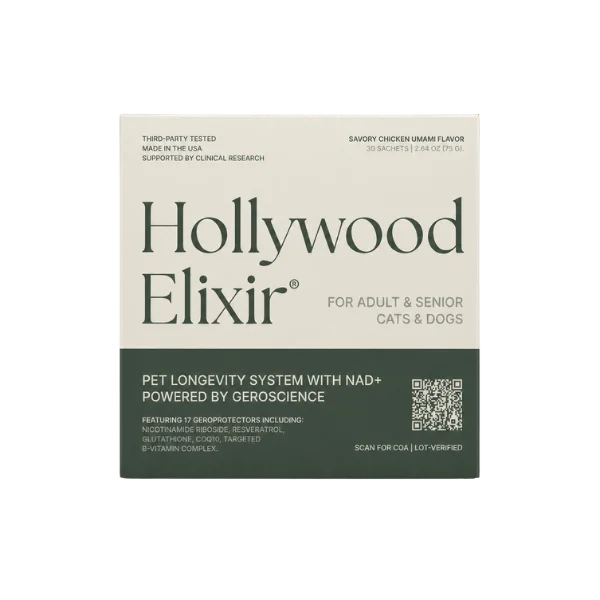
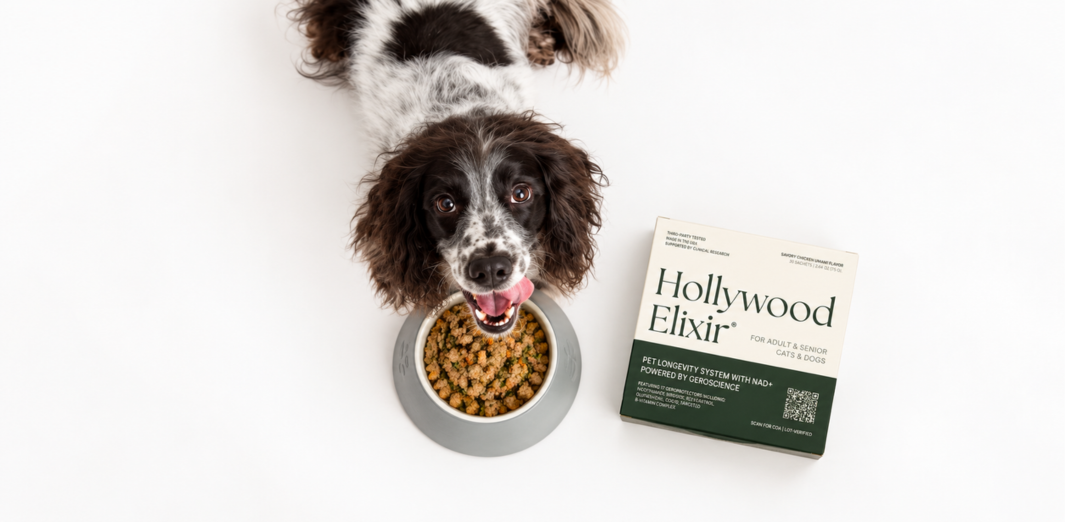
That’s exactly where Hollywood Elixir fits. Rather than promising to “add enzymes,” it supplies readable amounts of antioxidant support — glutathione at 50 mg (the substrate glutathione peroxidase depends on) and CoQ10 at 40 mg — so the dog’s internal systems have the raw materials to keep working, day after day. It’s daily, food-mixed support for healthy aging, not a single-nutrient patch or a disease treatment. Explore Hollywood Elixir →

A Calm Decision Framework for Choosing Ongoing Support

If you’re deciding whether to add enzymatic endogenous antioxidants supplements for dogs, use a simple, science-minded filter: What is the dog’s current load (age, activity, stressors)? Is the diet stable and high quality? Are there medications or conditions that make “extra” a careful choice? And does the product support a broader metabolic network rather than acting like a single-nutrient patch?

The strongest reason a careful owner still chooses a formula is coherence: it fits daily life, respects the body’s endogenous defenses, and supports healthy aging without overpromising. That’s the quiet standard behind the best enzymatic endogenous antioxidants for dogs—support that holds up over time.

“Best usually means best fit: the dog’s season of life, the dog’s load, and a formula you can keep consistent.”

Educational content only. This material is not a substitute for veterinary advice. Always consult your veterinarian about your dog’s specific needs. These statements have not been evaluated by the Food and Drug Administration. Products mentioned are not intended to diagnose, treat, cure, or prevent any disease.

Glossary

  • Antioxidant: A substance or system that helps neutralize reactive molecules that can stress cells.
  • Endogenous: Made within the body; not supplied directly from food or supplements.
  • Enzymatic Antioxidants: Antioxidant defenses that function as enzymes, helping convert reactive compounds into less reactive forms.
  • Oxidative Stress: An imbalance where reactive molecules outpace antioxidant defenses.
  • Free Radicals: Highly reactive molecules that can contribute to oxidative stress.
  • Phytonutrients: Plant-derived compounds that may support antioxidant capacity and overall resilience.
  • Dietary Antioxidants: Antioxidants obtained from food or supplements, distinct from endogenous defenses.
  • Resilience Support: A conservative goal focused on maintaining steady function under everyday stressors.
  • System-Level Formula: A product designed to support multiple connected processes rather than targeting one isolated nutrient.

Related Reading

References

Tanprasertsuk J. Roles of plant-based ingredients and phytonutrients in canine nutrition and health. PubMed Central. 2022. https://pmc.ncbi.nlm.nih.gov/articles/PMC9291198/

Jewell DE. Effect of dietary antioxidants on free radical damage in dogs and cats. PubMed Central. 2024. https://pmc.ncbi.nlm.nih.gov/articles/PMC11185959/

Piercy RJ. Effect of dietary supplements containing antioxidants on attenuation of muscle damage in exercising sled dogs. PubMed. 2000. https://pubmed.ncbi.nlm.nih.gov/11108194/

Hagen DM. Antioxidant supplementation during illness in dogs: effect on oxidative stress and outcome, an exploratory study. PubMed. 2019. https://pubmed.ncbi.nlm.nih.gov/31292973/

Sechi S. Oxidative stress and food supplementation with antioxidants in therapy dogs. PubMed. 2017. https://pubmed.ncbi.nlm.nih.gov/28725111/

Baskin CR. Effects of dietary antioxidant supplementation on oxidative damage and resistance to oxidative damage during prolonged exercise in sled dogs. PubMed. 2000. https://pubmed.ncbi.nlm.nih.gov/10951977/

Jewell DE. Effect of increasing dietary antioxidants on concentrations of vitamin E and total alkenals in serum of dogs and cats. PubMed. 2000. https://pubmed.ncbi.nlm.nih.gov/19757574/

Muršec A. Antioxidant Strategies for Age-Related Oxidative Damage in Dogs. PubMed. 2025. https://pubmed.ncbi.nlm.nih.gov/41150102/

Choi K. Oxidative stress response in canine in vitro liver, kidney and intestinal models with seven potential dietary ingredients. PubMed. 2016. https://pubmed.ncbi.nlm.nih.gov/26602166/

Payan-Carreira. Antioxidant enzyme dynamics suggest the absence of oxidative stress in the canine endometrium across the estrous cycle. 2025. https://www.sciencedirect.com/science/article/pii/S0378432025000582

Guo. The Role of Plant Extracts in Enhancing Nutrition and Health for Dogs and Cats: Safety, Benefits, and Applications. 2024. https://www.mdpi.com/2306-7381/11/9/426

Robinson. A Pilot Study on the Safety of a Novel Antioxidant Nanoparticle Delivery System and Its Indirect Effects on Cytokine Levels in Four Dogs. 2020. https://www.frontiersin.org/journals/veterinary-science/articles/10.3389/fvets.2020.00447/full

Raila J. Increased antioxidant capacity in the plasma of dogs after a single oral dosage of tocotrienols. PubMed. 2011. https://pubmed.ncbi.nlm.nih.gov/22005405/

Jobe MT. Systematic Review and Meta-Analysis of Quality Claims Associated with Fresh Pet Food: Evaluating Scientific Evidence for Additives, Ingredient Quality, and Effects of Processing in Pet Nutrition. PubMed Central. 2025. https://pmc.ncbi.nlm.nih.gov/articles/PMC12784728/

Chethan GE. Antioxidant supplementation during treatment of outpatient dogs with parvovirus enteritis ameliorates oxidative stress and attenuates intestinal injury: A randomized controlled trial. PubMed Central. 2023. https://pmc.ncbi.nlm.nih.gov/articles/PMC10276178/

Giannetto. Antioxidant and Hepatoprotective Effect of a Nutritional Supplement with Silymarin Phytosome, Choline Chloride, l-Cystine, Artichoke, and Vitamin E in Dogs. 2022. https://www.mdpi.com/2076-3921/11/12/2339

Bilgiç B. Investigation of Trace and Macro Element Contents in Commercial Cat Foods. PubMed Central. 2025. https://pmc.ncbi.nlm.nih.gov/articles/PMC11633335/

Finno CJ. Veterinary Pet Supplements and Nutraceuticals. PubMed Central. 2020. https://pmc.ncbi.nlm.nih.gov/articles/PMC7802882/

Ahmed. Bioaccumulation of heavy metals in some commercially important fishes from a tropical river estuary suggests higher potential health risk in children than adults. Nature. 2019. https://www.nature.com/articles/s41598-021-00467-4

FAQ

What are enzymatic endogenous antioxidants for dogs, in plain terms?

They’re the antioxidant tools your dog makes internally—enzymes and related defenses that help neutralize reactive byproducts of normal metabolism. Food antioxidants can contribute, but endogenous systems are the core “in-house” protection. If you want daily, system-level support rather than a single-ingredient approach, consider how a disclosed aging-support formula fits into a consistent routine.

Why do these antioxidants matter for everyday dog health?

Oxidative stress isn’t only a dramatic event; it can be a background pressure that rises with activity, immune challenges, and aging. Endogenous antioxidants help protect cells from that ongoing load. Many owners choose support that’s subtle and steady, aimed at resilience over time.

How are dietary antioxidants different from endogenous antioxidant enzymes?

Dietary antioxidants come from food or supplements; endogenous antioxidants are produced by the body and help manage oxidative stress from within. A complete diet is important, but internal defenses still depend on overall physiology and consistency.

Do plant ingredients really support antioxidant capacity in dogs?

Certain plant-based ingredients and phytonutrients have been associated with enhanced antioxidant capacity in dogs and may help reduce oxidative stress. The best results usually come from thoughtful formulation and consistency, not a single “superfood.” For a balanced, system-supportive formula, many owners consider a disclosed aging-support formula as part of daily care.

Is an enzymatic endogenous antioxidants supplement for dogs always necessary?

Not always. Many dogs do well on a complete diet, but oxidative load can change with age, lifestyle, and stressors. Antioxidant effects can vary depending on type and amount, so the decision is individual. If you want a conservative, system-level option that doesn’t hinge on one nutrient, a disclosed aging-support formula can be a practical way to support the broader network.

Are enzymatic endogenous antioxidants supplements for dogs safe daily?

Daily use can be appropriate, but safety depends on the dog’s health status, other supplements, and medications. Research discussions around antioxidant supplementation emphasize variable outcomes and the need for context-specific decisions. If your dog has a chronic condition or takes long-term meds, confirm fit with your veterinarian.

What side effects might occur with antioxidant supplements?

Most issues owners notice are digestive—soft stool, gas, or reduced appetite—especially when multiple products are started at once. Because antioxidant effectiveness varies by type and amount, piling on products can add unnecessary variables. Introduce one change at a time and pause if your dog seems uncomfortable.

Can antioxidant supplements interact with my dog’s medications?

Potential interactions depend on the medication and the supplement’s ingredients. During illness-related oxidative stress, antioxidants have been explored as supportive, but research also underscores that context matters and more clarity is still needed. If your dog is on prescriptions, ask your veterinarian before adding anything new.

Do senior dogs benefit more from endogenous antioxidant support?

Often, yes—because oxidative load and recovery demands can shift with age. Endogenous antioxidants are central to cellular protection, which is why aging conversations frequently include them. The goal is not a dramatic change, but steadier resilience over time.

Are these supplements useful for active or working dogs?

They can be. In exercising sled dogs, antioxidant supplementation has been associated with reduced muscle damage and improved recovery indicators, suggesting a role around sustained activity. For most pets, “active” may mean hikes or long play sessions, but the recovery principle still applies.

How long until I notice results from antioxidant support?

With enzymatic endogenous antioxidants for dogs, changes are often subtle and best judged as patterns over weeks. In performance contexts, antioxidant supplementation has been linked with recovery-related outcomes, which may be easier to observe than cosmetic changes. Track energy consistency, comfort after busy days, and overall routine stability.

What should I look for in the best enzymatic endogenous antioxidants for dogs?

Look for clarity, consistency, and a formula that supports the broader system rather than chasing a single “hero” ingredient. Antioxidant effects can vary by type and amount, so thoughtful formulation matters more than maximalism. Also consider palatability and daily practicality—because consistency is the point.

Do I need an enzymatic endogenous antioxidants supplement for dogs nutrition?

Nutrition is the foundation, but endogenous antioxidant enzymes are regulated by the body and influenced by overall context, not just what’s present in the bowl. Endogenous antioxidants play a key role in cellular protection, which is why owners sometimes add support during higher-demand seasons.

Can puppies take antioxidant supplements, or should they wait?

Puppies are still developing, so the safest approach is to keep supplementation conservative and vet-guided. Because antioxidant outcomes depend on type and amount, it’s worth avoiding unnecessary stacking during growth. If you’re considering support for a young dog with specific lifestyle demands, discuss it with your veterinarian.

Does dog size or breed change antioxidant supplement choices?

Size and breed can influence metabolism and sensitivity, but lifestyle and health status usually drive the decision more. The effectiveness of dietary antioxidants can vary with what’s used and how much, so personalization matters. If your dog is very small, very large, or medically complex, ask your veterinarian for guidance on fit.

Are enzymatic endogenous antioxidants for dogs the same for cats?

The concept—internal antioxidant defenses—exists in both species, but cats and dogs differ in metabolism and supplement tolerance. Endogenous antioxidants are produced by the body and are central to oxidative protection, yet species-specific decisions still matter. Use dog-specific products only for dogs unless your veterinarian advises otherwise.

Should I stop other supplements when adding antioxidants?

Not necessarily, but simplifying can help you understand what’s working and reduce digestive surprises. Since antioxidant outcomes vary by compound and amount, stacking multiple antioxidant-heavy products can be redundant or harder to manage. If your dog is on a complex regimen, ask your veterinarian which items are essential.

What does research say about antioxidants in dogs under stress?

Research discussions suggest antioxidants can be supportive in contexts of higher oxidative stress, including illness-related situations, while emphasizing that results depend on the approach and more research is needed. For owners, that usually translates to a conservative goal: support resilience, don’t chase promises.

When should I call my vet before starting antioxidants?

Call your vet if your dog is on prescription medications, has a chronic diagnosis, is pregnant, is recovering from surgery, or has persistent GI issues. Antioxidant supplementation can be context-dependent, and illness-related oxidative stress discussions highlight the need for individualized decisions. Bring the full ingredient list to your appointment so your clinic can assess fit.

How do I choose the best enzymatic endogenous antioxidants supplement for dogs?

Choose based on fit: your dog’s age, activity, stressors, and current diet. Because antioxidant effectiveness varies by the specific types and amounts used, a coherent, well-designed formula is usually more meaningful than a long ingredient list. Prioritize consistency, tolerability, and transparent formulation.

Can I give enzymatic endogenous antioxidants for dogs with food?

In many cases, yes—giving supplements with food can improve routine consistency and reduce stomach sensitivity. Since antioxidant outcomes vary with formulation and amount, steady daily administration is often the most practical approach. If your dog has a sensitive stomach, introduce slowly and monitor stool quality.

What makes an antioxidant product feel “system-level” rather than single-ingredient?

System-level support is framed around resilience and internal balance, not a promise tied to one compound. It respects that endogenous antioxidants are produced by the body and that overall context influences how well defenses perform. In practice, it looks like a coherent formula meant for daily use, with realistic expectations.

La Petite Labs

Discover LPL-01: How This Fits Into a Larger Canine Longevity System

Aging in dogs is not driven by a single pathway. It’s the result of interacting biological systems—energy metabolism, oxidative stress, immune signaling, and structural integrity—changing over time.

This article explores one piece of that puzzle. If you want to understand how these pieces connect—and what actually moves the needle—you need to zoom out.

Start with the underlying science: