
Selenium for Cats

How much cat food already contains, how cats get rid of the extra, and what the thyroid and kidney studies found.

By La Petite Labs Editorial 12 min read

As Seen On

  • AVMA, American Veterinary Medical Association
  • Today’s Veterinary Business
  • Petfood Industry
Woman cuddling an orange-and-white cat and a silver tabby while holding a Hollywood Elixir box
Hollywood Elixir® Senior Cat Supplement

17 science-backed actives

From$50/moSave up to 47%Save up to 44%Shop Now
Contents
Selenium is an essential trace mineral for cats, and complete cat food already supplies it, usually with room to spare, so a healthy cat doesn't need a selenium supplement. Cats handle the mineral in their own way. They carry more of it in their blood than dogs do and pass the extra out in urine.2 That makes cats tolerant, not immune: the maximum tolerable level in a cat's diet is 2 mg per kg.7

This guide covers what cat food contains, how cats deal with the excess, the thyroid and kidney questions, and the limits.

  • What it is: An essential trace mineral that cats build into enzymes. Some protect cells and others handle thyroid hormone.7
  • In the food: Cat foods averaged 1.14 mg of selenium per kg of dry matter in one survey, against a kitten requirement of 0.15 mg.5, 3
  • How cats cope: Extra selenium reaches a cat's urine within about 2 days.1
  • Thyroid: Two studies found no link between selenium status and hyperthyroidism in cats.8, 9
  • Kidneys: Serum selenium was no lower in 26 cats with kidney disease than in 19 healthy cats.11
  • Limit: The maximum tolerable level for cats is 2 mcg per gram of diet.7 Tablets made for people are sized for people.
  • In Hollywood Elixir: No. Hollywood Elixir has no added selenium. It's daily nutrition.

What is selenium, and what does it do for cats?

Selenium is a trace mineral that cats must get from food, in amounts counted in micrograms.

Cats build it into working proteins. The best known is glutathione peroxidase, an enzyme that prevents oxidative injury to cells. Others belong to the system that manages thyroid hormone.7

Kitten research shows both jobs. Twelve kittens ate either a very low-selenium diet or the same diet with selenium added. After 8 weeks the low group had less selenium in the blood and lower glutathione peroxidase activity. Their thyroid hormone T4 had risen and a second thyroid hormone, T3, had dropped.4

The authors read that pattern as a sign that a thyroid enzyme, type I deiodinase, depends on selenium in cats. The kittens ate and grew normally throughout, so nothing showed from the outside.4

Cats also run high. Cats in a four-region study carried about five times the plasma selenium reported for rats and people.8

Woman kneeling with two long-haired tabby cats while holding a Hollywood Elixir box beside a food bowl

How much selenium is in cat food?

Cat food usually contains more selenium than the minimum a cat needs. In a survey of 89 pet foods sold in New Zealand, cat foods averaged 1.14 mg per kg of dry matter. Wet cat foods ran higher and varied more than dry ones, and seafood flavors topped the list.5

A 2017 analysis of 21 complete canned cat foods found that selenium, in particular, exceeded the European requirement more than threefold. The authors advised using less of selenium-rich ingredients such as offal.6

The pattern isn't uniform. A 2026 review of 76 diet studies found excess selenium mostly in wet cat foods, and some dry pet foods below recommended levels.22

The New Zealand authors judged overt deficiency unlikely in cats fed commercial food, unless a food's selenium is poorly absorbed.5

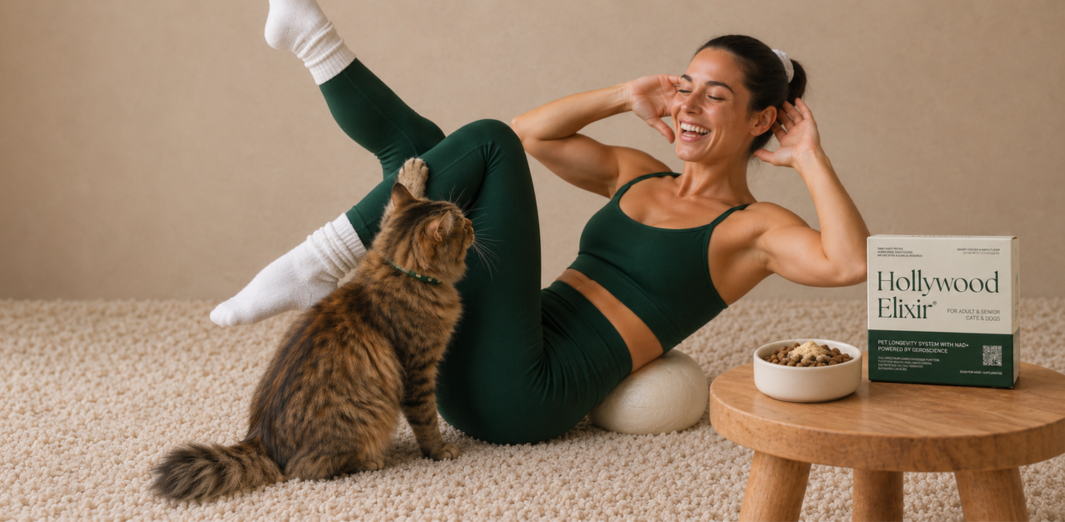
Woman exercising beside a tabby cat, with a Hollywood Elixir box and food bowl on a small table

Is selenium safe for cats, and where is the limit?

Selenium is safe for cats at the levels in complete cat food, and cats are the more tolerant of the two pet species. In a head-to-head study, cats excreted more of a high-selenium diet in urine than dogs did and stored less in the liver.2

Tolerant has limits. The Merck Veterinary Manual sets the maximum tolerable level for cats at 2 mcg per gram of diet.7 The high-selenium studies in cats ran for about a month or less, and we found none that followed cats on high intakes for years.

One research group that measured cats across four regions raised a related point. If high blood selenium in cats reflects how much goes into their food, the group wrote, that may matter for their health.8

Orange-and-white cat reaching toward a woman holding a Hollywood Elixir box while sitting in a chair

Does my cat need a selenium supplement?

A healthy cat eating a complete food doesn't need a selenium supplement. The words to look for on the label are "complete and balanced." A food can carry them only if it meets the cat nutrient profile or passes a feeding trial.16

Extra selenium doesn't pile up as a reserve of protection, either. When cats were fed more, their urine carried the surplus away within days, and their protective enzyme activity showed no steady rise.1

So a selenium product on top of a complete diet adds risk with no known gain. Our guide on whether cats need supplements when their food is complete looks at the wider question.

Gray-haired man holding a Hollywood Elixir box while two cats rest beside him in an armchair

How do cats handle extra selenium?

Cats handle extra selenium by absorbing it and then excreting it. A 32-day study gave groups of four cats one of three added selenium levels, as sodium selenite or as organic selenium.1

  • Absorption: high for both forms, at 73.2% and 80.0%.1
  • Urine: selenium in urine rose within about 2 days and then held steady.1
  • Blood: plasma selenium climbed with intake.1
  • Enzyme activity: glutathione peroxidase was highly variable and followed no steady pattern.1

The authors' summary was that cats closely regulate selenium by raising urinary excretion.1 A higher blood reading therefore tells you about exposure. It isn't proof of stronger antioxidant defenses.

Tolerant has limits.

What have studies of selenium in cats found?

Studies of selenium in cats are small and mostly measure blood, urine and enzymes, not health outcomes.

  • Requirement: 36 kittens, fed six selenium levels for 8 weeks, gave a requirement estimate of 0.15 mg per kg of diet.3
  • Tolerance: in a study of 18 cats, those fed 8 to 10 mcg per gram of diet for three weeks showed no clinical signs.2
  • Age and sex: blood selenium did not differ significantly by age or sex in healthy Czech cats, though cats over 7 years tended to run lower.15
  • Kidney disease: serum selenium matched in 26 cats with chronic kidney disease and 19 healthy cats.11
  • Tuna: kittens fed only canned tuna for 100 days built up selenium and mercury in their tissues.14

We found no trial that gave cats selenium and then measured coat, immunity or lifespan.

The human record is a caution. Pooled trials in people, with 19,475 participants, found no drop in cancer risk from selenium supplements.18

Tabby cat looking up at a Hollywood Elixir sachet held above it, with the product box on a small table

Does selenium cause or prevent hyperthyroidism in cats?

Selenium has no demonstrated link with hyperthyroidism in cats, in either direction.

  • Why it's asked: canned food is considered a risk factor for the disease, and canned diets carry more selenium than dry ones.10
  • Regions: 50 cats from four parts of the world had similar plasma selenium, whether hyperthyroidism was common locally or not.8
  • Patients: blood selenium was not significantly different between 12 hyperthyroid cats and 15 cats without the disease.9
  • Feeding trial: raising a dry food from 0.8 to 1.125 parts per million of selenium for 28 days made 6 cats 11% more active. The thyroid response the authors reported came with added water.10

We found no trial of selenium as a treatment for hyperthyroid cats. Our guide to methimazole for cats covers one prescribed treatment.

Hand gently petting an orange-and-white cat beside a food bowl and Hollywood Elixir box

Does selenium help cats with kidney disease?

Selenium doesn't look like a missing piece in feline kidney disease. Researchers compared 26 cats in all four stages of chronic kidney disease with 19 healthy cats. Serum selenium was no different between the groups, and it didn't fall as the disease advanced. The authors concluded that selenium is not a limiting factor in feline kidney disease.11

Diet is where care is needed. When 28 home-prepared kidney recipes for cats were analyzed, 9 fell short of the recommended selenium allowance, and none met every nutrient target.12

A cat with kidney disease is better served by a diet the vet has checked than by an added mineral. See our guide to chronic kidney disease in cats.

Man holding a Hollywood Elixir box beside a black cat, an orange tabby and a food bowl

Is selenium good for a cat's coat?

Selenium has not been tested for coat quality in cats, as far as we could find.

The nearest evidence comes from dogs. In beagles, hair growth slowed on the lowest-selenium diets and on the highest one alike.19 In kittens, weeks on a very low-selenium diet produced no clinical signs of deficiency.3

A dull or matted coat in a cat deserves a vet visit before a mineral. Our guide to coat changes in hyperthyroid cats describes one medical cause.

How much selenium does a cat need?

A cat needs very little selenium, and the published figures describe the diet as a whole.

  • Kitten requirement: 0.15 mg per kg of diet, from a study of 36 kittens.3
  • Advised level in commercial food: 0.5 mg per kg of dry matter, the same study's recommendation once poor availability is allowed for.3
  • Survey average: 1.14 mg per kg of dry matter across the cat foods tested.5
  • Maximum tolerable level: 2 mcg per gram of diet, which is 2 mg per kg.7

Experiments have gone above that ceiling for short periods. Cats fed 8 to 10 mcg per gram for three weeks showed no signs of poisoning.2

We found no official supplement amount for a cat that eats a complete food. Human references don't transfer: the adult human allowance is 55 mcg a day, set for a body many times a cat's size.20

A higher blood reading therefore tells you about exposure.

Silver tabby sitting beside a food bowl and a Hollywood Elixir box held in a person's hand

DVM Voice: Clinical Vignette of a Common Pattern in Senior Cat Aging

Case provided by JoAnna Pendergrass, DVM

Sasha, a 12-year-old cat, was brought in after her owner noticed increased thirst and urination, lethargy, vomiting, and a generally unkempt appearance. Examination showed weight loss, elevated blood pressure, and reduced vitality.

Diagnostic testing revealed elevated kidney markers, poorly concentrated urine, and protein loss in the urine — findings consistent with chronic kidney disease, one of the most common chronic conditions in senior cats.

Her care required a kidney-focused diet, blood pressure management, targeted supplementation, medication support, and regular monitoring — a necessary plan, but one started after clinical signs were already visible.

Clinical takeaway: Sasha’s case reflects why senior-cat wellness should begin before obvious decline. Earlier monitoring, body-condition tracking, hydration awareness, antioxidant support, and daily cellular resilience may help support quality of life as cats age.

Single-case vignette. Not generalizable. Veterinary diagnosis and monitoring are essential for increased thirst, urination, vomiting, lethargy, weight loss, or suspected kidney disease.

Explore Hollywood Elixir Research →
Woman holding a Hollywood Elixir box toward a brown cat perched on the back of a sofa

Which cats can run low on selenium?

Cats on unusual or restricted diets are the ones that can run low on selenium.

  • Home-prepared diets: recipes vary, and some fall under the recommended allowance.12
  • Weight-loss programs: in 58 cats on weight-loss diets, selenium intake was below recommended levels in more than half. All the cats stayed healthy.13
  • Poorly absorbed sources: selenium in animal-protein pet food is only about 30% available, which is why researchers advise a generous level in the food.3

None of these calls for a selenium pill. They call for a balanced recipe or a diet built for the purpose, as our guides to supplements for homemade cat food and weight management for cats explain.

Woman leaning toward a fluffy orange cat beside a Hollywood Elixir box and green food bowl

What happens if a cat gets too much selenium?

Too much selenium is a poisoning called selenosis, and in animals generally it comes at two speeds.7

  • Sudden: weakness, a racing heart, falling blood pressure and fluid in the lungs, often with a garlic smell on the breath.7
  • Gradual: damaged hair and faulty keratin, seen in livestock as hair loss and cracked hooves.7

Merck states that a single amount of 1 mg per kg of body weight or more can be lethal, and that no specific treatment exists beyond removing the source.7

We found no published case of selenium poisoning in a pet cat. Going by Merck's list of causes, the realistic route is a chewed bottle of supplements, not cat food.7

Tabby cat licking its nose beside a food bowl and Hollywood Elixir box

Is tuna or fish-based cat food a selenium problem?

Fish-based cat food carries the most selenium of any flavor group, and it's best fed as part of a mix.

In the New Zealand survey, seafood flavors had the highest selenium. Products made in Thailand, all seafood flavored, averaged 3.77 mg per kg of dry matter, against 0.61 to 0.80 mg for the rest.5

Two older experiments fed cats tuna-based food. Six kittens given only canned tuna for 100 days built up selenium and mercury in their tissues, with no behavioral changes or tissue damage found.14 In the other, cats on tuna cat food were less active and less vocal than cats on beef cat food, and they too carried more mercury and selenium.21

Neither study separates selenium from the mercury that came with it. Rotating flavors is a simple precaution.

How do you read selenium on a cat food or supplement label?

Selenium appears in a cat food's ingredient list, usually as one of two types.

  • Sodium selenite: the inorganic form, used in the kitten requirement studies.3, 4
  • Organic selenium: selenium bound into compounds such as selenomethionine.2

Cats absorbed both types well in a balance study, so the name matters less than the amount.1

On a supplement, look for three things.

  • The unit. A milligram is a thousand micrograms.
  • The selenium itself. The label should give elemental selenium per serving, not only the weight of a blend.
  • The full picture. Count the food and every other product your cat gets.

Hidden selenium is common. Of 70 dog and cat supplements bought in the United States, 52 contained selenium, yet only 10 listed it. None exceeded the maximum tolerable level, and 8 of the 18 products with mineral claims missed at least one of them.17

We hold our own label to that standard: all 17 active amounts are printed on Hollywood Elixir, and selenium isn't one of them.

Is selenium different for cats and dogs?

Selenium metabolism differs between cats and dogs, and the cat is the outlier.

Researchers fed 18 cats and 18 dogs a control diet or one with 8 to 10 mcg of selenium per gram for three weeks. On every diet, cats had more selenium in their plasma than dogs. On the high diets, cats put more into urine and kept less in the liver, while dogs absorbed more from the gut.2

The team concluded that cats can tolerate higher dietary selenium than dogs.2

Their foods differ as well. Cat foods averaged 1.14 mg per kg of dry matter in one survey, and dog foods 0.40 mg.5

So a cat's blood result can't be read against a dog's range, and supplements shouldn't cross between species in a mixed household. Our guide to selenium for dogs has the canine numbers.

Tabby cat sitting at a table with a food bowl and Hollywood Elixir box

When should you see the vet about selenium?

Call the vet about selenium when a product or a symptom is involved:

  • your cat has chewed or swallowed selenium tablets or multivitamins made for people;
  • your cat eats a home-prepared diet that hasn't been professionally balanced;
  • your cat is losing weight, eating more or drinking more, which needs a diagnosis and not a mineral;
  • your cat has kidney disease and you're considering any supplement.

Bring the label and an estimate of how much is missing. Human products are sized for people, and labels are sometimes wrong: in 2008 a liquid supplement for people contained 200 times its stated selenium.20

A blood selenium test needs a feline yardstick, because cats run far higher than people do.8

Woman cuddling a silver tabby and a cream-colored cat while holding a Hollywood Elixir box

What can you do instead of giving selenium?

Selenium's job is done by the diet, so the alternatives to a selenium product are about food and the nutrients around it.

  • Feed a complete and balanced cat food and keep it the bulk of the diet.16
  • Vary the flavors if your cat eats mostly fish-based food.5
  • Have any home-prepared recipe formulated by a veterinary nutritionist.12
  • Mind vitamin E. Selenium works in synergy with it, and vitamin E can cover a moderate selenium shortfall.13

Our guide to vitamin E for cats explains that partner nutrient. For an older cat, the best supplements for senior cats guide compares daily options. Our own daily powder, Hollywood Elixir, has no added selenium.

Is selenium in Hollywood Elixir?

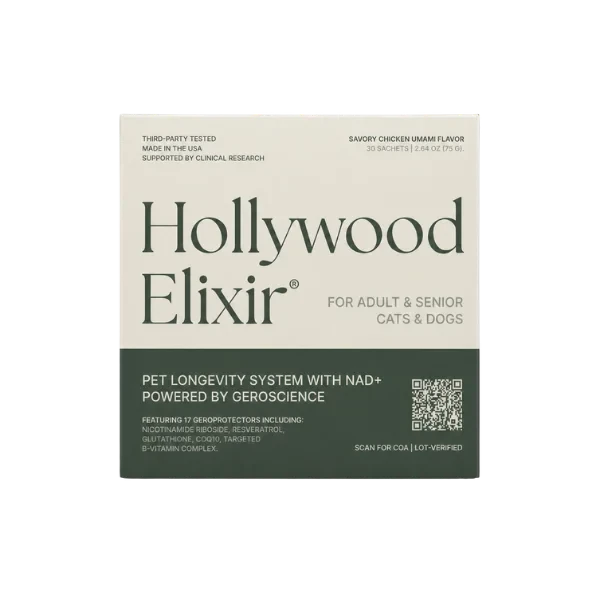
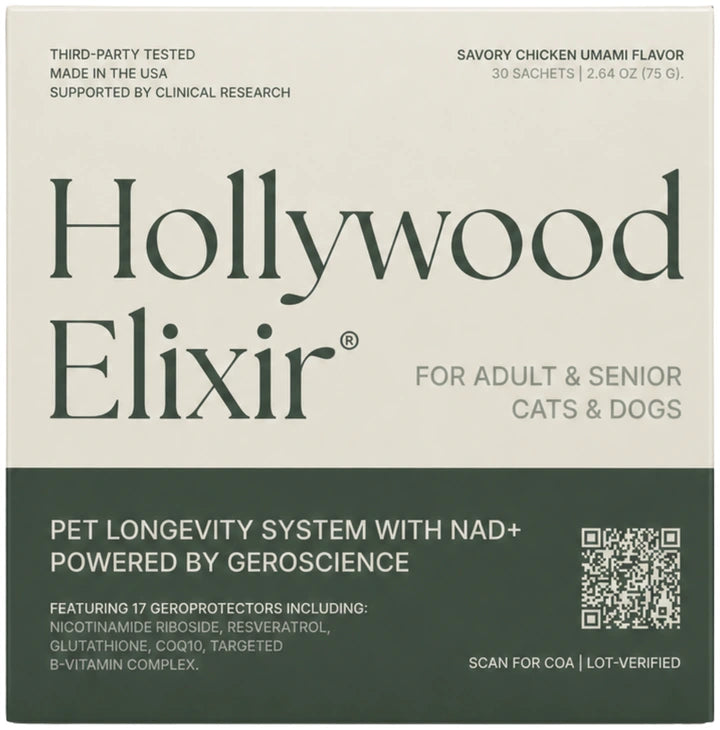
No. Hollywood Elixir contains no added selenium, and you won't find the mineral among its 17 actives. Complete cat food already supplies it, often generously.

The link is glutathione. Selenium is the mineral the body's glutathione enzymes run on. Hollywood Elixir provides glutathione itself: 50 mg per sachet, beside 15 IU of vitamin E.

Each sachet also carries 60 mg of nicotinamide riboside, which is an NAD+ precursor, and 14 other actives. All 17 amounts are on the label.

Hollywood Elixir is daily nutrition for adult and senior cats, a powder mixed into food: half a sachet for cats under 7 lb and one sachet from 7 to 30 lb. It hasn't been tested for thyroid disease, kidney disease or lifespan, and it can't correct a diet that lacks selenium.

To read about the ingredient that is in the formula, see glutathione for cats. See the full Hollywood Elixir formula and serving guide.

Neither study separates selenium from the mercury that came with it.

Educational content only. This material is not a substitute for veterinary advice. Always consult your veterinarian about your cat’s specific needs. These statements have not been evaluated by the Food and Drug Administration. Products mentioned are not intended to diagnose, treat, cure, or prevent any disease.

Glossary

Selenium: An essential trace mineral that cats need in microgram amounts from food.

Glutathione peroxidase: A selenium-containing enzyme that protects cells from oxidative injury.

Selenosis: Poisoning caused by too much selenium.

Sodium selenite: An inorganic selenium compound used as a selenium source in cat diets.

T4 and T3: Thyroxine and triiodothyronine, the two thyroid hormones measured in the kitten selenium studies.

Dry matter: A food's weight with the water removed, used to compare wet and dry foods.

Related Reading

References

Numbered references identify the sources used for specific claims. Read the study design, species and evidence boundaries alongside each finding.

FAQ

Does selenium treat hyperthyroidism in cats?

No. We found no trial of selenium as a treatment, and two studies found no difference in selenium status between hyperthyroid cats and others. Keep to the treatment your vet has prescribed.

Can I give my cat my own selenium tablets?

No. Human tablets are sized for an adult person, whose recommended intake is 55 mcg a day, and a complete cat food already supplies selenium. If your cat has swallowed one, call your vet with the label.

Does Hollywood Elixir contain selenium?

No. Hollywood Elixir has no added selenium. It supplies glutathione, 50 mg per sachet, with 15 IU of vitamin E, and complete cat food covers selenium.

Can a cat share a selenium supplement made for dogs?

It's a poor idea. Cats and dogs absorb, store and excrete selenium differently, and cat food already tends to carry more of it. Use only products labeled for cats and cleared by your vet.

Is a high selenium blood result a problem for a cat?

Not on that fact alone. Cats carry about five times the plasma selenium reported for people, so a cat's result has to be judged against feline values and the diet.

Do senior cats need more selenium?

We found no evidence that they do. In healthy Czech cats, blood selenium didn't differ significantly with age, though cats over 7 tended to run lower. A complete senior food covers it.

Can kittens have selenium supplements?

Kittens don't need them on a complete kitten food. A requirement study in 36 kittens settled on 0.15 mg of selenium per kg of diet, and surveyed cat foods averaged 1.14 mg.

Is sodium selenite in cat food safe?

Sodium selenite is the selenium source used in the kitten requirement studies and in the cat balance study. Cats absorbed it well there and passed the surplus in urine. Seeing it on an ingredient list is normal.

Does a cat on a weight-loss diet need extra selenium?

Usually not as a separate product. In 58 cats on weight-loss diets, selenium intake often fell below recommendations and every cat stayed healthy. Use a purpose-made diet and let your vet judge any additions.

Can selenium prevent cancer in cats?

We found no cat study on it. In people, pooled trials with 19,475 participants found no reduction in cancer from selenium supplements.

Orange-and-white cat beside a Hollywood Elixir box held in a person's hand

Discover LPL-01: How This Fits Into a Larger Feline Longevity System

Aging in cats unfolds quietly. It’s not driven by a single failure, but by gradual shifts across interconnected systems — cellular energy, oxidative balance, immune tone, and tissue integrity — each influencing the others over time.

This article explores one layer of that system. To understand what actually shapes long-term health, you need to step back and look at how these layers interact.

Start with the underlying science:

Keep exploring

What would you like to understand next?

Search practical guides about healthy aging, cellular energy, ingredients, and daily support for cats.