The 12 Hallmarks of Aging in Dogs
Read full insightPARPs and NAD Drain in Aging Cats
By La Petite Labs Editorial 15 min read
PARPs and NAD drain in aging cats begins with how cells respond to DNA strand breaks. PARP1 is a nuclear sensor that binds damaged DNA and becomes catalytically active, using NAD consumption to build poly(ADP-ribose) chains that coordinate repair. In an older cat, the key variable is often signaling frequency: when strand-break signals recur, PARP1 can be engaged more often, increasing cumulative NAD use even when each individual repair event is protective. This mechanism is distinct from other NAD-lowering routes. For example, CD38 is better framed as an NAD-consuming enzyme linked to immune and inflammatory signaling at membranes and in immune cells, whereas PARP-driven NAD use is tightly coupled to nuclear DNA damage responses. NAMPT, by contrast, sits on the recycling side of the equation by supporting NAD salvage rather than consuming NAD during repair. Mechanistically, PARP activation is therefore best understood as a demand-side pull on NAD that scales with DNA damage signaling intensity and duration (Ali, 2012).
- PARPs and NAD Drain in Aging Cats describes a trade-off: more DNA repair activity can spend more NAD, leaving less cellular fuel for daily function.
- DNA damage signals tend to accumulate with age, so repair pathways may run more often even when a cat seems outwardly “fine.”
- PARP enzymes help coordinate DNA repair, but they use NAD as a working ingredient, so chronic activation can contribute to NAD scarcity.
- Owners often notice quiet shifts—shorter play, longer recovery, less grooming—rather than dramatic symptoms.
- Kidney health and brain/behavior changes are practical clinical areas to screen early, because they can amplify fatigue and reduce stamina.
- NAD support (NR/NMN) has mostly non-feline evidence; it may help support normal function but is not a disease treatment.
- Tracking weight, litter box output, jump habits, grooming, and play duration improves vet handoff and keeps decisions grounded.
What increases DNA damage signaling in older cats: oxidative stress, inflammation, and replication stress
Several upstream pressures can increase the probability that a cat’s cells generate DNA damage signals that engage PARP pathways, even without focusing on clinical signs. One driver is oxidative stress: mitochondrial ROS produced during respiration can diffuse or be converted into reactive species that create oxidative lesions in nuclear and mitochondrial DNA. These lesions are not all strand breaks initially, but they can be processed into single-strand breaks during base excision repair, which is a common trigger for PARP1 activation.
Inflammation is another amplifier. Inflammatory signaling can raise local oxidant production (including from immune-cell oxidases) and can alter redox balance in surrounding tissues, increasing the burden of oxidative lesions and repair intermediates that recruit PARPs. A third contributor is replication stress, which becomes more relevant in dividing cell populations. Telomere shortening and telomere dysfunction can be interpreted as persistent DNA damage signals, and stalled replication forks can collapse into breaks that strongly activate PARP-dependent repair coordination.
Direct, tissue-resolved evidence in cats is still limited compared with rodent and human systems, so these drivers are best treated as biologically plausible mechanisms with species-specific magnitude and cell-type distribution still being mapped.
How PARPs spend NAD: PARylation, repair recruitment, and the trade-off during chronic activation
PARPs couple DNA damage detection to NAD use through PARylation: PARP1 transfers ADP-ribose units from NAD onto itself and nearby proteins, forming poly(ADP-ribose) chains. These PAR chains act as a transient scaffold that changes chromatin structure and promotes repair protein recruitment to the lesion site, helping organize repair complexes and coordinate pathway choice (Ali, 2012). The biochemical cost is inherent to the reaction—each ADP-ribose unit is derived from NAD—so higher PARylation demand translates into higher NAD consumption.
In acute activation, this is typically a short-lived, localized response: PARP1 turns on, PARylation peaks, repair factors assemble, and PAR is rapidly degraded as the lesion is resolved. The NAD depletion risk rises when activation becomes chronic or repeatedly triggered, because sustained PARylation can outpace NAD resynthesis and salvage capacity. Under those conditions, cells may face a cellular trade-off: maintaining continuous repair signaling and chromatin remodeling can compete with other NAD-dependent processes, shifting priorities toward genome maintenance at the expense of other metabolic and stress-response programs. This framing emphasizes duration and recurrence of PARP activity—not PARP presence itself—as the mechanistic pivot for NAD drain in aging tissues.
NAD: Cellular Fuel That Repair Also Spends

NAD is a helper molecule cells use to move energy through many everyday reactions, including those that keep mitochondria working and proteins functioning. PARP enzymes also use NAD as their raw material when they attach “ADP-ribose” signals to proteins during DNA repair. In plain terms: every time PARP runs a repair job, it spends NAD to do it (Mendelsohn, 2017). This is why do older cats lose NAD from PARP activity becomes a meaningful question—because the same fuel supports both repair and daily cellular work.
In the household, NAD drain does not create one signature symptom. Instead, owners may notice a cat that seems “fine” but less eager, less curious, or more easily tired by routine events like visitors or a new litter box location. Appetite can stay normal while body condition slowly shifts, especially muscle along the spine and thighs. These are cues to keep routines predictable and to avoid sudden changes that demand extra adaptation from an older body.
When Repair Becomes Routine, Trade-offs Appear
When PARP activity stays high for long stretches, NAD can be pulled away from other jobs, including pathways linked to cellular renewal rate and stress handling. Research in general mammalian aging describes an axis where PARP1 and other NAD users compete for the same pool, shaping how cells respond to ongoing stress (Mendelsohn, 2017). This does not mean PARP is “bad”—it means the balance can shift in senior bodies. The concept helps explain why a cat can have normal lab results yet feel less lively: the issue can be depth of cellular overhead, not a single failing organ. (see our Cat Life Stages →)
A practical home step is to reduce avoidable stressors that add to repair demand: secondhand smoke, strong cleaning fumes, and chronic conflict between pets. Keep hydration easy by offering multiple water stations and wet food if appropriate. Provide gentle movement opportunities—short play sessions that end before the cat is exhausted. These choices do not “fix DNA,” but they can support a more balanced daily load for an aging cat.
A Misconception: It’s Not Only About Diet
A common misconception is that NAD loss is only about diet—so adding a vitamin automatically solves it. In reality, NAD levels reflect both supply and demand. If PARP enzymes are repeatedly activated by DNA damage signals, demand can rise even when nutrition is adequate, and NAD can be diverted into repair work rather than everyday cellular tasks (CCS, 2024). This is the heart of PARP enzymes and NAD loss in aging cats: the body may be spending more fuel on maintenance, leaving less for visible vitality.
At home, this misconception can lead to chasing supplements while missing basics that matter more: kidney-friendly hydration, consistent calories, and pain control for arthritis. Owners may also overlook dental disease, which can quietly raise inflammation and stress. The better approach is layered: confirm medical issues with a veterinarian, then consider nutritional support as part of a daily plan. If a cat’s mood or activity changes quickly, that is a medical signal, not a “NAD problem.”
“Aging often looks like fewer extras, not one dramatic symptom.”
A Realistic Senior Cat Scenario Owners Recognize
Case vignette: A 14-year-old indoor cat starts sleeping in the closet and no longer greets family members at the door. Appetite is steady, but play drops to almost nothing, and the cat pauses before jumping onto the couch. Routine bloodwork looks “okay,” yet the owner senses a loss of spark. This is a realistic place where questions about DNA repair NAD depletion senior cats come up: the cat may be coping, but with less stamina and less overhead for change.
In this scenario, the best next step is not guessing at a single molecule. It is building a clear picture: weight trend, muscle condition, hydration habits, litter box output, and pain signs. Senior cats often hide discomfort, so subtle posture changes matter. A veterinarian can then interpret whether the pattern fits arthritis, early kidney disease, dental pain, thyroid changes, or something else—conditions that can indirectly increase cellular stress and repair demand.
Owner Checklist for Quiet Vitality Changes
Owner checklist: observable signs that can align with a lower cellular “fuel margin” in older cats include (1) shorter play sessions before stopping, (2) longer naps after minor activity, (3) hesitation before jumping or climbing, (4) slower grooming or a mildly unkempt coat, and (5) reduced interest in novelty like new toys. None of these prove PARPs and NAD Drain in Aging Cats, but together they suggest the body has less stamina for extras. The goal is pattern recognition, not self-diagnosis.
To use the checklist well, compare the cat to its own past, not to another cat. Note when changes began and whether they fluctuate with stress, weather, or diet changes. Video clips of jumping, walking, or grooming can be more useful than memory during a vet visit. If the cat is avoiding the litter box or hiding more than usual, treat that as urgent—pain and illness can escalate quickly in seniors.
What to Track so Patterns Become Clear
What to track rubric: choose a few concrete markers and record them weekly—body weight, appetite consistency, water intake style (more bowl visits or none), litter box clump size and frequency, jump height (top perch used or avoided), grooming time, and play duration before stopping. These outcome cues help a veterinarian separate “normal aging” from early disease and also help owners see whether changes are gradual or sudden. This tracking is especially helpful when exploring why do older cats lose NAD from PARP activity, because the mechanism is invisible but its trade-offs can be documented.
Keep the rubric simple enough to maintain. Use the same scale each time: minutes of play, number of jumps, or a 1–5 grooming score. Avoid daily over-monitoring, which can create stress for both cat and owner. Bring the log to checkups; it often shortens the path to the right tests. If a cat loses weight or muscle despite normal eating, that is a strong reason to schedule a visit promptly.
Inflammation Can Keep the Repair Alarm Ringing
Chronic PARP activation can also intersect with inflammation. When PARP1 consumes NAD, it can influence signaling that shapes inflammatory gene activity in general mammalian models (Kauppinen, 2013). This matters because inflammation itself can increase oxidative stress and DNA damage signals, creating a loop where repair demand stays high. The point is not to label a senior cat as “inflamed,” but to understand why small, ongoing issues—dental disease, obesity, chronic stress—can have outsized effects on energy and comfort in older bodies.
At home, inflammation-linked stress often shows up as a cat that is less social, less tolerant of handling, or more reactive to being picked up. Coat quality may decline, and the cat may stop grooming the lower back or belly. These signs should trigger a practical check: look at teeth and gums if safe, assess body condition, and consider whether the cat is struggling to reach favorite resting spots. Comfort changes are medical information, not personality changes.
Why Cat Aging Looks Quieter Than Dog Aging
Senior cats are not small dogs in how they show aging. Cats often reduce activity quietly rather than limping dramatically, and they may hide in new places instead of seeking attention. That subtlety is why mechanisms like PARPs and NAD Drain in Aging Cats can feel relevant: the cat may be compensating with less visible energy rather than obvious symptoms. It also explains why internal-link topics like the 12 hallmarks of aging in cats can be helpful—many small cellular shifts add up to a noticeable change in daily behavior.
Owners can support a gentler daily rhythm by making resources easy: low-entry litter boxes, ramps to favorite furniture, and multiple warm resting areas. Keep play low-impact—wand toys at floor level, short sessions, and frequent breaks. If the cat is startled easily or seems “spaced out,” reduce household chaos and keep routines predictable. These steps do not target PARP directly; they reduce the overall demand placed on an aging body with less overhead.
“Track patterns, then let testing turn worry into a plan.”
DVM Voice: Clinical Vignette of a Common Pattern in Senior Cat Aging
Case provided by JoAnna Pendergrass, DVM
Sasha, a 12-year-old cat, was brought in after her owner noticed increased thirst and urination, lethargy, vomiting, and a generally unkempt appearance. Examination showed weight loss, elevated blood pressure, and reduced vitality.
Diagnostic testing revealed elevated kidney markers, poorly concentrated urine, and protein loss in the urine — findings consistent with chronic kidney disease, one of the most common chronic conditions in senior cats.
Her care required a kidney-focused diet, blood pressure management, targeted supplementation, medication support, and regular monitoring — a necessary plan, but one started after clinical signs were already visible.
Clinical takeaway: Sasha’s case reflects why senior-cat wellness should begin before obvious decline. Earlier monitoring, body-condition tracking, hydration awareness, antioxidant support, and daily cellular resilience may help support quality of life as cats age.
Single-case vignette. Not generalizable. Veterinary diagnosis and monitoring are essential for increased thirst, urination, vomiting, lethargy, weight loss, or suspected kidney disease.
Kidney Health: a Practical Place to Start
Kidneys are a primary clinical focus when discussing aging cats because early kidney change is common and can be easy to miss. Kidney stress can shift appetite, hydration, and toxin handling, which can indirectly increase cellular stress and repair demand. Recent feline work shows that cats with rapidly progressive chronic kidney disease have distinct metabolic alterations compared with slower progressors, reinforcing that “energy chemistry” changes can track with disease pace (van Mulders, 2025). This does not prove a PARP cause, but it supports taking metabolism seriously in senior cats.
At home, kidney-related clues include larger urine clumps, more frequent drinking, constipation, or nausea-like behaviors such as lip-smacking. Some cats simply become picky or stop finishing meals. If these signs appear alongside reduced stamina, a vet visit is warranted rather than assuming it is only aging. Early testing—urinalysis, blood pressure, and kidney markers—can change the plan in a way no supplement can replace.
Brain and Behavior Changes in Senior Cats
The second clinical focus area is brain and behavior: cognitive aging in cats can look like altered sleep-wake patterns, reduced interaction, or getting “stuck” in corners. Brain cells are energy-hungry, and NAD is central to energy handling and cellular maintenance in general aging biology (CCS, 2024). When owners ask about PARP enzymes and NAD loss in aging cats, the practical relevance is that a cat with less cellular fuel may have less stamina for coping with change—new pets, remodeling, or even a moved food bowl.
Supportive routines matter: keep litter boxes and food in consistent locations, use night lights for older cats, and maintain predictable social time. If vocalizing at night increases, document timing and triggers; it can reflect cognitive change, pain, hypertension, or thyroid disease. Sudden disorientation is never “just aging” and should be evaluated quickly. A calm environment is a real intervention for a brain with less overhead.
How CD38 and NAD Salvage Fit the Picture
NAD decline in aging is not driven by PARP alone. Other NAD consumers, such as CD38, can also contribute, and NAD supply depends on salvage pathways that recycle vitamin B3-related building blocks. This is where ecosystem topics like CD38 and NAD decline in aging cats and NAMPT and the NAD salvage pathway in cats connect: they describe other reasons the NAD pool can shrink or become less available. Thinking in “supply versus demand” terms helps owners understand why a single lab value rarely captures the whole story.
At home, this broader view prevents tunnel vision. If a cat is slowing down, it is reasonable to ask about pain, kidney function, thyroid status, blood pressure, and dental health before focusing on NAD. Owners can also check whether the cat is eating enough protein for muscle maintenance and whether hydration is adequate. A balanced plan is usually more effective than stacking many new products at once, which can upset digestion and make it harder to tell what helped.
What NAD Precursors Can and Cannot Do
NAD support is often discussed using precursors such as nicotinamide riboside (NR) or nicotinamide mononucleotide (NMN). Evidence for these compounds comes mostly from non-feline studies, including mouse aging work and human safety-focused trials, so translation to cats must be cautious (Mills, 2016). The responsible takeaway is limited: supporting NAD availability is a plausible upstream wellness strategy, not a treatment for disease or a guarantee of renewed vitality. It is best viewed as one piece that may help support normal cellular function under veterinary oversight.
Owners considering NAD-related supplements should prioritize practicality and safety. Choose products with clear labeling, avoid combining multiple NAD precursors at once, and introduce any new supplement slowly to watch for stool changes or appetite shifts. Cats with kidney disease, liver disease, or multiple medications deserve extra caution and a veterinarian’s input. If a cat becomes nauseated, stops eating, or seems unusually sleepy after starting something new, stop and call the clinic.
Safety and Oversight for Nad-related Supplements
Safety nuance matters because “natural” does not mean risk-free. A human trial of NRPT in hospitalized patients was designed to evaluate tolerability and safety, not feline outcomes, but it illustrates the kind of stepwise safety thinking that should guide supplement decisions (Simic, 2020). Cats have unique metabolism and can be sensitive to flavorings, sweeteners, and unnecessary additives. For owners, the most important safety move is coordination: one veterinarian, one list of everything the cat eats, and one plan that can be adjusted based on outcome cues.
Watch for practical red flags after any change: vomiting, diarrhea, reduced appetite, hiding, or a sudden drop in litter box output. Also watch for “soft” changes like the cat refusing a previously loved food because a powder altered smell or texture. If the cat is on thyroid medication, appetite stimulants, pain control, or kidney-support diets, bring the full list to the vet before adding anything. The goal is a gentler, more balanced routine—not a complicated stack.
Prepare a Vet Visit That Leads to Answers
Vet visit prep: bring (1) a two-week log of weight, appetite, water behavior, and litter box output, (2) short videos of jumping, grooming, and walking, and (3) a list of all foods, treats, and supplements with brand names. Ask specific questions: “Could pain be limiting activity even without limping?”, “Do kidney markers or urine concentration suggest early change?”, “Would blood pressure or thyroid testing help explain behavior shifts?”, and “Are there reasons to avoid NAD-precursor supplements in this cat?” These questions help connect PARPs and NAD Drain in Aging Cats to real clinical decision-making.
Also ask what to recheck and when. Senior cats benefit from planned monitoring rather than crisis visits, especially when changes are gradual. If the veterinarian recommends a diet change, request a transition schedule and what to document for the vet during the switch. If supplements are discussed, ask how success will be judged—energy, appetite, stool quality, or lab trends—so expectations stay realistic and measurable.
Common Mistakes That Derail Senior Cat Plans
What not to do: (1) do not start a PARP inhibitor intended for cancer therapy—these are prescription drugs with serious risks and are not appropriate for “anti-aging” use; (2) do not stack multiple NAD products and antioxidants at once, which can cause appetite and stool problems; (3) do not ignore dental disease or arthritis while focusing on cellular theories; and (4) do not assume normal bloodwork means nothing is wrong. The mechanism behind DNA repair NAD depletion senior cats is real biology, but it is not a substitute for diagnosis.
Avoid sudden lifestyle overhauls that demand extra adaptation—new litter, new feeding schedule, and intense exercise plans can backfire in seniors. If a cat is losing muscle, do not restrict calories without veterinary guidance, even if weight seems “okay.” If the cat is drinking more, do not limit water. The safest path is incremental: one change at a time, with outcome cues tracked so the plan stays clear.
Putting Parp-driven NAD Spending into Perspective
The most useful way to think about PARPs and NAD Drain in Aging Cats is as a trade-off: the body prioritizes DNA repair to stay safe, and the fuel cost can leave less energy for the “extras” owners associate with vitality. This fits alongside other aging themes like mitophagy in cats, where the body’s cleanup and recycling systems can slow, adding to the daily workload. Feline-specific PARP data is limited, so the mechanism is best treated as a guiding framework rather than a proven diagnosis in any one cat.
For owners, the action plan is grounded: document subtle changes, prioritize kidney and comfort screening, and build a gentler environment that supports sleep, hydration, and low-impact movement. If NAD-support supplements are considered, do so with veterinary oversight and clear success markers. The goal is not to chase youth, but to protect quality of life—keeping daily routines less uneven and helping a senior cat keep its dignity and engagement for as long as possible.
“Support is most useful when comfort and disease screening come first.”
Educational content only. This material is not a substitute for veterinary advice. Always consult your veterinarian about your dog’s specific needs. These statements have not been evaluated by the Food and Drug Administration. Products mentioned are not intended to diagnose, treat, cure, or prevent any disease.
Glossary
- PARP (Poly ADP-Ribose Polymerase) - Enzyme family that helps coordinate DNA repair and stress responses.
- PARP1 - A major PARP enzyme that detects DNA strand breaks and starts repair signaling.
- NAD (Nicotinamide Adenine Dinucleotide) - A cellular helper molecule used to move energy and to run certain enzymes.
- NAD Depletion - A drop in available NAD caused by high use, low supply, or both.
- DNA Strand Break - A type of DNA damage that cells must repair to keep genetic instructions intact.
- ADP-Ribosylation - A chemical “tagging” process PARPs perform using NAD to signal repair and stress responses.
- NAD Salvage Pathway - The body’s recycling route that rebuilds NAD from vitamin B3-related pieces.
- CD38 - An enzyme that can consume NAD and is discussed as another contributor to age-related NAD decline.
- NAMPT - A key enzyme in NAD recycling that influences how well cells can maintain NAD supply.
- Mitophagy - The cell’s cleanup process for damaged mitochondria, relevant to energy and aging.
Related Reading
Aging & Senior Cat Guidance
• Cat Age Calculator: Cat Years to Human Years
• Lethargy in Cats
• Senior Cat Not Eating
• Cat Drinking A Lot
• Why Is My Senior Cat Withdrawn?
Healthy Aging Support
• NAD+ for Cats
• NMN for Cats
• Vitamins For Older Cats
• Senior Cat Food
References
Mendelsohn. The NAD+/PARP1/SIRT1 Axis in Aging. PubMed. 2017. https://pubmed.ncbi.nlm.nih.gov/28537485/
Van Mulders. Metabolic Alterations Associated With Rapidly Progressive Chronic Kidney Disease in Cats. PubMed. 2025. https://pubmed.ncbi.nlm.nih.gov/40622820/
Mills. Long-Term Administration of Nicotinamide Mononucleotide Mitigates Age-Associated Physiological Decline in Mice. PubMed. 2016. https://pubmed.ncbi.nlm.nih.gov/28068222/
Simic. Nicotinamide riboside with pterostilbene (NRPT) increases NAD(+) in patients with acute kidney injury (AKI): a randomized, double-blind, placebo-controlled, stepwise safety study of escalating doses of NRPT in patients with AKI. PubMed. 2020. https://pubmed.ncbi.nlm.nih.gov/32791973/
CCS. NAD metabolism: Role in senescence regulation and aging. PubMed Central. 2024. https://pmc.ncbi.nlm.nih.gov/articles/PMC10776128/
Ali. The zinc-finger domains of PARP1 cooperate to recognize DNA strand breaks. Springer. 2012. https://link.springer.com/article/10.1186/s43556-025-00385-1
Jackson. The DNA-damage response in human biology and disease. Springer. 2009. https://link.springer.com/article/10.1007/s40265-016-0688-7
Kauppinen. Poly(ADP-ribose) polymerase-1-induced NAD(+) depletion promotes nuclear factor-κB transcriptional activity by preventing p65 de-acetylation. PubMed Central. 2013. https://pmc.ncbi.nlm.nih.gov/articles/PMC4041949/
FAQ
What does PARPs and NAD Drain in Aging Cats mean?
PARPs are enzymes that help cells respond to DNA damage. When they start a repair response, they use NAD as a raw material, so repeated repair activity can spend down the available NAD pool.
In older cats, this matters because the “repair workload” can rise with age. Owners may then see gradual changes in stamina, grooming, or engagement that feel like normal aging but are still worth documenting for the veterinarian.
Why do older cats lose NAD from PARP activity?
When DNA strands break, PARP1 recognizes the damage and helps organize repair. That process consumes NAD each time it runs, so frequent activation can contribute to NAD decline over time(Ali, 2012).
The key point is “demand.” Even with good nutrition, a senior cat may be spending more NAD on maintenance tasks. This can show up as less interest in play, slower recovery after activity, or a preference for quiet resting spots.
Is NAD drain the same as a vitamin deficiency?
Not necessarily. NAD levels reflect both supply (diet and recycling pathways) and demand (how much NAD is being used by enzymes like PARPs). Aging biology describes how higher PARP activity can lower NAD availability even when intake is adequate.
That is why “add a vitamin and it’s fixed” is often disappointing. A better plan is to screen for pain, kidney change, dental disease, and stressors that can raise the repair workload, then consider nutrition as one supportive layer.
What at-home signs fit this cellular fuel trade-off?
Owners often notice patterns rather than a single symptom: shorter play sessions, longer naps after minor activity, hesitation before jumping, slower grooming, or reduced curiosity. These signs are not specific, but they can fit a lower “overhead” for extras.
Track what changes and when. A sudden shift is more concerning than a slow drift. If appetite drops, weight falls, or litter box output changes, schedule a veterinary visit rather than assuming it is only aging.
How is this different in cats versus dogs?
Cats often show aging more quietly than dogs. Instead of obvious limping or restlessness, cats may simply stop jumping as high, hide more, or play less. That subtle presentation can make PARPs and NAD Drain in Aging Cats feel relevant to owners who sense a change without a clear symptom.
The practical difference is monitoring: small behavior shifts deserve documentation. Video clips and a simple weekly log often help the veterinarian more than a single description like “slowing down.”
Can a vet test my cat’s NAD level directly?
In routine feline practice, direct NAD testing is not commonly used to guide care. NAD biology is real, but it is not yet a standard diagnostic tool for most senior-cat concerns.
Veterinarians usually focus on tests that change decisions right away: kidney markers, urinalysis, thyroid levels, blood pressure, dental evaluation, and pain assessment. Those results often explain the same “low stamina” picture owners are trying to understand.
Does PARP activation mean my cat has cancer?
No. PARP activation is a normal response to DNA damage and happens in healthy cells as part of routine maintenance. DNA repair pathways are involved in many contexts, not only cancer(Jackson, 2009).
Cancer concerns should be based on clinical signs and veterinary findings—weight loss, persistent vomiting, abnormal lumps, anemia, or imaging results. If worry is high, the best next step is a veterinary exam and a targeted workup.
Which organs are most affected by NAD-related aging?
In older cats, kidney function and brain/behavior are two practical areas where small changes can have big daily effects. Metabolic alterations have been described in cats with rapidly progressive chronic kidney disease, highlighting that “energy chemistry” shifts can track with disease pace(van Mulders, 2025).
That does not mean NAD is the single cause. It means senior care should prioritize hydration, appetite support, pain control, and early screening so the cat keeps more stamina for normal life.
How does inflammation connect to PARP and NAD use?
PARP1 activity can influence inflammatory signaling in general mammalian models, partly because NAD depletion changes how certain regulatory proteins behave(Kauppinen, 2013). This can contribute to a loop where stress and repair demand stay elevated.
For owners, the actionable piece is simpler: treat chronic inflammation sources seriously. Dental disease, obesity, untreated arthritis, and chronic stress can all make a senior cat’s day-to-day energy feel less balanced.
What is the NAD salvage pathway in cats?
The NAD salvage pathway is the body’s recycling route for rebuilding NAD from vitamin B3-related pieces. It helps maintain NAD availability when demand is high, and it is part of broader aging biology discussed across mammals(CCS, 2024).
In practical terms, it means NAD status is not only about what is eaten today. It is also about how much NAD is being spent and how well the body can recycle. That is why senior-cat care still starts with medical screening and comfort support.
Do NMN or NR supplements work in aging cats?
Evidence for NMN and NR comes mostly from non-feline studies. For example, long-term NMN administration in mice was associated with mitigation of several age-associated changes, but that does not confirm the same outcomes in cats(Mills, 2016).
If a veterinarian agrees a trial is reasonable, success should be judged by outcome cues: appetite, stool quality, weight stability, play duration, and comfort. Supplements should be viewed as supporting normal function, not as a treatment for disease.
Is nicotinamide riboside safe for senior cats?
Cat-specific safety data is limited, so decisions should be veterinarian-guided. Human safety-focused work with NRPT used stepwise dose escalation to evaluate tolerability in a medical setting, which supports the idea that safety assessment matters, but it is not a feline guarantee(Simic, 2020).
For cats, the safest approach is conservative: avoid stacking products, introduce one change at a time, and stop if appetite, vomiting, or stool changes appear. Cats with kidney or liver disease deserve extra caution.
How quickly would an owner notice changes from NAD support?
If a supplement is going to help support normal function, changes are usually gradual and subtle—more interest in play, slightly better grooming, or improved willingness to jump. Expect weeks, not days, and only if underlying medical issues are also addressed.
Use a simple tracking plan: weekly weight, play minutes, jump height, and litter box output. If a cat worsens at any point—especially appetite or hydration—pause the experiment and contact the veterinarian.
What quality signals matter when choosing a supplement?
Look for clear ingredient lists, consistent dosing instructions, and manufacturing transparency. Avoid products with unnecessary sweeteners, strong flavorings, or long “proprietary blends” that make it hard to know what the cat is actually getting.
Also consider the cat’s reality: will the product mix into wet food without refusal, and can it be given consistently? A simpler plan that the cat accepts often supports better long-term results than a complex routine that causes food aversion.
How do I give Hollywood Elixir™ to a picky cat?
Start by protecting appetite. Mix a very small amount into a strongly preferred wet food, and keep the rest of the meal unchanged. If the cat refuses, remove the food and try again later with a smaller amount rather than pushing through.
If a veterinarian recommends it as part of a daily plan, {"type":"link","url":"https://lapetitelabs.com/products/hollywood-elixir-graceful-aging-a-lifetime-of-love","children":[{"type":"text","value":"Hollywood Elixir™"}]} is best introduced slowly so stool quality and appetite can be monitored. Any vomiting or appetite drop is a reason to pause and call the clinic.
Can supplements replace senior bloodwork and urine testing?
No. Supplements can support normal function, but they cannot identify kidney disease, hyperthyroidism, hypertension, diabetes, anemia, or dental infection. Those conditions are common in older cats and can look like “low energy” at home.
Testing is what turns worry into a plan. Even when results are normal, they create a baseline that makes future changes easier to interpret. That baseline is often more valuable than guessing whether PARP-related NAD spending is the main driver.
What medications or conditions should prompt extra caution?
Extra caution is reasonable for cats with kidney disease, liver disease, a history of pancreatitis, or cats taking multiple medications (thyroid meds, pain control, appetite stimulants). These cats have less room for digestive upset or appetite disruption.
Bring a full list of foods, treats, and supplements to the veterinarian before adding anything new. The goal is a gentler, more balanced routine, with one change at a time so cause and effect stay clear.
When should a vet be called urgently for seniors?
Call urgently if a senior cat stops eating, vomits repeatedly, has very little urine output, shows open-mouth breathing, collapses, or seems suddenly disoriented. Rapid change is not typical “aging,” even if PARPs and NAD Drain in Aging Cats is being considered.
Also call if hiding becomes extreme, if there is obvious pain when touched, or if weight drops quickly. These signs often indicate a treatable medical problem that needs timely care, not a supplement adjustment.
How does this topic relate to mitophagy in cats?
Mitophagy is the cell’s cleanup process for worn-out mitochondria. When cleanup slows with age, cells may run less efficiently and create more stress signals. That can increase the overall maintenance workload, which is the same “trade-off” theme behind PARPs and NAD Drain in Aging Cats.
For owners, the shared takeaway is practical: protect sleep, reduce chronic stress, support hydration and nutrition, and manage pain early. These steps support the body’s daily maintenance demands without pretending to control a single enzyme.
How should owners decide if NAD support is worth trying?
Start with a decision framework: confirm medical basics (pain, kidneys, thyroid, dental health), define the goal (play time, grooming, appetite, sleep), and pick 2–3 outcome cues to track weekly. If the cat’s main issue is untreated disease, supplements are unlikely to help.
If a veterinarian agrees a trial is reasonable, keep it simple and time-limited, with a clear stop rule for appetite or stool changes. If used, {"type":"link","url":"https://lapetitelabs.com/products/hollywood-elixir-graceful-aging-a-lifetime-of-love","children":[{"type":"text","value":"Hollywood Elixir™"}]} should be viewed as supporting normal function as part of that measured plan.
Discover LPL-01: How This Fits Into a Larger Feline Longevity System
Aging in cats unfolds quietly. It’s not driven by a single failure, but by gradual shifts across interconnected systems — cellular energy, oxidative balance, immune tone, and tissue integrity — each influencing the others over time.
This article explores one layer of that system. To understand what actually shapes long-term health, you need to step back and look at how these layers interact.
Start with the underlying science:
- Feline Geroscience Framework →
A structured view of how aging progresses across cellular energy, inflammation, and resilience systems. - Senior Biological Defense Coverage (BDC) Modeling →
A systems-level map of which biological pathways decline first, and how layered interventions can support them. - Feline Geroscience Evidence Framework →
A breakdown of what is strongly supported in the literature versus what is still emerging. - LPL-01 Standard →
The formulation system that translates these models into real-world supplementation—covering multiple pathways in a coordinated way.
Essential Summary
Why Is PARP-Linked NAD Drain Important?
PARPs help repair DNA, but each repair job uses NAD, a key cellular fuel. In senior cats, more frequent repair signals can mean more ongoing NAD spending, leaving less overhead for everyday function. The result can be gradual, quiet changes in stamina and behavior rather than one obvious symptom.
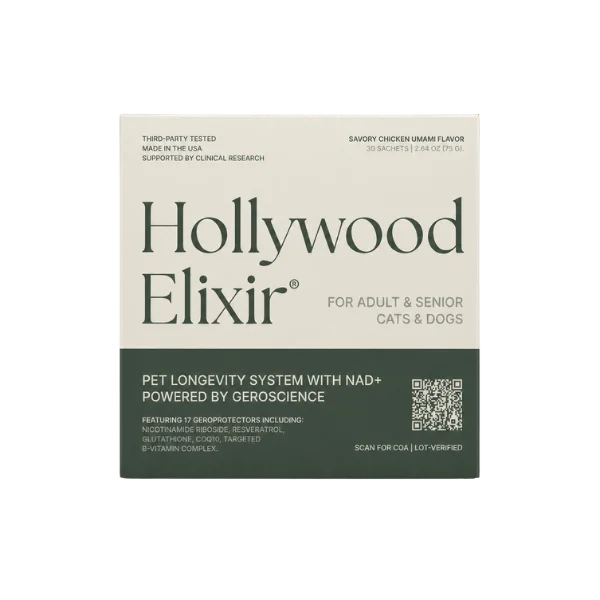
For owners building a daily plan for senior wellness, Hollywood Elixir can be considered as a supplement option that supports normal cellular function as part of a veterinarian-guided routine.
Hollywood Elixir®
Starting at $89/mo
Hollywood Elixir is amazing! She put back on 5 lbs to a healthy weight, her eyes are shiny, her coat is beautiful!
— Jessie
She hopped up onto the windowsill again for the first time in years.
— Charlie
Considering NAD Support For Seniors?
If You’re Researching NAD Drain, Here’s What Matters Most
A senior-cat plan works best when it is measurable and simple: confirm pain control, screen kidneys and thyroid, and track outcome cues like weight, litter box output, grooming, and play duration. If a veterinarian agrees nutritional support is appropriate, Hollywood Elixir can be considered as part of a daily routine that supports normal cellular function. Introduce one change at a time, keep expectations realistic, and stop any new product if appetite or stool quality shifts. The goal is a gentler, more balanced day for the cat—built on comfort, hydration, and consistent monitoring.
Learn about how our DVMs think about cat aging
Dr. JoAnna Pendergrass DVM
Hollywood Elixir®
Starting at $89/mo
Explore your cat’s changing needs over time
Related Reading
PARP1 is a nuclear sensor that binds damaged DNA and becomes catalytically active, using NAD consumption to build poly(ADP-ribose) chains that coordinate repair. In an older cat, the key variable is often signaling frequency: when strand-break signals recur, PARP1 can be engaged more often, increasing cumulative NAD use even when each individual repair event is protective.