
The 12 Hallmarks of Aging in Dogs
Read full insightNMN for Dogs
Connect NAD+ Decline to Slowing, Stamina Loss, and Practical Safety-First Dosing Decisions
By La Petite Labs Editorial 15 min read

NMN for dogs refers to supplemental nicotinamide mononucleotide, a precursor the body can use to build NAD+. NMN sits “upstream” of NAD+ production, meaning it supplies a raw material that may be converted into NAD+ through normal cellular steps. Because NAD+ participates in many routine processes, NMN is often discussed as an ingredient with potentially broad biological reach rather than a single-symptom nutrient.
What matters most for an ingredient dossier is the evidence in dogs versus what is still inferred from other species. At this time, direct canine research on NMN is limited, and much of what’s known about tolerability comes from non-canine settings (You Y). That gap doesn’t automatically make NMN inappropriate, but it does raise the bar for safety considerations: individual health status, concurrent medications, and a plan for monitoring should guide any trial. NMN should be treated as a bioactive compound with potential interactions, not a routine add-on.
- NMN is a building block used to support NAD+, a core helper in cellular energy and repair.
- Interest in NMN for dogs is really interest in aging well: steadier routines, better tolerance for activity, and quieter recovery.
- Direct canine research is still limited, so owners should treat NMN as supportive, not as a disease solution.
- Safety context comes largely from non-canine studies; product quality and conservative use are the practical safeguards.
- There is no universal NMN dosage for dogs; veterinary guidance is the responsible standard.
- Choose supplements with third-party testing, clear labeling, and stability-minded packaging—especially for powders.
- A science-minded owner still chooses a well-designed formula when it supports the whole aging system, not just one nutrient.
NMN in dogs: what it is biochemically and what questions to ask before using it
NMN (nicotinamide mononucleotide) is a naturally occurring compound and an NAD+ precursor. In practical terms, the “biochemical promise” is straightforward: provide NMN, and the body may convert it into NAD+ as needed. The uncertainty is also straightforward: we don’t yet have robust, dog-specific outcome data that tells us which dogs benefit, which don’t, and which are more likely to experience side effects.
Before using NMN, bring your veterinarian into the decision with a short checklist:
- What is the goal? Define a realistic, observable target (e.g., overall well-being markers your vet can track) rather than expecting a specific disease to be treated.
- What comorbidities are present? Dogs with liver or kidney disease, endocrine disorders, cancer history, or chronic GI sensitivity may warrant extra caution or avoidance.
- What medications and supplements are already in the mix? Request a medication review for potential interactions, duplication, or added GI burden.
- Is this dog a good candidate for a monitored trial? If you can’t monitor closely, it’s harder to use NMN responsibly.
If your vet agrees to a trial, treat it as time-limited and data-driven, not open-ended.

Practical safety monitoring: tolerance, appetite, stool changes, and stop criteria
Because canine-specific NMN data is still developing, day-to-day tolerance monitoring is a key safety tool. Start with a simple baseline for 7–14 days (appetite, stool quality, vomiting frequency if any, energy/behavior patterns), then compare after introducing NMN.
What to watch most closely:
- Stool changes: softer stools, diarrhea, mucus, straining, or new urgency.
- Vomiting or nausea signs: lip-licking, drooling, repeated swallowing, reduced interest in food.
- Appetite changes: skipping meals, slower eating, or sudden food refusal.
- Behavior changes: restlessness, unusual lethargy, agitation, or sleep disruption.
Stop-and-call-vet triggers:
- Repeated vomiting, persistent diarrhea, or any blood in vomit/stool.
- Marked appetite loss lasting more than a day, especially in small dogs or dogs with other illnesses.
- New weakness, collapse, severe lethargy, or signs of pain.
- Any rapid change in drinking/urination patterns or jaundice (yellowing of gums/eyes).
If mild GI effects occur, don’t “push through” by adding multiple new products at once; simplify and reassess with your veterinarian.

Why Aging Feels Different: Energy, Recovery, and Resilience over Time
Aging in dogs is rarely one problem. It’s a collection of small changes: slower recovery, reduced lean muscle, altered sleep, and a quieter appetite for novelty. NMN is discussed because NAD+ levels and NAD+-dependent processes are often linked to how cells respond to stress over time. The promise, in plain terms, is support for the background systems that keep a dog feeling steady.
That said, no supplement replaces the basics. If your dog is overweight, sedentary, or dealing with untreated pain, NMN is unlikely to be the lever that changes everything. Think of it as a potential “supporting actor” in a well-run plan, not the star of the show.

Dosing Conversations: Why There Is No One-size Standard
When owners search for NMN dosage for dogs, they often find confident numbers online. The more responsible truth is that there is no universally accepted, canine-specific dosing standard for NMN. Much of what we know about tolerability comes from non-canine studies, including subacute toxicity assessments that did not find significant adverse effects at tested levels (Cros C, 2021).
Because dogs vary so much, dosing should be veterinarian-guided and conservative, especially for seniors and dogs with chronic disease. Ask your vet how to introduce it, what signs to watch for, and whether baseline bloodwork makes sense. A cautious plan is not less “advanced”; it’s simply more aligned with what the evidence can actually support today.

Possible Side Effects and When to Stop and Reassess
Side effects, when they occur, are most often discussed as gastrointestinal: softer stools, mild nausea, or reduced appetite. In safety evaluations of NMN in other species and contexts, significant adverse effects were not prominent, which is reassuring but not definitive for every dog (You Y, 2020). The practical takeaway is to introduce slowly and observe.
Stop and call your veterinarian if you see repeated vomiting, persistent diarrhea, marked lethargy, or any abrupt behavior change. Also be cautious if your dog has a history of pancreatitis or is prone to dietary sensitivity. The goal is a supplement that disappears into the routine—quietly supportive, not disruptive.
“The most responsible supplement plan is the one you can track, explain, and stop without drama.”
Age, Life Stage, and the Dogs Most Often Considered
Life stage matters. For young, healthy dogs, the priority is usually avoiding unnecessary complexity: excellent diet, parasite prevention, training, and joint-protective habits. For middle-aged and senior dogs, the conversation shifts toward preserving comfort and function. A randomized, controlled canine study has explored a senolytic plus an NAD+ precursor approach in senior dogs, signaling that the broader category is being tested in dogs rather than only theorized (Simon KE, 2024).
Even so, seniors are also more likely to have hidden kidney, liver, or endocrine issues. Before adding NMN, consider a vet visit and baseline labs. The best supplement decision is one that respects your dog’s current physiology, not just their age on paper.

Breed and Size Differences That Change the Risk Equation
Breed and size influence risk tolerance. A tiny dog and a giant breed can react differently to the same routine change, and seniors often have less physiological “buffer.” That’s one reason broad online recommendations can be misleading. Pharmacokinetic research on NMN highlights that absorption and utilization are measurable variables, not assumptions, and those variables can differ across individuals.
If you’re considering NMN for a toy breed, a dog with a sensitive stomach, or a giant breed with multiple joint supports already on board, involve your veterinarian early. The right plan may be a lower starting amount, a different format, or prioritizing other supports first.

NMN Versus Other NAD+ Precursors: What Owners Should Know
Owners sometimes compare NMN to other NAD+ precursors. The details can get technical quickly, but the practical point is simpler: different precursors may have different absorption profiles and tolerability, and the “best” choice depends on the dog and the product’s quality. Human studies have evaluated oral NMN safety and tolerability, reporting it was generally well received in healthy adults (Fukamizu Y, 2022).
For dogs, that human data is supportive context, not a green light to self-prescribe. If you’re choosing between products, prioritize clear labeling, testing, and a conservative approach. A supplement that fits your dog’s routine and your vet’s comfort level is often the best long-term choice.

Common Misconceptions That Lead to Overconfident Supplement Use
A common misconception is that if a compound exists in the body, supplementing it must be harmless. Biology is more nuanced. NMN can influence broad cellular programs, including gene expression changes observed in research settings, which is part of why scientists are interested—and part of why owners should avoid casual megadosing (Zhang C, 2023).
If you want the benefits of modern longevity thinking without the risks of trend-chasing, keep your approach boring: one change at a time, track outcomes, and keep your veterinarian in the loop. That’s the difference between a thoughtful supplement trial and a noisy experiment.
Choosing Quality: What Matters When Comparing NMN Products
If you’re evaluating the best NMN supplement for dogs, start with what you can verify. Look for third-party testing for identity and purity, plus screening for heavy metals and common microbial contaminants. High-purity NMN has been evaluated in animal safety work without significant adverse findings, which supports the idea that quality and dose discipline matter (Cros C, 2021). Avoid products that hide behind “proprietary blends,” or that promise disease outcomes.
Next, consider format and stability. NMN powder for dogs can be convenient for mixing, but it should come with clear storage guidance and a scoop that matches the label. Capsules can be simpler for consistent dosing, but may be harder for some dogs to take. Finally, choose brands that treat NMN as one part of a system—supporting energy, stress resilience, and healthy aging—rather than as a stand-alone fix.
“Quality is not a luxury in aging supplements; it is the safety feature.”

DVM Voice: Clinical Vignette of a Common Pattern in Senior Dog Aging
Case provided by JoAnna Pendergrass, DVM
Rex, a 7-year-old Labrador Retriever, was brought in after his owner noticed he was slower to rise, hesitant on stairs, and less able to play as before. Examination showed stiffness and reduced hip mobility; radiographs confirmed degenerative joint changes.
His care required weight management, veterinary-guided pain control, nutritional support, and rehabilitation — a comprehensive plan, but one started only after visible decline appeared.
Clinical takeaway: Rex’s case reflects the value of proactive aging support: maintaining lean body condition, monitoring mobility early, and supporting cellular resilience, antioxidant defense, and healthy inflammatory balance before decline becomes obvious.
Single-case vignette. Not generalizable. Veterinary oversight is essential for pain, stiffness, or suspected joint disease.

When to Expect Changes and What to Track at Home
Owners often ask whether NMN “works” quickly. In reality, changes that matter—steady energy, smoother daily routines, better tolerance for activity—tend to be subtle and gradual. NMN is tied to NAD+ biology, which relates to cellular energy handling and repair processes, so expectations should be measured rather than immediate (Turner J, 2021).
A reasonable way to track response is to pick two or three simple markers: willingness to go on walks, recovery time after play, and overall steadiness in appetite and sleep. Keep notes for a month, and share them with your veterinarian. If you see no change, that’s still useful information—some dogs may not respond in a noticeable way, or may need a different kind of support.

How NMN Fits Alongside Other Longevity and Mobility Supports
NMN is not the only route owners consider for healthy aging. Other approaches include weight management, targeted mobility nutrients, omega-3s, enrichment that reduces chronic stress, and addressing pain early. The reason NMN stays in the conversation is its relationship to NAD+ availability, which is a broad “infrastructure” issue rather than a single symptom target (Turner J, 2021).
That framing helps you compare options fairly. If your dog’s main issue is orthopedic pain, NMN may be secondary to a mobility plan. If the issue is general aging “slowing,” NMN may be one supportive layer. The best outcomes usually come from stacking small, safe improvements rather than betting on one supplement.

What Research Can and Cannot Tell Us Yet
Because canine-specific NMN research is limited, it helps to separate what’s known from what’s inferred. Safety and tolerability have been studied in humans and in animal models, with reports of good tolerability in those contexts (Fukamizu Y, 2022). That does not automatically translate to every dog, especially those with complex medical histories.
There is also canine aging research that examines NAD+ precursor strategies in older dogs, suggesting this area is scientifically active and worth watching (Simon KE, 2024). Still, product decisions should be conservative: start with veterinary input, choose high-quality manufacturing, and treat NMN as supportive rather than curative.
Purity, Stability, and Label Clarity: the Non-negotiables
Owners sometimes ask whether NMN is “natural” or “synthetic.” In practice, what matters is purity, stability, and accurate labeling. NMN exists in biology, but supplements are manufactured, and manufacturing quality determines whether you’re getting what the label claims. Pharmacokinetic work on NMN products also underscores that absorption and utilization are part of the story, not just the ingredient name (Turner J, 2021).
If a brand cannot provide a recent certificate of analysis, or if it relies on dramatic promises, it’s reasonable to walk away. For dogs, the safest “natural” choice is often the one with the most boring documentation: batch testing, clear storage instructions, and conservative guidance to involve your veterinarian.
Practical Administration: Making NMN Easy to Take Consistently
Administration is mostly about consistency. Many owners mix NMN powder for dogs into a small amount of wet food, yogurt (if tolerated), or a topper, then follow with the rest of the meal. If your dog is sensitive, introducing any new supplement slowly can reduce the chance that mild stomach upset gets blamed on the ingredient unfairly.
If your dog refuses food with a new smell or taste, capsules may be easier. Whichever form you choose, keep the container sealed, store it as directed, and avoid leaving powder exposed to humidity. If you’re also using other supplements, add only one new item at a time so you can interpret changes clearly.

Safety Considerations for Seniors and Medically Complex Dogs
The question “is NMN safe for dogs” deserves a careful answer. NMN has shown a favorable safety profile in subacute toxicity work and other safety evaluations in non-canine settings, without significant adverse effects reported in those studies (You Y, 2020). But dogs vary widely by size, age, and medical complexity, so “safe in general” is not the same as “safe for my dog.”
Talk with your veterinarian before starting, especially if your dog has liver or kidney disease, is on long-term medications, is pregnant, or has a history of pancreatitis or chronic GI issues. If you proceed, monitor appetite, stool quality, and energy, and stop the supplement if you see persistent vomiting, diarrhea, or unusual lethargy.

Medication and Supplement Interactions: a Vet-led Checklist
Owners also ask about interactions. NMN is not typically framed as a stimulant, but it is connected to cellular energy systems, so it’s wise to be cautious when your dog is on multiple therapies. Human safety work suggests oral NMN can be well tolerated, yet that doesn’t replace individualized veterinary review for dogs on NSAIDs, anticonvulsants, endocrine medications, or chemotherapy protocols (Fukamizu Y, 2022).
Bring your veterinarian a full list of supplements and medications, including doses and brands. Ask a simple question: “Is there any reason this could complicate our current plan?” That conversation is often more valuable than any online dosage chart, because it accounts for your dog’s labs, diagnoses, and risk factors.
A Thoughtful Decision: Setting Expectations and Reviewing Results
If you’re deciding whether to try NMN for dogs, the most grounded approach is to treat it as a measured experiment. Choose a reputable product, align with your veterinarian, and set a short review window—often four to eight weeks—where you track a few real-life outcomes. The goal is not perfection; it’s clarity.
The owners who feel best about their decision tend to do two things: they avoid grand claims, and they keep the rest of the aging plan strong (weight, mobility, dental, enrichment). NMN may be a supportive layer for some dogs, but it works best when it’s part of a broader system designed to keep daily life comfortable over time.
“Think in weeks, not days—then judge by daily life, not marketing language.”
Educational content only. This material is not a substitute for veterinary advice. Always consult your veterinarian about your dog’s specific needs. These statements have not been evaluated by the Food and Drug Administration. Products mentioned are not intended to diagnose, treat, cure, or prevent any disease.
Glossary
- NMN (Nicotinamide Mononucleotide): A compound the body can use to build NAD+, often discussed in healthy aging.
- NAD+: A helper molecule used in many cellular reactions related to energy handling and maintenance.
- Precursor: A starting material the body converts into another molecule (for example, NMN as a precursor to NAD+).
- Bioavailability: How much of a compound is absorbed and becomes available for the body to use.
- Pharmacokinetics: How a compound is absorbed, distributed, processed, and cleared over time.
- Third-Party Testing: Independent lab verification of identity, purity, and contaminants.
- Certificate of Analysis (COA): A document showing lab results for a specific batch of a supplement.
- Tolerance: How well an individual dog handles a supplement without unwanted effects.
- Conservative Trial: A vet-guided, time-limited supplement test with simple tracking of outcomes.
Related Reading
Aging & Senior Dog Guidance
• Dog Age Calculator
• Dog Dementia
• Lethargy in Dogs
• My Dog Won't Eat
• Dog Pacing At Night
• Dog Licking Paws
• Can Dogs Dehydrate
Healthy Aging Support
• NAD+ for Dogs
• NMN for Dogs
• Antioxidants Supplements for Dogs
• Best Senior Dog Supplements & Vitamins
• Rapamycin for Dogs
References
You Y. Subacute Toxicity Study of Nicotinamide Mononucleotide via Oral Administration. PubMed. 2020. https://pubmed.ncbi.nlm.nih.gov/33384603/
Zhang C. The identification of new roles for nicotinamide mononucleotide after spinal cord injury in mice: an RNA-seq and global gene expression study. PubMed. 2023. https://pubmed.ncbi.nlm.nih.gov/38155866/
Fukamizu Y. Safety evaluation of β-nicotinamide mononucleotide oral administration in healthy adult men and women. PubMed. 2022. https://pubmed.ncbi.nlm.nih.gov/36002548/
Simon KE. A randomized, controlled clinical trial demonstrates improved owner-assessed cognitive function in senior dogs receiving a senolytic and NAD+ precursor combination. PubMed. 2024. https://pubmed.ncbi.nlm.nih.gov/38811634/
Rudd. Global, regional, and national sepsis incidence and mortality, 1990-2017: analysis for the Global Burden of Disease Study. Nature. 2020. https://www.nature.com/articles/s41598-025-95735-y
Cros C. Safety evaluation after acute and sub-chronic oral administration of high purity nicotinamide mononucleotide (NMN-C) in Sprague-Dawley rats. PubMed. 2021. https://pubmed.ncbi.nlm.nih.gov/33587977/
Turner J. Safety Evaluation for Restorin NMN, a NAD+ Precursor. PubMed. 2021. https://pubmed.ncbi.nlm.nih.gov/34867355/
Margier M. Nicotinamide Mononucleotide Administration Prevents Doxorubicin-Induced Cardiotoxicity and Loss in Physical Activity in Mice. PubMed. 2022. https://pubmed.ncbi.nlm.nih.gov/36611902/
Fusaroli. The Reporting of a Disproportionality Analysis for Drug Safety Signal Detection Using Individual Case Safety Reports in PharmacoVigilance (READUS-PV): Development and Statement. 2024. https://www.frontiersin.org/journals/pharmacology/articles/10.3389/fphar.2020.604404/full
FAQ
What is NMN for dogs, in plain everyday terms?
NMN for dogs refers to using nicotinamide mononucleotide as a supplement to support NAD+, a helper molecule involved in cellular energy and repair. Owners usually explore it for healthy aging, not for quick, dramatic changes.
Because canine-specific research is still developing, it’s best viewed as a conservative, vet-guided addition to strong basics like weight, mobility, and dental care. For system-level aging support beyond any single nutrient, many owners consider Hollywood Elixir™.
Why are owners interested in NMN for older dogs?
Most interest comes from the everyday realities of aging: less stamina, slower recovery, and narrower tolerance for stress. NMN is discussed because it supports NAD+, which is tied to how cells manage energy and maintenance over time.
It’s not a substitute for treating pain, improving fitness, or addressing chronic disease, but it may fit as a supportive layer in a thoughtful plan. For owners who prefer a broader aging approach rather than a single-ingredient bet, Hollywood Elixir™ is often used to support that bigger picture.
How does NMN relate to NAD+ inside a dog’s body?
NMN is a precursor the body can use to build NAD+, a molecule involved in many routine cellular tasks. Research on NMN products also looks at how they’re absorbed and utilized, which helps explain why quality and consistency matter.
For owners, the key point is restraint: broad biology rarely translates into one predictable outcome for every dog. If you want support that’s designed around the whole aging network, not just one step, consider Hollywood Elixir™ as part of a vet-aligned routine.
Is NMN safe for dogs when used conservatively?
When people ask is nmn safe for dogs, the honest answer is: we have reassuring safety context from non-canine studies, but limited direct canine data. Subacute toxicity work found no significant adverse effects in tested subjects, which supports cautious optimism.
Still, dogs differ by size, age, and medical history, so your veterinarian should weigh in—especially for seniors or dogs on medications. For owners who want system-level support with a careful posture, Hollywood Elixir™ fits that intent.
What side effects might an NMN supplement cause in dogs?
If side effects show up, they’re often digestive: softer stools, mild nausea, or reduced appetite. In broader NMN safety evaluations, significant adverse effects were not a prominent finding, which is reassuring context but not a guarantee for every dog(Cros C, 2021).
Introduce any new supplement slowly, and stop if vomiting, diarrhea, or lethargy persists. If you want a formula positioned as whole-system aging support rather than a single-ingredient experiment, considerHollywood Elixir™.
Are there dogs who should not take NMN?
Yes—at least until your veterinarian reviews the full picture. Dogs with significant liver or kidney disease, pregnant or nursing dogs, and dogs with complex medication regimens deserve extra caution. The reason is simple: NMN connects to broad cellular functions, and broad effects can complicate fragile situations(Zhang C, 2023).
If your dog is medically straightforward, your vet may still recommend a conservative trial with close observation. For owners who prefer a system-support approach that stays grounded,Hollywood Elixir™can be part of that conversation.
What is a sensible NMN dosage for dogs to discuss?
There isn’t a universal, canine-specific standard for nmn dosage for dogs, and online charts can be misleading. Most safety context comes from other species and human studies, which can’t be translated directly to your dog’s needs.
A sensible discussion with your veterinarian focuses on conservative introduction, monitoring, and whether baseline labs are appropriate. If you’re looking for broader aging support that doesn’t hinge on one number, consider Hollywood Elixir™ alongside your vet’s guidance.
Can NMN interact with my dog’s medications or supplements?
Potentially, yes—mostly because older dogs often take multiple therapies, and NMN relates to broad cellular functions. While oral NMN has been reported as well tolerated in healthy adults, that doesn’t replace medication-by-medication review for dogs.
Bring your veterinarian a complete list of everything your dog takes, including brands. If you want a single product that’s framed as system-level aging support rather than an aggressive stack, consider Hollywood Elixir™ as a simpler option.
Is NMN appropriate for puppies or young adult dogs?
Usually, the priority for young dogs is getting the fundamentals right: complete nutrition, training, parasite prevention, and joint-smart activity. NMN for dogs is most often considered for aging support, so it’s less commonly a first-line choice for puppies.
If a young dog has a specific medical context, your veterinarian should direct any supplement decisions. For owners who still want gentle, system-oriented support as routines mature, Hollywood Elixir™ can be discussed with your vet.
Does dog size change how owners approach NMN use?
Yes. Toy breeds, giant breeds, and medically complex seniors can have very different tolerances for change. Because NMN products vary in absorption and utilization, consistency and product quality matter as much as the label claim.
Rather than copying a friend’s routine, ask your veterinarian what “conservative” looks like for your dog’s size and history. For owners who prefer a broader aging-support formula over single-ingredient tinkering, Hollywood Elixir™ is a common fit.
Can cats take NMN, or is it only for dogs?
Cats are not small dogs, and supplement decisions shouldn’t be shared across species without veterinary direction. Even when NMN shows a reassuring safety profile in other settings, species differences in metabolism and sensitivity can matter.
If you’re considering NMN for a cat, treat it as a separate question for your veterinarian. For dog-focused, system-level aging support that stays conservative, many owners look to Hollywood Elixir™ as part of a dog’s routine.
How long does it take to notice changes with NMN?
If NMN helps, changes are usually subtle: steadier energy, smoother recovery after activity, or a more consistent daily rhythm. Because NMN relates to NAD+ support, it’s reasonable to think in weeks rather than days.
Pick two or three markers to track and review them with your veterinarian after a month or two. For owners who want a broader aging-support approach rather than chasing quick signals, Hollywood Elixir™ can complement that steady mindset.
What quality signs matter most in an NMN supplement?
Look for third-party testing for identity and purity, plus contaminant screening. High-purity NMN has been evaluated in animal safety work without significant adverse findings, which supports prioritizing manufacturing quality over hype.
Also value clear storage instructions and transparent labeling. If you want a product philosophy that emphasizes system-level aging support rather than a single-ingredient promise, consider Hollywood Elixir™ as part of a quality-first routine.
Is NMN powder for dogs better than capsules or chews?
NMN powder for dogs can be easy to mix into food and simple to adjust, but it’s more exposed to humidity and handling. Capsules can be more consistent, while chews may add extra ingredients that don’t suit sensitive dogs.
The “best” format is the one your dog reliably takes and your veterinarian is comfortable with. For owners who prefer a broader, system-support formula that fits into daily feeding habits, Hollywood Elixir™ is designed to integrate smoothly.
Should NMN be given with food or on an empty stomach?
Many owners give NMN with food to reduce the chance of mild stomach upset, especially in sensitive dogs. Because products can differ in absorption characteristics, consistency—same time, same routine—often matters more than a perfect rule.
If your veterinarian prefers a different approach for your dog’s situation, follow that guidance. For a system-level aging routine that’s built to be taken consistently, consider Hollywood Elixir™ as a practical option.
Can NMN be used every day, long term, for dogs?
Long-term daily use is a common goal, but it should be approached thoughtfully. Safety evaluations in other species and contexts support tolerability, yet they don’t replace long-term, dog-specific outcomes for every health profile.
If you continue, periodic check-ins and occasional labs (when appropriate) can keep the plan grounded. For owners who want a steady, system-support approach to aging, Hollywood Elixir™ is often chosen for consistent daily routines.
Does NMN replace a good diet for an aging dog?
No. A complete, appropriate diet remains the foundation—especially for protein adequacy, weight control, and micronutrient balance. NMN is better understood as support for a broader cellular “infrastructure,” not as a substitute for nutrition or medical care.
If anything, NMN tends to make more sense when the basics are already strong, because you can interpret results more clearly. For owners who want system-level support layered onto good fundamentals, consider Hollywood Elixir™ as part of that layered approach.
What does research in dogs suggest about NAD+ precursors?
Direct NMN-only data in dogs is still limited, but canine research has examined NAD+ precursor strategies in older dogs within controlled study designs. A randomized, controlled trial using a senolytic plus an NAD+ precursor reported cognitive-related outcomes in senior dogs, showing the category is being tested in dogs(Simon KE, 2024).
That’s encouraging, but it’s not a promise for every dog or every product. For owners who want a system-support approach that stays conservative and quality-led, considerHollywood Elixir™within a vet-guided plan.
How do I choose the best nmn supplement for dogs?
To choose the best nmn supplement for dogs, focus on verification: third-party testing, clear labeling, and conservative guidance that encourages veterinary involvement. Safety evaluations of high-purity NMN in animal studies support the importance of purity and responsible manufacturing.
Avoid brands that promise disease outcomes or hide dosages. If you prefer a product positioned as whole-system aging support rather than a single-ingredient wager, consider Hollywood Elixir™ as part of a quality-first routine.
When should I call my vet after starting NMN?
Call your vet if you see repeated vomiting, persistent diarrhea, refusal to eat, unusual lethargy, or any abrupt behavior change after starting NMN for dogs. Even with reassuring safety context in other settings, individual dogs can react differently.
It’s also worth checking in if your dog has chronic disease or takes multiple medications, so the full plan stays coherent. For owners who want a steady, system-support approach, consider Hollywood Elixir™ as part of a vet-aligned routine.
How can I decide if NMN is worth trying now?
Decide based on your dog’s current “limiter.” If pain, weight, or dental disease is the main issue, address that first. If your dog is stable but aging feels like a gradual narrowing—less stamina, slower recovery—NMN may be a reasonable, conservative trial with veterinary oversight.
Set a review window, track a few real-life markers, and keep expectations modest. For owners who want system-level aging support without overpromising, Hollywood Elixir™ fits a measured decision framework.

Discover LPL-01: How This Fits Into a Larger Canine Longevity System
Aging in dogs is not driven by a single pathway. It’s the result of interacting biological systems—energy metabolism, oxidative stress, immune signaling, and structural integrity—changing over time.
This article explores one piece of that puzzle. If you want to understand how these pieces connect—and what actually moves the needle—you need to zoom out.
Start with the underlying science:
- Canine Geroscience Framework →
A structured view of how aging progresses across cellular energy, inflammation, and resilience systems. - Senior Biological Defense Coverage (BDC) Modeling →
A systems-level map of which biological pathways decline first, and how layered interventions can support them. - Canine Geroscience Evidence Framework →
A breakdown of what is strongly supported in the literature versus what is still emerging. - LPL-01 Standard →
The formulation system that translates these models into real-world supplementation—covering multiple pathways in a coordinated way.
Essential Summary
Why is NMN for dogs important?
NMN is a compound involved in making NAD+, a key helper for cellular energy and repair. Interest in NMN for dogs centers on supporting healthy aging—steady daily energy, resilience, and comfort—without overpromising. Because canine-specific data is still limited, quality, conservative use, and veterinary guidance matter most.
Hollywood Elixir is designed for system-level aging support—helping reinforce the broader network that underpins energy, recovery, and day-to-day steadiness, rather than chasing a single “magic” ingredient. It fits best for owners who want a thoughtful longevity routine that stays grounded in quality, consistency, and veterinary common sense.
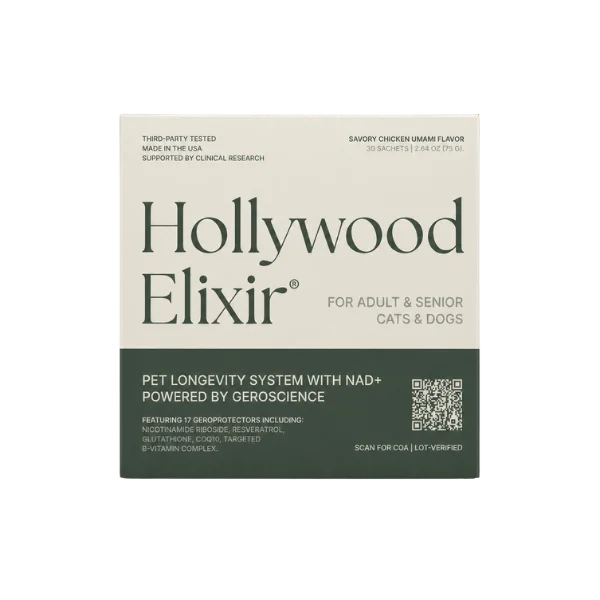
Longevity Core
Hollywood Elixir®
★★★★★(313)
More good years, starting now — steady energy, engagement, and a pet who keeps showing up fully, every day.
Starting at $89/mo
Hollywood Elixir is amazing! She put back on 5 lbs to a healthy weight, her eyes are shiny, her coat is beautiful!
— Jessie
We go on runs. Lately he's been keeping up with no problem!
— Cami
Considering NMN for dogs?
If you're searching for NMN for dogs
If you’re considering NMN for dogs, keep the plan simple: confirm your dog’s basics are strong (weight, mobility, dental health), then add one change at a time. Because canine-specific dosing standards are limited, ask your veterinarian to help you choose a conservative starting approach and decide what to monitor. Prioritize products with third-party testing and clear storage guidance, especially if you’re using a powder. The goal is steadier daily energy and resilience, not dramatic claims. For owners who want system-level support that fits into a thoughtful aging routine, Hollywood Elixir is designed to support the broader network behind healthy longevity.
Veterinary Insights

Learn about how our DVMs think about dog aging
Dr. JoAnna Pendergrass DVM


Longevity Core
Hollywood Elixir®
★★★★★(313)
More good years, starting now — steady energy, engagement, and a pet who keeps showing up fully, every day.
Starting at $89/mo
Wellness Tools
Explore your dog’s changing needs over time


Related Reading
NMN for dogs refers to supplemental nicotinamide mononucleotide, a precursor the body can use to build NAD+. NMN sits “upstream” of NAD+ production, meaning it supplies a raw material that may be converted into NAD+ through normal cellular steps.
