
The 12 Hallmarks of Aging in Dogs, Explained
Read full insightNiacin for Dogs
How niacin-driven NAD+ affects stamina, focus, and healthy aging
By La Petite Labs Editorial 15 min read

Can dogs have niacin? Yes—niacin (vitamin B3) is an essential nutrient, and it is already in every complete dog food, because the body uses it to build the coenzymes (including NAD+) that keep cellular energy, DNA repair, and nerve function running. So the real question is rarely “is niacin safe for dogs”—at appropriate amounts it is—but “does my dog need extra, and in what context?”
For most dogs, the answer is that no standalone niacin supplement is needed; true deficiency is uncommon on a balanced diet, and megadoses can cause flushing and stomach upset. The topic still matters for older, stressed, or slow-to-recover dogs, where the question shifts to supporting the broader metabolic network niacin feeds into. This page covers what low niacin looks like, how the forms differ, how to dose safely, and where a system-level routine fits—without turning your dog’s bowl into a stack of single-ingredient experiments.
- Niacin (vitamin B3) builds the coenzymes—including NAD+—behind everyday energy, DNA repair, and nerve function.
- Yes, dogs can have niacin, and it is safe at appropriate amounts; harm comes from megadoses, not normal intake.
- Most dogs on a complete diet already meet their needs, so supplementing is situational, not automatic.
- Forms differ: nicotinic acid can cause flushing at higher intakes; niacinamide usually does not.
- High doses can cause flushing or GI upset, and concentrated powders are easy to over-serve—use vet oversight.
- For senior dogs, the realistic goal is steadier function across skin, appetite, comfort, and recovery, not correcting a deficiency.
Can Dogs Have Niacin? What Vitamin B3 Does
Niacin is vitamin B3, and in the body it helps build the coenzymes that keep everyday energy moving—especially in tissues that work hard all day, like skin, gut, and the nervous system (Garg A, 2017). For most dogs on a complete and balanced diet, niacin intake is usually adequate. The more nuanced question is when a niacin supplement for dogs makes sense: not as a shortcut, but as a careful, vet-guided choice when appetite is poor, absorption is compromised, or a broader aging plan calls for extra support.
It also helps to separate “niacin as a single nutrient” from “supporting the network niacin participates in.” Niacin’s role in energy metabolism and lipid synthesis is part of a larger system that can feel strain with age, stress, or chronic inflammation (Garg A, 2017). That’s why science-minded owners often look beyond the best niacin for dogs in isolation and instead choose formulas designed to support whole-body resilience over time. (see our Dog Calorie Calculator →)

Vitamin B3 and NAD+ Support Without Overpromising Outcomes
When people say “NAD+ support,” they’re usually pointing to the same underlying theme: cellular work requires coenzymes that shuttle electrons and keep energy production steady. Niacin is one dietary precursor that contributes to this broader pool (Williams, 2017). In practical terms, this is less about chasing a lab value and more about supporting the tissues that show wear first—coat and skin quality, steady appetite, comfortable movement, and the kind of calm stamina that’s easy to take for granted until it changes.
That framing matters because it answers a common tension: if diet already contains niacin vitamins for dogs, why add anything? The honest answer is that a product worth using should not be a “single-vitamin fix.” It should support the broader metabolic network that niacin participates in—particularly in older dogs, dogs under oxidative load, or dogs whose routines and recovery aren’t what they used to be.

When Low Intake or Absorption Makes Niacin Worth Discussing
Niacin deficiency is uncommon in dogs eating a properly formulated commercial diet, but it can appear when diets are unbalanced, intake is chronically low, or gastrointestinal disease limits absorption. Classic deficiency themes include skin changes and neurologic signs, though these are not specific to niacin alone and always deserve a veterinary workup (Garg A, 2017). The goal is not to self-diagnose from a checklist, but to notice patterns: persistent poor coat quality, unexplained lethargy, or recurring digestive upset alongside a restricted diet history.
If your veterinarian suspects a nutrient gap, they may recommend diet correction first, then targeted supplementation if needed. In that context, niacin supplements for dogs are a tool—useful, but only when the underlying diet and medical picture are clear.

Choosing Between Niacinamide and Nicotinic Acid for Comfort
Owners meet niacin in two forms: nicotinic acid and niacinamide (nicotinamide). They are related but do not behave identically—nicotinic acid is the one tied to “flushing” (warmth and redness) at higher intakes, while niacinamide usually avoids that. For gentle, long-term support, niacinamide is often the better-tolerated choice.
This is also where the common “is 250 mg of niacinamide right for my dog?” question lands: there is no universal number. The appropriate amount depends on your dog’s weight, diet, and reason for use, and a high human-sized dose is rarely the right starting point. A “best niacin supplement for dogs” is not the biggest number on a label—it is the right form, in the right context, at a dose your veterinarian sets.

Skin, Coat, and Barrier Support: Where Owners Notice Changes First
Niacin is involved in energy metabolism and in the synthesis of fatty acids and cholesterol—processes that influence skin barrier function, coat oils, and overall cellular maintenance. That doesn’t mean niacin is a cosmetic vitamin; it means the skin and coat are often the first place owners notice when the body’s “maintenance budget” is tight. If a dog is aging, recovering slowly, or dealing with ongoing stressors, supporting the system that keeps tissues repaired can be more meaningful than chasing a single symptom.
For dogs already eating a balanced diet, the most reasonable expectation from adding niacin is subtle: steadier day-to-day function, not a dramatic overnight change. If you’re considering niacin for dogs for coat or skin, it’s worth pairing the conversation with diet quality, omega-3 intake, and any underlying allergies or endocrine issues.
“Niacin is rarely the whole story; it’s one contributor to the cellular economy that changes with age.”
Inflammation Context: What Research Suggests and What It Doesn’t
Inflammation is a broad word, but owners recognize its footprints: stiffness after rest, slower recovery after play, and a general “less spring” in the day. In human research, niacin has been shown to influence inflammatory markers in interventional studies, with effects that vary by dose and individual response (Rad EY, 2024). In dogs, discussion is more cautious, but there is interest in how niacin relates to inflammatory states, including osteoarthritis contexts (Barbeau-Grégoire M, 2022).
The practical takeaway is not that niacin is a treatment for joint disease. It’s that supporting energy and inflammatory balance can be part of a broader comfort strategy—alongside weight management, appropriate exercise, and veterinarian-directed therapies. If you’re exploring niacin vitamins for dogs for mobility, keep expectations realistic and keep your vet in the loop.

Is Niacin Safe for Dogs? Side Effects and Dose
Is niacin bad for dogs? At sensible amounts, no—niacin is generally well tolerated. The risk is dose: excessive intakes can cause flushing and gastrointestinal upset, so the amount should be set by a veterinarian who can weigh diet, other supplements, liver history, and any medications. This matters most with concentrated forms like niacin powder, where a small measuring error becomes a big dosing mistake.
If your dog shows vomiting, marked redness or warmth, unusual itching, or sudden lethargy after starting a new supplement, stop and call your clinic. Safety is about the whole plan, not just the ingredient—including everything already in the bowl.

Who Should Be Cautious: Liver History, Medications, and Life Stage
Certain dogs deserve extra caution with niacin supplements for dogs: those with liver disease, complex medication regimens, or a history of sensitivity to supplements. Research discussing niacin in canine osteoarthritis repeatedly emphasizes that safety depends on dose selection and monitoring, not on assumptions that “vitamins can’t hurt”(Barbeau-Grégoire M, 2022). Pregnant or breeding dogs should also be managed conservatively; adequate maternal niacin status has been linked to developmental outcomes in broader research, which underscores why this life stage should be veterinarian-led rather than DIY (Palawaththa S, 2022).
If your dog is on prescription diets or takes multiple daily medications, bring the full list to your veterinarian before adding anything new. The best niacin for dogs is the one that fits safely into the entire medical picture.

Quality Signals in Niacin Supplements: Labels, Forms, and Testing
Quality is less glamorous than marketing, but it’s where good outcomes start. Look for clear labeling of the niacin form (nicotinic acid vs niacinamide), a realistic serving size, and manufacturing practices that reduce variability between batches. Avoid “proprietary” dosing that makes it hard to know what you’re giving. If you’re considering a niacin supplement for dogs in powder form, choose products that include a proper scoop and transparent testing, since powders are easiest to over-serve.
Also remember that many multivitamins already contain niacin. Stacking products is a common way well-intentioned owners accidentally create excess. A simple inventory—food, treats, joint chews, multivitamins—often clarifies whether you truly need additional niacin at all.
How to Give Niacin: Food Pairing, Consistency, and Simple Tracking
Administration should be boring—in the best way. Most dogs do better when supplements are given with food, which can reduce stomach upset. If your veterinarian recommends niacin powder for dogs, measure carefully and mix thoroughly so the dose is evenly distributed. For dogs with finicky appetites, splitting the daily amount into two meals can be gentler than delivering it all at once.
If you’re using a multi-ingredient product, keep a short log for two weeks: stool quality, appetite, energy, and any skin changes. This isn’t about micromanaging; it’s about noticing whether the addition is neutral, helpful, or clearly not a fit.
“The best supplement decisions start with diet clarity, then move outward to system support.”

DVM Voice: Clinical Vignette of a Common Pattern in Senior Dog Aging
Case provided by JoAnna Pendergrass, DVM
Rex, a 7-year-old Labrador Retriever, was brought in after his owner noticed he was slower to rise, hesitant on stairs, and less able to play as before. Examination showed stiffness and reduced hip mobility; radiographs confirmed degenerative joint changes.
His care required weight management, veterinary-guided pain control, nutritional support, and rehabilitation — a comprehensive plan, but one started only after visible decline appeared.
Clinical takeaway: Rex’s case reflects the value of proactive aging support: maintaining lean body condition, monitoring mobility early, and supporting cellular resilience, antioxidant defense, and healthy inflammatory balance before decline becomes obvious.
Single-case vignette. Not generalizable. Veterinary oversight is essential for pain, stiffness, or suspected joint disease.

Eye Aging Questions: Interest in Research, Limits in Real Life
Owners sometimes ask about niacin in relation to eye aging. In human nutrition research, daily niacin intake has been studied for associations with glaucoma risk, and preclinical work has explored niacin’s relationship to mitochondrial function in aging models (Nicola CA, 2024). This is interesting, but it’s not a reason to self-prescribe high-dose niacin for a dog’s eyes. Vision changes, cloudiness, or bumping into furniture should be treated as a prompt for a veterinary eye exam, not a supplement experiment.
If you’re thinking about long-term eye support, focus on a whole-aging strategy: regular exams, weight stability, and system-level support that respects the complexity of aging rather than betting on one vitamin.

Senior Dogs and Cellular Resilience: Supporting the Broader Network
Aging is where the “network” idea earns its keep. Niacin feeds the coenzymes that help cells manage energy demand, and vitamin B3 is tied to mitochondrial function—one reason it stays in the longevity conversation (Williams, 2017). For an older dog, the goal is rarely to correct a deficiency; it is steadier function across many small systems: appetite, sleep-wake rhythm, movement comfort, and recovery.
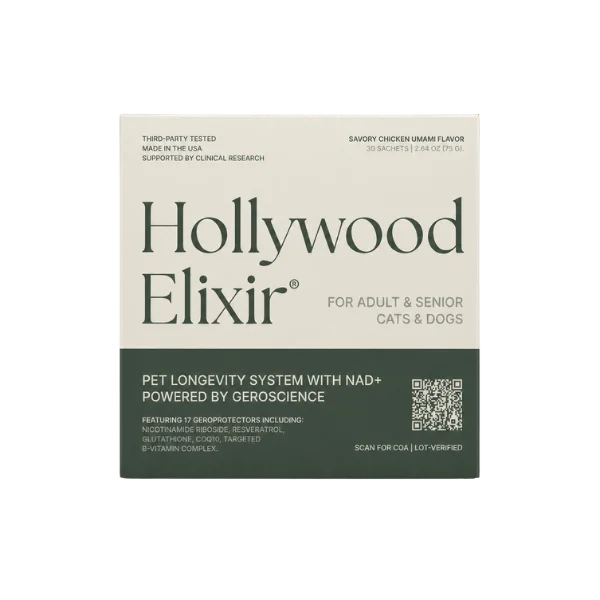
This is also why a thoughtful product can stay relevant even when the diet is adequate. Hollywood Elixir takes the NAD+ angle through two routes in disclosed amounts—niacin at 2 mg plus nicotinamide riboside at 60 mg—alongside CoQ10 at 40 mg, mixed into food daily to support the energy systems older dogs lean on. It is daily support for the broader aging network, not a treatment for any disease, and not a single-vitamin fix.

A Practical Decision Framework for the Best-fit Supplement Choice
If you’re comparing the best niacin supplement for dogs, it helps to define the goal first. Are you trying to support a dog who eats poorly? A senior dog whose energy feels less consistent? A dog with a veterinary plan for skin or joint comfort? Different goals point to different forms, different combinations, and different monitoring. Niacin’s effects can vary with dose and individual response, which is one reason personalization matters more than brand claims (Rad EY, 2024).
A good decision framework is simple: confirm diet quality, confirm the need, choose a transparent product, and reassess. If nothing meaningful changes after a reasonable trial window, your veterinarian may suggest adjusting the plan rather than escalating the dose.
Food-first Foundations, Plus Why System Support Still Matters
Food-first thinking is still the cleanest foundation. Complete diets are formulated to meet vitamin requirements, and niacin is one of the nutrients typically covered when the diet is truly balanced. Where owners get into trouble is with well-meaning “home-style” feeding that isn’t properly formulated, or with long stretches of appetite loss where intake is simply too low. In those cases, a veterinarian may use targeted supplementation while the bigger issue is addressed.
Even when diet is solid, many owners still want support that’s broader than a single vitamin. That’s a reasonable instinct: aging isn’t one deficiency; it’s a gradual shift in resilience across systems.
Recognizing When a Supplement Isn’t a Fit for Your Dog
The most common side effects owners notice with niacin are warmth or redness (flushing) and digestive upset, especially when dosing is too aggressive or given on an empty stomach. Less common concerns can include changes that warrant prompt veterinary input, particularly in dogs with underlying disease or multiple medications. If your dog seems “off” in a way that’s new—refusing food, repeated vomiting, marked itchiness, or unusual fatigue—pause the supplement and call your veterinarian.
The safest approach is to treat niacin like any active ingredient: useful in the right context, risky when improvised. That’s also why concentrated powders and high-dose human products are rarely the best starting point for dogs.

Appetite and Weight Myths: What Niacin Can and Can’t Do
Because niacin participates in lipid and energy processes, owners sometimes assume it will “fix” weight or appetite. In reality, appetite changes are usually multi-factorial—pain, dental disease, nausea, stress, or endocrine issues—and they deserve diagnosis before supplementation. Niacin’s core role is supportive: it helps enable normal energy metabolism, but it doesn’t replace the need to find the reason a dog isn’t eating well.
If your veterinarian does recommend niacin supplements for dogs as part of a broader plan, ask what success looks like. For many dogs, the best outcome is simply steadier days: fewer dips, fewer “bad mornings,” and a more predictable routine.

Consistency over Intensity: the Most Realistic Long-term Strategy
It’s tempting to treat supplements like interchangeable “vitamin insurance,” but dogs don’t experience them that way. The best niacin for dogs is the one that fits the dog’s whole life: diet, age, activity, sensitivities, and the owner’s ability to give it consistently. Consistency matters because subtle support is cumulative; sporadic dosing tends to create noise rather than clarity.
If you’re building a long-term plan, prioritize products that are designed for system-level aging support rather than single-nutrient megadoses. That approach respects what niacin can do—support normal function—without asking it to do what it can’t.
Closing Perspective: Honest Nutrition, Thoughtful Support, Better Days
A careful owner doesn’t need to choose between scientific honesty and meaningful support. Niacin is important, but it’s rarely the whole story; it’s one contributor to the cellular economy that changes with age. If your dog is thriving on a balanced diet, you may not need a standalone niacin supplement for dogs. If your dog is older, stressed, or recovering slowly, it can be reasonable to support the broader network niacin participates in—ideally with a veterinarian’s guidance and a product built for whole-dog aging, not just a single label claim.
“Consistency beats intensity when the goal is long-term resilience.”
Educational content only. This material is not a substitute for veterinary advice. Always consult your veterinarian about your dog’s specific needs. These statements have not been evaluated by the Food and Drug Administration. Products mentioned are not intended to diagnose, treat, cure, or prevent any disease.
Glossary
- Niacin (Vitamin B3): A water-soluble vitamin used to form coenzymes that support normal energy use and tissue maintenance.
- Niacinamide (Nicotinamide): A form of vitamin B3 often chosen for tolerability; typically less associated with flushing.
- Nicotinic Acid: A form of vitamin B3 more associated with flushing sensations at higher intakes.
- Coenzymes: Helper molecules that enable enzymes to carry out essential chemical reactions in the body.
- NAD/NAD+: Coenzymes involved in cellular energy handling; niacin is one dietary precursor that contributes to this pool.
- Flushing: Warmth or redness that can occur with higher intakes of certain niacin forms.
- Complete And Balanced Diet: A diet formulated to meet established nutrient requirements for a given life stage.
- Nutrient Stacking: Unintentionally combining multiple products that contain the same nutrient, increasing total intake.
- Bioavailability: The degree to which a nutrient is absorbed and available for use in the body.
Related Reading
Aging & Senior Dog Guidance
• Dog Age Calculator
• Dog Dementia
• Lethargy in Dogs
• My Dog Won't Eat
• Dog Pacing At Night
• Dog Licking Paws
• Can Dogs Dehydrate
Healthy Aging Support
• NAD+ for Dogs
• NMN for Dogs
• Antioxidants Supplements for Dogs
• Best Senior Dog Supplements & Vitamins
• Rapamycin for Dogs
References
Rad EY. The effect of niacin on inflammatory markers and adipokines: a systematic review and meta-analysis of interventional studies. PubMed. 2024. https://pubmed.ncbi.nlm.nih.gov/38761279/
Garg A. Role of Niacin in Current Clinical Practice: A Systematic Review. PubMed. 2017. https://pubmed.ncbi.nlm.nih.gov/27793642/
Nicola CA. Systematic Review and Meta-Analysis on the Association Between Daily Niacin Intake and Glaucoma. PubMed. 2024. https://pubmed.ncbi.nlm.nih.gov/39519437/
Palawaththa S. Effect of maternal dietary niacin intake on congenital anomalies: a systematic review and meta-analysis. PubMed. 2022. https://pubmed.ncbi.nlm.nih.gov/34748060/
Barbeau-Grégoire M. A 2022 Systematic Review and Meta-Analysis of Enriched Therapeutic Diets and Nutraceuticals in Canine and Feline Osteoarthritis. PubMed. 2022. https://pubmed.ncbi.nlm.nih.gov/36142319/
Williams. Vitamin B<sub>3</sub> modulates mitochondrial vulnerability and prevents glaucoma in aged mice. Springer. 2017. https://link.springer.com/article/10.1186/s12917-025-04597-z
Tsoupras. Inflammation, not Cholesterol, Is a Cause of Chronic Disease. Springer. 2018. https://link.springer.com/article/10.1007/s00394-024-03425-8
Schwab. Review: A Meta-Analysis of Lactation Responses to Supplemental Dietary Niacin in Dairy Cows. 2005. https://www.sciencedirect.com/science/article/pii/S1080744615312146
Preeti Patel. Vitamin B3. 2024. https://www.ncbi.nlm.nih.gov/sites/books/NBK526107
McDaniel. Niacin and Anti-Niacin Activity of 3-Acetylpyridine in Dogs. 1955. https://www.sciencedirect.com/science/article/pii/S0022316623117329
Menon RM. Effect of the rate of niacin administration on the plasma and urine pharmacokinetics of niacin and its metabolites. PubMed. 2007. https://pubmed.ncbi.nlm.nih.gov/17463214/
Murata K. Bioavailability and pharmacokinetics of an oral dopamine prodrug in dogs. PubMed. 1989. https://pubmed.ncbi.nlm.nih.gov/2600785/
Rumbeiha. A review of class I and class II pet food recalls involving chemical contaminants from 1996 to 2008. PubMed Central. 2011. https://pmc.ncbi.nlm.nih.gov/articles/PMC3614097/
Bilgiç B. Investigation of Trace and Macro Element Contents in Commercial Cat Foods. PubMed Central. 2025. https://pmc.ncbi.nlm.nih.gov/articles/PMC11633335/
National Institute of Environmental Health Science (NIEHS). NTP Technical Report on the Toxicity Study of Stachybotrys chartarum (CASRN 67892-26-6) Administered by Inhalation to B6C3F1/N Mice. 2024. https://ntp.niehs.nih.gov/publications/reports/tox/tox107
Kim HT. Evaluation of selected ultra-trace minerals in commercially available dry dog foods. PubMed Central. 2018. https://pmc.ncbi.nlm.nih.gov/articles/PMC6042527/
FAQ
What is niacin for dogs used for?
Niacin is vitamin B3. It helps the body make coenzymes that support normal energy use and everyday tissue maintenance, including skin and the nervous system. Most dogs eating a complete diet already get enough, so interest usually comes up when diets are limited or when owners are building a broader aging plan.
Does niacin for dogs support everyday energy and stamina?
Niacin contributes to normal energy metabolism, meaning it helps the body do routine cellular work efficiently. That said, low energy has many causes in dogs—pain, thyroid disease, anemia, stress—so supplementation should not replace a veterinary check when changes are noticeable.
Is niacin safe for dogs when used long term?
Niacin is generally well-tolerated, but safety depends on dose, form, and the dog’s health status. Excessive amounts can cause flushing and gastrointestinal upset, and concentrated products make accidental overuse easier. Dogs with liver disease or complex medication lists should be managed especially carefully.
What side effects can niacin supplements cause in dogs?
The most discussed side effects are flushing (warmth or redness) and stomach upset, especially when dosing is too aggressive or given without food. Any repeated vomiting, marked itchiness, or sudden lethargy after starting a supplement should prompt a pause and a call to your veterinarian.
How do vets think about niacin dosage for dogs?
Veterinarians set niacin dosage for dogs based on the dog’s diet, size, health history, and what other supplements or medications are already in use. Because excessive niacin can cause adverse effects, dosing should be individualized rather than copied from human labels or online anecdotes.
Which form is better: niacinamide or nicotinic acid?
Both are forms of vitamin B3, but they can differ in tolerability. Nicotinic acid is more associated with flushing at higher intakes, while niacinamide is often chosen when that effect is undesirable. The “better” choice depends on your dog’s sensitivity, the goal, and what else is in the supplement plan.
Can niacin for dogs help with itchy skin or coat issues?
Niacin supports processes involved in skin maintenance and lipid synthesis, which is one reason it’s discussed in coat and skin conversations. But itchiness is more often driven by allergies, parasites, infections, or endocrine disease, so supplementation should not delay diagnosis. Think of niacin as supportive, not as a stand-alone answer.
What are niacin for dogs side effects?
Potential interactions depend on the dog’s full regimen and health status, which is why your veterinarian should review niacin alongside prescriptions, joint products, and multivitamins. Safety concerns rise when multiple products stack the same nutrient or when high doses are used, since adverse effects are dose-related(Barbeau-Grégoire M, 2022).
Is niacin powder for dogs a good idea?
Powders can be useful when a veterinarian wants precise tailoring, but they also make accidental over-serving easier. Because excessive niacin can cause flushing and gastrointestinal upset, powders require careful measuring and thorough mixing with food. For many households, a vetted, dog-appropriate format is safer than adapting human bulk powders.
How quickly should I expect results after starting niacin?
With vitamins, changes tend to be gradual. If niacin is addressing a true gap, you may notice steadier appetite, coat quality, or energy over weeks rather than days. Responses can vary by dose and individual factors, which is why it’s wise to track a few simple observations instead of relying on a single “before and after” moment(Rad EY, 2024).
What makes the best niacin supplement for dogs?
The best niacin for dogs is clearly labeled (including the form), appropriately dosed for canine use, and made with reliable quality controls. It should also fit the dog’s total intake, since many complete diets and multivitamins already contain niacin. “Best” is less about maximum potency and more about consistency, transparency, and tolerability.
Can niacin for dogs be used daily with food?
Daily use can be appropriate when your veterinarian has confirmed it fits your dog’s needs and total diet. Giving niacin with meals is often more comfortable for the stomach, and it can reduce the chance of digestive upset. The key is consistency and avoiding “stacking” multiple products that quietly duplicate the same vitamin.
Is niacin for dogs different from niacin for cats?
Yes—species differ in nutrient requirements and in how diets are formulated to meet them. Even when the ingredient name is the same, the dosing logic and product selection should be species-specific. Because excessive niacin can cause adverse effects, it’s not a good idea to share supplements between pets without veterinary direction.
Should puppies or pregnant dogs take niacin supplements?
Life stages like growth and pregnancy are not the time for improvisation. Adequate maternal niacin status has been linked to developmental outcomes in broader research, which highlights the importance of getting nutrition right rather than experimenting with add-ons(Palawaththa S, 2022). For puppies and breeding dogs, your veterinarian should direct any supplementation decisions.
Can niacin supplements for dogs support older dogs specifically?
In senior dogs, the conversation is often about supporting the broader cellular environment rather than correcting a deficiency. Niacin is connected to coenzymes involved in energy handling, and research links vitamin B3 to mitochondrial function in aging contexts(Williams, 2017). The most realistic goal is steadier day-to-day function—comfort, appetite, and recovery—rather than a dramatic change.
Does niacin relate to inflammation and joint comfort in dogs?
Niacin has been studied for effects on inflammatory markers in broader research, with outcomes that can vary by dose and individual response. In dogs, there is discussion of niacin in osteoarthritis contexts, including how it may relate to inflammation and energy metabolism, but supplementation should be viewed as supportive rather than as a primary therapy.
What should I avoid combining with a niacin supplement?
The most common issue is duplication: multiple products that each contain niacin, leading to unintended excess. Because adverse effects are more likely at higher intakes, it’s wise to inventory food, treats, multivitamins, and “skin and coat” chews before adding anything new. If your dog has liver disease or takes several medications, ask your veterinarian to review the full list.
How can I tell if my dog needs niacin?
Need is usually suggested by context, not by guesswork: a poorly balanced homemade diet, prolonged low intake, or gastrointestinal disease that limits absorption. Niacin deficiency can be associated with skin and neurologic signs, but those signs overlap with many other conditions, so veterinary evaluation matters. A diet history and exam are more useful than self-diagnosis.
What does research say about niacin and eye aging?
Research in humans has examined associations between niacin intake and glaucoma risk, and preclinical work has explored vitamin B3 in aging models(Nicola CA, 2024). This is intriguing, but it doesn’t translate into a reason to self-prescribe high-dose niacin for a dog’s eyes. Any vision change should trigger a veterinary exam first.
When should I call my vet about niacin use?
Call your veterinarian if your dog develops repeated vomiting, marked flushing, hives-like itching, sudden lethargy, or any new symptom that appears soon after starting. Excessive niacin can cause adverse effects, and it’s safer to pause and ask than to push through. Also call before starting if your dog has liver disease, is pregnant, or takes multiple medications.
How do I choose between diet changes and adding niacin?
Start with the foundation: if the diet isn’t complete and balanced, correcting it is usually the most meaningful step. Niacin deficiency is uncommon when diets are properly formulated, and many signs owners attribute to vitamins have other causes. Supplementation makes more sense when a veterinarian identifies a specific gap or when a broader aging plan calls for system support.

Discover LPL-01: How This Fits Into a Larger Canine Longevity System
Aging in dogs is not driven by a single pathway. It’s the result of interacting biological systems—energy metabolism, oxidative stress, immune signaling, and structural integrity—changing over time.
This article explores one piece of that puzzle. If you want to understand how these pieces connect—and what actually moves the needle—you need to zoom out.
Start with the underlying science:
- Canine Geroscience Framework →
A structured view of how aging progresses across cellular energy, inflammation, and resilience systems. - Senior Biological Defense Coverage (BDC) Modeling →
A systems-level map of which biological pathways decline first, and how layered interventions can support them. - 2026 Market Research: Best Dog Longevity Supplements →
A 2026 industry report and review of leading senior-dog and cellular-aging formulas. - LPL-01 Standard →
The formulation system that translates these models into real-world supplementation—covering multiple pathways in a coordinated way.
Essential Summary
Why is niacin (B3) for dogs important?
Niacin (vitamin B3) supports everyday energy and tissue maintenance, but most dogs already get enough from balanced food. Supplementation is most sensible when a veterinarian identifies a gap or when an aging plan focuses on broader resilience. The safest approach is modest, consistent, and tailored to your dog’s full diet and health history.
Hollywood Elixir is designed for system-level aging support—helping the broader metabolic network that nutrients like niacin plug into—so owners aren’t forced to chase single-vitamin solutions when what they want is steadier, more resilient days.
Longevity Core
Hollywood Elixir®
★★★★★(313)
More good years, starting now — steady energy, engagement, and a pet who keeps showing up fully, every day.
Starting at $89/mo
Hollywood Elixir is amazing! She put back on 5 lbs to a healthy weight, her eyes are shiny, her coat is beautiful!
— Jessie
We go on runs. Lately he's been keeping up with no problem!
— Cami
Considering niacin for dogs?
If you're looking for niacin for dogs
If you’re considering niacin for dogs, start by confirming the basics: a complete diet, a clear goal, and a veterinarian’s input when health conditions or medications are involved. Many dogs won’t need a standalone niacin product, and high-dose experiments can create side effects that look like “new problems.” Where supplementation can still make sense is in supporting the broader aging network that vitamin B3 participates in—especially for senior dogs whose recovery and day-to-day steadiness aren’t what they used to be. Hollywood Elixir is positioned as system-level support rather than a single-nutrient replacement, which is often the most sensible way to think about long-term resilience.
Veterinary Insights

Learn about how our DVMs think about dog aging
Dr. JoAnna Pendergrass DVM


Longevity Core
Hollywood Elixir®
★★★★★(313)
More good years, starting now — steady energy, engagement, and a pet who keeps showing up fully, every day.
Starting at $89/mo
Wellness Tools
Explore your dog’s changing needs over time


Related Reading
Niacin for dogs sits in an unusual place in the supplement conversation. ” Niacin (vitamin B3) helps the body build coenzymes that keep energy moving and support normal maintenance across skin, nerves, and other high-demand tissues.
