

Natural Supplements for Dog Shedding

Identify the drivers of shedding and rebuild skin and coat resilience.

By La Petite Labs Editorial 15 min read

As Seen On

  • AVMA, American Veterinary Medical Association
  • Today’s Veterinary Business
  • Petfood Industry
Woman cuddling a golden retriever and a collie beside a Pet Gala box and a food bowl
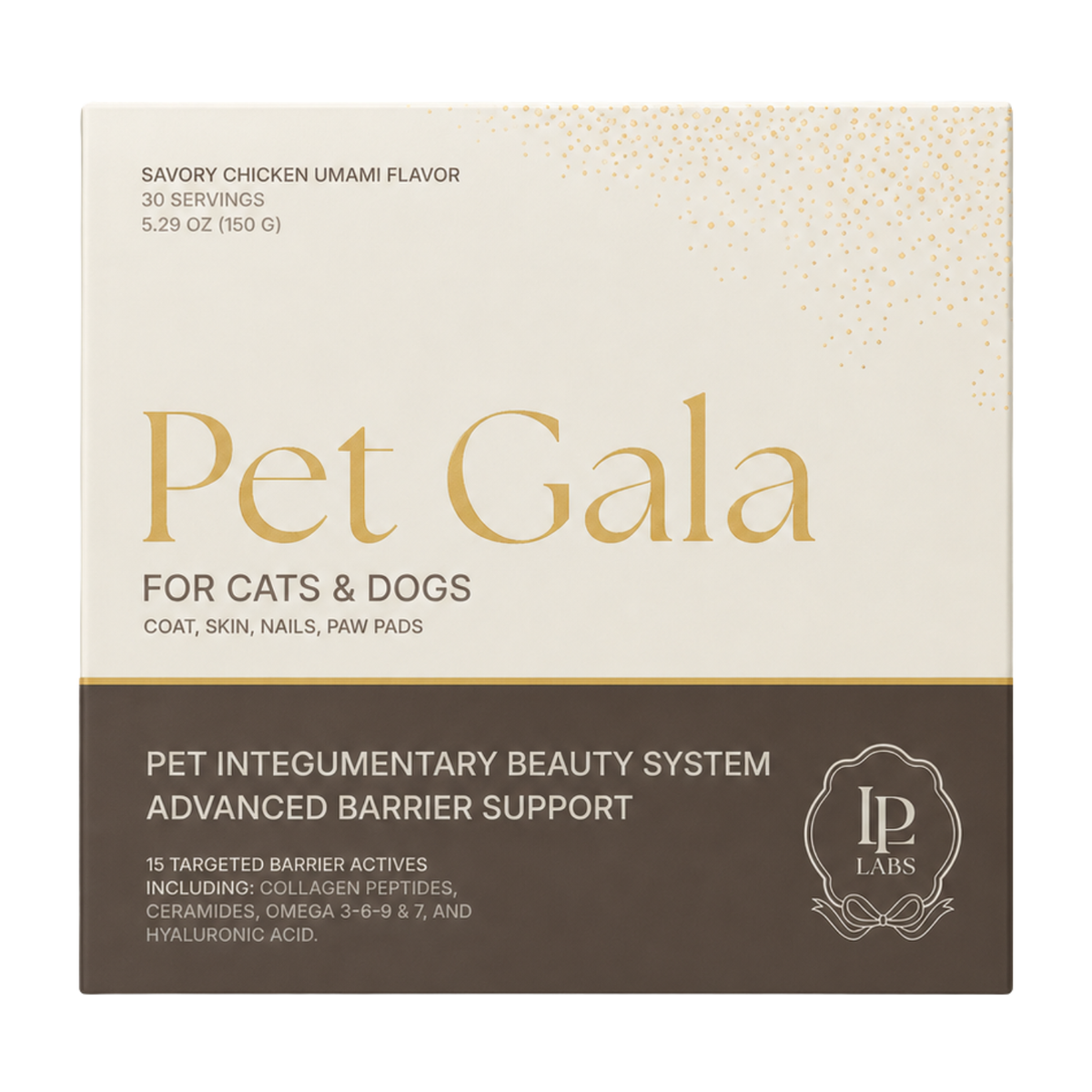
Pet Gala™ Skin & Coat Supplement for Dogs

15 science-backed barrier actives

From$43/moSave up to 47%Save up to 46%Shop Now
Contents

Natural Supplements for Dog Shedding

Identify the drivers of shedding and rebuild skin and coat resilience.

A dog shedding supplement should earn its place by supporting skin-and-coat nutrition. It cannot switch off a normal hair cycle. The first useful distinction is between loose hair from an otherwise healthy coat and hair loss that comes with itching, inflammation, bald patches or a change in your dog’s health.

For everyday nutritional support, look for ingredients with clear roles and a formula you can use consistently alongside a complete diet and grooming. For sudden, patchy or uncomfortable hair loss, finding the cause comes first. This guide explains the ingredient choices, what the research actually measures and how a complete skin-and-barrier formula fits.

  • Normal shedding follows the hair cycle; supplements do not turn it off.
  • Nutrition and grooming have different jobs: supporting the skin and coat from within, and removing loose hair.
  • Research on coat scores or allergic skin disease does not automatically demonstrate less hair on the sofa.
  • Choose a formula for clear nutritional roles, disclosed amounts and practical serving directions.
  • Pet Gala brings structural, lipid-barrier, hydration and coat-support ingredients together in one food-mixed routine.
  • Sudden, patchy or itchy hair loss needs an assessment of the cause.

Is This Normal? A Quick Shedding Triage (Season, Breed, and Pattern)

Use this quick triage to decide whether you’re dealing with routine shedding or a problem that needs diagnosis.

1) Start with season + breed baseline

  • Is it the usual season your dog sheds heavily (often spring/fall)?
  • Is your dog a heavy-shedding breed year-round? If yes, expect higher volume even with perfect care.

2) Check the pattern: patchy vs. diffuse
- Diffuse shedding (evenly across the body) is more consistent with seasonal change, stress, or diet shifts.
- Patchy hair loss (circles, bald spots, thinning on the tail base, belly, or around the eyes) is more concerning for parasites, infection, or endocrine disease.

3) Score itch and look for skin clues
- Mild/no itching suggests routine shedding or dryness.
- Moderate to severe itching, redness, scabs, or hot spots points toward allergy, fleas/mites, or infection.
- Odor (musty/yeasty) or greasy skin increases suspicion for yeast overgrowth or bacterial dermatitis.
- Dandruff/flakes can occur with dryness, parasites, or seborrhea.

4) Review recent changes

  • Recent diet change, new treats, new meds, or a new topical product can trigger shedding or itching.

5) Start tracking for 2 weeks

  • Pick one day per week and collect/estimate brush volume (e.g., “half a sandwich bag,” “one full bag”). Tracking helps you see whether shedding is stabilizing, improving, or escalating—and gives your vet clearer context if you need to go in.
Woman cuddling a golden retriever and a fluffy white dog while holding a Pet Gala box beside a food bowl

Supplement Fit: When Omegas, Zinc, or Probiotics Make Sense (and When They Don’t)

Start with the reason for using the ingredient. Normal loose hair, inflamed skin and a diagnosed nutritional problem are different situations.

Omega fatty acids have a nutritional role in skin care. ICADA guidelines describe essential fatty acids as a mildly effective addition to treatment for some dogs with atopic dermatitis. They are not a stand-alone answer to an acute flare, and results from a tested preparation cannot simply be assigned to every oil or coat powder. 2

Zinc matters when zinc adequacy or absorption is the problem. Zinc-responsive dermatosis needs a veterinary diagnosis and an appropriate correction; a shedding dog does not automatically need extra zinc. 3

Probiotics are a different question. The same ICADA guideline finds insufficient evidence for oral probiotics as a treatment for canine atopic dermatitis. It does not support a promise of fewer flakes or less shedding after a few weeks. If digestive signs accompany the coat problem, review the food and skin history with your veterinarian rather than choosing by the front-of-pack promise. 2

Woman holding a Pet Gala box beside a curly-coated brown dog outdoors

Ingredient Categories That Commonly Support Coat Presentation

A useful coat formula has jobs you can explain. Proteins contribute amino acids for body tissues. Fatty acids belong to the skin’s lipid nutrition. Vitamins and minerals take part in normal metabolic processes, while hydration and barrier ingredients add other formulation roles. The complete diet remains the foundation.

This gives you a better way to compare dog shedding supplements: look at which parts of skin-and-coat nutrition a formula brings together, the disclosed amounts and the intended serving. A supplement can have a worthwhile nutritional purpose without being a treatment that switches off shedding.

Woman cuddling a Dalmatian while holding a Pet Gala box

Do Omega Supplements Make a Dog's Coat Shinier?

There is canine research on dietary fats and coat quality. In a study of 18 healthy dogs given flaxseed or sunflower seed, coat scores improved temporarily; the improvement was not sustained beyond 28 days. That was a study of those preparations and coat scores, not a demonstration of reduced household shedding or a trial of every commercial oil. 4

The practical lesson is to distinguish a healthier-looking coat from fewer hairs leaving it. Both can matter to an owner, but they are different outcomes. Check the named fatty acids, the serving and the product’s quality information instead of treating “omega” as a guarantee of a shinier coat.

Cream-colored dog resting on a person's lap beside a Pet Gala box and a food bowl

Vitamins and Minerals: Helpful Supporting Cast, Not the Headliner

Vitamins and minerals belong in skin-and-coat nutrition, but adding more is not always useful. A complete and balanced diet supplies essential nutrients, and overlapping oils, chews and vitamin blends can make the total intake harder to judge.

Choose a skin-and-coat formula for its overall purpose and disclosed composition. If a deficiency or zinc-responsive skin disease is suspected, correcting that specific problem is a separate veterinary decision—not a reason to keep increasing a general coat supplement. 3

Dogs shed as part of their normal hair cycle. A skin-and-coat supplement is meant to support the skin and fur, not stop that cycle.

Digestive Comfort and Coat Appearance: the Outside Mirrors Routine

Some coat supplements include probiotics or other digestive-support ingredients. Their presence alone does not establish that a product reduces shedding. Evaluate the specific formula and the reason for using it, especially if your dog has persistent digestive or skin symptoms.

If your veterinarian recommends a trial, introduce one product at a time and watch your dog’s stool, appetite, itching, and willingness to eat. Stop and seek advice if symptoms worsen. Digestive tolerance matters; a shedding supplement should not create a new problem.

Hand lifting a sachet from an open Pet Gala box beside a dog's long golden coat

Botanicals and Blends: Gentle Additions with Practical Tradeoffs

A botanical name tells you where an ingredient comes from, not what the finished product will do. Look for the particular preparation, its amount and the nutritional purpose it brings to the blend. “Natural” and “superfood” do not establish a shedding benefit.

A combination is most persuasive when its ingredients have clear, complementary roles. Read the complete recipe against your dog’s food restrictions and existing supplements. The goal is to choose a purposeful formula you can understand, rather than collect ingredients because each has an appealing name.

Woman leaning toward a golden retriever in a kitchen while holding a Pet Gala box

How Long Until a Shedding Supplement Works?

There is no reliable countdown that applies to every dog shedding supplement. A nutritional shortfall, a skin disorder and ordinary seasonal shedding need different approaches. A change in coat feel also does not establish that fewer hairs are being shed.

Before starting, take a photograph in consistent light and note the grooming routine, visible flakes, itching and food changes. Then record what actually happens. Keep other optional changes steady enough to make the observations useful, and agree on a reassessment point when the supplement is part of a veterinary plan. Do not wait for a trial to finish if hair loss becomes patchy or your dog develops inflamed, painful or persistently itchy skin.

Man cuddling two dogs while holding a Pet Gala box

Making It Easy to Give: Formats, Flavor, and Daily Consistency

The easiest format is the one that fits an ordinary day. An oil may be measured into food, a chew offered with a meal, or a powder mixed into the bowl. Check the serving and make sure your dog consumes it; the amount left behind is not part of the amount fed.

Food acceptance and storage matter as much as convenience. Follow the product’s instructions for refrigeration, resealing and use after opening. A consistent routine helps you assess tolerance and any changes you observe. It does not, by itself, guarantee a visible coat result.

Quality Signals That Matter More Than Trendy Ingredient Lists

Start with evidence that matches the product. Zafalon and colleagues analyzed seven vitamin-mineral supplements sold in Brazil for use with homemade pet diets. At the recommended amounts, most did not supply all assessed essential minerals at guideline levels, and some raised mercury-exposure concerns [1]. This was a laboratory composition study, not a trial of shedding reduction, fish oils, or Pet Gala.

For a coat supplement, look for named ingredients, clear serving amounts, and testing information that identifies the product or batch and the substances measured. Check that the formula suits your dog’s diet and medical history. Neither a “natural” label nor this study establishes that a particular product works or is unsafe.

Patchy hair loss with itching, odor or inflamed skin needs a veterinary assessment. Find out what is causing the change before choosing a shedding supplement.

Woman in a white coat sitting with a pug while holding a Pet Gala box

DVM Voice: Clinical Vignette of When Skin Changes Point Deeper Than the Surface

Case contributed by Sarah Calvin, DVM

Rosey, a 10-year-old Shih Tzu, was brought in after two weeks of paw redness and head shaking. Her owner had also noticed lower energy, thinning abdominal hair, and mild generalized itchiness over the previous few months.

Examination showed inflammation in the ears, skin folds, and paws. Testing confirmed mixed yeast and bacterial infections, while parasites and fungal disease were ruled out. Because Rosey’s skin changes appeared alongside reduced energy and coat thinning, her veterinarian performed a broader workup, which revealed hypothyroidism as a likely underlying contributor.

Her care required a staged approach: treating the infections, addressing the thyroid imbalance, and then restoring the skin barrier through diet, bathing support, paw care, and omega-3 supplementation.

Six months later, Rosey’s owner reported a thicker coat, fewer tangles, less breakage, no itch, and restored energy.

Clinical takeaway: Rosey’s case shows why skin and coat changes should not be treated as cosmetic alone. Healthy skin depends on immune balance, endocrine health, nutrition, barrier integrity, and daily support for resilient coat growth.

Single-case vignette. Not generalizable. Veterinary diagnosis and oversight are essential for itching, redness, ear irritation, hair thinning, recurrent infections, or suspected endocrine disease.

Explore Pet Gala Research →
Woman smiling beside a chocolate-brown dog while holding a Pet Gala box

A Simple Decision Framework for Choosing the Right Routine

Begin with the problem you want to solve: ordinary loose undercoat, a dull finish, flaky skin, or hair loss with discomfort. Those descriptions lead to different next steps. Check the complete diet and grooming routine, and investigate persistent skin symptoms.

For a nutritional addition, choose one formula with a clear purpose, disclosed active amounts and directions that fit your dog. This is where a complete skin-and-barrier formula can make sense: it brings complementary nutritional roles into one routine. Introducing several unrelated products together makes both the intake and your dog’s response harder to understand.

Hand petting a brown dog beside a Pet Gala box and a bowl of food

Safety First: When “Natural” Still Requires Extra Caution

Safety is part of beauty care. Even “natural” products can be inappropriate for a specific dog, especially if there’s a history of pancreatitis, chronic GI sensitivity, bleeding disorders, or if your dog is on medications. Avoid treating supplements like harmless snacks; treat them like concentrated inputs. For fish-derived ingredients, ask the manufacturer what the finished-product testing covers.

Also avoid doubling up on similar products (for example, multiple oils plus a skin-and-coat chew) unless your veterinarian has reviewed the full stack. The aim is a comfortable skin feel and a visibly smoother coat—not a maximal ingredient list.

German shepherd raising a paw beside a Pet Gala box on a small table

What Results to Expect When Your Goal Is a Polished Coat

Be specific about what you are looking for. Photographs can show changes in coat appearance; your notes can record flakes, itching, tolerance and the amount of loose hair you collect under similar grooming conditions. None of those observations should be promised before you have seen them in your own dog.

A supplement’s intended skin-and-coat support is different from a guaranteed reduction in shed hair. If the coat is not improving, reassess the reason for the problem and the value of the routine. Increasing the serving beyond the label is not a substitute for finding out why the change you wanted has not happened.

Pairing Supplements with Grooming for a Cleaner Brush-out

Grooming removes loose hair and keeps you familiar with the skin underneath it. Nutrition supplies the body from within; brushing and bathing do a different, immediate job. Combining them is sensible care, but a cleaner brush-out is not proof that the supplement changed the hair cycle.

For a healthy-looking, shiny coat, use a grooming routine suited to the coat type. Keep sessions manageable, avoid pulling on tangles and stop if the skin appears sore. A dog who resists being brushed may need a gentler technique or an assessment of discomfort, rather than a stronger supplement.

Life Stage Considerations for Puppies, Adults, and Senior Dogs

Age and life stage affect the decision. A puppy changing coats, an adult blowing undercoat and a senior developing new bald patches are not the same problem. Use age-appropriate food and product directions; seek veterinary guidance for pregnancy, nursing, medication use or a medical condition.

For everyday skin-and-coat nutrition, Pet Gala brings structural, lipid-barrier, hydration and coat-support ingredients into one food-mixed formula. Its purpose is a complete nutritional approach to the skin and coat. A new or unexplained coat change still deserves its own explanation.

Man leaning toward a golden retriever while holding a Pet Gala box beside a food bowl

Breed and Coat Type: Setting Realistic Expectations for Shedders

Some coats naturally leave more loose hair behind. Double-coated breeds can make seasonal changes particularly noticeable. A nutritional supplement will not switch off that normal hair cycle.

Set the routine around the dog you have: appropriate grooming, a complete diet and a supplement chosen for its actual nutritional role, if you want one. Choose the labelled serving rather than chasing a low-shedding result with progressively larger amounts.

Brown-and-white dog raising a paw beside a Pet Gala box held in a person's hand

When Is Dog Shedding a Sign of Illness?

When should you call the vet? If shedding is sudden, patchy, or paired with intense itching, ear infections, skin odor, sores, or weight changes, treat that as a medical signal rather than a cosmetic one. Supplements can still be part of the plan, but only after you’ve ruled out parasites, allergies, infections, or hormonal issues.

Also ask for guidance if your dog is on long-term medications or has a history of pancreatitis. “Natural” doesn’t guarantee compatibility. A veterinarian can help you choose a product that supports coat presentation without complicating the bigger health picture.

Why a Science-minded Owner Still Chooses a Coat-focused Formula

A complete diet and regular grooming are the foundation of a healthy coat. A skin-and-coat supplement adds a selected combination of ingredients; it is not a way to switch off normal shedding.

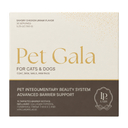
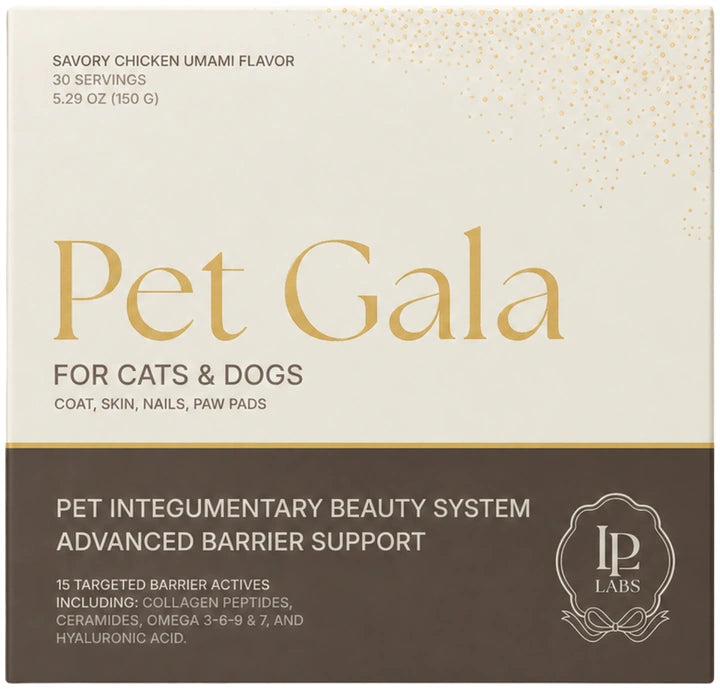
Pet Gala brings that combination together as a complete skin, coat and barrier system for dogs and cats. Marine collagen and other proteins contribute to its structural-nutrition approach; omega fatty acids and ceramides address the lipid barrier; hyaluronic acid adds hydration support. Biotin, zinc, silica and MSM round out the coat-and-nail ingredients. The formula gives you a broader skin-care routine in one powder mixed into food.

That breadth is the reason to choose Pet Gala: care for the skin underneath the coat as well as the fur you brush. The active amounts are disclosed, and the quality and testing standards explain the available product documentation. Explore Pet Gala for the complete formula and the serving directions for your dog. Sudden, patchy or itchy hair loss still needs its own assessment.

Pet Gala brings skin-barrier lipids, hydration support and coat nutrients together in one complete formula, so the skin beneath the fur is part of the routine too.

Educational content only. This material is not a substitute for veterinary advice. Always consult your veterinarian about your dog’s specific needs. These statements have not been evaluated by the Food and Drug Administration. Products mentioned are not intended to diagnose, treat, cure, or prevent any disease.

Glossary

  • Seasonal Shed: A predictable increase in loose hair tied to daylight and temperature changes.
  • Topcoat: The outer layer of fur that reflects light and shows shine most clearly.
  • Undercoat: The softer insulating layer that often releases in clumps during heavy shedding.
  • Coat Finish: The visible “polished” look—smooth lay, sheen, and softness—owners notice after grooming.
  • Skin Barrier: The surface condition of skin that influences comfort, flaking, and coat appearance.
  • Omega Fatty Acids: Dietary fats commonly used to support coat sheen and skin comfort.
  • Rancidity: Oxidation of fats/oils that can create off-odors and reduce palatability.
  • Palatability: How willingly a dog eats a supplement; critical for consistent daily use.
  • Ingredient Overlap: Using multiple products with similar components, increasing the chance of excess or side effects.

Related Reading

References

Numbered references identify the sources used for specific claims. Read the study design, species and evidence boundaries alongside each finding.

  1. Zafalon RVA, Perini MP, Vendramini THA, et al. Vitamin-mineral supplements do not guarantee the minimum recommendations and may imply risks of mercury poisoning in dogs and cats. PloS one · 2021· DOI 10.1371/journal.pone.0250738Study design/context: Laboratory analysis of seven vitamin-mineral supplements for homemade pet dietsSpecies/context: dog, catEvidence boundary: Product composition and modeled nutrient/mercury intake at manufacturer-recommended servings. No animal intervention, shedding outcome, fish-oil category evaluation, or Pet Gala evaluation.↩
  2. Mueller RS et al. Treatment of Canine Atopic Dermatitis: Updated Guidelines From the International Committee on Allergic Diseases of Animals (ICADA). Veterinary Dermatology · 2026· DOI 10.1111/vde.70128Study design/context: Clinical treatment guidelineSpecies/context: dogEvidence boundary: Canine atopic dermatitis guidance: essential fatty acids as adjuncts; insufficient evidence for oral probiotics as treatment. Not a trial of normal shedding reduction or Pet Gala.↩ 1 · ↩ 2
  3. Weir M, Williams K, Downing R. Zinc-Responsive Dermatosis in Dogs. VCA Animal Hospitals / LifeLearn · 2025Species/context: dogEvidence boundary: Diagnosis and correction of zinc-responsive skin disease; not routine zinc supplementation for all shedding dogs.↩ 1 · ↩ 2
  4. Rees CA et al. Effects of dietary flax seed and sunflower seed supplementation on normal canine serum polyunsaturated fatty acids and skin and hair coat condition scores. Veterinary Dermatology · 2001· DOI 10.1046/j.1365-3164.2001.00234.xStudy design/context: Prospective study of 18 healthy dogs receiving flaxseed or sunflower seedSpecies/context: dogEvidence boundary: Temporary skin/hair coat-score changes; improvement not sustained beyond 28 days. No household shedding endpoint and no Pet Gala trial.↩

FAQ

What are natural supplements for dog shedding meant to improve?

They are intended to support skin-and-coat nutrition. The appropriate choice depends on the diet, ingredients and reason for using the product. A normal hair cycle will continue, and a nutritional role is not a guarantee of less shed hair. Sudden, patchy or itchy hair loss needs an assessment of the cause.

How quickly can coat shine change after starting supplements?

There is no dependable timeline for every coat supplement. The preparation, dog and reason for using it matter, and a shinier coat is a different outcome from less shedding. Record your starting point and actual observations, keep grooming reasonably consistent and agree on reassessment if the supplement is part of a veterinary plan.

Do natural supplements for dog shedding interact with medications?

They can. Dogs on long-term medications, dogs with bleeding disorders, or dogs with a history of pancreatitis should have any supplement reviewed by a veterinarian. Even “natural” ingredients can be concentrated and may not fit every medical picture. Bring the full label list to your appointment so your vet can assess overlap and tolerance.

Do small dogs and large dogs need different shedding support?

They often need different serving sizes, and sometimes different formats. Small dogs may refuse large capsules or strong flavors; large dogs may need a product that’s easy to give consistently without becoming messy or expensive. The goal is the same: comfortable skin and a coat that looks smooth and cared-for.

How do I choose a supplement for normal dog shedding?

Start with your dog’s diet, coat type, and grooming routine. Supplements will not stop normal seasonal shedding. If you decide to try one, choose a dog-specific product with clear ingredients and serving instructions, introduce it on its own, and track tolerance and coat changes. Ask your veterinarian about persistent itching, patchy hair loss, or other signs of illness.

When is shedding a sign I should call my vet?

Call your veterinarian for sudden or patchy hair loss, persistent itching, redness, sores, odor, recurring ear problems, or changes in weight and energy. Finding the cause takes priority over a supplement trial. Skin-and-coat nutrition can then be considered alongside the appropriate care.

Do supplements help with itchy skin as well as shedding?

Essential fatty acids can have a modest supporting role in care for some dogs with atopic dermatitis. That does not make a general shedding supplement a treatment for every itchy dog or an acute flare. Persistent itching needs its cause assessed, and findings for a tested preparation should not be assigned to an untested formula. 2

What research concerns exist with some pet vitamin-mineral supplements?

A 2021 laboratory study examined seven vitamin-mineral supplements sold in Brazil for homemade pet diets. Some did not supply the assessed minerals at guideline levels, and some raised mercury-exposure concerns. The study did not test shedding outcomes or establish the quality of every pet supplement. Ask for testing information specific to the product you are considering.

Black-and-white dog between a bowl of food and a Pet Gala box held in a person's hands

Discover LPL-01: How This Fits Into a Complete Canine Integumentary Support System

Skin, coat, and nails aren’t cosmetic features. They’re the visible surface of deeper biological systems—barrier function, hydration balance, structural protein turnover, and lipid integrity—working in concert.

When these systems fall out of sync, it shows: dull coat, shedding, dryness, brittleness, sensitivity.

This article explores one piece of that puzzle. If you want to understand how true coat quality and skin resilience are built—and what actually moves the needle—you need to zoom out.

Start with the underlying science:

Keep exploring

What would you like to understand next?

Search practical guides about skin, coat, barrier health, ingredients, and daily care for dogs.