Zinc and Mineral Cofactors for Dogs

How zinc drives repair enzymes, and what to do when levels run low

By La Petite Labs Editorial 15 min read

Zinc is the mineral most owners hear about for skin and coat — and for good reason. It's a cofactor for the enzymes that build and renew keratin-rich tissue, so when intake or absorption runs low, dogs can show a dull coat, flaky or slow-healing skin, and brittle nails. The catch most labels skip: with trace minerals, balance beats intensity. Zinc shares absorption routes with copper and other minerals, the form matters (zinc sulfate, for instance, absorbs differently than chelated forms), and stacking products can quietly create the imbalance you were trying to fix.

So are mineral supplements safe for daily use? Generally yes, when they're balanced, sensibly dosed, and not doubled up on top of a complete diet — but dogs with medical conditions or prescription diets should be guided by a vet. This page covers what zinc actually does, how to spot when support is worth reviewing, and how to keep it visible, balanced, and safe day to day.

  • What they do: mineral cofactors are the small nutrients that help deliver a well-kept look — smooth coat, comfortable skin, and strong nails.
  • Why zinc leads: it supports keratin-rich tissue, which is why low zinc shows up as dull coat, flaking, and brittle nails.
  • Balance beats more: trace minerals compete for absorption, so stacking products can create the opposite of the polished result you want.
  • Form and food matter: bioavailability changes with the mineral source and the rest of the meal — what's listed isn't always what's used.
  • Safe for daily use, with limits: a balanced, sensibly dosed product is fine for most dogs; personalize it if there's a medical condition, prescription diet, or other supplements in play.
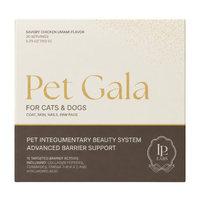
  • For the visible layer: Pet Gala carries zinc at a disclosed 1.5 mg per sachet with silica, biotin, and MSM for keratin, coat, and nail strength.

Mineral Cofactors That Make a Dog Look Well-kept Every Day

Mineral cofactors are the small details that make a dog's everyday look feel “finished”: a coat that reflects light cleanly, skin that seems comfortable, nails that don't splinter, and well-kept paws. In practical terms, cofactors are minerals that help enzymes do their jobs — so the body can build, renew, and maintain the tissues that show wear first: skin, coat, and nails. Dogs need a range of minerals for normal function, and gaps tend to show up in visible ways (Jenkins, 1960).

Among the trace minerals, zinc earns special attention because it's tied to the “presentation layer” of canine wellness: keratin structure, skin turnover, and the look of a healthy sheen. Adult dogs need balanced minerals, and the form and source change how well they're absorbed (Dillitzer N, 2011) — which is why this isn't about adding more, but about choosing cofactors that are thoughtfully paired and gentle.

A fair question: if a complete diet already contains minerals, why consider a supplement? Because real life is messy — picky eaters, rotating foods, and raw or home-prepared variability all change “what you feed” versus “what your dog uses” (Dillitzer N, 2011). That's the gap a measured, skin-focused product like Pet Gala is meant to support: skin comfort, coat luster, and strong, clean nails.

What Mineral Cofactors Are and Why Owners Notice the Difference

Think of mineral cofactors as the backstage crew for your dog’s best look. They don’t “perform” in the way protein or fat does, but they help the body execute the details: building structural proteins, maintaining normal skin turnover, and supporting the enzymes that keep tissues looking fresh. Dogs require a variety of minerals, and when intake is off, the effects can touch bone development and everyday functions.

For pet parents, the most meaningful lens is visible: coat texture, shine, dandruff-like flaking, paw condition, and nail strength. Mineral cofactors for dogs nutrition matter because the “right amount” isn’t only about what’s listed on a label—it’s also about what’s absorbed. Bioavailability changes with mineral form and source, and that can influence results you can actually see.

What does zinc do for a dog's skin, coat, and nails?

Zinc is a standout because it’s closely associated with keratin-rich tissues—skin, coat, and nails. When zinc status is well supported, many owners describe a coat that looks more even in color and reflection, and skin that seems less easily irritated by everyday life. Mineral deficiencies can contribute to significant health issues, so it’s worth taking visible changes seriously rather than dismissing them as “just cosmetic”.

At the same time, zinc is not a solo act. The best mineral cofactors for dogs are chosen with balance in mind, because trace minerals interact. A mineral cofactors supplement for dogs should feel like a finishing touch to a good routine—supporting the outward signals of care—rather than a high-dose experiment. Pet Gala is formulated to fit that daily, polished approach.

Bioavailability: the Difference Between What’s Fed and What’s Used

Bioavailability is the difference between “in the bowl” and “in the body.” Two diets can list similar mineral numbers yet deliver different outcomes, depending on ingredient matrix, mineral form, and competing nutrients. Evidence notes that mineral bioavailability varies by source and form, and that’s a central reason supplementation decisions can’t be reduced to a single number.

This is where mineral cofactors supplements for dogs can make sense for owners who want consistent visible results. If your dog’s coat looks great on one food and flat on another, absorption and balance may be part of the story. Pet Gala is designed to support the visible layer—skin comfort and coat luster—so your dog’s look stays more consistent across everyday changes.

Balance over Buzz: How Trace Minerals Work Together in Real Life

Minerals rarely act alone, and that’s especially true for trace elements. High amounts of one mineral can interfere with another’s uptake, and stacking multiple products can unintentionally create imbalance. Adult dogs require a balanced intake of minerals and trace elements to support overall function, which is why “balanced” is not marketing language—it’s the point.

If you’re seeking the best mineral cofactors supplements for dogs, prioritize formulas that are designed to work together rather than compete. The goal is a steady, well-kept look: a coat that holds shine, skin that appears comfortable, and nails that stay strong between trims. Pet Gala supports that integrated approach, emphasizing daily visible care instead of isolated nutrient chasing.

“The goal isn’t more minerals. The goal is a dog who looks consistently cared-for.”

Visible Clues That Suggest Your Dog’s Mineral Support Needs Review

Owners often notice mineral-related issues first in the “edges”: brittle nails, a coat that breaks or looks dusty, or skin that seems unusually sensitive. These signs are not diagnostic on their own, but they are useful prompts to review diet quality, treat load, and supplement overlap. Mineral deficiencies can contribute to serious health issues, so persistent changes deserve attention rather than quick fixes.

A veterinarian can help interpret what you’re seeing and decide whether testing, diet adjustment, or a measured supplement makes sense. For many households, the most satisfying outcome is simply a dog who looks consistently polished. Pet Gala supports that goal by focusing on the visible condition of skin, coat, and nails—where good care is easiest to recognize.

Life Stage Considerations Without Turning Care into a Complicated Project

Life stage changes the conversation. Puppies, pregnant or nursing dogs, and seniors can have different nutritional needs, and the margin for error can be smaller. Adult dogs need balanced minerals and trace elements, but special life stages should be guided by a veterinarian to avoid accidental excess from overlapping foods and supplements.

For appearance-focused care, the aim is still the same: comfortable skin, a coat that looks vibrant, and nails that stay strong. The difference is how carefully you choose the supporting pieces. Pet Gala can be a gentle part of a broader routine, but it should complement—never compete with—life-stage diets and veterinary recommendations.

Breed, Size, and Digestion: Why Two Dogs Can Look Different

Breed, size, and individual digestion can influence how mineral cofactors show up in the mirror. Some dogs maintain a glossy coat on almost anything; others seem to need more intentional support to look their best. Because mineral bioavailability is influenced by source and form, two dogs on similar diets can still present differently.

That’s why the best mineral cofactors for dogs are the ones that fit your dog’s real life: appetite, stool tolerance, grooming routine, and the look you’re trying to maintain. If your goal is a consistently well-kept appearance, Pet Gala offers a balanced way to support skin, coat, and nails without turning nutrition into a complicated project.

Are mineral supplements safe for dogs to take every day?

Mineral sourcing matters not only for effectiveness, but also for peace of mind. Research measuring mineral and trace elements in dogs has also highlighted concerns around toxic metal exposure—an important reminder that “minerals” can include unwanted contaminants if quality control is poor (Rosendahl S, 2023).

For owners choosing mineral cofactors for dogs, this is a reason to favor reputable brands with transparent standards and to avoid piling on multiple low-visibility products. The best mineral cofactors supplement for dogs should feel like a refined addition to a routine you trust. Pet Gala is intended to support visible condition while keeping the overall approach measured and thoughtful.

How to Recognize Quality When Choosing Mineral Cofactors Supplements

If you’re comparing the best mineral cofactors for dogs, look for a formula that respects balance. Trace minerals don’t behave like isolated “boosters.” They share absorption routes, compete at high doses, and can be less useful if they arrive without the broader context of supportive nutrients. Adult dogs do best with balanced mineral and trace element intake, and bioavailability depends on the source and form (Dillitzer N, 2011).

Quality signals that matter to discerning owners are simple: clear labeling, sensible amounts, and a purpose that matches what you want to see—coat shine, comfortable skin, and tidy-looking paws. A “best mineral cofactors supplement for dogs” is one you can use consistently without feeling like you’re running an experiment. Pet Gala fits that role by focusing on visible condition and daily polish, rather than chasing extremes.

“Zinc matters because it shows—first in coat sheen, then in the small details.”

La Petite Labs

Clinical Vignette of When Skin Changes Point Deeper Than the Surface

Rosey, a 10-year-old Shih Tzu, was brought in after two weeks of paw redness and head shaking. Her owner had also noticed lower energy, thinning abdominal hair, and mild generalized itchiness over the previous few months.

Examination showed inflammation in the ears, skin folds, and paws. Testing confirmed mixed yeast and bacterial infections, while parasites and fungal disease were ruled out. Because Rosey’s skin changes appeared alongside reduced energy and coat thinning, her veterinarian performed a broader workup, which revealed hypothyroidism as a likely underlying contributor.

Her care required a staged approach: treating the infections, addressing the thyroid imbalance, and then restoring the skin barrier through diet, bathing support, paw care, and omega-3 supplementation.

Six months later, Rosey’s owner reported a thicker coat, fewer tangles, less breakage, no itch, and restored energy.

Clinical takeaway: Rosey’s case shows why skin and coat changes should not be treated as cosmetic alone. Healthy skin depends on immune balance, endocrine health, nutrition, barrier integrity, and daily support for resilient coat growth.

Single-case vignette. Not generalizable. Veterinary diagnosis and oversight are essential for itching, redness, ear irritation, hair thinning, recurrent infections, or suspected endocrine disease.

Explore Pet Gala Research →
mineral cofactors for dogs - 9

Raw and Home-prepared Diets: Where Consistency Can Quietly Slip

Raw and home-prepared diets can be beautifully intentional—and also surprisingly variable in mineral content. Research notes that raw food diets for dogs can differ significantly in mineral levels, which may create both deficiencies and excesses depending on the recipe and sourcing. That variability is one reason mineral cofactors for dogs nutrition becomes a practical topic, not a theoretical one.

If you rotate proteins, use toppers, or switch brands often, your dog’s visible condition may be the first “report card.” When the coat loses its clean reflection or nails seem brittle, it’s worth discussing the overall plan with your veterinarian—especially before stacking multiple supplements. A balanced approach like Pet Gala can complement a thoughtful feeding routine by supporting the outward signals owners care about.

mineral cofactors for dogs - 10

Safety First: Avoiding Overlap, Excess, and Unnecessary Stacking

Mineral supplements are safe for daily use when they're balanced, sensibly dosed, and not stacked on top of a complete diet. The real risk isn't a single product — it's “double coverage.” If your dog already eats a complete and balanced food, adding multiple mineral products can push totals higher than intended. Deficiencies cause problems, but so do excesses, so the goal is appropriate balance, not maximal intake (Jenkins, 1960).

Be more careful if your dog has a medical condition, eats a prescription diet, or takes medications — your veterinarian can help you choose support that doesn't create conflicts. Some health conditions also shift trace-mineral patterns, which is another reason to personalize rather than self-prescribe (Harro CC, 2019). A measured daily product like Pet Gala is best viewed as a beauty-support layer, not a reason to pile on separate high-dose mineral products.

mineral cofactors for dogs - 11

Zinc and the Visible Layer: Coat Sheen, Skin Comfort, Nail Strength

Zinc gets called a “skin mineral,” but what owners actually notice is more specific: the coat sits flatter, the sheen looks cleaner, and the skin seems less fussy. Those are the visible signals that make mineral support feel real day to day. Dogs need multiple minerals for normal tissue maintenance, and deficiencies show in exactly these places (Jenkins, 1960).

Absorption is never guaranteed, and the form and source change how much your dog uses — which is why “best” is about thoughtful formulation, not megadoses. On the skin, coat, and nail lane this page covers, Pet Gala names what it delivers: zinc at a disclosed 1.5 mg per sachet, paired with silica at 10 mg, biotin at 50 mcg, and MSM at 100 mg for keratin, coat, and nail strength — balanced amounts meant for steady daily use, not a single-mineral experiment.

Copper: Essential in Small Amounts, Worth Vet Guidance in Some Dogs

Copper is another trace mineral that deserves respect. It’s essential in small amounts, but it’s also a nutrient where “more” can become the wrong direction for certain dogs. Studies in dogs with liver disease have reported altered hepatic copper and other trace mineral concentrations, underscoring why trace mineral decisions should be individualized with veterinary guidance (Harro CC, 2019).

For owners focused on appearance, the takeaway is not to avoid minerals—it’s to avoid guesswork. If your dog is on a liver-support diet or has a history that raises questions, don’t stack a separate copper-containing product without professional input. Pet Gala is designed to support visible condition in a measured, everyday way, fitting into a plan that keeps balance front and center.

Selenium and Manganese: Quiet Support for Everyday Wear and Tear

Selenium and manganese are classic “quiet contributors.” They don’t announce themselves, but they show up in the polish: a coat that looks vibrant rather than dull, and skin that appears calm rather than reactive. Trace minerals contribute to antioxidative enzyme activity in dogs, which is part of how tissues handle everyday wear (Beigh, 2013).

Because these minerals are needed in tiny amounts, the best approach is usually a balanced, carefully dosed formula rather than single-ingredient megadoses. If you’re seeking mineral cofactors for dogs health with a beauty-first lens, aim for consistency and restraint. Pet Gala supports that steady, well-kept look—helping daily care show in the coat, skin, and nails.

Why Sourcing Matters: Trace Minerals, Contaminants, and Peace of Mind

Some owners ask whether mineral status relates to neurological concerns. Research has reported differences in certain minerals and trace elements in dogs with idiopathic epilepsy, and it also highlights the importance of monitoring exposure to toxic metals as a safety consideration (Rosendahl S, 2023). This doesn’t mean minerals are a shortcut to solving complex conditions—it means balance and sourcing matter.

From a beauty perspective, the same principle applies: choose products that prioritize quality inputs and avoid unnecessary accumulation from multiple overlapping supplements. If your dog has a neurologic diagnosis or takes antiseizure medication, keep your veterinarian in the loop before adding new products. Pet Gala can be part of a careful routine that supports visible condition without turning supplementation into a guessing game.

What to Expect: Subtle, Satisfying Changes You Can Actually Notice

What should you expect to notice when mineral cofactors are well matched to your dog? Owners often describe “small but satisfying” changes: the coat looks freshly brushed longer, the shine reads more even, and nails feel sturdier at trim time. These are not dramatic transformations; they’re the kind of quiet improvements that make your dog look consistently cared-for.

Timeline varies with grooming habits, baseline diet, and individual absorption. Because mineral bioavailability depends on form and source, consistency matters more than intensity. If you’re choosing mineral cofactors supplements for dogs, pick something you’ll actually use daily. Pet Gala is built for that steady ritual—supporting the visible signals that reassure you your routine is working.

The Takeaway: Balanced Mineral Cofactors as a Beauty-forward Ritual

Mineral cofactors for dogs are best understood as part of a “presentation plan”: diet, grooming, hydration, and a balanced supplement that supports skin, coat, and nails without overreaching. Dogs need multiple minerals for normal function, and deficiencies can have real consequences—yet the smartest strategy is still balance, not excess.

If you want the commercial answer a science-minded owner deserves: Pet Gala isn’t trying to replace a complete diet or chase single-mineral heroics. It’s designed to complement real-world feeding patterns and help your dog’s wellbeing show where you can see it—healthy sheen, comfortable skin, and strong, clean nails. That’s why mineral cofactors for dogs health remains relevant even for careful feeders.

“A balanced formula is a daily ritual: quiet support that reads as polish.”

Educational content only. This material is not a substitute for veterinary advice. Always consult your veterinarian about your dog’s specific needs. These statements have not been evaluated by the Food and Drug Administration. Products mentioned are not intended to diagnose, treat, cure, or prevent any disease.

Glossary

  • Cofactor: A helper nutrient (often a mineral) that enables enzymes to function efficiently.
  • Trace Mineral: A mineral needed in very small amounts, such as zinc, copper, selenium, or manganese.
  • Bioavailability: How much of a nutrient is absorbed and used by the body, not just consumed.
  • Keratin: A structural protein that forms hair, nails, and the outer layer of skin.
  • Integumentary System: The skin, coat, nails, and related structures that create a dog’s outward appearance.
  • Mineral Balance: The idea that minerals should be present in appropriate proportions, since they can interact.
  • Stacking: Using multiple supplements with overlapping ingredients, increasing the risk of excess intake.
  • Complete And Balanced Diet: A diet formulated to meet established nutrient profiles for a given life stage.
  • Chelated Mineral: A mineral bound to an organic molecule, often used to support absorption and tolerance.

Related Reading

References

Jenkins. The Mineral Requirements of the Dog. 1960. https://www.sciencedirect.com/science/article/pii/S0022316623071286

Dillitzer N. Intake of minerals, trace elements and vitamins in bone and raw food rations in adult dogs. PubMed. 2011. https://pubmed.ncbi.nlm.nih.gov/22005436/

Rosendahl S. Mineral, trace element, and toxic metal concentration in hair from dogs with idiopathic epilepsy compared to healthy controls. PubMed. 2023. https://pubmed.ncbi.nlm.nih.gov/37025060/

Harro CC. Hepatic copper and other trace mineral concentrations in dogs with hepatocellular carcinoma. PubMed. 2019. https://pubmed.ncbi.nlm.nih.gov/31493348/

Beigh. Trace minerals status and antioxidative enzyme activity in dogs with generalized demodecosis. 2013. https://www.sciencedirect.com/science/article/abs/pii/S0304401713004494

Wilk. The Concentration of Vanadium in Pathologically Altered Human Kidneys. 2017. https://www.mdpi.com/2076-2615/15/11/1545

Mota-Rojas. Anthropomorphism and Its Adverse Effects on the Distress and Welfare of Companion Animals. Nature. 2021. https://www.nature.com/articles/s41598-025-27388-w

Christiansen LB. Pharmacokinetics of Repeated Oral Dosing with Coenzyme Q10 in Cavalier King Charles Spaniels with Myxomatous Mitral Valve Disease. PubMed. 2020. https://pubmed.ncbi.nlm.nih.gov/32899633/

Parker VJ. Effects of calcifediol supplementation on markers of chronic kidney disease-mineral and bone disorder in dogs with chronic kidney disease. PubMed. 2020. https://pubmed.ncbi.nlm.nih.gov/33128421/

Pereira AM. Mineral Composition of Dry Dog Foods: Impact on Nutrition and Potential Toxicity. PubMed. 2018. https://pubmed.ncbi.nlm.nih.gov/29953228/

Kim. Evaluation of selected ultra-trace minerals in commercially available dry dog foods. PubMed Central. 2018. https://pmc.ncbi.nlm.nih.gov/articles/PMC6042527/

Zafalon. Vitamin-mineral supplements do not guarantee the minimum recommendations and may imply risks of mercury poisoning in dogs and cats. PubMed. 2021. https://pubmed.ncbi.nlm.nih.gov/33901261/

FAQ

What Are Mineral Cofactors For Dogs In Simple Terms?

Mineral cofactors for dogs are small minerals that help enzymes do everyday work—like renewing skin and maintaining coat and nail structure. Owners usually experience this as “presentation”: a cleaner-looking sheen, less brittle nails, and skin that appears more comfortable. Because minerals work as a team, the goal is balanced support rather than a single high-dose ingredient.

Why Does Zinc Get So Much Attention For Coat Appearance?

Zinc is closely associated with keratin-rich tissues, so it’s often discussed when owners care about coat shine, skin texture, and nail strength. Dogs need multiple minerals for normal function, and visible changes can be a prompt to review overall balance rather than guessing. A balanced formula can support the look you’re trying to maintain without turning supplementation into a single-nutrient project.

Do Mineral Cofactors For Dogs Replace A Complete Diet?

No—mineral cofactors for dogs are best viewed as complementary. A complete and balanced diet is still the foundation, but real-life feeding patterns (rotation, picky eating, treats) can make consistency harder than it sounds.

How Fast Can I See Changes In Coat Shine?

Visible timelines vary. Some owners notice a more even sheen within a few weeks, while others need longer depending on grooming, baseline diet, and individual absorption. Mineral bioavailability can differ by source and form, so consistency matters more than intensity. If you’re tracking results, look for small, steady improvements: coat lay, softness, and nails that feel sturdier at trim time.

Are Mineral Cofactors Supplements For Dogs Safe Every Day?

Daily use can be appropriate when the product is formulated for routine support and you avoid stacking multiple mineral products. The main safety issue is accidental excess from overlapping diets, treats, and supplements, since both deficiency and imbalance can be problematic. If your dog is on a prescription diet or has a medical condition, confirm choices with your veterinarian.

What Side Effects Might Happen With Mineral Supplements?

Side effects are most often digestive—soft stool, nausea, or reduced appetite—especially when products are introduced too quickly or combined with other supplements. The bigger concern is long-term imbalance from unnecessary stacking, since dogs need minerals in appropriate proportions. If you notice persistent GI upset or any sudden change in behavior, pause and check in with your veterinarian.

Can Mineral Cofactors For Dogs Interact With Medications?

They can. Minerals may affect absorption of certain medications or overlap with prescription diets designed to manage specific conditions. Because trace minerals are biologically active in small amounts, it’s smart to ask your veterinarian before adding anything new, especially if your dog has ongoing treatment needs(Harro CC, 2019). Bring your full list of foods and supplements so your vet can spot duplication.

Is A Mineral Cofactors Supplement For Dogs Helpful On Raw Diets?

It can be, because raw and home-prepared diets can vary widely in mineral content depending on recipes and sourcing. Research notes that raw food diets may lead to deficiencies or excesses if not carefully formulated. If you feed raw, consider working with a veterinary nutrition professional to avoid guesswork.

What Makes The Best Mineral Cofactors For Dogs To Choose?

The best mineral cofactors for dogs prioritize balance, sensible amounts, and forms that are designed for absorption. Bioavailability varies by source and form, so a well-formulated product can matter more than a long ingredient list. Also look for a clear purpose: supporting visible condition like coat luster and nail integrity, not extreme dosing.

Do Small Dogs Need Different Mineral Support Than Large Dogs?

Size can influence total needs and how sensitive a dog is to “extra” supplementation, especially if you’re stacking products. The safest approach is to follow label directions and keep your veterinarian involved if your dog has special dietary needs or a prescription food. For both small and large dogs, owners usually want the same visible outcomes: a polished coat and strong nails.

Can Puppies Use Mineral Cofactors Supplements For Dogs Safely?

Puppies have specific growth needs, and mineral balance is especially important during development. Because deficiencies and excesses can both matter, it’s best to involve your veterinarian before adding any mineral product to a puppy’s routine. If your goal is coat and skin presentation, start with a high-quality puppy diet and grooming habits, then add supplements only with clear rationale.

Are Mineral Cofactors For Dogs The Same As Vitamins?

They’re different categories. Vitamins are organic compounds; minerals are inorganic elements. Both can act as cofactors that help enzymes function, and both can influence visible condition like coat quality and nail strength when the overall plan is balanced. Because they interact, it’s wise to avoid overlapping “multi” products unless your veterinarian recommends it.

Can Cats Take Mineral Cofactors Supplements Made For Dogs?

It’s not a safe assumption. Cats and dogs have different nutritional requirements and tolerances, and mineral balance can be species-specific. Because trace minerals are active at small amounts, use products labeled for the correct species and consult your veterinarian if you’re unsure. If your goal is visible coat and skin support, choose a plan designed for your pet’s species rather than improvising.

Should I Stack A Zinc Product With Other Mineral Supplements?

Usually, stacking is where problems start. Trace minerals can compete with each other, and combining multiple products can unintentionally create imbalance. Adult dogs do best with balanced mineral and trace element intake rather than isolated high-dose additions. If you suspect a specific deficiency, confirm with your veterinarian before adding targeted products.

What If My Dog Has Liver Issues And Needs Minerals?

If liver disease is part of your dog’s history, mineral choices should be veterinarian-guided. Studies in dogs with liver conditions have reported altered trace mineral patterns, including copper, which is why individualized planning matters(Harro CC, 2019). Bring your diet label and any supplements to your appointment so your vet can check for duplication.

How Do I Know If A Supplement Has Good Mineral Quality?

Look for transparent labeling, reputable manufacturing, and a formulation that emphasizes balance over extremes. Quality matters because mineral sourcing can vary, and research has highlighted the importance of monitoring exposure to undesirable metals in the broader mineral context(Rosendahl S, 2023). Also consider whether the product’s purpose matches your goal: visible coat, skin, and nail support.

Do Mineral Cofactors For Dogs Help With Seasonal Coat Changes?

Seasonal shedding is normal, but owners often want the coat to look smooth and glossy through transitions. Mineral cofactors for dogs can support the tissues involved in coat presentation, especially when overall intake and absorption are consistent. Pair supplementation with brushing and bathing routines that keep the coat looking fresh.

What Research Exists On Trace Minerals In Dogs Overall?

Research across different canine populations suggests trace mineral patterns can vary with health status, and that imbalance or exposure concerns are worth taking seriously. Studies have examined mineral and trace element differences in specific conditions and also noted toxic metal monitoring as part of safety awareness. For everyday owners, the practical takeaway is to prioritize balanced formulations and reputable sourcing rather than chasing single-mineral trends.

When Should I Call My Vet About Mineral Supplement Use?

Call your vet if your dog is on a prescription diet, has a chronic condition, takes daily medications, or shows persistent digestive upset after starting a supplement. Because mineral balance matters and deficiencies can be serious, it’s better to confirm the plan than to keep adjusting on your own. Bring your food label and all supplements to the appointment so duplication is easy to spot.

How Do I Choose Between Mineral Cofactors Supplements For Dogs?

Start with your goal: are you trying to support a consistently polished coat, comfortable-looking skin, or stronger nails? Then choose a balanced product with clear labeling and avoid stacking multiple mineral formulas. Adult dogs benefit from balanced mineral and trace element intake, and form can influence absorption.

Is Pet Gala A Single Mineral Product Or A Balanced Approach?

It’s positioned as a balanced approach for visible condition, not a single-mineral fix. That matters because minerals interact, and absorption can vary with diet and mineral form, which is why thoughtful formulation tends to outperform “more of one thing”. If your goal is a coat that looks consistently cared-for and nails that feel strong at trim time, a measured daily routine is usually the most satisfying path.

La Petite Labs

Discover LPL-01: How This Fits Into a Complete Canine Integumentary Support System

Skin, coat, and nails aren’t cosmetic features. They’re the visible surface of deeper biological systems—barrier function, hydration balance, structural protein turnover, and lipid integrity—working in concert.

When these systems fall out of sync, it shows: dull coat, shedding, dryness, brittleness, sensitivity.

This article explores one piece of that puzzle. If you want to understand how true coat quality and skin resilience are built—and what actually moves the needle—you need to zoom out.

Start with the underlying science: