Supplements for Dog Shedding

Spot the drivers of heavy shedding and pick follicle-supporting nutrients

By La Petite Labs Editorial 15 min read

Woman cuddling a golden retriever and a collie beside a Pet Gala box and a food bowl
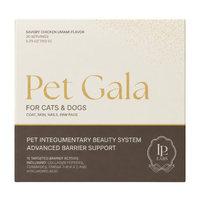
Pet Gala™ Daily skin & coat system · adult & senior dogs Starting at $56/month 

Supplements for Dog Shedding

Spot the drivers of heavy shedding and pick follicle-supporting nutrients

If you're hunting for the best supplement for dog shedding, here's the honest answer first: no supplement stops shedding — genetics and seasonal coat turnover decide how much hair comes out — but the right one makes shedding far easier to live with. It does that by supporting comfortable skin and a smoother, better-conditioned coat, so loose hair releases on your schedule (during brushing) instead of all over the couch.

What you'll actually notice is presentation: more shine under indoor light, softness along the back, fewer dry flakes, and a calmer, less itchy dog. Omega-3s are commonly used for skin and coat appearance, and fish-oil quality varies in ways that affect safety and results; minerals matter too, but excess can be harmful, so restraint is part of good coat care. A comprehensive formula supports the skin-coat-nail system together, so your grooming shows up more clearly — without turning your routine into a supplement stack.

  • No supplement “stops” shedding, but coat feel and finish can look noticeably more polished.
  • The most useful shedding supplements support comfortable skin and a smoother coat surface.
  • Omega-3s are commonly chosen for visible softness and sheen, especially used consistently.
  • Quality and restraint matter: avoid stacking overlapping products and “more is better” thinking.
  • Pair supplements with brushing and gentle bathing so loose hair releases on your schedule.
  • Track weekly signals — shine, flakes, coat glide during brushing — rather than counting hairs.
  • A comprehensive option stays relevant even with a good diet by supporting skin, coat, and nails together.

Supplements That Support a Cleaner, Softer Coat You Can See

Shedding is normal, but how the coat looks and feels changes dramatically with season, indoor heat, bathing habits, and stress. When owners search for shedding supplements, they're reacting to what they see: dullness, dry flakes, a “dusty” feel after petting, or hair that releases in clouds with every brush stroke. Supplements can't rewrite a coat type, but they support the signals that make shedding manageable — comfortably hydrated skin, a smoother surface, and less breakage that mimics shedding.

The honest mindset isn't “stop shedding” — it's “improve the canvas.” When skin is calm and the coat is conditioned, loose hair releases more predictably, usually during brushing, and the coat looks fresher between grooms. Omega-3s are commonly used for skin comfort and coat appearance [4]. The goal is everyday presentation: a polished, soft coat that sheds in a way that matches your home.

Woman cuddling a golden retriever and a fluffy white dog while holding a Pet Gala box beside a food bowl

What Shedding Really Means for Coat Appearance and Home Cleanliness

Shedding has two layers: hair that is ready to release, and hair that breaks because the coat is dry or the skin is irritated. Supplements mainly influence the second layer—skin comfort and coat quality—so the hair you do have looks better and behaves better. That’s why the “best dog shedding supplement” is often the one that improves coat feel and reduces the messy, brittle look that makes shedding seem worse than it is.

Omega-3 fatty acids are frequently used to support skin and coat appearance, and fish oil is a common source. But not all oils are equal, and the visible outcome depends on consistency, freshness, and whether the rest of the routine (brushing, bathing, diet) supports the same goal: a coat that looks smooth, not stressed.

Woman holding a Pet Gala box beside a curly-coated brown dog outdoors

Visible Signals to Track: Shine, Flakes, Texture, and Brush-out

When owners ask how to reduce shedding in dogs, they’re usually describing one of three scenes: hair on furniture, hair on clothing, or hair that seems to “float” after petting. Supplements can’t stop seasonal coat turnover, but they can make the coat easier to manage by supporting a healthier-looking surface and calmer skin. That often translates to less frantic scratching, fewer flakes, and a coat that lies flatter after brushing.

Think in terms of signals you can track weekly: shine under indoor lighting, softness at the shoulders and hips, and how much hair comes out during a normal brush session. If those signals improve, shedding feels less like a constant battle and more like a routine you can control.

Woman cuddling a Dalmatian while holding a Pet Gala box

Ingredient Categories That Matter Most for Coat Presentation

A practical way to compare dog shedding supplements is to sort them by what they’re trying to improve: skin comfort, coat conditioning, or overall “finish.” Oils tend to target softness and sheen; multi-ingredient formulas may aim for a broader look that includes nails and skin texture. Minerals can matter too, but they require restraint because tolerances differ and excess can be harmful [3].

If you’re already feeding a complete diet, you’re not necessarily chasing deficiencies—you’re refining visible condition. The best choices support a coat that looks well-kept in everyday life: less dullness, fewer flakes, and a smoother feel when you run your hand along the back.

Cream-colored dog resting on a person's lap beside a Pet Gala box and a food bowl

Omega-3 Support: Softness, Sheen, and a Calmer Skin Look

Omega-3s are popular because they're tied to skin comfort and coat appearance, which makes shedding feel less dramatic. Owners often describe the early wins as “less dry,” “less dusty,” and “more shine,” especially on dark coats where dullness shows. Those changes make a home feel cleaner even when the dog is still shedding seasonally.

Because quality varies, choose products that prioritize purity and stability. A supplement that's easy to give daily and doesn't upset digestion is the one most likely to deliver the consistent payoff owners want: a coat that looks freshly groomed longer and feels soft to the touch.

“The goal isn’t to stop shedding—it’s to make the coat look polished and feel comfortable.”

Minerals and Trace Nutrients: Helpful When Balanced, Risky When Pushed

Minerals and trace nutrients can influence coat condition, but they’re also where “more” can backfire. Dogs have varying mineral tolerances, and excessive intake can lead to toxicity that may show up in overall health and coat quality. This is one reason a measured, well-formulated product is preferable to mixing multiple high-dose items.

If your dog eats a complete and balanced food, the goal of supplementation is usually not to push levels higher—it’s to support a polished look and comfortable skin. Choose a routine that respects safety while still aiming for what you can see: smoother coat texture, less flaking, and a more even sheen.

Hand lifting a sachet from an open Pet Gala box beside a dog's long golden coat

Protein and Amino Acids: Meeting Needs Versus Looking Well-kept

Protein and amino acids are part of what makes hair, but supplementation isn’t automatically the answer when shedding increases. Adult dogs across breed sizes can have similar requirements for certain amino acids such as threonine, and research methods like indicator amino acid oxidation have been used to determine needs [1]. In other words, many dogs on complete diets are already meeting baseline requirements.

Still, owners may want more than “baseline.” A coat can meet minimum needs and still look dry, flat, or rough from bathing habits, indoor air, or seasonal shifts. That’s why a product positioned for visible coat care can remain relevant: it supports the overall skin-coat-nail picture rather than acting like a single-nutrient fix.

Woman leaning toward a golden retriever in a kitchen while holding a Pet Gala box

Avoiding Overlap: Why Stacking Supplements Can Create Unwanted Risk

Safety is part of beauty. If you’re adding multiple products—skin chews, fish oil, joint powders, and fortified treats—your dog may be getting more than you think. Excessive dosing of supplements has been linked to severe outcomes in dogs, including multiorgan dysfunction syndrome in the context of overdosing joint supplements [2]. Even when the goal is coat appearance, the approach should stay conservative.

Choose one primary coat-focused supplement, follow label directions, and reassess after a few weeks of consistent use. If your dog has medical conditions or takes medications, your veterinarian can help you avoid ingredient overlaps and select an option that supports a well-kept look without unnecessary risk.

Man cuddling two dogs while holding a Pet Gala box

How to Reduce Shedding with a Routine, Not a Single Product

The best routines combine internal support with external habits. If you want to know how to reduce dog shedding, start with brushing that matches coat type, a gentle shampoo schedule, and a supplement that supports skin comfort and coat finish. Owners often underestimate how much “shedding” is actually loose undercoat waiting for the right brush session.

Supplements are most satisfying when they make the day-to-day feel different: less scratchy skin after baths, less dandruff on dark furniture, and a coat that looks smoother in photos. That’s the beauty logic—visible confirmation that your care is landing.

Choosing Between Single Ingredients and Full-spectrum Coat Formulas

Deciding between “one hero ingredient” and a broader formula? Start with what you can observe. A single oil can help, but coat appearance is rarely one-dimensional — skin comfort, coat texture, and nail integrity move together, especially when bathing, brushing, and indoor humidity are in play. Fish oil supports visible coat quality, yet product quality varies and contaminants are a real consideration [4].

That's why a comprehensive option earns its place — not because your dog is “deficient,” but for consistent, repeatable results. Pet Gala is built for that lane, with disclosed actives per sachet: omega 3-6-9 at 150 mg and omega 7 at 50 mg for skin lipids and sheen, marine collagen at 500 mg, plus zinc at 1.5 mg and biotin at 50 mcg for keratin and coat strength — so you can read what your dog is getting. It supports several visible touchpoints at once, without turning your cabinet into a supplement stack.

“When skin looks calm and the coat feels conditioned, loose hair releases on your schedule.”

Woman in a white coat sitting with a pug while holding a Pet Gala box

DVM Voice: Clinical Vignette of When Skin Changes Point Deeper Than the Surface

Case contributed by Sarah Calvin, DVM

Rosey, a 10-year-old Shih Tzu, was brought in after two weeks of paw redness and head shaking. Her owner had also noticed lower energy, thinning abdominal hair, and mild generalized itchiness over the previous few months.

Examination showed inflammation in the ears, skin folds, and paws. Testing confirmed mixed yeast and bacterial infections, while parasites and fungal disease were ruled out. Because Rosey’s skin changes appeared alongside reduced energy and coat thinning, her veterinarian performed a broader workup, which revealed hypothyroidism as a likely underlying contributor.

Her care required a staged approach: treating the infections, addressing the thyroid imbalance, and then restoring the skin barrier through diet, bathing support, paw care, and omega-3 supplementation.

Six months later, Rosey’s owner reported a thicker coat, fewer tangles, less breakage, no itch, and restored energy.

Clinical takeaway: Rosey’s case shows why skin and coat changes should not be treated as cosmetic alone. Healthy skin depends on immune balance, endocrine health, nutrition, barrier integrity, and daily support for resilient coat growth.

Single-case vignette. Not generalizable. Veterinary diagnosis and oversight are essential for itching, redness, ear irritation, hair thinning, recurrent infections, or suspected endocrine disease.

Explore Pet Gala Research →
Woman smiling beside a chocolate-brown dog while holding a Pet Gala box

When Results Show up: What Changes First and What Takes Time

“How long until I see a difference?” is really two questions: when will the coat look better, and when will shedding feel easier to live with. Many owners notice early changes as improved softness and less “static” feel, especially after brushing. Shedding volume may still be seasonal, but the hair often releases more cleanly when the skin feels comfortable and the coat is better conditioned.

Set expectations around routines, not miracles. If you add dog supplements for shedding but keep the same harsh shampoo, skip brushing, or bathe too frequently, the visible payoff can be muted. Think of supplements as the quiet daily layer that makes grooming more rewarding: fewer surprises on your clothes, a coat that photographs well, and a dog that seems more at ease during brush time.

Hand petting a brown dog beside a Pet Gala box and a bowl of food

Quality Signals: Purity, Consistency, and Everyday Ease of Use

Quality matters more than hype. With oils, freshness and sourcing are central because oxidation and contaminants can undermine both safety and results [4]. With minerals, “more” is not automatically better; tolerances vary, and excessive intake can create problems that show up in the skin and coat [3]. The best anti shedding supplement for dogs is the one that is consistent, appropriately formulated, and easy to use daily.

Look for clear labeling, sensible serving guidance, and a brand that treats coat care as a system—skin, coat, and nails—rather than a single nutrient promise. When the formula is thoughtful, you’re not chasing a trend; you’re supporting a look you can recognize: smoother coat lay, brighter sheen, and less “itchy” body language during normal days.

German shepherd raising a paw beside a Pet Gala box on a small table

Safety First: Who Should Check with a Veterinarian Before Use

Some dogs need extra caution. If your dog has a history of pancreatitis, is on a therapeutic diet, is pregnant or nursing, or takes medications that affect bleeding or digestion, talk with your veterinarian before adding oils or multi-ingredient products. Safety isn’t only about the ingredient list—it’s also about the total daily load from all products combined, including treats and “extras.”

Avoid stacking multiple supplements that overlap heavily. Overdosing on certain supplements has been associated with serious outcomes in dogs, including multiorgan dysfunction in the context of excessive joint supplement dosing [2]. The coat goal is visible improvement with calm consistency, not a crowded routine that increases risk.

Diet Versus Supplements: Why Visible Coat Refinement Still Matters

Food matters, but it’s not the whole story. Many dogs meet basic amino acid needs through complete diets, and adult dogs across breed sizes can have similar requirements for certain amino acids such as threonine [1]. Yet “meeting requirements” doesn’t always translate to the coat look you want today—shine, softness, and a comfortable feel when you run your hand along the back.

That’s where a beauty-logic supplement earns its place: it’s not a replacement for a balanced diet, but a daily support layer for how wellbeing shows up on the outside. For owners who already feed a quality diet, the decision is often about refinement—helping the coat look more polished and the skin feel less reactive to weather, bathing, or seasonal shifts.

Brushing as Bonding: the Fastest Way to Manage Loose Hair

Brushing is still the fastest way to change what you see on your floor. If you’re focused on how to reduce shedding on dogs, pair the right brush with a schedule that matches your dog’s coat type: short daily sessions for heavy shedders, longer weekly sessions for coats that mat. The point isn’t perfection; it’s predictability—loose hair comes out on your terms, not on your couch.

Supplements fit best when they make brushing feel easier: less dry “snow,” smoother glide through the coat, and a dog that tolerates grooming without constant scratching breaks. When owners say a product “worked,” they often mean the whole ritual improved—coat looks better, home feels cleaner, and the dog seems more comfortable in their own skin.

Man leaning toward a golden retriever while holding a Pet Gala box beside a food bowl

Bathing Without Backfire: Keeping the Coat Fresh, Not Stripped

Bathing can either support coat appearance or sabotage it. Over-bathing, harsh degreasing shampoos, and very hot water can leave skin feeling tight and the coat looking flat. If you’re trying to figure out how to reduce dog shedding, aim for gentle cleansing that preserves the coat’s natural finish, then follow with thorough drying and brushing to lift out loosened hair.

A supplement routine is most satisfying when it complements grooming: you bathe, brush, and the coat settles into a softer, more even look over the following days. That visible “settling” is what many owners are really after—less chaos, more luster, and a dog that looks freshly cared-for between appointments.

Brown-and-white dog raising a paw beside a Pet Gala box held in a person's hand

Red Flags: When Shedding Is a Symptom, Not Just a Season

There are moments when shedding is a signal to pause and check in. Sudden patchy hair loss, intense itching, red skin, ear debris, or a coat that changes texture quickly can point to issues that supplements alone won’t address. Minerals are a good example of why: tolerances vary widely, and both deficiency and excess can affect overall condition [3].

If something looks “off,” bring photos and a timeline to your veterinarian. The best plan often combines medical clarity with supportive care—then a supplement can play its proper role: helping the coat return to a well-kept look once the underlying trigger is identified and managed.

A Simple Decision: Daily Visible Care That Fits Real Life

Choosing supplements for dog shedding is ultimately a decision about daily presentation. You’re not buying a promise to change your dog’s genetics; you’re choosing a routine that makes the coat look and feel better in your hands and in your home. The most satisfying results come from consistency: a formula you trust, a serving your dog accepts, and grooming habits that let the coat show its best side.

If you want a single, coherent approach, look for a product designed around visible coat signals—shine, softness, and comfortable skin—without pushing extremes. That’s the practical “why” behind a comprehensive option: it supports the whole skin-coat-nail picture so the difference shows up where you notice it every day.

“A simple routine beats a crowded cabinet: consistency is what shows in the coat.”

Educational content only. This material is not a substitute for veterinary advice. Always consult your veterinarian about your dog’s specific needs. These statements have not been evaluated by the Food and Drug Administration. Products mentioned are not intended to diagnose, treat, cure, or prevent any disease.

Glossary

  • Undercoat: The soft, dense layer beneath the topcoat that sheds heavily in seasons.
  • Topcoat (Guard Hair): The outer hairs that protect and give the coat its visible finish.
  • Coat Finish: The look and feel owners notice—shine, smoothness, and how the coat lies.
  • Skin Barrier: The skin’s protective surface that influences comfort, moisture, and flaking.
  • Dander: Tiny flakes of skin that can make shedding look worse on furniture and clothing.
  • Breakage: Hair snapping due to dryness or damage, which can mimic heavy shedding.
  • Omega-3 Fatty Acids: Fats commonly used to support skin comfort and coat appearance.
  • Supplement Stacking: Using multiple products with overlapping ingredients, increasing total intake.
  • Seasonal Shed (Coat Blow): A predictable period when many dogs release large amounts of undercoat.

Related Reading

References

Numbered references identify the sources used for specific claims. Read the study design, species and evidence boundaries alongside each finding.

  1. Mansilla WD, Fortener L, Templeman JR, et al. Adult dogs of different breed sizes have similar threonine requirements as determined by the indicator amino acid oxidation technique. Journal of animal science · 2020· DOI 10.1093/jas/skaa066Study design/context: not-stated-in-titleSpecies/context: dogEvidence boundary: The species/context tag is inferred only from the source title; the actual study population and claim-level relevance still depend on the full methods and outcomes.↩ 1 · ↩ 2
  2. Nobles IJ, Khan S. Multiorgan dysfunction syndrome secondary to joint supplement overdosage in a dog. The Canadian veterinary journal = La revue veterinaire canadienne · 2015· PMID 25829554Study design/context: not-stated-in-titleSpecies/context: dogEvidence boundary: The species/context tag is inferred only from the source title; the actual study population and claim-level relevance still depend on the full methods and outcomes.↩ 1 · ↩ 2
  3. Fahey GC Jr, Campion M, Collings GF, et al. The art of establishing mineral tolerances of dogs and cats. Journal of animal science · 2024· DOI 10.1093/jas/skae132Study design/context: not-stated-in-titleSpecies/context: dog, catEvidence boundary: The species/context tag is inferred only from the source title; the actual study population and claim-level relevance still depend on the full methods and outcomes.↩ 1 · ↩ 2 · ↩ 3
  4. Lauren R. Ober, Jennifer A. Larsen, Lauren E. Hoffman, et al. Analysis of selected nutrients and contaminants in fish oil supplements for dogs*. Topics in Companion Animal Medicine · 2025· DOI 10.1016/j.tcam.2025.100949Study design/context: not-stated-in-titleSpecies/context: dog, other-animalEvidence boundary: The title names cross-species or non-pet context (dog, other-animal); title-level classification does not establish efficacy, dosing, safety, or the actual study population in dogs.↩ 1 · ↩ 2 · ↩ 3

Further reading

These sources provide additional context but are not mapped to a numbered claim above.

FAQ

What are supplements for dog shedding meant to improve?

Supplements for dog shedding are typically used to support the look and feel of skin and coat, not to eliminate normal seasonal hair turnover. Owners usually want less dryness, fewer flakes, and a coat that feels smoother after brushing. When the skin is comfortable and the coat is conditioned, loose hair often releases more predictably during grooming.

How do omega-3s relate to coat shine and shedding?

Omega-3 fatty acids are commonly used to support skin comfort and coat appearance, which can make shedding feel less chaotic in the home. Many owners notice changes as improved softness and a smoother coat surface rather than an immediate drop in hair. Because fish oil quality can vary, choose products you trust and use them consistently.

How to reduce shedding in dogs without changing their diet?

Focus on grooming rhythm and skin comfort: brush more frequently, bathe with a gentle shampoo, and dry thoroughly so loose hair releases during the session. Indoor humidity and regular laundering of bedding can also reduce the “hair everywhere” feeling. Many owners add supplements for dog shedding to support a softer coat surface that brushes out more cleanly.

How to reduce dog shedding during seasonal coat blows?

During seasonal shedding, the goal is control, not zero hair. Increase brushing frequency, use tools matched to coat type, and schedule a bath-and-blowout so loose undercoat comes out at once instead of drifting through the house for weeks. A daily coat-support supplement can make the coat feel smoother and less dry while the seasonal change runs its course.

Can puppies take supplements for dog shedding safely?

Puppies have different nutritional needs and are often already on growth-formulated diets, so adding supplements should be discussed with your veterinarian. The goal is to avoid unnecessary overlap while supporting a healthy-looking coat as the adult coat comes in. If your vet agrees a supplement is appropriate, introduce it gradually and monitor stool and appetite.

Do small dogs need different shedding support than large dogs?

The visible goals are the same—softness, shine, and comfortable skin—but serving sizes and tolerance can differ by body size and individual digestion. That’s why label directions and veterinary guidance matter more than breed stereotypes. If your small dog is sensitive, introduce new products gradually and avoid stacking multiple chews.

What else helps besides supplements for dog shedding at home?

Brushing is the fastest lever: it removes loose hair before it lands on furniture. Gentle bathing, thorough drying, and washing bedding regularly also reduce the “hair everywhere” effect. A humidifier can help if indoor air is very dry. Supplements for dog shedding work best as the daily support that makes grooming feel more rewarding—less flaking, smoother coat glide, and a fresher finish.

When should I call the vet about sudden shedding changes?

Call your veterinarian if shedding becomes sudden and patchy, if there’s intense itching, redness, ear debris, sores, or a strong odor. Those signs can indicate parasites, infection, allergies, or other issues that need diagnosis rather than cosmetic support alone. Once you have clarity on the cause, a coat-focused supplement can support the return to a well-kept look as part of the broader plan.

Black-and-white dog between a bowl of food and a Pet Gala box held in a person's hands

Discover LPL-01: How This Fits Into a Complete Canine Integumentary Support System

Skin, coat, and nails aren’t cosmetic features. They’re the visible surface of deeper biological systems—barrier function, hydration balance, structural protein turnover, and lipid integrity—working in concert.

When these systems fall out of sync, it shows: dull coat, shedding, dryness, brittleness, sensitivity.

This article explores one piece of that puzzle. If you want to understand how true coat quality and skin resilience are built—and what actually moves the needle—you need to zoom out.

Start with the underlying science:

Keep exploring

What would you like to understand next?

Search practical guides about skin, coat, barrier health, ingredients, and daily care for dogs.