





Milk Thistle for Dogs

What silymarin does for a dog's liver, what the trials found, the amounts studies gave, and when the vet comes first.

By La Petite Labs Editorial 11 min read

As Seen On

Woman hugging a golden retriever while holding a Hollywood Elixir box
Hollywood Elixir® Senior Dog Supplement

17 science-backed actives

From$50/moSave up to 47%Save up to 44%Shop Now
Contents

Milk thistle is a widely used liver supplement for dogs, and it appears safe, but the proof that it helps is thin. The best dog trial tested its main compound, silybin, together with SAMe during chemotherapy. Liver enzymes rose in 68% of dogs on the supplement and in 84% of dogs without it.3 Veterinary liver specialists rate the overall evidence as equivocal.2

This guide covers what milk thistle is, what the dog studies found, the amounts they gave, the side effects, and the signs that mean your dog needs a vet first.

  • What it is: A purple-flowered plant. Its seeds yield silymarin, a mix of compounds, and silybin is the main one.13, 4
  • Best dog evidence: In dogs on the chemotherapy drug lomustine, a silybin and SAMe product cut the share with raised liver enzymes from 84% to 68%.3
  • Liver enzymes: Small studies saw ALT fall within three weeks to two months. None showed that dogs felt better or survived longer.5, 6, 8
  • Amount: No official amount exists. Dog studies gave from 1.5 mg of silybin per kg a day up to 50 mg per kg in a poisoning experiment.6, 10
  • Safety: Reported problems are rare, and the usual one is mild stomach upset.2, 7
  • Vet first: Yellow gums, vomiting, a swollen belly or a dog that stops eating call for a vet visit. Milk thistle is an add-on to a diagnosis and never a stand-in for one.12
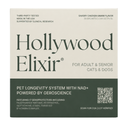
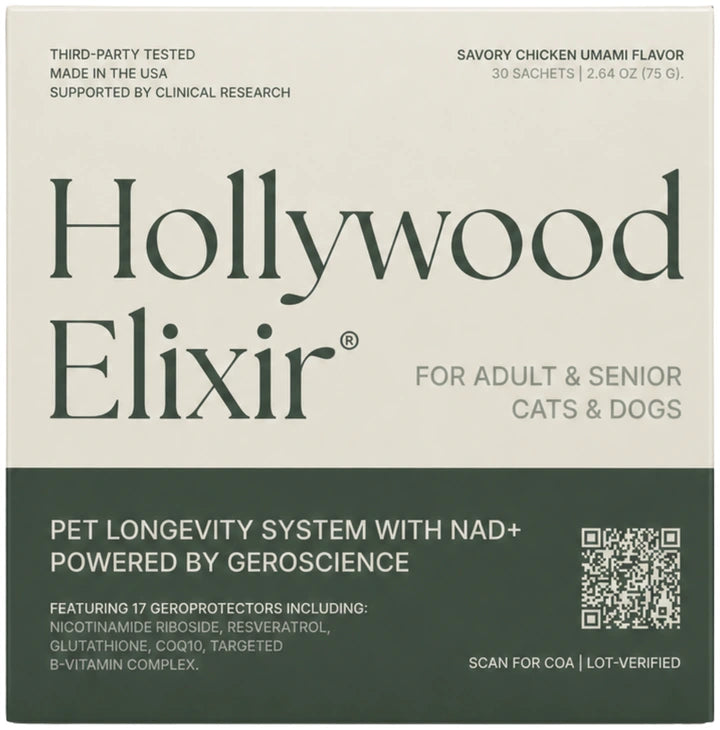
  • In Hollywood Elixir: No. Hollywood Elixir has no milk thistle. It's daily nutrition that includes glutathione and vitamin E, and it isn't a liver treatment.

What is milk thistle, and what do vets use it for in dogs?

Milk thistle is a tall plant with purple flowers, known to botanists as Silybum marianum.13 Its seeds yield an extract called silymarin, a mix of related compounds. Silybin, also spelled silibinin, makes up 50 to 60% of that mix and is the most active part.4

In dogs, vets use milk thistle to support the liver. VCA Animal Hospitals lists it for liver conditions and poisonings, and notes possible roles beside chemotherapy and in protecting the kidneys.1 Most vets pair it with other care. In a 2019 consensus statement, most of the seven liver specialists on the panel said they used a product that combines silybin with SAMe.2

Milk thistle is sold as a supplement, so the FDA doesn't review it for safety or effectiveness before sale.1 That leaves the choice of product, and the amount, to you and your vet.

Woman holding a Hollywood Elixir box beside a pug, a terrier and a food bowl

Does milk thistle help a dog's liver?

Milk thistle may help a dog's liver, but nobody has proved it. The specialist panel that wrote the 2019 guidelines on chronic hepatitis in dogs judged the evidence of benefit to be equivocal.2 An earlier review was blunter: no strong clinical evidence that silymarin, SAMe or vitamin E protects the liver in dogs with liver disease.17

What exists is a handful of small studies. Most measured liver enzymes in the blood, and those numbers often fell.5, 6 In a trial of 39 seriously ill, hospitalized dogs, a mix of four antioxidants that included silybin made no difference to illness scores or survival after 30 days.8

Our guide to liver health for dogs covers the wider picture.

Woman in sportswear holding a Hollywood Elixir box beside a black-and-tan dog outdoors

What did the chemotherapy trial in dogs find?

The strongest dog trial of milk thistle tested its main compound, silybin, combined with SAMe in a product called Denamarin. Dogs with lymphoma, mast cell tumors or histiocytic sarcoma were starting lomustine, a chemotherapy drug known to raise liver enzymes. Each dog was randomly assigned to lomustine alone or lomustine plus the supplement.3

Liver enzymes rose in 84% of dogs on lomustine alone and in 68% of dogs that also got the supplement. Dogs without it were more likely to have chemotherapy delayed or stopped.3

Two limits apply. The supplement reduced the problem and did not remove it. And the trial cannot say how much of the effect came from silybin and how much from SAMe.

Woman holding a Hollywood Elixir box above her forehead beside a Bernese mountain dog outdoors

Can milk thistle lower high liver enzymes in dogs?

Milk thistle products have lowered liver enzymes in several small dog studies.

  • 15 pet dogs with liver disorders of unknown cause: ALT and AST fell after 28 days on a commercial silybin product.5
  • 8 dogs with liver disease: ALT fell after 60 days on a milk thistle extract.6
  • 6 healthy French Bulldogs: ALT fell after 21 days on a blend of ginkgo and milk thistle.7

A lower number is not a diagnosis. Raised enzymes can come from medicines such as phenobarbital or steroids, and from breed quirks, as well as from liver disease.5 Our guide to ALT and AST in dogs explains the tests.

Golden retriever nuzzling a woman holding a Hollywood Elixir box on the grass beside a food bowl

How much milk thistle do dog studies use?

No official amount of milk thistle exists for dogs. The studies used very different amounts, depending on the product and the goal.

  • Liver disease study: 1.5 mg of silybin per kg of body weight a day, for 60 days.6
  • Healthy-dog study: 1 or 2 grams a day of a ginkgo and milk thistle blend, for 21 days.7
  • Mushroom poisoning experiment: 50 mg of silibinin per kg, given into a vein in a laboratory.10, 11

The authors of one 2025 study describe typical veterinary use as 5 to 20 mg of silymarin per kg a day, or 2 to 10 mg per kg for silybin complexes.7 Those figures describe practice, and they are not an official guide. Your vet should set the amount for your dog and the product.

A lower number is not a diagnosis.

Is milk thistle safe for dogs?

Milk thistle appears safe for dogs at the amounts studied. The specialist panel on canine hepatitis wrote that toxicity has rarely been reported.2 A 2023 review of milk thistle in animals found that a few studies reported no effect, and none reported problems linked to it.4

The dog studies agree. Healthy dogs given silybin for 28 days kept normal blood counts and digested their food as well as dogs on no supplement.5 In 17 dogs given a milk thistle blend for eight weeks, no adverse effects were reported.18

Three limits are worth knowing.

  • Short studies: the dog trials ran for weeks, so daily use over years is untested.
  • Product quality: human milk thistle supplements have failed purity tests, as the section on choosing a product explains.14
  • False comfort: a lower enzyme number can make a sick liver look better on paper while the cause goes untreated.

VCA Animal Hospitals adds that knowledge of side effects in animals is limited because the studies are limited.1

Overhead view of a black-and-white dog beside a food bowl and Hollywood Elixir box

What are the side effects of milk thistle in dogs?

Milk thistle's side effects in dogs are few and mostly mild. Authors who summarized its veterinary use list mild stomach upset, such as diarrhea or a change in appetite, and call it rare.7 In people, the common complaints are bloating, nausea and gas.13

Allergy is possible. Milk thistle is related to ragweed, chrysanthemums, marigolds and daisies, and people allergic to those plants react to it more often.13

If your dog vomits after a capsule on an empty stomach, VCA Animal Hospitals suggests giving the next one with food.1 Stop the supplement and call your vet if you see repeated vomiting, lasting diarrhea or a dog that goes off its food.

Woman smiling beside a golden retriever, a green food bowl and a Hollywood Elixir box

Can milk thistle be given with a dog's medications?

Milk thistle can change how a dog's body handles some medicines. Silymarin can slow certain liver enzymes that process drugs, along with a second drug-handling protein called P-glycoprotein. The specialist panel on canine hepatitis advises caution when high amounts of silybin are given to dogs on several drugs at once.2

Named examples are few.

  • Metronidazole: VCA Animal Hospitals lists it as a drug to use with caution alongside silymarin.1
  • Cisapride: the authors of a 2025 dog study advise against combining it with milk thistle.7

Give your vet a full list of medicines and supplements before you start. That matters most for dogs on chemotherapy, seizure medicine or long-term pain relief.

Man holding a Hollywood Elixir box while sitting on an outdoor sofa with a golden retriever

Which dogs should not take milk thistle?

Milk thistle is not for every dog. VCA Animal Hospitals says not to use it in pets allergic to any part of it, and to use caution in pets that are pregnant or nursing or that have estrogen-related disorders.1

Other authors go further and advise against it for:7

  • pregnant or nursing dogs;
  • puppies;
  • dogs allergic to plants in the Asteraceae (daisy) family.

Add one group of our own: a dog with symptoms and no diagnosis. Vomiting, yellow gums or a swollen belly need tests first, because the liver problems behind them call for different care.12

Which form is best: seed powder, silymarin or a silybin complex?

The form of milk thistle decides how much reaches the blood. Three forms are sold.

  • Ground seed or seed powder: the whole seed holds only a little silymarin. One review puts it at 1 to 8% of dry weight.4
  • Silymarin extract: the concentrated mix of compounds, usually in capsules or tablets.1
  • Silybin complex: silybin bound to phosphatidylcholine, a fat-like carrier added to improve absorption.9

Absorption is the weak point. Silymarin dissolves poorly in water, and the specialist panel on canine hepatitis describes its uptake by mouth as low and its half-life as short, at four to six hours.4, 2

The complex was built to fix that. In eight beagles, the silybin complex produced a peak blood level of 1,310 ng/mL, against 472 ng/mL for a standard extract with the same silybin content.9 The panel adds a caution: nobody knows yet whether the higher blood level means a better result for the dog.2

SAMe is a separate ingredient and not a form of milk thistle. Some veterinary products combine the two, and the main dog trial tested that pairing.3

A capsule from the cupboard is no antidote.

Woman sitting with a beagle in a kitchen while holding a Hollywood Elixir box

DVM Voice: Clinical Vignette of a Common Pattern in Senior Dog Aging

Case provided by JoAnna Pendergrass, DVM

Rex, a 7-year-old Labrador Retriever, was brought in after his owner noticed he was slower to rise, hesitant on stairs, and less able to play as before. Examination showed stiffness and reduced hip mobility; radiographs confirmed degenerative joint changes.

His care required weight management, veterinary-guided pain control, nutritional support, and rehabilitation — a comprehensive plan, but one started only after visible decline appeared.

Clinical takeaway: Rex’s case reflects the value of proactive aging support: maintaining lean body condition, monitoring mobility early, and supporting cellular resilience, antioxidant defense, and healthy inflammatory balance before decline becomes obvious.

Single-case vignette. Not generalizable. Veterinary oversight is essential for pain, stiffness, or suspected joint disease.
Explore Hollywood Elixir Research →
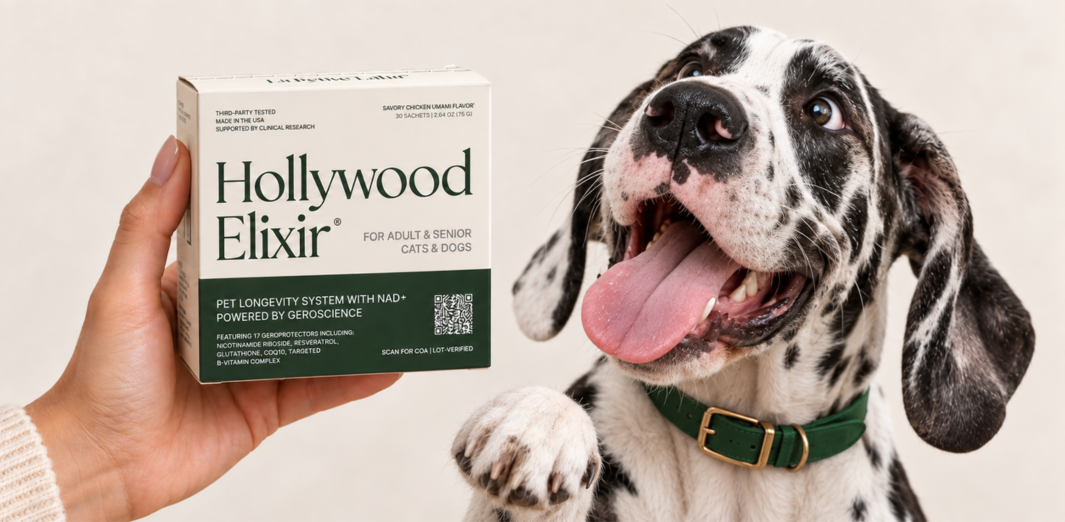
Spotted gray dog beside a Hollywood Elixir box held in a person's hand

How do you choose a milk thistle product for a dog?

A good milk thistle product tells you exactly what is in it. Check the label for:

  • the amount of silymarin or silybin in milligrams, and not just the weight of the herb;
  • the form, such as plain extract or a silybin complex;
  • any added actives, such as SAMe, with their own amounts;
  • a batch test or third-party test for purity.

Quality is a real problem. When researchers tested 26 milk thistle supplements sold for people, silymarin content often differed from the label, and every product carried mold toxins and pesticide residues.14

Ask your vet which brand the clinic uses, and bring the label of anything you already give.

Golden retriever nuzzling a man holding a Hollywood Elixir box beside a food bowl

Does a healthy dog need a milk thistle "liver detox"?
A healthy dog does not need milk thistle to "detox" its liver. Clearing harmful substances is the liver's own job, and the organ has a large reserve and can regrow.12

The closest test used six healthy French Bulldogs. Three weeks on a ginkgo and milk thistle blend lowered ALT, a liver enzyme, and raised albumin, a blood protein. Antioxidant markers, including glutathione, stayed the same.7

A lower number in a healthy dog is not proof of benefit, and we found no study that followed healthy dogs for any health outcome. If your dog's blood work is normal, there is nothing for milk thistle to fix.

Golden spaniel eating from a green bowl beside a Hollywood Elixir box

Does milk thistle help a dog that ate a poisonous mushroom?

Milk thistle's best-known rescue role is in death cap mushroom poisoning, and the form used there is a hospital drip. In a 1984 experiment, beagles were given death cap (Amanita phalloides). Four of the twelve untreated dogs died. None of the dogs given silibinin at 5 and 24 hours died, and their liver damage was far milder.10

The Merck Veterinary Manual explains the catch. The silibinin used for poisoning is given into a vein, which delivers amounts that oral products cannot reach, and that form is not licensed for sale in the United States.11

A capsule from the cupboard is no antidote. A dog that may have eaten a wild mushroom needs an emergency vet at once.

What do the human studies of milk thistle show?

Milk thistle has been studied far more in people than in dogs, and the results are mixed. The U.S. National Center for Complementary and Integrative Health sums it up: there isn't enough high-quality evidence to reach firm conclusions about its effects on health conditions in people.13

Two findings stand out.

  • A Cochrane review pooled 18 randomized trials with 1,088 patients who had alcoholic or viral liver disease. Milk thistle had no significant effect on deaths or on complications of liver disease.16
  • A U.S. trial gave 154 people with hepatitis C either silymarin or a placebo for 24 weeks. Liver enzymes fell no further on silymarin than on placebo, even at amounts above the customary range.15

Safety was the bright spot. Side effects on silymarin were comparable to those on placebo in the hepatitis C trial.15

Human results carry over to dogs only loosely, since the diseases differ. They do explain why vets treat milk thistle as an add-on to other care.

Is milk thistle different for dogs and cats?

Milk thistle is used for the liver in both species, but the evidence behind it differs.

  • Dogs have the chemotherapy trial, the mushroom experiment and several small enzyme studies.3, 10, 5
  • Cats have much less. A 2023 review found only a few short experiments, the best known with the painkiller acetaminophen.4

The amounts differ too. That review found dog studies using anywhere from 10 to 140 mg per kg, and a single figure for cats, 30 mg per kg.4

Cats are also more sensitive than dogs to some substances, because they lack certain liver enzymes.4 Never give a cat a product bought for a dog without asking a vet. Our guide to milk thistle for cats covers the feline side.

Woman holding a Hollywood Elixir box beside a dapple dachshund and green food bowl on a sofa

When should you see the vet instead of trying milk thistle?
Milk thistle is an add-on to a diagnosis, so some signs mean the vet comes first. The Merck Veterinary Manual lists these signs of liver disease in dogs:12

  • yellow gums, skin or eyes (jaundice);
  • vomiting, diarrhea or loss of appetite;
  • drinking and urinating far more than usual;
  • a swollen belly or weight loss;
  • seizures or other nerve problems.

Go at once if your dog has swallowed a poison, a wild mushroom or too much of any medicine.12 For a dog with no signs and a raised enzyme on routine blood work, ask your vet what to retest and when. Our guide to senior dog bloodwork panels explains the tests.

Woman cuddling a brown-and-white spaniel while holding a Hollywood Elixir box

Milk thistle vs. SAMe and vitamin E: what else supports the liver?

Milk thistle is one of three antioxidants that liver specialists often add to a dog's care.

  • SAMe: the liver turns it into glutathione, an important antioxidant. Dogs have less glutathione in the liver than other species, and SAMe restores it.2
  • Vitamin E: every specialist on the canine hepatitis panel uses it for inflamed livers, while noting that studies in dogs are limited.2
  • Milk thistle: most of the panel uses it in a combined product with SAMe.2

Finding the cause still comes first. Copper-related hepatitis, for example, needs a low-copper diet and a drug that removes copper.2 Our guides to glutathione for dogs and vitamin E for dogs cover those two in depth.

Is milk thistle in Hollywood Elixir?

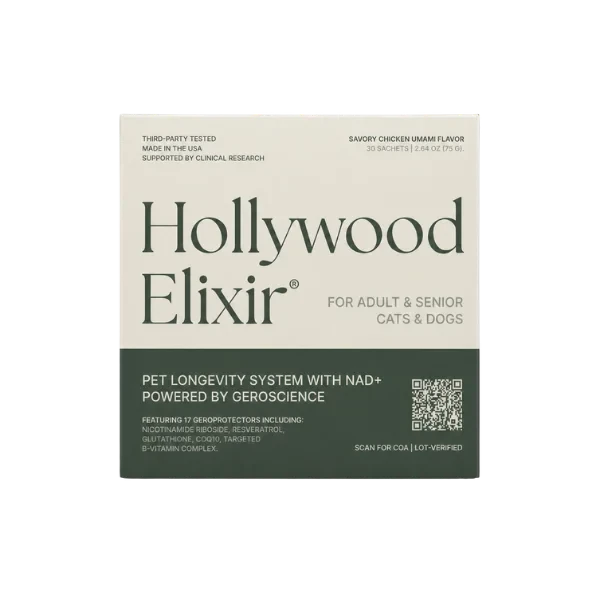
No. Milk thistle isn't one of the 17 actives in Hollywood Elixir, and the product isn't a liver supplement.

Much of the interest in milk thistle comes from its antioxidant action. A veterinary review credits silibinin, its main compound, with raising antioxidant levels.19 Hollywood Elixir comes at antioxidants from another side: each sachet supplies 50 mg of glutathione and 15 IU of vitamin E, with both amounts printed on the label.

Hollywood Elixir is daily nutrition for adult and senior dogs, a powder mixed into food. The serving goes by weight: half a sachet under 7 lb, one sachet from 7 to 30 lb and two sachets above 30 lb. As a supplement, it has never been tested for liver disease, liver enzymes or lifespan.

If your dog's liver values are the worry, start with your vet. For everyday antioxidant support, our guides to NAD+ for dogs and the best longevity supplements for dogs explain the options. See the full Hollywood Elixir formula and serving guide.

If your dog's blood work is normal, there is nothing for milk thistle to fix.

Educational content only. This material is not a substitute for veterinary advice. Always consult your veterinarian about your dog’s specific needs. These statements have not been evaluated by the Food and Drug Administration. Products mentioned are not intended to diagnose, treat, cure, or prevent any disease.

Glossary

Silymarin: The mix of active compounds extracted from milk thistle seeds.

Silybin (silibinin): The main and most active compound in silymarin.

SAMe: S-adenosylmethionine, a compound the liver turns into glutathione; often paired with silybin in liver supplements.

ALT: Alanine aminotransferase, a liver enzyme measured in blood tests that rises with liver cell damage.

Glutathione: An important antioxidant made in the liver.

Lomustine (CCNU): A chemotherapy drug that commonly raises liver enzymes in dogs.

Related Reading

References

Numbered references identify the sources used for specific claims. Read the study design, species and evidence boundaries alongside each finding.

FAQ

Can I give my dog milk thistle every day?

Dog studies gave milk thistle daily for three weeks to two months without reported problems. Nobody has tracked dogs on it for years. If your vet has advised it for a liver condition, ask how long to continue and when to recheck blood work.

How long does milk thistle take to work in dogs?

VCA Animal Hospitals says milk thistle can take up to a few weeks to reach its full effect, and that the change may show only on lab tests. In the dog studies, liver enzymes were rechecked after 21 to 60 days.

Is milk thistle and spirulina safe to give my dog daily?

We found no study of the two together in dogs. Milk thistle on its own was well tolerated in the dog studies. Our guide to spirulina for dogs covers that side. Check with your vet first if your dog takes any medicine or has a liver problem.

Can I give my dog human milk thistle capsules?

Only with your vet's guidance. A test of 26 milk thistle supplements sold for people found that silymarin content often differed from the label and that every product carried mold toxins. Your vet can match a product and an amount to your dog's weight.

Does milk thistle help dogs on phenobarbital or NSAIDs?

We found no trial that tested milk thistle with either. Both kinds of drug can injure the liver in some dogs, and milk thistle may change how some drugs are processed. Ask your vet before adding it, and keep to the blood tests your vet has scheduled.

Does Hollywood Elixir contain milk thistle?

No. Hollywood Elixir has no milk thistle, silymarin or silybin. It's a daily nutrition powder with 17 actives, including 50 mg of glutathione and 15 IU of vitamin E per sachet, and it isn't a liver treatment.

Is milk thistle good for senior dogs?

Age alone is no reason to give milk thistle. Older dogs can develop nodular hyperplasia, an age-related liver change that usually causes no illness, and they can also have real liver disease. Telling them apart takes a vet, and sometimes a biopsy.

Can puppies or pregnant dogs have milk thistle?

Not without a vet's say. VCA Animal Hospitals advises caution with milk thistle in pregnant or nursing pets, and the authors of a 2025 dog study advise against it for puppies and for pregnant or nursing dogs. We found no safety study in either group.

What happens if my dog eats too much milk thistle?

Reviewers describe a wide safety margin for milk thistle and no significant toxicity at the amounts vets use. Mild stomach upset is the side effect they list. VCA Animal Hospitals still advises calling your vet at once after any suspected overdose, with the product name and your dog's weight.

What is the difference between milk thistle, silymarin and silybin?

Milk thistle is the plant. Silymarin is the extract from its seeds, a mix of compounds. Silybin, also spelled silibinin, is the main compound in that mix, and it is the one most dog studies measured.

Dalmatian looking toward a Hollywood Elixir box held in a person's hand

Discover LPL-01: How This Fits Into a Larger Canine Longevity System

Aging in dogs is not driven by a single pathway. It’s the result of interacting biological systems—energy metabolism, oxidative stress, immune signaling, and structural integrity—changing over time.

This article explores one piece of that puzzle. If you want to understand how these pieces connect—and what actually moves the needle—you need to zoom out.

Start with the underlying science:

Keep exploring

What would you like to understand next?

Search practical guides about healthy aging, cellular energy, ingredients, and daily support for dogs.