





The 12 Hallmarks of Aging in Dogs, Explained
Read full insightMilk Thistle for Cats
By La Petite Labs Editorial 11 min read
As Seen On

17 science-backed actives
Contents +
Vets use milk thistle to support a cat's liver, but the research in cats is thin and says more about safety than benefit. In one experiment, silymarin kept liver enzymes normal in cats given a toxic amount of acetaminophen.2 In another, a silybin complex raised glutathione in cats' white blood cells.3 We found no trial in cats with everyday liver disease.
This guide covers what milk thistle is, what the cat studies mean, the amounts they gave, the risks, and the signs that mean your cat needs a vet today.
- What it is: Silymarin, an extract of milk thistle seeds. Its main compound is silybin.4
- Cat evidence: Two short experiments in healthy cats, one with 20 animals and one with 10, plus a single case report.2, 3, 9
- Absorption: Low by mouth, even in forms built to absorb better.4
- Amount: No official amount exists. Cat studies gave 30 mg of silymarin per kg once, or 10 mg of a silybin complex per kg a day for five days.2, 3
- Safety: Well tolerated in the animal studies so far, which are few.1, 4
- Biggest risk: Waiting. A cat that stops eating can develop fatty liver after only a few days, and no supplement replaces feeding support.7, 8
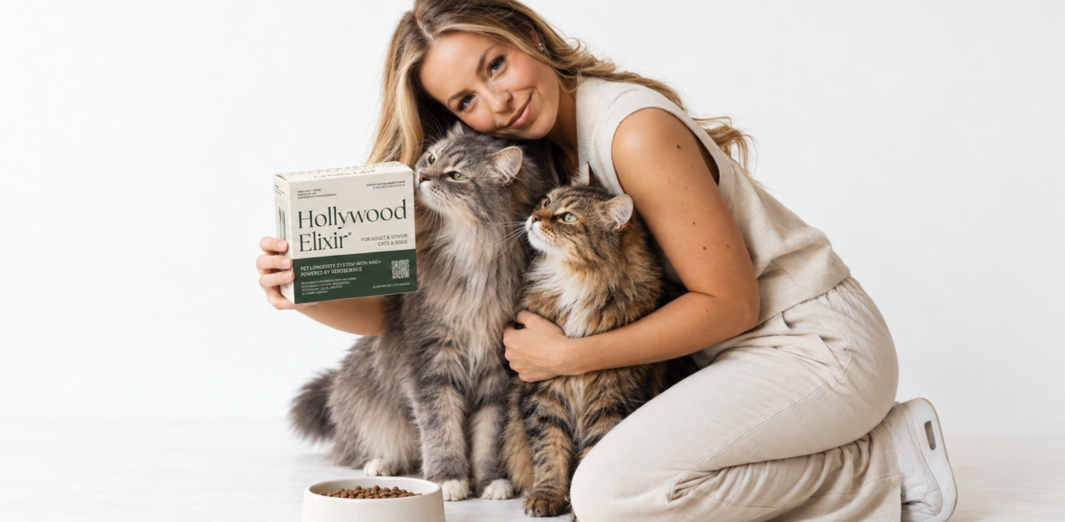
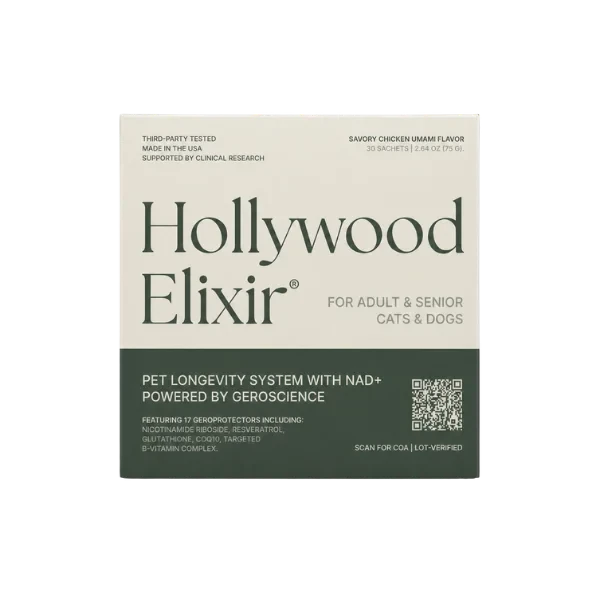
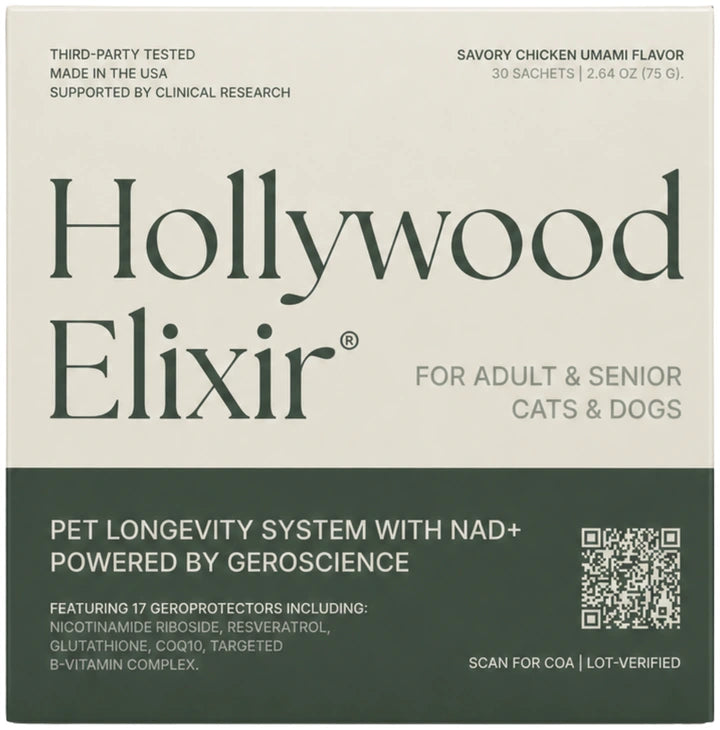
- In Hollywood Elixir: No. Hollywood Elixir contains no milk thistle. It's a daily nutrition powder that lists glutathione and vitamin E among its actives, and it isn't a liver product.
What is milk thistle, and why do vets give it to cats?
Milk thistle is a flowering plant, and the part used in supplements is silymarin, an extract of its seeds.11, 4 Silymarin is a mix of compounds. The main one is called silybin or silibinin, depending on the label.4
Vets give it to cats as a liver support. VCA Animal Hospitals describes silymarin as a supplement used for liver conditions and poisonings in cats and other pets.1 A 2020 review of liver supplements for dogs and cats places it among the antioxidants used beside diet, medicines and care for complications.5
Two facts set expectations. Milk thistle is sold as a supplement, so the FDA doesn't check it for safety or effectiveness before sale.1 And that 2020 review found very few studies in cats.5
What have studies of milk thistle in cats found?
Milk thistle has been tested in cats in only a few small experiments. We found two on PubMed, both in healthy cats.
- Acetaminophen experiment: 20 cats were given a toxic amount of acetaminophen. In the cats that also got silymarin, liver enzymes stayed in the normal range.2
- White blood cell study: 10 cats took a silybin complex for five days. Glutathione, an antioxidant, rose in their white blood cells.3
A 2023 review adds experiments in which silymarin limited liver damage from the drugs tetracycline and mebendazole.4
Each of these was a short test under laboratory conditions. We found no trial of milk thistle in pet cats with liver disease.
Can milk thistle treat acetaminophen (Tylenol) poisoning in a cat?
Milk thistle is not a home remedy for acetaminophen poisoning, even though one experiment looks hopeful. Researchers gave 20 healthy cats 150 mg of acetaminophen per kg. Cats that received 30 mg of silymarin per kg, at the same moment or four hours later, kept normal liver enzymes and blood values. N-acetylcysteine, the comparison drug, did the same.2
A real poisoning is messier. The amount is unknown and hours may have passed. The FDA warns that acetaminophen is fatal to cats, which lack enzymes the liver needs to break it down.6
If your cat has swallowed any acetaminophen, go to a vet or an emergency clinic now. Do not give milk thistle and wait.
Does milk thistle help cats with liver disease?
Milk thistle has never been put through a trial in cats with liver disease, as far as we could find. The closest thing is a single case report. A three-year-old cat with a bacterial liver infection recovered fully on two antibiotics plus a product combining SAMe and silybin.9 With three medicines given at once, no one can say which did the work.
The common liver diseases of cats have their own treatments. Fatty liver, the most frequent, is managed with feeding support. Inflammatory liver disease often calls for antibiotics or steroids.7 A vet may add milk thistle to those plans, and it replaces none of them.
Our guide to liver health for cats explains the main conditions.
How much milk thistle have cats been given in studies?
No official amount of milk thistle exists for cats. The published figures come from short experiments and one case.
- Acetaminophen experiment: 30 mg of silymarin per kg of body weight, by mouth, once.2
- White blood cell study: 10 mg of a silybin complex per kg a day, for five days.3
- Case report: 90 mg a day of a combined SAMe and silybin product, for one cat.9
A 2023 review of the animal research found 30 mg per kg to be the only amount reported for cats.4
None of these is a recommendation. Products differ in how much silybin they hold and how well it absorbs, so the amount for your cat is your vet's call.
Do not give milk thistle and wait.
Is milk thistle safe for cats?
Milk thistle appears to be safe for cats, with the caveat that few cats have been studied. VCA Animal Hospitals describes silymarin as well tolerated in animals and adds that limited research means limited knowledge of side effects.1 A review of milk thistle across animal species found no study that reported a problem linked to it.4 A separate safety review reached a similar verdict: no major toxicity in animals.13
Three cautions are specific to cats.
- Long-term use is untested. One cat experiment gave a single serving, and the other ran for five days.2, 3
- Cats process some substances differently. They lack certain liver enzymes that dogs have, so a product or amount can't simply be copied from another species.4
- Product quality varies. In a test of 26 milk thistle supplements made for people, every one carried mold toxins.12
Tell your vet about any supplement before it goes into your cat's bowl.
What side effects can milk thistle cause in cats?
Side effects of milk thistle in cats are poorly documented, because so few cats have been studied.1 Most of what is known comes from people. Their most common complaints are bloating, nausea and gas, and VCA Animal Hospitals also mentions upset stomach and diarrhea.11, 1
We would watch one thing above all: appetite. A cat that eats poorly for even a few days is at risk of fatty liver.7 Stop the supplement and call your vet if your cat vomits, has diarrhea or eats less than usual.
If a capsule on an empty stomach causes vomiting, VCA suggests giving the next one with food.1
Does milk thistle interact with a cat's medications?
Milk thistle may interact with medicines, and we found no study of this in cats. VCA Animal Hospitals advises caution when silymarin is given with drugs that the liver breaks down, and names metronidazole as an example.1
Research in other species points the same way. A specialist panel writing about dogs noted that silymarin can slow some drug-processing enzymes and urged care in animals on several medicines.10 A human safety review found few interactions overall, with caution advised for drugs that have a narrow safety window.13
Many cats with liver trouble take several medicines at once. Give your vet the full list, supplements included, before adding milk thistle.
Should kittens, pregnant cats or sick cats have milk thistle?
Milk thistle is not right for every cat. VCA Animal Hospitals gives this guidance for pets:1
- do not use it in a pet that is allergic to any part of the product;
- use caution in pregnant or nursing pets;
- use caution in pets with estrogen-related disorders.
Kittens are a gap. We found no study of milk thistle in kittens, so there is nothing to lean on.
Sick cats need more care still. A cat that is vomiting, jaundiced or off its food needs a diagnosis before any supplement, because the causes range from infection to fatty liver and each has its own treatment.7
How well do cats absorb milk thistle, and which form is used?
Cats absorb milk thistle poorly, as other species do. Silymarin barely dissolves in water, and much of what is swallowed is broken down in the liver before it can circulate. A 2023 review notes that absorption stayed low in cats even when silybin was bound to a fatty carrier.4
Three forms reach the market.
- Seed powder or ground herb: holds only a small share of silymarin.4
- Silymarin extract: the concentrated mix, usually in capsules or tablets.1
- Silybin complex: silybin bound to phosphatidylcholine, the form used in the cat study that measured glutathione.3
Some veterinary products add SAMe, a separate ingredient, to the silybin complex. That pairing was used in the cat case report.9
Capsules and tablets raise a practical problem, since many cats resist pills. VCA Animal Hospitals notes that silymarin may be given with or without food.1 Ask your vet before crushing a tablet, because products that add SAMe often rely on a protective coating.10
None of these is a recommendation.
DVM Voice: Clinical Vignette of a Common Pattern in Senior Cat Aging
Case provided by JoAnna Pendergrass, DVM
Sasha, a 12-year-old cat, was brought in after her owner noticed increased thirst and urination, lethargy, vomiting, and a generally unkempt appearance. Examination showed weight loss, elevated blood pressure, and reduced vitality.
Diagnostic testing revealed elevated kidney markers, poorly concentrated urine, and protein loss in the urine — findings consistent with chronic kidney disease, one of the most common chronic conditions in senior cats.
Her care required a kidney-focused diet, blood pressure management, targeted supplementation, medication support, and regular monitoring — a necessary plan, but one started after clinical signs were already visible.
Clinical takeaway: Sasha’s case reflects why senior-cat wellness should begin before obvious decline. Earlier monitoring, body-condition tracking, hydration awareness, antioxidant support, and daily cellular resilience may help support quality of life as cats age.
Single-case vignette. Not generalizable. Veterinary diagnosis and monitoring are essential for increased thirst, urination, vomiting, lethargy, weight loss, or suspected kidney disease.
How do you choose a milk thistle product for a cat?
A milk thistle product for a cat should come from your vet's shortlist, because supplements are not checked before they go on sale.1 Read the label for four things:
- the silymarin or silybin content in milligrams;
- whether it is a plain extract or a silybin complex;
- every other active ingredient, such as SAMe;
- flavorings and fillers, which matter to a fussy cat.
Independent testing shows why the label deserves a second look. Among 26 human milk thistle supplements, silymarin content often differed from the label and varied from batch to batch.12
Avoid dividing human capsules by guesswork. Ask your vet for a product and an amount worked out for your cat's weight.
Does a healthy cat need a liver detox?
A healthy cat does not need milk thistle to cleanse its liver. Detoxifying is the liver's own work: it handles waste made by the body and harmful things the cat swallows.7
We found no study showing that milk thistle improves the health of a cat with a normal liver. In the one study of healthy cats, five days of a silybin complex raised glutathione in white blood cells, while other measures of oxidative stress stayed the same.3
Routine "detox" powders also carry a cost for cats. A switch to food that a cat dislikes is a known trigger for loss of appetite.7
Why is a cat that stops eating a liver emergency?
A cat that stops eating is at risk of hepatic lipidosis, or fatty liver, and milk thistle will not fix it.
Hepatic lipidosis is the most common liver disease in cats. It follows a spell of poor appetite, sometimes only a few days long, and overweight cats are most at risk.7 Fat moves into the liver faster than the liver can process it.8
Treatment is food. Cornell's Feline Health Center describes feeding through a tube, often for a month or so, while the vet treats the underlying cause.8 Cats that recover rarely relapse.7, 8
So count meals, not capsules. Our guide to a senior cat that is not eating explains what to do first.
What do human studies of milk thistle show?
Milk thistle has a long record in human medicine, and its results there are mixed. The U.S. National Center for Complementary and Integrative Health concludes that trials for liver diseases have been conflicting or too limited to settle the question.11
Two examples show the pattern.
- Pooled fatty liver trials: an analysis of 26 randomized trials with 2,375 patients found lower ALT and AST, two liver enzymes, on silymarin.16
- One careful trial: 78 patients with an inflamed fatty liver took silymarin or a placebo for 48 weeks. Liver biopsies improved no more often on silymarin.17
Safety held up. The 48-week trial judged high amounts of silymarin safe and well tolerated.17
In people, then, milk thistle shifts blood numbers more reliably than it changes the disease. None of these patients had a cat's liver diseases, which is one more reason vets treat milk thistle as an add-on.
Is milk thistle the same for cats and dogs?
Milk thistle is used for the liver in both species, and dogs have far more research behind it.
- Dogs: in a randomized trial during chemotherapy, a silybin and SAMe product lowered the share of dogs with raised liver enzymes from 84% to 68%.14 A specialist panel still rates the overall dog evidence as equivocal.10
- Cats: two short experiments in healthy cats and one case report.2, 3, 9
The species differ in ways that matter here. Cats lack some liver enzymes that dogs have, which makes them more sensitive to certain drugs.4 The FDA notes that vets sometimes use acetaminophen in dogs and never in cats.6
Poisoning looks different too. After acetaminophen, cats are more prone to red blood cell damage and dogs to liver damage.6
In a home with both pets, buy and measure each animal's supplement separately. Our guide to milk thistle for dogs covers the canine studies.
When should a cat see the vet instead of getting milk thistle?
Milk thistle is for a cat whose problem already has a name. See your vet first if your cat shows any of these signs of liver disease:7, 8
- loss of appetite or weight loss;
- vomiting or diarrhea;
- a yellow tinge to the gums or ears (jaundice);
- a swollen belly;
- drinking and urinating more than usual.
Treat two situations as emergencies: a cat that has stopped eating, and a cat that may have swallowed a human medicine or a poison.7 Routine blood tests can pick up liver changes sooner, as our guide to senior cat bloodwork panels explains.
Milk thistle vs. SAMe: what else do vets use for a cat's liver?
Milk thistle is one of several supports a vet may add to a cat's liver care, and SAMe has the stronger cat data. In 15 healthy cats given SAMe daily for 113 days, glutathione in the liver rose by 35%, with no overt signs of toxicity.15
Other supplements named for cats in the Merck Veterinary Manual include vitamin E, B vitamins, vitamin K and zinc, each prescribed for a specific need.7
Food outranks them all. For fatty liver, feeding support is essential.7 Our guides to glutathione for cats and vitamin E for cats cover two of these nutrients.
Is milk thistle in Hollywood Elixir?
No. Hollywood Elixir contains no milk thistle, silymarin or silybin, and it isn't made for liver disease.
The link between the two is glutathione. In the one cat study of a silybin complex, the change researchers measured was a rise in glutathione inside white blood cells.3 Hollywood Elixir has no silybin. Its label lists glutathione itself, 50 mg per sachet, beside 15 IU of vitamin E.
Those are 2 of the 17 actives in a daily nutrition powder for adult and senior cats. A cat under 7 lb gets half a sachet stirred into food, and a cat from 7 to 30 lb gets one. It is a supplement, and it has never been tested in cats with liver disease or for lifespan.
A cat with a liver diagnosis should have every supplement cleared by the vet first. If your cat is well and you're weighing daily nutrition, our guide to NAD+ for cats and our roundup of the best supplements for senior cats are the places to start. See the full Hollywood Elixir formula and serving guide.
So count meals, not capsules.
Educational content only. This material is not a substitute for veterinary advice. Always consult your veterinarian about your cat’s specific needs. These statements have not been evaluated by the Food and Drug Administration. Products mentioned are not intended to diagnose, treat, cure, or prevent any disease.
Glossary
Silymarin: The extract of milk thistle seeds, a mix of related plant compounds.
Silybin (silibinin): The main active compound in silymarin.
Hepatic lipidosis: Fatty liver, the most common liver disease in cats, which follows a period of poor appetite.
Acetaminophen: A human pain reliever, sold as Tylenol, that is fatal to cats.
Glutathione: An antioxidant found inside cells, including liver cells and white blood cells.
SAMe: S-adenosylmethionine, a compound vets give to raise glutathione in the liver; often paired with silybin.
Related Reading
Aging & Senior Cat Guidance
• Cat Age Calculator: Cat Years to Human Years
• Cat Lifespan by Breed
• Lethargy in Cats
• Senior Cat Not Eating
• Cat Drinking A Lot
• Why Is My Senior Cat Withdrawn?
Healthy Aging Support
• NAD+ for Cats
• NMN for Cats
• Vitamins For Older Cats
• Senior Cat Food
• Longevity Drugs for Cats
References
Numbered references identify the sources used for specific claims. Read the study design, species and evidence boundaries alongside each finding.
- [1]
- [2]
- [3]
- [4]
- [5]
- [6]
- [7]
- [8]
- [9]
- [10]
- [11]
- [12]
- [13]
- [14]
- [15]
- [16]
- [17]
FAQ
Can I give my cat milk thistle every day?
Only on your vet's advice. The cat studies of milk thistle lasted five days or less, so daily use over months is untested in cats. If your vet prescribes it for a liver condition, ask how long to give it and when blood work should be repeated.
How long does milk thistle take to work in cats?
VCA Animal Hospitals says silymarin can take up to a few weeks to show its full effect, and that the change may be visible only on lab tests. We found no cat study that measured how quickly milk thistle works.
Can I give my cat human milk thistle capsules?
Not without your vet's approval. The amount in a human capsule isn't worked out for a cat, and a test of 26 human milk thistle supplements found mold toxins in every one and silymarin content that often differed from the label.
Is milk thistle good for cats with kidney disease?
We found no study of milk thistle in cats with kidney disease. VCA Animal Hospitals notes that the supplement's effects can last longer in pets with liver or kidney disease, so a cat with kidney disease should get it only under a vet's direction.
Does milk thistle help a cat with fatty liver?
We found no study of milk thistle in cats with hepatic lipidosis. The established treatment is feeding support, often through a tube, plus care for the underlying cause. Milk thistle is at most an extra your vet may add.
Does Hollywood Elixir contain milk thistle?
No. Hollywood Elixir has no milk thistle, silymarin or silybin. It's a daily nutrition powder whose 17 actives include 50 mg of glutathione and 15 IU of vitamin E per sachet, and it isn't a liver treatment.
What happens if my cat eats too much milk thistle?
A safety review found no major toxicity from silymarin in animals, and the usual complaints in people are stomach upsets. VCA Animal Hospitals still advises calling your vet right away after a suspected overdose, with the product details and your cat's weight.
Can milk thistle and SAMe be given together to cats?
They are sold together in some veterinary liver products. One case report describes a cat that recovered from a liver infection on antibiotics plus a combined SAMe and silybin product. We found no trial comparing the pair with either one alone in cats.
What is the difference between milk thistle and silymarin?
Milk thistle is the plant. Silymarin is the extract of its seeds, a mix of related compounds, and silybin (also written silibinin) is the main one. Labels use all three names, so check which one the milligram figure refers to.
Discover LPL-01: How This Fits Into a Larger Feline Longevity System
Aging in cats unfolds quietly. It’s not driven by a single failure, but by gradual shifts across interconnected systems — cellular energy, oxidative balance, immune tone, and tissue integrity — each influencing the others over time.
This article explores one layer of that system. To understand what actually shapes long-term health, you need to step back and look at how these layers interact.
Start with the underlying science:
- Feline Geroscience Framework →
A structured view of how aging progresses across cellular energy, inflammation, and resilience systems. - Senior Biological Defense Coverage (BDC) Modeling →
A systems-level map of which biological pathways decline first, and how layered interventions can support them. - 2026 Market Research: Best Cat Longevity Supplements →
A feline-specific review of longevity supplements. 2026 Industry report created by LPL-01 Research. - LPL-01 Standard →
The formulation system that translates these models into real-world supplementation—covering multiple pathways in a coordinated way.
Keep exploring
What would you like to understand next?
Search practical guides about healthy aging, cellular energy, ingredients, and daily support for cats.
Hollywood Elixir®Senior Cat SupplementSenior cat energy, mobility & cognitionFrom$50/moSave up to 47%Save up to 44%Shop Now
Limited time offerEnds Nov 30
Hollywood Elixir®Senior Cat SupplementSenior cat energy, mobility & cognitionFrom$50/moSave up to 47%Save up to 44%Shop Now
Essential Summary
What should cat owners know about milk thistle?
Milk thistle (silymarin) is a liver-support supplement that a vet may add to a cat's care plan, and it replaces no part of that plan.
The cat research is two short experiments in healthy cats and one case report. We found no trial in cats with liver disease.
A cat that stops eating, or that may have swallowed acetaminophen, needs a vet now.

Hollywood Elixir® Senior Cat Supplement
17 science-backed actives in every sachet
Supports senior energy, mobility & cognition
60-day first-box guarantee
Hollywood Elixir is amazing! She put back on 5 lbs to a healthy weight, her eyes are shiny, her coat is beautiful!
— Jessie
She hopped up onto the windowsill again for the first time in years.
— Charlie
Looking for antioxidant support?
Glutathione and vitamin E, with amounts printed.
Hollywood Elixir gives adult and senior cats 50 mg of glutathione, 15 IU of vitamin E and 15 more actives in each sachet. It has no milk thistle in it and isn't a liver treatment.

Hollywood Elixir® Senior Cat Supplement
17 science-backed actives in every sachet
Supports senior energy, mobility & cognition
60-day first-box guarantee
Learn about how our DVMs think about cat aging
Dr. JoAnna Pendergrass DVM

Hollywood Elixir® Senior Cat Supplement
17 science-backed actives in every sachet
Supports senior energy, mobility & cognition
60-day first-box guarantee
Explore your cat’s changing needs over time
Related Reading
Vets use milk thistle to support a cat's liver, but cat studies are few. See what an experiment in 20 cats found, the amounts used, safety and red-flag signs.