





The 12 Hallmarks of Aging in Dogs, Explained
Read full insightMCT Oil for Cats
By La Petite Labs Editorial 12 min read
As Seen On

17 science-backed actives
Contents +
MCT oil is tolerated by cats when it's built into a complete food, but we found no study showing that it helps a cat's brain, seizures or weight. The cat research covers something more basic: whether cats will eat it, and what it does to their blood fats and ketones. That matters, because a cat that goes off its food can become seriously ill.6
This guide covers what the feeding studies in cats found, the side effects, the amounts used, and why the dog research doesn't carry over.
- What it is: MCT oil is a purified fat made of medium-chain fatty acids, mostly caprylic (C8) and capric (C10) acid.4, 3
- Will cats eat it: That depends on the food. Cats refused a C8-rich MCT in one older study and ate MCT foods without refusal in two later ones.1, 2, 4
- Benefits: Unproven. We found no cat trial for cognition, seizures or weight, and one small study of kidney blood markers.4
- Side effects: Gut upset and food refusal are the two on record.5, 1
- Biggest risk: A cat that stops eating. Going without food sets the stage for fatty liver disease, which can be fatal.6
- Amount: None is established. Study foods held about 7% to 8% MCT as part of a complete diet.3, 4
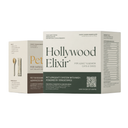
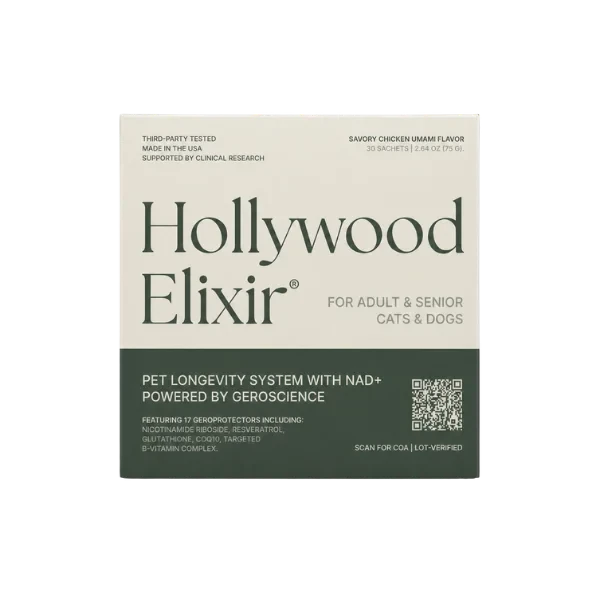
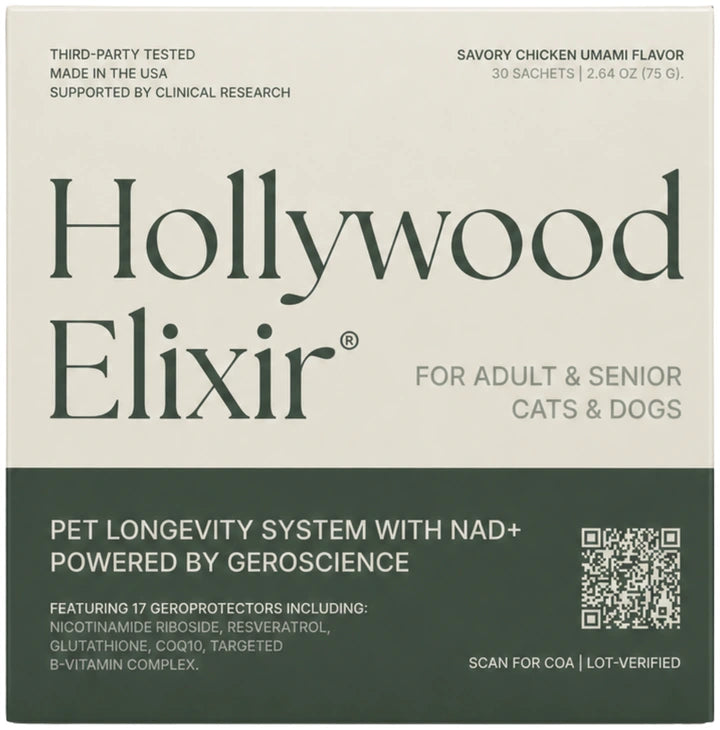
- In Hollywood Elixir: No. Hollywood Elixir has no MCT oil. Its 17 actives include an NAD+ precursor, CoQ10 and B vitamins.
What is MCT oil?
MCT oil is a concentrated fat made of medium-chain triglycerides. The classic medium-chain fatty acids are caproic (C6), caprylic (C8) and capric (C10), while lauric acid (C12) sits between medium and long.4
Chain length changes how the body handles the fat. Medium-chain fatty acids go straight to the liver, and the liver converts much of them into ketones, a fuel that other tissues can burn.3 That's the "ketogenic" label you'll see on MCT products.
Cat owners meet MCT in three places:
- as a bottled oil;
- as an ingredient in some complete cat foods;8
- as the carrier oil inside other supplements, CBD oils among them.5
Brain health is one reason MCT comes up for cats. A veterinary review of feline cognitive dysfunction lists diets containing medium-chain triglycerides among the options.8 For cats, as the next chapters show, that idea rests on borrowed evidence.
Can cats have MCT oil?
Cats can have MCT oil in a properly made food, and a healthy cat on a complete diet has no need for it. Two feeding studies support the first half. Nineteen healthy adult cats ate MCT diets for nine weeks with no food refusal. Cats with kidney disease ate a food with 8% MCT for eight weeks without eating less or losing weight.2, 4
The second half is just as firm. We found no study in which MCT oil improved a cat's memory, behavior, seizures or body weight.
Pouring oil over a meal is the version with the least research behind it. Every feeding study used a finished food.
Will a cat eat food with MCT oil in it?
MCT oil's first hurdle with cats is taste. In a 1985 study, young cats ate less and lost weight on purified diets made with MCT or hydrogenated coconut oil. With a C8-rich MCT, they wouldn't eat after the first taste. Even 5% or 10% of that MCT was rejected, and so was caprylic acid itself at 0.1% to 1% of the diet.1
Other results were kinder. The same researchers found that cats did not reject a different MCT at 5% or 15%.1 In 2010, 19 cats ate low-MCT and high-MCT diets for nine weeks with no difference in food intake.2
So the recipe matters. A cat that turns away from an MCT product is telling you something, and coaxing isn't the answer.
Does MCT oil help cats with cognitive decline?
MCT oil hasn't been tested for cognitive decline in cats, as far as we could find. A 2025 systematic review of diets and supplements for aging pets covered 30 studies, and only 2 were feline trials.9 The cat diet trial we did find tested a blend of fish oil, B vitamins, antioxidants and arginine, with no MCT in the mix.10
MCT still comes up. A veterinary review of feline cognitive dysfunction lists diets containing antioxidants or medium-chain triglycerides among the ways to manage it.8 As far as we can tell, that practice leans on dog studies and not on trials in cats.
Our guide to feline cognitive dysfunction covers the signs and the workup.
What did the feeding studies in cats find?
MCT oil changed blood chemistry in cats more than it changed the cats. Two studies in healthy cats are the core of the evidence.
- 19 adult cats, 9 weeks: food intake, body weight and body condition were the same on low-MCT and high-MCT diets. Blood triglycerides rose on the high-MCT diet and stayed within the normal range. Cholesterol didn't differ between diets.2
- 64 cats, 28 days: a food with 6.9% MCT shifted many blood fats. Ketones didn't rise significantly on MCT alone, and they did rise when fish oil was fed with it.3
Neither study measured memory, behavior, seizures or lifespan. The 64-cat study was funded by the pet food company that employed its authors.3
MCT oil changed blood chemistry in cats more than it changed the cats.
Can MCT oil help cats with kidney disease?
MCT oil has one small kidney study in cats, published in 2026, and its findings were in blood chemistry, not in kidney function. Sixteen cats with chronic kidney disease ate two dry kidney foods for eight weeks each. One was a standard kidney food. In the other, part of the pork fat was swapped for 8% C8 MCT.4
On the MCT food:
- fasting levels of the ketone beta-hydroxybutyrate went up;
- several blood fats linked to inflammation went down;
- food intake and body weight held steady;
- creatinine and SDMA, two standard kidney markers, did not change.4
The authors read these results as support for C8 MCT in kidney diets. Keep the limits in view. The study had sixteen cats, eight-week feeding periods and a short washout, and it was funded by a pet food company whose employees wrote it.4 One cat left when its kidney function declined quickly, which the study vet judged unrelated to the food.4
For a cat with kidney disease, that adds up to a question for your vet about food choices. It's no reason to add oil to the bowl. Our guide to chronic kidney disease in cats covers the care with a longer record.
Is MCT oil safe for cats?
MCT oil appears safe for cats in the short run when it's part of a complete food. The feeding studies ran from four to nine weeks, with no food refusal or weight loss reported on the MCT foods.2, 4 All 64 cats in the largest one returned to their colony healthy.3
The oil given straight has far less behind it. In a 2021 safety study of cannabis oils, four healthy cats got plain MCT oil by mouth as a placebo. Stomach and gut side effects were more common with the MCT-based oils than with sunflower-based ones, and every side effect in the study was mild.5
We found no cat study of MCT oil that ran longer than nine weeks.
What are the side effects of MCT oil in cats?
MCT oil's side effects in cats, as far as the studies show, involve the gut and the appetite.
- Gut upset: in a safety study of 20 healthy cats, stomach and gut side effects were more common with MCT-based oils than with sunflower-based ones. Every side effect passed without treatment.5
- Food refusal: in the 1985 study, cats ate less and lost weight on MCT diets.1
In people, a review of 33 studies found that gut complaints such as diarrhea and nausea were the most common side effects of MCTs, more so at higher amounts.15
Stop the MCT product and call your vet the same day if your cat eats less, vomits or has diarrhea.
Why is a cat going off its food a serious risk?
MCT oil's taste problem matters because a cat that stops eating can develop hepatic lipidosis, or fatty liver. The Merck Veterinary Manual calls it the most common acquired liver disease in cats, and a potentially lethal one.6
The trigger is going without food. When an overweight cat stops eating, body fat is released faster than the liver can process it.6 Merck lists forced weight-loss plans built on food a cat won't accept among the causes.6 A rejected oil on dinner fits that description.
Signs include dramatic weight loss, lethargy, vomiting and jaundice.6 So never let a cat go hungry to make it accept MCT oil. Our guide to a senior cat not eating explains what to do next.
How much MCT oil did the cat studies use?
MCT oil has no established amount for cats that we could find. The studies give reference points, and all of them come from complete foods.
- 64-cat study: 6.9% MCT in a dry food, a level chosen so that MCT supplied 30% of the fat.3
- Kidney study: 8% C8 MCT in a dry kidney food.4
- 19-cat study: a low-MCT and a high-MCT diet, each fed for nine weeks.2
- 1985 taste study: cats rejected a C8-rich MCT at 5% and 10% of a purified diet.1
In the two recent studies, MCT replaced pork fat that was already in the recipe.3, 4
We found no study that worked out a measured amount of bottled MCT oil for cats. The one study that gave the oil by syringe was testing cannabis products, with MCT as the placebo.5
If your vet wants your cat on MCT, ask whether a food made with it would do the job. If an oil is used, have the vet set the amount.
So the recipe matters.
DVM Voice: Clinical Vignette of a Common Pattern in Senior Cat Aging
Case provided by JoAnna Pendergrass, DVM
Sasha, a 12-year-old cat, was brought in after her owner noticed increased thirst and urination, lethargy, vomiting, and a generally unkempt appearance. Examination showed weight loss, elevated blood pressure, and reduced vitality.
Diagnostic testing revealed elevated kidney markers, poorly concentrated urine, and protein loss in the urine — findings consistent with chronic kidney disease, one of the most common chronic conditions in senior cats.
Her care required a kidney-focused diet, blood pressure management, targeted supplementation, medication support, and regular monitoring — a necessary plan, but one started after clinical signs were already visible.
Clinical takeaway: Sasha’s case reflects why senior-cat wellness should begin before obvious decline. Earlier monitoring, body-condition tracking, hydration awareness, antioxidant support, and daily cellular resilience may help support quality of life as cats age.
Single-case vignette. Not generalizable. Veterinary diagnosis and monitoring are essential for increased thirst, urination, vomiting, lethargy, weight loss, or suspected kidney disease.
Which cats should not have MCT oil?
MCT oil is a poor fit for several kinds of cat, and appetite is the main filter. Think twice with a cat that:
- is a picky eater or has refused new foods before;
- is overweight, since fatty liver strikes overweight cats that stop eating;6
- is already eating poorly or losing weight.
Kittens are untested. We found no study of MCT oil in growing kittens, and the 1985 work in young cats ended in food refusal and weight loss.1
Sick cats are mostly untested too. Apart from the kidney study, the feeding studies enrolled healthy cats.2, 3, 4 We found none in cats with liver disease, diabetes or pancreatitis.
Can the dog research be applied to cats?
MCT oil's best evidence comes from dogs, and it doesn't transfer to cats. In a blinded trial of 28 dogs with epilepsy, seizure counts were lower on MCT oil than on a control oil.11 Aged Beagles on a 5.5% MCT diet did better on cognitive tests.12
Cats have nothing comparable. A 2024 systematic review of ketogenic diets for dogs and cats found studies in dogs only.13
Even the mechanism is shakier in cats. MCT is meant to work by raising ketones, and in the 64-cat study ketones didn't rise significantly on MCT alone.3 Don't scale a dog's amount down for a cat.
Is MCT oil worth trying for a senior cat?
MCT oil sits low on the list for a senior cat. Signs of cognitive dysfunction tend to show from about age 10: getting lost, staring at walls, loud crying at night and missing the litter box.7
Those same signs often have a treatable cause. Cornell's Feline Health Center points to arthritis pain, kidney disease, an overactive thyroid and high blood pressure, and says such conditions are ruled out first.7 Our guide to night vocalization in senior cats covers that workup.
If the diagnosis is cognitive decline and your vet suggests MCT, a complete food made with it is the studied route.2, 3
How do you choose an MCT product for a cat?
The MCT product with the most cat evidence is a complete food, not a bottle of oil. Every feeding study fed MCT inside a formulated diet.2, 3, 4
If you and your vet settle on an oil, read the label closely.
- Fatty acids: look for the C8 and C10 percentages. The MCT in the 64-cat study was 51.4% C8 and 39.1% C10.3 C8 is also the fatty acid cats refused in the taste study, so expect some cats to say no.1
- Coconut oil: it's no stand-in. Its main fatty acid is lauric acid, and diets made with hydrogenated coconut oil cut food intake in the taste study.14, 1
- Hidden MCT: a carrier oil can ride inside another supplement. In the cat safety study, two of the three cannabis oils were made with MCT.5
We hold our own label to the same standard. Hollywood Elixir prints an amount beside each of its 17 actives, and MCT oil isn't on the list. Our guide to the best supplements for senior cats is a good place to compare options.
Is MCT oil different for cats and dogs?
MCT oil is a studied add-on for dogs and an open question for cats. Three differences stand out.
- Evidence: dogs have blinded trials for seizures and controlled studies on cognition.11, 12 Cats have feeding studies and one small kidney study.2, 3, 4
- Appetite: cats refused a C8-rich MCT outright in one study.1 The stakes of food refusal are also higher for a cat, because of fatty liver disease.6
- Ketones: dogs on a 5.5% MCT diet had higher blood ketones.12 Healthy cats on a 6.9% MCT food did not, unless fish oil was fed with it.3
A bottle bought for the dog isn't one to share with the cat, and the dog's amount tells you nothing about a cat's. Our guide to MCT oil for dogs covers the canine trials.
When should you see the vet instead of trying MCT oil?
MCT oil is the wrong first answer to a change in an older cat. Book a vet visit if your cat:
- cries at night or seems lost in familiar rooms;
- starts missing the litter box;
- drinks or urinates more than usual;
- loses weight or eats less;
- has a seizure.
Night crying is common in cats with an overactive thyroid or high blood pressure, and kidney disease can change litter box habits.7 Each of those has a real treatment, and none of them is MCT oil.
Treat a cat that has stopped eating as urgent.6
What else supports an aging cat's brain?
MCT oil isn't the only idea for an aging cat's brain, and others have more behind them in cats.
- A tested nutrient blend: cats aged 5.5 to 8.7 years did better on three of four cognitive tests when their diet was supplemented with fish oil, B vitamins, antioxidants and arginine.10
- Home changes: Cornell suggests low-sided litter boxes, ramps where stairs are hard, and avoiding stressful new pets.7
- Checkups: routine vet visits catch health problems early, when they're most treatable.7
A veterinary review adds environmental enrichment and, in some cases, medication.8 Our guides to cognitive supplements for cats and mental stimulation for senior cats go deeper.
Is MCT oil in Hollywood Elixir?
No. Hollywood Elixir has no MCT oil in it.
MCT oil is about handing cells a different fuel. Hollywood Elixir supports the machinery that burns fuel. A sachet holds 60 mg of nicotinamide riboside, an NAD+ precursor, with 40 mg of CoQ10 and 250 mcg of vitamin B12. Fourteen more actives bring the count to 17, and the label states the amount of each.
For a cat the serving is small and goes into food: half a sachet under 7 lb, one sachet from 7 to 30 lb. Hollywood Elixir is a daily supplement. It hasn't been tested for cognitive dysfunction, seizures, kidney disease or lifespan, and it won't stand in for a diagnosis.
If MCT oil appealed because you want to support an older cat's energy, our guide to mitochondrial support for cats explains this approach. See the full Hollywood Elixir formula and serving guide.
So never let a cat go hungry to make it accept MCT oil.
Educational content only. This material is not a substitute for veterinary advice. Always consult your veterinarian about your cat’s specific needs. These statements have not been evaluated by the Food and Drug Administration. Products mentioned are not intended to diagnose, treat, cure, or prevent any disease.
Glossary
MCT: Medium-chain triglyceride, a fat built from medium-length fatty acids such as C8 and C10.
Caprylic acid (C8): An eight-carbon fatty acid, the main one in the MCTs fed in the recent cat studies and the one cats refused in the 1985 taste study.
Ketones: Fuel molecules the liver makes from fat. Beta-hydroxybutyrate is the one measured in blood.
Hepatic lipidosis: Fatty liver disease, which can follow when a cat stops eating.
SDMA: A blood marker of kidney function, measured in the cat kidney study.
Cognitive dysfunction: An age-related decline in a cat's memory and behavior, with signs that resemble dementia in people.
Related Reading
Aging & Senior Cat Guidance
• Cat Age Calculator: Cat Years to Human Years
• Cat Lifespan by Breed
• Lethargy in Cats
• Senior Cat Not Eating
• Cat Drinking A Lot
• Why Is My Senior Cat Withdrawn?
Healthy Aging Support
• NAD+ for Cats
• NMN for Cats
• Vitamins For Older Cats
• Senior Cat Food
• Longevity Drugs for Cats
References
Numbered references identify the sources used for specific claims. Read the study design, species and evidence boundaries alongside each finding.
- [1]
- [2]
- [3]
- [4]
- [5]
- [6]
- [7]
- [8]
- [9]
- [10]
- [11]
- [12]
- [13]
- [14]
- [15]
FAQ
Can I give my cat coconut oil instead of MCT oil?
It's a poor swap. Coconut oil's main fatty acid is lauric acid, so it isn't a C8 and C10 MCT oil. In the 1985 cat study, diets made with hydrogenated coconut oil cut food intake and the cats lost weight.
Is MCT oil a substitute for fish oil for cats?
No. MCT oil supplies medium-chain saturated fats, and fish oil supplies the long-chain omega-3s EPA and DHA. In a 64-cat study each one changed blood fats in its own way, and the two together had effects neither had alone.
Does Hollywood Elixir contain MCT oil?
No. Hollywood Elixir has no MCT oil. It's a daily supplement with 60 mg of nicotinamide riboside, 40 mg of CoQ10 and 250 mcg of vitamin B12 per sachet among its 17 actives, and it isn't a cognitive or kidney treatment.
Can MCT oil help an underweight cat gain weight?
MCT oil adds calories, but we found no study using it for weight gain in cats. Unexplained weight loss in a cat needs a diagnosis first, and an oil that puts a cat off its food makes the problem worse.
Can MCT oil help cats with seizures?
We found no study of MCT oil for seizures in cats. The seizure trials were done in dogs that stayed on their medication. A cat that has a seizure needs a vet, and any diet change should go through that vet.
Can kittens have MCT oil?
We found no study of MCT oil in growing kittens. In the one study that used young cats, MCT diets led to food refusal and weight loss. A kitten's food is balanced for growth, so leave MCT oil out unless your vet prescribes it.
How long did cats stay on MCT in the studies?
Four to nine weeks. The 64-cat study ran 28 days, the 19-cat study nine weeks, and the kidney study eight weeks on each food. We found no cat study of MCT oil lasting longer than that.
Is the MCT oil in CBD products a concern for cats?
It's worth knowing about. In a safety study of cannabis oils in 20 healthy cats, stomach and gut side effects were more common with the MCT-based oils than with the sunflower-based ones. All of them were mild.
Does MCT oil cause fatty liver in cats?
We found no study showing that MCT oil harms a cat's liver directly. The known route is indirect: a cat that refuses its food can develop fatty liver from not eating. Stop the MCT oil and call your vet if your cat's appetite drops.
Discover LPL-01: How This Fits Into a Larger Feline Longevity System
Aging in cats unfolds quietly. It’s not driven by a single failure, but by gradual shifts across interconnected systems — cellular energy, oxidative balance, immune tone, and tissue integrity — each influencing the others over time.
This article explores one layer of that system. To understand what actually shapes long-term health, you need to step back and look at how these layers interact.
Start with the underlying science:
- Feline Geroscience Framework →
A structured view of how aging progresses across cellular energy, inflammation, and resilience systems. - Senior Biological Defense Coverage (BDC) Modeling →
A systems-level map of which biological pathways decline first, and how layered interventions can support them. - 2026 Market Research: Best Cat Longevity Supplements →
A feline-specific review of longevity supplements. 2026 Industry report created by LPL-01 Research. - LPL-01 Standard →
The formulation system that translates these models into real-world supplementation—covering multiple pathways in a coordinated way.
Keep exploring
What would you like to understand next?
Search practical guides about healthy aging, cellular energy, ingredients, and daily support for cats.
Hollywood Elixir®Senior Cat SupplementSenior cat energy, mobility & cognitionFrom$50/moSave up to 47%Save up to 44%Shop Now
Limited time offerEnds Nov 30
Hollywood Elixir®Senior Cat SupplementSenior cat energy, mobility & cognitionFrom$50/moSave up to 47%Save up to 44%Shop Now
Essential Summary
What should cat owners know about MCT oil?
Cats tolerated MCT in complete foods for four to nine weeks, but we found no cat trial showing a benefit for cognition, seizures or weight.
Taste is the weak point. Cats refused a C8-rich MCT in one study, and a cat that stops eating risks fatty liver disease.
Night crying, confusion and litter box changes need a vet visit first, because thyroid, kidney and blood pressure problems cause the same signs.

Hollywood Elixir® Senior Cat Supplement
17 science-backed actives in every sachet
Supports senior energy, mobility & cognition
60-day first-box guarantee
Hollywood Elixir is amazing! She put back on 5 lbs to a healthy weight, her eyes are shiny, her coat is beautiful!
— Jessie
She hopped up onto the windowsill again for the first time in years.
— Charlie
Thinking about energy support for an older cat?
No MCT oil, and each amount on the label.
Hollywood Elixir gives adult and senior cats 60 mg of nicotinamide riboside, 40 mg of CoQ10, 250 mcg of vitamin B12 and 14 more actives per sachet. It isn't a cognitive, seizure or kidney treatment.

Hollywood Elixir® Senior Cat Supplement
17 science-backed actives in every sachet
Supports senior energy, mobility & cognition
60-day first-box guarantee
Learn about how our DVMs think about cat aging
Dr. JoAnna Pendergrass DVM

Hollywood Elixir® Senior Cat Supplement
17 science-backed actives in every sachet
Supports senior energy, mobility & cognition
60-day first-box guarantee
Explore your cat’s changing needs over time
Related Reading
We found no trial of MCT oil for a cat's brain or seizures. Feeding studies in 19, 64 and 16 cats show what it does, and why appetite is the real risk.