Longevity Shot for Cats

Compare Aging Biology and Build Routines for Brain, Weight, and Heart Span

Essential Summary

Why is a longevity shot idea important?

The “shot” idea matters because it can distract from what actually changes a cat’s aging span: early detection, body condition strategy, and daily routines that support normal cellular function. In cats, age-related obesity is tied to inflammaging, which can make day-to-day function feel more jagged over time.

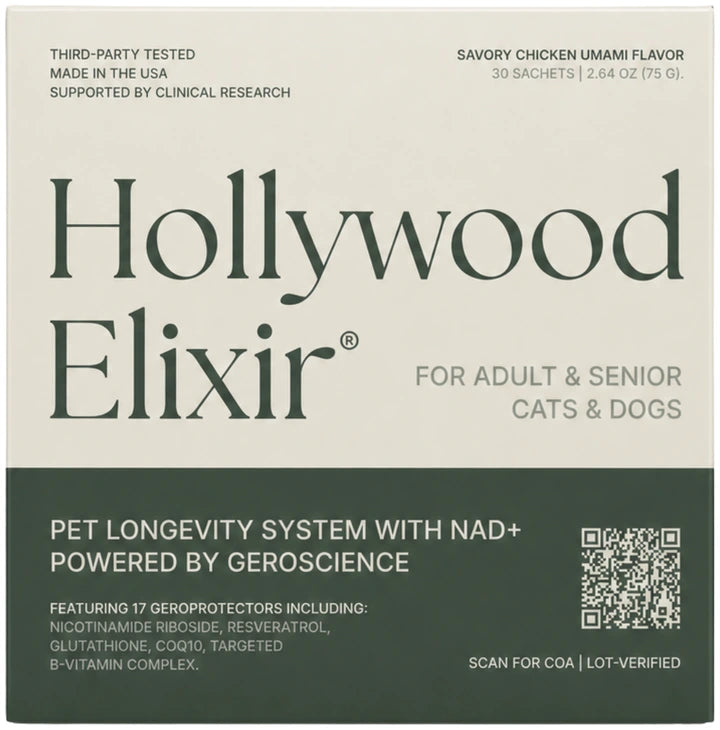
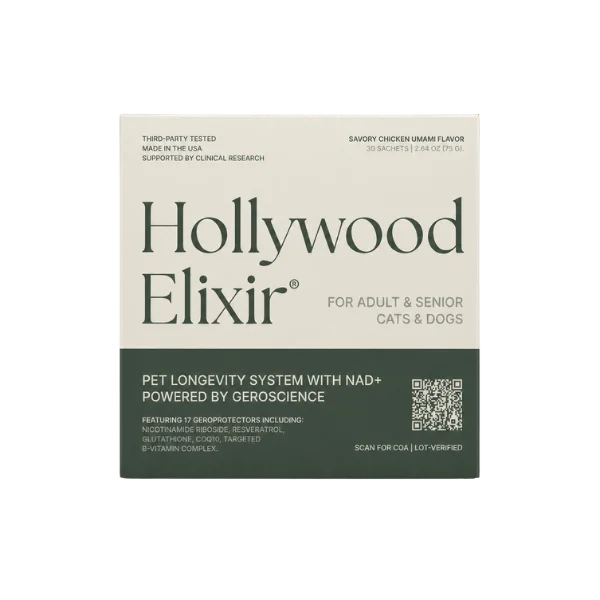
For owners who want a daily, systems-based layer of support, Hollywood Elixir™ is designed to support graceful aging as part of a broader plan that includes veterinary screening, nutrition, and home tracking.

When an older cat starts sleeping deeper, jumping less, or seeming “not quite herself,” it is natural to wonder if a single injection could reset aging. In reality, there is no true longevity shot for cats that reliably extends lifespan in healthy pets; most “shots” are either routine medical care (vaccines, pain control, fluids) or marketing language. The practical goal is cat longevity support that keeps daily function cleaner and more rhythmic while protecting the organs that most often limit a cat’s span—especially the brain and body weight regulation.

This page is built to help owners prepare for a veterinary visit: what to notice at home, what to record over a 30-day window, which questions to bring, and how to interpret common test results. Aging is not one switch; it is a shifting balance among inflammation, muscle loss, appetite changes, and organ workload. In cats, age-related obesity can drive chronic low-grade inflammation (“inflammaging”), which can make mobility, grooming, and energy feel more jagged over time (Kobayashi, 2025). Meanwhile, feline brain aging shares meaningful parallels with humans, which is why behavior changes deserve the same seriousness as lab changes (Januel, 2025). The most useful “longevity plan” is usually a layered routine: targeted veterinary screening plus natural longevity alternatives cats can use daily to support normal cellular function, hydration habits, and a stable body condition.

By La Petite Labs Editorial, ~15 min read

Featured Product:

  • A “longevity shot for cats” is not an evidence-based, one-and-done anti-aging therapy; most real longevity gains come from screening, weight strategy, and daily routines.
  • Start with what changed: jumping, grooming, appetite, litter box output, sleep-wake rhythm, and social behavior are often earlier signals than a single lab value.
  • Track trend points over a 30-day window: body weight, food intake, water intake, stool quality, play tolerance, and “good day/bad day” notes.
  • Expect the veterinarian to prioritize baseline bloodwork and urinalysis, blood pressure, body condition scoring, and targeted add-ons based on symptoms.
  • A common misconception is that injections are inherently stronger than daily support; in aging care, consistency often matters more than intensity.
  • Be cautious with “natural” megadoses—cats can experience vitamin D toxicity from dietary sources and supplements, so dosing should be veterinarian-guided (Vecchiato, 2021).
  • The best feline aging support blends medical oversight with upstream daily support that targets appetite stability, lean mass, hydration habits, and cognitive engagement.

The Moment Owners Start Wondering About a “Shot”

Owners usually start searching after a small but persistent change: a cat hesitates before jumping, sleeps through breakfast, or seems less socially “present.” Those shifts can reflect pain, body composition drift, or early organ strain—not just “getting old.” Feline aging support works best when it treats these changes as clues to investigate, not as a reason to chase a single longevity shot for cats.

CASE VIGNETTE: A 13-year-old indoor cat begins missing the couch jump and stops grooming her lower back. The household tries a trendy injection advertised for “anti-aging,” but the cat’s litter box clumps quietly get smaller over two weeks. That combination—mobility change plus subtle output change—is a better reason to call the veterinarian than to repeat a shot.

Cellular powerhouse illustration symbolizing metabolic support via feline aging support.

What People Mean by “Longevity Shot” in Cats

In practice, “longevity shot” can mean several very different things: a vitamin injection, a pain-control injection, subcutaneous fluids, or a clinic-administered supplement. None of these are proven to extend lifespan in healthy cats as a general rule. The more evidence-based framing is cat longevity support: lowering avoidable stressors on the body while keeping daily function cleaner, more rhythmic, and easier to assess.

At home, it helps to translate marketing into concrete questions: What problem is being targeted—pain, appetite, hydration, anxiety, or a diagnosed disease? How will the household know it worked—jump height, grooming time, litter box output, or weight trend points? Natural longevity alternatives cats can use daily often fit better than episodic injections because they create a routine that can be monitored and adjusted.

DNA structure visual linked to antioxidant protection mechanisms in natural longevity alternatives cats.

Two Primary Focus Areas: Brain Rhythm and Body Condition

This page focuses on two areas that commonly shape an older cat’s span: brain aging (sleep-wake rhythm, interaction, confusion) and body condition (weight gain or loss, muscle drift, appetite changes). Research increasingly treats pet cats as meaningful models for brain aging, reinforcing that behavior changes deserve structured attention rather than dismissal (Januel, 2025). Separately, age-related obesity in cats is linked to inflammaging, which can influence mobility, grooming, and overall adaptability (Kobayashi, 2025).

In the household, these two areas show up as “soft” signs: a cat stops greeting at the door, plays for shorter bursts, or becomes picky in a new way. Those are not diagnoses, but they are trackable. Feline aging support becomes more effective when the household can describe patterns—what time of day is worst, which surfaces are avoided, and whether appetite changes match weight trend points.

Structural biology image symbolizing ingredient integrity supported by cat longevity support.

Owner Checklist Before Calling the Vet

OWNER CHECKLIST (home-observable): (1) Jumping: any new “two-step” climbs or missed landings; (2) grooming: greasy coat, dandruff, or matting along the spine; (3) sleep-wake rhythm: nighttime vocalizing or daytime disengagement; (4) appetite pattern: smaller meals, food hovering, or sudden preference shifts; (5) litter box: clump size, frequency, and any outside-the-box events. These details help separate normal aging from pain, stress, or organ strain.

A household can gather this in 10 minutes without handling the cat. Photograph the litter box once daily for a week, note where the cat chooses to rest, and record whether grooming happens after meals. This kind of cat longevity support—observing before intervening—often produces a clearer veterinary plan than trying a new injection and hoping for a dramatic change.

Pug close-up emphasizing comfort and connection supported by cat longevity support.

What to Track over a 30-Day Window

WHAT TO TRACK (trend points): body weight weekly; body condition photos monthly (top and side view); daily food intake (measured, not guessed); daily water intake if feasible; litter box clump count and approximate size; play tolerance (minutes before stopping); and a simple “rhythmic vs jagged day” note. Trend points matter because older cats can compensate until they cannot, and a single “good day” can hide a real drift.

Use the same scale and the same time of day for weigh-ins, and avoid weighing right after a large meal. If the cat will not tolerate a scale, use a carrier method (carrier alone, then carrier plus cat). Natural longevity alternatives cats use daily are easier to evaluate when the household can say, “After two weeks, grooming time looked more rhythmic and weight trend points stabilized.”

Hollywood Elixir™ is amazing and makes my 13 y/o kitty young again!

— Jessie

She hopped up onto the windowsill again—first time in years.

— Charlie

“Aging care works best when routines are consistent and data is shareable.”

The Misconception: Injections Are Automatically More “Real”

UNIQUE MISCONCEPTION: Many owners assume a shot is inherently more potent than a daily routine. In aging care, the opposite is often true: the body responds to consistency, and the household needs repeatable observations to judge whether a plan is working. A longevity shot for cats can also create false reassurance—masking pain briefly while weight, hydration, or sleep-wake rhythm continues to drift.

A better question is, “What is the mechanism and what is the monitoring plan?” If the goal is feline aging support, the household should expect a timeline measured in weeks, not hours. If a clinic offers an injection without explaining what will be tracked afterward, it is reasonable to pause and ask for a clearer plan before proceeding.

Elegant canine photo emphasizing gentle vitality supported through feline aging support.

How the Vet Will Triage an Aging Concern

Veterinarians typically triage aging concerns by separating “behavior-only” changes from changes that suggest pain, dehydration, endocrine disease, or heart strain. That usually starts with a physical exam, weight and muscle scoring, and a discussion of appetite, thirst, and litter box output. Because age-related obesity is tied to inflammaging in cats, body condition is not cosmetic—it is a clinical clue that can shape the entire plan.

Owners can make this visit more productive by bringing a short timeline: when the change started, whether it is constant or episodic, and what makes it better or worse. A cat that is “fine at the clinic” may still have jagged nights at home, so a 20-second video of jumping or nighttime vocalizing can be more useful than a long story.

Side-profile dog portrait highlighting focus and alertness supported by feline aging support.

Vet Visit Prep: Questions Worth Bringing

VET VISIT PREP (bring these questions): (1) “Which age-related diseases best match these trend points, and which are most urgent to rule out?” (2) “If pain is suspected, how will response be assessed at home—jumping, grooming, sleep rhythm?” (3) “What screening tests are most informative for this cat’s age and body condition?” (4) “If a supplement or injection is suggested, what are the realistic outcomes and the follow-up plan?”

Bring the cat’s current diet label, treat list, and any supplements—especially “natural” products. Cats are sensitive to certain nutrient excesses; vitamin D toxicity has been documented from dietary sources and can be serious, so the veterinarian should know exactly what is being given (Crossley, 2017). This is a core part of safe cat longevity support.

Product info graphic highlighting testing and standards behind feline aging support.

What Not to Do While Waiting for the Appointment

WHAT NOT TO DO: (1) Do not start multiple new supplements at once; it destroys the ability to interpret trend points. (2) Do not give high-dose vitamins “just in case,” especially fat-soluble vitamins; cats can experience vitamin D toxicity from excess intake (Vecchiato, 2021). (3) Do not restrict food aggressively to force weight loss in an older cat; rapid changes can be risky. (4) Do not assume nighttime vocalizing is “just old age” without checking pain, blood pressure, and thyroid status.

Instead, keep routines stable for 7–10 days so the veterinarian sees the true baseline. Make the home easier: add a low step to favorite furniture, place a second water station, and use a larger, lower-sided litter box. These changes are simple feline aging support that can reduce day-to-day friction while diagnostics are pending.

How Bloodwork and Urinalysis Fit into Longevity Planning

Baseline labs do not measure “aging,” but they reveal the constraints that shape a cat’s span: kidney concentration ability, liver markers, glucose trends, electrolytes, and anemia. Urinalysis is especially valuable because it can show hydration and kidney handling before a cat looks obviously sick. If glucose is elevated or diabetes is suspected, treatment choices require monitoring; evidence for some non-insulin options in cats is limited and heterogeneous, reinforcing the need for veterinarian-led selection and follow-up (Romero-Vélez, 2025).

Owners can support cleaner interpretation by avoiding big diet changes right before testing and by noting whether the cat was stressed, fasted, or recently given treats. Ask the clinic which results should be rechecked and on what timeline. Cat longevity support is not a single lab panel; it is a repeatable loop of testing, home trend points, and adjustments.

“In cats, behavior shifts can be medical signals, not personality changes.”

Lab coat visual symbolizing disciplined formulation supporting natural longevity alternatives cats.

Blood Pressure, Thyroid, and the “Restless Night” Cat

Nighttime vocalizing, pacing, and sudden clinginess can be linked to pain, hyperthyroidism, hypertension, or cognitive change. Because cats can hide daytime discomfort, the “restless night” pattern is worth a structured workup rather than a quick sedating injection. Brain aging in cats is increasingly treated as biologically meaningful, not merely behavioral, which supports taking these signs seriously during screening (Januel, 2025).

At home, note the clock time of vocalizing, whether it follows litter box use, and whether it improves after food or attention. Record a short audio clip; it helps distinguish yowling from pain-related meowing. Natural longevity alternatives cats use daily should not replace diagnostics here—this is a “measure first” moment so the plan matches the cause.

Shop Now
Hollywood Elixir with foods symbolizing nutrient synergy aligned with cat longevity support.

Heart Screening and Why Some “Anti-aging” Drugs Aren’t General Tools

Owners sometimes hear about drugs associated with longevity research and assume they translate into a general feline anti-aging shot. In cats, medications like rapamycin have been studied in specific clinical contexts; for example, delayed-release rapamycin was evaluated in cats with subclinical hypertrophic cardiomyopathy, focusing on heart changes rather than broad lifespan extension (Kaplan, 2023). That distinction matters: a therapy studied for a diagnosed condition is not automatically appropriate for a healthy aging cat.

If a cat has a murmur, fast breathing at rest, or exercise avoidance, the veterinarian may recommend blood pressure checks, imaging, or cardiac biomarkers. Owners can help by counting resting respiratory rate during sleep for a week and bringing the numbers. Feline aging support becomes safer when heart risk is clarified before any new regimen is layered in.

Shop Now
Pet owner displaying product as part of daily care supported by natural longevity alternatives cats.

Weight Drift, Inflammaging, and the “Soft Middle” Problem

In older cats, weight drift can be confusing: some gain fat while losing muscle, and others lose weight despite eating. Age-related obesity is linked to inflammaging in cats, meaning adipose tissue can contribute to chronic low-grade inflammatory signaling that may make movement and grooming feel more jagged. This is one reason body condition scoring and muscle scoring matter as much as the number on the scale.

At home, feel along the ribs and spine weekly and compare to photos; a “soft middle” can hide muscle loss over the back legs. Use puzzle feeders or measured meal portions to keep appetite cues more rhythmic, and avoid free-pouring kibble. Cat longevity support here is practical: the goal is a stable body condition that supports adaptability and a healthier regeneration rate.

Shop Now

Natural Longevity Alternatives Cats Can Use Daily

Natural longevity alternatives cats can use daily tend to work best when they support normal function rather than chase dramatic “anti-aging” claims. The most defensible categories are those that fit into a consistent routine: hydration-friendly feeding strategies, measured protein-appropriate diets, gentle mobility support, and cognitive engagement. Because cats can be sensitive to nutrient excess, “more” is not automatically better—especially with fat-soluble vitamins and concentrated oils.

A household can choose one change at a time and evaluate it against trend points: appetite rhythm, stool quality, grooming, and play tolerance. If a supplement is used, keep the label and lot number and share it with the veterinarian. This approach is slower than a “shot,” but it is often cleaner in outcomes because it is trackable and reversible.

Where a Daily “Systems” Supplement Can Fit

A daily supplement fits best when it supports upstream cellular health and helps the household keep routines consistent—rather than promising to replace diagnostics or treat disease. This is the practical difference between feline aging support and the fantasy of a longevity shot for cats: daily inputs can be adjusted based on trend points, while one-off interventions often leave owners guessing what changed.

For example, Hollywood Elixir™ can be used as part of cat longevity support by contributing to a consistent daily plan that supports normal cellular function. The household still benefits most from pairing it with a 30-day window of tracking and a scheduled recheck, so changes are interpreted as patterns—not wishful thinking.

Side-by-side chart contrasting bioactives and fillers relative to cat longevity support.

What “Real Results” Look Like in Aging Care

In aging care, meaningful results are often subtle but important: fewer missed jumps, a coat that looks cleaner, a more rhythmic appetite, and fewer “bad day” notes across a month. Owners should be wary of any plan that promises immediate transformation. The body’s regeneration rate and adaptability change gradually, so the most honest goal is a wider surplus of good days rather than a dramatic overnight shift.

A practical benchmark is to reassess at 2 weeks for tolerability (stool, appetite, behavior) and at 4–6 weeks for trend points (weight, grooming, play tolerance). If nothing changes, that is still useful information—it narrows the next step with the veterinarian. Feline aging support is a sequence of small, testable decisions.

Shop Now
Unboxed supplement reflecting refined experience and trust in feline aging support.

When “Shots” Are Legit: Disease-specific Therapies

Some injections or advanced therapies are absolutely legitimate—but they are disease-specific, not general longevity tools. For example, AAV-based gene therapy has been studied in a feline Sandhoff disease model with improved survival compared with untreated controls, reflecting targeted enzyme restoration rather than broad anti-aging support (Maguire, 2024). Similarly, antiviral therapy with GS-441524 has strong evidence for feline infectious peritonitis outcomes, which is about treating a specific fatal disease, not slowing normal aging (Gokalsing, 2025).

This distinction protects owners from hype: a therapy that changes the course of a defined disease can be life-saving, but it does not imply that a healthy senior cat needs an “anti-aging shot.” If a clinic suggests an injection for “longevity,” ask what diagnosis it targets and what objective markers will be followed afterward.

Shop Now

A Follow-up Plan That Keeps Decisions Clean

A strong follow-up plan has three parts: (1) a short list of trend points to monitor, (2) a recheck date, and (3) a decision rule for what happens if the cat worsens. If a disease-specific therapy is used, follow-up should include objective confirmation; for example, long-term follow-up after oral GS-441524 for FIP commonly includes exams and lab markers to confirm sustained remission (Zwicklbauer, 2023). That mindset—measure, recheck, confirm—also applies to everyday feline aging support.

Owners can keep decisions cleaner by changing one variable at a time and writing down start dates. If the cat’s appetite becomes jagged, if litter box output drops, or if resting breathing rises, the plan should shift from “support” to “call the vet.” Cat longevity support is most effective when it is paired with clear thresholds for action.

“The most persuasive longevity plan is the one a household can sustain.”

Educational content only. This material is not a substitute for veterinary advice. Always consult your veterinarian about your cat’s specific needs. These statements have not been evaluated by the Food and Drug Administration. Products mentioned are not intended to diagnose, treat, cure, or prevent any disease.

Glossary

  • Inflammaging - Chronic low-grade inflammation associated with aging and body fat changes.
  • Body condition score (BCS) - A hands-on and visual estimate of body fat that complements scale weight.
  • Muscle condition score (MCS) - An assessment of muscle mass loss or maintenance, especially over the spine and hips.
  • Trend points - Repeatable measurements tracked over time (weight, appetite, litter box output) to reveal patterns.
  • Sleep-wake rhythm - The daily pattern of sleeping and activity; changes can signal pain or cognitive shift.
  • Resting respiratory rate - Breaths per minute while asleep; used as a home marker for possible heart or lung stress.
  • Subcutaneous fluids - Fluids given under the skin to support hydration in specific medical situations.
  • Urine specific gravity - A measure of how concentrated urine is, often used to assess hydration and kidney handling.
  • Cognitive change - Shifts in attention, interaction, or orientation that may reflect brain aging or medical disease.

Related Reading

References

Romero-Vélez. Efficacy and Safety of Non-Insulin Antidiabetic Drugs in Cats: A Systematic Review. 2025. https://www.mdpi.com/2076-2615/15/17/2561

Maguire. Intravenous gene therapy improves lifespan and clinical outcomes in feline Sandhoff Disease.. PubMed Central. 2024. https://pmc.ncbi.nlm.nih.gov/articles/PMC11601349/

Gokalsing. Efficacy of GS-441524 for Feline Infectious Peritonitis: A Systematic Review (2018-2024).. PubMed Central. 2025. https://pmc.ncbi.nlm.nih.gov/articles/PMC12298711/

Zwicklbauer. Long-term follow-up of cats in complete remission after treatment of feline infectious peritonitis with oral GS-441524.. PubMed Central. 2023. https://pmc.ncbi.nlm.nih.gov/articles/PMC10811998/

Kobayashi. Age-related obesity and inflammaging in cats. 2025. https://www.frontiersin.org/journals/veterinary-science/articles/10.3389/fvets.2025.1639055/full

Januel. Cat brains age like humans: Translating Time shows pet cats live to be natural models for human aging.. PubMed. 2025. https://pubmed.ncbi.nlm.nih.gov/40766475/

Kaplan. Delayed-release rapamycin halts progression of left ventricular hypertrophy in subclinical feline hypertrophic cardiomyopathy: results of the RAPACAT trial.. PubMed Central. 2023. https://pmc.ncbi.nlm.nih.gov/articles/PMC10979416/

Vecchiato. Case Report: A Case Series Linked to Vitamin D Excess in Pet Food: Cholecalciferol (Vitamin D3) Toxicity Observed in Five Cats.. PubMed Central. 2021. https://pmc.ncbi.nlm.nih.gov/articles/PMC8416511/

Crossley. Vitamin D toxicity of dietary origin in cats fed a natural complementary kitten food.. PubMed Central. 2017. https://pmc.ncbi.nlm.nih.gov/articles/PMC5731632/

FAQ

Is there a real longevity shot for cats?

There is no single injection proven to extend lifespan in healthy pet cats in a reliable, general way. Many “shots” marketed for aging are vitamins, fluids, or symptom-focused medications that may be appropriate for a specific problem, not for longevity itself.

A more evidence-based approach is feline aging support: screening for hidden disease, stabilizing body condition, and tracking trend points over a 30-day window so changes are measurable.

What does “cat longevity support” actually mean?

Cat longevity support means reducing the everyday stressors that shorten a cat’s span and catching disease earlier, when it is more manageable. Practically, that includes weight strategy, hydration habits, dental and pain screening, and age-appropriate lab monitoring.

It also means choosing routines a household can sustain, because consistency makes outcomes cleaner and easier to interpret than sporadic, high-intensity interventions.

Which aging changes are normal, and which are red flags?

Mild slowing down can be normal, but persistent behavior shifts deserve attention: missed jumps, reduced grooming, appetite changes, increased thirst, nighttime vocalizing, or litter box changes. These can reflect pain, endocrine disease, kidney strain, or cognitive change rather than “just aging.”

If a change is new, progressive, or paired with weight drift, it is a good reason to schedule a veterinary visit and bring home trend points.

How long should owners track symptoms before the vet visit?

For non-emergency concerns, 7–14 days of consistent notes is often enough to reveal patterns without delaying care. Record appetite, water intake if possible, litter box clump size and frequency, sleep-wake rhythm, and mobility moments like jumping.

If breathing seems fast at rest, the cat stops eating, or the cat is hiding and painful, do not wait—call the clinic the same day.

What tests usually matter most for older cats?

Common first-line screening includes a physical exam with weight and muscle scoring, bloodwork, and urinalysis. Many veterinarians also check blood pressure and thyroid status in seniors, because these can shape behavior, appetite, and sleep rhythm.

The most useful panel is the one matched to the cat’s trend points—what changed at home and how quickly it is drifting.

Can obesity shorten a cat’s aging span?

Yes. In cats, age-related obesity is linked to chronic low-grade inflammation (“inflammaging”), which can influence mobility, grooming, and overall adaptability. That makes body condition a clinical issue, not just a cosmetic one.

A veterinarian can help set a safe weight strategy that protects lean mass while keeping appetite and stool patterns more rhythmic.

Are “natural longevity alternatives cats” use always safe?

“Natural” does not automatically mean safe for cats. Cats can be sensitive to nutrient excess, and fat-soluble vitamins are a common risk when owners stack multiple products.

Vitamin D toxicity has been documented in cats from dietary sources and supplement-like exposures, so any high-dose vitamin plan should be veterinarian-guided(Vecchiato, 2021).

Should a senior cat get vitamin injections for aging?

Vitamin injections can be appropriate when a veterinarian identifies a specific need, but they are not a universal anti-aging tool. Without a diagnosis and monitoring plan, they can create false reassurance while the real driver of decline continues.

If a clinic suggests vitamins, ask what deficiency is suspected, what will be tracked afterward, and whether diet changes would address the same goal more cleanly.

How is feline aging support different from disease treatment?

Feline aging support focuses on maintaining normal function and catching problems early—weight strategy, hydration habits, cognitive engagement, and screening. Disease treatment targets a diagnosed condition with specific therapies and objective follow-up.

Confusing the two can lead to chasing “anti-aging” products when the cat actually needs diagnostics for pain, kidney strain, thyroid disease, or heart changes.

Do cats age like humans in the brain?

Cats show meaningful parallels to humans in brain aging, which is why behavior changes can be biologically important rather than “just personality”. Sleep-wake rhythm shifts, confusion, and altered social interaction deserve structured observation.

Owners can help by recording when changes happen, what triggers them, and whether pain or appetite changes occur at the same time.

Is rapamycin a longevity drug for healthy cats?

Rapamycin is not a general “longevity shot” for healthy cats. In cats, it has been studied in specific clinical contexts, such as subclinical hypertrophic cardiomyopathy, with outcomes focused on heart changes rather than broad lifespan extension(Kaplan, 2023).

Any discussion of such medications should be veterinarian-led, diagnosis-driven, and paired with monitoring that matches the cat’s risk profile.

What side effects should owners watch after a new supplement?

Watch for appetite becoming jagged, vomiting, diarrhea, constipation, new hiding, or changes in litter box output. Also watch for a cat that seems “wired” at night or unusually sleepy during the day, because sleep rhythm is a sensitive marker in seniors.

Stop the new product and call the veterinarian if signs are persistent, severe, or paired with weakness, dehydration, or fast breathing.

Can Hollywood Elixir™ replace veterinary screening for seniors?

No.

A daily product like Hollywood Elixir™ is designed to support graceful aging as part of a plan, but it cannot diagnose pain, kidney strain, thyroid disease, or hypertension. Screening is what keeps decisions clean, because it identifies the constraints that actually shape a cat’s span.

How should owners introduce Hollywood Elixir™ into a routine?

Introduce one change at a time and keep everything else stable for 1–2 weeks so trend points are interpretable. Pair the start date with simple tracking: appetite rhythm, stool quality, grooming, and play tolerance.

If using Hollywood Elixir™, share the full ingredient label with the veterinarian, especially if the cat takes prescription medications or has kidney or heart concerns.

How soon can owners expect changes from daily longevity routines?

Most meaningful changes show up over weeks, not days. In older cats, the goal is often a cleaner pattern—more rhythmic appetite, fewer missed jumps, and fewer “bad day” notes—rather than a dramatic transformation.

A practical approach is a 30-day window of trend points with a planned recheck, so the veterinarian can adjust the plan based on patterns rather than impressions.

What quality signals matter when choosing a cat supplement?

Look for transparent labeling, clear feeding directions, lot identification, and a company willing to share quality testing practices. Avoid products that promise to treat disease, replace diagnostics, or deliver immediate “anti-aging” results.

For feline aging support, the best product is the one that fits a consistent routine and can be evaluated against trend points without stacking multiple new variables.

Can a longevity shot for cats help cognitive changes?

A single injection is unlikely to address cognitive change in a broad, reliable way. Nighttime vocalizing and confusion can also reflect pain, thyroid disease, or hypertension, so the first step is screening and a structured history.

Once medical drivers are addressed, cognitive-focused routines—predictable feeding times, gentle play, and environmental cues—often provide cleaner, trackable support than chasing a one-time “anti-aging” intervention.

What medications commonly interact with supplements in older cats?

Interactions depend on the ingredient and the cat’s prescriptions, but older cats commonly take thyroid medication, pain control, heart medications, or kidney-supportive therapies. Supplements can also change appetite or stool patterns, which complicates medication timing.

Bring every label to the appointment and ask the veterinarian to review the full list before adding anything new, including Hollywood Elixir™.

When should owners call the vet urgently about aging signs?

Call urgently if the cat stops eating, has repeated vomiting, shows open-mouth breathing, collapses, cannot use the litter box, or seems painful and withdrawn. Also call if resting breathing rate rises or the gums look pale.

These are not situations for experimenting with natural longevity alternatives cats might use daily; they require prompt assessment and, often, same-day testing.

How do owners decide between shots, supplements, and diagnostics?

Start with diagnostics when the change is new, progressive, or paired with weight drift, thirst changes, or litter box changes. Shots can be appropriate when they target a defined problem (pain flare, dehydration) with a follow-up plan.

Supplements fit best as cat longevity support when they are one variable in a consistent routine, tracked with trend points and reviewed at a recheck. For many households, that is the cleanest decision framework.

5K+ Happy Pet Parents

Excellent 4.8

Longevity Shot for Cats | Why Thousands of Pet Parents Trust Hollywood Elixir™

"My go-to nutrient-dense topper. Packed with 16 powerful anti-aging actives and superfoods!"

Chanelle & Gnocchi

"We go on runs pretty often; he use to get tired halfway through, but lately, he's been keeping up without any problem."

Cami & Clifford

"He seems more happy overall. I've also noticed he has more energy which makes our walks and playtime so much more fun."

Olga & Jordan

"I want her to live forever. She hasn't had an ear infection since!"

Madison & Azula

"My go-to nutrient-dense topper. Packed with 16 powerful anti-aging actives and superfoods!"

Chanelle & Gnocchi

"We go on runs pretty often; he use to get tired halfway through, but lately, he's been keeping up without any problem."

Cami & Clifford

"He seems more happy overall. I've also noticed he has more energy which makes our walks and playtime so much more fun."

Olga & Jordan

"I want her to live forever. She hasn't had an ear infection since!"

Madison & Azula

"My go-to nutrient-dense topper. Packed with 16 powerful anti-aging actives and superfoods!"

Chanelle & Gnocchi

"We go on runs pretty often; he use to get tired halfway through, but lately, he's been keeping up without any problem."

Cami & Clifford

"He seems more happy overall. I've also noticed he has more energy which makes our walks and playtime so much more fun."

Olga & Jordan

"I want her to live forever. She hasn't had an ear infection since!"

Madison & Azula

"My go-to nutrient-dense topper. Packed with 16 powerful anti-aging actives and superfoods!"

Chanelle & Gnocchi

"We go on runs pretty often; he use to get tired halfway through, but lately, he's been keeping up without any problem."

Cami & Clifford

"He seems more happy overall. I've also noticed he has more energy which makes our walks and playtime so much more fun."

Olga & Jordan

"I want her to live forever. She hasn't had an ear infection since!"

Madison & Azula

SHOP NOW