



Lavender for Cats

Why the oil is riskier for cats than for dogs, what one 16-cat study found, and how to keep a scented home safe.

By La Petite Labs Editorial 11 min read

As Seen On

  • AVMA, American Veterinary Medical Association
  • Today’s Veterinary Business
  • Petfood Industry
Woman cuddling an orange-and-white cat and a silver tabby while holding a Hollywood Elixir box
Hollywood Elixir® Senior Cat Supplement

17 science-backed actives

From$50/moSave up to 47%Save up to 44%Shop Now
Contents
Lavender is not a safe calming aid for cats: the plant is listed as toxic to them, and the essential oil should never go on a cat's skin or fur. A cat's liver is slow to clear the oil's compounds, and grooming turns anything on the coat into something swallowed. One small clinic study did report calmer behavior with lavender scent. It involved 16 cats and lasted 30 minutes.

This guide takes the plant, the oil and diffusers one at a time, then covers the warning signs and what to do if your cat gets into lavender.

  • What it is: A scented herb. Its essential oil is a concentrate of plant compounds, chiefly linalool and linalyl acetate.6
  • The plant: The ASPCA lists lavender as toxic to cats. The signs are nausea, vomiting and loss of appetite.2
  • The oil: Never put it on a cat. Essential oils pass through the skin and get swallowed during grooming.3
  • Diffusers: Ultrasonic and nebulizing models release oil droplets that can settle on fur.3
  • Calming: One study of 16 cats reported lower stress scores with lavender scent, but the two groups already differed at the first check.1
  • Amount: Europe's food-safety agency judged up to 7 mg of lavender oil per kg of cat food safe as a flavoring, against 30 mg for dogs.6 We found no amount recommended for calming.
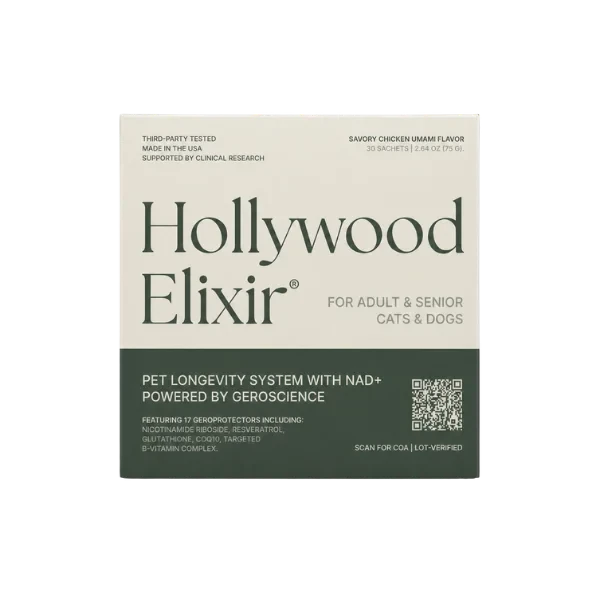
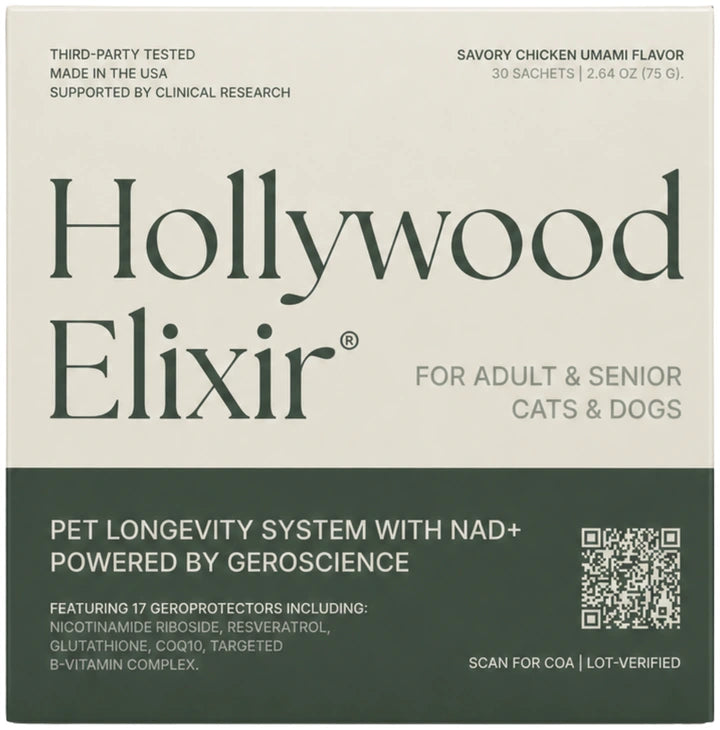
  • In Hollywood Elixir: No. Hollywood Elixir contains no lavender and is not a calming aid. It's daily nutrition.

Is lavender safe for cats?

Lavender is not a safe choice for cats in its concentrated forms, and nothing we read makes the scent worth the risk. Three sources line up:

  • The ASPCA lists the lavender plant as toxic to cats.2
  • Pet Poison Helpline says concentrated essential oils should never be applied directly to cats.3
  • The PDSA, a UK veterinary charity, names lavender among the essential oils that are toxic to cats.4

Risk still turns on the form and the amount. A lavender bush outdoors, a scented candle in another room and an open bottle of oil are three very different exposures.

Lavender is also not the oil that worries poison-control vets most. Pet Poison Helpline's list of oils known to poison cats names 11, among them tea tree, peppermint and eucalyptus. Lavender is not one of them.3

A working rule: keep the oil off your cat, away from the rooms your cat uses, and locked out of reach.

Woman kneeling with two long-haired tabby cats while holding a Hollywood Elixir box beside a food bowl

What is lavender, and what is in the oil?
Lavender is a flowering herb grown for its scent, and its essential oil is that fragrance in concentrated form. Essential oils are drawn out of plants by distilling or cold pressing.3 When Europe's food-safety agency tested seven batches of lavender oil, linalool and linalyl acetate together reached 75.4% of the oil in the richest batch.6

The ASPCA names the same two compounds as the toxic principles of the lavender plant.2

A cat can meet lavender as a plant, as dried flowers, as bottled oil, or as a scent in diffusers, sprays and toiletries.

Woman exercising beside a tabby cat, with a Hollywood Elixir box and food bowl on a small table

Why are cats more sensitive to lavender oil than dogs or people?

Lavender oil is harder on cats because of how the feline liver works. The body clears the oil's compounds partly through a liver step called glucuronidation, and cats have an unusually low capacity for it.6 A 2000 study traced part of that weakness to UGT1A6, an enzyme gene that is broken in cats.7

Regulators build this in. When Europe's food-safety agency assessed lavender oil for pet food, it required a safety margin of 500 for cats, against 100 for other animals.6

Grooming adds a second route. Oil that lands on fur is absorbed through the skin or licked off.3

Orange-and-white cat reaching toward a woman holding a Hollywood Elixir box while sitting in a chair

Is the lavender plant toxic to cats?

The lavender plant is listed as toxic to cats by the ASPCA's poison-control center. Its entry gives three signs: nausea, vomiting and loss of appetite.2

The entry states no amount, and what it describes is stomach upset.2 A cat that brushes past a lavender pot has had no real exposure. A cat that chews the leaves or flowers may be sick afterward.

If your cat is a plant chewer, grow lavender where the cat can't get at it. Phone your vet for advice if your cat eats some and vomits. Repeated vomiting, or a cat that stops eating, calls for a visit.

Gray-haired man holding a Hollywood Elixir box while two cats rest beside him in an armchair

Are lavender diffusers safe around cats?

Lavender diffusers pose two kinds of risk to cats, depending on the type. Passive diffusers, such as reeds, plug-ins and warmers, give off scent only. Their main hazard is irritated airways, unless the liquid spills onto the cat or gets licked.3

Active diffusers are the bigger worry. Ultrasonic and nebulizing models push tiny oil droplets into the air, and the droplets can collect on a cat's fur. From there the oil is absorbed through the skin or swallowed during grooming.3

The PDSA's advice is to keep cats out of rooms where oils are diffusing, and to air the room before letting them back in.4 For a pet with breathing problems, the ASPCA says it may be best to use no diffuser at all.5

For cats, purer means stronger.

Does lavender calm cats? What the one cat study found

Lavender scent was linked with lower stress scores in the one cat study we could read, and that study is too small to lean on. In 2018, researchers tested 16 cats at a veterinary practice. Eight breathed in lavender oil scent and eight did not. Each cat's behavior was scored on a standard cat stress scale every 10 minutes for 30 minutes.1

The lavender group scored lower at every check.1 The catch is the first check. The two groups already differed at admission. If that score was taken before the scent had time to act, the lavender cats may simply have been calmer cats.1

The published summary mentions no safety checks and no follow-up.1 Oil on fur, oil by mouth and a diffuser running at home for hours were not tested.

Human research is larger. A 2019 review pooled 37 trials in people and found that inhaled lavender lowered anxiety scores.13 People choose to sniff it, can walk away, and don't lick their coats afterward.

Tabby cat looking up at a Hollywood Elixir sachet held above it, with the product box on a small table

Can you put lavender oil on a cat?

Lavender oil should never go on a cat, diluted or not. Pet Poison Helpline puts it bluntly: concentrated essential oils should never be applied directly to cats.3 The PDSA says the same of any essential oil, for two reasons. The skin may react badly, and the cat will lick the oil off and swallow it.4

Diluting the oil lowers the risk without removing it. The PDSA notes that the carrier oil used for dilution can itself upset a cat's stomach.4

After handling undiluted lavender oil, wash your hands well before you stroke your cat.4

Hand gently petting an orange-and-white cat beside a food bowl and Hollywood Elixir box

Does lavender oil work for fleas on cats?

Lavender oil has killed and repelled fleas in the laboratory, and the evidence stops there. In a 2024 test, oil from a hybrid lavender repelled cat fleas on treated filter paper.14 No cat took part.

On real cats, plant-oil flea products have a poor record. Poison-control vets reviewed 39 cats exposed to flea products made from essential oil blends, and 36 of them had adverse effects, most often agitation and drooling.10 An older review lists drooling, tremors, wobbliness and low body temperature in cats poisoned by insecticides that contain linalool, one of lavender's main compounds.8, 6 A 1995 review called such poisonings uncommon and tied most to products used stronger than the label says.9

Ask your vet for a flea product made for cats.4 Our guide to flea allergy dermatitis in cats shows why flea control matters.

Man holding a Hollywood Elixir box beside a black cat, an orange tabby and a food bowl

What are the signs of lavender oil poisoning in cats?

No source we read lists signs that are special to lavender oil, so the ones to know are the general signs of essential oil poisoning. The PDSA lists these:4

  • heavy drooling;
  • vomiting;
  • shaking or tremors;
  • walking as if drunk;
  • dullness or lethargy;
  • trouble breathing, or breathing with the mouth open;
  • collapse or seizures.

Skin that touched the oil may turn red or sore, though normal-looking skin is no proof the cat is fine.4

Scent in the air has signs of its own: a watery nose or eyes, drooling, and coughing or wheezing. A cough can look like a cat trying to bring up a hairball, except that no hairball appears.3

What should you do if your cat licked or walked through lavender oil?

A cat with lavender oil on its fur, paws or tongue needs a call to the vet straight away, even if it looks normal. The PDSA's advice is to contact your vet immediately after any suspected contact with an essential oil, whether or not signs have appeared.4

While you make the call:

  • Move: take your cat away from the oil and into fresh air.
  • Block licking: keep your cat from grooming its coat if you can.
  • Find the bottle: your vet will want to know which oil it was and how concentrated.4

Breathing trouble is the emergency. Pet Poison Helpline says a cat with breathing signs should be moved into fresh air at once and taken for emergency care if the signs don't clear quickly.3

In the United States, Pet Poison Helpline answers 24/7 at (855) 764-7661, and the ASPCA Animal Poison Control Center is at (888) 426-4435.3, 2

People choose to sniff it, can walk away, and don't lick their coats afterward.

Silver tabby sitting beside a food bowl and a Hollywood Elixir box held in a person's hand

DVM Voice: Clinical Vignette of a Common Pattern in Senior Cat Aging

Case provided by JoAnna Pendergrass, DVM

Sasha, a 12-year-old cat, was brought in after her owner noticed increased thirst and urination, lethargy, vomiting, and a generally unkempt appearance. Examination showed weight loss, elevated blood pressure, and reduced vitality.

Diagnostic testing revealed elevated kidney markers, poorly concentrated urine, and protein loss in the urine — findings consistent with chronic kidney disease, one of the most common chronic conditions in senior cats.

Her care required a kidney-focused diet, blood pressure management, targeted supplementation, medication support, and regular monitoring — a necessary plan, but one started after clinical signs were already visible.

Clinical takeaway: Sasha’s case reflects why senior-cat wellness should begin before obvious decline. Earlier monitoring, body-condition tracking, hydration awareness, antioxidant support, and daily cellular resilience may help support quality of life as cats age.

Single-case vignette. Not generalizable. Veterinary diagnosis and monitoring are essential for increased thirst, urination, vomiting, lethargy, weight loss, or suspected kidney disease.

Explore Hollywood Elixir Research →
Woman holding a Hollywood Elixir box toward a brown cat perched on the back of a sofa

How much lavender is too much for a cat?

We found no study that measured a safe amount of lavender oil for a cat's skin or lungs, so there is no number to give for diffusers, sprays or drops. The one official figure covers food. Europe's food-safety agency judged lavender oil safe as a flavoring at up to 7 mg per kg of complete cat food, against 30 mg per kg for dogs.6

That figure covers a trace added for smell and taste. A bottle of essential oil is the concentrate itself.

The cat study used scent only, for 30 minutes, and its summary gives no amount.1

Woman leaning toward a fluffy orange cat beside a Hollywood Elixir box and green food bowl

Are lavender candles, sprays and toiletries risky for cats?

Lavender-scented household products sit at the low end of the risk scale when they hold little essential oil. The PDSA rates the risk from toiletries and cosmetics with only a very small amount of essential oil as low.4

Low is not zero for every cat. Strong fragrance can irritate a cat's airways, and a watery nose or eyes, drooling or labored breathing are the signs.3

Two habits cover most of the risk:4

  • don't clean with undiluted essential oils, since cats rub against surfaces and then groom;
  • store oils and reed diffuser liquid where a cat can't reach or drink them.
Tabby cat licking its nose beside a food bowl and Hollywood Elixir box

Which cats are most at risk from lavender? Kittens, seniors, asthma

Lavender scent is hardest on cats whose airways are already irritated. Pet Poison Helpline names three groups at greater risk of severe breathing irritation: cats with asthma, cats with airborne allergies, and cats that live with tobacco smoke.3

Kittens, senior cats and cats with liver or kidney disease are a gap in the research. We found no lavender study in any of those groups. Because essential oils are broken down in the liver, keeping lavender oil out of the home of a cat with liver disease is the cautious choice.3

How do you read the label on a lavender product in a cat home?

A lavender product belongs in a home with cats only if its label answers three questions.

  • How strong is it? Look for the percentage of essential oil. Pet Poison Helpline's rule: the higher the concentration, the greater the risk to the cat.3
  • Where does it end up? Reeds, plug-ins and room sprays scent the air. Anything that leaves oil on a surface, on your hands or on the cat ends up on fur.
  • What else is in it? Check blends for oils with a worse record. Tea tree, peppermint, citrus, eucalyptus, cinnamon, wintergreen and ylang ylang appear on both of the poison lists we read.3, 4

Be wary of products sold for cats themselves. The PDSA points out that essential oils are not well regulated, so makers can put them in pet products, over-the-counter flea treatments included.4

Words like "natural", "pure" and "therapeutic grade" describe the oil and say nothing about what it does to a cat. For cats, purer means stronger.

Is lavender different for cats and dogs?

Lavender is a different proposition for cats than for dogs, on three counts.

  • Evidence: dogs have several scent studies, including one in which 32 dogs rested more on car rides with lavender in the air.15 Cats have the single 16-cat clinic study.1
  • In food: Europe's food-safety agency judged lavender oil safe as a flavoring at up to 30 mg per kg for dogs and 7 mg per kg for cats.6
  • Body and habits: cats are slower to clear the oil's compounds, and they spend much of the day grooming, so a droplet on the coat matters more.6, 11

A veterinary review of clinic stress drew the same line. It passed on a tip to use lavender or chamomile oil on dog bedding, and said essential oils are probably best avoided where cats are housed.11

A scent routine that suits a dog can be wrong for the cat sharing the room. In a mixed home, follow the cat rules: no oil on any animal and no active diffuser in shared rooms. Our guide to lavender for dogs covers the canine studies.

Tabby cat sitting at a table with a food bowl and Hollywood Elixir box

When should you call the vet about lavender and your cat?

Lavender calls for a vet in two situations: after an exposure, and before you try it for a behavior problem.

After contact with the oil, phone right away without waiting for signs.4 Head to an emergency clinic for open-mouth breathing, wheezing, tremors, stumbling, collapse or a seizure.3, 4

For behavior, a vet visit beats a scent when your cat:

  • hides, hisses or lashes out more than before;
  • pees or poops outside the litter box;
  • eats less or stops grooming.

Changes like these can come from pain or illness as well as stress. Our guide to a stressed cat describes the signs.

Woman cuddling a silver tabby and a cream-colored cat while holding a Hollywood Elixir box

What can calm a cat instead of lavender?

Lavender is not where feline vets start. Guidelines from the American Association of Feline Practitioners and the International Society of Feline Medicine begin with the cat's surroundings. They call meeting a cat's environmental needs essential, not optional, and link it to less stress and fewer stress-related problems.12

For a cat that panics at the vet, ask about medicine. In a trial of 75 cats, 100 mg of gabapentin by mouth, an hour before a heart exam, made cats easier to handle.17

Other calming scents have thin records too. In a blinded study of 8 cats, neither catnip nor a feline facial pheromone changed behavior or vital signs during a clinic exam.16

For trips to the clinic, a veterinary review suggests teaching your cat to connect the carrier and the car ride with food.11

Is lavender in Hollywood Elixir?

No. Hollywood Elixir has no lavender in it, and we don't sell it as a calming product. Lavender reaches a cat as a scent or an oil, and the oil is the risky part.

Hollywood Elixir goes in the food bowl instead. It's a daily nutrition supplement for adult and senior cats, with 17 actives and every amount printed on the label. Two of them are reishi mushroom at 25 mg, a mushroom some call an adaptogen, and vitamin B6 at 1 mg per sachet. You can read more in our guides to reishi for cats and vitamin B6 for cats.

A cat under 7 lb gets half a sachet a day, mixed into food, and a cat from 7 to 30 lb gets one. The formula has not been tested for stress, anxiety or lifespan.

For the wider picture on feeding an older cat, see our guide to NAD+ for cats and our guide to the best supplements for senior cats. See what is in each Hollywood Elixir sachet.

A scent routine that suits a dog can be wrong for the cat sharing the room.

Educational content only. This material is not a substitute for veterinary advice. Always consult your veterinarian about your cat’s specific needs. These statements have not been evaluated by the Food and Drug Administration. Products mentioned are not intended to diagnose, treat, cure, or prevent any disease.

Glossary

Essential oil: A concentrated, scented oil drawn from a plant by distilling or cold pressing.

Linalool: A main compound in lavender oil, listed with linalyl acetate as the plant's toxic principles.

Glucuronidation: A liver process that helps the body clear many plant compounds. Cats have a low capacity for it.

Passive diffuser: A reed, plug-in or warmer that releases scent by evaporation.

Active diffuser: An ultrasonic or nebulizing device that sprays tiny oil droplets into the air.

Carrier oil: A plain oil used to dilute an essential oil.

Related Reading

References

Numbered references identify the sources used for specific claims. Read the study design, species and evidence boundaries alongside each finding.

FAQ

Is the smell of lavender bad for cats?

The PDSA says toxic effects from breathing in diffused oils are rare, because the oils are quite diluted. Strong fragrance can still irritate the airways, and cats with asthma are more at risk. Keep cats out of rooms where lavender oil is being diffused.

My cat ate some lavender plant. What should I do?

Watch for nausea, vomiting and loss of appetite, the signs the ASPCA lists for lavender. Call your vet for advice, or the ASPCA Animal Poison Control Center at (888) 426-4435. Repeated vomiting or refusing food means a visit.

Is dried lavender safe for cats?

The ASPCA's entry for the lavender plant makes no exception for dried flowers. Keep dried bunches and sachets where your cat can't chew them, and call your vet if your cat eats some and vomits.

Can I use lavender lotion or hand cream around my cat?

The PDSA rates toiletries with only a very small amount of essential oil as a low risk to cats. Let lavender lotion sink in before you handle your cat, don't let your cat lick it, and wash your hands after touching undiluted oil.

Does lavender help cats sleep?

We found no study of lavender and sleep in cats. The one cat study we could read lasted 30 minutes at a veterinary practice and scored stress, not sleep. Night-time restlessness in a cat is a reason to see your vet.

Is lavender a cat pheromone?

No. Lavender is a plant scent, and cat pheromone products are a separate thing. In one small study of 8 cats, a feline facial pheromone made no measurable difference during a clinic exam either.

How soon do signs appear after a cat touches lavender oil?

We found no timing data for lavender oil itself. In a poison-control review of essential-oil flea products, signs began within 24 hours in 39 of 44 affected pets and lasted from 30 minutes to 149 hours. Call your vet without waiting.

My cat likes the smell of lavender. Does that mean it's safe?

No. A cat that sniffs lavender or stays in a scented room is showing you what it likes, not how much oil it has taken in. Judge safety by the form and the amount, and keep the oil off its coat.

Is lavender safe for kittens?

We found no lavender study in kittens. The general advice for cats applies with extra care: no essential oil on skin or fur, no active diffusers in rooms kittens use, and plants and bottles out of reach.

Does Hollywood Elixir contain lavender?

No. Hollywood Elixir has no lavender and is not a calming product. It's a daily nutrition powder with 17 actives, including reishi mushroom and vitamin B6.

Orange-and-white cat beside a Hollywood Elixir box held in a person's hand

Discover LPL-01: How This Fits Into a Larger Feline Longevity System

Aging in cats unfolds quietly. It’s not driven by a single failure, but by gradual shifts across interconnected systems — cellular energy, oxidative balance, immune tone, and tissue integrity — each influencing the others over time.

This article explores one layer of that system. To understand what actually shapes long-term health, you need to step back and look at how these layers interact.

Start with the underlying science:

Keep exploring

What would you like to understand next?

Search practical guides about healthy aging, cellular energy, ingredients, and daily support for cats.