Immune Supplements for Senior Cats

Match Immune Ingredients to Gut, Oral, Skin, Joint, and Kidney Needs in Aging Cats

Essential Summary

Why is senior cat immune support important?

In older cats, immune support matters most when it reduces daily immune workload and supports normal barrier function. The most useful approach is vet-first: identify drivers like dental disease, gut disruption, or chronic inflammation, then choose one supplement category and track trend points over a 30-day window.

Hollywood Elixir™ can be part of a daily plan that supports normal cellular health across aging tissues, which may help support broader resilience while a veterinarian addresses specific diagnoses. It fits best when paired with consistent routines and 30-day trend tracking, rather than stacked with multiple new products at once.

When a senior cat starts having recurring sneezing, sticky eyes, mouth odor, or slow-healing skin irritation, the smartest next step is usually a vet call—not a shopping spree. In older cats, “immune problems” are often the visible edge of something else: dental disease, gut disruption, chronic inflammation, stress, or organ change that shrinks the body’s adaptability. Supplements can still matter, but they fit best after the workload drivers are identified.

This page takes a skeptical buyer’s approach to immune supplements for senior cats: what categories exist, what the evidence tends to support, and what to avoid when marketing gets ahead of biology. The goal is to help owners prepare for the appointment with cleaner observations, better tracking, and sharper questions—so the veterinarian can decide whether senior cat immune support should focus on barrier care (gut, mouth, skin), diagnostics, or targeted treatment first. Expect a plan built around trend points over a 30-day window, because meaningful change in an aging cat rarely shows up overnight.

By La Petite Labs Editorial, ~15 min read

Featured Product:

  • The best immune booster for older cats is usually a vet-guided plan, not a single ingredient.
  • Start with what the immune system is reacting to: mouth pain, gut disruption, parasites, stress, or chronic disease.
  • Track concrete trend points for 30 days (weight, stool rhythm, symptom days, grooming, appetite) before changing products.
  • Be skeptical of default add-ons: lysine is not supported for routine feline herpesvirus management (Bol, 2015).
  • Probiotics are most evidence-aligned when the goal is supporting normal digestion and microbiome stability.
  • Avoid stacking “immune system supplements aging cats” marketing pushes; change one variable at a time.
  • Bring labels, timelines, and key questions to the vet so supplement choices fit labs, appetite, and medications.

Know When “Low Immunity” Is Really a Vet Visit Trigger

When an older cat starts “catching everything,” the issue is often immune span plus the wear-and-tear of chronic inflammation, dental disease, or kidney change—not a simple lack of one nutrient. Aging can narrow the body’s adaptability: barriers (skin, mouth, gut) get less forgiving, and the regeneration rate of immune cells can slow. That is why the best immune booster for older cats is rarely a single powder; it is a plan that reduces immune workload while supporting normal function.

The trigger for a vet call is usually practical: a senior cat with a cleaner home routine still develops recurring sneezing, mouth odor, or slow-healing scratches. Before buying immune system supplements aging cats are marketed with, note what changed first—appetite, litter box, grooming, or stressors like a new pet. Those details help a veterinarian separate “immune support” from an underlying condition that needs direct care.

Mitochondria artwork highlighting longevity science connected to immune system supplements aging cats.

Start with Barriers: Gut, Mouth, and Skin Do the Heavy Lifting

In senior cat immune support, the most actionable biology is barrier-first: the gut lining, oral tissues, and skin are where immune decisions get made all day. A large share of immune activity is tied to the gastrointestinal microbiome, and feline probiotic research focuses heavily on digestive outcomes and microbiome shifts rather than “general immunity” claims (Sivamaruthi, 2025). That matters because a supplement that supports normal gut function may indirectly support immune stability, even if it never claims to “boost” anything.

At home, look for barrier clues that owners often normalize: dandruff that returns quickly after brushing, small chin sores, lip smacking, or stool that alternates between dry and soft. These are not diagnoses, but they are useful trend points to bring to the appointment. A veterinarian can then decide whether diet adjustment, dental evaluation, parasite control, or a carefully chosen supplement category fits the bigger picture.

DNA strand visualization representing cellular protection supported by senior cat immune support.

The Lysine Myth: Why “Default” Choices Can Miss the Mark

A common misconception is that lysine is the default “immune supplement” for older cats with watery eyes or sneezing. Evidence does not support routine lysine use for feline herpesvirus management, and a systematic review concluded it is not effective for prevention or treatment (Bol, 2015). In cats latently infected with feline herpesvirus, oral lysine did not reduce viral shedding compared with controls (Maggs, 2003). That does not mean owners did anything wrong—it means the category is often marketed beyond what the data can carry.

If lysine has been used for months with no cleaner, more rhythmic pattern to flare-ups, that is a useful data point rather than a failure. Record how often eye discharge appears, whether it tracks with stress, and whether appetite dips at the same time. Bringing that timeline helps the veterinarian choose targeted steps—sometimes environmental management, sometimes diagnostics, and sometimes a different support strategy entirely.

Bioactive protein structure illustrating synergy in wellness supported by best immune booster for older cats.

Supplement Categories That Actually Differ in Mechanism

Not all “immune system supplements aging cats” are the same category. Broadly, there are microbiome supports (probiotics, prebiotics), bioactive proteins (lactoferrin, colostrum fractions), and immune-signaling fibers like beta-glucans. Beta-glucans interact with innate immune receptors such as dectin-1, which helps explain why they are discussed as immune-modulating ingredients rather than simple vitamins (Brown, 2003). The practical takeaway is to match the category to the problem being observed, not to the label’s promise.

Owners can reduce confusion by choosing one category at a time and keeping the rest of the routine stable. Changing food, adding treats, and starting two supplements in the same week makes it hard to interpret what the cat is telling you. A single, consistent change over a 30-day window creates clearer trend points for the vet and avoids chasing every new “best immune booster for older cats” headline.

Dog portrait symbolizing calm and wellness supported by senior cat immune support.

Case Vignette: the “Immune” Problem That Was Dental Pain

Case vignette: A 14-year-old indoor cat begins having “sticky eyes” every few weeks and seems less interested in grooming. The owner adds an immune chew, then switches foods, and the pattern becomes more jagged—some days better, some worse. At the vet visit, the most helpful detail is that the cat also started dropping kibble and pawing at the mouth, pointing the workup toward dental pain and oral inflammation rather than a simple immune deficit.

This is where senior cat immune support becomes a handoff problem: the veterinarian needs the owner’s observations to decide whether to prioritize oral exam, viral history, bloodwork, or diet review. Supplements can still be part of the plan, but they fit best after the main immune “workload drivers” are identified. A focused story beats a long list of products tried.

Hollywood Elixir™ is amazing and makes my 13 y/o kitty young again!

— Jessie

She hopped up onto the windowsill again—first time in years.

— Charlie

“The most useful immune plan starts by lowering immune workload.”

Owner Checklist to Bring to the Appointment

Owner checklist (before the appointment) should focus on what the immune system is being asked to handle daily. Check: (1) mouth odor, drooling, or pawing at the face; (2) eye or nose discharge frequency and color; (3) coat changes like dandruff or greasy patches; (4) stool consistency and hairball frequency; (5) any new stressor (boarding, visitors, construction). These observations help separate barrier irritation from infection risk and from pain-driven behavior changes.

Write the checklist results down rather than relying on memory. A simple calendar note—“discharge on 6 days this month,” “two soft stools after new treat”—creates cleaner information. If immune system supplements aging cats are already being used, include the exact product name, start date, and whether the cat’s appetite or thirst shifted afterward.

Neutral-tone dog photo highlighting attentive expression supported by senior cat immune support.

What to Track over a 30-Day Window

What to track over a 30-day window works best when it is concrete and repeatable. Useful trend points include: weekly body weight, appetite score (finishes meal vs grazes), water intake changes, stool form, grooming time, and the number of “symptom days” (sneeze days, eye-discharge days, bad-breath days). Add one quality-of-life marker such as play interest or willingness to jump, because pain and inflammation can masquerade as “low immunity.”

Tracking also protects against overreacting to a single bad day. Many owners buy the best immune booster for older cats after a weekend flare, then stop it after three days when nothing changes. A 30-day window is long enough to see whether the pattern becomes less jagged, and it gives the veterinarian a baseline for deciding if the plan is supporting normal function or if diagnostics should move sooner.

Canine profile image reflecting strength and steadiness supported by immune system supplements aging cats.

Probiotics: Best Fit for Gut Rhythm, Not Big Promises

Probiotics are often the most practical “immune-adjacent” tool for older cats because they target gut ecology, which influences barrier signaling and stool quality. The evidence base in cats is strain-specific and variable, and outcomes are more consistent for gastrointestinal signs than for broad immune claims (Sivamaruthi, 2025). That does not make probiotics weak—it means the goal should be framed as supporting normal digestion and stool rhythm, which can lower day-to-day immune workload.

For household use, consistency matters more than novelty. Choose a cat-specific product with clear strain labeling and a realistic storage plan, then introduce it slowly to protect appetite. If the cat is immunocompromised or on chemotherapy, probiotic decisions should be vet-guided, because “generally well tolerated” is not the same as “right for every patient” (Sivamaruthi, 2025).

Product breakdown image highlighting 16 actives and benefits supported by immune system supplements aging cats.

Lactoferrin: Why It Shows up in Oral and Immune Formulas

Bioactive milk proteins are another category owners see in senior cat immune support products. Lactoferrin is discussed for its antimicrobial and immune-signaling properties in general biology, and feline clinical work has explored oral bovine lactoferrin in difficult stomatitis cases (Sato, 1996). That study context is specific and does not translate into a blanket claim for every older cat, but it helps explain why lactoferrin shows up in “immune” formulas.

At home, the decision point is often palatability and mouth comfort. If a senior cat has oral pain, powders can cling to inflamed gums and reduce eating, which is the opposite of what immune resilience needs. Owners should tell the vet if the cat chews on one side, drops food, or prefers soft textures—those details can change whether a lactoferrin-containing option is appropriate right now.

Colostrum: Interesting Biology, Limited Senior-cat Specific Proof

Colostrum is marketed as a broad immune tool, but the most direct feline data is in kittens, where bovine colostrum supplementation influenced immune and gut function measures (Gore, 2021). That is interesting background, yet it is not the same as evidence in senior cats with chronic disease. For older cats, colostrum fits best as a “barrier and gut” support concept, not as a promise of fewer infections.

Owners considering colostrum should watch for tolerance: stool changes, gas, or appetite shifts after starting. If the cat has a history of food sensitivity, the veterinarian may prefer a simpler ingredient list first. The goal is a cleaner daily rhythm—stable stool, steady eating, and fewer stress-linked flare days—so the immune system has more surplus for real challenges.

“One change at a time creates cleaner trend points.”

Branded lab coat reflecting precision and trust supporting immune system supplements aging cats.

Beta-glucans: Immune Signaling with Real-world Caveats

Beta-glucans sit in a gray zone between “nutrient” and “signal.” In cats, beta-glucans have been used as an adjunct in a clinical setting for sporotrichosis alongside antifungal therapy, but the study design was uncontrolled, limiting conclusions about independent benefit (Chacon, 2025). That nuance matters for skeptical buyers: beta-glucans may be reasonable as part of a plan, yet they should not be treated as a stand-alone solution when a senior cat is truly ill.

In the household, beta-glucans are often added “just in case,” then continued without tracking. If a cat’s skin lesions, sneezing, or mouth pain are active, the safer move is to call the veterinarian first and ask whether immune support is appropriate during diagnostics. Supplements can support normal function, but delaying treatment while experimenting at home can shrink the cat’s recovery span.

Shop Now
Hollywood Elixir surrounded by ingredients, showing antioxidant diversity in best immune booster for older cats.

What Not to Do with Immune Products in Older Cats

What not to do is mostly about avoiding false certainty. Do not stack multiple immune system supplements aging cats are advertised with at the same time; it blurs cause and effect and increases the chance of appetite disruption. Do not use human immune products that contain xylitol-sweetened powders, high-dose botanicals, or undisclosed blends. Do not assume “natural” equals liver-safe; some mushrooms and herbal extracts have reported liver injury concerns in humans, which is a reason to keep cat choices conservative and vet-reviewed (Unknown, 2024).

Also avoid using supplements to “cover” skipped basics. Parasite prevention, dental care, hydration, and a complete diet usually do more for immune workload than any single add-on. If a supplement causes vomiting, food refusal, or diarrhea, stop and document the timing for the veterinarian. A cleaner plan is one the cat will actually eat.

Shop Now
Lifestyle shot of dog owner and Hollywood Elixir aligned with best immune booster for older cats.

Questions to Ask Your Veterinarian Before Choosing Supplements

Vet visit prep works best when questions are specific and tied to observations. Useful questions include: “Could dental disease or stomatitis be driving these flare days?” “Do you suspect feline herpesvirus, allergy, or asthma based on the pattern?” “Which bloodwork would change the supplement plan?” and “Are there reasons to avoid probiotics or immune-active ingredients in this cat?” A veterinarian can then match senior cat immune support to the cat’s real risk profile.

Bring the product labels or photos of ingredient panels, especially if the cat is on thyroid medication, steroids, or antifungals. Owners should also mention any history of FIV/FeLV testing, chronic kidney disease, or weight loss. The goal is not to arrive with a demand for the best immune booster for older cats, but with a clear brief that helps the vet choose safe, compatible options.

Shop Now

How Common Tests Change the Supplement Conversation

What tests mean: veterinarians often start with an oral exam, weight trend review, and baseline labs (CBC/chemistry/urinalysis) because immune-looking symptoms can be downstream of kidney change, diabetes, hyperthyroidism, or chronic inflammation. A CBC can show whether white blood cell patterns suggest infection, stress, or inflammation, while chemistry values can flag organ constraints that change supplement choices. This is where “immune supplements for senior cats” becomes a safety question as much as a benefit question.

Owners can help by asking the vet which results would make them pause on certain ingredients—especially concentrated botanicals or multi-ingredient blends. If the cat is dehydrated or nauseated, the immediate plan may focus on hydration and appetite first, because immune resilience depends on calories and protein. Supplements fit better once the cat is eating in a more rhythmic way.

How to Spot Quality in Senior Cat Immune Support Products

Quality signals for supplements are mostly about transparency. Look for a clear ingredient list, a stated serving size for cats, lot tracking, and a company that will share basic quality testing. Be cautious with products that promise “viral defense” or “infection prevention,” because those are disease claims that responsible brands avoid. Reviews of feline dietary immune supplementation emphasize that evidence varies by ingredient and study design, so marketing certainty should be treated as a red flag (Rutherfurd-Markwick, 2013).

In practice, the best immune booster for older cats is the one that the cat reliably consumes and that fits the veterinarian’s constraints for that patient. A simple powder that mixes into wet food may be easier than a chew for cats with dental pain. Owners should plan for a slow introduction and keep a note of any food aversion, because appetite protection is part of immune support.

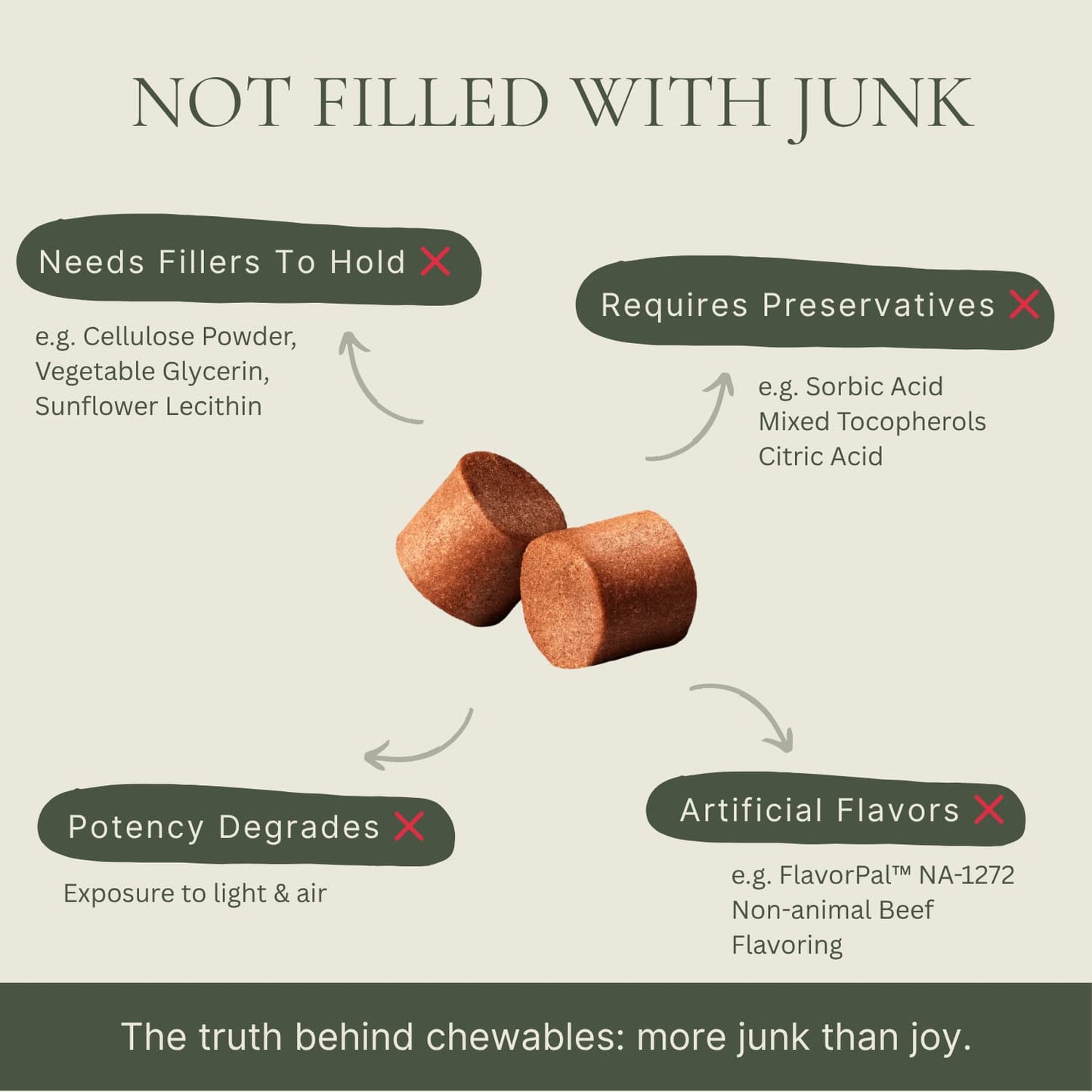
Visual comparison highlighting no fillers advantage aligned with immune system supplements aging cats.

Sequencing: Treat the Driver First, Then Add Support

How supplements “fit” after the visit: the veterinarian may recommend addressing the main driver first—dental treatment, allergy management, parasite control, or a diet shift—then adding one support category to widen adaptability. This sequencing is important because it prevents supplements from masking a worsening condition. It also creates a clearer read on whether the cat’s pattern becomes cleaner over time, which is the real goal of senior cat immune support.

Owners can set expectations by treating supplements as slow-acting context, not emergency tools. A reasonable plan is to pick one product, keep meals and treats stable, and reassess at 2 and 4 weeks with the same trend points. If the cat’s “symptom days” increase or energy drops, that is a signal to update the vet rather than adding another immune system supplement aging cats are marketed with.

Shop Now
Product reveal shot showing premium feel consistent with best immune booster for older cats.

Where Hollywood Elixir™ Fits in a Systems-based Plan

For owners who want a systems-based option, Hollywood Elixir™ is positioned as part of a daily plan that supports normal cellular health across aging tissues rather than chasing one immune pathway. That upstream framing can be useful when the goal is broader resilience—supporting the body’s surplus and regeneration rate while the veterinarian manages specific diagnoses. It should still be chosen with the cat’s labs, appetite, and medication list in mind.

The practical way to use a product like this is to pair it with tracking: weight, stool rhythm, grooming, and the count of flare days. If the cat is picky, introduce it gradually and avoid mixing it with a new food at the same time. Supplements support best when the rest of the routine is calm and repeatable, giving the vet a clean signal at follow-up.

Shop Now

Follow-up: Use Trend Points to Decide What Comes Next

Follow-up plan is where skeptical buying becomes smart care. Schedule a check-in with the veterinarian after the initial workup or treatment change, and bring the 30-day trend points rather than impressions. If the cat is on antibiotics, steroids, or antifungals, ask whether timing matters for probiotics or other supports, and whether any ingredients should be paused during flares. This keeps immune supplements for senior cats in the role they do best: supporting normal function alongside medical decision-making.

If the plan is working, the pattern usually looks cleaner: fewer symptom days, more rhythmic eating, and a coat that rebounds with routine grooming. If it is not, the next step is not a bigger supplement stack—it is a tighter question for the vet, such as whether dental imaging, blood pressure, or additional viral testing is warranted. The goal is a longer span of good days, built on evidence and observation.

“A supplement should fit the diagnosis, not the label.”

Educational content only. This material is not a substitute for veterinary advice. Always consult your veterinarian about your cat’s specific needs. These statements have not been evaluated by the Food and Drug Administration. Products mentioned are not intended to diagnose, treat, cure, or prevent any disease.

Glossary

  • Immune span - The practical range of immune adaptability across daily challenges in an aging cat.
  • Barrier function - How well the gut lining, skin, and oral tissues prevent irritation and regulate immune signaling.
  • Microbiome - The community of microbes in the gut that influences digestion and immune signaling.
  • Probiotic strain - A specific, identified microorganism used to support normal gut function; effects are strain-specific.
  • Prebiotic fiber - A fiber that feeds beneficial gut microbes and supports stool rhythm.
  • Beta-glucans - Immune-signaling fibers that can interact with innate immune receptors.
  • Dectin-1 - An innate immune receptor involved in recognizing beta-glucans.
  • Lactoferrin - A milk-derived protein studied for antimicrobial and immune-signaling roles.
  • Colostrum - Early milk containing bioactive proteins; feline evidence is stronger in kittens than seniors.
  • Symptom day - A day when a trackable sign (sneezing, eye discharge, mouth odor) is present and logged.

Related Reading

References

Bol. Lysine supplementation is not effective for the prevention or treatment of feline herpesvirus 1 infection in cats: a systematic review.. PubMed Central. 2015. https://pmc.ncbi.nlm.nih.gov/articles/PMC4647294/

Maggs. Efficacy of oral supplementation with L-lysine in cats latently infected with feline herpesvirus.. PubMed. 2003. https://pubmed.ncbi.nlm.nih.gov/12518876/

Gore. Supplementation of Diets With Bovine Colostrum Influences Immune and Gut Function in Kittens.. PubMed Central. 2021. https://pmc.ncbi.nlm.nih.gov/articles/PMC8383104/

Chacon. Prospective Uncontrolled Interventional Study of Itraconazole and β-Glucans (<i>Euglena gracilis</i>) to Assess Safeness and Clinical Effectiveness in Cats with Cutaneous and Mucosal Sporotrichosis.. PubMed Central. 2025. https://pmc.ncbi.nlm.nih.gov/articles/PMC12474118/

Sivamaruthi. A Review of Probiotic Supplementation and Its Impact on the Health and Well-Being of Domestic Cats.. PubMed Central. 2025. https://pmc.ncbi.nlm.nih.gov/articles/PMC12389776/

Unknown. Lingzhi, Reishi. 2024. https://www.ncbi.nlm.nih.gov/books/n/livertox/Lingzhi

Sato. Oral administration of bovine lactoferrin for treatment of intractable stomatitis in feline immunodeficiency virus (FIV)-positive and FIV-negative cats.. PubMed. 1996. https://pubmed.ncbi.nlm.nih.gov/8896681/

Rutherfurd-Markwick. The potential for enhancement of immunity in cats by dietary supplementation.. PubMed. 2013. https://pubmed.ncbi.nlm.nih.gov/23385006/

Brown. Dectin-1 Mediates the Biological Effects of β-Glucans. 2003. https://www.mdpi.com/2813-9372/3/1/7

FAQ

What does immune support mean for a senior cat?

For older cats, “immune support” usually means supporting normal barrier function (mouth, gut, skin) and reducing the day-to-day immune workload. Aging can shrink adaptability, so small irritations can create more frequent flare days.

The most useful approach is to identify what is driving immune activation—dental disease, stress, parasites, or chronic illness—then add one supplement category that fits that driver and track trend points over a 30-day window.

When should an owner call the vet about frequent infections?

Call promptly if a senior cat has lethargy, reduced appetite, weight loss, labored breathing, persistent fever, or wounds that look worse over 24–48 hours. Those signs can indicate a problem that needs diagnostics, not a supplement trial.

Also call if “minor” issues are recurring: repeated eye discharge, mouth odor with drooling, or skin sores that keep returning. These patterns help a veterinarian decide whether immune support is appropriate or whether a primary condition is driving the cycle.

Are immune supplements for senior cats actually evidence-based?

Some categories have better alignment with feline evidence than others, but the data rarely supports broad, guaranteed outcomes. Reviews of feline dietary immune supplementation emphasize that results depend on the ingredient, dose form, and the outcome measured(Rutherfurd-Markwick, 2013).

A practical way to stay evidence-grounded is to choose a supplement for a specific goal (like stool rhythm or oral comfort), change one variable at a time, and use a 30-day tracking window before deciding whether it fits your cat.

Is lysine a good choice for older cats with herpes flare-ups?

Lysine is commonly marketed for feline herpesvirus, but evidence does not support routine use for prevention or treatment. A systematic review concluded lysine supplementation is not effective for feline herpesvirus 1 management(Bol, 2015).

If flare-ups are recurring, the better next step is a vet visit to confirm what is happening (herpes vs allergy vs asthma vs dental pain) and to build a plan around triggers, environment, and targeted care rather than relying on a default supplement.

Do probiotics help with senior cat immune support?

Probiotics are most defensible when the goal is supporting normal gastrointestinal function, because feline studies focus heavily on microbiome and digestive outcomes. Evidence quality varies by strain and study design, so results are not interchangeable across products.

For older cats, a probiotic may help support a cleaner stool rhythm and reduce gut-related immune workload. It should be introduced slowly, and cats that are immunocompromised should only use probiotics under veterinary guidance.

How long does it take to see results from immune supplements?

Most supportive supplements are better judged over weeks, not days. A short trial can miss the real signal because flare-ups naturally come and go, and appetite or stress can temporarily change symptoms.

Use a 30-day window with trend points such as weight, stool form, grooming, and the number of symptom days. If the pattern becomes cleaner and more rhythmic without appetite disruption, that is more meaningful than a single “good day” after starting a new product.

What is the safest way to start a new supplement?

Start one product at a time and keep food, treats, and routines stable. Introduce gradually to protect appetite, since food refusal can quickly shrink a senior cat’s surplus and make any immune plan harder.

Document the start date and any changes in vomiting, stool, thirst, or energy. If the cat has kidney disease, diabetes, hyperthyroidism, or is on prescription medications, confirm compatibility with the veterinarian before continuing.

Can I combine multiple immune system supplements aging cats are sold?

Stacking multiple products at once is a common mistake because it blurs cause and effect and increases the chance of appetite disruption. It also makes it difficult for a veterinarian to interpret whether a change is from the supplement, the disease, or the environment.

A more reliable approach is to choose one category that matches the main problem (gut rhythm, oral comfort, skin barrier), track trend points for 30 days, and only then decide whether to adjust. This keeps the plan cleaner and safer.

Are mushroom immune products safe for senior cats?

Caution is warranted with concentrated mushroom extracts and multi-herb blends, especially in older cats with unknown liver status. Human safety resources describe reported liver injury concerns with some mushroom products, which is a reason to keep feline choices conservative and vet-reviewed(Unknown, 2024).

If a veterinarian agrees a mushroom-derived ingredient fits, ask for a product with transparent labeling and avoid combining it with other new supplements. Stop and report any vomiting, appetite drop, or lethargy that begins soon after starting.

What should I bring to the vet about immune concerns?

Bring a short timeline: when symptoms started, how many symptom days occurred this month, and what triggers seem to precede them (stress, boarding, diet changes). Photos of eye discharge, skin lesions, or stool can be surprisingly helpful.

Also bring labels or photos of any supplements, including start dates. This helps the veterinarian decide whether senior cat immune support should focus on barrier care, dental work, diagnostics, or a cautious supplement trial—and which ingredients should be avoided with current medications.

Which symptoms are often mistaken for “low immunity” in older cats?

Dental pain and oral inflammation are frequently mislabeled as “immune weakness” because they can cause drooling, reduced grooming, and recurrent mouth odor. Chronic itch from allergy or fleas can also look like immune trouble when the real issue is ongoing skin barrier irritation.

Digestive upset is another common culprit: alternating stool quality can drive inflammation and make a cat look “run down.” A veterinarian can sort these patterns out quickly, which prevents owners from chasing the best immune booster for older cats when the driver is elsewhere.

Do beta-glucans work as immune support in cats?

Beta-glucans are immune-signaling fibers that interact with innate immune receptors such as dectin-1, which is why they are discussed as immune-modulating ingredients rather than simple vitamins(Brown, 2003).

In cats, beta-glucans have been used as an adjunct in a clinical setting, but at least one study design was uncontrolled, limiting conclusions about independent benefit(Chacon, 2025). For senior cats, they fit best as part of a vet-guided plan, not as a stand-alone answer.

Can lactoferrin support oral health in older cats?

Lactoferrin is a milk protein discussed for antimicrobial and immune-signaling roles, and feline clinical work has explored oral bovine lactoferrin in difficult stomatitis cases(Sato, 1996). That context is specific and does not mean it is appropriate for every senior cat.

If oral pain is present, the first priority is a veterinary oral exam and a plan for comfort and dental care. A supplement can support normal oral tissues only if the cat will eat reliably and the ingredient choice fits the veterinarian’s assessment.

Is colostrum a good option for senior cat immune support?

Colostrum is often marketed broadly, but direct feline research is stronger in kittens than in seniors. In kittens, bovine colostrum influenced immune and gut function measures, which is interesting but not a guarantee for older cats(Gore, 2021).

For seniors, colostrum fits best when the goal is supporting normal gut and barrier function and when the cat tolerates dairy-derived ingredients. Track stool rhythm and appetite closely, and ask the veterinarian whether it fits the cat’s overall diet and medical constraints.

How do I choose the best immune booster for older cats?

Choose based on the problem you can observe and track, not the broadest claim. If stool quality is inconsistent, a gut-focused option may fit; if mouth issues are prominent, dental evaluation comes first; if stress triggers flare days, environmental changes may matter most.

Then apply a buyer’s filter: transparent labeling, cat-appropriate serving guidance, and a plan to introduce slowly. The “best” product is the one that supports normal function without disrupting appetite and that your veterinarian agrees is compatible with labs and medications.

What are common side effects of immune supplements in cats?

The most common issues are gastrointestinal: vomiting, softer stool, gas, or food refusal. In senior cats, even mild appetite disruption matters because it can quickly lead to weight loss and a more jagged day-to-day pattern.

Behavior changes (hiding, reduced play) can also occur if a supplement alters taste or causes nausea. Any new lethargy, persistent vomiting, or diarrhea should prompt stopping the product and contacting the veterinarian with the timing and ingredient list.

Can immune supplements interact with my cat’s medications?

They can, especially multi-ingredient blends that include botanicals or concentrated extracts. Interactions may be direct (absorption timing) or indirect (appetite changes that affect medication dosing consistency).

Bring a full list of medications and supplements to the vet, including flea/tick products and any “calming” aids. Ask which ingredients should be avoided given kidney or liver values, and whether probiotics or fibers should be separated from certain oral medications.

Are these supplements different for cats versus dogs?

Yes. Cats have different nutrient requirements, different taste tolerance, and different risk profiles for certain ingredients. Products formulated for dogs may use flavorings, sweeteners, or dosing assumptions that do not translate safely to cats.

For senior cat immune support, prioritize cat-specific labeling and avoid human or dog products with “proprietary blends.” If a veterinarian recommends a cross-species product, confirm the exact serving guidance and how to monitor tolerance over the first two weeks.

Can Hollywood Elixir™ replace immune supplements for senior cats?

No supplement should be treated as a replacement for veterinary diagnosis or for targeted care when a cat is ill. A product can support normal function, but it cannot stand in for dental treatment, parasite control, or management of chronic disease.

If a veterinarian agrees a systems-based option fits your cat’s goals, Hollywood Elixir™ can be part of a daily plan that supports normal cellular health while you track trend points like appetite, stool rhythm, and symptom days over a 30-day window.

How should Hollywood Elixir™ be introduced to a picky senior cat?

Introduce any new supplement slowly to protect appetite. Start with a very small amount mixed into a familiar wet food, and avoid pairing it with a new diet change in the same week so the cat’s response stays interpretable.

If your veterinarian has okayed it, Hollywood Elixir™ can be used as part of a daily plan that supports normal cellular health. Track food acceptance, stool rhythm, and energy for two weeks before deciding whether it fits your cat’s routine.

What should I track if I start an immune support product?

Track what you can repeat: weekly weight, appetite consistency, water intake changes, stool form, grooming time, and the number of symptom days (sneezing, eye discharge, mouth odor days). These trend points are more useful than a general impression.

If you are using Hollywood Elixir™, track the same markers and keep other variables stable. The goal is to see whether the overall pattern becomes cleaner over a 30-day window, then share that data with your veterinarian.

5K+ Happy Pet Parents

Excellent 4.8

Immune Supplements for Senior Cats | Why Thousands of Pet Parents Trust Hollywood Elixir™

"My go-to nutrient-dense topper. Packed with 16 powerful anti-aging actives and superfoods!"

Chanelle & Gnocchi

"We go on runs pretty often; he use to get tired halfway through, but lately, he's been keeping up without any problem."

Cami & Clifford

"He seems more happy overall. I've also noticed he has more energy which makes our walks and playtime so much more fun."

Olga & Jordan

"I want her to live forever. She hasn't had an ear infection since!"

Madison & Azula

"My go-to nutrient-dense topper. Packed with 16 powerful anti-aging actives and superfoods!"

Chanelle & Gnocchi

"We go on runs pretty often; he use to get tired halfway through, but lately, he's been keeping up without any problem."

Cami & Clifford

"He seems more happy overall. I've also noticed he has more energy which makes our walks and playtime so much more fun."

Olga & Jordan

"I want her to live forever. She hasn't had an ear infection since!"

Madison & Azula

"My go-to nutrient-dense topper. Packed with 16 powerful anti-aging actives and superfoods!"

Chanelle & Gnocchi

"We go on runs pretty often; he use to get tired halfway through, but lately, he's been keeping up without any problem."

Cami & Clifford

"He seems more happy overall. I've also noticed he has more energy which makes our walks and playtime so much more fun."

Olga & Jordan

"I want her to live forever. She hasn't had an ear infection since!"

Madison & Azula

"My go-to nutrient-dense topper. Packed with 16 powerful anti-aging actives and superfoods!"

Chanelle & Gnocchi

"We go on runs pretty often; he use to get tired halfway through, but lately, he's been keeping up without any problem."

Cami & Clifford

"He seems more happy overall. I've also noticed he has more energy which makes our walks and playtime so much more fun."

Olga & Jordan

"I want her to live forever. She hasn't had an ear infection since!"

Madison & Azula

SHOP NOW