Beta Glucans for Cats

What these fibers do, what cat studies have found, and how beta-glucans fit a daily supplement

By La Petite Labs Editorial 17 min read

Woman cuddling an orange-and-white cat and a silver tabby while holding a Hollywood Elixir box
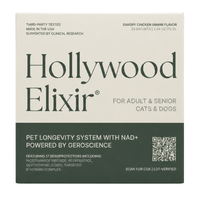
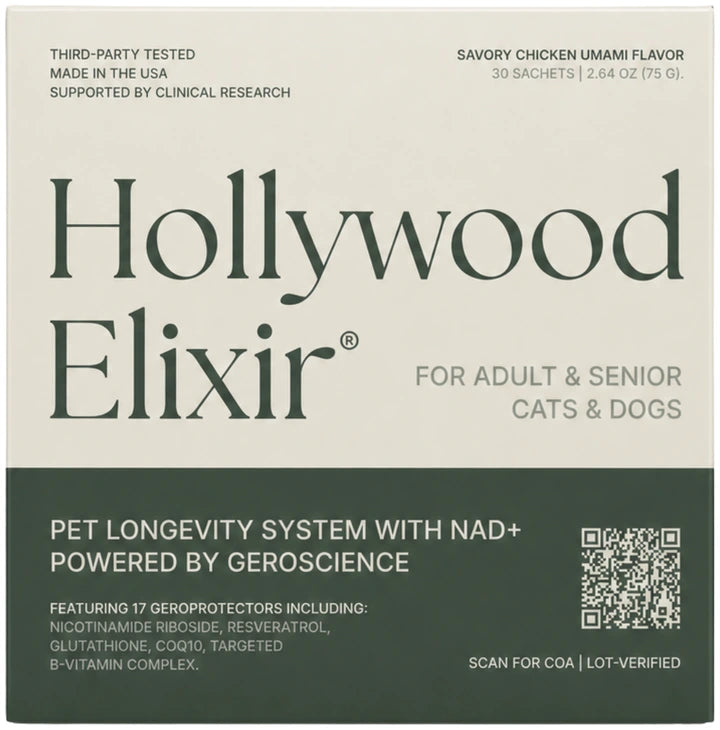
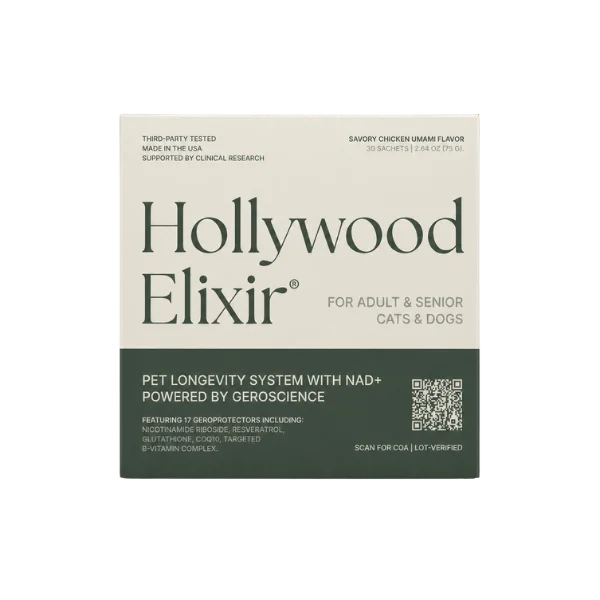
Hollywood Elixir® Daily longevity system · adult & senior cats Starting at $63/month 

Beta-glucans are chains of glucose found in materials such as yeast cell walls and mushrooms. Some forms interact with immune cells; preparations containing them have also been studied for effects on the gut. That combination explains why beta-glucans appear in feline immune-support powders. 1 2 3

The interesting part is what happens after that explanation. Researchers have found changes in cats’ digestion and gut bacteria, but a cat vaccine study produced a result that ran against expectations. “Immune support” turns out to contain several different questions.

We include yeast beta-glucans in Hollywood Elixir alongside NR, CoQ10 and glutathione. Here is what each part contributes to that reasoning—and what to look for when choosing a formula your cat will actually eat.

Beta-glucans are a family of glucose-based compounds whose source and structure matter. A yeast beta-glucan preparation, a mushroom blend and a whole yeast-cell-wall ingredient are not interchangeable products.

A small feline feeding study found improved digestibility and a tendency toward firmer stools with a yeast-cell-wall blend. A newer mushroom-and-colostrum study found modest microbiome changes without changing stool characteristics. In a separate vaccine study, supplemented cats had lower antibody levels than controls, although every cat responded adequately.

Hollywood Elixir uses 50 mg yeast beta-glucan powder per standard 2.5 g sachet, alongside ingredients involved in cellular energy and antioxidant defense. Review the complete formula and current feline serving instructions when deciding whether that broader approach fits your cat.

What beta-glucans are

A beta-glucan is a long chain made from glucose units. Its behavior depends on how those units join together, how the chain branches and how the ingredient is prepared. That is why “beta-glucan” names a family of compounds rather than one uniform powder. 1 2

The form often discussed in immune research is beta-1,3/1,6-glucan from yeast. The numbers describe the connections in its structure; they are not a dose or a quality score.

Beta-glucans are not vitamins, and a yeast-derived beta-glucan extract is not a live probiotic. Those distinctions become useful when you compare it with a multivitamin, a probiotic sachet or a mushroom supplement.

Woman kneeling with two long-haired tabby cats while holding a Hollywood Elixir box beside a food bowl

Yeast, mushrooms and a whole cell wall are different ingredients

Yeast and mushrooms can both supply beta-glucans, but their extracts also differ in composition. A whole yeast-cell-wall product can contain beta-glucans together with other carbohydrates, including mannan oligosaccharides, often abbreviated MOS. The cat feeding study below used such a combination. 3

A mushroom formula may combine several extracts and other ingredients. Its total weight therefore does not tell you the amount of beta-glucans inside it.

In Hollywood Elixir, the declared ingredient is beta-1,3/1,6-D-glucan powder from Saccharomyces cerevisiae, the yeast species commonly used in baking. The ingredient panel lists it separately from reishi extract, so the two amounts can be read separately. 6

Woman exercising beside a tabby cat, with a Hollywood Elixir box and food bowl on a small table

Why immune cells recognize beta-glucans

Immune cells need ways to recognize material they encounter. One receptor, Dectin-1, binds certain beta-glucan structures. In laboratory experiments with mouse macrophages—a type of immune cell—blocking that receptor greatly reduced recognition of yeast-derived particles. 1

That supplies a biological explanation for studying beta-glucans as immune-active ingredients. The cell is responding to a recognizable molecular pattern.

What happens next depends on the preparation and circumstances. Recognition in a laboratory experiment does not mean that an oral supplement will prevent a cat’s next infection, and an immune response is not a single dial that should always be turned higher.

Orange-and-white cat reaching toward a woman holding a Hollywood Elixir box while sitting in a chair

How the gut enters the picture

The digestive tract contains microbes that use components of food. Researchers can study what those microbes produce when exposed to a yeast ingredient, then ask whether feeding the ingredient changes the living animal’s digestion or microbial community.

These are related experiments, but they answer different questions. A fermentation result in a laboratory vessel does not guarantee the same change in a cat’s stool. The 2023 yeast-cell-wall paper is useful precisely because it investigated both. 3

It also explains why a beta-glucan product is different from a probiotic: one supplies a particular food-derived material; a probiotic product supplies selected live microorganisms.

Gray-haired man holding a Hollywood Elixir box while two cats rest beside him in an armchair

The feline gut study found improved digestibility

Researchers divided 18 adult cats among three diets: a control food and two foods containing different amounts of a commercial yeast-cell-wall blend. At the higher inclusion, apparent protein and organic-matter digestibility improved. Stool scores suggested a tendency toward firmer stools, but that difference did not reach statistical significance. Some measures of the fecal bacterial community also changed. 3

The blend contained MOS as well as beta-glucans, so the result belongs to that preparation. It was not a test of beta-glucans alone or a treatment trial in cats with diarrhea.

The study’s separate laboratory fermentation experiments showed additional effects. In the living cats, however, the measured fecal fermentation products and pH did not differ significantly. That matters when this paper is used to promise an increase in beneficial fermentation products.

A mushroom powder and a yeast beta-glucan extract are different ingredients, even when their serving weights match.

What the newest mushroom study adds

A study published in August 2026 tested a mushroom complex in 20 healthy adult cats. For 12 weeks, one group received a blend of turkey tail, reishi and lion’s mane extracts with bovine colostrum; the other received a placebo. 4

The blend modestly changed fecal bacteria and metabolites and lowered serum triglycerides. Stool characteristics did not change, and the researchers reported no adverse health effects during the study.

This adds controlled feline feeding data, with a modest result. The 900 mg daily amount was the weight of the combined preparation, not 900 mg of isolated beta-glucans, and the experiment cannot identify which component caused each change.

Tabby cat looking up at a Hollywood Elixir sachet held above it, with the product box on a small table

The vaccine finding is more complicated than “boosting immunity”

In a 2020 study, 35 healthy cats ate either a control diet or the same diet supplemented with yeast beta-1,3/1,6-glucans. Researchers measured rabies antibodies after vaccination and a booster. 2

The supplemented cats had lower antibody levels than the controls. All cats, in both groups, still produced an adequate response. The supplement did not deliver the higher antibody response the researchers had expected from work in other species.

This does not show that beta-glucans cause vaccine failure or broadly weaken cats’ immunity. The result is specific: adding beta-glucans did not produce a stronger antibody response in these cats.

Hand gently petting an orange-and-white cat beside a food bowl and Hollywood Elixir box

What if your cat keeps sneezing or has feline herpes?

Recurring eye or respiratory signs often prompt a search for immune support. Feline herpesvirus can persist after infection and flare during stress. The care plan depends on the signs and severity, with nutrition, hydration and appropriate treatment playing important roles. 5

The feeding and vaccine studies described here do not establish beta-glucans as a treatment for herpes or a reliable way to prevent its flare-ups. Do not use a new supplement to explain away continuing symptoms.

Contact your veterinary team when signs recur or your cat eats less. Breathing difficulty needs urgent assessment. A supplement decision can be made alongside that care, once you know what problem the cat is dealing with.

Man holding a Hollywood Elixir box beside a black cat, an orange tabby and a food bowl

Why we include beta-glucans in Hollywood Elixir

We chose yeast beta-glucans for their interaction with immune-recognition pathways. Hollywood Elixir pairs them with ingredients involved in making usable energy and handling reactive molecules, giving the formula several distinct nutritional roles. 1

A standard 2.5 g sachet contains 50 mg yeast beta-glucan powder, 60 mg NR, 40 mg CoQ10 and 50 mg reduced glutathione. Reishi is listed separately at 25 mg. 6

For an owner interested in a broader daily formula, that is a reason to consider Hollywood Elixir: the ingredients have different purposes, and their amounts are disclosed together. The feline studies above tested other preparations; they do not establish a clinical effect for our finished formula.

How the energy and antioxidant ingredients complement that choice

NAD+ helps cells use energy from food. NR is a starting material cells can use to make NAD+, so it enters the formula for a different reason from beta-glucans. 7

CoQ10 carries electrons onward in the mitochondrial reactions involved in making ATP. Glutathione is used by an enzyme that turns hydrogen peroxide into water, contributing to antioxidant defense. 8 9

These roles explain the combined design: immune-focused nutrition sits alongside ingredients for cellular energy and antioxidant chemistry. Beta-glucans do not become NAD+; the ingredients contribute different biological roles. Our NAD+ guide for cats explains the energy system in more detail.

Every cat in the vaccine study responded adequately, but antibody levels were lower in the supplemented group.

Silver tabby sitting beside a food bowl and a Hollywood Elixir box held in a person's hand

DVM Voice: Clinical Vignette of a Common Pattern in Senior Cat Aging

Case provided by JoAnna Pendergrass, DVM

Sasha, a 12-year-old cat, was brought in after her owner noticed increased thirst and urination, lethargy, vomiting, and a generally unkempt appearance. Examination showed weight loss, elevated blood pressure, and reduced vitality.

Diagnostic testing revealed elevated kidney markers, poorly concentrated urine, and protein loss in the urine — findings consistent with chronic kidney disease, one of the most common chronic conditions in senior cats.

Her care required a kidney-focused diet, blood pressure management, targeted supplementation, medication support, and regular monitoring — a necessary plan, but one started after clinical signs were already visible.

Clinical takeaway: Sasha’s case reflects why senior-cat wellness should begin before obvious decline. Earlier monitoring, body-condition tracking, hydration awareness, antioxidant support, and daily cellular resilience may help support quality of life as cats age.

Single-case vignette. Not generalizable. Veterinary diagnosis and monitoring are essential for increased thirst, urination, vomiting, lethargy, weight loss, or suspected kidney disease.

Explore Hollywood Elixir Research →
Woman holding a Hollywood Elixir box toward a brown cat perched on the back of a sofa

Keep complete meals at the center

Cats need an appropriate supply of protein, amino acids, fats, vitamins and minerals. A complete and balanced food for the cat’s life stage is designed to provide that nutritional base. A beta-glucan supplement does not fill every gap in a homemade recipe or turn a complementary food into a complete meal. 10

This also keeps the purpose of Hollywood Elixir clear. It is an addition to the diet, chosen for the ingredients it brings together; it does not replace the cat’s food.

If the cat follows a prescribed diet or a food-elimination trial, have additions checked against that plan. The source of flavorings and proteins can matter just as much as the headline ingredient.

Woman leaning toward a fluffy orange cat beside a Hollywood Elixir box and green food bowl

Beta-glucan dosage for cats: compare like with like

The studies used different preparations. A percentage of yeast-cell-wall blend in a complete diet cannot be directly compared with milligrams of a mushroom-and-colostrum mixture—or with a yeast beta-glucan powder in a multi-ingredient supplement. 3 4

The research discussed here therefore does not provide one universal beta-glucan dose for cats. The ingredient’s source, composition and actual product directions matter.

Hollywood Elixir’s 50 mg figure describes the beta-glucan powder in a standard 2.5 g sachet. 6 Check the current feline directions for the serving appropriate to your cat. Increasing a mixed formula to match a number from a paper would also increase its other ingredients.

Tabby cat licking its nose beside a food bowl and Hollywood Elixir box

Read the form and amount together

A useful label tells you what the ingredient is and what the directed serving supplies. Look for the source, such as Saccharomyces cerevisiae, and whether the amount describes beta-glucans, an extract or an entire blend.

For a hypothetical comparison, 100 mg of an extract standardized to 20% beta-glucans would supply 20 mg beta-glucans. A different product listing 100 mg of whole mushroom powder has not supplied enough information to make the same calculation.

If the manufacturer provides batch testing, check which material, lot and measurement the report covers. Our pet supplement quality guide explains how to compare these documents. They can clarify what is in a product; they do not substitute for research on its effect in cats.

Choose a format your cat will actually eat

Powders, capsules and liquids ask different things of the cat and the person feeding it. Follow the actual directions: a capsule intended to be opened and sprinkled onto food should not be treated as though every cat is expected to swallow it whole.

Check the measuring unit, too. A scoop, capsule and dropper are not equivalent amounts. If food mixing is permitted, notice whether the portion containing the supplement was eaten rather than assuming an empty-looking bowl means the whole serving was consumed.

Do not withhold normal food to make a cat accept a supplement. Maintaining food intake matters more than getting an optional powder into one particular meal.

Safety depends on the cat and the complete formula

Short feeding studies provide some reassurance about their tested preparations. They cannot establish lifelong safety in every cat, particularly when products differ in source, added ingredients and serving size.

For a cat with chronic illness, a known food allergy or a treatment intended to alter immune activity, ask the clinician overseeing that care to assess the proposed formula. This is especially useful when several supplements overlap. The question is whether the complete formulation fits that cat’s diet and treatment.

Hollywood Elixir contains whey and chicken-derived ingredients alongside its named actives. 6 Those belong in the suitability check. If a new product is followed by vomiting, diarrhea, reduced eating or another concerning change, stop it and contact your veterinary team.

Tabby cat sitting at a table with a food bowl and Hollywood Elixir box

Look for observations you can describe

Before introducing a supplement, record what the cat eats, its usual stool pattern and the issue that prompted your interest. Note the product, serving and start date. If other food or treatment changes happen, put them in the same record.

Bring that record to routine veterinary visits for your senior cat, if that is your cat’s life stage. It makes the conversation more useful. “Stools became firmer after the food changed” is an observation. “Her immune system is stronger” is an interpretation that a normal week at home cannot verify.

Do not wait through a planned supplement trial when symptoms persist or worsen. The record should help you act on changes, rather than encourage you to tolerate them.

Woman cuddling a silver tabby and a cream-colored cat while holding a Hollywood Elixir box

A focused ingredient or a broader daily formula?

A focused beta-glucan product lets you consider that particular ingredient and preparation. A combined formula is worth exploring when you want its companion ingredients too.

That is Hollywood Elixir’s case: yeast beta-glucans alongside NR, CoQ10 and glutathione, with the broader formula disclosed ingredient by ingredient. It brings several nutritional aims into one powder, which may be simpler to assess and use than assembling separate supplements.

Read the NR guide for cats if that companion ingredient is new to you. Its role in making NAD+ is distinct from the immune and gut questions that brought you to beta-glucans.

Choose a purpose before choosing a powder

Beta-glucans have a credible research story: a recognizable molecular structure, specific immune-cell interactions and an expanding set of feline feeding studies. The detail makes that story more useful. A gut result, an antibody response and a daily nutrition choice each need their own explanation.

If your aim is a broader healthy-aging formula, explore Hollywood Elixir and its current cat serving directions. If your cat has an ongoing digestive or respiratory problem, start with the care plan for that condition.

A good addition should have a reason to be there, fit the rest of the diet and be something your cat can comfortably accept.

Hollywood Elixir pairs yeast beta-glucans with ingredients involved in cellular energy and antioxidant defense.

Educational content only. This material is not a substitute for veterinary advice. Always consult your veterinarian about your cat’s specific needs. These statements have not been evaluated by the Food and Drug Administration. Products mentioned are not intended to diagnose, treat, cure, or prevent any disease.

Glossary

Beta-glucans: Chains of glucose whose structure varies with their source and preparation.

Beta-1,3/1,6: A description of how glucose units connect within a beta-glucan structure.

Saccharomyces cerevisiae: A yeast species used as a source of beta-glucans.

Dectin-1: An immune-cell receptor that recognizes certain beta-glucan structures.

Macrophage: A type of immune cell that can engulf material it encounters.

MOS: Mannan oligosaccharides, carbohydrates that can occur alongside beta-glucans in yeast-cell-wall preparations.

Microbiota: The community of microorganisms in a particular environment, such as the gut.

Antibody titer: A measurement of antibodies against a particular target.

NR: Nicotinamide riboside, a starting material for NAD+ synthesis.

Related Reading

References

Numbered references identify the sources used for specific claims. Read the study design, species and evidence boundaries alongside each finding.

  1. Gordon D. Brown, Philip R. Taylor, Delyth M. Reid, Janet A. Willment, David L. Williams, Luisa Martinez-Pomares, Simon Y. C. Wong, Siamon Gordon. Dectin-1 Is A Major β-Glucan Receptor On Macrophages. 2002· DOI 10.1084/jem.20020470Species/context: Mouse cellsEvidence boundary: This laboratory study identifies a receptor involved in the recognition of yeast-derived material by mouse immune cells. It explains a mechanism rather than the effect of an oral supplement in cats.↩ 1 · ↩ 2 · ↩ 3 · ↩ 4
  2. John Byrne, Darryn Knobel, Susan M. Moore, Stephanie Gatrell, Patrick Butaye. The Influence of β-1,3-1,6-Glucans on Rabies Vaccination Titers in Cats. 2020· DOI 10.3390/vetsci7030118Species/context: CatsEvidence boundary: The supplemented cats had lower rabies antibody levels than controls, while every cat still produced an adequate response. The study does not show a general improvement in feline vaccine responses.↩ 1 · ↩ 2 · ↩ 3
  3. Fernando González, Amanda Carelli, Alina Komarcheuski, Mayara Uana, Rodolpho Martin do Prado, Diogo Rossoni, Márcia Gomes, Ricardo Vasconcellos. Yeast Cell Wall Compounds on The Formation of Fermentation Products and Fecal Microbiota in Cats: An In Vivo and In Vitro Approach. 2023· DOI 10.3390/ani13040637Species/context: CatsEvidence boundary: This study tested a yeast-cell-wall blend containing several components in healthy cats, alongside separate laboratory fermentation experiments. Its findings cannot identify an effect of isolated beta-glucans.↩ 1 · ↩ 2 · ↩ 3 · ↩ 4 · ↩ 5
  4. Milan G. Broughton, Patrícia M. Oba, Julio C. Mioto, Laura L. Bauer, Samantha A. Koziol, Chinmayee Panda, Shirin Pourafshar, Ryan N. Dilger, Brett R. Loman, Kelly S. Swanson. Effects of a Mushroom-Based β-Glucan Blend on the Gastrointestinal Health and Immune Function of Healthy Adult Cats. 2026· DOI 10.1093/jas/skag259Species/context: CatsEvidence boundary: Twenty healthy cats received a mushroom-and-colostrum mixture or placebo. The modest changes in gut measurements did not include altered stool characteristics.↩ 1 · ↩ 2
  5. Cornell Feline Health Center. Respiratory Infections. Accessed 2026Species/context: CatsEvidence boundary: Cornell explains the causes, signs and management of feline respiratory infections. The guidance concerns clinical care, rather than an effect of beta-glucan supplements.↩
  6. La Petite Labs. Hollywood Elixir: ingredients and supplement facts. 2026Species/context: Dogs and catsEvidence boundary: The official label and ingredient description identify the yeast beta-glucan form and its amount per standard 2.5 g sachet. They describe the formulation rather than a clinical trial result.↩ 1 · ↩ 2 · ↩ 3 · ↩ 4
  7. Rachel S. Fletcher, Joanna Ratajczak, Craig L. Doig, Lucy A. Oakey, Rebecca Callingham, Gabriella Da Silva Xavier, Antje Garten, Yasir S. Elhassan, Philip Redpath, Marie E. Migaud, Andrew Philp, Charles Brenner, Carles Canto, Gareth G. Lavery. Nicotinamide riboside kinases display redundancy in mediating nicotinamide mononucleotide and nicotinamide riboside metabolism in skeletal muscle cells. 2017Species/context: Mouse skeletal-muscle cells and miceEvidence boundary: This paper traces precursor metabolism into NAD+ in mouse muscle cells. It explains the role of NR in the formula rather than a combined benefit in cats.↩
  8. Reactome. Complex I oxidises NADH to NAD+, reduces CoQ to CoQH2. Accessed 2026Species/context: Conserved cellular pathway; human curated record with canine orthologueEvidence boundary: This reaction describes the transfer of electrons from NADH through mitochondrial complex I to CoQ, a connection in normal energy metabolism.↩
  9. Reactome. GPX1 tetramer reduces H2O2 to H2O. Accessed 2026Species/context: Conserved cellular pathwayEvidence boundary: This reaction explains how an enzyme uses reduced glutathione to convert hydrogen peroxide to water.↩
  10. Cornell Feline Health Center. Feeding Your Cat. Accessed 2026Species/context: CatsEvidence boundary: Cornell explains the nutritional requirements of cats and the role of complete and balanced food. A targeted supplement does not replace that dietary base.↩

FAQ

What are beta-glucans for cats?

Beta-glucans are chains of glucose found in sources such as yeast and mushrooms. Their structure and preparation affect how they behave. Some are studied for immune-cell interactions, and feline feeding studies have investigated preparations containing them for gut effects. They are not vitamins or live probiotics.

Do beta-glucans improve a cat’s immune system?

They interact with pathways involved in immune recognition, but a reliable general improvement in feline immunity is not established by the studies discussed here. Outcomes differ: a vaccine study found lower antibody levels in supplemented cats, while all cats responded adequately. It is more useful to assess a specific preparation and outcome than to promise a universal immune boost.

Can beta-glucans help a cat’s digestion?

An 18-cat study found improved apparent digestibility and a tendency toward firmer stools with a yeast-cell-wall blend containing beta-glucans and MOS. That is encouraging for the tested blend, but it does not isolate beta-glucans or establish treatment for diarrhea. A newer mushroom-and-colostrum trial did not change stool characteristics.

What beta-glucan dosage should I give my cat?

There is no universal dose established by these studies. Diet percentages, whole mushroom blends and yeast extracts describe different preparations. Use directions for the exact feline product. Hollywood Elixir lists 50 mg yeast beta-glucan powder per standard 2.5 g sachet; consult its current cat serving guidance rather than assuming every cat receives a whole sachet.

Are beta-glucans safe for every cat?

No supplement can be assumed suitable for every cat. Short feeding studies do not settle long-term use across all conditions and formulations. Have the full label checked for a cat with chronic illness, restricted food or a complex treatment plan. Stop a new product and contact your veterinarian if concerning symptoms or reduced eating occur.

Can beta-glucans prevent feline herpes flare-ups?

The studies discussed here do not establish that benefit. Feline herpes can recur, particularly during stress, and management depends on the cat’s signs and medical needs. Keep nutrition, hydration and the veterinary treatment plan in place; persistent symptoms or reduced eating should prompt contact with the veterinary team.

Do beta-glucans improve vaccine responses in cats?

The cited 2020 study found the opposite direction: cats eating the supplemented diet had lower rabies antibody levels than controls. All 35 cats still produced an adequate response. This does not establish vaccine failure, but it cannot support a claim that the supplement improved feline vaccine responses.

Why are beta-glucans in Hollywood Elixir?

Hollywood Elixir uses yeast beta-1,3/1,6-glucan powder as an immune-focused ingredient alongside NR, CoQ10 and reduced glutathione. The companion ingredients have distinct roles in NAD+ production, energy transfer and antioxidant defense. This explains the combined nutritional approach; the cited cat studies did not test the finished formula.

Orange-and-white cat beside a Hollywood Elixir box held in a person's hand

Discover LPL-01: How This Fits Into a Larger Feline Longevity System

Aging in cats unfolds quietly. It’s not driven by a single failure, but by gradual shifts across interconnected systems — cellular energy, oxidative balance, immune tone, and tissue integrity — each influencing the others over time.

This article explores one layer of that system. To understand what actually shapes long-term health, you need to step back and look at how these layers interact.

Start with the underlying science:

Keep exploring

What would you like to understand next?

Search practical guides about healthy aging, cellular energy, ingredients, and daily support for cats.