





Ozempic for Dogs

Whether any GLP-1 drug is coming for dogs, why vets don't use semaglutide, what to do after an accidental dose, and what works for weight now.

By La Petite Labs Editorial 9 min read

As Seen On

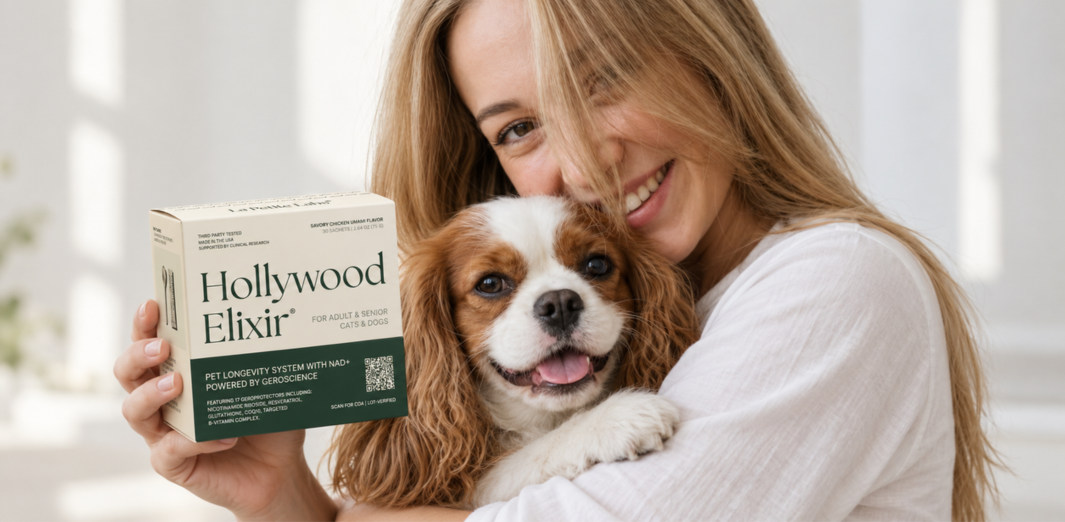
Woman hugging a golden retriever while holding a Hollywood Elixir box
Contents

No. There is no Ozempic for dogs, and no GLP-1 drug is approved for dogs as of November 2026. No published study has tested semaglutide for weight loss in pet dogs, so there's no dog dose. If your dog swallows a GLP-1 pen or pill, call your vet now.

Here's what's in development, what the dog evidence shows, the risks and cost, and the weight plan that works today.

La Petite Labs publishes this guide and makes Hollywood Elixir, a supplement for dogs and cats. We don't sell GLP-1 drugs, and we're not affiliated with Novo Nordisk, Okava, Akston or Loyal.

Is there an Ozempic for dogs?

No. Ozempic is semaglutide, a human drug labeled for adults with type 2 diabetes.1 The ASPCA said in March 2026 that none of the GLP-1 drugs, including semaglutide, tirzepatide, liraglutide and dulaglutide, is approved for veterinary use.2 We found nothing approved since.

Anything sold online as "Ozempic for dogs" is either a human drug or a product that isn't a GLP-1 drug at all. Cats are a step further along, with two drugs in trials; our Ozempic for cats guide covers them.

Ozempic for dogs at a glance

Is there an Ozempic for dogs?
No; no GLP-1 drug is approved for dogs or cats
In development for dogs
Akston's dog GLP-1, about six months behind its cat program; Okava plans dog studies after its cat trial
Semaglutide dose for dogs
None established; no published weight-loss trial in pet dogs
The one dog GLP-1 trial
Liraglutide in 7 obese senior Golden Retrievers for 40 days; weight loss wasn't statistically significant
Cost of human Ozempic
$349 to $499 a month self-pay, plus vet visits
Dog ate a GLP-1 pen or pill?
Call your vet or ASPCA Animal Poison Control at (888) 426-4435
What works now
A vet weight plan: 97% of 926 dogs lost weight, averaging 11.4% in three months
Why it matters
Labradors fed 25% less lived a median 1.8 years longer

Options for an overweight dog

OptionStatus (November 2026)Evidence in dogs
Vet weight plan with a weight-loss foodAvailable now926 dogs in 27 countries: 97% lost weight, averaging 11.4% in three months
Cutting calories vs more exerciseAvailable now13 dogs: about 10% loss with a diet, 2% with more activity alone
Weighed meals instead of scoopsAvailable nowMeasuring cups misjudged kibble portions by 18% under to 80% over
Liraglutide (human GLP-1 drug)Research only7 dogs, 40 days: 13.27% loss, not statistically significant
Semaglutide (Ozempic, Wegovy)Not approved for dogsNo published weight-loss trial in pet dogs
Akston's dog GLP-1In developmentNo dog results published
Dirlotapide (Slentrol)Sold 2007 to 2010 onlyOwners found its stomach side effects unacceptable
"Natural GLP-1" chewsSold without FDA reviewNo placebo-controlled dog trials found

Competitor label and pricing facts checked November 11, 2026. Sources are listed in the References section below.

Woman holding a Hollywood Elixir box beside a pug, a terrier and a food bowl

Is there a GLP-1 for dogs?

Not yet, and the dog programs trail the cat ones. Akston Biosciences, which is testing a once-weekly GLP-1 injection in cats at Cornell, is also developing a GLP-1 drug for dogs about six months behind its cat program.3 No dog trial results have been published.

Every GLP-1 option for dogs is still at the research stage, and there's no announced approval date for any of them.

Woman in sportswear holding a Hollywood Elixir box beside a black-and-tan dog outdoors

Is Okava making a GLP-1 for dogs?

It plans to, after cats. Okava Pharmaceuticals is testing OKV-119, a six-month exenatide implant, in up to 50 overweight cats in its MEOW-1 trial. The company says the cat results are expected to guide similar studies in dogs.4 Okava has also told reporters it plans to study dogs after cats.5

As of November 2026, we found no announcement that a dog trial had started. Okava hasn't given a dog timeline.

Woman holding a Hollywood Elixir box above her forehead beside a Bernese mountain dog outdoors

Can dogs take GLP-1 medication?

Not as an approved treatment. A vet is legally allowed to prescribe an approved human drug off-label, within a valid vet-client-patient relationship.6 With semaglutide, a vet would be working without any dog dosing or safety data for weight loss.

Semaglutide has been given to dogs, but in drug-development labs. Novo Nordisk used dogs to study how the semaglutide pill is absorbed in the stomach.7 That's research on absorption, not on weight loss in pet dogs.

Golden retriever nuzzling a woman holding a Hollywood Elixir box on the grass beside a food bowl

Does GLP-1 work for dogs?

Possibly, but there's one small trial, and it used a different drug. Researchers in Turkey gave liraglutide, an older GLP-1 drug, to seven obese senior Golden Retrievers for 40 days, alongside measured food. They compared them with seven obese dogs on measured food alone and seven lean dogs.8

The treated dogs ate less and lost 13.27% of their body weight, but the difference wasn't statistically significant. Their cholesterol and triglycerides fell.8 A 2024 University of Florida review concluded that semaglutide and tirzepatide may have a role in pets, but that feasibility studies are still needed.9

There is no Ozempic for dogs, and no published trial has tested semaglutide for weight loss in pet dogs.

What is the semaglutide dose for dogs?

There isn't one. No dog dose of semaglutide has been established, because no published trial has tested it for weight loss in pet dogs. The liraglutide trial used a fixed injected dose under research monitoring, and it isn't a guide for home use.8

Ozempic pens deliver fixed human doses, starting at 0.25 mg a week, and the label says never to share a pen between patients.1 Don't give a dog any part of a human GLP-1 pen or pill. If you're interested in weight-loss drugs for your dog, ask your vet about trials.

Overhead view of a black-and-white dog beside a food bowl and Hollywood Elixir box

Is semaglutide safe for dogs?

Its safety in dogs is unknown. In people, the most common side effects of Ozempic are nausea, vomiting, diarrhea, stomach pain and constipation. Nausea affected 15.8% to 20.3% of people, depending on dose, against 6.1% on placebo.1 The label also warns about pancreatitis, low blood sugar when it's combined with insulin, and thyroid C-cell tumors seen in rodents.1

In pets exposed to GLP-1 drugs, the ASPCA lists vomiting, diarrhea, lethargy and decreased appetite as the most common signs. Low blood sugar and pancreatitis are less likely but possible.2 A dog that is vomiting and not eating needs a vet, not a wait-and-see approach.

Woman smiling beside a golden retriever, a green food bowl and a Hollywood Elixir box

Can dogs take Ozempic for diabetes?

Usually not. GLP-1 drugs work best in type 2 diabetes, and dogs almost always get type 1, according to reporting on the University of Florida's cat GLP-1 research.10

Mix-ups are the bigger danger. Pet Poison Helpline has reported diabetic pets given Ozempic instead of insulin. In one case, a pet sitter gave a Siberian Husky several doses; she was treated for low blood sugar and recovered after two days in hospital.11 Owners also ask about metformin, another human type 2 drug; our metformin for dogs guide explains where it fits.

Man holding a Hollywood Elixir box while sitting on an outdoor sofa with a golden retriever

How much does Ozempic for dogs cost?

There's no dog product, so there's no dog price. For reference, human Ozempic costs $349 a month for most doses through Novo Nordisk's self-pay pharmacy, and $499 a month for the highest dose, as of November 2026.12 Exams and follow-up weigh-ins would add to that.

Okava has cited a target of about $100 a month for its cat implant, but that's a goal for an unapproved cat product.5

What about Zepbound, Mounjaro or tirzepatide for dogs?

The same answer applies. Tirzepatide, sold as Mounjaro and Zepbound, is on the ASPCA's list of GLP-1 drugs that aren't approved for veterinary use.2 We found no published trial of tirzepatide in pet dogs.

The 2024 University of Florida review named semaglutide and tirzepatide as the drugs worth testing in pets, and called for studies first.9 The same caution applies to any newer human weight-loss drug: if it hasn't been tested in dogs, there's no safe dog dose to follow.

If your dog chews a GLP-1 pen or swallows a pill, call your vet or a poison line, even if your dog seems fine.

Spotted gray dog beside a Hollywood Elixir box held in a person's hand

My dog ate Ozempic. What should I do?

Call your vet or a pet poison line right away, even if your dog seems fine. ASPCA Animal Poison Control is (888) 426-4435, and Pet Poison Helpline is (855) 764-7661. Both are open 24 hours, and a fee may apply.1311 Tell them the product, its strength and how much may be missing.

Semaglutide now comes as injection pens and as once-daily tablets, sold as Rybelsus and Ozempic tablets.14 The ASPCA warns that a chewed pen can also cause a gut blockage or injury from its sharp parts.2 Keep the packaging so your vet can see exactly what was eaten.

Golden retriever nuzzling a man holding a Hollywood Elixir box beside a food bowl

How do I keep GLP-1 drugs away from my dog?
GLP-1 pens and pills should be stored where a dog can't reach them. The ASPCA recommends closed cabinets, shelves or the refrigerator, kept separate from pet medications, and a sharps container for used needles.2

  • Separate human and pet medicines. Pet Poison Helpline says Ozempic and insulin are easily confused when they're stored together.11
  • Brief your pet sitter. Go through every medicine your dog takes and how it's given.11
  • Watch for licking. The ASPCA lists licking residue after an injection as one way pets are exposed.2
Golden spaniel eating from a green bowl beside a Hollywood Elixir box

Is there a weight loss drug for dogs?

Not a GLP-1, and the one past option is gone. Dirlotapide, sold as Slentrol, was approved by the FDA in 2007 to treat obesity in dogs. It reduces appetite and fat absorption.9 It was available only through 2010: managing dogs on it was labor-intensive, and owners found its stomach side effects unacceptable.15

A 2025 commentary in the American Journal of Veterinary Research asked whether it should return, now that owners are familiar with GLP-1 side effects.15 For now, weight loss in dogs comes down to food.

Do "natural GLP-1" chews work for dogs?

No chew or supplement has been shown to work like a GLP-1 drug in dogs. Supplements for animals aren't a separate FDA category. The FDA regulates them as food or as drugs, and food doesn't need FDA review before it's sold.16

Human "GLP-1-like" supplements are a real hazard. The ASPCA warns that some contain 5-HTP, which can cause seizures; xylitol, which can cause low blood sugar and liver damage in dogs; or caffeine and other stimulants.2 For what has evidence for an older dog, see our guide to natural alternatives to longevity drugs for dogs.

What works for dog weight loss right now?

A vet-guided diet works for most dogs. In a 2022 US survey, veterinary professionals classified 59% of dogs as overweight or obese.17

The diet figures come from an international study of commercial weight-loss foods and a small randomized trial.1819 The measuring-cup figures come from 12 studies of people scooping dry food.20 Walks still matter, but in that trial more activity alone didn't take much weight off.19 For older dogs, our senior dog diet guide covers what to feed.

Woman holding a Hollywood Elixir box beside a dapple dachshund and green food bowl on a sofa

Do lean dogs live longer?

In the best long-term study, yes. Purina researchers paired 48 Labrador Retrievers from puppyhood and fed one dog in each pair 25% less than its partner for life.21 The leaner dogs lived a median 1.8 years longer, and chronic diseases such as osteoarthritis showed up later.22

The same study found that body fat above 25% was linked to rising insulin resistance, which on its own predicted a shorter life.22 Before cutting portions for an older dog, read our diet and dog longevity guide, since some seniors are already losing muscle.

Woman cuddling a brown-and-white spaniel while holding a Hollywood Elixir box

How does weight connect to LOY-002?

LOY-002, Loyal's daily pill for senior dogs, targets the same metabolism problem. Loyal says it aims to extend healthy lifespan by targeting age-associated metabolic dysfunction, improving insulin sensitivity and lowering insulin in senior dogs.23 It's intended for dogs 10 and older weighing at least 14 lb, and it isn't approved.23

Loyal doesn't describe LOY-002 as a weight-loss drug. The link to the Labrador study is metabolism: the leaner dogs had lower insulin, and insulin resistance predicted a shorter life.2122 Our LOY-002 guide covers its FDA status and who may qualify, and our dog longevity drugs guide compares every candidate.

Where daily nutrition fits

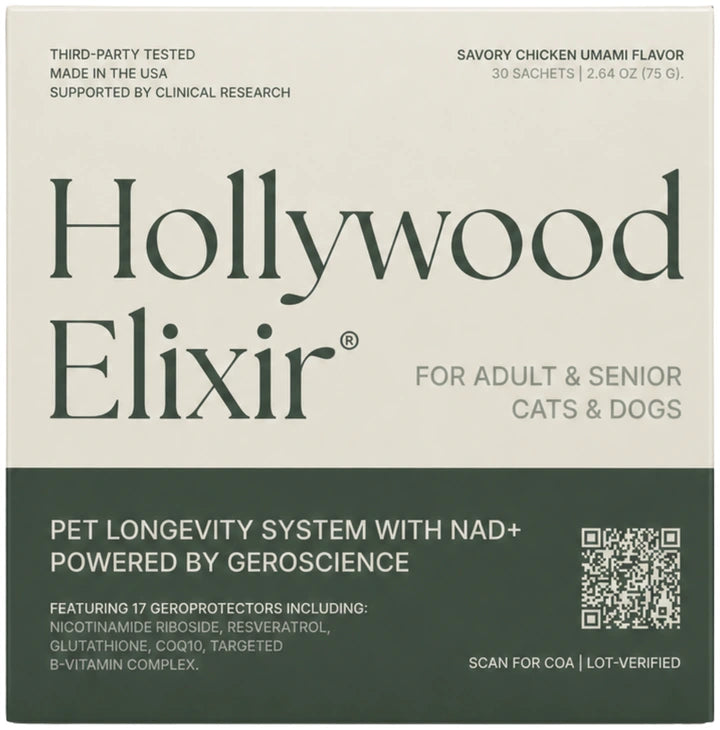
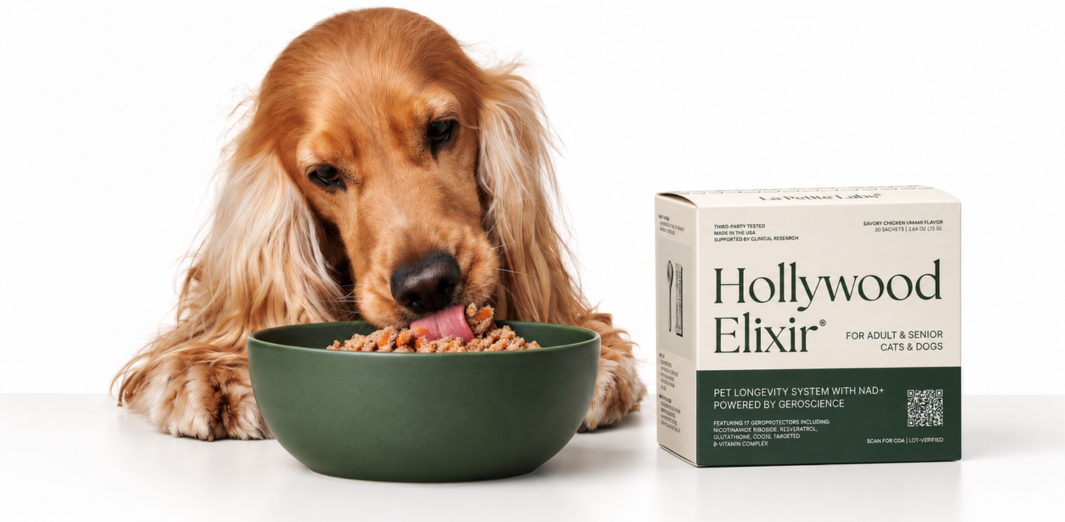
We make Hollywood Elixir, a daily nutrition powder for adult and senior dogs and cats. It's built around nicotinamide riboside, an NAD+ precursor, with CoQ10, glutathione and 14 more actives, and every active amount is printed on the label. It's a supplement, not an Ozempic substitute: it isn't designed to do what GLP-1 drugs do, it isn't a weight-loss product, and it hasn't been tested for lifespan. Its case is practical: one daily sachet stirred into food (half for pets under 7 lb, two for dogs over 30 lb) instead of a cupboard of separate supplements. If your dog takes insulin or any other prescription drug, check with your vet before adding it or any other supplement. See the full formula and serving guide.

Labradors fed 25% less than their littermates for life lived a median 1.8 years longer.

Educational content only. This material is not a substitute for veterinary advice. Always consult your veterinarian about your dog’s specific needs. These statements have not been evaluated by the Food and Drug Administration. Products mentioned are not intended to diagnose, treat, cure, or prevent any disease.

Glossary

GLP-1: a gut hormone released after eating that slows stomach emptying and increases fullness.

GLP-1 receptor agonist: a drug that mimics GLP-1, such as semaglutide (Ozempic, Wegovy) or liraglutide.

Tirzepatide: a human weight-loss and diabetes drug sold as Mounjaro and Zepbound.

Off-label (extra-label) use: a vet prescribing an approved drug in a way its label doesn't list, which FDA rules allow under conditions.

Insulin resistance: when the body needs more insulin than normal to control blood sugar.

Body condition score: a 1-to-9 scale vets use to judge fat; 4 to 5 is ideal.

Related Reading

References

Sources and further detail

  1. Novo Nordisk (2026). *Ozempic (semaglutide) injection: prescribing information*, via DailyMed
  2. ASPCA (5 March 2026). *Pet safety alert: rising GLP-1 pet exposures*
  3. dvm360 (25 Nov 2025). *Cornell launches clinical trial of once-weekly GLP-1 therapy for feline weight management*
  4. OKAVA Pharmaceuticals (3 Dec 2025). *OKAVA Pharmaceuticals announces first cat dosed in MEOW-1 study of OKV-119* (press release, via PR Zen)
  5. Yahoo News (3 Dec 2025). *Weight loss drugs for cats? Company launches clinical trial of GLP-1 implants in cats*
  6. FDA, *The ins and outs of extra-label drug use in animals: a resource for veterinarians*
  7. Buckley ST, Bækdal TA, Vegge A et al. *Science Translational Medicine* (2018). Transcellular stomach absorption of a derivatized glucagon-like peptide-1 receptor agonist
  8. Dik B, Hatipoglu D, Kahraman O et al. *The Veterinary Journal* (2025). Liraglutide as a novel therapeutic for overweight in canines: a clinical study
  9. Zomer HD, Cooke PS. *Biology* (2024). Advances in drug treatments for companion animal obesity
  10. The Independent Florida Alligator (22 Feb 2026). *From house cats to hourglass: UF tests Ozempic-style implant on cats*
  11. Pet Poison Helpline, *Are pets being poisoned with Ozempic?*
  12. NovoCare, *Ozempic cost navigator* (checked November 2026)
  13. ASPCA, *Animal Poison Control Center* (checked November 2026)
  14. Novo Nordisk (2026). *Rybelsus and Ozempic (semaglutide) tablets: prescribing information*, via DailyMed
  15. Krecic MR. *American Journal of Veterinary Research* (2025). Should the canine weight-loss drug dirlotapide be resurrected?
  16. FDA, *FDA's regulation of pet food*
  17. Association for Pet Obesity Prevention, *2022 pet obesity survey results*
  18. Flanagan J, Bissot T, Hours MA et al. *PLoS One* (2017). Success of a weight loss plan for overweight dogs: the results of an international weight loss study
  19. Chapman M, Woods GRT, Ladha C et al. *The Veterinary Journal* (2019). An open-label randomized clinical trial to compare the efficacy of dietary caloric restriction and physical activity for weight loss in overweight pet dogs
  20. German AJ, Holden SL, Mason SL et al. *Journal of Animal Physiology and Animal Nutrition* (2011). Imprecision when using measuring cups to weigh out extruded dry kibbled food
  21. Kealy RD, Lawler DF, Ballam JM et al. *JAVMA* (2002). Effects of diet restriction on life span and age-related changes in dogs
  22. Lawler DF, Larson BT, Ballam JM et al. *British Journal of Nutrition* (2008). Diet restriction and aging in the dog: major observations over two decades
  23. Loyal, *For veterinarians* (checked November 2026)

FAQ

Is Ozempic for dogs real?

No. There's no Ozempic made or approved for dogs, and no GLP-1 drug of any kind is approved for veterinary use as of November 2026. Products sold under that name online are either human drugs or not GLP-1 drugs at all.

Can I give my dog semaglutide for weight loss?

No. There's no established dog dose, and no published trial has tested semaglutide for weight loss in pet dogs. Ask your vet for a weight plan instead.

Is there an Ozempic equivalent for dogs?

Not yet. Akston Biosciences is developing a GLP-1 drug for dogs, and Okava plans dog studies after its cat trial, but neither has published dog results.

Do vets prescribe Ozempic for dogs?

A vet can legally prescribe an approved human drug off-label under FDA rules. With no dog dosing or safety data and a high monthly price, semaglutide isn't a standard weight-loss option for dogs.

What happens if a dog eats an Ozempic pen?

The most common signs are vomiting, diarrhea, lethargy and loss of appetite, and low blood sugar or pancreatitis is possible. A chewed pen can also cause a blockage or injury from sharp parts. Call your vet or ASPCA Animal Poison Control at (888) 426-4435.

Can a dog have Zepbound?

No. Zepbound is tirzepatide, a human drug that isn't approved for dogs, and we found no published dog trial of it.

What happened to Slentrol for dogs?

Slentrol (dirlotapide) was approved by the FDA in 2007 to treat obesity in dogs and was available only through 2010. Managing dogs on it was labor-intensive, and owners found its stomach side effects unacceptable.

How much weight can a dog lose on a diet plan?

In an international study of 926 overweight dogs on weight-loss foods, 97% lost weight, averaging 11.4% of body weight in three months. Your vet sets the target and the daily amount of food.

When will a GLP-1 for dogs be available?

No one has given a date. The dog programs from Akston and Okava trail their cat trials, and the lead investigator of Okava's cat trial projected a 2028 market date for cats.

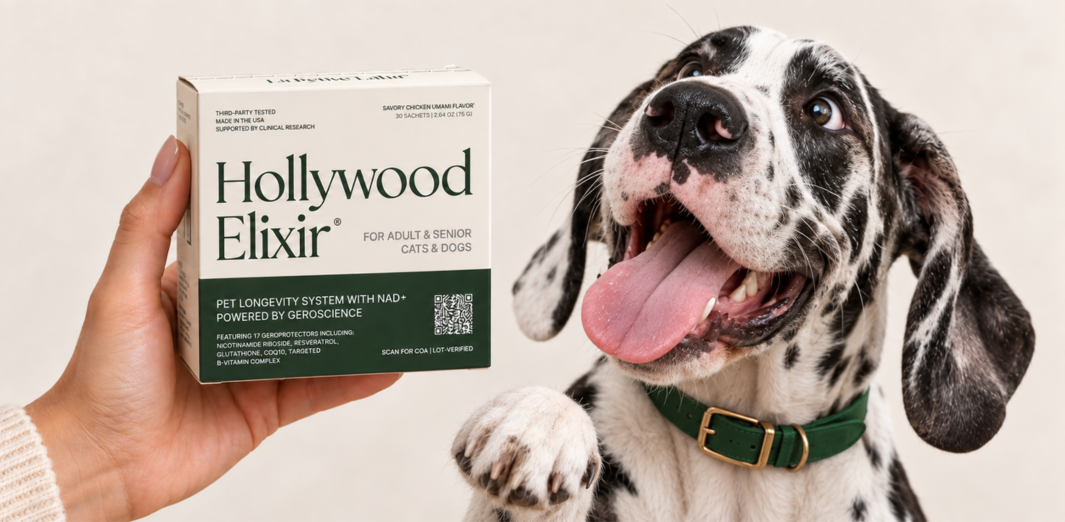
Dalmatian looking toward a Hollywood Elixir box held in a person's hand

Discover LPL-01: How This Fits Into a Larger Canine Longevity System

Aging in dogs is not driven by a single pathway. It’s the result of interacting biological systems—energy metabolism, oxidative stress, immune signaling, and structural integrity—changing over time.

This article explores one piece of that puzzle. If you want to understand how these pieces connect—and what actually moves the needle—you need to zoom out.

Start with the underlying science: