





Ozempic for Cats

Where the cat GLP-1 trials stand, why human Ozempic isn't the answer, and what helps an overweight cat today.

By La Petite Labs Editorial 9 min read

As Seen On

Woman cuddling an orange-and-white cat and a silver tabby while holding a Hollywood Elixir box
Contents

No. There is no Ozempic for cats, and no GLP-1 drug is approved for cats as of November 2026. The furthest along is OKV-119, an exenatide implant from Okava Pharmaceuticals, now in a trial of about 50 overweight cats. Until one is approved, a vet-guided diet plan is what works.

Here's what's in development, why human Ozempic isn't used in cats, how this links to feline diabetes, and how to help a heavy cat lose weight safely.

La Petite Labs publishes this guide and makes Hollywood Elixir, a supplement for dogs and cats. We're not affiliated with Okava, Akston, Novo Nordisk or any company named here.

Is there an Ozempic for cats?

No. Ozempic is semaglutide, a human drug labeled for adults with type 2 diabetes, and it isn't approved for cats.1 No GLP-1 drug of any kind is approved for veterinary use. The ASPCA said so in March 2026, and a July 2026 CNBC report found no commercial "Ozempic for cats."23

What does exist is research. Two companies are testing GLP-1 drugs designed for cats, and both are still in trials. If you have a dog too, our Ozempic for dogs guide covers where dogs stand.

Ozempic for cats at a glance

Is there an Ozempic for cats?
No; no GLP-1 drug is approved for cats or dogs
Furthest along
OKV-119, a six-month exenatide implant from Okava, in the MEOW-1 trial (up to 50 cats)
Also in trials
AKS-562c, a once-weekly GLP-1 injection from Akston, at Cornell (target 70 cats)
Earliest market date
The trial's lead investigator projected 2028
Expected cost
Not set; Okava has cited a target of about $100 a month
Human Ozempic for a cat?
No; there's no cat dose, appetite loss is risky in cats, and it costs hundreds a month
Approved drugs for diabetic cats
Insulin, plus the once-daily pills Bexacat and Senvelgo for some newly diagnosed cats
What works now
A vet weight plan: measured meals, slow loss of about 1–2% a week

Options for an overweight cat

OptionStatus (November 2026)Evidence in cats
Vet weight plan with a weight-loss foodAvailable now413 pet cats in 22 countries: 97% lost weight, averaging 10.6% in about three months
Weighed meals instead of free feedingAvailable nowMeasuring cups misjudged kibble portions by 18% under to 80% over in tests
OKV-119 implant (exenatide)In the MEOW-1 trial; not approved4 of 5 lab cats lost at least 5% over 112 days
AKS-562c weekly injectionIn a Cornell trial; not approvedNo pet-cat results published yet
Twice-daily exenatide injectionsResearch only5.1% loss vs 3.2% on placebo in 12 obese cats; not significant
Human Ozempic (semaglutide)Not approved for catsNo published cat studies
"Weight loss" supplementsSold without FDA reviewNo placebo-controlled cat trials found

Competitor label and pricing facts checked November 11, 2026. Sources are listed in the References section below.
Woman kneeling with two long-haired tabby cats while holding a Hollywood Elixir box beside a food bowl

What is OKV-119, the "cat Ozempic" implant?
OKV-119 is an investigational implant from Okava Pharmaceuticals, a San Francisco company. A vet places it under the skin at a routine visit, and it's designed to release exenatide, a GLP-1 drug, for up to six months.4 Exenatide is a different molecule from semaglutide, the drug in Ozempic.5

The published cat data are small. In a 2024 study of five purpose-bred cats, four ate less and lost at least 5% of their body weight, which they kept off through the 112-day study.6 An earlier study in 19 healthy cats found the implant took one to two minutes to insert or remove, with no apparent reactions at the implant site.7 Both studies were run by Okava staff and a consultant to the company.

Woman exercising beside a tabby cat, with a Hollywood Elixir box and food bowl on a small table

What is the MEOW-1 trial?

MEOW-1, short for ManagEment of OverWeight cats with OKV-119, is Okava's first trial in pet cats. The first cat was dosed in December 2025, under an FDA investigational new animal drug file. The trial tests safety, tolerability and weight loss in overweight or obese client-owned cats.4 It plans to enroll up to 50 cats, measure weight at three months and follow cats for six.5

Two-thirds of the cats get the implant, and the rest are controls. In February 2026, lead investigator Chen Gilor of the University of Florida said treated cats were losing weight and placebo cats weren't, but called it too early for results.8 As of November 2026, we found no published MEOW-1 results.

Orange-and-white cat reaching toward a woman holding a Hollywood Elixir box while sitting in a chair

When will a GLP-1 for cats be available?

Not before 2027, and probably later. Okava said in December 2025 that it aimed to file for FDA approval in 2027 or 2028.5 In February 2026, Gilor said the team planned to seek approval within 24 to 36 months and expected the drug on the market by 2028.8

Trial dates have already moved. Results were first expected by summer 2026, and in July 2026 they were still described as due later in the year.83 Until a cat GLP-1 is approved, there's nothing for a vet to prescribe that was made for cats. Drugs aimed at aging in cats are on a similarly slow track, as our Loyal for cats guide explains.

Gray-haired man holding a Hollywood Elixir box while two cats rest beside him in an armchair

Is there a weight loss shot for cats?

Not an approved one. The second candidate is AKS-562c from Akston Biosciences, a GLP-1 injection given once a week. Cornell University's veterinary college began a trial in November 2025, aiming to enroll 70 client-owned cats for about 11 weeks, with an option to expand to 140.9 No results had been published as of November 2026.

There is no Ozempic for cats. The closest drug is a six-month implant still being tested in about 50 cats.

How much will Ozempic for cats cost?

No price has been set. Okava has cited a target of about $100 a month for owners, but that's a goal for a product that isn't approved.5 One Wall Street analyst told CNBC that affordability will likely limit how many owners use pet obesity drugs.3

For comparison, human Ozempic costs $349 a month for most doses through Novo Nordisk's self-pay pharmacy, and $499 for the highest dose, as of November 2026.10 A vet exam and follow-up weigh-ins would come on top of any drug.

Tabby cat looking up at a Hollywood Elixir sachet held above it, with the product box on a small table

Can I give my cat Ozempic or semaglutide?

No. Don't give a cat any human GLP-1 pen or pill. Ozempic pens deliver fixed human doses, starting at 0.25 mg a week, and the label says never to share a pen between patients.1 We found no published study of semaglutide in pet cats, so there's no established cat dose.

A vet is legally allowed to prescribe an approved human drug off-label within a valid vet-client-patient relationship.11 The practical barriers are the ones in this guide: no cat dosing or safety data, a price in the hundreds each month, and appetite loss as the most common side effect. With cat-specific drugs already in trials, waiting for their data is a reasonable call.

Hand gently petting an orange-and-white cat beside a food bowl and Hollywood Elixir box

Do GLP-1 drugs work in cats?

They can reduce appetite and weight, but the cat studies are small. In a 12-week, placebo-controlled study of 12 obese pet cats, twice-daily exenatide injections produced a median 5.1% weight loss, against 3.2% on placebo. That difference wasn't statistically significant.12

In 30 newly diagnosed diabetic cats, adding weekly exenatide to insulin and a low-carbohydrate diet stopped the weight gain seen on placebo. More treated cats reached remission, 40% against 20%, but the study was too small to confirm that difference.13

Man holding a Hollywood Elixir box beside a black cat, an orange tabby and a food bowl

What are the side effects of GLP-1 drugs in cats?

The main side effects match what people get: nausea, vomiting and less interest in food. In the diabetic-cat study, appetite dropped in 60% of exenatide cats against 20% on placebo, and vomiting occurred in 53% against 40%.13 In people taking Ozempic, nausea affected 15.8% to 20.3% depending on the dose, against 6.1% on placebo.1

Appetite loss matters more in cats. A cat that stops eating can develop hepatic lipidosis, or fatty liver, which Cornell's Feline Health Center says is likely to be fatal if not treated promptly.14 Any GLP-1 use in a cat needs a vet tracking how much the cat actually eats.

Why are cats first in line for GLP-1 drugs?

Cats get the kind of diabetes GLP-1 drugs were made for. Feline diabetes closely resembles human type 2 diabetes: it usually starts in middle age, it's linked to obesity, and insulin output declines over time.15 Reporting on Gilor's work, the University of Florida's student newspaper noted that about 80% of diabetic cats have type 2, while dogs almost always get type 1.8

Weight is the main lever. Cornell says obese cats are up to four times more likely to develop diabetes than cats at an ideal weight.16 Gilor has said that preventing diabetes is the urgency behind his work on cat obesity.8

Appetite loss is the most common GLP-1 side effect, and a cat that stops eating can develop a dangerous fatty liver.

Woman holding a Hollywood Elixir box toward a brown cat perched on the back of a sofa

Are there new diabetes drugs for cats?

Yes, but they aren't GLP-1 drugs. In December 2022, the FDA approved Bexacat (bexagliflozin), the first oral drug to improve blood sugar control in cats. It's a once-daily SGLT2 inhibitor tablet.17 Senvelgo (velagliflozin), a once-daily liquid in the same class, followed in August 2023.18

Both are only for otherwise healthy cats that haven't been treated with insulin, and both carry a boxed warning about diabetic ketoacidosis.1718 Injectable insulin is still the standard of care for many diabetic cats.16 Our insulin for cats guide explains how it works and what it costs.

Woman leaning toward a fluffy orange cat beside a Hollywood Elixir box and green food bowl

What if my cat gets Ozempic by mistake?

Call your vet or a pet poison line right away. Pet Poison Helpline has reported diabetic pets given Ozempic instead of insulin, because the two are easily confused. One cat, Mario, got at least one dose from a family member and was found nearly comatose, with severe low blood sugar and dehydration.19

The ASPCA lists vomiting, diarrhea, lethargy and decreased appetite as the most common signs after a GLP-1 exposure, with low blood sugar and pancreatitis possible. Its Animal Poison Control line is (888) 426-4435.2 Store human pens apart from pet insulin, and walk any pet sitter through your cat's medicines.19

Tabby cat licking its nose beside a food bowl and Hollywood Elixir box

How many cats are overweight?

Most of the cats vets see. In a 2022 US survey, veterinary professionals classified 61% of cats as overweight or obese. When their cat scored 6 to 9 on the 9-point body condition scale, 28% of owners still called its body condition normal.20

Extra weight isn't only cosmetic. Cornell lists osteoarthritis, diabetes and extra strain on the heart among the problems obesity can worsen in cats.21

What are the options for an overweight cat?

Every option available today is diet-based. The drug options are still in trials.

The diet results come from an international study run with commercial weight-loss foods.22 The measuring-cup figures come from 12 studies of people scooping dry food.23 The drug figures are from the studies described above.612

How fast should a cat lose weight?

Slowly. Cornell's Feline Health Center suggests aiming for about 1% to 2% of body weight a week, under a vet's direction.21 In the 413-cat study, the average was 0.8% a week.22 A cat put on a sudden starvation diet risks hepatic lipidosis, so if your cat stops eating, call your vet.2114

Older cats need extra care. In 2,609 cats at an Australian clinic, those whose highest body condition score was 6 of 9, just above ideal, had the lowest risk of death. Thinner cats and cats at 9 of 9 did worse.24 Ask your vet what weight is right before cutting an older cat's food. Our senior cat diet guide covers what to feed.

Tabby cat sitting at a table with a food bowl and Hollywood Elixir box

How can I help my cat lose weight at home?

  • Start with a vet visit. Your vet can check for medical problems, set a target weight and pick a food and daily amount.
  • Weigh food in grams. A kitchen scale is more consistent than a measuring cup.23
  • Feed meals, not an open bowl. Cornell recommends a set mealtime that you control.21
  • Weigh your cat regularly. Cornell suggests a baby scale for home weigh-ins.21
  • Count every extra. Treats and food from other people in the house add up, so agree on one person who feeds.
  • Add play. Short play sessions add activity, and they give a hungry cat something to do besides beg.
Woman cuddling a silver tabby and a cream-colored cat while holding a Hollywood Elixir box

Are there weight loss supplements for cats?

No supplement has been shown to work like a GLP-1 drug in cats. Supplements for animals aren't a separate FDA category. The FDA regulates them as food or as drugs, and food doesn't need FDA review before it's sold.25

Be careful with human products too. The ASPCA warns that some over-the-counter "GLP-1-like" supplements contain 5-HTP, xylitol or caffeine, which can be dangerous for pets.2 For what has real evidence for an older cat, read our guide to natural alternatives to longevity drugs for cats.

Where daily nutrition fits

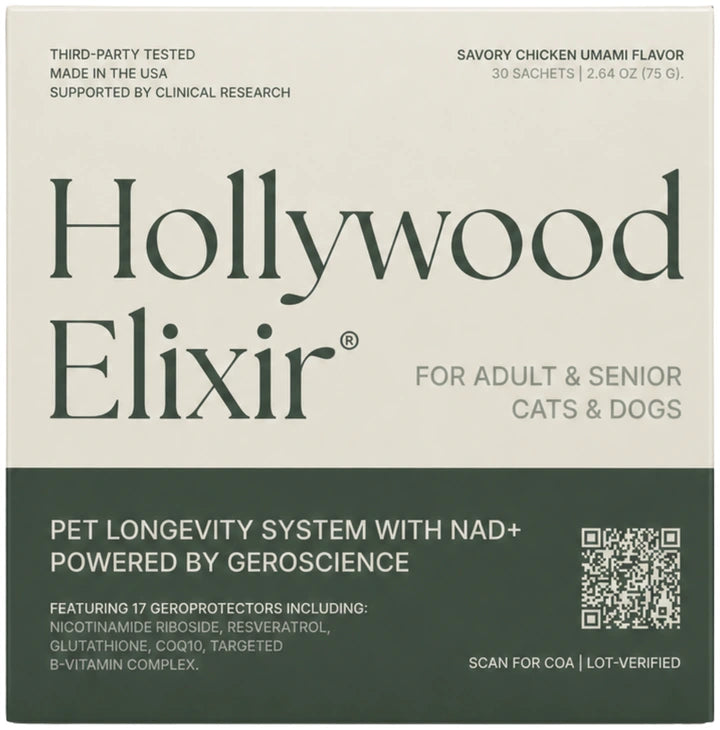
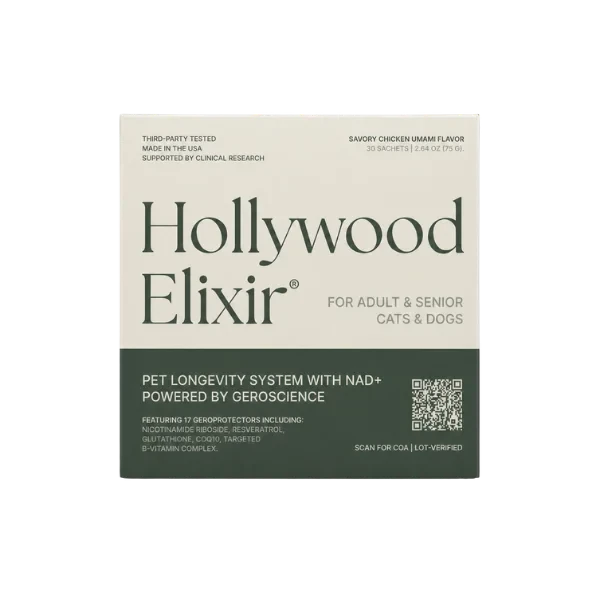
We make Hollywood Elixir, a daily nutrition powder for adult and senior cats and dogs. It's built around nicotinamide riboside, an NAD+ precursor, with CoQ10, glutathione and 14 more actives, and every active amount is printed on the label. It's a supplement, not an Ozempic substitute: it isn't designed to do what GLP-1 drugs do, it isn't a weight-loss product, and it hasn't been tested for lifespan. Its case is practical: one daily sachet stirred into food (half for cats under 7 lb) instead of a cupboard of separate supplements. If your cat takes insulin or another diabetes drug, check with your vet before adding it or any other supplement. See the full formula and serving guide.

In a study of 413 overweight cats, 97% lost weight on a vet-guided diet plan alone.

Educational content only. This material is not a substitute for veterinary advice. Always consult your veterinarian about your cat’s specific needs. These statements have not been evaluated by the Food and Drug Administration. Products mentioned are not intended to diagnose, treat, cure, or prevent any disease.

Glossary

GLP-1: a gut hormone released after eating that slows stomach emptying, increases fullness and boosts insulin when blood sugar is high.

GLP-1 receptor agonist: a drug that mimics GLP-1, such as semaglutide (Ozempic) or exenatide.

Exenatide: the GLP-1 drug in Okava's OKV-119 implant; a different molecule from semaglutide.

Hepatic lipidosis: fatty liver disease in cats, usually triggered when a cat stops eating.

Body condition score: a 1-to-9 scale vets use to judge fat; 4 to 5 is ideal.

SGLT2 inhibitor: a diabetes drug that makes the kidneys pass extra sugar in the urine; Bexacat and Senvelgo are approved for some cats.

Related Reading

References

Sources and further detail

  1. Novo Nordisk (2026). *Ozempic (semaglutide) injection: prescribing information*, via DailyMed
  2. ASPCA (5 March 2026). *Pet safety alert: rising GLP-1 pet exposures*
  3. CNBC (18 July 2026). *Fat cat? Weight-loss drugs may be coming for your overweight pet*
  4. OKAVA Pharmaceuticals (3 Dec 2025). *OKAVA Pharmaceuticals announces first cat dosed in MEOW-1 study of OKV-119* (press release, via PR Zen)
  5. Yahoo News (3 Dec 2025). *Weight loss drugs for cats? Company launches clinical trial of GLP-1 implants in cats*
  6. Klotsman M, Anderson WH, Gilor C. *BMC Veterinary Research* (2024). Drug release profile of a novel exenatide long-term drug delivery system (OKV-119) administered to cats
  7. Klotsman M, Adin CA, Anderson WH, Gilor C. *Frontiers in Veterinary Science* (2021). Safety, tolerability, and proof-of-concept study of OKV-119, a novel exenatide long-term drug delivery system, in healthy cats
  8. The Independent Florida Alligator (22 Feb 2026). *From house cats to hourglass: UF tests Ozempic-style implant on cats*
  9. dvm360 (25 Nov 2025). *Cornell launches clinical trial of once-weekly GLP-1 therapy for feline weight management*
  10. NovoCare, *Ozempic cost navigator* (checked November 2026)
  11. FDA, *The ins and outs of extra-label drug use in animals: a resource for veterinarians*
  12. Hoelmkjaer KM, Wewer Albrechtsen NJ, Holst JJ et al. *PLoS One* (2016). A placebo-controlled study on the effects of the glucagon-like peptide-1 mimetic, exenatide, on insulin secretion, body composition and adipokines in obese, client-owned cats
  13. Riederer A, Zini E, Salesov E et al. *Journal of Veterinary Internal Medicine* (2016). Effect of the glucagon-like peptide-1 analogue exenatide extended release in cats with newly diagnosed diabetes mellitus
  14. Cornell Feline Health Center, *Hepatic lipidosis*
  15. Henson MS, O'Brien TD. *ILAR Journal* (2006). Feline models of type 2 diabetes mellitus
  16. Cornell Feline Health Center, *Feline diabetes*
  17. FDA (8 Dec 2022). *FDA approves first oral treatment for cats with diabetes mellitus*
  18. Boehringer Ingelheim (14 Aug 2023). *Senvelgo receives FDA approval*
  19. Pet Poison Helpline, *Are pets being poisoned with Ozempic?*
  20. Association for Pet Obesity Prevention, *2022 pet obesity survey results*
  21. Cornell Feline Health Center, *Obesity*
  22. Flanagan J, Bissot T, Hours MA et al. *PLoS One* (2018). An international multi-center cohort study of weight loss in overweight cats: differences in outcome in different geographical locations
  23. German AJ, Holden SL, Mason SL et al. *Journal of Animal Physiology and Animal Nutrition* (2011). Imprecision when using measuring cups to weigh out extruded dry kibbled food
  24. Teng KT, McGreevy PD, Toribio JL et al. *Journal of Feline Medicine and Surgery* (2018). Strong associations of nine-point body condition scoring with survival and lifespan in cats
  25. FDA, *FDA's regulation of pet food*

FAQ

Is Ozempic safe for cats?

Its safety in cats is unknown, because we found no published study of semaglutide in pet cats. In cat studies of exenatide, a related drug, reduced appetite and vomiting were common. A cat that stops eating can develop fatty liver disease, so don't give a cat any human GLP-1 product.

What is the Ozempic for cats called?

The leading candidate is OKV-119, an exenatide implant from Okava Pharmaceuticals, tested in the MEOW-1 trial. A second candidate, AKS-562c from Akston Biosciences, is a once-weekly injection being tested at Cornell. Neither is approved.

Is there a GLP-1 for cats?

Not an approved one as of November 2026. Two GLP-1 drugs for cats are in clinical trials, and the lead investigator of one has projected a market date of 2028.

Can a vet prescribe semaglutide for my cat?

US law allows vets to prescribe approved human drugs off-label within a valid vet-client-patient relationship. With no cat dosing or safety data and a high monthly price, it isn't a standard option for weight loss in cats.

Is the cat GLP-1 implant safe?

Early studies in research cats found the implant easy to insert and remove, with no apparent implant-site reactions. The MEOW-1 trial is testing safety in pet cats, and no results had been published as of November 2026.

Can GLP-1 drugs help diabetic cats?

In one study of 30 newly diagnosed diabetic cats, weekly exenatide added to insulin prevented weight gain, and more treated cats reached remission. The study was too small to confirm the remission benefit, and no GLP-1 drug is approved for diabetic cats.

How much weight should my cat lose per week?

Cornell's Feline Health Center suggests about 1% to 2% of body weight a week, under a vet's direction. Faster loss, or a cat that stops eating, raises the risk of fatty liver disease.

Is there a weight loss pill for cats?

No pill is approved for weight loss in cats. Bexacat and Senvelgo are approved for some diabetic cats, but they treat blood sugar, not obesity.

What should I do if my cat gets into an Ozempic pen?

Call your vet or the ASPCA Animal Poison Control line at (888) 426-4435 right away. Have the product name and strength ready, and watch for vomiting, lethargy or not eating.

Orange-and-white cat beside a Hollywood Elixir box held in a person's hand

Discover LPL-01: How This Fits Into a Larger Feline Longevity System

Aging in cats unfolds quietly. It’s not driven by a single failure, but by gradual shifts across interconnected systems — cellular energy, oxidative balance, immune tone, and tissue integrity — each influencing the others over time.

This article explores one layer of that system. To understand what actually shapes long-term health, you need to step back and look at how these layers interact.

Start with the underlying science: