
5 Coat Warning Signs of Illness in Dogs & Cats
Read full insightLabrador Dry Skin Solutions
What's breaking your Lab's skin barrier and how to rebuild it
By La Petite Labs Editorial 15 min read

Labrador dry skin usually traces back to one thing: a stressed skin barrier that can no longer hold moisture in and keep irritants out. On a double-coated dog it shows up as visible flakes, a dusty coat, more dander, mild itch, or a coat that feels rougher than usual — often while energy and appetite stay normal. So the first move is not a new shampoo; it is figuring out which category you are in.
This hub gives a clear overview of the common cause groups behind dry skin in Labs: allergy-related inflammation, parasites, infection or yeast imbalance, nutrition and fatty-acid balance, environment (cold weather, indoor heating, sun, swimming), and grooming (bathing frequency, shampoo sensitivity, friction). What this page covers: simple definitions, the "skin barrier" concept, and a practical way to group what you are seeing so you can pick the right next read. If your main issue is persistent scratching, continue to the Labrador Itchy Skin guide; if it is mostly hair everywhere, the Shedding Solutions page fits better.
- Notice the pattern first: flakes alone differ from redness, odor, or hair loss.
- Choose gentle bathing that cleans without stripping the coat's natural finish.
- Brush for polish: distribute oils, lift debris, and reduce the "dusty" look.
- Support coat oils and barrier lipids with balanced feeding; fat quality often shows in shine.
- Be cautious with sudden diet trends; the label alone does not guarantee a better coat (Donadelli RA, 2020).
- Improve the home environment: humidity, bedding, and friction can change texture fast.
- Escalate early for intense itch, sores, or odor; ordinary dryness should look effortless to manage.
What “Dry Skin” Means in Labs: Flakes, Dander, and Barrier Damage
“Dry skin” is a catch-all phrase, but it can mean different things on a Labrador’s coat.
Flakes are visible bits of dead skin that you may see on the fur or bedding. Dander is finer, more powdery skin debris that can look like dust on dark hair and may be more noticeable during brushing or petting. Seborrhea refers to an abnormal scaling condition where the skin’s turnover is disrupted; it can be dry and flaky, oily and greasy, or a mix—often making the coat look dull even when it’s freshly groomed.
A helpful way to think about true dryness is “skin barrier” function. The outer layer of skin is meant to hold moisture in and keep irritants out. When that barrier is stressed, the skin can lose its natural oils (often described as lipid “mortar,” including ceramide-like fats), leading to easier irritation and more visible scaling.
Common misreads happen in Labs because their double coat hides early skin changes. Seasonal coat change can create extra loose hair and some surface debris that looks like dryness, while the underlying skin may be fine. This is why separating cosmetic flaking from barrier disruption is the first step before you decide which symptom-focused article to use next.

Dry-Skin Pattern Map: Where It Shows Up and What It Often Points To
Where dryness shows up—and what was happening around the time it started—often helps you sort it into a likely “bucket” without jumping straight to conclusions.
Elbows and pressure points: commonly linked to friction, callusing, or dry indoor air, especially in winter.
Belly and inner thighs: often influenced by contact irritation (grass, cleaners, new bedding) or seasonal/environmental triggers.
Along the back: can reflect overall coat/skin dryness from environment or grooming changes, but can also overlap with broader skin sensitivity patterns.
Tail base: frequently noticed when the skin is producing more debris than usual; it’s also a spot owners watch closely when there’s a history of external irritants.
Paws: dryness here may track with licking, outdoor exposure, or product contact (floor cleaners, de-icers).
Context prompts to note: a new shampoo or bathing schedule, winter heating, frequent swimming, a recent diet change, a move to a new home, or a new flea/tick product.
Tracking suggestion: take clear photos in the same lighting and jot quick notes for 7–14 days (location, flake amount, odor/no odor, itch level, and any routine changes). That record makes it easier to choose the most relevant next article—and to describe the pattern accurately if you decide to consult your veterinarian.

Bathing Without Stripping: Clean Fur, Not a Dry Finish
Bathing is one of the most common reasons a Labrador’s skin looks dry. Many “deodorizing” or heavily scented shampoos strip oils, leaving the coat clean but flat and flaky. If your dog is otherwise healthy, switch to a mild, dog-specific shampoo and avoid hot water. Keep baths less frequent, and rinse longer than you think you need—leftover product can irritate and dull the coat.
Conditioning matters for Labs because their double coat can trap residue and dryness at the base. A light conditioner or leave-on spray designed for dogs can restore slip and reduce static. These are practical labrador retriever dry skin care tips that show up quickly: fewer flakes after towel-drying and a coat that lies smoother along the shoulders.

Brushing as Skincare: the Fastest Way to Improve Coat Finish
Brushing is not just grooming—it’s surface skincare. A consistent brush-out lifts dead hair, distributes natural oils, and makes it easier to spot early irritation. For Labradors, use an undercoat rake or deshedding tool sparingly (overuse can create friction), and rely on a slicker or soft bristle brush for daily polish. The goal is a coat that looks even, not “scraped.”
If you’re wondering how to help labrador retrievers with dry skin without overcomplicating it, start here: five minutes of gentle brushing most days. Owners often notice the payoff fast—less dandruff on black pants, less shedding in clumps, and a calmer dog who enjoys the ritual.

Food and Fats: Nutrition Choices That Show in the Coat
Nutrition influences what the coat looks like because skin oils and hair quality reflect the overall balance of the diet. Dietary fat content can affect skin condition, and omega-3 fatty acids are commonly associated with skin and coat support in dogs (German K, 2025). If your Labrador’s coat looks dull or feels dry despite good grooming, review the food: is it complete and balanced, and is your dog maintaining a healthy weight?
Avoid chasing extremes. The best solutions for dry skin in labrador retrievers usually come from steady, high-quality feeding rather than constant switching. If you add fish oil or other supplements, do it with your veterinarian’s input—especially if your dog has pancreatitis history, is on medications, or has a sensitive stomach.
“The best dry-skin routines don’t feel intense—they look obvious: softer fur, fewer flakes, calmer scratching.”
Topicals and Balms: Where Moisture Helps and Where It Doesn’t
Topical moisturizers for dogs can be helpful, but the best ones feel invisible after application—no greasy residue, no heavy fragrance, no sticky coat that attracts dirt. Focus on areas that commonly look dry in Labs: elbows, hocks, and the underside where the coat is thinner. Patch-test first, and stop if you see redness or increased licking.
For labrador retriever dry skin relief solutions, think “light layers.” A leave-on conditioner after baths, plus a paw and elbow balm as needed, often creates a noticeable difference in texture. If your dog licks products off obsessively, that’s a sign to simplify and ask your veterinarian for safer options.

Swimming, Rinsing, and Drying: Keeping Active Labs Looking Sleek
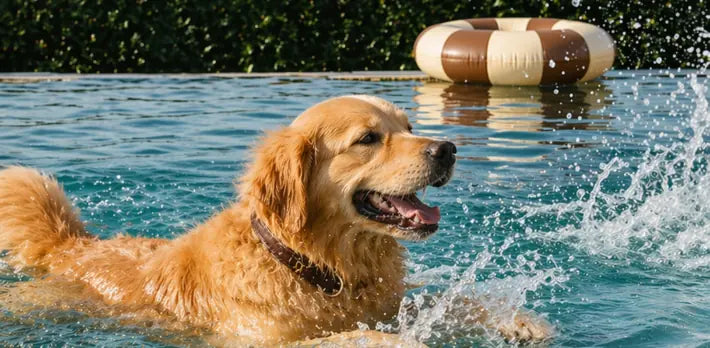
Swimming and frequent rinsing leave a Labrador's coat rough even when the dog is thrilled. Chlorine, salt, and repeated towel-drying strip oils and create a "straw-like" feel along the back. The fix is a quick post-swim routine: rinse with fresh water, then dry thoroughly — a damp undercoat irritates skin and invites odor.
Keep it simple: rinse, gentle towel press (not aggressive rubbing), and a light coat-conditioning spray. It is a small ritual, but for active Labs it is the difference between a coat that looks sleek and one that looks weathered by the end of the week.
Supplements with Sense: Support the Look Without Overdoing It
Supplements can be part of a dry-skin plan, but they complement good grooming and a balanced diet rather than replacing them. Owners often expect a single capsule to create shine overnight; in reality the visible change is gradual and tied to consistent daily use, because coat turnover takes time. Choose support that fits your dog's full routine instead of a one-off megadose.
Safety still matters: talk with your veterinarian if your dog is pregnant, has a bleeding disorder, takes anti-inflammatory medication, or has a history of pancreatitis. The right plan should make the coat feel softer and look more even — without digestive upset or new itching.

What Results Look Like, and When to Escalate Care
When owners ask for labrador retriever dry skin solutions, they often want a timeline. Surface changes can show quickly: less flaking after you stop harsh shampoo, smoother feel after conditioning, and fewer scratch breaks once bedding and humidity improve. Nutrition-linked changes tend to be slower because coat turnover takes time; many owners notice the coat looks more polished after several weeks of consistent feeding and supplementation.
Track what you can see: flake amount after brushing, shine in daylight, and how often your dog interrupts rest to scratch. If signs worsen or include redness, odor, or hair loss, that’s your cue to move from “home care” to veterinary evaluation.
Diet Trends and Coat Texture: What to Watch After Switching
Some Labradors look worse after a diet switch that seemed “cleaner.” If dryness appears alongside softer stools, gas, or a sudden change in coat feel, consider whether the new food is truly balanced for your dog. Grain-free diets, for example, don’t automatically improve amino acid or taurine status in Labrador Retrievers and can change bile acid excretion (Donadelli RA, 2020). That doesn’t mean grain-free is “bad,” but it does mean the label alone isn’t a dry-skin solution.
For labrador retriever dry skin treatment options, focus on what shows up in the mirror: consistent stool quality, steady energy, and a coat that regains luster. If you’re trialing foods, change one variable at a time and give it enough runway to judge the visible result. Pair diet choices with a supportive daily routine so improvements aren’t dependent on a single ingredient.
“Match the remedy to the signal you see, and the coat often responds faster than you expect.”

Clinical Vignette of When Skin Changes Point Deeper Than the Surface
Rosey, a 10-year-old Shih Tzu, was brought in after two weeks of paw redness and head shaking. Her owner had also noticed lower energy, thinning abdominal hair, and mild generalized itchiness over the previous few months.
Examination showed inflammation in the ears, skin folds, and paws. Testing confirmed mixed yeast and bacterial infections, while parasites and fungal disease were ruled out. Because Rosey’s skin changes appeared alongside reduced energy and coat thinning, her veterinarian performed a broader workup, which revealed hypothyroidism as a likely underlying contributor.
Her care required a staged approach: treating the infections, addressing the thyroid imbalance, and then restoring the skin barrier through diet, bathing support, paw care, and omega-3 supplementation.
Six months later, Rosey’s owner reported a thicker coat, fewer tangles, less breakage, no itch, and restored energy.
Clinical takeaway: Rosey’s case shows why skin and coat changes should not be treated as cosmetic alone. Healthy skin depends on immune balance, endocrine health, nutrition, barrier integrity, and daily support for resilient coat growth.
Single-case vignette. Not generalizable. Veterinary diagnosis and oversight are essential for itching, redness, ear irritation, hair thinning, recurrent infections, or suspected endocrine disease.

Allergy-linked Dryness: When It’s More Than Simple Flaking
When dryness is paired with recurrent ear issues, a “corn chip” odor, or seasonal flare-ups, allergies may be part of the picture. Allergic skin doesn’t always look dramatic; it can present as subtle roughness, thinning fur on the belly, or persistent paw licking. The best solutions for dry skin in labrador retrievers here are about reducing triggers and keeping the skin’s surface calm enough to look and feel comfortable.
Your veterinarian may recommend a structured elimination diet, parasite control, or prescription therapies if inflammation is significant. At home, keep routines steady: fragrance-free grooming, gentle drying after swims, and consistent coat conditioning. This is where supportive products matter—because even when medical care is needed, owners still want the visible reassurance of a softer, more even coat day to day.

Parasites and Infections That Mimic Dry Skin in Labradors
Parasites and infections can masquerade as “dry skin.” Flea allergy dermatitis can look like scattered flakes and overgrooming, while bacterial or yeast overgrowth may add redness, odor, or greasy patches. If you see circular hair loss, oozing, thickened skin, or intense itching, skip the home-experiment phase and book a veterinary visit. These are not situations to “moisturize through.”
For everyday labrador retriever dry skin relief solutions, keep parasite prevention current and avoid harsh shampoos that strip oils. The goal is a coat that looks clean and lies smoothly, not one that feels squeaky. When the underlying issue is addressed, supportive grooming and nutrition can bring back the visible softness owners associate with a thriving Labrador.

Hydration Habits That Support a Softer, More Comfortable Coat
Hydration is a quiet lever for skin comfort, but it shows up in obvious ways: less “static” fur, fewer flakes after brushing, and a coat that feels pliable instead of brittle. Encourage drinking by refreshing bowls often, offering multiple water stations, and adding moisture to meals (broth without onion/garlic, or water mixed into food).
If your Labrador is drinking excessively or seems unusually thirsty, talk with your veterinarian—dry skin can coexist with other health changes. For most dogs, though, small daily hydration habits pair beautifully with topical care. Think of it as polishing the overall look: water supports comfort, while grooming and nutrition support the visible finish.
Home Environment Tweaks That Make the Coat Look More Even
Indoor air can be the hidden reason a Labrador looks “winter-dry.” Heating lowers humidity, and the coat can lose its soft lay—especially on the back and hips where friction from bedding is common. A humidifier in the main sleeping area, frequent washing of blankets with fragrance-free detergent, and a quick brush-out before bed can make the coat look noticeably more even.
If you’re collecting labrador retriever dry skin care tips, add one that feels almost too simple: reduce friction. Rotate bedding, choose smoother fabrics, and keep nails trimmed to limit self-scratching damage. These changes don’t sound glamorous, but they often deliver the “my dog looks better” payoff owners want.
Senior Labrador Dry Skin Care That Feels Gentle and Effective
Older Labradors can develop drier skin as grooming becomes less thorough, activity patterns change, or chronic conditions alter coat quality. You may notice slower regrowth after shedding, a thinner feel along the spine, or a coat that loses its easy shine. The best remedies for labrador retriever dry skin in seniors are gentle and consistent: softer brushes, shorter baths, and conditioning steps that don’t overwhelm sensitive skin.
Because older dogs can be on medications, check with your veterinarian before adding supplements. The goal is not to “fix aging,” but to keep your dog looking comfortably cared-for—smooth coat, calm skin, and nails that stay strong for confident walks. Daily rituals matter more than dramatic interventions.

Whole-dog Considerations When Coat Changes Don’t Make Sense
Some Labradors carry genetic or breed-linked considerations that influence overall wellbeing, and that can show up in the coat. For example, Labrador Retrievers are known to be predisposed to hepatic copper accumulation, and dietary management may be used in affected dogs under veterinary guidance (Fieten H, 2015). While this is not a “dry skin cause” you should assume, it’s a reminder: persistent coat changes deserve a whole-dog view.
If dryness is paired with poor appetite, vomiting, weight loss, or a sudden change in energy, don’t rely on cosmetic fixes. But when your Labrador is otherwise well, supportive grooming plus nutrition-forward care can still elevate visible condition—because the coat is one of the clearest daily signals owners can actually see.

Choosing Products That Deliver Visible Comfort Without Irritation
A simple way to choose among dry-skin options is to match the product to the texture problem. Flakes without redness usually respond to gentler cleansing and conditioning. Rough, bristly coat often improves with better dietary fat balance and omega-3 support, which is commonly linked to coat quality (German K, 2025). Red, itchy skin needs a vet-first mindset.
For a daily barrier system rather than a single nutrient, Pet Gala is built for this skin-coat-nail lane, with omega 3-6-9 at a disclosed 150 mg, ceramides at 8 mg, hyaluronic acid at 50 mg, and marine collagen at 500 mg per sachet. Look for the same quality signals you would anywhere — clear ingredient lists, fragrance-free topical formulas, and consistent serving guidance. The best products are the ones your dog tolerates well and that make the coat look better in real life, not just on paper.
A Calm Routine for Lasting Softness, Shine, and Everyday Confidence
The most reassuring outcome is simple: your Labrador looks comfortable in their own skin. You see fewer flakes on the couch, a coat that reflects light again, and a dog who settles without constant scratching. That’s why labrador retriever dry skin solutions work best as a calm routine—grooming that feels like bonding, nutrition that supports visible polish, and quick escalation to your veterinarian when signs don’t fit “ordinary dryness.”
If you want one unifying principle, it’s this: chase the visible signal you care about (softness, shine, comfort), then choose consistent steps that reinforce it. When you do, the coat becomes a daily confirmation of care—clean, smooth, and unmistakably well-kept.
“A polished coat is a daily confirmation of care—clean, smooth, and comfortably well-kept.”
Educational content only. This material is not a substitute for veterinary advice. Always consult your veterinarian about your dog’s specific needs. These statements have not been evaluated by the Food and Drug Administration. Products mentioned are not intended to diagnose, treat, cure, or prevent any disease.
Glossary
- Barrier Support: Daily care choices that help skin feel comfortable and look smooth, including gentle cleansing and conditioning.
- Dander: Fine flakes of shed skin that can appear on the coat and furniture, often mistaken for “dirt.”
- Double Coat: Two-layer coat common in Labradors; the dense undercoat can trap moisture, residue, and flakes.
- Leave-On Conditioner: A dog-safe product applied after bathing or between baths to improve slip, softness, and manageability.
- Contact Irritation: Skin reaction triggered by shampoos, detergents, grass, or fragrances, often localized to belly or paws.
- Friction Points: Areas like elbows, hocks, and hips where pressure and rubbing can make skin look dry or thickened.
- Coat Luster: The visible shine and “smooth lay” of fur that owners associate with a well-kept, comfortable dog.
- Omega-3 Fatty Acids: Dietary fats often used to support skin and coat appearance; best selected with vet guidance for sensitive dogs.
- Hot Spots: Localized, inflamed, sometimes oozing skin lesions that require veterinary attention rather than moisturizing.
Related Reading
Common Canine Integumentary Issues
• Hot Spots on Dogs
• Dog Licking Paws
• Dog Itch Relief
• Dog Skin Allergies
• Dog Dandruff
Comfort & Recovery
• Skin & Coat Supplements for Dogs
• Coat Growth Supplement for Dogs
• Dog Nail Supplement
Ingredient-Level Articles
• Biotin for Dogs
• Silica for Dogs
• Hyaluronic Acid for Dogs
• Ceramides for Dogs
References
Fieten H. Dietary management of labrador retrievers with subclinical hepatic copper accumulation. PubMed Central. 2015. https://pmc.ncbi.nlm.nih.gov/articles/PMC4895432/
McDermott A. Reapplication of the Type IV Hypersensitivity Quantitative Risk Assessment to Assess Ingredients Used on Canines. PubMed. 2025. https://pubmed.ncbi.nlm.nih.gov/40536915/
Mansilla WD. Adult dogs of different breed sizes have similar threonine requirements as determined by the indicator amino acid oxidation technique. PubMed Central. 2020. https://pmc.ncbi.nlm.nih.gov/articles/PMC7085255/
Donadelli RA. A commercial grain-free diet does not decrease plasma amino acids and taurine status but increases bile acid excretion when fed to Labrador Retrievers. PubMed Central. 2020. https://pmc.ncbi.nlm.nih.gov/articles/PMC7433909/
German K. Exploratory analysis of nutrient composition of adult and senior dog diets. PubMed Central. 2025. https://pmc.ncbi.nlm.nih.gov/articles/PMC12757753/
FAQ
What are the most common causes of dry skin in Labradors?
Dryness in Labradors often comes from over-bathing, low indoor humidity, frequent swimming, or friction from bedding. It can also reflect allergies, parasites, or skin infection—especially if there’s redness, odor, or hair loss.
If you’re comparing labrador retriever dry skin solutions, start by matching the fix to the pattern you see, and involve your veterinarian when signs look inflamed. For daily visible-care support, consider Pet Gala™.
How can I tell dry skin from allergies in my Labrador?
Dry skin often looks like light flaking with minimal redness, while allergies commonly add persistent itching, paw licking, ear issues, or seasonal flare-ups. Allergic skin can still flake, but the dog’s behavior (constant scratching) is usually the giveaway.
Because allergy management can require veterinary guidance, keep home care gentle and consistent while you investigate triggers. A steady routine plus supportive daily care can pair well with Pet Gala™.
Which bathing habits worsen Labrador dry skin the fastest?
Frequent baths, hot water, and strongly scented or “degreasing” shampoos can strip coat oils and leave a squeaky, flaky finish. Incomplete rinsing is another common issue—residue can irritate and make the coat look dull.
For labrador retriever dry skin solutions, bathe less often, rinse longer, and add a dog-safe conditioning step for softness. To reinforce everyday coat polish, many owners include Pet Gala™.
What grooming routine helps Labradors with dry skin look better?
Aim for short, frequent brush-outs that lift flakes and distribute natural oils. Use an undercoat tool sparingly and rely on a softer brush for daily shine. Pay attention to elbows, hocks, and the back where friction and dryness show first.
If you’re deciding how to help labrador retrievers with dry skin, consistency beats intensity—five minutes most days can change the coat’s finish. For added skin-and-coat support, consider Pet Gala™.
Do omega-3s actually improve dry skin appearance in Labradors?
Omega-3 fatty acids are commonly associated with skin and coat support, and dietary fat balance can influence visible coat quality in dogs. Many owners notice improved softness and sheen over several weeks when omega-3s fit the dog’s overall diet.
Because supplements can interact with medical conditions or medications, confirm choices with your veterinarian. For a daily routine that supports visible coat polish, you can pair nutrition with Pet Gala™.
Are grain-free foods the best solutions for dry skin in Labradors?
Not automatically. In Labrador Retrievers, grain-free feeding does not inherently improve plasma amino acids or taurine status, and it can change bile acid excretion(Donadelli RA, 2020). Some dogs do well on grain-free diets, but the label alone isn’t a reliable predictor of coat softness.
If you trial a new food, change one variable at a time and watch the coat, stool, and itch level. For consistent visible-care support alongside diet choices, consider Pet Gala™.
What are safe labrador retriever dry skin treatment options at home?
Safe home options include reducing bath frequency, switching to a mild dog shampoo, adding a light conditioner, brushing regularly, and improving indoor humidity. You can also rinse after swimming and avoid fragranced sprays that irritate sensitive skin.
If you see sores, strong odor, or significant hair loss, move from home care to veterinary evaluation. For daily skin, coat, and nail support that complements a gentle routine, consider Pet Gala™.
When should I call the vet about my Labrador’s dry skin?
Call your veterinarian if dryness comes with intense itching, redness, odor, oozing, circular hair loss, or sudden behavior changes. Also seek help if your dog seems unwell overall—low appetite, vomiting, weight loss, or unusual thirst.
These signs can indicate parasites, infection, or allergy flare-ups that need targeted care. For everyday visible-care support while you follow veterinary guidance, consider Pet Gala™.
How long until I see results from dry skin care changes?
Surface improvements—less flaking after brushing, smoother feel after conditioning—can appear within days to a couple of weeks. Nutrition-related changes usually take longer because coat turnover is gradual; many owners notice a more polished look after several weeks of consistency.
Track visible signals like shine in daylight and how often your dog interrupts rest to scratch. To support a steady routine that prioritizes visible coat quality, consider Pet Gala™.
Can dry skin in Labradors be caused by too much bathing?
Yes. Over-bathing can remove protective oils and leave the coat clean but brittle, especially in a double-coated breed. If you notice flakes right after baths, a squeaky coat texture, or increased scratching, your bathing routine may be the main trigger.
Switch to a gentler shampoo, rinse thoroughly, and add a light conditioning step to restore softness. For ongoing skin-and-coat support that fits daily care, consider Pet Gala™.
What ingredients should I avoid in products for Labrador dry skin?
Avoid harsh degreasers, heavy fragrance, and products not formulated for dogs. Strong essential oil blends can be irritating, and “medicated” products used without guidance can worsen dryness if the issue isn’t what the label targets.
Choose clear, dog-specific formulas and patch-test new items on a small area first. For a daily routine focused on visible coat polish and comfort, consider Pet Gala™.
Are there side effects from fish oil for Labrador dry skin?
Possible side effects include loose stool, fishy breath, or stomach upset, especially if introduced too quickly. Some dogs with pancreatitis history or those on certain medications may need extra caution, so it’s best to confirm supplement choices with your veterinarian.
Introduce any new supplement gradually and watch both skin comfort and digestion. For a broader daily approach to skin, coat, and nails beyond single-ingredient strategies, consider Pet Gala™.
Can dry skin solutions differ for Labrador puppies versus adults?
Yes. Puppies often have more sensitive skin and may react to fragranced shampoos or frequent bathing. Adults may show dryness from environment, swimming, or diet changes. In both cases, gentle grooming and a balanced, age-appropriate diet are the foundation.
For puppies, keep products especially mild and avoid unnecessary add-ons unless your veterinarian recommends them. For daily visible-care support that fits many life stages, consider Pet Gala™.
Do indoor humidity and bedding really affect Labrador skin dryness?
They can. Heated indoor air lowers humidity, and friction from bedding can roughen coat texture along the back, hips, and elbows. Owners often notice more flakes in winter or when a dog sleeps on rough fabrics.
Try a humidifier in the sleeping area and wash bedding with fragrance-free detergent. These small changes can improve the coat’s visible finish quickly, especially when paired with Pet Gala™.
What’s the best decision framework for choosing dry skin products?
Start with the signal: flakes without redness usually call for gentler cleansing and conditioning; rough coat suggests grooming plus nutrition support; redness, odor, or sores suggest veterinary evaluation. Then choose products that your dog tolerates well and that fit a routine you’ll actually keep.
Avoid stacking multiple new products at once—change one variable, watch the coat, and adjust. For a consistent daily approach to visible skin and coat quality, consider Pet Gala™.
Can medications interact with supplements used for dry skin support?
They can. Dogs taking anti-inflammatory drugs, blood thinners, or managing chronic conditions should only add supplements with veterinary approval. Even “simple” oils can be inappropriate for some medical histories, and the safest plan is individualized.
Bring your dog’s full medication list to your veterinarian before starting new skin supplements. For daily visible-care support that can complement a vet-guided plan, consider Pet Gala™.
Is this page about labrador retriever dry skin solutions relevant for cats?
Cats can get dry skin too, but the causes, grooming tolerance, and safe product choices differ. Many dog shampoos and topical products are not appropriate for cats, and cats may have unique dietary sensitivities or grooming behaviors that change the approach.
If you’re caring for a cat, use cat-specific products and consult your veterinarian for persistent flaking or itch. For dog-focused daily coat support, explore Pet Gala™.
What research-backed nutrition concepts relate to coat dryness in Labradors?
Coat appearance is commonly linked to overall diet balance, including fat quality and omega-3 intake, which are associated with skin and coat support. Diet trends can also have unexpected effects; for example, grain-free feeding can alter bile acid excretion in Labrador Retrievers.
The practical takeaway is to prioritize complete-and-balanced feeding and watch your dog’s visible response. For a daily routine that supports skin, coat, and nails beyond single-nutrient thinking, consider Pet Gala™.
How do I administer supplements without upsetting my Labrador’s stomach?
Introduce new supplements gradually and give them with food. Watch for loose stool, decreased appetite, or increased gas, and pause if you see changes. Consistency matters more than large, sudden additions, especially for dogs with sensitive digestion.
Keep the rest of the routine stable so you can tell what’s helping. If you want daily support designed to fit into an easy ritual, consider Pet Gala™.
What are the best remedies for Labrador dry skin during winter?
Winter dryness often responds to less frequent bathing, a conditioning step after washes, more frequent brushing, and improved indoor humidity. Also reduce friction by rotating bedding and choosing smoother fabrics. These changes can quickly reduce flakes and restore a softer coat feel.
If itching becomes intense or skin looks inflamed, involve your veterinarian rather than escalating home products. For daily visible-care support through seasonal changes, consider Pet Gala™.
How can Pet Gala™ fit into my Labrador’s dry skin routine?
Think of labrador retriever dry skin solutions as a layered routine: gentle grooming, balanced feeding, and quick veterinary escalation for inflamed signs. A daily supplement can be the “steady background” that supports visible coat polish and nail strength while you keep the rest of the routine simple.
If you want support that complements grooming and nutrition rather than replacing them, you can include Pet Gala™.

Discover LPL-01: How This Fits Into a Complete Canine Integumentary Support System
Skin, coat, and nails aren’t cosmetic features. They’re the visible surface of deeper biological systems—barrier function, hydration balance, structural protein turnover, and lipid integrity—working in concert.
When these systems fall out of sync, it shows: dull coat, shedding, dryness, brittleness, sensitivity.
This article explores one piece of that puzzle. If you want to understand how true coat quality and skin resilience are built—and what actually moves the needle—you need to zoom out.
Start with the underlying science:
- Canine Skin & Coat Framework →
A structured view of how skin, coat, and nail health are maintained across collagen synthesis, lipid balance, and barrier function. - Barrier Protection Coverage Modeling →
A systems-level map of which integumentary pathways are most vulnerable—and how layered nutritional inputs can support them. - 2026 Market Research: Best Dog Skin & Coat Supplements →
A category review of dog formulas for coat quality, skin barrier support, fatty acid balance, collagen support, shedding, and visible beauty. - LPL-01 Standard →
The formulation system that translates these models into real-world supplementation—covering multiple pathways in a coordinated way.
Essential Summary
Why are Labrador Retriever dry skin solutions important?
The most satisfying dry-skin care is the kind you can see: fewer flakes on the coat, softer fur under your hand, and a Labrador who settles comfortably. Start with gentle bathing and brushing, then support the coat with balanced nutrition and smart hydration. If redness, odor, or hair loss appears, involve your veterinarian.
Pet Gala fits into dry-skin routines as daily, visible-care support for skin, coat, and nails—helping reinforce the polished look owners love, especially when grooming and diet are already thoughtful.

Barrier System
Pet Gala™
★★★★★(171)
Soft coat, strong nails, calm skin — so they feel comfortable, beautiful, and at ease in their own body.
Starting at $79/mo
The scratching is completely gone, his coat looks healthy and shiny!
— Lena
He was struggling with itching, now he's glowing.
— Grace
Looking for Labrador Retriever dry skin solutions?
If you're looking for dry skin solutions for Labrador Retrievers
If you want labrador retriever dry skin solutions that feel realistic, build a routine you’ll actually keep: bathe less often with a mild dog shampoo, rinse thoroughly, and add a light conditioning step. Brush most days for five minutes to lift flakes and distribute natural oils. Support the coat from the inside with a complete-and-balanced diet, and ask your veterinarian before adding oils or supplements—especially for sensitive stomachs or dogs on medications. Then refine the environment: smoother bedding, fragrance-free laundry, and a bit more humidity in winter. For owners who want a steady, beauty-forward layer that supports skin, coat, and nails beyond single-nutrient thinking, Pet Gala fits naturally into that daily ritual.
Veterinary Insights

Learn about how our DVMs think about the canine barrier
Dr. Sarah Calvin DVM


Barrier System
Pet Gala™
★★★★★(171)
Soft coat, strong nails, calm skin — so they feel comfortable, beautiful, and at ease in their own body.
Starting at $79/mo
Wellness Tools
Explore the visible signs of whole-body wellness


Related Reading
In Labs, dryness can show up as visible flakes, a dusty coat, increased dander, mild itchiness, or a coat that feels rougher than usual—even when energy and appetite seem normal.
