
The 12 Hallmarks of Aging in Dogs, Explained
Read full insightGlutathione for Dogs: What It Does and How to Restore It
Spot the signs of low glutathione and the steps that rebuild your dog's defenses
By La Petite Labs Editorial 15 min read

Yes, dogs can take glutathione, and for many older or recovering dogs it makes biological sense: glutathione is the master antioxidant their cells already make and spend every day to neutralize oxidative byproducts and support the liver's detox work. The problem the search results promise to solve is real — when illness, age, or environmental load push oxidative stress higher than the body can recycle glutathione, detox capacity falls behind and inflammation climbs. That gap is why veterinarians sometimes fold antioxidant support into a broader plan, and research in canine liver disease has found altered glutathione levels in liver tissue. This page covers what depletes glutathione in dogs, the signs that can appear, and how diet, liver support, and safe supplementation help rebuild protection — without pretending a supplement replaces diagnosis or treatment. Healthy, thriving dogs may never need targeted support; seniors, dogs recovering from illness, and dogs with liver concerns are where it earns a closer look.
- Yes, dogs can take glutathione — it is the antioxidant their cells make and spend daily to steady oxidative stress.
- Glutathione fails when oxidative load (illness, age, toxins) outpaces the body's ability to recycle it.
- The liver is glutathione's busiest workplace; canine liver disease can alter glutathione levels in liver tissue.
- Is it safe? Generally well tolerated, but dosing should be vet-guided — especially with medications or chronic disease.
- Liposomal and precursor forms aim to survive digestion better; form and third-party testing matter more than label hype.
- Results are quiet and measured in weeks — steadier energy, recovery, and comfort, not an overnight change.
Why This Antioxidant Conversation Matters More as Dogs Age
Glutathione is your dog's master antioxidant — made inside the cells, spent constantly, and concentrated in tissues that handle heavy turnover and detox work. It keeps cells resilient under everyday strain, and when dogs are sick, inflamed, or simply older, oxidative stress rises and glutathione is one of the main tools the body uses to buffer the load (Hagen DM, 2019).
So the practical question for pet parents is not "Is glutathione good?" but "Is my dog's system keeping up?" Support can be reasonable during periods of higher demand — illness, recovery, environmental exposures, or age-related wear — while still respecting that it is not a substitute for diagnosis or treatment. The rest of this page covers what glutathione does, when support makes sense, and how to choose well.

What Glutathione Does Inside Cells, in Plain Owner Language
Inside the body, glutathione exists in a cycle: it neutralizes reactive compounds, becomes “used,” and then is regenerated so it can work again. That recycling is part of why glutathione is central to cellular defense rather than a one-time shield. When demand rises—through inflammation, toxin exposure, or intense physiologic stress—cells can burn through antioxidant capacity faster than it is restored.
This is the core logic behind glutathione supplements for dogs: not to override biology, but to support it when the balance feels strained. The most responsible framing is supportive, not curative. Think of it as helping the body keep its footing, especially in tissues that do heavy lifting every day.

The Liver Connection: Detox Work and Glutathione Demand
The liver is where glutathione earns its reputation. It participates in detoxification reactions and helps manage oxidative byproducts created during normal metabolism. In dogs with liver disease, research has found altered glutathione concentrations in liver tissue, suggesting that hepatic conditions can change antioxidant status in meaningful ways.
For owners, this does not translate into self-treatment. It translates into a better conversation: if your veterinarian is monitoring liver enzymes or bile acids, it may be reasonable to ask whether antioxidant support is appropriate, and how it fits alongside diet, medications, and follow-up testing.
Oxidative Stress in Dogs: When the Load Quietly Increases
Oxidative stress is a broad term for an imbalance between reactive molecules and the body’s ability to neutralize them. In sick dogs, oxidative stress can increase, and glutathione is one of the key internal compounds involved in reducing that load. This is why glutathione benefits for dogs are often discussed in the context of recovery, chronic disease management, or aging.
The goal is not to eliminate oxidative processes—some are part of normal signaling—but to avoid a chronic surplus that wears down tissues. Support can be especially relevant when appetite is reduced, sleep is disrupted, or inflammation is persistent, because those states can make cellular maintenance more expensive.

Forms and Precursors: Why All Glutathione Products Differ
Not all "glutathione" products work the same way, and liposomal glutathione is the form most owners ask about. Liposomal versions wrap glutathione in tiny fat-like spheres designed to protect it through digestion so more reaches the bloodstream intact — the appeal is better absorption than plain reduced glutathione, which the gut breaks down readily. Other products skip direct glutathione entirely and supply precursors that help the body build and maintain its own.
Form matters, and so does your reason for using it. In research settings, glutathione-related compounds have been explored for organ protection in dogs, including myocardial contexts, which shows the system is biologically active across many tissues (Hoshida S, 1994). A product chosen for general aging support may look different from one chosen to complement a veterinarian's liver-support plan — and naming that intent up front keeps you from stacking supplements you don't need.
“Glutathione support is rarely about a dramatic change; it is about protecting reserve.”
Balance over Excess: Antioxidants as Support, Not a Shortcut
A common misconception is that more antioxidants are always better. In reality, the body uses oxidative signals for normal immune and cellular communication, and the goal is balance. In canine illness, antioxidant supplementation has been discussed as a way to help manage oxidative stress, not to erase it.
This is why the best glutathione supplement for dogs is typically the one used with restraint: appropriate dose, appropriate duration, and a clear plan for reassessment. If your dog’s needs change—new medication, new diagnosis, new diet—the supplement plan should change too.

Medication Considerations: Why Your Vet Should Be Involved
Medication interactions are one of the most overlooked reasons to involve a veterinarian. Glutathione-related enzymes participate in detoxification, and differences in these systems can influence how dogs handle certain drugs. Research has examined glutathione-S-transferase theta genotypes in relation to cyclophosphamide toxicity risk in dogs, illustrating that detox capacity is not identical across individuals (Ekena J, 2018).
If your dog is on chemotherapy, long-term anti-inflammatories, anticonvulsants, or complex regimens, avoid adding supplements casually. The safest approach is to share the exact product label with your veterinarian and ask whether timing, dose, or monitoring should be adjusted.

Life Stage Fit: Puppies, Adults, Seniors, and Different Priorities
Life stage changes the conversation. Puppies are building systems; adults are maintaining them; seniors are often compensating. In older dogs, the appeal of glutathione for dogs is usually about preserving “reserve”—the ability to bounce back after a long walk, a vaccine visit, or a mild stomach bug. The science of oxidative stress in illness supports why antioxidant capacity can matter when the body is under strain.
For very young dogs, supplementation is rarely the first lever unless a veterinarian has a specific reason. For seniors, it may be part of a broader plan that includes mobility support, cognitive enrichment, and regular lab work to catch subtle shifts early.

Practical Use: Palatability, Consistency, and Routine Fit
Administration is where good intentions succeed or fail. Some dogs tolerate powders mixed into wet food; others do better with capsules hidden in a small treat. Consistency matters because antioxidant systems respond to steady support, not sporadic bursts. If you are using glutathione supplements for dogs, start with a conservative approach and watch for appetite or stool changes.
If your dog is on a restricted-calorie plan, be mindful that add-ins can unintentionally shift nutrient balance or calorie totals; monitoring is emphasized in weight-loss contexts for a reason (German AJ, 2015). A veterinarian can help you choose a format that fits the diet without introducing new problems.
How to Choose the Best Glutathione Supplements for Dogs
If you are comparing the best glutathione supplements for dogs, it helps to separate the label from the lived reality: absorption, tolerance, and consistency matter more than heroic numbers on a panel. Some forms are designed to survive digestion better than others, and some products pair glutathione-related ingredients with liver-supportive compounds. In dogs with liver disease, a supplement containing S-acetyl-glutathione and silybin has been studied for effects on liver health and oxidative stress markers (Martello, 2023).
Quality signals include transparent sourcing, third-party testing, and conservative claims. Avoid products that promise to “detox” dramatically or replace veterinary care. The best glutathione for dogs is the one that fits your dog’s needs, your veterinarian’s plan, and a broader strategy that supports aging biology rather than chasing a single molecule.
“The best supplement plan is coordinated, conservative, and easy to sustain.”

DVM Voice: Clinical Vignette of a Common Pattern in Senior Dog Aging
Case provided by JoAnna Pendergrass, DVM
Rex, a 7-year-old Labrador Retriever, was brought in after his owner noticed he was slower to rise, hesitant on stairs, and less able to play as before. Examination showed stiffness and reduced hip mobility; radiographs confirmed degenerative joint changes.
His care required weight management, veterinary-guided pain control, nutritional support, and rehabilitation — a comprehensive plan, but one started only after visible decline appeared.
Clinical takeaway: Rex’s case reflects the value of proactive aging support: maintaining lean body condition, monitoring mobility early, and supporting cellular resilience, antioxidant defense, and healthy inflammatory balance before decline becomes obvious.
Single-case vignette. Not generalizable. Veterinary oversight is essential for pain, stiffness, or suspected joint disease.

Glutathione Dosage for Dogs: Why It Should Be Vet-Led
Glutathione dosage for dogs is not a one-size decision, and it is rarely appropriate to treat it like a simple vitamin. Needs vary with diet, size, health status, and concurrent medications. In particular, detoxification capacity and drug metabolism can differ between individuals; genetic factors in glutathione-related enzymes have been investigated in relation to medication toxicity risk in dogs (Ekena J, 2018).
Rather than chasing a precise number on your own, use dosing as a conversation with your veterinarian: what goal are you supporting (recovery, liver support, aging resilience), what form is being used, and how will you monitor response? A cautious plan also includes stopping rules—what changes would mean you pause and reassess.

Safety, Side Effects, and When to Pause Supplementation
Glutathione is generally well tolerated in dogs; the real safety question is context, not the molecule itself. What matters most is the dog's underlying condition, the product's other ingredients, and what else is being given at the same time. Dogs with liver disease can have altered glutathione concentrations in liver tissue, which is one reason veterinarians may take a more tailored approach (Center SA, 2002).
The side effects owners report with many supplements — soft stool, mild nausea, appetite changes — are nonspecific, and they are signals to slow down or stop rather than push through. If your dog is on chemotherapy, seizure medication, or complex prescriptions, do not add a glutathione supplement without veterinary oversight, because detox pathways and drug handling can be intertwined (Ekena J, 2018).

What Results Can Look Like over Weeks, Not Days
Owners often ask when they will “see” glutathione benefits for dogs. The honest answer is that glutathione work is mostly quiet: it supports cellular steadiness rather than producing a dramatic, immediate change. In dogs experiencing illness-related oxidative stress, antioxidant support has been discussed as one way to help manage that burden, which may show up as improved overall resilience rather than a single symptom shift (Hagen DM, 2019).
A practical timeline is measured in weeks, not days, and should be paired with observable markers you and your veterinarian agree on—energy, appetite, stool quality, coat, lab trends when relevant. If nothing changes, that is still useful information: it may mean the bottleneck is elsewhere, or the chosen form is not a good match.
Diet, Protein, and Why Adequacy Still Doesn’t Equal Resilience
Diet matters because glutathione is built from amino acids, and the body needs adequate protein and micronutrients to maintain its internal antioxidant systems. When dogs are on restricted diets—whether for weight loss, allergies, or medical management—nutrient adequacy can become more delicate, which is why monitoring is emphasized in energy restriction contexts (German AJ, 2015).
Still, even a well-formulated diet does not guarantee that an older or stressed dog is meeting demand at the cellular level. This is where a systems approach becomes relevant: supporting mitochondrial function, redox balance, and recovery capacity can matter even when “requirements” are technically met. That broader framing is also why some owners choose products that support aging networks beyond single-nutrient replacement.
Liver Health Context: When Glutathione Support Becomes More Relevant
If your dog has known liver concerns, glutathione becomes more than a buzzword. Research in dogs with liver disease has shown altered glutathione concentrations in liver tissue, underscoring that antioxidant status can shift with hepatic conditions (Center SA, 2002). That does not mean glutathione alone is “the answer,” but it supports why veterinarians may consider antioxidant strategies as part of a larger plan.
In this setting, product choice should be conservative: clear labeling, veterinary compatibility, and avoidance of aggressive detox claims. A studied approach has included S-acetyl-glutathione paired with silybin, suggesting that combinations may be used to support liver function and oxidative balance under veterinary direction (Martello, 2023).

Beyond the Liver: Why Antioxidant Systems Touch Many Organs
Heart and muscle tissues are especially sensitive to oxidative strain because they are metabolically active. Experimental work in dogs has explored glutathione-related precursors for myocardial protection during ischemic events, highlighting the broader relevance of glutathione biology beyond the liver (Hoshida S, 1994). For most pet parents, this is not a reason to self-prescribe; it is a reminder that antioxidant systems are woven through many organs.
If your dog has cardiac disease, the right question is whether antioxidant support fits the cardiology plan, not whether a supplement is “strong.” Coordination matters, because the goal is steady support without interfering with medications, appetite, or fluid balance.

Aging Support as a Network: Keeping Cellular Defenses Steady
Aging is where glutathione conversations tend to land, because the visible changes—slower recovery, stiffer mornings, thinner reserves—feel like a whole-body story. Oxidative stress is commonly discussed in the context of illness and physiologic strain in dogs, and antioxidant supplementation has been proposed as supportive care in those situations (Hagen DM, 2019). The point is not to chase youth; it is to protect capacity.
This is also where a science-minded owner may ask: if glutathione is endogenous, why buy anything? Because aging support is rarely about one molecule. A well-designed product can support the metabolic network that helps maintain redox balance, energy production, and cellular repair—areas that influence how glutathione is used and recycled over time.
A Calm Decision: Matching Supplements to Your Dog’s Real Needs
Choosing whether to use a glutathione supplement comes down to your dog's situation. A healthy, thriving dog may get more from diet, exercise, dental care, and routine labs; an older dog, a dog in recovery, or one managing a chronic condition is where gentle, system-level antioxidant support earns a place — without making medical promises. Bring your veterinarian in whenever medications or a liver-disease history are involved (Center SA, 2002).
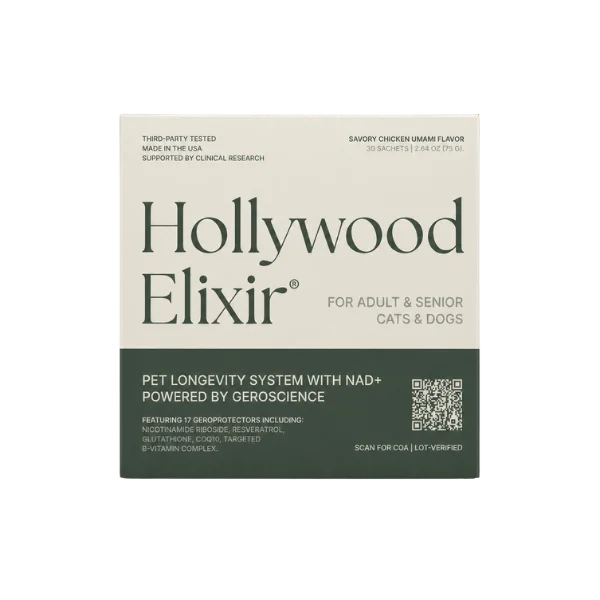
If you would rather support glutathione as part of a broader daily routine than chase a single molecule, that is the logic behind Hollywood Elixir: it includes glutathione at a disclosed 50 mg per sachet alongside other antioxidants — astaxanthin, vitamins C and E, resveratrol — because aging support is a network, not one nutrient. It is a food-mixed powder you can read, explain to your vet, and keep using daily. The goal is not a dramatic before-and-after; it is a dog who keeps more of their normal across the months that matter.
“Aging is a network problem; support that respects the network tends to age better.”
Educational content only. This material is not a substitute for veterinary advice. Always consult your veterinarian about your dog’s specific needs. These statements have not been evaluated by the Food and Drug Administration. Products mentioned are not intended to diagnose, treat, cure, or prevent any disease.
Glossary
- Glutathione: An antioxidant made in the body that helps protect cells from oxidative damage and supports detox functions.
- Oxidative Stress: An imbalance where reactive molecules outpace the body’s antioxidant defenses, potentially stressing tissues over time.
- Redox Balance: The cellular “push and pull” between oxidation and reduction that keeps normal signaling and protection in equilibrium.
- Detoxification: A set of liver and cellular processes that transform and clear compounds; glutathione participates in several steps.
- Glutathione-S-Transferase (GST): A family of enzymes that use glutathione in detox reactions and can influence drug handling.
- S-Acetyl-Glutathione: A modified form of glutathione used in some supplements, studied in canine liver-support contexts.
- Precursor: A building-block compound the body can use to make glutathione, often discussed when supporting endogenous production.
- Bioavailability: How much of a nutrient or compound is absorbed and becomes available for the body to use.
- Hepatic: Relating to the liver; hepatic conditions can change antioxidant status and supplement considerations.
Related Reading
Aging & Senior Dog Guidance
• Dog Age Calculator
• Dog Dementia
• Lethargy in Dogs
• My Dog Won't Eat
• Dog Pacing At Night
• Dog Licking Paws
• Can Dogs Dehydrate
Healthy Aging Support
• NAD+ for Dogs
• NMN for Dogs
• Antioxidants Supplements for Dogs
• Best Senior Dog Supplements & Vitamins
• Rapamycin for Dogs
References
Mansilla WD. Adult dogs of different breed sizes have similar threonine requirements as determined by the indicator amino acid oxidation technique. PubMed Central. 2020. https://pmc.ncbi.nlm.nih.gov/articles/PMC7085255/
German AJ. Assessing the adequacy of essential nutrient intake in obese dogs undergoing energy restriction for weight loss: a cohort study. PubMed. 2015. https://pubmed.ncbi.nlm.nih.gov/26446678/
Mansilla WD. Special topic: The association between pulse ingredients and canine dilated cardiomyopathy: addressing the knowledge gaps before establishing causation. PubMed Central. 2019. https://pmc.ncbi.nlm.nih.gov/articles/PMC6396252/
Ekena J. Glutathione-S-transferase-theta genotypes and the risk of cyclophosphamide toxicity in dogs. PubMed. 2018. https://pubmed.ncbi.nlm.nih.gov/29984447/
Center SA. Liver glutathione concentrations in dogs and cats with naturally occurring liver disease. PubMed. 2002. https://pubmed.ncbi.nlm.nih.gov/12171175/
Hagen DM. Antioxidant supplementation during illness in dogs: effect on oxidative stress and outcome, an exploratory study. PubMed. 2019. https://pubmed.ncbi.nlm.nih.gov/31292973/
Martello. Antioxidant Effect of a Dietary Supplement Containing Fermentative S-Acetyl-Glutathione and Silybin in Dogs with Liver Disease. PubMed. 2023. https://pubmed.ncbi.nlm.nih.gov/36851435/
Hoshida S. gamma-Glutamylcysteine ethyl ester for myocardial protection in dogs during ischemia and reperfusion. PubMed. 1994. https://pubmed.ncbi.nlm.nih.gov/7930265/
Such. Effect of Glutathione on Canine Myocardial Ischaemia Without Reperfusion. PubMed. 1993. https://pubmed.ncbi.nlm.nih.gov/8098371/
Wedekind KJ. The selenium requirement of the puppy. PubMed. 2004. https://pubmed.ncbi.nlm.nih.gov/15387850/
Bilgiç B. Investigation of Trace and Macro Element Contents in Commercial Cat Foods. PubMed Central. 2025. https://pmc.ncbi.nlm.nih.gov/articles/PMC11633335/
Ahmed. Bioaccumulation of heavy metals in some commercially important fishes from a tropical river estuary suggests higher potential health risk in children than adults. Nature. 2019. https://www.nature.com/articles/s41598-021-00467-4
FAQ
What is glutathione, and why do dogs use it?
Glutathione is a small compound made inside the body that helps protect cells from oxidative wear. It is used and recycled constantly, which is why it is often discussed as a foundational antioxidant rather than a one-time “shield.” In sick dogs, oxidative stress can rise, increasing the importance of antioxidant capacity.
If you are exploring glutathione for dogs, think of it as supporting cellular steadiness, not as a replacement for diagnosis or treatment. Many owners prefer broader aging support that complements this biology, such as Hollywood Elixir™.
What are the most realistic glutathione benefits for dogs?
The most realistic benefits are subtle: steadier recovery, better tolerance of day-to-day stress, and support for tissues that work hard metabolically. In illness, antioxidant support has been discussed as a way to help manage oxidative stress rather than produce a dramatic, immediate change.
If you want something that fits into a whole-dog longevity plan, it can be helpful to choose a system-level formula that supports aging biology beyond a single ingredient, including Hollywood Elixir™.
How does glutathione support the liver in dogs?
The liver relies on glutathione for detoxification reactions and for buffering oxidative byproducts created during normal metabolism. In dogs with liver disease, glutathione concentrations in liver tissue have been shown to be altered, which helps explain why antioxidant status may matter in hepatic conditions.
This is a veterinarian-led conversation, especially when lab monitoring is involved. For owners who want broader daily support that aligns with cellular defense themes, consider Hollywood Elixir™ as part of an overall resilience plan.
Is glutathione for dogs safe for daily use?
For many dogs, antioxidant supplements are tolerated, but “safe” depends on the dog’s condition, the product’s quality, and what medications are on board. Dogs with liver disease can have altered glutathione status, which is one reason individualized planning is preferred.
Daily use should be conservative and monitored for appetite or stool changes, with a clear stop-and-reassess plan. If you prefer a system-level approach to aging support, look at Hollywood Elixir™.
What side effects can a glutathione supplement cause in dogs?
Side effects are usually nonspecific and may include soft stool, mild nausea, or reduced appetite—often related to the product form or added ingredients rather than glutathione itself. If your dog is already dealing with illness-related oxidative stress, changes in appetite or digestion should be taken seriously and discussed with your veterinarian.
A cautious approach is to start low, change one thing at a time, and stop if symptoms appear. For broader daily support that is not framed as a single-nutrient fix, consider Hollywood Elixir™ within a veterinarian-approved plan.
Can glutathione interact with my dog’s medications?
It can, depending on the medication and the dog’s detoxification capacity. Glutathione-related enzymes are involved in drug handling, and genetic differences in these systems have been studied in relation to cyclophosphamide toxicity risk in dogs. That does not mean supplements are unsafe, but it does mean coordination matters.
If your dog is on chemotherapy, anticonvulsants, or long-term prescriptions, ask your veterinarian before adding anything new. For owners seeking steady, system-level aging support, Hollywood Elixir™ can be discussed as part of a coordinated routine.
What is an appropriate glutathione dosage for dogs?
Glutathione dosage for dogs should be veterinarian-guided because needs vary with size, diet, and health status, and because product forms differ in how they are absorbed. Detoxification capacity can also vary between individuals, including differences in glutathione-related enzymes that influence drug handling.
Instead of focusing on a single number, focus on a plan: why you’re using it, what you’ll monitor, and when you’ll reassess. For broader daily resilience support, consider Hollywood Elixir™ as a system-level option.
Which dogs are most likely to benefit from antioxidant support?
Dogs under higher physiologic demand—older dogs, dogs recovering from illness, or dogs with chronic inflammatory conditions—are often the ones owners think about first. In sick dogs, oxidative stress can increase, and antioxidant supplementation has been discussed as supportive care to help manage that burden.
The best candidates are those with a clear goal and a veterinarian who can help monitor progress. If you want a daily routine that supports aging biology broadly, explore Hollywood Elixir™ as part of that longer view.
Do puppies or young dogs need glutathione supplements?
Most healthy puppies do best with a complete, growth-appropriate diet and good preventive care rather than targeted antioxidant supplementation. Supplement decisions in young dogs are usually driven by specific veterinary goals, especially because their needs and tolerances can change quickly as they grow.
If you are thinking about long-term resilience, it can be more meaningful to focus on habits and whole-body support as adulthood approaches. For owners planning a measured aging-support routine later in life, consider Hollywood Elixir™ when it fits your veterinarian’s guidance.
Is glutathione for dogs different from glutathione for cats?
The molecule is the same, but species differences in diet, metabolism, and supplement tolerance mean you should not assume a cat product and a dog product are interchangeable. Even within dogs, health status and medications can change what is appropriate, so species- and patient-specific guidance matters.
If you are managing a multi-pet household, keep supplement routines clearly separated and veterinarian-approved. For dog-focused, system-level aging support, consider Hollywood Elixir™ as part of a dog-specific plan.
How long does it take to notice changes with supplementation?
With antioxidant support, changes are usually gradual and best judged over weeks. The goal is often steadier recovery and fewer “off days,” not a dramatic overnight shift. In dogs experiencing illness-related oxidative stress, antioxidant supplementation has been discussed as supportive care, which aligns with a slower, steadier timeline.
Pick two or three markers to track—appetite, stool quality, energy, comfort—and reassess with your veterinarian. For a daily routine built around broader resilience, consider Hollywood Elixir™.
What should I look for in the best glutathione for dogs?
Look for conservative claims, clear labeling, and quality controls such as third-party testing. Also consider the form and whether it is designed for real-world use (palatability, stability, and simple dosing). In liver-focused contexts, combinations have been studied, including S-acetyl-glutathione paired with silybin in dogs with liver disease(Martello, 2023).
Most importantly, choose something that fits your veterinarian’s plan and your dog’s tolerance. If you want system-level aging support rather than single-nutrient chasing, considerHollywood Elixir™as a broader option.
Are glutathione supplements for dogs helpful during liver disease?
They can be considered as part of a veterinarian-led plan, because liver disease can change glutathione status and oxidative balance. Research in dogs with liver disease has documented altered liver glutathione concentrations, supporting the idea that antioxidant systems may be under different pressure in hepatic conditions.
The right choice depends on diagnosis, labs, diet, and medications, so avoid self-prescribing. For owners also thinking about long-term resilience beyond a single supplement, consider Hollywood Elixir™ as a system-level support option.
Can I give glutathione with a weight-loss diet?
Possibly, but weight-loss plans deserve extra care because nutrient adequacy can shift when calories are restricted. Research on energy restriction in obese dogs highlights the need to monitor essential nutrient intake and adjust diets thoughtfully(German AJ, 2015). Adding supplements without a plan can unintentionally complicate that balance.
If you want antioxidant support during weight management, ask your veterinarian to review the full diet and supplement list together. For broader aging and resilience support that can fit into a measured routine, considerHollywood Elixir™.
Does the form of glutathione matter for absorption?
Yes. Different forms are designed with different goals—some aim to deliver glutathione more directly, while others focus on supporting the body’s ability to maintain its own levels. In veterinary contexts, a supplement containing S-acetyl-glutathione has been studied in dogs with liver disease, suggesting that form and formulation choices can be clinically relevant.
Rather than chasing the “strongest” option, choose what your dog tolerates and what your veterinarian supports. For system-level daily resilience that does not hinge on one form alone, consider Hollywood Elixir™.
Should I use a glutathione supplement for dogs during recovery?
Recovery is one of the more reasonable times to discuss antioxidant support, because physiologic stress and inflammation can increase oxidative load. In sick dogs, oxidative stress has been highlighted as a concern, and antioxidant supplementation may be used as supportive care under veterinary guidance.
The key is coordination: confirm compatibility with medications, appetite, and any therapeutic diet. For owners who want a steady, broader resilience routine as recovery transitions into maintenance, consider Hollywood Elixir™ as a system-level option.
How do I decide between single-ingredient and blended formulas?
Single-ingredient products can be useful when a veterinarian is targeting a specific need and wants clean control over variables. Blended formulas can make sense when your goal is broader support—energy, recovery, and antioxidant balance—because aging and resilience are network problems, not isolated deficiencies.
If your dog has a complex medical history, simpler may be safer; if your dog is generally stable, a well-designed blend may be more practical long-term. For a system-level approach, consider Hollywood Elixir™ as a daily foundation.
When should I call my vet before starting supplementation?
Call first if your dog has liver disease, is on chemotherapy, has seizures, is pregnant, or is taking multiple prescriptions. Liver conditions can alter glutathione status, and medication handling can vary between dogs, making individualized guidance important. It is also wise to call if your dog has vomiting, diarrhea, or sudden appetite loss.
A short vet check-in can prevent weeks of confusion and keep the plan aligned with labs and medications. If you want a broader daily resilience routine to discuss at that visit, consider Hollywood Elixir™.
Is there research on glutathione supplements for dogs?
There is research touching glutathione status and related supplementation in canine contexts, especially around oxidative stress and liver health. For example, dogs with liver disease have shown altered liver glutathione concentrations, and a supplement containing S-acetyl-glutathione with silybin has been investigated for liver-related outcomes.
That evidence supports thoughtful use, not sweeping promises. For owners who want a practical, daily approach that supports aging biology more broadly, consider Hollywood Elixir™ as part of a bigger plan.
What’s a simple decision framework for glutathione for dogs?
Start with three questions: What is the goal (recovery, aging resilience, liver support)? What is the risk (medications, sensitive digestion, chronic disease)? How will you measure success (energy, appetite, comfort, labs)? In dogs under physiologic strain, oxidative stress can be higher, which is where antioxidant support may be considered.
If the goal is broad and long-term, a system-level product can be more coherent than stacking single ingredients. For that kind of daily support, consider Hollywood Elixir™.

Discover LPL-01: How This Fits Into a Larger Canine Longevity System
Aging in dogs is not driven by a single pathway. It’s the result of interacting biological systems—energy metabolism, oxidative stress, immune signaling, and structural integrity—changing over time.
This article explores one piece of that puzzle. If you want to understand how these pieces connect—and what actually moves the needle—you need to zoom out.
Start with the underlying science:
- Canine Geroscience Framework →
A structured view of how aging progresses across cellular energy, inflammation, and resilience systems. - Senior Biological Defense Coverage (BDC) Modeling →
A systems-level map of which biological pathways decline first, and how layered interventions can support them. - 2026 Market Research: Best Dog Longevity Supplements →
A 2026 industry report and review of leading senior-dog and cellular-aging formulas. - LPL-01 Standard →
The formulation system that translates these models into real-world supplementation—covering multiple pathways in a coordinated way.
Essential Summary
Why is glutathione for dogs important?
Glutathione supports cellular defense by helping neutralize oxidative byproducts and backing the body’s detox work. In dogs, demand can rise with illness, aging, or liver stress, making supportive strategies worth discussing with a veterinarian. The best approach is conservative: choose quality, monitor response, and treat supplementation as one part of whole-dog resilience.
Hollywood Elixir is designed for system-level aging support—helping the metabolic network that influences antioxidant balance, energy, and recovery—so you are not relying on a single ingredient to carry the whole story. It fits best for owners who want thoughtful, daily support that complements veterinary care rather than competing with it.
Longevity Core
Hollywood Elixir®
★★★★★(313)
More good years, starting now — steady energy, engagement, and a pet who keeps showing up fully, every day.
Starting at $89/mo
Hollywood Elixir is amazing! She put back on 5 lbs to a healthy weight, her eyes are shiny, her coat is beautiful!
— Jessie
We go on runs. Lately he's been keeping up with no problem!
— Cami
Considering glutathione for dogs?
If you're looking for glutathione for dogs
If you are considering glutathione for dogs, treat it as a supportive choice, not a stand-alone solution. Start with your dog’s context: age, medications, liver history, and how stable appetite and digestion are. Ask your veterinarian what success would look like and when you should reassess. Then choose a product strategy that supports the broader system—energy, recovery, and antioxidant balance—rather than chasing a single ingredient. That is where Hollywood Elixir fits: a daily, system-level approach designed to complement veterinary care and help maintain resilience over time.
Veterinary Insights

Learn about how our DVMs think about dog aging
Dr. JoAnna Pendergrass DVM


Longevity Core
Hollywood Elixir®
★★★★★(313)
More good years, starting now — steady energy, engagement, and a pet who keeps showing up fully, every day.
Starting at $89/mo
Wellness Tools
Explore your dog’s changing needs over time


Related Reading
There are supplements that promise a brighter coat or a calmer stomach, and then there are compounds that sit deeper in the story—quietly shaping how well a body holds up to time. Glutathione belongs in the second category.
