




Colostrum for Dogs

What the dog trials found for immunity, itching and loose stools, the amounts they used, and which dogs should skip it.

By La Petite Labs Editorial 12 min read

As Seen On

Woman hugging a golden retriever while holding a Hollywood Elixir box
Hollywood Elixir® Senior Dog Supplement

17 science-backed actives

From$50/moSave up to 47%Save up to 44%Shop Now
Contents
Bovine colostrum raised vaccine and gut antibody levels in one 40-week study of healthy dogs, but it did nothing for itchy, allergic dogs in a 2026 trial. Colostrum is the first milk a cow makes after calving, dried into a powder. In dogs it has been tested for immune markers, for loose stools in weaned puppies and for atopic dermatitis.

This guide covers what each dog study found, the amounts used, the risks and when to call your vet.

  • What it is: Colostrum is the first milk a mammal makes after giving birth. Supplements use cow colostrum, dried into powder.1
  • Immunity: In 24 adult dogs, food with 0.1% colostrum kept vaccine antibodies higher and raised gut IgA over 40 weeks.2
  • Allergies: A 2026 placebo-controlled trial in 20 dogs with atopic dermatitis found no effect on itch or skin scores.3
  • Loose stools: Weaned puppies given 0.5 g a day had better stool scores after travel stress than puppies given skim milk powder.1
  • Amount: None is established. The trials give reference points only.2, 3
  • Watch for: Raw colostrum and dairy reactions. Dairy is among the most often reported food allergens in dogs.7, 11
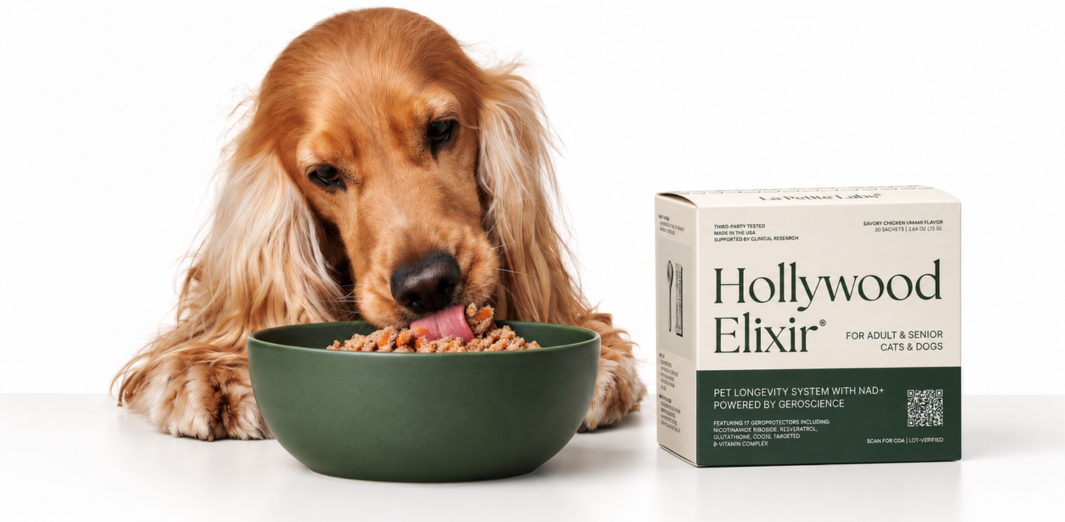
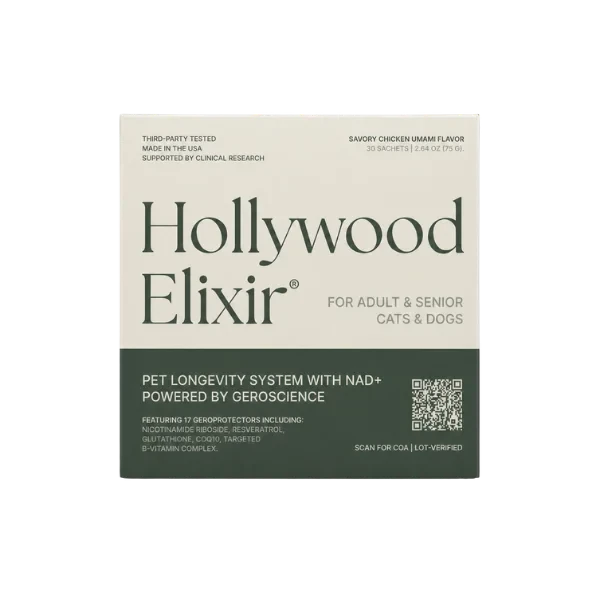
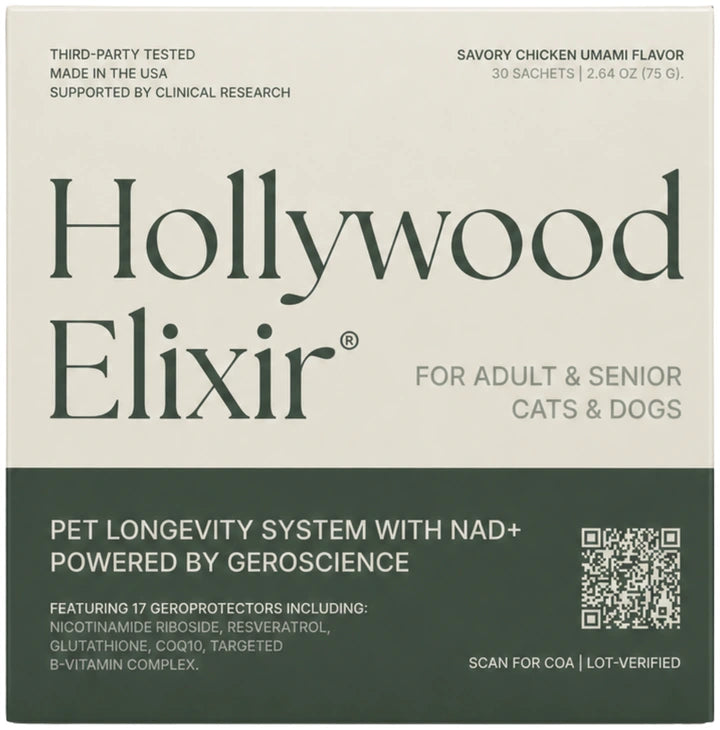
  • In Hollywood Elixir: No. Hollywood Elixir has no colostrum. It's daily nutrition for adult and senior dogs.

What is colostrum?

Colostrum is the first milk a mammal makes after giving birth. The colostrum in pet supplements comes from cows, so labels call it bovine colostrum. It is dried into a powder for foods and supplements.1

What sets it apart from regular milk is its protein. Antibodies, also called immunoglobulins, make up 70 to 80% of the protein in bovine colostrum, against 1 to 2% in mature milk.1 Colostrum also carries lactoferrin, an iron-binding protein, and less lactose than regular milk.1

Colostrum does two jobs, and they are easy to confuse.

  • For a newborn: a puppy is born without IgG antibodies and takes them in from its mother's colostrum during the first two days of life.5
  • For an adult dog: that early window is long gone. Researchers study what colostrum does inside the gut and how the dog's own immune system responds.2

Nearly everything sold for adult dogs rests on the second job.

Woman holding a Hollywood Elixir box beside a pug, a terrier and a food bowl

What does colostrum do for dogs?

Colostrum has changed four measurable things in dog studies. None of them is a disease outcome.

  • Vaccine response: dogs eating colostrum kept higher antibody levels after a distemper booster.2
  • Gut antibodies: the same dogs had more IgA, the main antibody on gut surfaces, in their stool.2, 1
  • Gut bacteria: their gut bacteria were more diverse and more stable over time.2
  • Stool quality: recently weaned puppies had better stool scores after travel stress.1

We found no dog study that counted infections, sick days or vet visits. So "immune support" on a colostrum label describes lab markers in healthy dogs. The one trial in dogs with a disease, atopic dermatitis, found no benefit.3

Woman in sportswear holding a Hollywood Elixir box beside a black-and-tan dog outdoors

What did the 40-week dog study find?

Colostrum's best dog evidence is one feeding study from Nestlé Purina Research, which also paid for it.2 Twenty-four adult Husky-cross sled dogs ate the same dry food for 40 weeks. For half of them, the food contained 0.1% spray-dried bovine colostrum.2

All the dogs got a distemper booster at the start. Antibody levels peaked at eight weeks in both groups. In the plain-food group they fell back to baseline by week 16, while in the colostrum group they stayed high to the end of the study.2

The colostrum dogs also had more IgA in their stool and a more diverse, more stable mix of gut bacteria. Stool scores, body weight and blood tests were no different between the groups.2

Woman holding a Hollywood Elixir box above her forehead beside a Bernese mountain dog outdoors

Does colostrum help dogs with allergies?

Colostrum did not help allergic dogs in the one trial that tested it. In 2026, researchers enrolled 20 pet dogs with year-round environmental atopic dermatitis in a double-blinded, placebo-controlled study.3

After two weeks on a standard diet, the dogs got bovine colostrum at 0.2% of their food's dry matter, or a placebo, for four weeks. Skin lesions were scored on a standard scale, and owners rated itching every day.3

Nothing separated the groups: not skin scores, not itch, not the immune markers in blood and stool. Quality of life improved slightly in both groups, placebo included.3

It was a small, short trial, and a longer one could differ. For now, colostrum has no evidence as an itch remedy. Our guide to Apoquel alternatives for dogs covers other routes to ask your vet about.

Golden retriever nuzzling a woman holding a Hollywood Elixir box on the grass beside a food bowl

Can colostrum help a dog with diarrhea?

Colostrum has one diarrhea-related trial in dogs, and it was in puppies. A 2025 review describes it: 70 recently weaned puppies, mostly toy breeds aged 40 to 50 days, got 0.5 g of bovine colostrum powder or skim milk powder daily for 10 days after travel stress.1

Stools improved in both groups. From day six to day nine, the colostrum puppies had better average stool scores.1

Adult dogs are another story. In the 40-week study, stool scores were the same with or without colostrum, and those dogs were healthy to begin with.2 We found no trial of colostrum in adult dogs with diarrhea.

A dog whose diarrhea lasts more than a day or two, or comes with blood, vomiting or low energy, needs a vet before a supplement.

Colostrum did not help allergic dogs in the one trial that tested it.

Is colostrum safe for dogs?

Bovine colostrum looked safe in the dog studies, at the small amounts they used. In the 40-week study, dogs on colostrum ate, weighed and tested the same as dogs on plain food, and a blood marker of inflammation stayed in the normal range. The authors reported no detectable side effects.2

A 12-week trial of a mushroom and colostrum blend in 20 healthy beagles found the same. All dogs stayed healthy, and their blood work was unchanged.4

Three limits are worth knowing.

  • Amounts: the longest study used 0.1% of the diet, which is 1 g of colostrum per kg of food.2 The trial that used twice that share of the diet lasted four weeks.3
  • Healthy dogs: the safety observations come from healthy adult dogs.2, 4 We found none for pregnant dogs or dogs with a serious illness.
  • Raw products: raw milk and raw colostrum have carried the H5N1 bird flu virus to pets.11 Choose a pasteurized or heat-treated product.

Colostrum is also dairy, and dairy products are among the most often reported food allergens in dogs.7

Overhead view of a black-and-white dog beside a food bowl and Hollywood Elixir box

What are the side effects of colostrum in dogs?

Colostrum caused no detectable side effects in the 40-week dog study, and the 12-week blend trial described its mix as well tolerated.2, 4 Those were healthy dogs on small amounts, so watch your own dog during the first weeks.

Because colostrum is a dairy product, the thing to look for is a food reaction. In dogs, food reactions show up mostly in the skin and the gut. Itching of the paws, face, ears and belly is the most common skin sign, and diarrhea and vomiting are the most common gut signs.8

Stop the colostrum and call your vet if your dog gets itchier, vomits, has loose stools or goes off food.

Woman smiling beside a golden retriever, a green food bowl and a Hollywood Elixir box

How much colostrum did the dog studies use?

No amount of colostrum has been established for dogs. The trials give these reference points.

  • Adult dogs, 40 weeks: 0.1% spray-dried bovine colostrum in dry food, which is 1 g per kg of food.2
  • Allergic dogs, four weeks: 0.2% of the diet's dry matter.3
  • Weaned puppies, 10 days: 0.5 g of powder a day.1
  • Older beagles, three weeks: 1 g a day, given with four probiotic strains.1
  • Blend trial, 12 weeks: 1.8 g a day of a mushroom and colostrum mix. The published summary gives no separate colostrum figure.4

These figures can't be swapped for one another, because the products and the dogs differed. If your vet supports a trial, use a product that states its colostrum content per serving, and agree on the amount before you start.

Man holding a Hollywood Elixir box while sitting on an outdoor sofa with a golden retriever

How long does colostrum take to work in dogs?

Colostrum's effects in dog studies showed up on very different clocks.

  • Stools: in the weaned-puppy trial, stool scores differed from day six to day nine.1
  • Vaccine antibodies: levels peaked at eight weeks in both groups. The gap opened afterward, as the plain-food dogs fell back to baseline by week 16.2
  • Itch: four weeks of colostrum changed nothing in dogs with atopic dermatitis.3

A fair home trial has one goal you can see, such as stool quality, and an end date agreed with your vet. If nothing has changed by then, stop.

Can puppies have bovine colostrum?

Puppies meet colostrum at two very different ages, and bovine colostrum only has evidence for the later one.

A newborn puppy has no IgG antibodies of its own. It takes them in from its mother's colostrum during the first two days of life, and how soon it nurses matters more than how rich the colostrum is.5 In a kennel study of 149 puppies, those with low antibody levels at two days old were more likely to die in their first three weeks.9

When a mother's colostrum isn't available, banked canine colostrum is described as the best option.5 A review of substitutes found the most promising results for canine plasma and hyperimmune egg powder, and concluded that the mother's own colostrum and milk remain the best guarantee.6 A newborn that hasn't nursed needs a vet within hours, not a supplement tub.

Weaned puppies are where bovine colostrum has been tested. In the 70-puppy trial, 0.5 g a day for 10 days improved stool scores after the stress of travel.1

A newborn that hasn't nursed needs a vet within hours, not a supplement tub.

Woman sitting with a beagle in a kitchen while holding a Hollywood Elixir box

DVM Voice: Clinical Vignette of a Common Pattern in Senior Dog Aging

Case provided by JoAnna Pendergrass, DVM

Rex, a 7-year-old Labrador Retriever, was brought in after his owner noticed he was slower to rise, hesitant on stairs, and less able to play as before. Examination showed stiffness and reduced hip mobility; radiographs confirmed degenerative joint changes.

His care required weight management, veterinary-guided pain control, nutritional support, and rehabilitation — a comprehensive plan, but one started only after visible decline appeared.

Clinical takeaway: Rex’s case reflects the value of proactive aging support: maintaining lean body condition, monitoring mobility early, and supporting cellular resilience, antioxidant defense, and healthy inflammatory balance before decline becomes obvious.

Single-case vignette. Not generalizable. Veterinary oversight is essential for pain, stiffness, or suspected joint disease.
Explore Hollywood Elixir Research →
Spotted gray dog beside a Hollywood Elixir box held in a person's hand

Is colostrum worth trying for a senior dog?

Colostrum is an understandable idea for an older dog, because immune function fades with age. Dogs are generally considered senior from about seven, and older dogs respond less strongly to vaccines.1

The evidence stops short of seniors, though. We found no colostrum trial in senior dogs. The closest is a three-week pilot in eight beagles averaging eight years old, which gave colostrum together with probiotics. Protein digestion improved, and neither gut bacteria nor immune measures changed.1

So a senior dog's first step is a checkup, not a tub of powder. If the checkup is clear and you want a daily formula, our guide to the best all-in-one supplements for dogs compares the options. Our own formula for adult and senior dogs, Hollywood Elixir, has no colostrum.

Golden retriever nuzzling a man holding a Hollywood Elixir box beside a food bowl

Which dogs should skip colostrum?

Colostrum isn't right for every dog. Talk to your vet before giving it to a dog that:

  • has reacted to dairy before, since dairy products were the reported food allergen in 51 of 297 dogs in one review;7
  • is on an elimination diet, because that test depends on feeding only foods the dog hasn't eaten before;8
  • is a newborn that hasn't nursed, which is an emergency for a vet;5
  • is pregnant, nursing or on medicine that affects the immune system, since none of the dog trials we found included such dogs.

Skip raw colostrum for every dog. Raw milk and colostrum have passed bird flu virus to pets.11

Golden spaniel eating from a green bowl beside a Hollywood Elixir box

What does the human research on colostrum show?

Colostrum has more pooled trial data in people than in dogs, and the results are mixed. Everything in this list is human data.

  • Immune markers: a pooled analysis of 10 trials in 239 athletes and active adults found little or no change in blood and saliva immune measures.13
  • Gut barrier: a pooled analysis of 10 trials found that two urine markers of gut permeability, often called leaky gut, were lower after bovine colostrum.14
  • Diarrhea: across five trials in children with infectious diarrhea, colostrum reduced stool frequency.10

None of this has been repeated in dogs. We found no dog study that measured gut permeability or counted infections.

How do you choose a colostrum product for a dog?

A colostrum product for a dog should say what it is, how much is in it and how it was processed. Suppliers use different, sometimes proprietary, production methods, so two tubs with the same name can differ.1

Check the label for:

  • bovine colostrum named as an ingredient, with its amount per serving in grams or milligrams;
  • pasteurization or heat treatment, never raw;11
  • every other active listed with its own amount;
  • flavors and added proteins, which matter if your dog is on an elimination diet.8

An IgG percentage describes the powder. We found no dog trial that compared products by IgG content.

Blends need the closest reading. The 2026 beagle trial tested colostrum mixed with three mushroom extracts, and its findings belong to the mix.4 It's the test we apply to our own label: Hollywood Elixir prints all 17 amounts, and colostrum isn't among them.

Is colostrum different for dogs and cats?

Colostrum has been studied at different life stages in the two species, and the risks aren't identical.

  • Evidence: dogs have a 40-week adult study, a puppy stool trial and an allergy trial.2, 1, 3 Cats have a study in 24 growing kittens, which found higher gut IgA and a stronger response to a rabies booster.12
  • Dairy reactions: in one review of food reactions, dairy products were a reported trigger in 17% of the dogs and 4% of the cats.7
  • Raw products: cats appear especially vulnerable to bird flu from raw milk and colostrum, often with severe disease.11
  • Amounts: the adult-dog and kitten studies both used 0.1% of the diet, so the daily amount followed how much each animal ate.2, 12

Our guide to colostrum for cats covers the kitten and adult-cat studies.

Woman holding a Hollywood Elixir box beside a dapple dachshund and green food bowl on a sofa

When should you see the vet instead of trying colostrum?
Colostrum shouldn't be the first response to a dog that keeps getting sick or keeps scratching. Book a visit if your dog:

  • has diarrhea or vomiting that lasts more than a day or two, or any blood in the stool;
  • scratches, licks its paws or shakes its head most days;
  • gets repeated ear or skin infections;
  • loses weight, eats less or tires easily;
  • is a newborn puppy that isn't nursing.

Each of these needs a diagnosis, and a supplement can't supply one. A few weeks spent testing colostrum on an undiagnosed problem are weeks the real cause goes untreated.

Woman cuddling a brown-and-white spaniel while holding a Hollywood Elixir box

What works better than colostrum for an itchy dog?

Colostrum failed its one itch trial, so an itchy dog's plan starts elsewhere.3

  • Find the cause: an elimination diet over several weeks is still the tool of choice for confirming a food reaction. Blood, saliva and hair tests have been found unsatisfactory.8
  • Ask about itch control: our guides to dog skin allergies and Cytopoint for dogs explain what vets reach for.
  • Read up on single ingredients: lactoferrin for dogs, one of colostrum's own proteins, has a guide of its own.1

Whatever you choose, tell your vet, and change one thing at a time.

Is colostrum in Hollywood Elixir?

No. Hollywood Elixir has no colostrum, and it isn't an allergy or immune treatment.

Colostrum is a milk-derived ingredient that people buy for immune support. Hollywood Elixir's milk-derived ingredient is whey protein isolate, 250 mg per sachet, and it sits beside 50 mg of beta glucans and 25 mg of reishi mushroom. All 17 actives, including 60 mg of nicotinamide riboside (an NAD+ precursor), have their amounts printed on the label.

It's a daily supplement for adult and senior dogs, a powder stirred into food: half a sachet under 7 lb, one sachet from 7 to 30 lb, two sachets above 30 lb. Hollywood Elixir hasn't been tested for immune markers, allergies, infections or lifespan, and it's no substitute for a diagnosis.

If you came to colostrum for immune support, our guides to beta glucans for dogs, whey protein for dogs and reishi mushroom for dogs show what each ingredient has behind it. See the full Hollywood Elixir formula and serving guide.

So "immune support" on a colostrum label describes lab markers in healthy dogs.

Educational content only. This material is not a substitute for veterinary advice. Always consult your veterinarian about your dog’s specific needs. These statements have not been evaluated by the Food and Drug Administration. Products mentioned are not intended to diagnose, treat, cure, or prevent any disease.

Glossary

Colostrum: The first milk a mammal makes after giving birth, rich in antibodies.

Bovine colostrum: Colostrum from cows, the kind dried into powder for pet supplements.

Immunoglobulins: Antibodies. IgG is the main one in bovine colostrum, and IgA is the main one on gut surfaces.

Passive immune transfer: The way a newborn puppy takes in its mother's antibodies during the first two days of life.

Atopic dermatitis: A long-term allergic skin disease that makes dogs itch.

Lactoferrin: An iron-binding milk protein found in colostrum.

Related Reading

References

Numbered references identify the sources used for specific claims. Read the study design, species and evidence boundaries alongside each finding.

FAQ

Can I give my dog colostrum every day?

The longest dog study fed colostrum daily for 40 weeks, mixed into dry food at 0.1%, with no detectable side effects. Those were healthy adult sled dogs. We found no dog study that gave larger amounts of colostrum for that long.

Does Hollywood Elixir contain colostrum?

No. Hollywood Elixir has no colostrum. Its milk-derived ingredient is whey protein isolate, at 250 mg per sachet, listed with 50 mg of beta glucans, 25 mg of reishi mushroom and 14 other actives.

Can colostrum replace my dog's allergy medicine?

No. In the only allergy trial, 20 dogs with atopic dermatitis got colostrum or a placebo for four weeks, and itch and skin scores were no different. Don't stop a prescribed medicine for colostrum without talking to your vet.

Does colostrum mean my dog can skip vaccines?

No. In the 40-week study, dogs fed colostrum kept higher antibody levels after a distemper booster, so the vaccine came first. We found no study that tested colostrum in place of a vaccine.

Is raw colostrum safe for dogs?

Raw colostrum is a risk we'd avoid. Raw milk and raw colostrum have passed the H5N1 bird flu virus to pets, and experiments support infection through the gut in both dogs and cats. Choose a pasteurized or heat-treated powder.

Does colostrum help dogs with yeast or ear infections?

We found no study of colostrum for yeast, ear infections or kennel cough in dogs. The dog research covers immune markers in healthy adults, stool scores in weaned puppies and one allergy trial. Recurring infections need a vet visit to find the cause.

Is colostrum the same as milk or whey protein?

No. Antibodies make up most of the protein in bovine colostrum and only 1 to 2% of the protein in mature milk. Whey proteins, lactoferrin among them, are one part of colostrum, so a whey supplement and a colostrum supplement are separate products.

Is powder, a chew or a capsule the best form of colostrum for dogs?

No dog study we found compared forms. The trials used spray-dried colostrum mixed into dry food or a measured powder given daily. Pick the form that states its colostrum amount per serving and that your dog will eat.

Is goat colostrum better than bovine colostrum for dogs?

We found no dog study of goat colostrum at all. Every colostrum trial in dogs that we found used bovine colostrum, so there is nothing to compare.

Dalmatian looking toward a Hollywood Elixir box held in a person's hand

Discover LPL-01: How This Fits Into a Larger Canine Longevity System

Aging in dogs is not driven by a single pathway. It’s the result of interacting biological systems—energy metabolism, oxidative stress, immune signaling, and structural integrity—changing over time.

This article explores one piece of that puzzle. If you want to understand how these pieces connect—and what actually moves the needle—you need to zoom out.

Start with the underlying science:

Keep exploring

What would you like to understand next?

Search practical guides about healthy aging, cellular energy, ingredients, and daily support for dogs.