




Colostrum for Cats

What the kitten and adult-cat studies measured, the amounts they used, and why raw colostrum is a real danger to cats.

By La Petite Labs Editorial 12 min read

As Seen On

Woman cuddling an orange-and-white cat and a silver tabby while holding a Hollywood Elixir box
Hollywood Elixir® Senior Cat Supplement

17 science-backed actives

From$50/moSave up to 47%Save up to 44%Shop Now
Contents
Bovine colostrum raised gut antibodies and vaccine response in one study of growing kittens, but no trial shows that it helps a sick cat. Colostrum is a cow's first milk after calving, dried into a powder. The cat research is thin: 24 kittens, 16 healthy adults and one blend trial. Raw colostrum is the real hazard. Cats fed raw colostrum and milk from cows with bird flu died.

This guide covers what the cat studies measured, the amounts used, the risks and what a newborn kitten really needs.

  • What it is: Colostrum is the first milk made after birth. Cat supplements use dried cow colostrum.11
  • Kittens: In 24 kittens, food with 0.1% colostrum raised gut IgA and sped up the response to a rabies booster.1
  • Adult cats: In 16 healthy adults, 28 days of colostrum shifted blood markers and left stool scores unchanged.2
  • Newborns: A kitten absorbs its mother's antibodies for less than a day after birth.5 A kitten that missed that feed needs a vet.
  • Amount: None is established. Studies mixed 0.05% to 0.1% into food.2, 1
  • Watch for: Raw colostrum. Cats fed raw colostrum and milk from cows with bird flu died of the infection.8
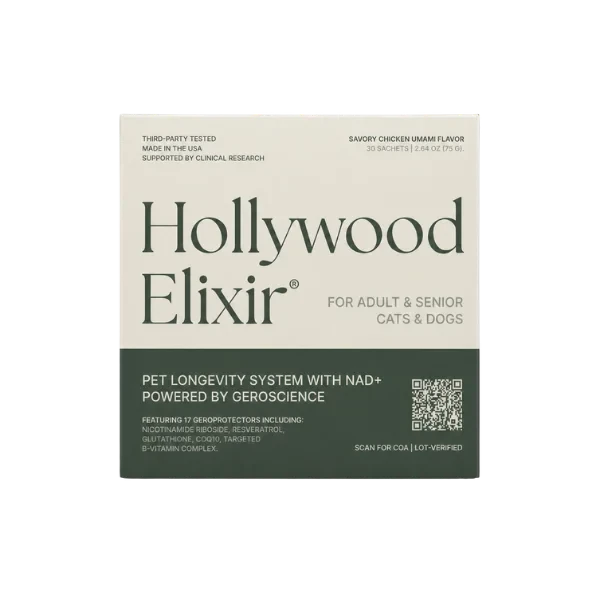
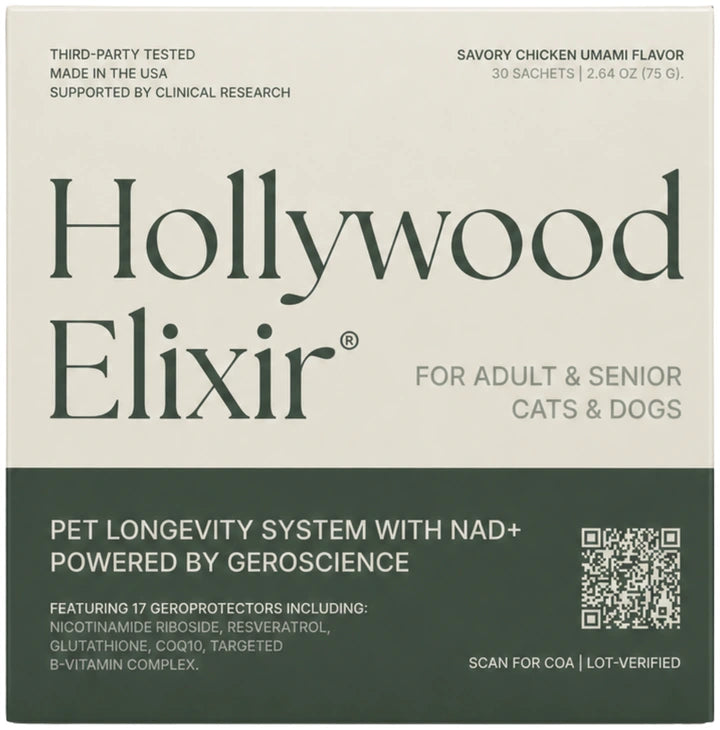
  • In Hollywood Elixir: No. Hollywood Elixir has no colostrum. It's daily nutrition for adult and senior cats.

What is bovine colostrum?

Bovine colostrum is the first milk a cow makes after calving. It is dried and used in foods, supplements and animal feed.11

Compared with ordinary milk, colostrum is packed with antibodies. They account for 70 to 80% of its protein, against 1 to 2% in mature milk, and the main type is IgG.11 Colostrum also contains lactoferrin and less lactose than regular milk.11

Those antibodies were made by a cow for her calf. The main feeding study in cats reported the cat's own responses: IgA in stool, antibodies after a vaccine and the mix of gut bacteria.1

A queen's own colostrum is a separate subject, and it matters only in a kitten's first hours of life. Chapter 10 covers it.

Woman kneeling with two long-haired tabby cats while holding a Hollywood Elixir box beside a food bowl

Is colostrum good for cats?

Colostrum has moved immune and blood markers in healthy cats, and that is as far as the cat evidence goes.

  • Kittens: more IgA in stool, a faster and stronger antibody response to a rabies booster, and steadier gut bacteria after a stressful move.1
  • Adult cats: lower malondialdehyde, a blood marker the authors used to gauge oxidation, and shifts in inflammation signals over 28 days.2

We found no trial of colostrum in cats with any illness: no diarrhea trial, no cat flu trial and no allergy trial. For a healthy cat on a complete diet, colostrum is optional. For a sick cat, it is untested.

Woman exercising beside a tabby cat, with a Hollywood Elixir box and food bowl on a small table

What did the kitten study find?

The main colostrum study in cats followed 24 domestic shorthair kittens for 44 weeks.1 From 16 weeks of age, half ate a complete kitten food and half ate that food with 0.1% spray-dried bovine colostrum added.

Three things differed in the colostrum group.

  • Gut antibodies: IgA in stool was higher.1
  • Vaccine response: after a rabies booster at week 38, rabies-neutralizing antibodies rose faster and were higher two weeks later.1
  • Gut bacteria: the mix held steadier after the kittens were moved to new housing and taken to the clinic.1

Growth, food intake and blood chemistry matched in both groups. Nestlé Purina Research ran and funded the study, and its reported outcomes were lab measures.1

Orange-and-white cat reaching toward a woman holding a Hollywood Elixir box while sitting in a chair

What does the research show in adult cats?

Colostrum's adult-cat evidence comes from two small studies of healthy cats.

The first gave 16 neutered British shorthair cats a basal diet, with or without 0.05% bovine colostrum powder, for 28 days.2 Growth and stool scores didn't change. Blood tests did: malondialdehyde fell, two signals the authors read as anti-inflammatory (IL-4 and IL-10) rose, and the inflammatory signal TNF-alpha fell.2 The paper lists its authors at a company, Fubei (Shanghai).2

The second tested a blend. Twenty adult cats got 900 mg a day of mushroom extracts mixed with bovine colostrum, or a placebo, for 12 weeks.3 Stool quality was unaffected, blood triglycerides were lower, and gut bacteria shifted slightly. Because it was a blend, colostrum's share of those effects is unknown.3

Gray-haired man holding a Hollywood Elixir box while two cats rest beside him in an armchair

Can colostrum help a cat with diarrhea or a cold?

Colostrum hasn't been tested in cats with diarrhea or cat flu, as far as we could find.

What exists is neutral on stools. In the 28-day adult study, stool scores matched with or without colostrum, and the 12-week blend trial saw no change in stool quality either.2, 3 Those cats were healthy and had normal stools from the start.

In people, a pooled analysis of five trials in children found that bovine colostrum cut stool frequency during infectious diarrhea.12 Children with infections are a long way from a cat with chronic loose stools.

A cat with diarrhea for more than a day or two, or a cat that sneezes, has runny eyes and stops eating, belongs at the vet.

Raw colostrum can kill a cat.

Is colostrum safe for cats?

Processed bovine colostrum caused no problems in the cat studies, all of which used small amounts in healthy animals.

  • Kittens, 44 weeks: normal growth, normal blood chemistry and no rise in an inflammation marker. The authors concluded that colostrum had no adverse effects on growing kittens.1
  • Adults, 28 days: no effect on growth or stool scores at 0.05% of the diet.2
  • Blend, 12 weeks: stool quality was unchanged. Blood urea nitrogen drifted up in all cats and reached a higher level in the blend group, and blood IgA fell over time on the blend.3

The adult study also saw the ratio of urea nitrogen to creatinine rise at day 14.2 Neither summary describes these shifts as harmful, and one involved a blend. Still, urea is a number vets watch in cats with kidney disease, so we would mention colostrum to the vet in that case. That caution is our inference, not a study finding.

Long-term use in adult and senior cats hasn't been studied, as far as we could find, and neither have amounts above those tested.

Tabby cat looking up at a Hollywood Elixir sachet held above it, with the product box on a small table

Is raw colostrum dangerous for cats?

Raw colostrum can kill a cat. In 2024, during the H5N1 bird flu outbreak in US dairy herds, domestic cats fed raw colostrum and milk from affected cows developed fatal systemic influenza.8

A 2025 review describes the wider pattern. Bird flu has reached pets through contaminated raw pet food, raw milk and colostrum, and cats appear particularly susceptible, often with severe disease and high mortality.9

The US Food and Drug Administration has indicated that the commercial milk supply remains safe.8 The danger sits with unpasteurized products.

So the rule for cats is simple: never raw. Use only colostrum that has been pasteurized or heat-treated, and ask the maker if the label doesn't say.

Hand gently petting an orange-and-white cat beside a food bowl and Hollywood Elixir box

What are the side effects of colostrum in cats?

Colostrum produced no reported side effects in the kitten and adult-cat feeding studies.1, 2 Both mixed very small amounts into food, between 0.05% and 0.1% of the diet.

Colostrum is a dairy product, so a food reaction is possible. Dairy is an uncommon trigger in cats: in a review of 78 cats with food reactions, dairy products were the cause in 3.10 When a cat does react to a food, the signs are mostly in the skin and the gut, and diarrhea and vomiting are the most common gut signs.13

Stop the colostrum and call your vet if your cat vomits, gets loose stools, scratches more or eats less. A cat that quits eating should be seen promptly, whatever the reason.

Man holding a Hollywood Elixir box beside a black cat, an orange tabby and a food bowl

How much colostrum did the cat studies use?

Nobody has set a colostrum amount for cats. The studies offer three reference points.

  • Kittens, 44 weeks: food carrying 0.1% spray-dried bovine colostrum, or 1 g in each kg of food.1
  • Adult cats, 28 days: 0.05% colostrum powder in the diet, or half a gram in each kg of food.2
  • Blend trial, 12 weeks: 900 mg a day of a mushroom and colostrum mix. The published summary doesn't give the colostrum share.3

A cat eats far less than a kilogram of food a day, so the two feeding studies supplied only a small fraction of a gram of colostrum daily.

If your vet supports a trial, pick a product that states its colostrum content per serving, and settle the amount with your vet first.

Does a newborn kitten need colostrum?

A newborn kitten needs its mother's colostrum, and it needs it on day one. Kittens are born with no detectable IgG in their blood.5, 6 They take in antibodies from the queen's first milk through the gut, and only briefly. In one study, antibody given up to 12 hours after birth reached the blood, and antibody given at 16 hours or later did not.5

Missing that window has lasting effects. Kittens deprived of colostrum had lower blood IgG than nursed kittens for the first four weeks, and in one study they didn't catch up until six weeks of age.4, 6 Fostering them onto a queen in mid-lactation didn't fix it, although an earlier study had suggested that a queen's later milk could stand in.4, 5

What did work was a vet's treatment. Adult cat serum given by injection brought IgG up to the level of kittens that had nursed.6, 4

One caution runs the other way. Kittens with blood type A or AB can become seriously ill from the colostrum of a type B queen, a condition called neonatal isoerythrolysis.7

We found no study that tested bovine colostrum powder as a rescue for a newborn kitten. A kitten that hasn't nursed needs a vet within hours.

For a healthy cat on a complete diet, colostrum is optional.

Silver tabby sitting beside a food bowl and a Hollywood Elixir box held in a person's hand

DVM Voice: Clinical Vignette of a Common Pattern in Senior Cat Aging

Case provided by JoAnna Pendergrass, DVM

Sasha, a 12-year-old cat, was brought in after her owner noticed increased thirst and urination, lethargy, vomiting, and a generally unkempt appearance. Examination showed weight loss, elevated blood pressure, and reduced vitality.

Diagnostic testing revealed elevated kidney markers, poorly concentrated urine, and protein loss in the urine — findings consistent with chronic kidney disease, one of the most common chronic conditions in senior cats.

Her care required a kidney-focused diet, blood pressure management, targeted supplementation, medication support, and regular monitoring — a necessary plan, but one started after clinical signs were already visible.

Clinical takeaway: Sasha’s case reflects why senior-cat wellness should begin before obvious decline. Earlier monitoring, body-condition tracking, hydration awareness, antioxidant support, and daily cellular resilience may help support quality of life as cats age.

Single-case vignette. Not generalizable. Veterinary diagnosis and monitoring are essential for increased thirst, urination, vomiting, lethargy, weight loss, or suspected kidney disease.

Explore Hollywood Elixir Research →
Woman holding a Hollywood Elixir box toward a brown cat perched on the back of a sofa

Is colostrum worth trying for a senior cat?

Colostrum has no research in senior cats that we could find. The oldest cats studied were the 20 adults in the blend trial, which averaged about seven years old and were healthy.3

That gap matters, because the usual reasons for reaching for an immune powder in an old cat are weight loss, a dull coat, repeat infections or a poor appetite. Each of those is a symptom with a cause, and the cause deserves a diagnosis first.

If your vet gives the all-clear and you still want a daily supplement, our guide to the best supplements for senior cats compares the options. Our page on immune support for senior cats covers the basics that come before any powder.

Woman leaning toward a fluffy orange cat beside a Hollywood Elixir box and green food bowl

Which cats should skip colostrum?

Colostrum isn't a fit for every cat. Check with your vet first if your cat:

  • is on an elimination diet, because that test relies on feeding only foods the cat hasn't eaten before (see our guide to the elimination diet for cats);13
  • has reacted to dairy before;10
  • has kidney disease, since two small cat studies saw urea-related blood values shift on colostrum or a colostrum blend;2, 3
  • is a newborn or orphaned kitten, which needs a vet, not a supplement;4
  • is pregnant or nursing, because none of the cat studies we found included queens.

And no cat should get raw colostrum.8

Tabby cat licking its nose beside a food bowl and Hollywood Elixir box

Does colostrum help cats with allergies or itching?

Colostrum has no allergy trial in cats that we could find. The only allergy trial of colostrum in pets was in dogs, and it came up empty. Twenty dogs with atopic dermatitis received bovine colostrum or a placebo for four weeks, and skin scores, itch and immune markers were no different.14

For an itchy cat, the bigger issue is diagnosis. An elimination diet over several weeks is still the tool of choice for confirming a food reaction, and blood, saliva and hair tests have been found unsatisfactory.13 A milk-based powder added in the middle of that diet muddies the result.

So colostrum isn't an itch remedy for cats. Start with your vet.

How do you choose a colostrum product for a cat?

A colostrum product for a cat should tell you the source, the amount and the processing. Production methods differ between suppliers and are sometimes proprietary, so the word colostrum on two labels can mean different powders.11

Look for:

  • bovine colostrum listed by name, with the amount in each serving;
  • pasteurized or heat-treated, never raw;8
  • a short ingredient list, with no added flavors or proteins that are new to your cat;
  • a form your cat will accept without going off its food.

Be wary of blends. The one cat trial of a colostrum blend also contained three mushroom extracts, and its results can't be split between them.3 An IgG percentage is a fact about the powder. No cat study we found compared products by IgG content.

Read every label for amounts, ours included. Hollywood Elixir prints each of its 17 actives with its amount, and colostrum isn't one of them.

Is colostrum different for cats and dogs?

Colostrum research differs by species, and so do the risks.

  • Evidence: cats have a 44-week kitten study and a 28-day adult study.1, 2 Dogs have a 40-week adult study, in which vaccine antibodies stayed higher on colostrum, plus a puppy stool trial and an allergy trial.15, 11, 14
  • Newborns: maternal antibodies fade faster in kittens than in puppies.7
  • Dairy reactions: in one review of food reactions, dairy products were a reported trigger in 4% of the cats and 17% of the dogs.10
  • Raw products: bird flu from raw milk and colostrum has hit cats hardest.9

A powder bought for the dog shouldn't go into the cat's bowl without a look at the label and the amount. Our guide to colostrum for dogs covers the canine trials.

Tabby cat sitting at a table with a food bowl and Hollywood Elixir box

When does a cat need the vet instead of colostrum?

Colostrum is the wrong first move when a cat is unwell. See your vet if your cat:

  • eats less or stops eating;
  • loses weight, or drinks and urinates more;
  • has diarrhea or vomiting that keeps coming back;
  • sneezes with runny eyes or a blocked nose;
  • overgrooms, scratches or loses fur;
  • is a kitten that isn't nursing or isn't gaining weight.

These signs have causes that an exam, blood tests and stool tests can find. A scoop of colostrum finds nothing, and waiting costs time.

Woman cuddling a silver tabby and a cream-colored cat while holding a Hollywood Elixir box

What can you use instead of colostrum for a cat?

Colostrum's nearest relatives have guides of their own.

  • Lactoferrin: one of colostrum's own proteins, also sold separately.11 Our guide to lactoferrin for cats goes deeper.
  • Beta glucans: found in mushroom extracts like those in the cat blend trial.3 See our guide to beta glucans for cats.
  • Vaccines and a complete diet: in the kitten study, the antibody gain followed a rabies booster. Colostrum added to a vaccine response, and nothing suggests it can stand in for one.1

Hollywood Elixir, our own daily powder, lists 50 mg of beta glucans per sachet and no colostrum. Keep your vet in the loop on anything new that goes into the bowl.

Is colostrum in Hollywood Elixir?

No. Hollywood Elixir doesn't contain colostrum, and it isn't a treatment for infections, allergies or gut trouble.

Colostrum comes from milk, and people give it for immune support. The milk-derived ingredient in Hollywood Elixir is whey protein isolate, at 250 mg per sachet. It comes with 50 mg of beta glucans, 25 mg of reishi mushroom and 14 other actives, among them 60 mg of nicotinamide riboside, an NAD+ precursor. Every amount is printed on the label.

Hollywood Elixir is daily nutrition for adult and senior cats. One sachet of powder goes into food each day for a cat between 7 and 30 lb, and half a sachet for a cat under 7 lb. It hasn't been tested for immune markers, infections, allergies or lifespan.

If immune support is what drew you to colostrum, our guides to whey protein for cats and reishi for cats explain what those ingredients have behind them. See the full Hollywood Elixir formula and serving guide.

A newborn kitten needs its mother's colostrum, and it needs it on day one.

Educational content only. This material is not a substitute for veterinary advice. Always consult your veterinarian about your cat’s specific needs. These statements have not been evaluated by the Food and Drug Administration. Products mentioned are not intended to diagnose, treat, cure, or prevent any disease.

Glossary

Colostrum: The first milk made after birth, rich in antibodies.

Bovine colostrum: Colostrum from cows, dried into powder for foods and supplements.

IgA: An antibody found on gut surfaces and measured in stool in the cat studies.

Passive transfer: The way a newborn kitten takes in its mother's antibodies through colostrum in its first hours.

Neonatal isoerythrolysis: An illness in type A or AB kittens caused by antibodies in the colostrum of a type B queen.

Queen: A female cat that has given birth.

Related Reading

References

Numbered references identify the sources used for specific claims. Read the study design, species and evidence boundaries alongside each finding.

FAQ

Can I give my cat colostrum every day?

The cat studies fed colostrum daily for 28 days in adults and 44 weeks in kittens, mixed into food at 0.05% to 0.1%, without reported problems. Those were healthy cats on tiny amounts. We found no cat study of larger daily scoops.

Does Hollywood Elixir contain colostrum?

No. Hollywood Elixir has no colostrum. Its milk-derived ingredient is whey protein isolate at 250 mg per sachet, and it also lists 50 mg of beta glucans and 25 mg of reishi mushroom.

Is bovine colostrum a kitten milk replacer?

No. Colostrum powder is a supplement, and nothing we read tested it as a complete food for an orphaned kitten. A kitten without its mother needs a vet and a formula made for kittens.

Can colostrum prevent cat flu?

We found no study of colostrum against cat flu, herpesvirus or calicivirus in cats. The kitten study measured antibodies after a rabies booster, which is a lab marker. Vaccines, and a vet visit for a sneezing cat, stay the plan.

Can colostrum be given with a probiotic?

Products that pair colostrum with probiotics exist, and we found no cat study of the pair. A small dog pilot gave both together, so its results belong to the combination. If you try one, change one thing at a time.

Is colostrum safe for cats with kidney disease?

We found no study of colostrum in cats with kidney disease. Two small studies in healthy cats saw urea-related blood values shift on colostrum or a colostrum blend. Ask the vet who manages your cat's kidneys before adding it.

Can cats have goat colostrum?

We found no cat study of goat colostrum. The cat research used bovine colostrum, so there is nothing to compare. Whatever the animal, skip raw colostrum.

How long does colostrum take to work in cats?

In the adult-cat study, blood markers had shifted by day 14 and day 28. In kittens, the vaccine difference showed after more than 30 weeks on a colostrum diet. Neither study measured how the cats felt.

Is colostrum powder better than chews or capsules for cats?

No cat study we found compared forms. The research mixed colostrum powder into food or sprinkled a blend on top. Choose the form that states its colostrum amount per serving and that your cat will eat.

Orange-and-white cat beside a Hollywood Elixir box held in a person's hand

Discover LPL-01: How This Fits Into a Larger Feline Longevity System

Aging in cats unfolds quietly. It’s not driven by a single failure, but by gradual shifts across interconnected systems — cellular energy, oxidative balance, immune tone, and tissue integrity — each influencing the others over time.

This article explores one layer of that system. To understand what actually shapes long-term health, you need to step back and look at how these layers interact.

Start with the underlying science:

Keep exploring

What would you like to understand next?

Search practical guides about healthy aging, cellular energy, ingredients, and daily support for cats.