

Choline for Cats

How much a cat needs, what trials in overweight cats and neutered kittens found, and when a vet matters more than a supplement.

By La Petite Labs Editorial 12 min read

As Seen On

  • AVMA, American Veterinary Medical Association
  • Today’s Veterinary Business
  • Petfood Industry
Woman cuddling an orange-and-white cat and a silver tabby while holding a Hollywood Elixir box
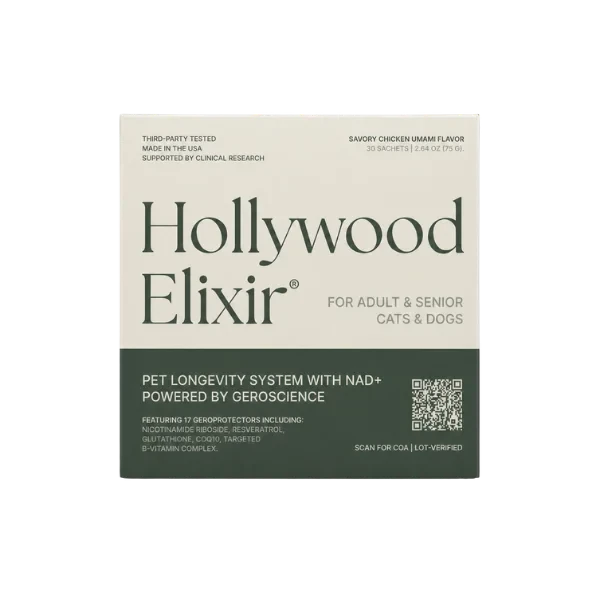
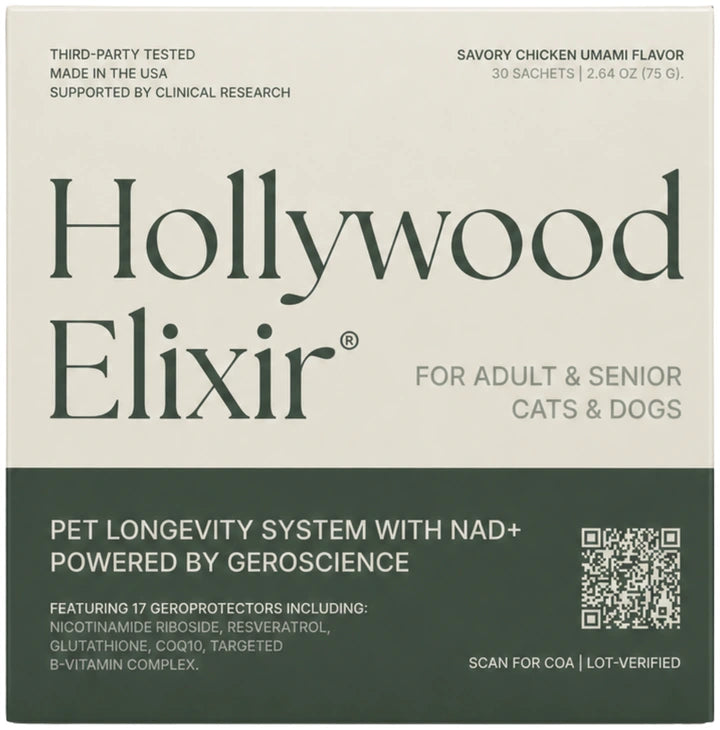
Hollywood Elixir® Senior Cat Supplement

17 science-backed actives

From$50/moSave up to 47%Save up to 44%Shop Now
Contents
Cats need choline, and a complete cat food already supplies it, so most cats don't need a supplement. The recommended allowance is 637 mg per 1,000 calories, about half again what dogs need.1 Trials have fed overweight cats up to 8 times that allowance. Blood fats changed, body weight stayed the same, and the cats tolerated it.4, 6 We found no trial showing that choline treats or prevents fatty liver disease.

This guide covers what choline does in a cat, how much food supplies, what the trials found, which cats can run short, and when a vet matters more than a supplement.

  • What it is: Choline is an essential nutrient that cats use to build cell membranes and move fat out of the liver.1, 2
  • Amount: The recommended allowance for cats is 637 mg per 1,000 calories of food.1
  • In food: Cat foods measured in trials held 3,310 to 4,587 mg of choline per kg of dry matter.3, 7
  • Overweight cats: Up to 8 times the allowance changed blood fats and left body weight where it was.4
  • Kittens: In 15 neutered male kittens, extra choline meant less food eaten and less fat gained over 12 weeks.7
  • Risk: A recalled canned food with at least 65 times the recommended choline made four cats vomit and stagger.11 A cat that stops eating needs a vet promptly, whatever the cause.
  • In Hollywood Elixir: No. Choline isn't one of Hollywood Elixir's 17 actives. It's a daily nutrition powder for adult and senior cats.

What is choline, and why do cats need it?

Choline is an essential nutrient for cats, with roles in fat metabolism, liver function, nerve signaling and growth.1 It is often described as vitamin-like, and it works alongside several B vitamins.2

Inside the body, choline does three main things.

  • Builds membranes. Most choline ends up in phosphatidylcholine, a fat-like molecule found in every cell membrane.2
  • Moves fat. The liver wraps fat in particles for export, and those particles can't be assembled without phosphatidylcholine.2
  • Passes on methyl groups. Choline is converted to betaine, which feeds the same methyl cycle as methionine, folate and vitamin B12.2

Cats lean hard on that last cycle. As strict carnivores they use up amino acids such as methionine quickly, and they seem to need more of several B vitamins than other species.14 A cat that stops eating for long can run short of them, which is part of why cats are prone to fatty liver disease.14

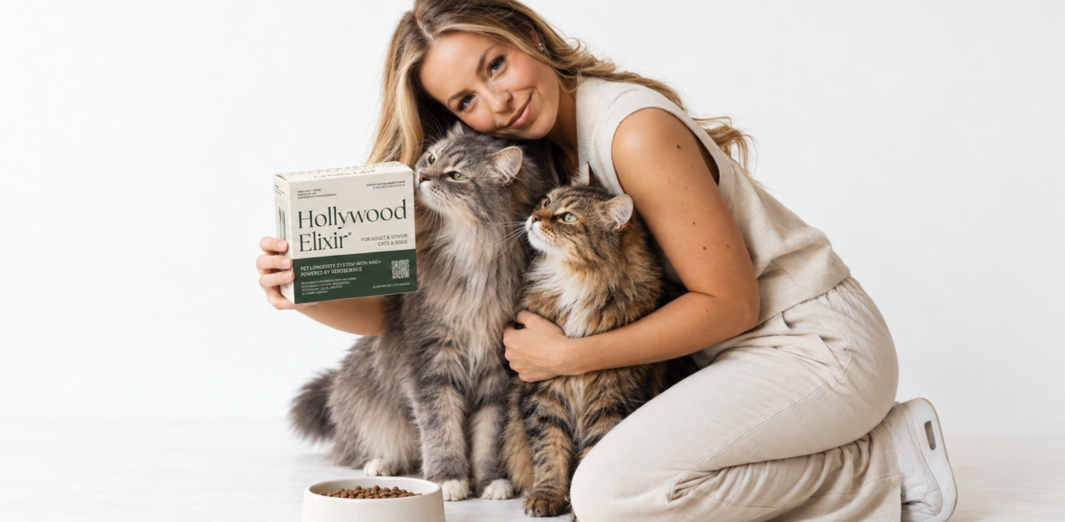
Woman kneeling with two long-haired tabby cats while holding a Hollywood Elixir box beside a food bowl

How much choline does a cat need?

Choline for cats has an official figure: a recommended allowance of 637 mg for every 1,000 calories of food.1

For a sense of scale, obese cats on the control diet in one trial took in about 284 mg of choline a day.3

The figure has a weak spot. The official minimum behind it comes from a 1982 study of growth and liver fat in kittens, and researchers say nobody knows whether it's the best level for adult cats.3

No authority we found recommends a supplemental amount for a healthy cat.

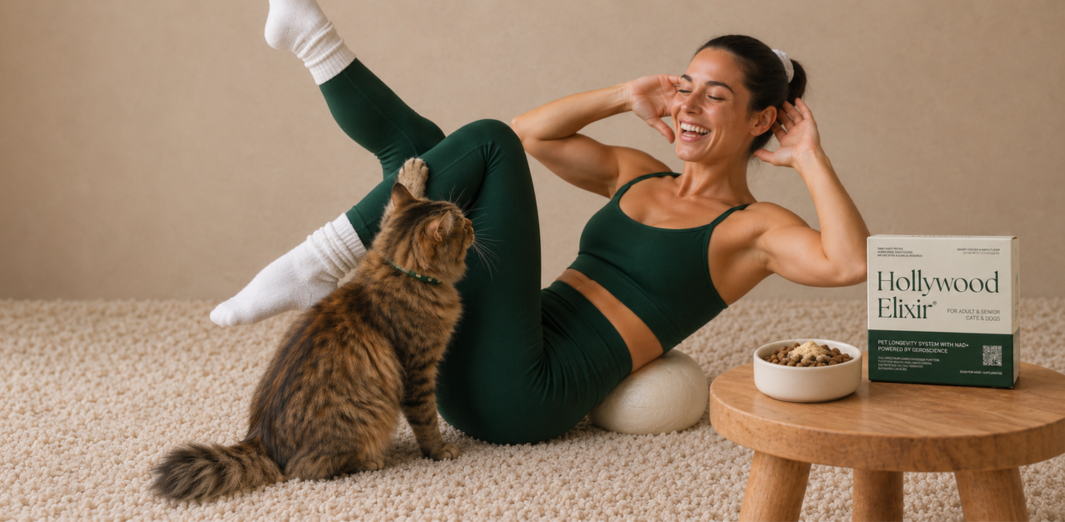
Woman exercising beside a tabby cat, with a Hollywood Elixir box and food bowl on a small table

How much choline is in cat food?

Choline levels in commercial-style cat foods have been measured in several trials.

  • Adult dry food in one trial: 3,620 mg of choline per kg.4
  • Growth diet for kittens: 3,310 mg per kg of dry matter.7
  • Control diet for obese cats: 4,587 mg per kg of dry matter.3

Makers reach those levels by adding choline chloride to the recipe. The control diet above had it mixed in at 0.19% before the kibble was cooked.3

A food labeled complete and balanced is the baseline that every other choline question starts from.

Orange-and-white cat reaching toward a woman holding a Hollywood Elixir box while sitting in a chair

Do cats need a choline supplement?

Most cats don't need a choline supplement, because their food is formulated to supply the allowance. The cases where intake may fall short are specific: home-prepared diets and calorie-restricted weight loss.

Extra choline is a research question, not a routine. A 2026 review concludes that intake above the published allowance may help liver fat metabolism and weight management, and that research in cats remains limited.1

Check first that the main food is complete for your cat's life stage and that your cat eats its ration. Add choline only when your vet has a reason and has named a product and an amount.

Gray-haired man holding a Hollywood Elixir box while two cats rest beside him in an armchair

What does choline have to do with a cat's liver?

Choline helps the liver ship fat out. Fat leaves the liver packed in particles called VLDL, and the liver can't build them without phosphatidylcholine, which it makes from choline.2 When that supply fails, fat collects in liver cells.2

Cats are unusually exposed to this problem. Hepatic lipidosis, or fatty liver, is the most common form of liver dysfunction in cats, and the classic case is an overweight cat that stops eating for days to weeks.18 Body fat floods into the liver faster than the liver can process it.12

That link is why researchers test choline in overweight cats.

Fewer calories means less of every nutrient.

What did the studies in overweight cats find?

Choline has been tested in three feeding trials in overweight or obese cats. All came from one research group.

  • 12 obese cats, 5 weeks: a high-choline diet against a control diet. Weight and body composition were unchanged. Blood cholesterol and triglycerides rose, and one liver enzyme fell.3
  • 14 overweight male cats, 3 weeks per level: choline chloride sprinkled on food at up to 8 times the allowance. Weight and energy use held steady. Blood fats rose at 6 times the allowance.4
  • 9 lean and 9 obese male cats, 6 weeks: choline at 6 times the allowance, compared with L-carnitine and with no supplement. Cats on choline ate less food. Body composition and energy use stayed the same, blood cholesterol rose, and so did the liver enzyme ALT.5

The researchers read the rise in blood fats as the liver exporting more fat.4, 5 No trial measured liver fat directly, and the authors of the first one called for ultrasound and biopsy studies.3

Every cat was fed to hold its weight, so these trials say nothing about choline during weight loss. The third trial was part-funded by a pet food company, and the supplement maker supplied the choline.5

Tabby cat looking up at a Hollywood Elixir sachet held above it, with the product box on a small table

Does choline help a cat lose weight?

Choline has not produced weight loss in any adult cat trial. In all three, body weight and body condition stayed the same.3, 4, 5 Energy expenditure, where it was measured, didn't move either.4, 5

One finding hints at appetite. Lean and obese cats ate less food during their six weeks on choline, though too little to change their weight.5

"Fat burner" is the wrong label. Choline helps move fat, and fat on the move through the blood hasn't been lost. A cat loses weight on a measured ration and a plan, and our guide to weight management for cats sets one out.

Hand gently petting an orange-and-white cat beside a food bowl and Hollywood Elixir box

What did the kitten study after neutering find?

Choline's most striking result in cats comes from kittens. Fifteen male kittens were neutered and then offered three times their energy needs for 12 weeks, to mimic free feeding. Eight of them also got extra choline on their food.7

The choline group ate less each day and gained weight more slowly. The choline kittens also put on less fat.7 Satiety hormones, blood fats and energy expenditure were no different between the groups.7

Neutering is a major risk factor for obesity in cats, so the idea is worth following.7 One small study in male kittens is too thin a base for giving choline after every neuter.

Man holding a Hollywood Elixir box beside a black cat, an orange tabby and a food bowl

Can choline prevent fatty liver in cats?

Choline has no trial behind it for preventing or treating hepatic lipidosis in cats, as far as we could find. The feeding trials measured blood fats in healthy overweight cats, not liver fat in sick ones.3, 4

What does work is food. In more than 90 percent of cases the disease follows another illness, and it's almost always preceded by a cat refusing to eat.12 Treatment is feeding, often through a tube for about a month, plus care for the underlying cause.12

Choline has appeared inside that feeding. In a 1993 report, five obese cats with signs of the disease were tube-fed a liquid diet with added citrulline and choline, and ate on their own after 12 to 16 days.13 Nobody tested the choline separately.

Which cats can run short of choline?

Choline intake can fall below the allowance in two situations: weight-loss feeding and home-prepared diets.

Cats on a diet. Fewer calories means less of every nutrient. Sixteen obese cats lost weight for 10 weeks on a veterinary weight-loss food, and their choline intake fell below the recommended allowance. Two dipped under the minimum requirement at their lowest intake, and all stayed clinically healthy.8

A 2026 analysis of nine foods found the same pattern on paper. With purpose-made weight-loss foods, only choline fell below recommendations. With ordinary adult foods in smaller portions, choline fell short under every calculation.9

Cats on homemade food. Choline was the nutrient most often missing from 94 analyzed home-prepared recipes, below the allowance in 89.7% of them. Five recipes written by veterinarians met every assessed requirement except choline.10 Our guide to supplements for homemade cat food explains what a recipe needs.

Cats that aren't eating. A cat that refuses food is short of everything at once, which makes it a medical problem, not a choline problem. See our page on a senior cat not eating.

Extra choline is a research question, not a routine.

Silver tabby sitting beside a food bowl and a Hollywood Elixir box held in a person's hand

DVM Voice: Clinical Vignette of a Common Pattern in Senior Cat Aging

Case provided by JoAnna Pendergrass, DVM

Sasha, a 12-year-old cat, was brought in after her owner noticed increased thirst and urination, lethargy, vomiting, and a generally unkempt appearance. Examination showed weight loss, elevated blood pressure, and reduced vitality.

Diagnostic testing revealed elevated kidney markers, poorly concentrated urine, and protein loss in the urine — findings consistent with chronic kidney disease, one of the most common chronic conditions in senior cats.

Her care required a kidney-focused diet, blood pressure management, targeted supplementation, medication support, and regular monitoring — a necessary plan, but one started after clinical signs were already visible.

Clinical takeaway: Sasha’s case reflects why senior-cat wellness should begin before obvious decline. Earlier monitoring, body-condition tracking, hydration awareness, antioxidant support, and daily cellular resilience may help support quality of life as cats age.

Single-case vignette. Not generalizable. Veterinary diagnosis and monitoring are essential for increased thirst, urination, vomiting, lethargy, weight loss, or suspected kidney disease.

Explore Hollywood Elixir Research →
Woman holding a Hollywood Elixir box toward a brown cat perched on the back of a sofa

Is choline safe for cats?

Choline is safe for cats at the levels in food, and it was tolerated well above them in a short trial. Authors of the five-level study reported that choline at up to 8 times the allowance was well tolerated over three-week periods, with no adverse health outcomes.6

The European Food Safety Authority reassessed choline chloride in 2025 and concluded that it remains safe as a feed additive for all animal species.15

Two signals deserve a note. At the highest level, blood TMAO rose, a sign that the gut may not have absorbed all the choline.6 And in another trial the liver enzyme ALT was higher while cats were on choline.5 Both findings came from short trials in healthy cats, so long-term effects are unknown.

Woman leaning toward a fluffy orange cat beside a Hollywood Elixir box and green food bowl

What happens if a cat gets too much choline?

Too much choline has made cats ill in one published case, and the cause was a manufacturing error. Four healthy adult cats in one household began vomiting and staggering less than 12 hours after eating a canned food. The food was recalled five days later for holding more choline chloride than its recipe called for.11

Testing found 165,300 mg of choline per kg of dry matter, at least 65 times the recommended amount for adult cats. All four cats recovered within 48 hours.11

The cats tested positive on a blood test for antifreeze poisoning, yet no antifreeze was found in the food. The authors suggest choline toxicosis can trigger a false positive on some of those tests.11

Tabby cat licking its nose beside a food bowl and Hollywood Elixir box

Choline chloride, bitartrate or lecithin: which form is in cat products?

Choline reaches cats in a few different forms, and the label tells you which.

  • Choline chloride: the form added to cat food and the one used in the adult cat trials described here.3, 4, 5
  • Choline bitartrate: another choline salt, sold as a supplement for people.2 We found no cat study that used it.
  • Lecithin and phosphatidylcholine: choline bound into a fat. Only about 13% of phosphatidylcholine is choline by weight, so the numbers on these labels look bigger than the choline they deliver.2

In people, very large amounts of choline can cause a fishy body odor, vomiting, drooling and sweating, and phosphatidylcholine generally doesn't cause the odor.2

How do you choose a choline product and read the label?

Most cats will never need a choline product. If your vet has suggested choline, the label should answer four questions.

  • Which form? Choline chloride and choline bitartrate are salts. Lecithin and phosphatidylcholine carry far less choline per milligram.2
  • How much choline per serving? Look for milligrams of choline, not milligrams of the ingredient that carries it.
  • Is it made for cats? A feeding guide by body weight is the minimum. Human capsules are sized against an adult intake of 425 to 550 mg a day.2
  • What else is in it? If it's a blend, each ingredient should have its own amount.

We hold our own label to that last rule: Hollywood Elixir prints the amount of each of its 17 actives, and choline isn't one of them.

For food, look for the words complete and balanced for your cat's life stage. On a weight-loss plan, ask your vet about a purpose-made weight-loss food.9

Is choline the same for cats and dogs?

Choline is essential for both species, and the details differ in ways that matter.

  • Allowance: cats need 637 mg per 1,000 calories and dogs 425 mg, so cat food has to be richer in choline.1
  • Liver: cats are the species prone to hepatic lipidosis when they stop eating, which is why feline choline research targets overweight cats.14, 3
  • Research: cat trials have tested amounts up to 8 times the allowance.4 The dog evidence is thinner.
  • Neutering: in people and rodents, female hormones boost the liver's own choline production. A study of 12 cats found no such effect before or after spaying and neutering.16

Dog food is built to a lower choline target, so it's no substitute for cat food. Our guide to choline for dogs covers the canine side.

Tabby cat sitting at a table with a food bowl and Hollywood Elixir box

When should a cat see the vet instead?

Choline can't stand in for a diagnosis, and with cats the clock matters. See your vet promptly if your cat:

  • stops eating or eats much less than usual, especially if overweight;
  • backs away from the food bowl or drools near it;
  • has a yellow tinge to the ears or gums;
  • loses weight faster than the diet plan intended;
  • vomits or staggers after a new food or supplement.

The first three are the pattern seen in hepatic lipidosis. Affected cats avoid the bowl, may salivate at the sight of it, and can turn jaundiced.12 Recognized early and treated properly, the outlook is good, and cats that recover rarely relapse.18, 12

Woman cuddling a silver tabby and a cream-colored cat while holding a Hollywood Elixir box

What else is used for weight and liver support in cats?

Choline is one of several nutrients studied for feline weight and liver support, and none replaces a feeding plan.

  • L-carnitine: tested beside choline in lean and obese cats. Neither changed body composition or energy use over six weeks.5
  • A veterinary weight-loss food: recommended by the authors of the 2026 analysis to lower the risk of nutrient shortfalls.9
  • Assisted feeding: the core treatment for hepatic lipidosis, ahead of any single nutrient.12
  • Creatine, carnitine and choline together: tested for 7 days in 8 dogs, where the mix raised blood creatine.19 We found no cat study of the trio.

A 2025 review of cognition studies in aging pets included 2 feline trials, and we found none that tested choline.17

Our guides to L-carnitine for cats and liver health for cats go deeper.

Is choline in Hollywood Elixir?

No. Choline isn't among Hollywood Elixir's 17 actives, and the formula adds none. Your cat's choline should come from a complete cat food.

Choline's methyl cycle also runs on vitamin B12, vitamin B6 and riboflavin.2 Hollywood Elixir provides 250 mcg of vitamin B12, 1 mg of vitamin B6 and 0.5 mg of riboflavin in each sachet, with 60 mg of nicotinamide riboside (an NAD+ precursor) and 13 other actives, all with printed amounts.

Hollywood Elixir is a daily nutrition powder for adult and senior cats that you stir into food. Cats under 7 lb get half a sachet, and cats from 7 to 30 lb get one. It hasn't been tested for weight loss, liver disease or lifespan, and it's no substitute for a complete diet or a vet visit.

Our guide to vitamin B12 for cats covers that vitamin in detail, and the best supplements for senior cats compares daily formulas. See the full Hollywood Elixir label and serving guide.

A cat that refuses food is short of everything at once, which makes it a medical problem, not a choline problem.

Educational content only. This material is not a substitute for veterinary advice. Always consult your veterinarian about your cat’s specific needs. These statements have not been evaluated by the Food and Drug Administration. Products mentioned are not intended to diagnose, treat, cure, or prevent any disease.

Glossary

Choline: An essential, vitamin-like nutrient that cats use to build cell membranes and move fat out of the liver.

Choline chloride: A choline salt, and the form added to cat food and used in the feline trials.

Hepatic lipidosis: Fatty liver disease in cats, which most often follows a period of not eating.

Phosphatidylcholine: A fat-like molecule that holds most of the body's choline and is needed to export fat from the liver.

Recommended allowance: The National Research Council's daily target for a nutrient. It sits above the minimum requirement.

L-carnitine: A nutrient that carries fats into the cell's energy centers, often paired with choline in weight research.

Related Reading

References

Numbered references identify the sources used for specific claims. Read the study design, species and evidence boundaries alongside each finding.

FAQ

Does choline burn fat in cats?

No. In three trials, overweight and obese cats on extra choline kept the same weight and body condition. Blood fats rose, which researchers read as fat leaving the liver. That's fat being moved, not burned.

Should I give choline after my kitten is neutered?

One study of 15 male kittens found less food eaten and less fat gained with extra choline over 12 weeks. That's a single small trial. Measured meals and regular weigh-ins come first, and your vet can advise on the rest.

Is a rise in blood fats on choline harmful?

In the cat trials, cholesterol and triglycerides rose on choline while the cats stayed healthy, and the researchers saw it as fat being carried out of the liver. In your own cat, a high result needs your vet's reading and not a guess.

Does Hollywood Elixir contain choline?

No. Hollywood Elixir has no added choline. It provides vitamin B12, vitamin B6 and riboflavin, which work in the same pathway, and it's designed to go on top of a complete cat food.

Is choline bitartrate safe for cats?

We found no cat study of choline bitartrate. The cat trials used choline chloride, which was well tolerated at up to 8 times the allowance for three weeks. Skip human capsules unless your vet has set the amount.

What about choline with creatine and carnitine?

That combination was tested in 8 adult dogs for 7 days and raised blood creatine. We found no cat study of the three together. In cats, choline and L-carnitine were compared separately, and neither changed body composition.

Can cats get choline from eggs or meat?

In human diets, eggs, meat, poultry and fish are good choline sources. Cat food doesn't rely on ingredients alone, because makers add choline chloride to reach the target. Small extras from the kitchen won't replace a complete food.

How long does choline take to work in cats?

In trials, blood fats shifted within three to six weeks of extra choline. Those were lab measures in overweight cats. No trial has found a change an owner could see, such as weight loss, in an adult cat.

Do senior cats need more choline?

Nobody has measured that. A 2026 review notes that choline needs were worked out in kittens and that little is known about adult or senior cats. A complete food, eaten in full, is still the reliable source.

Can choline help an older cat with memory or confusion?

We found no trial of choline for cognition in cats. A 2025 review of cognition studies in aging pets included only 2 feline trials. Night crying or confusion in an older cat deserves a vet check first.

Orange-and-white cat beside a Hollywood Elixir box held in a person's hand

Discover LPL-01: How This Fits Into a Larger Feline Longevity System

Aging in cats unfolds quietly. It’s not driven by a single failure, but by gradual shifts across interconnected systems — cellular energy, oxidative balance, immune tone, and tissue integrity — each influencing the others over time.

This article explores one layer of that system. To understand what actually shapes long-term health, you need to step back and look at how these layers interact.

Start with the underlying science:

Keep exploring

What would you like to understand next?

Search practical guides about healthy aging, cellular energy, ingredients, and daily support for cats.