






Aloe Vera for Dogs

Which parts of the plant are toxic, what the gel can do on skin, and what to do if your dog eats a leaf.

By La Petite Labs Editorial 12 min read

As Seen On

Woman cuddling a golden retriever and a collie beside a Pet Gala box and a food bowl
Pet Gala™ Skin & Coat Supplement for Dogs

15 science-backed barrier actives

From$43/moSave up to 47%Save up to 46%Shop Now
Contents

Aloe Vera for Dogs

Which parts of the plant are toxic, what the gel can do on skin, and what to do if your dog eats a leaf.

Aloe vera is toxic to dogs if they chew the leaf, while the clear gel inside is the part used on skin. The trouble comes from a bitter yellow sap, called latex, that sits just under the leaf's skin.7 Eating it brings vomiting, diarrhea and lethargy.1, 2

On skin the picture is kinder. In small dog studies, aloe gel helped wounds and skin infections close faster.3, 5 We found no dog trial for itch.

This guide covers which parts are toxic, what to do if your dog eats the plant, how to use a gel safely, and where aloe stops helping.

  • What it is: A succulent plant with two very different parts: a clear inner gel, and a yellow latex under the leaf's skin.6, 7
  • If eaten: The plant is toxic to dogs. Signs are vomiting, lethargy and diarrhea.1
  • On skin: In a trial of 13 dogs and 3 cats, open wounds closed faster with aloe than with the comparison cream.3
  • For itch: We found no dog trial. In people, aloe adds moisture to the outer skin.14
  • How much: No amount is established for dogs. Two dog studies used a 20% or 40% aloe ointment twice a day for two weeks.4, 5
  • See a vet if: Your dog chewed the plant, or has a wound, burn or sore that is deep, raw or spreading. Call right away if vomiting or diarrhea starts.
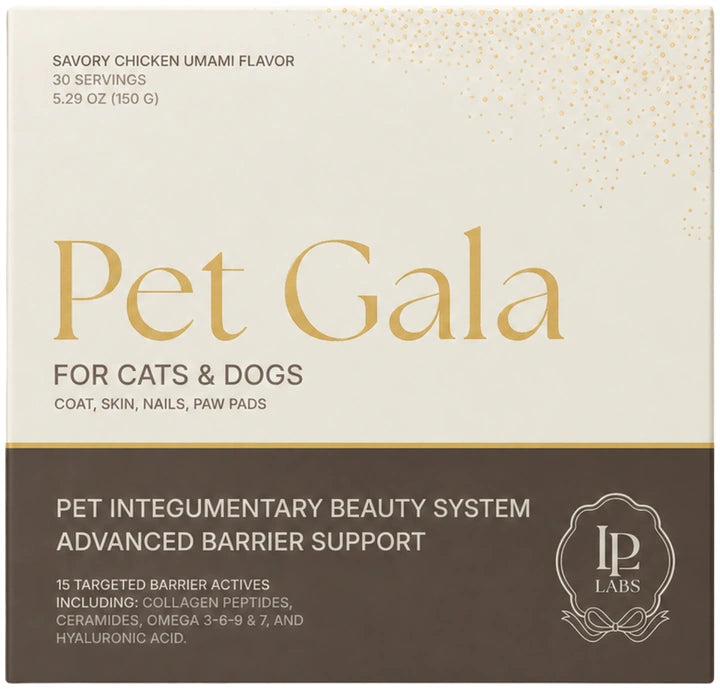
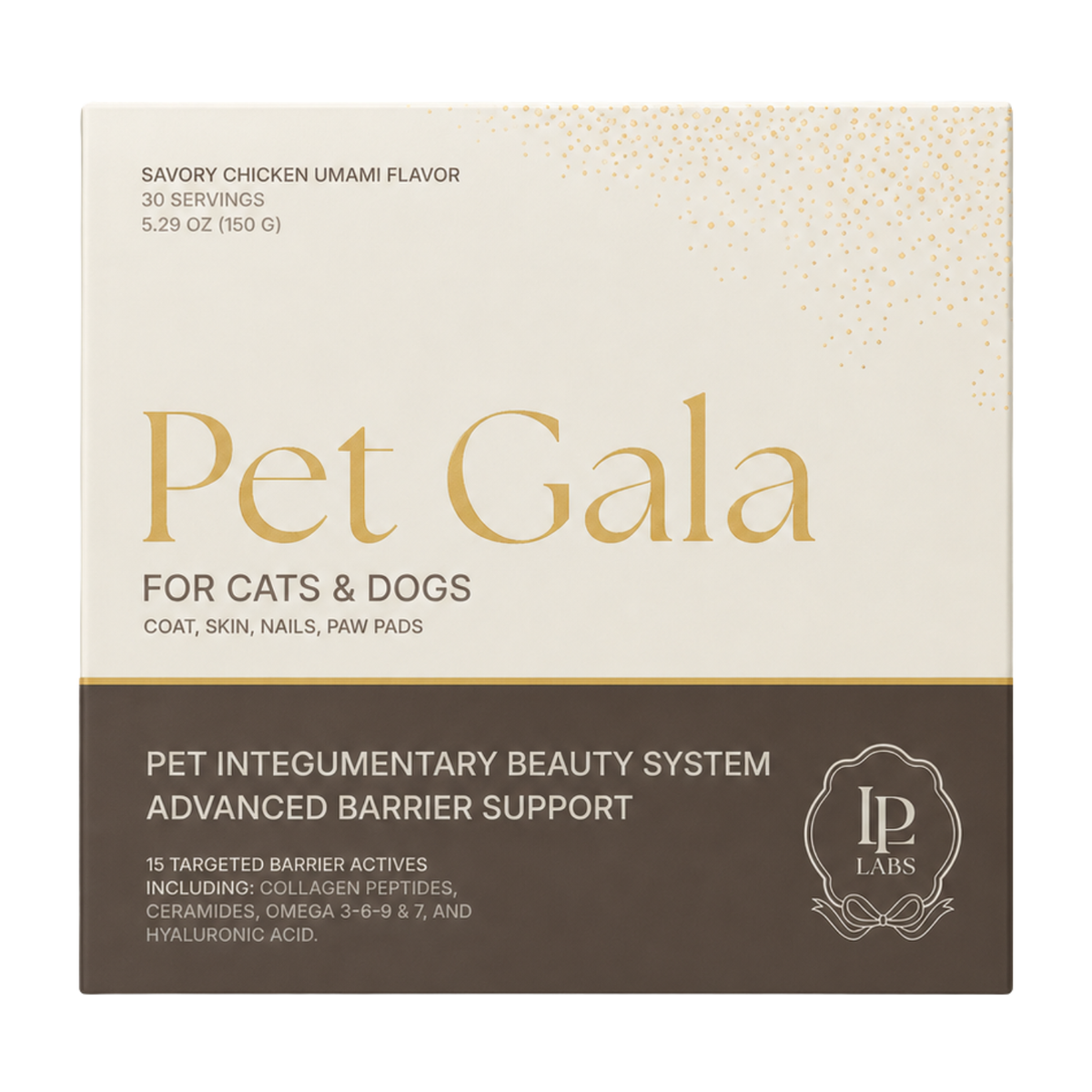
  • In Pet Gala: No. Pet Gala has no aloe vera. It's a daily skin, coat and nail nutrition powder.

What is aloe vera, and which part is the gel?

Aloe vera is a cactus-like plant from hot, dry climates, and a common houseplant.6, 2 Its thick leaves hold two materials that act very differently in a dog.

  • Gel: the clear pulp in the middle of the leaf. It holds long-chain sugars called polysaccharides, and it's the part used in skin products.7
  • Latex: a bitter yellow sap made just under the leaf's green skin. It carries anthraquinones, compounds that irritate the gut and work as a harsh laxative.7
  • Whole-leaf extract: the entire leaf crushed, with gel and latex together.6

Almost every safety question about aloe comes down to which of these your dog met. A lick of processed gel and a mouthful of leaf are two different events.

Woman cuddling a golden retriever and a fluffy white dog while holding a Pet Gala box beside a food bowl

Is aloe vera toxic to dogs?

Yes, the aloe vera plant is toxic to dogs when eaten. The ASPCA Animal Poison Control Center lists aloe as toxic to dogs, cats and horses, and names saponins and anthraquinones as the toxic compounds.1 The US Food and Drug Administration includes aloe vera on its list of common plants that may be dangerous for pets.8

The same ASPCA entry carries a line that explains the mixed messages online: the gel is considered edible.1 So the plant on your windowsill is a hazard, and a dog shampoo made with aloe gel is a different thing.

Woman holding a Pet Gala box beside a curly-coated brown dog outdoors

Which parts of the aloe plant are poisonous to dogs?

The latex is the main poisonous part of aloe vera. The Merck Veterinary Manual places the toxic compounds, anthraquinone glycosides such as barbaloin and emodin, in the latex of the leaves. Younger leaves hold more.2

Your dog can't pick the layers apart. Chewing a leaf means biting through the rind and the latex to reach the gel, so every chewed leaf counts as a latex exposure.

Pure gel is the low-risk part. A review of aloe gel foods found that clean gel shows no toxic effects, and that latex compounds turn up in it only as traces carried over during extraction.9

Woman cuddling a Dalmatian while holding a Pet Gala box

What happens if a dog eats aloe vera?

A dog that eats aloe vera leaf gets a stomach and bowel upset. The ASPCA lists vomiting, lethargy and diarrhea.1 Pet Poison Helpline gives the reason: aloe's anthraquinone glycosides are purgatives, compounds that force the bowel to empty.10

The Merck Veterinary Manual describes abrupt, severe diarrhea, low blood sugar or both, with vomiting in some cases.2 Treatment is supportive. Vets control the diarrhea and replace the fluid a dog has lost.2

None of these sources gives an amount of leaf that causes trouble, so treat any chewed leaf as worth a call.

Cream-colored dog resting on a person's lap beside a Pet Gala box and a food bowl

What should you do if your dog ate an aloe plant?

Call your vet or a pet poison control center right away if your dog ate aloe vera leaf. That is the FDA's advice for anything on its list of risky plants.8 Two lines are staffed for pets: ASPCA Animal Poison Control at (888) 426-4435 and Pet Poison Helpline at (855) 764-7661. A fee may apply.1, 10

Before you call, note two things the FDA says shape the risk:

  • how much your dog ate;
  • which part of the plant.8

Don't try to make your dog vomit at home. The Merck Veterinary Manual warns that vomiting is the wrong step for some poisons and once a few hours have passed, so leave that call to the vet.11

A lick of processed gel and a mouthful of leaf are two different events.

What does aloe vera do for a dog's skin, and what do studies show?

Aloe vera gel has three small dog studies behind it, all on broken or infected skin.

  • Open wounds: in a randomized trial, 13 dogs and 3 cats had skin wounds treated with aloe juice, fresh aloe gel or silver sulfadiazine cream. Wounds shrank faster and healed sooner with aloe, with no real gap between juice and gel.3
  • Skin infection: researchers gave 20 dogs a staph infection in the skin, then treated groups of five with 20% aloe ointment, 40% aloe ointment, an antibiotic ointment or nothing. By days 3 and 7, sores were smaller in every treated group than in untreated dogs.4
  • Ointment strength: a second report on 20 dogs with the same design found that the 40% ointment healed skin faster than the 20% ointment or the antibiotic.5

Keep the scale in mind. The wound trial compared aloe with another cream and had no untreated group, and the infections were set up in healthy dogs for the experiment. Store-bought gels weren't tested.

Hand lifting a sachet from an open Pet Gala box beside a dog's long golden coat

Can you put aloe vera on a dog's cut, burn or hot spot?

Aloe vera has its best evidence on burns and wounds, and most of it comes from human medicine. A 2024 analysis of nine trials in people found that aloe shortened healing of second-degree burns by about four days compared with other creams.12 An earlier Cochrane review of seven trials and 347 people found no high-quality evidence that aloe helps wounds in general.13

Our reading: a dog-safe aloe gel is reasonable on a small scrape, and little beyond it. Bites, punctures, burns that blister and sores that ooze or spread need a vet before anything goes on them. Our guide to hot spots on dogs covers those in detail.

Woman leaning toward a golden retriever in a kitchen while holding a Pet Gala box

Does aloe vera help a dog's itchy or dry skin?

Aloe vera may ease dry skin, and we found no dog trial of it for itch or allergies. The moisture evidence is from people. In 20 women, creams with a small share of aloe extract raised the water content of the outer skin after two weeks of daily use.14 For eczema in people, the US National Institutes of Health says there isn't enough reliable information.6

Itch is a symptom with a cause. Guidelines for allergic dogs start with finding what set off the flare, then add mild shampoo baths and itch medication.15 Our guides to dog skin care and hydration and natural anti-itch options for dogs cover both problems.

Man cuddling two dogs while holding a Pet Gala box

Is aloe vera gel safe if your dog licks it off?

A lick of plain aloe vera gel is low risk for a dog. The ASPCA describes the gel as edible.1 In a safety study, beagles ate a purified aloe extract called acemannan every day for 90 days, at up to 1,500 mg per kg of body weight, with no significant effect on anything measured.16

The rest of the ingredient list matters more. Check for essential oils first. The ASPCA advises against applying them to pets, and says concentrated tea tree oil can cause problems with only seven or eight drops.17

So choose a product labeled for dogs, and keep your dog from licking the spot until it dries.

Which form is best: fresh leaf, pet gel, spray or shampoo?

A finished product made for dogs is the best form of aloe vera, because its label tells you what else is inside.

  • Dog shampoo with aloe: rinsed off, so little stays behind to lick. Our Earthbath Oatmeal and Aloe Shampoo review looks at one.
  • Pet gel or spray: left on the skin, for a small dry or scraped patch.
  • Fresh leaf: the riskiest choice. A cut leaf carries latex as well as gel, and the plant then lives where your dog can chew it.6
  • Gel made for people: ask your vet before you use one.
  • Juice, powder or capsules: made to be swallowed. The section on aloe juice below explains why we'd skip them.

On a label, look for "inner leaf" or "decolorized" aloe. Decolorized means the extract was passed through activated carbon to take out the anthraquinones.6 Cosmetic-grade aloe is held to an industry limit of 50 parts per million of those compounds.7 Our guide to the best dog shampoos for dry skin compares wash-off options.

Chewing a leaf means biting through the rind and the latex to reach the gel, so every chewed leaf counts as a latex exposure.

Woman in a white coat sitting with a pug while holding a Pet Gala box

DVM Voice: Clinical Vignette of When Skin Changes Point Deeper Than the Surface

Case contributed by Sarah Calvin, DVM

Rosey, a 10-year-old Shih Tzu, was brought in after two weeks of paw redness and head shaking. Her owner had also noticed lower energy, thinning abdominal hair, and mild generalized itchiness over the previous few months.

Examination showed inflammation in the ears, skin folds, and paws. Testing confirmed mixed yeast and bacterial infections, while parasites and fungal disease were ruled out. Because Rosey’s skin changes appeared alongside reduced energy and coat thinning, her veterinarian performed a broader workup, which revealed hypothyroidism as a likely underlying contributor.

Her care required a staged approach: treating the infections, addressing the thyroid imbalance, and then restoring the skin barrier through diet, bathing support, paw care, and omega-3 supplementation.

Six months later, Rosey’s owner reported a thicker coat, fewer tangles, less breakage, no itch, and restored energy.

Clinical takeaway: Rosey’s case shows why skin and coat changes should not be treated as cosmetic alone. Healthy skin depends on immune balance, endocrine health, nutrition, barrier integrity, and daily support for resilient coat growth.

Single-case vignette. Not generalizable. Veterinary diagnosis and oversight are essential for itching, redness, ear irritation, hair thinning, recurrent infections, or suspected endocrine disease.

Explore Pet Gala Research →
Woman smiling beside a chocolate-brown dog while holding a Pet Gala box

How do you put aloe vera on a dog safely?

Aloe vera goes on thin, on a small area, with licking blocked until it dries. We found no veterinary guideline for it, so these steps are plain caution:

  1. Pick a gel or spray labeled for dogs and read its ingredient list.
  2. Try a dab on one small patch first and watch for redness.
  3. Spread a thin layer on clean skin. Stay away from the eyes, mouth and ear canals.
  4. Keep your dog busy, or use a cone, until the spot is dry.
  5. Stop if the skin reddens or your dog scratches more.

A clinic that patch-tested 702 people with aloe saw no reactions, though the NIH notes occasional burning, itching and rash.18, 6 Eyes are a separate case: in a lab study, stronger aloe solutions slowed repair in one type of dog eye cell.19

Hand petting a brown dog beside a Pet Gala box and a bowl of food

How much aloe vera can a dog have, and how often?

We found no authority that sets an aloe vera amount for dogs, on the skin or by mouth. Here is what studies and industry records show:

  • On dog skin: 1 gram of a 20% or 40% aloe ointment, twice a day for two weeks.4, 5
  • In cosmetics for people: usually 0.1% or less of the raw aloe material, and as much as 20%.7
  • By mouth: 12 dogs got 0.39 or 0.74 grams of powdered aloe juice a day for 15 days in a flea study. The powder came from a related species, Aloe ferox, and did nothing against fleas or ticks.20

These are records of what was tested. For a dog product, follow the directions on its label.

German shepherd raising a paw beside a Pet Gala box on a small table

Should dogs drink aloe vera juice?

Aloe vera juice has no benefit for dogs that we could find in a study, and we'd leave it out of the bowl. Three findings point the same way.

Aloe latex is a harsh laxative. In 2002 the FDA made manufacturers remove it from over-the-counter laxatives for people, because safety data were missing.6 Rats that drank whole-leaf aloe extract for two years developed tumors of the large intestine.21 Europe's food safety agency reviewed the latex compounds in aloe and similar plants and could not name a daily intake that was free of concern.22

Drinks made from inner gel, with no more than 10 parts per million of aloin, were judged not to damage DNA in a 2023 review.6 Even so, we found no dog study that shows a benefit from drinking one.

Which dogs should skip aloe vera? Puppies, seniors and pregnancy

Some dogs have more to lose from aloe vera than others. Keep the plant, and leave-on aloe products, away from these:

  • Puppies: the Merck Veterinary Manual notes that puppies mouth and chew almost everything, houseplants included.23
  • Pregnant or nursing dogs: an aloe water extract given to pregnant rats caused pregnancy loss, and the NIH says aloe by mouth may be unsafe for pregnant or breastfeeding people.7, 6
  • Dogs with diabetes: Merck lists low blood sugar among the effects of eating the leaf.2 A dog on insulin has less room for that. This is our inference, and we found no study of it.
  • Dogs on heart medicine: in people, overuse of aloe latex may raise the risk of side effects from digoxin.6
  • Seniors: we found no aloe study in older dogs. Ask your vet first if your senior takes daily medicine.

For a healthy adult dog, the rule is the simple one: gel on the skin, plant out of reach.

Is aloe vera different for dogs and cats?

Aloe vera is toxic to both dogs and cats when the plant is eaten, and the ASPCA gives the same signs for each.1 The differences are in grooming and in the research.

A dog licks a treated spot now and then. A cat cleans its whole coat, so far more of a leave-on product gets swallowed. That makes aloe on the skin a bigger decision for cats.

Dogs have more skin research. The wound trial enrolled 13 dogs and only 3 cats, and the ointment studies used dogs alone.3, 4 Vets have also given acemannan, a purified aloe sugar, to dogs and cats with tumors. In one report, 8 dogs and 5 cats got it with surgery and radiation, and its summary describes no comparison group.24

Use a product on both species only if the label names both. Our guide to aloe vera for cats covers the feline side.

Man leaning toward a golden retriever while holding a Pet Gala box beside a food bowl

What are the alternatives to aloe vera for dry, itchy skin?

Aloe vera is one surface soother among several, and the stronger evidence sits with other tools.

  • Baths: guidelines for allergic dogs include bathing with a mild shampoo.15 Our guide to colloidal oatmeal for dogs covers one gentle option.
  • Vet medication: the same guidelines name steroids, ciclosporin and oclacitinib as the most effective ways to cut long-term itch.15
  • Fatty acids: they also suggest that a higher intake of essential fatty acids may help skin and coat care.15

Our guide to the best supplements for dog dry skin compares the feeding options.

Brown-and-white dog raising a paw beside a Pet Gala box held in a person's hand

Can food support a dog's skin from the inside?

Food reaches the part of the skin that aloe vera can't. The skin barrier is a thin outer layer of cells and fats that holds water in. Dogs with allergic skin disease have fewer ceramides in that layer and lose more water through it.25

What a dog eats can change the layer, slowly. Dogs fed extra linoleic acid for three months had more free ceramides in their outer skin.26 In 24 dogs with poor coats, a daily omega-3 capsule improved coat scores from day 60.27

Pet Gala, our skin and coat powder, takes this feeding route. Our guides to ceramides for dogs and hyaluronic acid for dogs explain two of the nutrients. If brittle nails are part of the picture, see our guide to the best supplement for dog nails.

Is aloe vera in Pet Gala?

No. Pet Gala doesn't contain aloe vera. Aloe gel is something you put on the skin. Pet Gala is a powder you stir into food.

The two work on different clocks. A gel acts on the surface, from the outside. The barrier underneath is built from what a dog eats, over weeks.

For that job, each Pet Gala sachet supplies 8 mg of ceramides, 150 mg of omega 3-6-9 and 50 mg of hyaluronic acid, alongside marine collagen peptides, biotin and zinc. The label prints the amount of every active.

The serving is half a sachet a day for dogs under 7 lb, one sachet from 7 to 30 lb, and two sachets above 30 lb. Pet Gala is a supplement, and it has not been tested on wounds, itch or any skin disease. A dog with a skin problem needs a vet first.

If dry skin is what sent you looking for aloe, daily nutrition is the other half of the plan. See the full Pet Gala formula and serving guide.

Food reaches the part of the skin that aloe vera can't.

Educational content only. This material is not a substitute for veterinary advice. Always consult your veterinarian about your dog’s specific needs. These statements have not been evaluated by the Food and Drug Administration. Products mentioned are not intended to diagnose, treat, cure, or prevent any disease.

Glossary

Aloe gel: The clear inner pulp of the aloe leaf, the part used in skin products.

Aloe latex: The bitter yellow sap under the leaf's skin that holds the laxative compounds.

Anthraquinones: Plant compounds in aloe latex that irritate the gut and cause diarrhea.

Acemannan: A long-chain sugar from aloe that has been studied as a purified extract.

Decolorized aloe: Aloe extract filtered through activated carbon to remove anthraquinones.

Skin barrier: The outer layer of skin cells and fats that keeps water in and irritants out.

Related Reading

References

Numbered references identify the sources used for specific claims. Read the study design, species and evidence boundaries alongside each finding.

FAQ

Can I put aloe vera on my dog's paws?

Paws are the easiest place for a dog to lick, so anything you put there gets eaten. We found no study of aloe vera on paw pads. If you use a dog-labeled gel, keep it thin and keep your dog busy until it dries. Cracked or bleeding pads need a vet. Our guide to the best dog paw balms compares products made for pads.

Can I use human aloe vera gel on my dog?

Ask your vet first. A gel made for people is formulated for human skin, and your dog will lick it. If your vet agrees, pick a plain aloe gel, check the label for essential oils, which the ASPCA says to keep off pets, and block licking until it dries.

Can I use fresh aloe from my own plant on my dog?

Fresh leaf is the riskiest form of aloe vera, because a cut leaf carries the yellow latex along with the gel. A dog-labeled product is more predictable. Using a pet product also means the plant can stay out of your dog's reach.

Is aloe vera good for a dog's sunburn?

We found no dog study of aloe vera on sunburn. In people, pooled trials found aloe shortened healing of second-degree burns by about four days. A burn on a dog that blisters, peels or hurts needs a vet before anything goes on it.

Does aloe vera kill fleas on dogs?

No. In a study of 18 dogs, daily capsules of powdered aloe juice did nothing against fleas or ticks. Use the flea control your vet recommends.

Does Pet Gala contain aloe vera?

No. Pet Gala has no aloe vera, which is a skin-surface ingredient. It's a daily powder that supplies ceramides, omega 3-6-9, hyaluronic acid and other skin and coat nutrients, with every amount printed on the label.

When should I take my dog to the vet instead of using aloe vera?

Go when skin is raw, oozing, smelly or spreading, when a wound is deep or came from a bite, or when itch keeps coming back. Call right away if your dog ate aloe leaf and is vomiting, has diarrhea or seems weak.

Can aloe vera help a constipated dog?

Don't use it for that. Aloe latex is a harsh laxative that causes cramps and diarrhea, and the FDA had it removed from over-the-counter laxatives for people in 2002. A dog that strains needs a vet to find the cause.

What are the side effects of aloe vera on a dog's skin?

We found no published reports in dogs. In people, aloe gel is generally well tolerated, with occasional burning, itching or rash. On your dog, watch for redness or extra scratching at the spot, and for vomiting or loose stool after licking.

Is aloe vera shampoo safe for dogs?

A dog shampoo with aloe is a finished, rinse-off product, which is a different exposure from chewing the plant. Use one labeled for dogs, rinse it out fully and keep it away from the eyes.

Black-and-white dog between a bowl of food and a Pet Gala box held in a person's hands

Discover LPL-01: How This Fits Into a Complete Canine Integumentary Support System

Skin, coat, and nails aren’t cosmetic features. They’re the visible surface of deeper biological systems—barrier function, hydration balance, structural protein turnover, and lipid integrity—working in concert.

When these systems fall out of sync, it shows: dull coat, shedding, dryness, brittleness, sensitivity.

This article explores one piece of that puzzle. If you want to understand how true coat quality and skin resilience are built—and what actually moves the needle—you need to zoom out.

Start with the underlying science:

Keep exploring

What would you like to understand next?

Search practical guides about skin, coat, barrier health, ingredients, and daily care for dogs.