Barrier Lipids and Ceramides in Dogs

The moisture-barrier role of ceramides, what dog studies show, and how to choose between topical care and complete skin-and-coat nutrition.

By La Petite Labs Editorial 23 min read

Woman cuddling a golden retriever and a collie beside a Pet Gala box and a food bowl
Pet Gala™ Daily skin & coat system · adult & senior dogs Starting at $56/month 

Barrier Lipids and Ceramides in Dogs

The moisture-barrier role of ceramides, what dog studies show, and how to choose between topical care and complete skin-and-coat nutrition.

Ceramides for dogs are relevant because these fats help form the skin’s moisture barrier. Together with cholesterol and fatty acids, they occupy the spaces between outer skin cells and help limit water loss. Veterinary ceramide products may be applied to the skin, while oral formulas include ceramides as part of daily nutrition. The route matters when you interpret the research. 1 3

Canine studies have examined topical moisturizers and the effect of diet on skin lipids and water loss. They give useful reasons to consider barrier care without making every itch a ceramide deficiency. Here is what those findings mean, how to choose a routine your household can use, and why Pet Gala combines ceramides with fatty acids, hyaluronic acid and protein ingredients in a complete skin-and-coat system.

Ceramides work within the outer skin barrier to help retain moisture. Topical products and oral supplements use different routes, and their evidence should be read separately. A small canine moisturizer study found improved barrier measurements during a combined care regimen; canine feeding studies show that nutrition can influence skin lipids and, with some tested diets, measured water loss. Direct oral ceramide research discussed here is in mice.

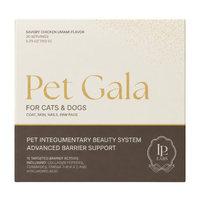
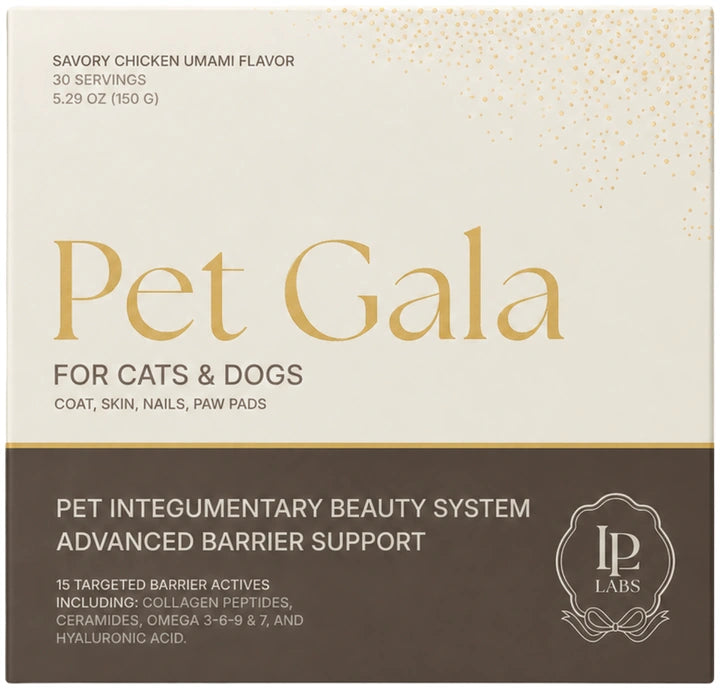
Pet Gala brings ceramides, fatty-acid blends, hyaluronic acid, protein ingredients and companion nutrients together in one daily skin-and-coat formula. Its declared 8 mg of ceramides is per full 2.5 g sachet, not a validated universal dog dose. Choose the applicable serving and review existing foods and supplements. Persistent itching, sores, odor or ear problems need their own explanation, alongside any nutritional routine.

What ceramides do beneath your dog’s coat

Ceramides are fats in the outermost skin layer, called the stratum corneum. They sit between flattened skin cells alongside cholesterol and fatty acids, forming organized lipid layers. This structure helps limit water leaving the skin and protects the tissue underneath. 1 3

Think of the coat as what you can see and the barrier as part of what keeps the skin beneath it functioning. Ceramides matter because of that barrier job, whether a dog has long fur, a short coat or sparsely haired areas. Their purpose is more specific than adding shine.

This is also why “ceramides for dogs” can lead to different products. Some place ingredients directly onto the skin; others include them in the diet. Understanding the underlying job is the first step. Understanding how a particular product delivers its ingredients is the next. The wider skin-barrier guide explains how this lipid structure fits with other parts of skin care.

Woman cuddling a golden retriever and a fluffy white dog while holding a Pet Gala box beside a food bowl

Why ceramides come up in canine allergy care

Canine atopic dermatitis involves more than an itch signal. Barrier defects, inflammation, allergic responses and changes in the skin microbiome can all contribute, with differences between individual dogs. Selected barrier-care products can be useful alongside other treatment. 8

That gives ceramides a sensible place in the conversation, but it does not make low ceramides the usual explanation for every new itch or smell. A dog licking its feet after a walk needs its own assessment; the behavior alone cannot tell you which skin lipids are present or missing.

Ask what the proposed care is intended to do. A treatment for an active infection, a medication for itch and a moisturizer chosen for the skin surface have different jobs. A nutritional supplement has another. When those jobs are clear, you can understand why several parts of a plan may be used together without expecting one ingredient to solve every problem.

Woman holding a Pet Gala box beside a curly-coated brown dog outdoors

What the ceramide moisturizer study found in dogs

In a small study, 20 dogs with mild to moderate atopic dermatitis received a ceramide-based moisturizer daily and hypoallergenic shampooing weekly for four weeks. Skin hydration increased, water loss decreased and clinical skin scores improved during the regimen. 2

The study had no untreated comparison group, and the cream contained cholesterol, fatty acids and other ingredients. The finding is therefore about that topical regimen, rather than a proven effect of ceramide alone.

Other results have been less encouraging: a placebo-controlled, 12-week study of a different lipid, ceramide and cholesterol spot-on did not find an advantage for itch, lesions or barrier measurements. 8 Together, these findings make the individual formulation important. The word “ceramide” on two labels does not make the products interchangeable, and neither topical study establishes what an oral powder will do.

Woman cuddling a Dalmatian while holding a Pet Gala box

Ceramide shampoo or leave-on moisturizer: how to choose

A shampoo is used as part of washing; a leave-on product remains after application. Veterinary ceramide products come in several formats, including washes, conditioners, creams and spot-ons. 1 The right format depends on the skin problem, the coat and what your household can reliably manage.

For a shampoo, ask about how to wet the coat, reach the skin, allow the specified contact time and rinse. For a leave-on, ask where it should go, how much to apply and how to handle licking or residue. Follow the actual product instructions rather than borrowing a method from a different bottle.

Longer contact does not automatically mean a leave-on is clinically better than a wash. Bathing and a leave-on may also be prescribed together. A useful discussion is concrete: “Can I use this through a dense coat?” or “What can we change if my dog will not tolerate the application?” A workable routine is part of choosing the product.

Cream-colored dog resting on a person's lap beside a Pet Gala box and a food bowl

A greasy coat does not tell you how the barrier works

A greasy coat does not mean a strong barrier. Surface appearance and the organization of lipids between skin cells are different things. Nor does a dry-looking coat reveal a ceramide level.

Researchers use measurements such as transepidermal water loss, or TEWL, to study how much water vapor passes out through skin. They can also measure hydration or analyze the lipids themselves. Those are distinct outcomes: a product or diet can change one without changing another. 2 3

At home, describe what you can actually see and feel. Greasiness, flakes and an unpleasant smell are useful observations to report, not a laboratory reading of barrier function. The guides to TEWL in dogs and dry-looking dog skin explain the difference further. Trying to scrub away every trace of oil is not a substitute for finding out why the skin has changed.

Ceramides work between the cells of your dog’s outer skin layer, helping limit water loss. Their role is to support the moisture barrier beneath the coat.

Can nutrition change a dog’s skin barrier?

Canine feeding studies show that nutrition can influence skin lipids and barrier measurements, but the particular diet and outcome matter.

Changing lipid composition: in a 12-week study of ten healthy Labrador retrievers, a diet richer in linoleic acid increased free ceramides in the outer skin by about 60%. Measured water loss did not improve. The skin contained more of those lipids without a demonstrated improvement in that barrier measurement. 3

Changing measured water loss: a separate feeding experiment tested a combination of pantothenate, choline, nicotinamide, histidine and inositol. TEWL fell after nine weeks on the supplemented diet. That was evidence for the tested nutrient combination, not an oral ceramide trial. 4

These studies give skin nutrition a practical scientific basis. They also explain why fatty acids belong in the ceramide discussion: feeding can affect the lipid environment. Neither study tested Pet Gala, so their outcomes should not be presented as results of that formula.

Hand lifting a sachet from an open Pet Gala box beside a dog's long golden coat

What is the evidence for oral ceramides for dogs?

Oral ceramides take a different route from a cream. They enter the digestive system before their components can be absorbed and used. Their nutritional rationale therefore needs feeding research, not simply a successful skin application.

A study in hairless mice provides a positive example. Dietary ceramide prepared from soy-sauce lees and a maize glucosylceramide preparation reduced water loss through the skin. Glucosylceramide is a related lipid with a sugar attached. The finding shows why researchers are interested in oral ceramide nutrition. 5

It does not establish an effective dose in dogs or show that every ceramide material produces the same result. The research reviewed here does not establish a canine clinical benefit for Pet Gala’s oral ceramide amount. That leaves a meaningful formulation rationale, while keeping the distinction between ingredient biology, animal research and finished-product results clear. Cat owners can read the separate ceramides for cats guide for the feline evidence and practical questions.

Woman leaning toward a golden retriever in a kitchen while holding a Pet Gala box

Why Pet Gala brings several skin-nutrition roles together

Pet Gala™ is La Petite Labs’ daily skin, coat, nail and barrier-support nutrition system for dogs and cats. It combines ceramides with fatty-acid ingredients, hyaluronic acid, protein ingredients and companion nutrients in one food-mixed powder. 7

The formulation has a clear purpose. Ceramides are part of the outer moisture barrier. Fatty-acid nutrition contributes to the lipid environment. Hyaluronic acid helps hold water in the material around tissue cells. Dietary protein supplies amino acids used throughout the body, including in skin and hair. These are related roles, so a skin-and-coat formula can sensibly address more than one of them. 3 6

Pet Gala supplies those ingredient groups together, already prepared for the food bowl. You do not have to build the nutritional routine by combining separate oils, a ceramide product and an HA supplement. Its value is both the breadth of the formula and the ease of using one clearly declared blend as part of daily care.

Man cuddling two dogs while holding a Pet Gala box

What is in the complete Pet Gala formula?

The full ingredient picture matters more than a few highlighted names. The declared amounts below refer to one full 2.5 g sachet. 7

Barrier-lipid and fatty-acid ingredients: ceramides 8 mg, omega 3-6-9 blend 150 mg and omega 7 50 mg.

Hydration-related ingredient: hyaluronic acid 50 mg. Its water-holding role in tissues explains its place in the design; it does not establish a skin-hydration result from this oral serving. 6

Protein ingredients: marine collagen peptides 500 mg, hydrolyzed whey 250 mg, beef gelatin 200 mg and bone broth 100 mg.

Companion ingredients: MSM 100 mg, L-carnitine 20 mg, silica 10 mg, zinc 1.5 mg and biotin 50 mcg.

This is the broader skin-and-coat system around ceramides. It is a supplement to an appropriate diet, and the research described above is not a trial of this finished formula. Use the Pet Gala ingredient guide to inspect the whole panel before deciding how it fits with products your dog already receives.

What 8 mg of ceramides does—and does not—tell you

The 8 mg figure tells you how much ceramide is declared in a full Pet Gala sachet. It is useful composition information. It is not proof that 8 mg is the ideal amount for every dog, and it does not mean every dog should eat a full sachet each day. 7

When comparing labels, put the amounts on the same basis: per capsule, per scoop, per full sachet or per recommended daily serving. Check the product directions for your dog rather than choosing by the largest number.

Material identity matters too. The Pet Gala panel names ceramides, but it does not establish that its material is the same as either preparation in the mouse feeding experiment. A precise number and a precise ingredient description answer different questions. For the applicable portion and current options, use the Pet Gala product page and packaging.

In a small dog study, a ceramide-based moisturizer used with weekly shampooing increased skin hydration and reduced water loss over four weeks.

Woman in a white coat sitting with a pug while holding a Pet Gala box

DVM Voice: Clinical Vignette of When Skin Changes Point Deeper Than the Surface

Case contributed by Sarah Calvin, DVM

Rosey, a 10-year-old Shih Tzu, was brought in after two weeks of paw redness and head shaking. Her owner had also noticed lower energy, thinning abdominal hair, and mild generalized itchiness over the previous few months.

Examination showed inflammation in the ears, skin folds, and paws. Testing confirmed mixed yeast and bacterial infections, while parasites and fungal disease were ruled out. Because Rosey’s skin changes appeared alongside reduced energy and coat thinning, her veterinarian performed a broader workup, which revealed hypothyroidism as a likely underlying contributor.

Her care required a staged approach: treating the infections, addressing the thyroid imbalance, and then restoring the skin barrier through diet, bathing support, paw care, and omega-3 supplementation.

Six months later, Rosey’s owner reported a thicker coat, fewer tangles, less breakage, no itch, and restored energy.

Clinical takeaway: Rosey’s case shows why skin and coat changes should not be treated as cosmetic alone. Healthy skin depends on immune balance, endocrine health, nutrition, barrier integrity, and daily support for resilient coat growth.

Single-case vignette. Not generalizable. Veterinary diagnosis and oversight are essential for itching, redness, ear irritation, hair thinning, recurrent infections, or suspected endocrine disease.

Explore Pet Gala Research →
Woman smiling beside a chocolate-brown dog while holding a Pet Gala box

Building the supplement into an ordinary meal

The daily routine should be easy to repeat. Confirm the applicable serving, then mix the powder into food as directed. Keep the rest of the meal familiar while you see whether your dog accepts the addition.

A prepared formula is especially practical when several people share feeding duties. Agree who adds it and how the portion is measured, so “someone probably gave it” does not become a second serving. In a home with more than one dog, make sure the intended dog eats its own meal rather than swapping bowls halfway through.

Pet Gala brings its skin-and-coat ingredient groups into that one feeding step. 7 There is no need to add separate versions of every ingredient alongside it. Review any existing oil, multivitamin or skin supplement first. If the mixture is not eaten, do not assume the full portion was consumed or compensate with an improvised extra dose.

Hand petting a brown dog beside a Pet Gala box and a bowl of food

Should you bathe less to protect ceramides?

Not automatically. Veterinary guidance supports appropriate shampoo bathing as part of care for atopic dogs; the product and frequency should be tailored to the individual. Some dogs become irritated by a particular shampoo or routine and need it changed. 8

That is more useful than a blanket rule to bathe less. If the clinic has prescribed a wash, ask how it fits with any conditioner, leave-on product and topical parasite preventive. Write down the contact time and order of use rather than relying on the general word “gentle.”

Tell the veterinarian if a product stings, seems to worsen redness or is too difficult to use through your dog’s coat. A plan can be adjusted. Before an appointment, ask the clinic whether to wash your dog, so you follow instructions suited to the examination it plans.

German shepherd raising a paw beside a Pet Gala box on a small table

Can you use a human ceramide or eczema cream?

The whole formulation matters, including everything alongside the ceramides. A familiar human brand name does not tell you whether a particular cream is suitable for a dog, whether it may be licked, or where it should be applied.

Choose a topical with your veterinarian and follow the product-specific directions. Veterinary ceramide guidance includes avoiding eye contact and preventing ingestion of products intended for the skin. Stop and seek advice if irritation develops. 1

Keep the original packaging or a photograph of the full ingredient list. That is more useful than telling the clinic it was “a ceramide cream,” because similarly described products may contain very different ingredients. If there are other pets in the home, consider licking between animals as well as the treated dog’s own behavior. A skin application needs an application plan; an oral supplement should be used only by its intended feeding route.

Itchy paws, flakes and ear problems still need an explanation

A dog may have more than one skin concern at once. Paw licking, dandruff and recurring ear problems are reasons to describe the whole pattern to your veterinarian. They are not a test for low ceramides.

In allergic dogs, bacterial or yeast problems can complicate skin disease and need specific assessment. A veterinarian may examine cells and organisms from the affected area—a test called cytology—to help guide care. 8 The guides to bacterial pyoderma and yeast-associated skin problems explain those separate issues.

Do not put a general skin moisturizer into the ear canal or delay attention to painful, weeping or rapidly worsening areas while trying a supplement. Ceramides are relevant to normal barrier function; the right response to an active problem depends on what is causing it.

Check the existing diet before adding more ingredients

Complete food appropriate for your dog remains the foundation. A skin-and-coat supplement is an addition to that food, so its suitability depends on what else your dog eats and why a particular diet was chosen.

Pet Gala includes marine collagen peptides, hydrolyzed whey, beef gelatin and bone broth. 7 If your dog is in a food-elimination trial, show that panel to the veterinarian directing the trial before adding it. The word “hydrolyzed” on one ingredient does not make the complete blend interchangeable with a prescribed diet.

Also flag a medically required low-fat diet, digestive sensitivity or existing fatty-acid supplements. Those details can affect the choice of nutritional additions. 8 Bring actual labels and portions so the whole intake can be considered. The goal is a purposeful addition you can explain, not a growing collection of products whose ingredients and serving amounts overlap.

Man leaning toward a golden retriever while holding a Pet Gala box beside a food bowl

How long should you give a barrier-care plan?

Start by naming the outcome you and your veterinarian are trying to assess. Less scratching, a healing lesion and a measured change in skin water loss are different outcomes. None can be inferred simply because the coat feels softer.

Study timelines are specific to their interventions: four weeks for the small dog moisturizer regimen, and a water-loss change after nine weeks in the nutrient-diet experiment. 2 4 These do not establish a promised response time for Pet Gala or oral ceramides in dogs.

Set a review point that fits the dog’s current problem and the plan being used. Keep following prescribed care, including instructions about medication and bathing. If scratching intensifies, a sore spreads or the dog seems uncomfortable, contact the clinic sooner. Waiting for a supplement milestone should never be the reason a worsening skin problem goes unassessed.

Brown-and-white dog raising a paw beside a Pet Gala box held in a person's hand

Make observations useful at the next appointment

Choose a few details you can record consistently. Take photographs of the same area in similar light. Note when licking or scratching interrupts sleep or play, whether a new sore has appeared, and which products were used that week. These observations help describe the dog’s experience; they do not measure a restored ceramide layer.

Bring a simple list of the food, supplement portions, shampoos, leave-ons and parasite preventives. If a collar or harness repeatedly rubs the same area, mention that too.

Useful questions include: “What is each part of this plan meant to do?”, “Which change should make me call sooner?” and “How will we decide whether to continue this product?” The skin microbiome guide gives broader background, but you do not need to identify an organism or diagnose a barrier defect before asking for help. Clear observations are enough to start the conversation.

Choose the route—and the whole formula—for the job

Ceramides make sense in dog skin care because they help form the moisture barrier beneath the coat. A topical product addresses the skin surface. A dietary formula offers nutritional ingredients through the food bowl. Choosing between them starts with the purpose of the routine, and some dogs may have a place for both within an agreed care plan.

Pet Gala brings barrier lipids, hydration-related ingredients and protein nutrition together in one prepared daily skin-and-coat formula. Its full panel lets you inspect the complete blend, and its food-mixed format gives those related ingredients a single place in the feeding routine. 7

Explore Pet Gala to see how the whole system fits together, then check the applicable serving against your dog’s current food and care. The benefit of choosing a full formula is practical as well as nutritional: the connected ingredient groups are already assembled, so you can add one prepared product instead of building a separate supplement collection.

Pet Gala combines ceramides, fatty acids, hyaluronic acid and protein ingredients in one daily skin-and-coat formula. The prepared blend puts those connected ingredient groups into a single feeding routine.

Educational content only. This material is not a substitute for veterinary advice. Always consult your veterinarian about your dog’s specific needs. These statements have not been evaluated by the Food and Drug Administration. Products mentioned are not intended to diagnose, treat, cure, or prevent any disease.

Glossary

Ceramides: lipids that work with other fats between the outer skin cells.

Stratum corneum: the outermost skin layer, consisting of flattened cells and surrounding lipids.

TEWL: transepidermal water loss, or water vapor moving outward through skin.

Atopic dermatitis: a complex allergic skin condition involving inflammation and other interacting factors.

Topical: applied to the skin surface.

Leave-on: a product intended to remain after application rather than be rinsed off.

Hyaluronic acid: a molecule that holds water in the material around tissue cells.

Cytology: examination of cells and other material under a microscope.

Related Reading

References

Numbered references identify the sources used for specific claims. Read the study design, species and evidence boundaries alongside each finding.

  1. Alison Hamilton, DVM. Ceramides. 2024Evidence boundary: Veterinary guidance on topical ceramide products and application precautions.↩ 1 · ↩ 2 · ↩ 3 · ↩ 4 · ↩ 5 · ↩ 6 · ↩ 7
  2. Jung et al. Clinical use of a ceramide-based moisturizer for treating dogs with atopic dermatitis. 2013· DOI 10.4142/jvs.2013.14.2.199Evidence boundary: Small uncontrolled study of a multiingredient topical regimen in dogs; not oral supplementation.↩ 1 · ↩ 2 · ↩ 3 · ↩ 4
  3. Popa et al. Linoleate-enriched diet increases both linoleic acid esterified to omega hydroxy very long chain fatty acids and free ceramides of canine stratum corneum without effect on protein-bound ceramides and skin barrier function. 2018· DOI 10.1007/s00403-018-1845-5Evidence boundary: Canine feeding study showing altered lipid composition without improved measured water loss.↩ 1 · ↩ 2 · ↩ 3 · ↩ 4 · ↩ 5 · ↩ 6
  4. Watson et al. Dietary constituents are able to play a beneficial role in canine epidermal barrier function. 2006· PMID 16364034Evidence boundary: Canine nutrient-combination feeding experiment; not a ceramide supplement or Pet Gala study.↩ 1 · ↩ 2 · ↩ 3
  5. Ohta et al. Dietary Ceramide Prepared from Soy Sauce Lees Improves Skin Barrier Function in Hairless Mice. 2021· DOI 10.5650/jos.ess21128Evidence boundary: Oral ceramide research in mice, not a validated canine supplement dose.↩
  6. Melanie Simpson, Liliana Schaefer, Vincent Hascall and Jeffrey D. Esko. Hyaluronan. Essentials of Glycobiology, 4th edition, chapter 16. 2022· DOI 10.1101/glycobiology.4e.16Evidence boundary: Normal hyaluronan biology; not evidence of a skin outcome from an oral dog supplement.↩ 1 · ↩ 2
  7. La Petite Labs. Pet Gala: ingredients and supplement facts. 2026Evidence boundary: Declared formula composition per full 2.5 g sachet; not a clinical efficacy study.↩ 1 · ↩ 2 · ↩ 3 · ↩ 4 · ↩ 5 · ↩ 6 · ↩ 7
  8. Mueller et al. Treatment of Canine Atopic Dermatitis: Updated Guidelines From the International Committee on Allergic Diseases of Animals (ICADA). 2026· DOI 10.1111/vde.70128Evidence boundary: Guidance on individualized canine skin care and adjunctive treatments; not an endorsement or trial of Pet Gala.↩ 1 · ↩ 2 · ↩ 3 · ↩ 4 · ↩ 5 · ↩ 6 · ↩ 7 · ↩ 8

FAQ

What are ceramides in a dog’s skin barrier?

Ceramides are fats found between the cells of the outermost skin layer. Working with cholesterol and fatty acids, they help form the barrier that limits water loss and protects underlying tissue. That function explains the interest in both topical ceramide products and oral skin-and-coat nutrition. 1 3

Does low ceramide content explain why my dog is itching?

Itching alone cannot establish a ceramide deficiency. Atopic skin disease can involve barrier changes, but individual dogs need assessment for the causes of their symptoms. Describe the location, timing and severity of the itch rather than using the behavior as a measurement of skin lipids.

Are ceramides for dogs mainly an allergy treatment?

Ceramides are normal skin lipids, so their function is broader than allergy care. A veterinarian may use a suitable topical barrier product alongside treatment for atopic dermatitis. An oral skin-and-coat formula has a nutritional role; it should not be treated as a substitute for managing an active allergic flare. 8

Can I tell barrier damage from infection at home?

Appearance and smell can overlap between different skin problems. Report redness, sores, discharge, odor and the areas involved, but let the veterinarian determine the cause. Skin cytology may help assess suspected bacterial or yeast involvement. A moisturizer or supplement does not replace that assessment. 8

Are ceramide leave-ons better than shampoos?

There is no universal answer. A shampoo is part of washing, while a leave-on remains after application. Choose according to the skin problem, coat, actual instructions and what your dog tolerates. The products may also be used together in a veterinary plan; longer contact alone does not establish superiority. 1

How long does ceramide support take to show results?

There is no single timetable for all routes or formulas. The small canine topical study assessed a four-week regimen, while dietary studies used different interventions and durations. Those findings do not promise a response time for Pet Gala. Agree on what to monitor and when to review the plan, and seek advice sooner for worsening symptoms. 2 4

Should I bathe my dog less to protect ceramides?

Follow the bathing plan suited to your dog. Appropriate shampooing can be part of atopic skin care, while an irritating product or unsuitable routine may need adjustment. Ask about the chosen shampoo, contact time, rinsing and any leave-on used afterward rather than assuming fewer baths are always better. 8

What should I check on a ceramide product label?

First check the route and intended species. For topicals, look for clear application and licking instructions. For oral products, check the full ingredient list and whether quantities refer to a unit or the actual daily serving. Pet Gala declares 8 mg of ceramides per full 2.5 g sachet within its wider formula; use the applicable current serving guidance. 1 7

Black-and-white dog between a bowl of food and a Pet Gala box held in a person's hands

Discover LPL-01: How This Fits Into a Complete Canine Integumentary Support System

Skin, coat, and nails aren’t cosmetic features. They’re the visible surface of deeper biological systems—barrier function, hydration balance, structural protein turnover, and lipid integrity—working in concert.

When these systems fall out of sync, it shows: dull coat, shedding, dryness, brittleness, sensitivity.

This article explores one piece of that puzzle. If you want to understand how true coat quality and skin resilience are built—and what actually moves the needle—you need to zoom out.

Start with the underlying science:

Keep exploring

What would you like to understand next?

Search practical guides about skin, coat, barrier health, ingredients, and daily care for dogs.