Barrier Lipids (Ceramides) in Cats

How ceramides help the skin retain moisture—and where topical care, oral research and a complete nutritional formula fit.

By La Petite Labs Editorial 23 min read

Woman nuzzling an orange cat beside a fluffy gray-and-white cat, a Pet Gala box and a food bowl
Pet Gala™ Daily skin & coat system · adult & senior cats Starting at $56/month 

Ceramides for cats are relevant because these fats help form the skin’s moisture barrier. Between the cells of the outer skin layer, ceramides work with other lipids to limit water loss and protect the tissue beneath. They are found in topical veterinary skin products and in oral supplements, but those routes have different evidence. 1 5

Dietary ceramides have improved a measured barrier outcome in mice; direct feline research also shows that a carefully formulated diet can contribute to skin-disease care. Neither result establishes an oral ceramide treatment for cats. This guide explains what the findings do mean, how to approach flakes or grooming changes, and why Pet Gala combines ceramides with fatty acids, hyaluronic acid and protein ingredients in a wider daily skin-and-coat system.

Ceramides are normal skin lipids that help limit moisture loss through the outer barrier. A topical product acts at the skin surface; an oral supplement takes a different route and needs its own evidence. Mouse feeding research supplies a positive rationale for oral ceramides, while a feline clinical trial supports a role for a specific complete diet in allergy management. Neither tested Pet Gala or established a feline ceramide dose.

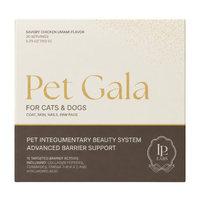
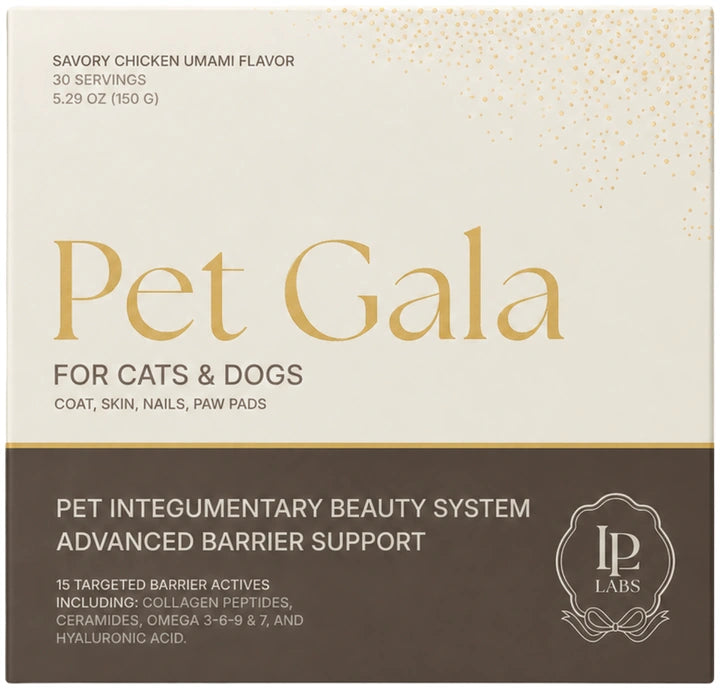
Pet Gala combines ceramides with fatty-acid blends, hyaluronic acid, protein ingredients and companion nutrients in one prepared skin-and-coat formula. Its panel declares 8 mg of ceramides per full 2.5 g sachet; follow the applicable serving guidance for your cat. Flakes alone cannot identify a ceramide deficiency, and persistent itch, lesions or grooming changes deserve an explanation alongside any nutritional routine.

What are ceramides, and what do they do for a cat’s skin?

Ceramides are fats that belong in the skin itself. In the outermost layer, flattened skin cells sit within layers of lipids, including ceramides, cholesterol and fatty acids. Together, the cells and lipids form a barrier that slows water escaping from the body and helps protect the tissue beneath. Ceramides help seal the spaces between those outer cells; they are much more than a cosmetic coating on fur. 1 5

This explains the interest in ceramides for cats: retaining moisture is part of normal skin function, and the condition of the skin matters beneath even a beautiful coat. It also explains why ceramides belong in a broader conversation about skin-barrier care.

Lipids are one part of that barrier. Skin cells also need organized proteins and connections to neighboring cells. Our guide to filaggrin, tight junctions and the feline skin barrier explains those complementary structures.

Woman smiling with a tabby cat on her shoulder while holding a Pet Gala box

How ceramides relate to skin moisture and water loss

Researchers can measure water vapor leaving the skin surface. This is called transepidermal water loss, or TEWL. It answers a particular question: how readily is water passing through the barrier under the conditions of the test? It is different from measuring how much water is present in the skin, and both can be useful when studying a moisturizer. 3

At home, a softer coat cannot tell you that TEWL has fallen. Nor can flakes identify which skin lipid has changed. In one canine feeding experiment, the researchers found more free ceramides in the outer skin without an improvement in measured water loss—a useful demonstration that composition and function are related but separate measurements. 5

The TEWL guide for cats goes further into the measurement. For everyday care, photographs and notes can describe the skin’s appearance; they cannot replace that measurement or diagnose a ceramide shortage.

Woman kissing a fluffy gray cat while holding an orange tabby and a Pet Gala box

Topical ceramides and oral ceramides serve different routines

Topical products go onto the skin. A veterinarian may select a ceramide-containing wash or leave-on product as part of a skin-care plan. The formulation, application site and instructions matter, especially for an animal that grooms itself. 1

Oral products go into the diet. A ceramide-containing powder or tablet must pass through digestion and absorption. Its proposed nutritional role therefore needs oral research; the result from a cream cannot be used as proof that a food supplement will have the same effect.

This is a practical choice as well as a scientific one. A cat that dislikes being handled may make repeated skin application difficult. Another may accept prescribed topical care but reject anything new in its dinner. Discuss those realities when choosing a routine. A cat-friendly format is useful only if it is appropriate for the job and can actually be used as directed.

Woman petting a silver tabby on a kitchen counter beside an open Pet Gala box

What research on oral ceramides has found

Dietary ceramides have produced a measurable barrier result in an animal experiment. In a study of hairless mice, researchers compared a free-ceramide preparation made from soy-sauce lees with maize-derived glucosylceramide, a related lipid with a sugar attached. Feeding these preparations reduced water loss through the skin. This provides a concrete reason to investigate oral ceramide nutrition. 2

The finding is promising because it concerns an ingredient eaten in the diet and a measured skin-barrier outcome. It does not depend solely on the observation that ceramides occur naturally in skin.

The experiment was in mice, however. It does not establish the same benefit in cats, a feline daily dose or a result for Pet Gala. The ceramide materials also matter: an ingredient listed simply as “ceramides” should not be assumed to be identical to either preparation in that experiment. These distinctions help you judge an oral product without dismissing the underlying research.

Woman holding a fluffy white cat and a Pet Gala box

What the dog moisturizer study adds

A small study followed 20 dogs with mild to moderate atopic dermatitis while they received a ceramide-based moisturizer daily for four weeks, along with weekly hypoallergenic shampooing. Skin hydration, water loss and clinical scores improved during the study. 3

That is useful topical evidence, with two qualifications that change how it should be read. There was no untreated comparison group, and the moisturizer contained several ingredients, including cholesterol and fatty acids. The results therefore belong to that care regimen; they do not isolate ceramide as the sole cause of improvement.

For a cat owner, the study helps explain why veterinary dermatology pays attention to barrier lipids. It does not validate giving an oral supplement to a cat or applying the study cream at home. The separate guide to ceramides for dogs covers the canine evidence and care decisions in their own context.

Ceramides help seal the spaces between cells in the outer skin layer, limiting water loss. They are part of the barrier that keeps skin hydrated and protected.

What has actually been studied in cats?

There is direct feline evidence that diet can contribute to the management of allergic skin disease. In a six-month randomized, blinded trial, cats with feline atopic skin syndrome received either a test food enriched with fatty acids, antioxidants and turmeric or a control food, alongside their medical care. Twenty-five cats were included in the analysis. 4

The test group had a lower medication score than the control group at six months. Its lesion score was lower at three months, but not at six months. Owners’ itch scores improved within the test group, although the difference between diets was not statistically significant at either follow-up. The study was small, had missing follow-up data and was funded by the food manufacturer.

This is encouraging evidence for nutrition as part of veterinary care. It tested a complete food, however, not isolated ceramides or Pet Gala. The research reviewed here did not establish an oral ceramide treatment benefit or dose for pet cats.

Two long-haired cats looking toward a Pet Gala box held above a food bowl

Why fatty acids belong in the ceramide conversation

The skin’s lipids respond to more than the amount of ceramide printed on a supplement label. Fatty-acid nutrition can change the lipid material found in skin.

In a 12-week feeding study involving ten healthy Labrador retrievers, a diet richer in linoleic acid increased free ceramides in the outer skin by about 60%. Measured water loss did not improve. That result shows a nutritional influence on lipid composition without turning it into a claim that the dogs’ skin barrier performed better. 5

For formulation, the useful idea is that barrier nutrition can involve both ceramides and fatty acids. For product comparison, the useful question is what the whole formula provides. A high number beside a single ingredient cannot tell you everything about the product’s nutritional purpose, and the presence of several ingredients does not by itself prove that their combined effect is greater.

Hand gently petting an orange-and-white cat beside a Pet Gala box and a food bowl

Do dandruff or a rough coat mean low ceramides?

They do not establish that diagnosis. A cat may have flakes because of a skin disorder or because it is no longer grooming an area well. Allergies and parasites also belong among the possibilities. 6

Skip the idea that fine powder on a brush means one cause while larger flakes mean another. Instead, notice details you can reliably describe: where the flakes collect, whether there are bald patches or redness, and whether your cat is licking, scratching or resisting touch. A photograph of the same area in similar lighting can help you show a change clearly.

If flakes are the main concern, start with the guide to flaky skin in cats. For questions about dry-looking skin, keep the appearance separate from a diagnosis of dehydration or missing ceramides. The ingredient can have a meaningful nutritional role without explaining every change in the coat.

Man sitting with two long-haired cats on a sofa beside a Pet Gala box and a food bowl

Grooming and bathing still matter

An older or less mobile cat may struggle to reach the back and hindquarters. Arthritis and excess body weight can make normal self-grooming difficult, leaving loose hair and flakes behind. A supplement does not solve that access problem. 6

Gentle brushing, when your cat is comfortable with it, can help remove loose material. Stop if an area seems sore rather than trying to brush it into looking healthy. The healthy cat coat guide can help you organize ordinary coat care; persistent overgrooming deserves a different discussion.

Bathing should fit the individual cat. Most healthy adult cats rarely need it, while a veterinarian may prescribe repeated therapeutic bathing for a skin condition. Do not stop an advised wash routine simply because you have read that bathing removes lipids. 6 The aim of gentle skin care is care your cat needs and tolerates.

Why Pet Gala combines ceramides with a broader formula

Pet Gala™ is La Petite Labs’ daily skin, coat, nail and barrier-support nutrition system for dogs and cats. Its purpose brings several related nutritional roles together: ceramides and fatty-acid ingredients for the lipid side of skin nutrition, hyaluronic acid as a hydration-related molecule, and protein ingredients within the wider skin-and-coat formula. 8

Those roles are connected, but they are not interchangeable. Ceramides help organize the outer moisture barrier. Hyaluronic acid helps hold water in the material around tissue cells. Protein is part of the nutritional supply needed to maintain skin and hair. 1 6 7

Pet Gala gives you these ingredient groups in one prepared powder. That is a concrete benefit for an owner considering separate oils, a ceramide product and additional skin supplements: the formula is already assembled, and the full panel can be checked before anything is added to a meal. It is a nutritional design, with a purpose that extends beyond a single ingredient.

Dietary ceramides reduced water loss through the skin in a study of hairless mice. That finding gives oral ceramide nutrition a concrete research basis; the same benefit has not been established in cats.

Close-up of long white cat fur beside a veterinary vignette about visible skin and coat changes

DVM Voice: Clinical Vignette of When Skin Changes Point Deeper Than the Surface

Case provided by Sarah Calvin, DVM

Maverick, a 4-year-old Siamese cat, was brought in for hair loss across his lower abdomen and red, flaky skin lesions that had progressed over the previous month. His owners were unsure whether he was itchy or overgrooming.

Examination showed broken hairs, abdominal alopecia, and lesions consistent with bacterial skin infection. Further testing ruled out fleas, FeLV/FIV, and common fungal causes. Because his grooming pattern suggested deeper discomfort, his veterinarian continued the workup.

Radiographs and urinalysis revealed bladder stones, crystalluria, and blood in the urine. Maverick’s overgrooming was linked to urinary pain — a case where skin changes were secondary to an internal problem.

His care required a staged plan: stabilizing the skin infection, surgically removing the bladder stones, managing pain, transitioning to a therapeutic diet, and supporting skin-barrier recovery with appropriate nutrition and fish oil.

Hair regrowth began by 8 weeks. By 6 months, his coat had fully recovered, with no recurrence after the urinary issue was resolved.

Clinical takeaway: Maverick’s case shows why feline coat loss and overgrooming deserve careful veterinary investigation. Skin and coat health can reflect pain, stress, nutrition, infection, barrier weakness, or internal disease — not just surface-level grooming behavior.

Single-case vignette. Not generalizable. Veterinary diagnosis and oversight are essential for overgrooming, hair loss, skin lesions, urinary signs, pain, or suspected infection.

Explore Pet Gala Research →
Long-haired tabby being combed beside a Pet Gala box and a food bowl

The complete Pet Gala ingredient picture

The declared ingredients are easier to understand when you can see the whole formula. Each amount below is for a full 2.5 g sachet. 8

Ceramides and fatty-acid ingredients: ceramides 8 mg, omega 3-6-9 blend 150 mg and omega 7 50 mg.

Hydration-related ingredient: hyaluronic acid 50 mg. HA forms hydrated structures in tissues; that normal role explains its place in the formulation. It does not mean this oral amount has been shown to moisturize feline skin. 7

Protein ingredients: marine collagen peptides 500 mg, hydrolyzed whey 250 mg, beef gelatin 200 mg and bone broth 100 mg. These belong to the formula’s protein-nutrition side; swallowed collagen is not a direct delivery of intact new skin.

Other declared ingredients: MSM 100 mg, L-carnitine 20 mg, silica 10 mg, zinc 1.5 mg and biotin 50 mcg.

The full Pet Gala ingredient guide lets you inspect the formulation together. Its breadth is the reason to consider it as a daily skin-and-coat system. The studies discussed above were not trials of this finished blend.

Orange-and-white cat eating from a bowl beside a Pet Gala box

What does 8 mg of ceramides mean for a cat?

It tells you the amount declared in one full Pet Gala sachet. It does not establish that every cat should receive a full sachet, or that 8 mg is a clinically validated feline ceramide dose. Those are different questions. 8

Use the applicable serving directions on the current product page and packaging. If you are comparing products, check whether the stated amount refers to a capsule, a scoop, a full sachet or the recommended daily portion. Otherwise, two similar-looking numbers may describe different servings.

Also distinguish an ingredient name from its exact material. The Pet Gala panel declares ceramides; it does not establish the same source or form used in the mouse feeding study. Avoid selecting a cat dose by scaling a human product or an experimental mouse diet. The useful purchase information is the actual formulation and how that product is intended to be served.

Brown-and-white tabby licking its nose beside a Pet Gala box and a food bowl

How it fits with complete food and allergy diets

A complete food appropriate for your cat’s life stage remains the nutritional foundation. Skin and hair need an adequate overall supply of protein, fat, vitamins and minerals; a supplement adds to that diet. 6

Food allergy investigations require special attention to everything eaten. Pet Gala contains marine collagen, whey, beef gelatin and bone broth, so it introduces several ingredients beyond an elimination diet. Let the veterinarian overseeing the trial decide whether it belongs in the plan. “Hydrolyzed whey” on a supplement panel does not make the whole product equivalent to a prescribed hydrolyzed diet. 8

The same practical approach applies when a cat is already using a therapeutic food or several supplements: review the complete labels together. Bring the product names and portions, not just “skin powder” or “fish oil.” If allergy is the main concern, our guide to cat skin allergies provides the broader context for that conversation.

Can you use a human ceramide cream on a cat?

Choose the whole product for the cat, not just the familiar word on the front. A human moisturizer may contain ingredients and fragrances that have not been selected for feline use, and a cat can ingest residue while grooming. The original dog cream study is not a recommendation to use a human moisturizer on your pet.

For topical care, have your veterinarian identify a suitable feline product and explain where to apply it, how much to use and how to manage licking. Keep it away from the eyes and follow its directions. 1

Avoid mixing multiple topicals, because it becomes unclear what caused a reaction or what helped. Keep the container or photograph the ingredient list so you can identify the product if irritation occurs. An oral supplement and a topical treatment may have different places in a care plan; one should not silently replace the other.

Making a food-mixed routine work for a picky cat

A well-chosen formula still has to fit an accepted meal. Before you open the sachet, confirm the applicable portion and check whether your cat’s current diet permits additions. Mix as directed into a familiar food rather than changing the food and the supplement at the same time.

For example, if your cat already refuses a fish-oil topping, a powder offers a different format to consider. It does not guarantee acceptance: smell, texture and individual preference still matter. Pet Gala combines the ingredient groups in one product, so there is no need to make the meal carry several separate new supplements. 8

Watch whether the meal is actually eaten. Food left in the bowl means an uncertain amount of supplement was consumed, so adding extra to the next meal is not a reliable correction. If your cat rejects the mixture, offer its usual food and discuss another approach. Protecting normal eating matters more than finishing a sachet.

Long-haired tabby beside a Pet Gala box held by a person wearing blue scrubs and a stethoscope

When should you expect a difference?

There is no established feline oral-ceramide timeline that justifies promising smoother skin or easier grooming after four to six weeks. Study durations describe the studies: four weeks of topical treatment in dogs, for example, or six months of a complete-diet trial in cats. They are not a countdown for a different product. 3 4

Make any review useful by deciding what you are trying to assess. If the concern is visible flakes, take a clear starting photograph. If it is licking, describe the affected area and whether the behavior interrupts rest or play. Record the product, actual portion and start date alongside any treatment changes.

Choose a review point with your veterinarian that fits the original problem. Keep following prescribed care, and contact the clinic sooner if the skin worsens. A coat looking better is welcome; it does not, by itself, show that ceramides caused the change.

Couple cuddling a silver tabby cat

When skin symptoms need a closer look

Persistent itching, new bald areas, broken skin or recurrent odor call for veterinary assessment rather than a longer supplement experiment. If a cat is repeatedly working at one area, the useful question is what is driving the behavior. Parasites, allergy and other skin disorders may require different care. 6

Bring photographs and the labels of foods, supplements and topical products. Details about parasite prevention are relevant too. The skin microbiome is another part of the wider skin environment, but a change in smell does not identify a missing nutrient or tell you which organism is involved.

If a new topical causes irritation, stop using it and contact the veterinarian. 1 Unexpected vomiting, marked distress or refusal to eat after a new product also deserves prompt advice. Keep the packaging available so the clinic can assess the entire product, route and amount.

Choosing ceramides as part of a complete skin-and-coat routine

Ceramides have a clear reason to belong in skin care: they are part of the barrier that retains moisture. Topical veterinary products use that idea at the skin surface; oral ceramide research explores it through nutrition. Understanding the route lets you choose for the actual job.

For daily nutritional support, Pet Gala brings ceramides, fatty acids, hyaluronic acid and protein ingredients together in one prepared skin-and-coat formula. You can add the applicable portion to food without building a routine from separate supplements. The full panel makes that choice concrete: you can see both the ingredient that first caught your attention and the wider nutritional system around it. 8

Explore Pet Gala for a daily formula that brings barrier lipids, hydration-related ingredients and protein nutrition together. Check its full ingredients against your cat’s existing food and care plan, then follow the current serving guidance. Ceramides are the starting point of the question; the whole formula is what you are choosing.

Pet Gala brings ceramides, fatty acids, hyaluronic acid and protein ingredients together in one daily skin-and-coat formula. You can add the prepared blend to food without building a routine from separate supplements.

Educational content only. This material is not a substitute for veterinary advice. Always consult your veterinarian about your cat’s specific needs. These statements have not been evaluated by the Food and Drug Administration. Products mentioned are not intended to diagnose, treat, cure, or prevent any disease.

Glossary

Ceramides: fats found in the outer skin barrier, where they work with other lipids between skin cells.

Stratum corneum: the outermost skin layer, made of flattened cells and surrounding lipids.

TEWL: transepidermal water loss; water vapor passing outward through the skin.

Topical: applied to the skin surface.

Glucosylceramide: a ceramide with a glucose molecule attached; one form studied in dietary research.

FASS: feline atopic skin syndrome, an allergic skin-disease category.

Hyaluronic acid: also called hyaluronan or HA, a molecule that forms hydrated structures around tissue cells.

Related Reading

References

Numbered references identify the sources used for specific claims. Read the study design, species and evidence boundaries alongside each finding.

  1. Alison Hamilton, DVM. Ceramides. 2024Evidence boundary: Veterinary guidance on topical ceramide products, including feline application and irritation precautions.↩ 1 · ↩ 2 · ↩ 3 · ↩ 4 · ↩ 5 · ↩ 6 · ↩ 7 · ↩ 8 · ↩ 9
  2. Ohta et al. Dietary Ceramide Prepared from Soy Sauce Lees Improves Skin Barrier Function in Hairless Mice. 2021· DOI 10.5650/jos.ess21128Evidence boundary: Dietary ceramide experiment in hairless mice; not a feline trial or Pet Gala study.↩
  3. Jung et al. Clinical use of a ceramide-based moisturizer for treating dogs with atopic dermatitis. 2013· DOI 10.4142/jvs.2013.14.2.199Evidence boundary: Small uncontrolled canine study of a multiingredient topical regimen, not oral ceramide supplementation.↩ 1 · ↩ 2 · ↩ 3 · ↩ 4 · ↩ 5
  4. Watson et al. A Randomised-Controlled Study Demonstrates That Diet Can Contribute to the Clinical Management of Feline Atopic Skin Syndrome (FASS). 2025· DOI 10.3390/ani15101429Evidence boundary: Feline complete-diet trial alongside medical care; not an isolated ceramide or Pet Gala trial.↩ 1 · ↩ 2 · ↩ 3 · ↩ 4
  5. Popa et al. Linoleate-enriched diet increases both linoleic acid esterified to omega hydroxy very long chain fatty acids and free ceramides of canine stratum corneum without effect on protein-bound ceramides and skin barrier function. 2018· DOI 10.1007/s00403-018-1845-5Evidence boundary: Canine fatty-acid feeding study showing altered skin lipids without improved measured water loss.↩ 1 · ↩ 2 · ↩ 3 · ↩ 4 · ↩ 5
  6. Malcolm Weir, Ryan Llera, Tammy Hunter and Cheryl Yuill. Coat and Skin Appearance in the Healthy Cat. 2026Evidence boundary: Veterinary guidance on feline nutrition, grooming, bathing and skin changes.↩ 1 · ↩ 2 · ↩ 3 · ↩ 4 · ↩ 5 · ↩ 6 · ↩ 7 · ↩ 8
  7. Melanie Simpson, Liliana Schaefer, Vincent Hascall and Jeffrey D. Esko. Hyaluronan. Essentials of Glycobiology, 4th edition, chapter 16. 2022· DOI 10.1101/glycobiology.4e.16Evidence boundary: Normal hyaluronan structure and tissue biology; not oral feline supplement efficacy.↩ 1 · ↩ 2
  8. La Petite Labs. Pet Gala: ingredients and supplement facts. 2026Evidence boundary: Manufacturer-declared composition per full 2.5 g sachet; serving directions and formula identity are separate from clinical efficacy.↩ 1 · ↩ 2 · ↩ 3 · ↩ 4 · ↩ 5 · ↩ 6 · ↩ 7

FAQ

What do ceramides do for a cat’s skin?

Ceramides are normal skin fats that work with other lipids between the cells of the outer barrier. They help limit water loss and protect the tissue beneath. That role explains their use in skin-care products and the interest in oral nutrition. It does not mean a cat with dandruff has a ceramide deficiency. 1 5

Can research on ceramides in dogs be applied to cats?

It can explain why an approach is worth studying, but it cannot establish the same result in cats. The small dog moisturizer study used a multiingredient topical regimen; it did not test an oral supplement. The feline trial discussed here tested a complete diet alongside medical care, not ceramides alone or Pet Gala. 3 4

How long do oral ceramides take to work in cats?

A reliable feline response time has not been established by the research reviewed here. Four-week dog topical results and a six-month feline food trial are not timelines for an oral ceramide supplement. Decide what to monitor and when to review it with your veterinarian; do not wait through worsening skin symptoms to complete an arbitrary trial. 3 4

Can Pet Gala be used with an allergy or elimination diet?

Have the veterinarian directing the diet approve any addition. Pet Gala contains marine collagen peptides, hydrolyzed whey, beef gelatin and bone broth, as well as its other ingredients. Those additions can conflict with a controlled food trial. Bring the full panel and intended portion, and keep following the prescribed diet and medication plan. 8

What mistakes should I avoid with ceramide products?

Do not diagnose a deficiency from flake size, use a human cream simply because it contains ceramides, or substitute topical research for proof about an oral powder. Avoid starting several new products at once. Continue veterinarian-directed bathing where prescribed; the appropriate routine depends on the cat and the skin condition. 1 6

Can ceramide products cause side effects in cats?

Suitability depends on the whole formulation and route. A topical product can irritate skin, and it should be used with the advised licking precautions. Stop a product and seek veterinary advice if a reaction occurs. For a new oral blend, report unexpected digestive changes or food refusal rather than assuming the named ceramide ingredient alone caused them. 1

When should I contact a veterinarian about flakes or irritated skin?

Arrange assessment for persistent itch, bald areas, broken skin, recurrent odor or signs that touch and grooming are uncomfortable. Contact the clinic promptly for marked distress, vomiting or refusal to eat after a new product. Photographs and the actual product packaging help the veterinarian understand what changed. 6

What should I track if I introduce a skin-and-coat supplement?

Record the product, portion actually eaten and start date. Use similar photographs to compare a specific area, and note licking, scratching, meal acceptance and any other treatment changes. Those observations can guide a review; they do not measure skin ceramides or TEWL. Choose a review point that fits the original concern rather than assuming a supplement must produce a visible result within a fixed number of weeks.

Orange tabby cat stretching on a green rug

Discover LPL-01: How This Fits Into a Complete Feline Integumentary Support System

Skin, coat, and nails in cats are not surface traits. They reflect deeper biological systems—barrier integrity, hydration dynamics, lipid balance, and structural protein turnover—working in coordination.

When these systems drift, the signs are subtle but telling: reduced coat softness, increased shedding, dryness, brittle claws, changes in grooming behavior.

This article explores one piece of that system. If you want to understand how true coat quality and skin resilience are built in cats—and what actually drives visible improvement—you need to zoom out.

Start with the underlying science:

Keep exploring

What would you like to understand next?

Search practical guides about skin, coat, barrier health, ingredients, and daily care for cats.