Vitamins for Old Dogs

Identify Common Senior Deficiencies and Target Fatigue, Stiffness, and Slow Recovery

Essential Summary

Why are vitamins for old dogs important?

Older dogs don’t always need more vitamins; they need steadier support. Appetite changes, digestion shifts, and chronic conditions can alter vitamin status, making targeted choices safer than guesswork. The best approach is conservative dosing, minimal overlap, and a product that supports whole-body resilience rather than chasing a single nutrient.

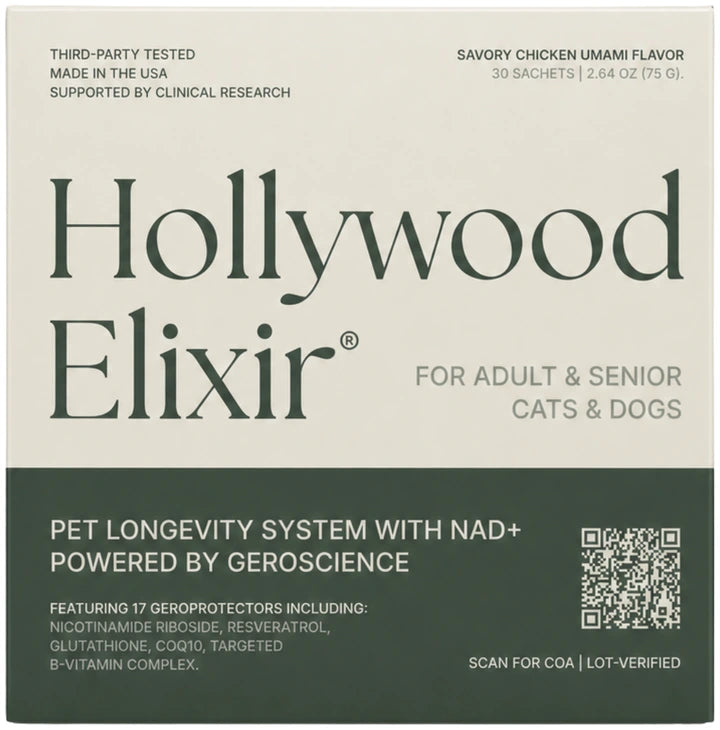
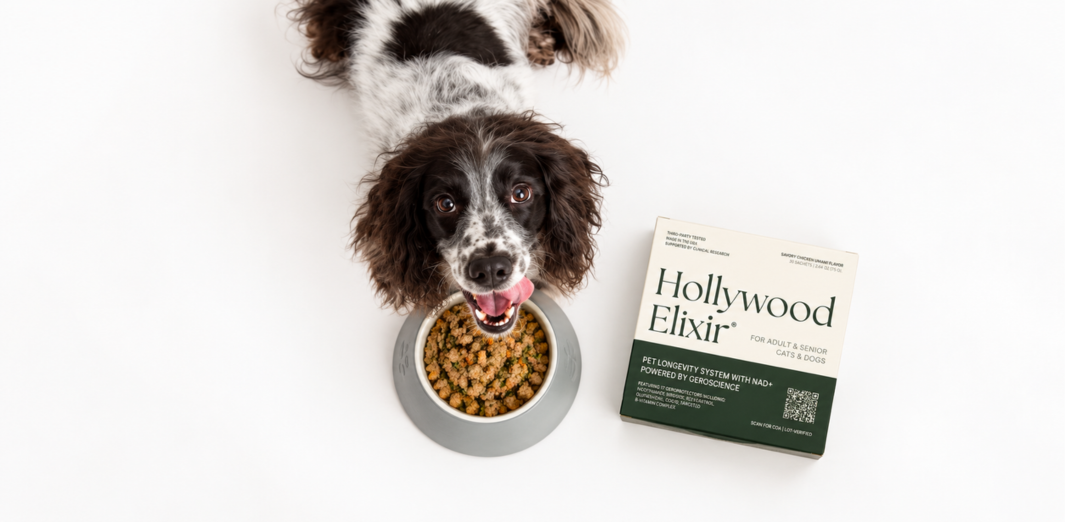
Hollywood Elixir™ is designed for system-level aging support—helping reinforce the everyday metabolic network that underpins energy, recovery, and vitality—without positioning itself as a high-dose vitamin replacement. It fits well alongside a complete diet by focusing on broader resilience, which is often what discerning owners want when choosing senior dog supplements.

Vitamins for old dogs come up most often when you notice a change you can’t quite explain. Maybe your dog is leaving food behind, losing muscle over the hips, having softer stools, or seeming slower on walks. Some of these shifts can reflect a vitamin gap or a diet mismatch—but in seniors, they can also be early signs of medical problems that won’t improve with nutrients alone.

Start by ruling out common medical causes with your veterinarian if symptoms are new, persistent, or worsening: dental pain, kidney or liver disease, diabetes, thyroid disease, parasites, arthritis pain, and medication side effects can all look like “aging.” Watch for red flags that should not wait: rapid or ongoing weight loss, repeated vomiting, black/tarry stool, blood in vomit or stool, collapse, labored breathing, severe lethargy, or refusal to eat for a full day.

Before you add anything, track a simple 7-day log: morning and evening appetite (percent eaten), water intake changes, stool consistency and frequency, vomiting episodes, energy on walks, stiffness getting up, and weekly weight. This symptom-first snapshot helps you and your vet decide whether the next step is labs, a food adjustment, or a targeted vitamin plan.

By La Petite Labs Editorial, ~15 min read

Featured Product:

  • Aging changes a dog’s margin for error: appetite, absorption, and recovery can become less predictable.
  • Separate deficiency correction from general support; true deficiencies deserve veterinary testing and targeted plans.
  • Digestive and chronic conditions can alter vitamin levels, so “more” is not automatically safer.
  • B vitamins matter for steadiness; older dogs can be susceptible to cobalamin and folate deficiency (Stanley E, 2019).
  • Be cautious with fat-soluble vitamins; vitamin D supports mineral balance but excess can be toxic.
  • Choose fewer, better products: clear labeling, conservative formulas, and minimal ingredient overlap.
  • A science-minded reason to supplement remains: system-level support can help maintain resilience even on a complete diet.

Decision Tree: When to Think 'Vitamins' vs 'Vet' vs 'Food Change'

Use this quick triage to decide what to do next.

1) Appetite or weight loss
- Vet-first if: weight loss is noticeable over 2–4 weeks, your dog skips meals for 24 hours, or there’s increased thirst/urination.
- Food change first if: appetite is picky but stable weight, and treats/table scraps have crept up.
- Consider vitamins only after: dental pain and systemic illness are ruled out and intake is consistent.

2) GI signs (vomiting/diarrhea)
- Vet-first if: vomiting lasts >24 hours, diarrhea lasts >48 hours, there’s blood/black stool, dehydration, or marked lethargy.
- Food change first if: mild soft stool without other symptoms and a recent diet/treat change.
- Consider vitamins only after: stool is stable and you’re not “stacking” multiple products to chase GI symptoms.

3) Coat/skin changes
- Vet-first if: intense itching, hair loss patches, recurrent ear/skin infections, or sudden dandruff with weight loss.
- Food change first if: dryness started after a diet switch.
- Consider vitamins if: diet is complete, skin exam is unremarkable, and changes are gradual.

4) Energy, pain, or mobility changes
- Vet-first if: limping, yelping, reluctance to climb stairs, or trouble rising (pain needs treatment).
- Food change/vitamins only after: pain plan is in place and activity is predictable.

5) Cognition/behavior changes
- Vet-first if: sudden disorientation, seizures, head tilt, or rapid decline.
- Consider vitamins only after: medical causes and medication effects are reviewed.

Scientific mitochondria render emphasizing oxidative balance supported by senior dog vitamins.

What to Measure Before Adding Vitamins (So You Don’t Guess)

If you add vitamins without baseline data, it’s hard to know what changed—or why. Gather these basics first:

- Body condition score (BCS) and weight: record weight weekly and note BCS (too thin, ideal, or overweight). Unplanned weight loss matters even when appetite seems “okay.”
- Diet audit: write down the exact food, flavor, and daily amount (measured), plus toppers. Note any recent formula changes.
- Treat math: keep treats to <10% of daily calories. Higher treat intake can dilute nutrient balance and confuse appetite and stool patterns.
- Calorie intake estimate: track how much is actually eaten (not just offered). Seniors often graze, and under-eating can mimic “deficiency.”
- Stool quality notes: log frequency and consistency (e.g., firm/formed vs soft vs watery), mucus, straining, and any accidents.
- Medication list: include NSAIDs, anticonvulsants, and steroids, plus preventives and any recent antibiotics—these can affect appetite, thirst, stool, and nutrient needs.

Then discuss with your vet whether labs are appropriate before supplementing—commonly a CBC/chemistry panel, urinalysis (especially if thirst/urination increased), thyroid testing when indicated, and targeted tests based on symptoms. Bringing your 7-day log helps your vet decide whether vitamins are reasonable, or whether the priority is diagnosing a medical cause or adjusting the diet first.

DNA strand illustration representing antioxidant support pathways in best supplements for senior dogs.

B Vitamins: Steady Energy, Appetite Support, and Healthy Blood

B vitamins are often discussed in the context of energy and appetite, but their real value is steadiness: they help the body run routine processes without friction. In older dogs, cobalamin (B12) and folate deficiencies can occur and may contribute to anemia, underscoring their importance (Stanley E, 2019).

If your dog is losing weight, seems less interested in food, or has chronic GI signs, your veterinarian may recommend testing rather than guessing. A supportive supplement can still be useful, but it shouldn’t mask a problem that needs diagnosis. Think of B vitamins as part of a broader “capacity” strategy: supporting the systems that keep an older dog engaged with daily life.

Protein ribbon image emphasizing scientific formulation standards in best supplements for aging dogs.

Fat-soluble Vitamins: Benefits with Higher Stakes for Overlap

Fat-soluble vitamins (A, D, E, K) are where caution and sophistication matter most. Because they can be stored in the body, stacking multiple products increases the chance of excess—especially when a complete diet is already fortified. In dogs with malabsorption conditions, fat-soluble vitamin levels can also be abnormal, which is why monitoring may be recommended in specific diseases (Barko, 2018).

For most healthy seniors, the goal is not high-dose fat-soluble vitamins; it’s balanced support. If you’re comparing senior dog supplements, favor formulas that respect the difference between “support” and “pharmacologic dosing.” A restrained approach is often the safest way to keep benefits while minimizing avoidable risk.

Pug close-up emphasizing comfort and connection supported by best supplements for senior dogs.

Minerals and Multivitamins: the Hidden Source of Imbalance
Minerals are not vitamins, but they’re often bundled into the same products—and they can be the hidden reason a supplement doesn’t suit an older dog. Calcium and phosphorus balance, for example, is closely tied to vitamin D’s role in the body (RVA, 2020). That matters because seniors are more likely to have conditions that make mineral balance delicate.

If your dog eats a veterinary therapeutic diet, be especially careful with “all-in-one” multivitamins that add extra minerals. The best supplements for aging dogs are compatible with the diet you’re already relying on. When you want system-level support without disturbing carefully tuned nutrition, look for products that emphasize metabolic resilience rather than heavy mineral loading.

Hollywood Elixir™ is amazing and makes my 13 y/o young again!

— Jessie

We go on runs. Lately he's been keeping up with no problem!

— Cami

“In senior dogs, the smartest supplement plan is usually the simplest one.”

What the Best Supplements for Senior Dogs Have in Common

So what counts as the best supplements for senior dogs in real life? Usually, the ones that solve a specific friction point: a picky eater who won’t finish meals, a dog whose coat has dulled, or a senior who seems to tire faster on familiar walks. The “best” product is the one you can use consistently, without upsetting digestion or creating nutrient overlap.

A senior dog powder supplement can be a practical choice because it’s easy to adjust and easy to mix. If you’re already using joint support or omega-3s, choose a multivitamin that doesn’t duplicate those ingredients aggressively. The goal is a coherent stack: fewer products, clearer purpose, and a routine your dog accepts without drama.

Dog headshot symbolizing resilience and calm energy supported by best multivitamin for senior dogs.

Do You Need a Senior Dog Multivitamin on Complete Diets

It’s tempting to treat a multivitamin as nutritional insurance. Sometimes that’s reasonable—especially for seniors who eat less, skip meals, or rotate foods. But if your dog eats a complete and balanced diet and is thriving, adding a senior dog multivitamin may not change much, and it can complicate things if you later need to interpret lab work or symptoms.

A more modern way to think about supplements for old dogs is to support the aging system rather than chase a long ingredient list. That means prioritizing formulas designed around resilience—cellular upkeep, energy support, and recovery—while keeping vitamin doses conservative. This approach stays relevant whether or not you ever identify a single “gap.”

Canine profile image reflecting strength and steadiness supported by best supplements for senior dogs.

Safety First: Avoiding Excess and Protecting Sensitive Seniors

Safety is not a footnote for senior dog vitamins; it’s the main event. Older dogs are more likely to be on medications, have slower recovery from stomach upset, or live with early organ changes that haven’t announced themselves yet. Vitamin D is a clear example: it’s essential for mineral metabolism, but excessive amounts can cause toxicity in dogs (Weidner N, 2017).

To reduce risk, avoid stacking multiple multivitamins, and be cautious with products that promise dramatic results. If your dog has kidney disease, GI disease, or EPI, ask your veterinarian whether vitamin levels should be monitored and whether a targeted plan is safer than a generic formula (Galler A, 2012).

Product info graphic highlighting testing and standards behind supplements for aging dogs.

Medication and Supplement Interactions: Keeping the Routine Coherent

Interactions are easy to overlook because supplements feel “food-like.” In reality, they can change appetite, stool quality, and how reliably a dog takes medications. If your dog is on thyroid medication, heart meds, seizure control, or long-term anti-inflammatories, introduce new supplements one at a time and keep your veterinarian informed.

Also consider the interaction between products, not just drugs. Many “skin and coat” chews already contain vitamins A and D; adding a separate senior dog multivitamin can quietly stack fat-soluble vitamins. A simpler, system-focused formula can reduce overlap while still supporting the broader aging picture.

Kidney Disease: When Supplement Choices Should Be Extra Conservative

If your dog has kidney disease, the conversation about supplements for aging dogs becomes more specific. Some dogs with chronic kidney disease show altered blood vitamin levels, and monitoring can be part of thoughtful management (Galler A, 2012). The key is restraint: kidneys change how the body handles many compounds, so “more” is not automatically better.

Ask your veterinarian which nutrients are worth checking, and whether a senior dog multivitamin is appropriate or redundant with a therapeutic diet. Keep a simple list of everything your dog gets—food, treats, chews, powders—so your vet can spot overlaps. When you choose a product, prioritize conservative formulas and system-level support that complements medical care rather than competing with it.

“A complete diet can meet requirements; aging is about maintaining capacity.”

Clinical image tied to evidence-based wellness positioning for vitamins for senior dogs.

Digestive Conditions That Can Quietly Shift Vitamin Status

Digestive disorders are one of the most common reasons older dogs drift into “subclinical” nutrient problems—nothing dramatic, just less bounce, less appetite, slower recovery. In chronic enteropathy, dogs may show abnormal serum levels of fat-soluble vitamins, and monitoring can matter for overall nutritional status (Serafini F, 2024).

If stools are persistently soft, weight is trending down, or your dog seems hungry but can’t keep condition, don’t guess with a shelf full of senior dog vitamins. Start with a veterinary workup, then build a plan that may include targeted nutrients, diet adjustments, and a carefully chosen supplement that supports the whole aging system—energy, cellular maintenance, and day-to-day vitality—without trying to replace medical care.

Shop Now
Hollywood Elixir with foods symbolizing nutrient synergy aligned with best supplements for aging dogs.

EPI and Absorption: Why Enzymes Often Come Before Vitamins

Exocrine pancreatic insufficiency (EPI) is a reminder that vitamins are not only about what’s in the bowl; they’re also about what gets absorbed. Dogs with EPI can have altered serum concentrations of lipid-soluble vitamins due to malabsorption, and monitoring helps prevent deficiencies (Barko, 2018).

In these cases, enzyme therapy is foundational, because improving digestion can improve absorption of lipid-soluble vitamins (Barko, 2018). A supplement can still have a role, but it should be chosen to fit the medical plan and the dog’s tolerance. For many families, the most sustainable approach is a simple routine: enzymes as prescribed, diet consistency, and a supportive formula that focuses on aging resilience rather than high-dose single nutrients.

Shop Now
Lifestyle image showing supplement use in real homes supported by senior dog powder supplement.

Vitamin D in Seniors: Essential Role, Real Toxicity Risk

Vitamin D deserves special respect in senior dog supplements. It plays a central role in calcium and phosphorus balance, supporting bone health and other body functions (Weidner N, 2017). At the same time, excessive vitamin D can be toxic in dogs, which is why dosing should be conservative and veterinarian-guided—especially if your dog eats a complete commercial diet that already contains vitamin D (Weidner N, 2017).

Rather than chasing high numbers, look for a formulation philosophy that avoids “megadosing” and instead supports the broader aging network—energy production, cellular upkeep, and recovery. That approach stays relevant even when a diet is nutritionally complete, because aging is not only about meeting minimums; it’s about maintaining capacity over time.

Shop Now

Quality Signals That Separate Trustworthy Products from Noise

Quality matters more than novelty. The best supplements for senior dogs tend to be boring in the right ways: clear labeling, consistent manufacturing, and realistic promises. If a brand won’t tell you what’s in the scoop, where it’s made, or how it’s tested, it’s not a good match for an older dog whose tolerance may be narrower than it used to be.

Look for practical signals: a lot number, an expiration date, and a customer service channel that can answer questions about allergens and sourcing. Avoid stacking multiple products that repeat the same vitamins; this is a common way well-meaning owners accidentally overdo fat-soluble nutrients. A single, thoughtfully designed senior dog powder supplement can be easier to manage than a cabinet full of chews.

Powders, Chews, and Capsules: Making Supplements Easy to Take

Administration is where good intentions either become a calm habit or a daily negotiation. Powders can work well for seniors because you can mix them into wet food, warm water, or a small “topper” portion without asking your dog to chew a large tablet. If appetite is variable, give supplements with the meal your dog reliably finishes.

Start low and go slow, especially if your dog has a sensitive stomach. Watch for subtle feedback: gassiness, stool changes, itchiness, or a sudden refusal of food. Those aren’t moral failures; they’re useful data. The best multivitamin for senior dogs is the one your dog can take consistently, without disrupting the routines that keep weight and hydration steady.

Side-by-side chart contrasting bioactives and fillers relative to best multivitamin for senior dogs.

What a Realistic Timeline Looks Like for Noticing Changes

When should you expect results? With supportive supplements for old dogs, the timeline is usually measured in weeks, not days. Some owners notice steadier appetite or a brighter demeanor first; others see changes in coat quality or willingness to move after a month or two. The absence of a dramatic “before and after” is not proof a product is useless—aging support is often about preserving function rather than creating a sudden transformation.

Choose one change at a time so you can interpret what’s happening. Keep notes on energy, sleep, stool quality, and mobility. If you’re also changing food, adding pain management, or adjusting exercise, it becomes impossible to know what helped. A calm, trackable approach is what makes senior dog supplements feel less like guesswork and more like stewardship.

Shop Now
Hollywood Elixir box in open packaging, showing premium presentation for senior dog powder supplement.

When a Vet Visit Matters More Than Another Supplement

There are moments when the right “vitamin conversation” is actually a vet visit. Sudden weight loss, persistent vomiting or diarrhea, fainting, new confusion, or a sharp drop in stamina should not be managed with a new jar of supplements. Older dogs can develop conditions that change vitamin handling and blood levels, and monitoring may be part of responsible care (Galler A, 2012).

Bring your supplement labels to the appointment. Ask whether any ingredients could interfere with medications, and whether bloodwork suggests a true deficiency versus a general need for supportive nutrition. The goal is a plan that respects both biology and daily life: safe, consistent, and tailored to what your dog is actually facing.

Shop Now

A Science-minded Reason to Choose System-level Aging Support

A science-minded owner doesn’t choose a supplement because they doubt food; they choose it because aging is a systems problem. Even when a diet meets standards, older dogs can have narrower reserves, shifting absorption, and changing needs that show up as “less spark” long before anything looks like illness. Some conditions can also alter vitamin status, which is why targeted monitoring sometimes matters (Serafini F, 2024).

The most sensible role for senior dog vitamins is to support the network—energy, cellular maintenance, and resilience—without pushing risky doses. That’s also why a product can stay relevant even if you’re not chasing a lab-defined deficiency: it’s about supporting the whole aging arc, not just topping off a single nutrient.

“Conservative dosing and minimal overlap matter most with fat-soluble vitamins.”

Educational content only. This material is not a substitute for veterinary advice. Always consult your veterinarian about your dog’s specific needs. These statements have not been evaluated by the Food and Drug Administration. Products mentioned are not intended to diagnose, treat, cure, or prevent any disease.

Glossary

  • Senior dog vitamins: Dog-specific vitamin formulas intended to support aging-related needs and routines.
  • Senior dog multivitamin: A broad supplement combining multiple vitamins (and sometimes minerals) in one product.
  • Fat-soluble vitamins: Vitamins A, D, E, and K, which can be stored in the body and may pose higher risk if overdosed.
  • Water-soluble vitamins: Vitamins like the B-complex and vitamin C that are not stored as extensively and are generally excreted more readily.
  • Cobalamin (Vitamin B12): A B vitamin involved in blood cell formation and GI health; low levels can be clinically significant.
  • Folate (Vitamin B9): A B vitamin important for cell division and blood health; sometimes assessed alongside B12.
  • Malabsorption: Reduced ability to absorb nutrients from food, which can contribute to vitamin abnormalities.
  • Chronic enteropathy: Long-standing intestinal disease that can affect digestion, absorption, and nutrient status.
  • Exocrine pancreatic insufficiency (EPI): A condition where the pancreas does not produce enough digestive enzymes, impairing nutrient absorption.
  • Therapeutic diet: A veterinary-formulated food designed for a medical condition; supplement choices should be coordinated to avoid imbalance.

Related Reading

References

Serafini F. Dysregulated serum concentrations of fat-soluble vitamins in dogs with chronic enteropathy.. PubMed. 2024. https://pubmed.ncbi.nlm.nih.gov/39087781/

Galler A. Blood vitamin levels in dogs with chronic kidney disease.. PubMed. 2012. https://pubmed.ncbi.nlm.nih.gov/21767966/

Stanley E. Relationship between cobalamin and folate deficiencies and anemia in dogs.. PubMed. 2019. https://pubmed.ncbi.nlm.nih.gov/30499147/

Barko. Serum concentrations of lipid-soluble vitamins in dogs with exocrine pancreatic insufficiency treated with pancreatic enzymes.. PubMed Central. 2018. https://pmc.ncbi.nlm.nih.gov/articles/PMC6189355/

Weidner N. Current knowledge of vitamin D in dogs.. PubMed. 2017. https://pubmed.ncbi.nlm.nih.gov/27171904/

RVA. Vitamin D metabolism in dogs and cats and its relation to diseases not associated with bone metabolism.. PubMed. 2020. https://pubmed.ncbi.nlm.nih.gov/31803981/

Cho DY. Hypervitaminosis A in the dog.. PubMed. 1975. https://pubmed.ncbi.nlm.nih.gov/1190603/

Gunther R. Toxicity of a vitamin D3 rodenticide to dogs.. PubMed. 1988. https://pubmed.ncbi.nlm.nih.gov/2841268/

Haake. Investigating Owner Use of Dietary Supplements in Dogs with Canine Cognitive Dysfunction. 2023. https://www.mdpi.com/2076-2615/13/19/3056

Barroso. Vitamins, Minerals and Phytonutrients as Modulators of Canine Immune Function: A Literature Review. 2024. https://www.mdpi.com/2306-7381/11/12/655

Crimmins. Lifespan and Healthspan: Past, Present, and Promise.. Springer. 2015. https://link.springer.com/article/10.1007/s11357-025-01521-z

Bermingham EN. Nutritional needs and health outcomes of ageing cats and dogs: is it time for updated nutrient guidelines?. PubMed Central. 2024. https://pmc.ncbi.nlm.nih.gov/articles/PMC11188961/

RVA. Vitamin-mineral supplements do not guarantee the minimum recommendations and may imply risks of mercury poisoning in dogs and cats.. PubMed. 2021. https://pubmed.ncbi.nlm.nih.gov/33901261/

Yamka. Serum Metabolomics of Senior Dogs Fed a Fresh, Human-Grade Food or an Extruded Kibble Diet.. PubMed Central. 2025. https://pmc.ncbi.nlm.nih.gov/articles/PMC12566208/

German. Assessing the adequacy of essential nutrient intake in obese dogs undergoing energy restriction for weight loss: a cohort study.. PubMed Central. 2015. https://pmc.ncbi.nlm.nih.gov/articles/PMC4597434/

FAQ

What are vitamins for old dogs meant to support daily?

Vitamins for old dogs are typically used to support everyday resilience—appetite steadiness, energy, coat quality, and recovery—rather than to “fix” a specific disease. In a healthy senior eating a complete diet, the goal is often to reinforce the broader aging system, not to chase high doses.

If symptoms suggest a true deficiency, testing and a targeted plan are more appropriate than guessing. For system-level support that fits alongside good nutrition, many owners consider Hollywood Elixir™

Do senior dog vitamins matter if my dog eats kibble?

They can, but the reason is subtle. A complete and balanced food may meet minimum requirements, yet older dogs can have narrower reserves, shifting appetite, or less predictable digestion. That’s when supportive supplementation can feel like it smooths the rough edges of aging, even without a diagnosed deficiency.

The safest approach is conservative formulas and avoiding overlap with other fortified products. For owners who want system-level support beyond single-nutrient top-offs, Hollywood Elixir™

When should I avoid giving vitamins for old dogs?

Avoid starting new vitamins if your dog has sudden weight loss, persistent vomiting or diarrhea, fainting, or a sharp change in behavior. Those signs deserve a veterinary evaluation first, because underlying conditions can change nutrient handling and make supplementation riskier.

Also be cautious if your dog is on multiple medications or a therapeutic diet, where nutrient balance is deliberate. For a measured, system-focused option that’s designed to complement a thoughtful plan, consider Hollywood Elixir™

Are supplements for old dogs safe for long-term daily use?

Many can be, but long-term safety depends on formulation, dose, and whether you’re stacking products. Fat-soluble vitamins deserve extra caution because excess can accumulate; vitamin D, for example, is essential but can be toxic at excessive levels.

Choose conservative blends, introduce one product at a time, and keep your veterinarian informed—especially if your dog has chronic disease. For daily, system-level aging support that’s meant to fit into a steady routine, many owners use Hollywood Elixir™

What side effects can senior dog vitamins cause at first?

The most common early issues are mild GI changes: softer stool, gas, or reduced appetite if the flavor or texture is unfamiliar. Occasionally, dogs show itchiness or refuse food if a supplement doesn’t agree with them. These effects are usually a sign to pause, reassess, and simplify.

Introduce new products gradually and avoid adding multiple items at once, so you can identify the cause. For a senior-friendly approach that emphasizes steady, system-level support, consider Hollywood Elixir™

Can vitamins for old dogs interact with prescription medications?

They can. Interactions may be direct (ingredient-drug) or indirect (changing appetite, stool quality, or how reliably a dog takes pills). This matters more in seniors, who are more likely to be on long-term medications. Your veterinarian can help you avoid overlaps and choose timing that’s easier on the stomach.

Bring the supplement label to appointments and add only one new product at a time. For a system-support formula that’s designed to fit into a careful routine, consider Hollywood Elixir™

At what age should I start vitamins for old dogs?

There isn’t a universal birthday that makes a dog “need” supplements. Many owners start when they notice early senior shifts—slower recovery after activity, a duller coat, or more selective eating. Large breeds often show these changes earlier than small breeds, but the decision should be based on the dog in front of you.

If your dog has chronic GI or kidney issues, ask your vet whether monitoring is appropriate before adding anything. For gentle, system-level support that suits many aging routines, considerHollywood Elixir™

Do small and large breeds need different senior dog vitamins?

Sometimes, yes—mostly because their aging timelines and body sizes differ. Large breeds may reach “senior” earlier and can have different mobility and weight-management pressures. Small breeds may live longer and benefit from routines that stay consistent over many years. The best choice is a product with clear directions and conservative dosing.

Whatever the breed, avoid stacking multiple multivitamins and keep your veterinarian in the loop if your dog has medical conditions. For system-level aging support that’s designed to complement a thoughtful plan, consider Hollywood Elixir™

Are vitamins for old dogs the same as human vitamins?

They shouldn’t be treated as interchangeable. Dogs have different tolerances and different risks, especially with fat-soluble vitamins. Vitamin D is a good example: it’s vital for mineral balance, but excessive amounts can be dangerous in dogs. Human products may also contain sweeteners or additives that aren’t appropriate for pets.

Choose dog-specific products with transparent labeling and a conservative approach, and ask your veterinarian when your dog has health conditions. For a dog-focused, system-support option, consider Hollywood Elixir™

How long until I notice results from senior dog supplements?

For supportive products, think in weeks rather than days. Some owners notice steadier appetite or a brighter demeanor first, while coat quality and overall “get up and go” may take a month or two. If your dog has an underlying condition affecting nutrient status, timelines can vary and should be discussed with your veterinarian.

Make one change at a time and keep simple notes so you can tell what’s helping. For consistent, system-level aging support that fits into a daily routine, consider Hollywood Elixir™

What quality signs matter when choosing best vitamins for senior dogs?

Look for clarity and restraint: a complete ingredient list, lot numbers, expiration dates, and a company that can answer sourcing and allergen questions. Be wary of “proprietary blends” that hide amounts, or formulas that stack many fat-soluble vitamins without explaining why. Seniors benefit from predictability more than novelty.

Also consider whether the product complements your dog’s current diet and medications, rather than duplicating them. For a system-level approach designed to support aging without chasing extremes, consider Hollywood Elixir™

Is a senior dog multivitamin necessary for picky eaters?

It can be helpful, but it’s not automatically the best first move. Picky eating in seniors can reflect dental pain, nausea, or digestive discomfort, so it’s worth checking in with your veterinarian if the change is new. If the issue is simply reduced intake, a conservative multivitamin may help cover gaps without forcing large portions.

Powders are often easier than tablets because you can mix them into a small, high-value portion. For a system-support formula that fits into a gentle routine, consider Hollywood Elixir™

Should I choose a senior dog powder supplement or chew?

It depends on your dog’s preferences and your need for flexibility. Powders are easy to mix into wet food and can be simpler for dogs with dental issues. Chews can be convenient, but some seniors tire of the flavor, and chews may add extra calories or repeated ingredients you’re already using elsewhere.

Whichever form you choose, introduce it gradually and keep the overall “stack” simple to avoid overlap. For an easy-to-use option built around system-level aging support, consider Hollywood Elixir™

Can supplements for aging dogs replace a complete senior diet?

No—supplements are best as support, not as a substitute for a complete and balanced diet. Diet provides the foundation: protein, essential fats, and the baseline vitamin-mineral profile. Supplements can help reinforce resilience when appetite, digestion, or recovery changes with age, but they can’t correct a fundamentally inadequate feeding plan.

If you’re unsure whether your food is complete, ask your veterinarian before adding multiple products. For system-level support that’s meant to complement good nutrition, consider Hollywood Elixir™

Are vitamins for old dogs different for dogs with kidney disease?

Often, yes. Dogs with chronic kidney disease may have altered blood vitamin levels, and monitoring can be part of careful management. Because kidney disease can change how the body handles nutrients, it’s especially important to avoid high-dose, kitchen-sink formulas and to coordinate supplements with any therapeutic diet.

Ask your veterinarian which nutrients are appropriate and which are unnecessary. For owners seeking conservative, system-level aging support that can fit alongside a vet-led plan, consider Hollywood Elixir™

Do digestive issues change which vitamins for old dogs matter?

They can. In chronic enteropathy, dogs may show abnormal levels of fat-soluble vitamins, and monitoring can be important for nutritional status. That means the “best” supplement is not always a broad multivitamin; sometimes it’s a targeted plan based on testing, plus a conservative support product your dog tolerates well.

If stool quality has been off for weeks, start with your veterinarian rather than adding multiple products. For system-level support that’s designed to be steady and gentle, consider Hollywood Elixir™

Is vitamin D safe in senior dog vitamins?

Vitamin D is important for calcium and phosphorus balance, but it’s also one of the nutrients where excess can cause toxicity in dogs. Safety depends on the amount in the product, what your dog already gets from food, and whether you’re stacking multiple fortified supplements.

For seniors—especially those with chronic disease—choose conservative formulas and ask your veterinarian if you’re unsure. For system-level aging support that avoids a “megadose” mindset, consider Hollywood Elixir™

Can older dogs be low in B12 or folate?

Yes. Cobalamin (B12) and folate deficiencies can occur in dogs and may contribute to anemia, and older dogs may be more susceptible(Stanley E, 2019). If your senior has chronic GI signs, weight loss, or reduced appetite, your veterinarian may recommend testing rather than relying on a general multivitamin.

When deficiencies are confirmed, targeted support is usually more effective than broad supplementation. For owners who also want gentle, system-level aging support alongside veterinary care, considerHollywood Elixir™

How do I decide the best supplements for aging dogs?

Start with a simple decision frame: What problem are you trying to solve—picky eating, low stamina, coat changes, or general resilience? Then check constraints: current diet, medications, and any diagnosed conditions. Finally, choose the smallest number of products that address the goal without overlapping heavily.

If your dog has chronic disease, ask your veterinarian whether monitoring is appropriate before adding anything. For a system-level option that’s designed to complement a careful plan, considerHollywood Elixir™

Are vitamins for old dogs appropriate for cats too?

Not automatically. Cats and dogs have different nutritional requirements and tolerances, and a product formulated for one species may not be appropriate for the other. If you share a household with both, avoid “cross-dosing” supplements and ask your veterinarian for a cat-specific recommendation.

For dogs, choose dog-specific formulas with conservative dosing and clear labeling. For system-level aging support tailored to dogs, consider Hollywood Elixir™

What research supports monitoring vitamins in older or sick dogs?

Research and clinical observations show that certain diseases can alter vitamin status. Dogs with chronic enteropathy may have abnormal serum levels of fat-soluble vitamins, and monitoring can be important for nutritional management. Dogs with chronic kidney disease may also have altered vitamin levels, supporting a more individualized approach.

This doesn’t mean every senior needs extensive testing, but it does justify caution with high-dose products. For system-level support that’s designed to stay conservative, consider Hollywood Elixir™

When should I call my vet about senior dog supplements?

Call if your dog develops vomiting, diarrhea lasting more than a day, marked lethargy, refusal to eat, or any sudden change after starting a new product. Also call before supplementing if your dog has kidney disease, chronic GI disease, or EPI, where vitamin levels and absorption can be altered and may warrant monitoring.

Bring a list of all foods, treats, and supplements so your vet can spot overlaps and risks. For a system-level option that’s intended to complement vet-guided care, consider Hollywood Elixir™

5K+ Happy Pet Parents

Excellent 4.8

Vitamins for Old Dogs | Why Thousands of Pup Parents Trust Hollywood Elixir™

"He seems more happy overall. I've also noticed he has more energy which makes our walks and playtime so much more fun."

Olga & Jordan

"He's got way more energy now! We go on runs pretty often; he use to get tired halfway through, but lately, he's been keeping up without any problem."

Cami & Clifford

"I want her to live forever. She hasn't had an ear infection since!"

Madison & Azula

"It helps with her calmness, her immune system. I really like the clean ingredients. Highly recommend La Petite Labs!"

Maple & Cassidy

"He seems more happy overall. I've also noticed he has more energy which makes our walks and playtime so much more fun."

Olga & Jordan

"He's got way more energy now! We go on runs pretty often; he use to get tired halfway through, but lately, he's been keeping up without any problem."

Cami & Clifford

"I want her to live forever. She hasn't had an ear infection since!"

Madison & Azula

"It helps with her calmness, her immune system. I really like the clean ingredients. Highly recommend La Petite Labs!"

Maple & Cassidy

"He seems more happy overall. I've also noticed he has more energy which makes our walks and playtime so much more fun."

Olga & Jordan

"He's got way more energy now! We go on runs pretty often; he use to get tired halfway through, but lately, he's been keeping up without any problem."

Cami & Clifford

"I want her to live forever. She hasn't had an ear infection since!"

Madison & Azula

"It helps with her calmness, her immune system. I really like the clean ingredients. Highly recommend La Petite Labs!"

Maple & Cassidy

"He seems more happy overall. I've also noticed he has more energy which makes our walks and playtime so much more fun."

Olga & Jordan

"He's got way more energy now! We go on runs pretty often; he use to get tired halfway through, but lately, he's been keeping up without any problem."

Cami & Clifford

"I want her to live forever. She hasn't had an ear infection since!"

Madison & Azula

"It helps with her calmness, her immune system. I really like the clean ingredients. Highly recommend La Petite Labs!"

Maple & Cassidy

SHOP NOW