Vitamin B12 for Dogs

Compare Methylation and Gut Absorption for Nerves, Energy, and Stool Quality

Essential Summary

Why Is Vitamin B12 for Dogs Important?

Vitamin B12 for Dogs supports methylation chemistry and nerve-energy function, but the biggest risk is poor absorption during chronic GI disease. When stools, appetite, and weight become irregular, testing cobalamin (often with folate) can turn a vague concern into a measurable plan.

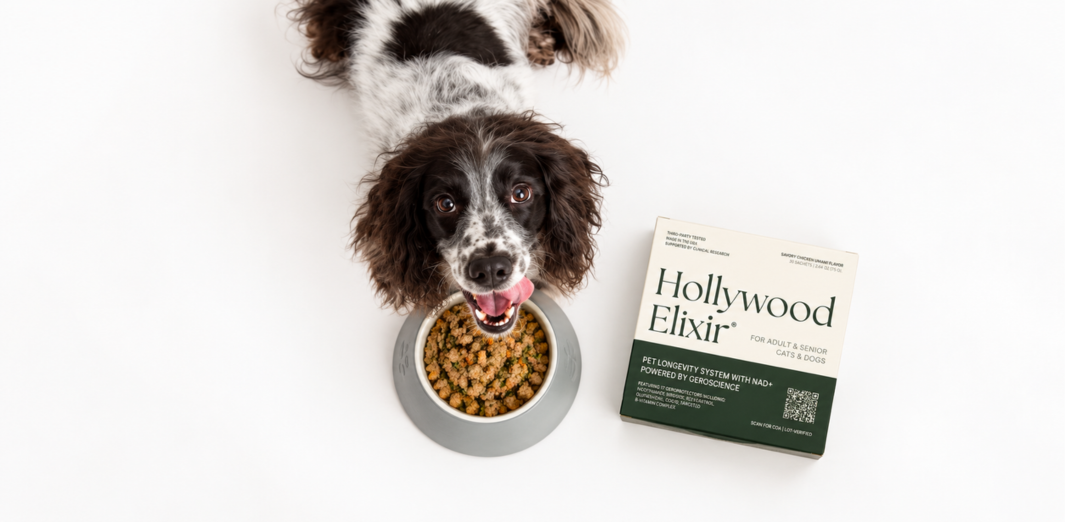
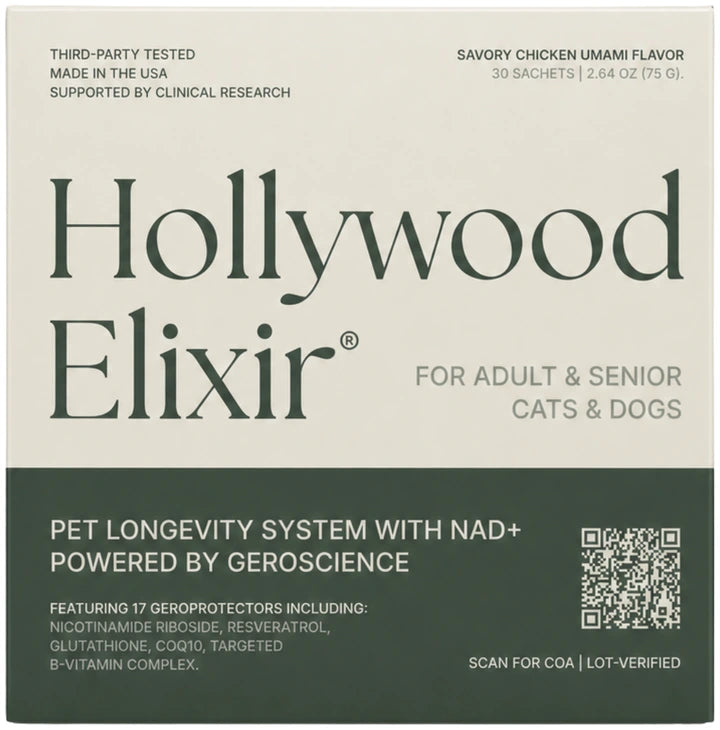
Hollywood Elixir™ is designed as part of a daily plan that supports healthy aging foundations, including cellular-energy pathways and overall vitality. It is not a replacement for veterinary diagnosis of low cobalamin, but it can fit alongside a consistent diet and tracking routine when owners are building a more sustained, whole-dog support strategy.

Vitamin B12 for Dogs matters most when a dog’s gut cannot absorb it reliably, because methylation and nerve-energy chemistry can falter even with a “good” diet. The common confusion is treating B12 like a simple food checkbox versus treating it like a measurable bottleneck in cellular energy and neurologic stability. In practice, owners are often choosing between two paths: adding a supplement “just in case,” or asking a veterinarian to test and target a true deficiency.

This page compares those approaches and explains what actually differs: dietary intake versus intestinal uptake, and short-term pep versus long-term methylation capacity. Cobalamin (B12) works alongside folate in one-carbon metabolism, shaping homocysteine handling and supporting normal nerve function and red blood cell formation (Kather, 2020). Dogs with chronic enteropathy or exocrine pancreatic insufficiency (EPI) are a special case because low serum cobalamin is common and clinically meaningful (Westermarck, 2012).

Owners will find a decision framework, what to track at home, and how to prepare for a vet visit. The goal is not to chase a single vitamin, but to understand when B12 is the limiting step in a broader B-vitamin and cellular-energy ecosystem that also connects to NAD coenzymes and daily mending speed.

By La Petite Labs Editorial, ~15 min read

Featured Product:

  • Vitamin B12 for Dogs is most important when absorption is impaired, not when diet is merely “imperfect.”
  • B12 supports methylation chemistry and nerve-energy pathways; low status can show up as GI irregularity, low appetite, weight loss, or neurologic changes.
  • The key contrast is intake versus uptake: chronic enteropathy and EPI can block absorption even with high-quality food.
  • Testing (serum cobalamin, often paired with folate) helps separate “try a supplement” from “treat a deficiency pattern.”
  • Oral and injectable cobalamin can both normalize low levels in many dogs; route choice depends on diagnosis, severity, and follow-up plans.
  • Owners get better outcomes by tracking daily readouts (stool, appetite, weight, energy latitude) for 3–4 weeks before judging change.
  • A layered plan pairs veterinary diagnostics with steady nutrition and targeted support, rather than chasing one ingredient in isolation.

The Confusion: Diet Checkbox Versus Absorption Bottleneck

Vitamin B12 for Dogs is often discussed as if it were only about what goes into the bowl, but the more decisive question is what the intestine can take up. Cobalamin is a cofactor in methylation and cellular energy reactions, and it also supports normal neurologic function and blood cell formation (Kather, 2020). When B12 is low, the body can lose latitude in these pathways, so signs may look “whole-body” rather than neatly vitamin-shaped.

At home, the confusion shows up as mismatched signals: a dog eats a complete diet yet develops softer stools, a duller attitude, or slower mending speed after routine stress. Owners may try rotating foods or adding random B-complex products, then feel stuck when changes are not more sustained. The practical pivot is to treat B12 as a measurable bottleneck—especially when GI disease is already on the table—rather than a vague “nutrition insurance” idea.

Mitochondria illustration showing cellular energy support linked to vitamin b12 for dogs.

Side a: When Food Intake Is the Main Issue

In a healthy dog, commercial complete diets generally provide adequate B12, because cobalamin is an essential nutrient included to meet requirements [E7]. True intake problems are more likely with unbalanced home-prepared diets, extreme pickiness, or prolonged appetite loss. Even then, B12 status does not depend on one meal; it reflects a pattern over time and the dog’s ability to absorb and use the vitamin.

Household routines can quietly create intake gaps: frequent table-food substitution, inconsistent feeding schedules, or “toppers” that displace a balanced base diet. Owners can tighten the basics first—consistent complete food, measured portions, and fewer rotating add-ons—before assuming a deficiency. If a dog’s stool and appetite become more uniform after routine cleanup, that points toward intake and GI stability rather than a deeper absorption problem.

DNA strand visualization representing cellular protection supported by vitamin b12 for dogs.

Side B: When Absorption Fails Despite Good Food

Dogs can become hypocobalaminemic because the gut cannot absorb B12 reliably, even when the diet contains enough. Chronic enteropathy and EPI are classic examples, and cobalamin assessment is part of standard management because low levels are common and clinically relevant (Westermarck, 2012). In these cases, B12 is not just a “vitamin add-on”; it becomes a marker of intestinal function and a lever that can shape recovery room.

Owners often notice a pattern: stools drift from formed to loose, appetite becomes less predictable, and weight trends down despite normal enthusiasm for food. A dog may also seem less hardy on long walks or after minor dietary changes. When this pattern persists, it is reasonable to ask the veterinarian whether serum cobalamin and folate testing fits the workup, rather than repeatedly switching diets without a measurement plan.

Protein visualization highlighting formulation depth and rigor in vitamin b12 for dogs.

What Actually Differs: Intrinsic Factor, Pancreas, and Ileum

The decisive difference between “needs more B12” and “cannot use B12” is the absorption pathway. In dogs, cobalamin uptake depends on binding and transport steps that involve intrinsic factor and the distal small intestine; pancreatic disease can disrupt this chain, which is why EPI and low cobalamin often travel together (Westermarck, 2012). When the ileum is inflamed or the microbiome is altered, the handoff can become less reliable, and serum cobalamin can fall even with adequate intake.

This mechanism changes what owners should do at home: focus less on “finding the perfect protein” and more on documenting GI patterns that suggest malabsorption. Record stool form, frequency, and urgency alongside appetite and weight, because these daily readouts help a veterinarian decide whether the intestine is failing to capture nutrients. A consistent log also helps distinguish a short-lived upset from a longer pattern that deserves targeted testing.

Pug portrait highlighting companionship and steady support from vitamin b12 for dogs.

Methylation: Why B12 Links to Homocysteine Handling

B12’s methylation role is where owners often feel the effects without seeing an obvious “vitamin symptom.” Cobalamin works with folate in one-carbon metabolism, supporting normal methylation reactions that influence homocysteine balance and cellular maintenance (Kather, 2020). In dogs with cobalamin deficiency, methylation-related markers such as homocysteine and methylmalonic acid can be abnormal, reinforcing that deficiency is more than a diet label (Grützner, 2013).

At home, methylation strain can look like a dog that has less room to recover after routine stressors: travel, grooming, or a minor diet change. The dog may not be “sick,” but energy feels less sustained and the coat or skin may look less resilient. These are nonspecific signs, so the best move is not self-diagnosis; it is using them as context when discussing whether B12 and folate testing belongs in the plan.

Hollywood Elixir™ is amazing and makes my 13 y/o young again!

— Jessie

We go on runs. Lately he's been keeping up with no problem!

— Cami

“B12 questions are usually absorption questions, not food-quality questions.”

Nerve Energy Versus “Just Anemia” Thinking

A common mental shortcut is to equate B12 only with anemia, but in dogs the more action-changing concern is often nerve energy and GI function. Cobalamin supports neurologic integrity and cellular energy chemistry, so deficiency can contribute to weakness, altered gait, or behavioral quietness alongside digestive signs. Anemia can occur, but waiting for pale gums or dramatic lethargy can delay a more useful early conversation about absorption and chronic intestinal disease.

Owners can watch for small neurologic clues that fit the whole picture: reluctance to jump, a less coordinated turn on slick floors, or a new sensitivity to long walks. These observations matter most when paired with GI irregularity, because the combination points toward malabsorption rather than simple conditioning. Bringing a short video clip to the veterinarian can make the description more precise than words alone.

Elegant dog portrait reflecting alertness and natural vitality supported by vitamin b12 for dogs.

Case Vignette: the “Good Food, Bad Stools” Dog

A 7-year-old German Shepherd on a reputable complete diet develops months of loose stools and slow weight drift, with appetite that swings between ravenous and indifferent. The owner tries novel proteins and probiotics, but the pattern stays irregular and the dog seems less hardy on hikes. In this scenario, asking the veterinarian about EPI and checking serum cobalamin and folate can be more informative than another diet swap, because hypocobalaminemia is common in EPI and chronic enteropathy workups.

The household routine that helps most is a two-week “stability window”: no new treats, consistent meal timing, and a simple stool log with photos. That reduces noise and gives the clinic cleaner information. If testing confirms low cobalamin, supplementation becomes a targeted step rather than a guess, and follow-up labs can show whether the plan is working.

Close-up profile of a dog symbolizing awareness and vitality via vitamin b12 for dogs.

Owner Checklist: Home Signs That Fit B12 Malabsorption

Because B12 deficiency in dogs often reflects intestinal disease, the most useful home checklist focuses on patterns that suggest malabsorption rather than a single dramatic symptom. Owners can look for: (1) stools that alternate between formed and loose over weeks, (2) increased stool volume or frequency, (3) weight loss or failure to regain weight after illness, (4) appetite that becomes less predictable, and (5) new exercise intolerance that does not match conditioning. These signs are not diagnostic, but they help decide when Vitamin B12 for Dogs should be discussed as a measured clinical variable.

The routine step is to write these observations down with dates, not memory. Add notes about diet changes, antibiotics, or stress events, because those can temporarily shift stools and appetite. A short, structured record makes it easier for a veterinarian to decide whether to test cobalamin, folate, and other GI markers, and it prevents the common cycle of chasing one-off symptoms.

Supplement overview graphic emphasizing quality ingredients aligned with vitamin b12 for dogs.

What to Track: Daily Readouts That Show Real Change

When B12 is part of a plan, progress is best judged with a small set of repeatable daily readouts rather than mood alone. Track 3–7 markers: stool form score, stool frequency, appetite consistency, weekly body weight, willingness to exercise, “recovery time” after activity, and any paw-dragging or slipping episodes on smooth floors. These markers map to the two main clinical focus areas here—chronic GI disease and neurologic energy—without drifting into unrelated symptom hunting.

Use the same conditions each time: weigh on the same scale weekly, walk the same route, and keep meal timing consistent. Give each change 3–4 weeks before judging whether the pattern is more sustained, because gut healing and nutrient repletion are rarely instant. This tracking also helps the veterinarian interpret follow-up labs and decide whether the route or duration of cobalamin support should be adjusted.

Oral Versus Injectable: the Practical Tradeoffs

Owners often assume injections are automatically “stronger,” but studies in dogs with hypocobalaminemia show that oral cobalamin can raise serum levels, and comparisons with parenteral protocols have demonstrated normalization with both approaches in many cases (Toresson, 2018). In dogs with chronic enteropathy, oral supplementation has been shown to increase serum cobalamin concentrations, making it a realistic option when adherence is good and follow-up is planned (Toresson, 2016). The route choice should match diagnosis severity, owner capacity, and the veterinarian’s monitoring strategy.

At home, the tradeoff is consistency versus clinic visits. Oral plans require reliable daily administration and a willingness to recheck labs; injectable plans require scheduling and tolerance of handling, but remove day-to-day variability. Either way, owners should avoid changing multiple variables at once—diet, probiotics, enzymes, and B12—because it becomes impossible to tell what made stools more uniform.

“Track stools and weight first; mood alone is a noisy signal.”

Research-style uniform highlighting scientific integrity aligned with vitamin b12 for dogs.

Unique Misconception: “B12 Works Like a Stimulant”

A specific misunderstanding around Vitamin B12 for Dogs is expecting an immediate “energy pop,” like a stimulant. B12 is water-soluble and participates in enzyme reactions tied to methylation and cellular energy chemistry, but deficiency correction is usually reflected in more uniform appetite, stools, and activity over time—not a same-day personality shift. When owners chase a quick behavioral change, they may abandon a useful plan before the gut and tissues have time to respond.

A better household expectation is gradual pattern change: fewer bad-stool days, less irregular appetite, and more sustained willingness to move. If a dog seems “wired” after a new supplement, that may reflect other ingredients, timing, or stress rather than B12 itself. Keeping a simple log prevents overinterpreting one unusually good or bad day.

Shop Now
Curated ingredient scene highlighting bioactive blend supporting vitamin b12 for dogs.

Vet Visit Prep: Questions That Clarify the Real Problem

A productive veterinary visit focuses on narrowing the cause of low B12 risk: intake, absorption, or a broader GI disorder. Useful questions include: “Should serum cobalamin and folate be checked together?”, “Does this pattern fit chronic enteropathy or EPI?”, “If cobalamin is low, do you prefer oral or injections and why?”, and “When should levels be rechecked to confirm the plan is working?” Cobalamin and folate are often evaluated in EPI and can carry prognostic value in that context (Soetart, 2019).

Bring concrete observations: a two-week stool log, weight trend, diet list (including treats and chews), and any videos of gait changes. Also note prior antibiotics or steroid courses, because they can blur the clinical picture. This preparation helps the veterinarian choose tests and interpret results without relying on vague descriptions like “off and on” or “picky lately.”

Shop Now
Pet owner presenting supplement, highlighting home wellness supported by vitamin b12 for dogs.

What Not to Do: Common B12 Mistakes in Dogs

When owners suspect B12 issues, a few missteps repeatedly slow progress. Avoid: (1) switching diets weekly while also starting cobalamin, (2) assuming a multivitamin replaces diagnostic work for chronic diarrhea, (3) stopping supplementation as soon as stools look better for a few days, and (4) skipping follow-up labs after a confirmed low value. In dogs with chronic enteropathy or EPI, supplementation is typically part of a broader management plan, not a standalone fix (Chang, 2022).

Another common mistake is focusing only on “energy” and ignoring stool quality and weight trend, which are often the earliest daily readouts of malabsorption. Owners should also avoid doubling up on multiple B12 products “for good measure,” because it creates confusion about what was given and when. A single, vet-aligned plan with a recheck date is usually more uniform and easier to evaluate.

Shop Now

Safety and Forms: Cyanocobalamin Versus Others

Most canine supplementation uses cyanocobalamin, a synthetic form of vitamin B12 widely used to treat or prevent deficiency, with a generally wide safety margin as a water-soluble vitamin (Advait Vasavada, 2024). That safety profile does not mean “anything goes,” but it does mean toxicity is not the usual limiting factor; the bigger issue is whether the dog needs supplementation and whether the route matches the absorption problem. For dogs with GI disease, the veterinarian may choose a form and schedule that aligns with follow-up testing.

Owners should still watch for practical tolerability issues: refusal of tablets, vomiting after administration, or stress around injections. If a dog is on multiple medications, keep a written schedule to avoid missed doses or accidental doubling. Any new rash, facial swelling, or sudden vomiting after a supplement warrants stopping the product and calling the clinic, even when the nutrient itself is considered low-risk.

How This Connects to Folate, Microbiome, and IBD Patterns

B12 rarely acts alone in GI cases, which is why veterinarians often interpret cobalamin alongside folate and the broader chronic enteropathy picture. In dogs with chronic gastrointestinal disease, cobalamin status has been linked with differences in intestinal microbial patterns, reinforcing that low B12 can be a signpost for deeper gut disruption rather than a simple dietary miss (Toresson, 2023). This does not mean the microbiome is “the cause” in every dog, but it supports a more integrated view of absorption, inflammation, and nutrient handling.

For owners, the practical implication is to avoid tunnel vision. If a dog has suspected IBD or chronic enteropathy, B12 support may be one piece, while diet trials, parasite testing, and other therapies address the primary driver. Keeping the tracking rubric focused on stools, weight, and activity helps the household see whether the overall plan is becoming more sustained, not just whether one lab number moved.

Supplement comparison highlighting clean formulation advantages for vitamin b12 for dogs.

Decision Framework: When to Test, When to Supplement

A simple decision framework keeps Vitamin B12 for Dogs from becoming guesswork. If a dog is healthy on a complete diet with normal stools and stable weight, routine B12 testing is usually not the first step; focus on consistent nutrition and life-stage appropriate care. If chronic diarrhea, weight loss, or suspected EPI/chronic enteropathy is present, testing serum cobalamin (often with folate) becomes more actionable because low levels are common and clinically relevant in these disorders.

If testing confirms low cobalamin, supplementation is targeted and measurable, and the household can track whether daily readouts become more uniform while the veterinarian monitors lab response. If testing is not immediately available, a veterinarian may still recommend a time-limited trial with a clear recheck plan, especially when GI disease is strongly suspected. The key is defining what success looks like before starting: which signs should change, and when to reassess.

Shop Now
Supplement box revealed in soft light, reflecting premium vitamin b12 for dogs positioning.

Where NAD Coenzymes and B-vitamins Fit Together

Owners reading about cellular energy often encounter NAD coenzymes, B-vitamins, and mitochondria as separate topics, but they intersect in day-to-day resilience. B12 supports methylation and enzyme reactions that contribute to normal cellular maintenance, while other B-vitamins support adjacent steps in energy handling and red blood cell biology. This is why a dog can look “tired” from a gut-driven nutrient bottleneck even when calories are adequate.

Practically, this means a layered plan tends to outperform ingredient chasing: stabilize the gut problem, confirm whether B12 is low, and then support the broader energy ecosystem with consistent routines. Owners can align meal timing, sleep, and exercise to reduce day-to-day variability, then evaluate changes over 3–4 weeks. When the baseline is calmer, it becomes easier to see whether support strategies are producing more sustained appetite, stools, and activity.

Shop Now

Putting It All Together: a Calm, Measurable Plan

The most useful takeaway is that Vitamin B12 for Dogs is a “measurement and mechanism” topic, not a trend. In dogs with chronic enteropathy or EPI, cobalamin supplementation is commonly used because low levels reflect impaired intestinal handling and can be corrected with structured protocols (Chang, 2022). The goal is not perfection on paper; it is restoring room to recover in methylation and nerve-energy pathways while the primary GI condition is addressed.

A calm plan is straightforward: keep diet consistent, track daily readouts, test when the pattern suggests malabsorption, and recheck to confirm the response. Avoid stacking multiple new supplements at once, and treat any sudden neurologic change, severe lethargy, or rapid weight loss as a reason to call the veterinarian promptly. When owners and clinics share the same tracking language, decisions become clearer and less reactive.

“A recheck date turns supplementation into a measurable plan.”

Educational content only. This material is not a substitute for veterinary advice. Always consult your veterinarian about your dog’s specific needs. These statements have not been evaluated by the Food and Drug Administration. Products mentioned are not intended to diagnose, treat, cure, or prevent any disease.

Glossary

  • Cobalamin - Another name for vitamin B12 used in veterinary testing and treatment.
  • Hypocobalaminemia - Low serum cobalamin (B12) concentration on bloodwork.
  • Intrinsic Factor - A binding protein needed for normal intestinal absorption of B12.
  • Ileum - The distal small intestine where B12 absorption primarily occurs.
  • Exocrine Pancreatic Insufficiency (EPI) - A condition where the pancreas fails to provide digestive enzymes, often linked with low B12.
  • Chronic Enteropathy - Long-standing intestinal disease causing persistent GI signs and sometimes nutrient malabsorption.
  • Methylation - A biochemical process that uses one-carbon units; B12 and folate help keep it functioning normally.
  • Homocysteine - A blood marker that can rise when methylation pathways are strained.
  • Methylmalonic Acid (MMA) - A metabolic marker that can increase with functional B12 deficiency.
  • Cyanocobalamin - A common supplemental form of vitamin B12 used in veterinary care.

Related Reading

References

Soetart. Serum cobalamin and folate as prognostic factors in canine exocrine pancreatic insufficiency: An observational cohort study of 299 dogs.. PubMed. 2019. https://pubmed.ncbi.nlm.nih.gov/30606434/

Westermarck. Exocrine Pancreatic Insufficiency in the Dog: Historical Background, Diagnosis, and Treatment. 2012. https://www.mdpi.com/2076-2615/13/14/2313

Chang. Effect of oral or injectable supplementation with cobalamin in dogs with hypocobalaminemia caused by chronic enteropathy or exocrine pancreatic insufficiency.. PubMed Central. 2022. https://pmc.ncbi.nlm.nih.gov/articles/PMC9511088/

Toresson. The Intestinal Microbiome in Dogs with Chronic Enteropathies and Cobalamin Deficiency or Normocobalaminemia-A Comparative Study.. PubMed Central. 2023. https://pmc.ncbi.nlm.nih.gov/articles/PMC10135184/

Advait Vasavada. Cyanocobalamin. 2024. https://www.ncbi.nlm.nih.gov/books/NBK555964

Toresson. Oral Cobalamin Supplementation in Dogs with Chronic Enteropathies and Hypocobalaminemia.. PubMed Central. 2016. https://pmc.ncbi.nlm.nih.gov/articles/PMC4913667/

Panel). Safety and efficacy of vitamin B(12) (in the form of cyanocobalamin) produced by Ensifer spp. as a feed additive for all animal species based on a dossier submitted by VITAC EEIG.. PubMed Central. 2018. https://pmc.ncbi.nlm.nih.gov/articles/PMC7009413/

Toresson. Comparison of efficacy of oral and parenteral cobalamin supplementation in normalising low cobalamin concentrations in dogs: A randomised controlled study.. PubMed. 2018. https://pubmed.ncbi.nlm.nih.gov/29428088/

Grützner. Serum homocysteine and methylmalonic acid concentrations in Chinese Shar-Pei dogs with cobalamin deficiency.. PubMed. 2013. https://pubmed.ncbi.nlm.nih.gov/23499543/

Kather. Review of cobalamin status and disorders of cobalamin metabolism in dogs.. PubMed Central. 2020. https://pmc.ncbi.nlm.nih.gov/articles/PMC6979111/

FAQ

What is Vitamin B12 for Dogs used for?

Vitamin B12 for Dogs refers to cobalamin, a nutrient used as a cofactor in methylation and cellular energy reactions. It also supports normal neurologic function and healthy blood cell formation.

In practice, the most important “use” is identifying when low B12 reflects malabsorption from chronic enteropathy or EPI, rather than a simple diet gap. That distinction changes whether the next step is testing, supplementation route, or a broader GI workup.

Why would a dog become low in B12?

Low cobalamin in dogs is commonly tied to impaired intestinal absorption, especially with chronic enteropathy or exocrine pancreatic insufficiency (EPI). Even a high-quality complete diet cannot compensate if the absorption pathway is failing.

Less commonly, intake issues can contribute, such as unbalanced home-prepared diets or prolonged poor appetite. A veterinarian can help decide whether the pattern fits an absorption problem that deserves blood testing and follow-up.

What are common signs of low B12 in dogs?

Signs are often nonspecific and overlap with GI disease: chronic loose stools, increased stool frequency, weight loss, and appetite that becomes irregular. Some dogs also show reduced exercise latitude or subtle neurologic changes, because B12 supports nerve function and energy chemistry.

Because these signs have many causes, the most useful next step is documenting patterns (stool, weight, appetite) and discussing whether serum cobalamin and folate testing fits the workup.

How is B12 deficiency diagnosed in dogs?

Diagnosis typically starts with bloodwork measuring serum cobalamin, often interpreted alongside folate in dogs with chronic GI signs. This pairing can help veterinarians recognize patterns consistent with malabsorption and guide next steps.

If EPI is suspected, additional tests (such as pancreatic function testing) may be recommended, because EPI is commonly associated with low cobalamin and requires a broader treatment plan.

Is oral B12 effective for dogs with low levels?

Oral cobalamin can be effective in many dogs with hypocobalaminemia, including those with chronic enteropathy, and has been shown to raise serum cobalamin concentrations(Toresson, 2016).

The key is adherence and follow-up. A veterinarian should set expectations for when to recheck levels and which daily readouts (stool, weight, appetite) should become more uniform if the plan is working.

Are B12 injections better than oral supplements for dogs?

Not automatically. A randomized comparison in dogs with low cobalamin found that both oral and parenteral approaches can normalize concentrations in many cases(Toresson, 2018).

Injections may be preferred when adherence is difficult, when GI disease is severe, or when a veterinarian wants a tightly controlled protocol. Oral plans can be a good fit when daily administration is reliable and rechecks are scheduled.

How quickly do dogs respond to B12 supplementation?

Response is usually best judged by patterns over weeks, not hours. Serum levels may rise with supplementation, but owners often notice changes first as more uniform stools, steadier appetite, and better weight stability rather than a sudden burst of energy.

A practical window is 3–4 weeks of consistent routine before evaluating daily readouts. If severe signs are present or worsening, a veterinarian should reassess sooner.

Is Vitamin B12 for Dogs safe to give daily?

Cyanocobalamin (a common supplemental form of B12) is water-soluble and generally has a wide safety margin when used to address deficiency(Advait Vasavada, 2024). Safety still depends on using an appropriate product, following veterinary guidance, and avoiding unnecessary stacking of multiple supplements.

Daily use makes the most sense when a veterinarian has identified low cobalamin risk or confirmed hypocobalaminemia, and when there is a plan for monitoring response with follow-up labs and home tracking.

Can too much B12 harm a dog?

B12 has a wide safety margin in typical supplementation contexts because it is water-soluble, and cyanocobalamin is commonly used for deficiency support(Advait Vasavada, 2024). That said, “more” is not automatically better, especially if it distracts from diagnosing chronic diarrhea or weight loss.

The bigger risk is mismanagement: doubling products, changing multiple variables at once, or skipping rechecks. Any unexpected reaction after a supplement should be discussed with a veterinarian.

Does B12 interact with other medications in dogs?

B12 is generally compatible with many treatment plans, but interactions are not the only concern. Medications such as antibiotics, steroids, or GI drugs can change stool patterns and appetite, which can complicate interpretation of whether B12 support is helping.

Owners should bring a full medication and supplement list to the veterinarian, including probiotics and chews. The goal is a plan that is easy to follow and easy to evaluate with daily readouts and scheduled rechecks.

Is B12 deficiency common in dogs with EPI?

Yes. Hypocobalaminemia is commonly associated with exocrine pancreatic insufficiency (EPI) in dogs, and cobalamin assessment and supplementation are part of standard management discussions.

Because EPI also affects digestion broadly, B12 is typically one piece of a larger plan that may include enzymes, diet strategy, and monitoring. A veterinarian can explain how often to recheck levels and what home signals should become more uniform.

Is B12 deficiency linked to chronic enteropathy or IBD?

Low cobalamin is common in canine chronic enteropathies and is clinically relevant because it reflects impaired intestinal absorption(Toresson, 2016). In these dogs, B12 status can act as a signpost that the gut is not handling nutrients normally.

Owners should treat this as a reason to coordinate care, not as a standalone explanation. The best outcomes come from addressing the underlying enteropathy while using B12 support as a measurable part of the plan.

Should folate be checked with B12 in dogs?

Often, yes. Veterinarians commonly interpret serum cobalamin and folate together in dogs with chronic GI signs, because the pattern can add context about intestinal function and guide next diagnostic steps.

Owners can ask what the clinic expects each result to mean: whether it changes diet strategy, prompts additional tests, or affects the choice between oral and injectable cobalamin. Pairing labs with a stool and weight log makes the interpretation more useful.

What does methylation have to do with B12 in dogs?

B12 participates in methylation-related reactions that help manage one-carbon metabolism and support normal cellular maintenance. In dogs, cobalamin deficiency can be associated with abnormal metabolic markers that reflect this functional role(Grützner, 2013).

For owners, methylation is less about a buzzword and more about why deficiency can look “whole-body”: appetite, stools, energy latitude, and neurologic function can all feel less stable. Testing and follow-up turn that complexity into a clearer plan.

Can puppies or seniors need different B12 support?

Life stage matters mostly because disease risk and diet patterns change. Puppies on complete growth diets usually meet B12 needs through food, while seniors are more likely to have chronic GI issues or appetite shifts that raise the question of malabsorption.

If a senior dog develops chronic diarrhea, weight loss, or reduced hardiness, it is reasonable to discuss whether Vitamin B12 for Dogs should be evaluated as part of a broader workup. Any supplementation plan should be guided by a veterinarian and rechecked.

Are certain breeds more prone to low B12?

Breed risk is usually indirect: breeds predisposed to EPI or chronic enteropathy may be more likely to show low cobalamin because absorption is compromised. The more reliable predictor is the clinical pattern—chronic GI signs, weight drift, and appetite irregularity—rather than breed alone.

Owners should avoid assuming a breed label equals a deficiency. The best approach is documenting daily readouts and asking a veterinarian whether cobalamin and folate testing fits the dog’s specific history.

Can cats use the same B12 plan as dogs?

Cats and dogs share general cobalamin biology, but clinical decision-making and dosing strategies should not be assumed to match across species. Cats have their own common causes of hypocobalaminemia and different practical considerations for administration and monitoring.

For a dog, Vitamin B12 for Dogs should be discussed in a canine-specific context—especially around EPI and chronic enteropathy patterns. A veterinarian should guide any cross-species household supplement decisions.

What should owners look for in a quality B12 product?

Quality signals include clear labeling of the B12 form (commonly cyanocobalamin), transparent ingredient lists, and manufacturing practices that support consistent dosing. Products should avoid unnecessary stimulants or complex blends that make it hard to interpret response.

For dogs with GI disease, the “best” product is the one that fits the veterinarian’s plan and the household’s ability to administer it consistently. A recheck date matters more than a trendy label.

How should B12 be given to picky dogs?

Administration should protect consistency. Options include hiding tablets in a measured portion of the regular meal, using a small amount of a tolerated “carrier” food, or choosing a veterinary injection plan if daily dosing is unrealistic.

If a broader daily routine is being built for aging support, Hollywood Elixir™ can be positioned as part of a consistent plan that supports normal vitality—separate from any veterinarian-directed cobalamin protocol—so changes can be evaluated without confusion.

Can Hollywood Elixir™ replace B12 testing or injections?

No. Hollywood Elixir™ is not a substitute for diagnosing hypocobalaminemia or managing EPI/chronic enteropathy. When a dog’s pattern suggests malabsorption, testing and veterinary guidance are the most direct way to decide whether B12 is a bottleneck.

Where it can fit is alongside fundamentals—consistent diet, tracking, and veterinary care—as part of a daily plan that supports normal cellular-energy function and overall vitality. Keeping roles separate prevents unrealistic expectations.

When should a vet be called about possible B12 issues?

A veterinarian should be contacted when chronic diarrhea lasts more than a few days, when weight is trending down, or when appetite becomes persistently irregular. New neurologic signs—wobbliness, weakness, or sudden reluctance to jump—also warrant prompt evaluation because B12 supports normal nerve function.

Bring a short stool and weight log and a list of diet changes and medications. Ask whether Vitamin B12 for Dogs should be evaluated with serum cobalamin and folate as part of the diagnostic plan.

5K+ Happy Pet Parents

Excellent 4.8

Vitamin B12 for Dogs | Why Thousands of Pup Parents Trust Hollywood Elixir™

"He seems more happy overall. I've also noticed he has more energy which makes our walks and playtime so much more fun."

Olga & Jordan

"He's got way more energy now! We go on runs pretty often; he use to get tired halfway through, but lately, he's been keeping up without any problem."

Cami & Clifford

"I want her to live forever. She hasn't had an ear infection since!"

Madison & Azula

"It helps with her calmness, her immune system. I really like the clean ingredients. Highly recommend La Petite Labs!"

Maple & Cassidy

"He seems more happy overall. I've also noticed he has more energy which makes our walks and playtime so much more fun."

Olga & Jordan

"He's got way more energy now! We go on runs pretty often; he use to get tired halfway through, but lately, he's been keeping up without any problem."

Cami & Clifford

"I want her to live forever. She hasn't had an ear infection since!"

Madison & Azula

"It helps with her calmness, her immune system. I really like the clean ingredients. Highly recommend La Petite Labs!"

Maple & Cassidy

"He seems more happy overall. I've also noticed he has more energy which makes our walks and playtime so much more fun."

Olga & Jordan

"He's got way more energy now! We go on runs pretty often; he use to get tired halfway through, but lately, he's been keeping up without any problem."

Cami & Clifford

"I want her to live forever. She hasn't had an ear infection since!"

Madison & Azula

"It helps with her calmness, her immune system. I really like the clean ingredients. Highly recommend La Petite Labs!"

Maple & Cassidy

"He seems more happy overall. I've also noticed he has more energy which makes our walks and playtime so much more fun."

Olga & Jordan

"He's got way more energy now! We go on runs pretty often; he use to get tired halfway through, but lately, he's been keeping up without any problem."

Cami & Clifford

"I want her to live forever. She hasn't had an ear infection since!"

Madison & Azula

"It helps with her calmness, her immune system. I really like the clean ingredients. Highly recommend La Petite Labs!"

Maple & Cassidy

SHOP NOW