






The 12 Hallmarks of Aging in Dogs, Explained
Read full insightTurmeric and Curcumin for Cats
By La Petite Labs Editorial 10 min read
As Seen On

17 science-backed actives
Contents +
Turmeric extract was safe for healthy adult cats in a four-month feeding study, but there's little proof yet that it helps a cat with any condition. The cat research is new and small: one safety study, two arthritis trials that used blends, and a 16-cat kidney trial. Curcumin, the main active compound, is poorly absorbed, and cats clear plant compounds differently from dogs and people.
This guide covers what the cat studies found, the amounts they used, the risks, and what to ask your vet.
- What it is: Turmeric is a spice from the ginger family. Curcumin is its main active compound.7
- Safety: Healthy adult cats ate turmeric extract in their food for four months with no effects of clinical concern.1
- Arthritis: Two cat trials saw better movement. Both used blends or diets with other active ingredients.3, 4
- Kidneys: In a 16-cat trial, curcumin given with standard care for 60 days improved a kidney blood marker.2
- Amount: None is established. Studies give reference points only.1, 2
- Watch for: Black pepper extract. It blocks a liver pathway that cats are already slow at.8, 6
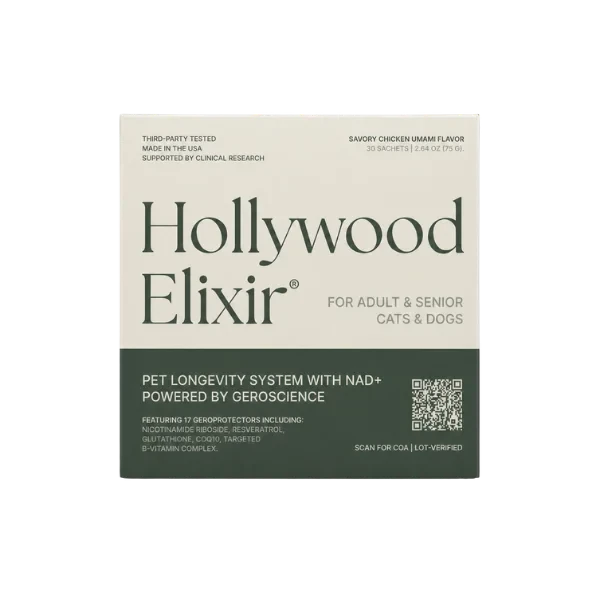
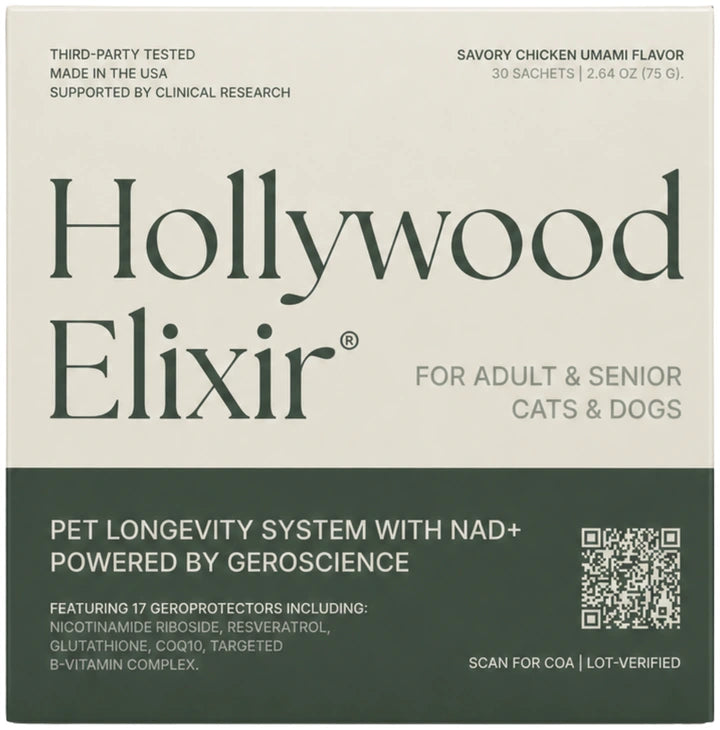
- In Hollywood Elixir: No. Hollywood Elixir has no turmeric or curcumin. It uses other plant antioxidants, such as quercetin and resveratrol.
What are turmeric and curcumin?
Turmeric is a spice made from the root of a plant in the ginger family.7 Curcumin is the compound that gives it its yellow color, and it's the part researchers care about. Curcumin and its close relatives are called curcuminoids.7
The difference matters when you read a label.
- Turmeric powder is the whole ground root. Pure turmeric powder averaged 3.14% curcumin by weight in a laboratory test of spice products.11
- Turmeric extract is concentrated. The extract fed in the cat safety study contained at least 90% curcuminoids.1
The two uses studied in cats are stiff joints and kidney health. Both ideas come from curcumin's effects on inflammation and oxidation in laboratory work.13 Whether those effects reach a living cat is what the rest of this page looks at.
Can cats have turmeric?
Cats can have turmeric in small amounts, and a healthy cat on a complete diet doesn't need it.
The safety picture is better than it was. In a study published in 2026, healthy adult cats ate food with turmeric extract for four months, with no changes of clinical concern in weight, digestion or blood tests.1 European regulators also accept turmeric extract as a flavoring in feed for all animal species, at 15 mg per kg of food.10
Safe in a healthy cat isn't the same as useful in a sick one. For arthritis and kidney disease the evidence is early, and both are conditions where a vet should be steering.
What did the four-month safety study in cats find?
Turmeric extract passed a formal tolerance test in cats. Researchers fed three groups of healthy adult cats the same dry food for four months: one plain, and two with different levels of turmeric extract.1
They tracked body weight, body condition, food intake, stool quality, vomiting and diarrhea, blood counts and blood chemistry, with special attention to liver enzymes. Nothing of clinical or toxicological concern turned up. The authors concluded that a diet providing up to 1,040 ppm of total curcuminoids is safe.1
The limits: these were healthy adults, the study lasted four months, and it tested a food ingredient, not a concentrated supplement.
Does turmeric help cats with arthritis?
Turmeric has appeared in two arthritis trials in cats, and both tested it as part of a mix.
- Supplement blend, 16 cats, 10 weeks: curcumin with green-lipped mussel and blackcurrant leaf. Grooming, activity, playfulness and stair climbing improved on the supplement, and some cats didn't respond at all.3
- Therapeutic diet, 30 cats, 13 weeks: fish-oil omega-3s with turmeric extract and collagen. Weight bearing, stair climbing and night-time activity improved against a placebo diet, with no side effects seen.4
Neither trial can say what the turmeric contributed. In a later review, the team behind the diet trial describes it simply as an omega-3 enriched diet.5
Can curcumin help cats with kidney disease?
Curcumin improved kidney markers in one small trial, which makes it a lead worth following and not yet a treatment. Sixteen cats with stage 3 chronic kidney disease all received standard care, and eight also got 80 mg of curcumin a day for 60 days.2
SDMA, a blood marker of kidney function, was lower in the curcumin group from day 30 onward. Protein loss in urine fell too, and markers of oxidation and inflammation moved in a favorable direction.2
Sixteen cats over two months can't show whether curcumin slows the disease. Our guide to chronic kidney disease in cats covers the care with a longer track record.
Safe in a healthy cat isn't the same as useful in a sick one.
Is turmeric safe for cats long term?
Turmeric's safety in cats is known for four months in healthy adults, and not beyond that.1 Three open questions matter for longer use.
- Liver clearance: cats have a much lower capacity than most mammals to process plant phenolic compounds by glucuronidation, a main clearing route in the liver.6 Curcumin is a phenolic compound that is cleared this way in other species.13, 8
- Liver injury: in people, liver damage has been reported with curcumin products designed for high absorption.7
- Oxalate: turmeric powder is rich in soluble oxalate and raised urinary oxalate in a human study.9 That's a reason for caution in cats with kidney disease or a history of oxalate stones.
The four-month study did watch liver enzymes closely and found nothing of concern, which is reassuring for food-level amounts.1 Concentrated supplements given for years are a different exposure, and nobody has tested them in cats.
What are the side effects of turmeric in cats?
Turmeric caused no notable side effects in the cat studies so far. The four-month safety study monitored vomiting, diarrhea and stool quality and found nothing of concern.1 The 13-week diet trial also reported no side effects.4
In people, the common complaints are nausea, vomiting, reflux, diarrhea and constipation, so gut upset is the thing to watch for in a cat.7
Stop and call your vet if your cat vomits, has loose stools, eats less or seems unusually tired. A cat that stops eating needs a vet visit whatever the cause. Expect yellow stains on pale fur and bedding as well.
How much turmeric or curcumin can a cat have?
No amount of turmeric or curcumin has been established for cats. The studies give three reference points.
- Kidney trial: 80 mg of curcumin per cat per day, split into two servings, for 60 days.2
- Safety study: food providing up to 1,040 mg of curcuminoids per kg of dry diet, for four months.1
- Flavoring level: 15 mg of turmeric extract per kg of complete feed, the level European regulators assessed for all species.10
These amounts aren't interchangeable, because the products and the cats differed. If your vet supports a trial, use a product that states its curcuminoid content, and agree on the amount before you start.
Should cats have turmeric with black pepper or golden paste?
Black pepper and golden paste are best avoided when giving turmeric to a cat. Pepper's active compound, piperine, raises curcumin levels by blocking glucuronidation.8 Cats are already slow at that step, so a blocker adds risk with no tested benefit.6
Golden paste is a homemade mix of turmeric powder, oil and black pepper. It has the same problem, plus an unknown amount of curcumin in each spoonful. The published summaries of the cat studies don't mention piperine or a paste.1, 2, 3, 4
If a product lists black pepper extract or piperine, pick a different one or ask your vet first.
Why do cats process curcumin differently?
Curcumin is hard for any animal to absorb. Little of it crosses the gut wall, the body breaks it down quickly, and what's left is cleared fast.13
Cats add a twist. The domestic cat has a much lower capacity than most mammals to attach glucuronic acid to plant phenolic compounds, because one of the genes for that job, UGT1A6, no longer works in cats.6 It's the same quirk that makes acetaminophen so dangerous to them.
Only one published study has measured curcumin in cats' blood. It compared plain curcumin with a nanoparticle form, as part of laboratory work on feline infectious peritonitis, and the nanoparticles reached higher levels.12 The antiviral tests in that study were done in cell cultures, not in sick cats.
The careful reading is simple. A cat isn't a small dog. Dog or human amounts shouldn't be scaled down by weight.
A cat isn't a small dog.
DVM Voice: Clinical Vignette of a Common Pattern in Senior Cat Aging
Case provided by JoAnna Pendergrass, DVM
Sasha, a 12-year-old cat, was brought in after her owner noticed increased thirst and urination, lethargy, vomiting, and a generally unkempt appearance. Examination showed weight loss, elevated blood pressure, and reduced vitality.
Diagnostic testing revealed elevated kidney markers, poorly concentrated urine, and protein loss in the urine — findings consistent with chronic kidney disease, one of the most common chronic conditions in senior cats.
Her care required a kidney-focused diet, blood pressure management, targeted supplementation, medication support, and regular monitoring — a necessary plan, but one started after clinical signs were already visible.
Clinical takeaway: Sasha’s case reflects why senior-cat wellness should begin before obvious decline. Earlier monitoring, body-condition tracking, hydration awareness, antioxidant support, and daily cellular resilience may help support quality of life as cats age.
Single-case vignette. Not generalizable. Veterinary diagnosis and monitoring are essential for increased thirst, urination, vomiting, lethargy, weight loss, or suspected kidney disease.
Which cats should not have turmeric?
Turmeric isn't right for every cat. Talk to your vet before giving it to a cat that:
- has kidney disease or has had oxalate stones, since turmeric raises urinary oxalate in people;9
- has liver disease, given the reports of liver injury in people;7
- has gallbladder or bile duct disease, because curcumin makes the gallbladder contract in people;14
- is pregnant or nursing;7
- is a kitten, since the cat studies so far were in adults.1
The kidney caution cuts both ways. One small trial suggests curcumin may help kidney markers, while turmeric powder carries oxalate.2, 9 That's a decision for the vet managing your cat's kidneys.
Can turmeric be given with a cat's arthritis medicine?
Turmeric hasn't been tested alongside prescription arthritis medicine in cats, as far as we could find. That includes the NSAIDs meloxicam and robenacoxib and the antibody injection Solensia.
Two practical rules follow. Tell your vet about every supplement before a new prescription or an anesthetic. And don't lower or stop a prescribed medicine because a supplement seems to be working.
Turmeric's place, if it has one, is as an add-on that your vet knows about.
Is turmeric worth trying for a senior cat?
Turmeric is a fair question for a senior cat, because arthritis is so common. Osteoarthritis is considered the main source of chronic pain in cats and affects well over a quarter of them. Detection stays low, because many owners don't know the signs.5
So the first step is finding out whether your cat hurts. Our guide to the subtle signs of pain in cats lists what to look for.
If arthritis is confirmed, turmeric sits well down the list. The review's authors report that an omega-3 enriched diet worked about as well as standard medicines in their trials, without side effects.5
How do you choose a turmeric product for a cat?
A turmeric product for a cat should be simple, measured and made for cats. Human health authorities warn that curcumin products vary in how much they contain and often include other plant ingredients, such as piperine.7
Check for:
- the curcuminoid content per serving, in milligrams;
- a cat-specific product with a feeding guide;
- no piperine or black pepper extract;8
- a form your cat will actually eat.
Powder and extract aren't equivalent. A 250 mg serving of turmeric powder holds roughly 8 mg of curcumin, while 250 mg of a 90% extract holds about 225 mg.11, 1
Blends deserve the closest reading, since both cat arthritis trials used them and neither could separate the ingredients.3, 4 Look for the amount of each ingredient, not a combined total. It's the test we apply to our own label: Hollywood Elixir prints all 17 amounts, and turmeric isn't among them.
Is turmeric different for cats and dogs?
Turmeric has a longer research record in dogs and a more cautious outlook in cats.
- Evidence: cats have a safety study, two arthritis trials of blends and one small kidney trial.1, 2, 3, 4 Dogs have their own placebo-controlled arthritis trials.
- Metabolism: cats have a much lower capacity than most mammals to glucuronidate plant phenolic compounds, so the two species can't share amounts.6
- Boosters: piperine, the black pepper extract found in many human products, blocks that same pathway.8
A product bought for the dog shouldn't be passed to the cat. Our guide to turmeric and curcumin for dogs covers the canine trials.
When should you see the vet instead of trying turmeric?
Turmeric shouldn't be the first response to a cat that's slowing down. Book a visit if your cat:
- stops jumping onto favorite spots, or hesitates before jumping;
- grooms less, or has a matted coat over the back and hips;
- misses the litter box or struggles to climb in;
- drinks or urinates more, loses weight or eats less.
The first three can be arthritis pain. The last points toward problems such as kidney disease, which need blood tests and real treatment. A cat on turmeric with an undiagnosed illness is a cat losing time.
What works better than turmeric for an arthritic cat?
Several options have more evidence than turmeric for arthritis in cats.
- Omega-3 enriched diet: in the 30-cat trial, 64% of cats improved their weight bearing and 87% did better on a stair test. That diet also contained turmeric extract and collagen.4
- Prescription NSAIDs: most of the research on managing feline arthritis has focused on them.5
- Antibody injections: anti-nerve growth factor antibodies are described as a promising newer route, with long-term effects still to be described.5
Home changes help too, such as ramps and steps up to favorite spots. Turmeric fits, if at all, as a small add-on to that plan.
Is turmeric in Hollywood Elixir?
No. Hollywood Elixir doesn't contain turmeric or curcumin, and it isn't a joint or kidney treatment.
Its plant compounds are different ones. A sachet supplies 25 mg of quercetin, 15 mg of resveratrol and 2 mg of astaxanthin, next to 60 mg of nicotinamide riboside (an NAD+ precursor) and 13 more actives. Each of the 17 amounts is printed on the label.
It's a daily supplement for adult and senior cats, a powder mixed into food: half a sachet under 7 lb, one sachet from 7 to 30 lb. Hollywood Elixir hasn't been tested for arthritis, kidney disease or lifespan, and it's no substitute for a diagnosis.
If you were drawn to turmeric for its plant antioxidants, our guides to quercetin for cats and the best supplements for senior cats show what else is on the table. See the full Hollywood Elixir formula and serving guide.
Neither trial can say what the turmeric contributed.
Educational content only. This material is not a substitute for veterinary advice. Always consult your veterinarian about your cat’s specific needs. These statements have not been evaluated by the Food and Drug Administration. Products mentioned are not intended to diagnose, treat, cure, or prevent any disease.
Glossary
Turmeric: A spice made from the ground root of a plant in the ginger family.
Curcumin: The main active compound in turmeric and the source of its yellow color.
Curcuminoids: The group of related compounds in turmeric that includes curcumin.
Glucuronidation: A liver process that tags compounds for removal from the body, and one that cats perform slowly.
Piperine: A compound from black pepper that slows the breakdown of curcumin.
SDMA: A blood marker that vets use to track kidney function.
Related Reading
Aging & Senior Cat Guidance
• Cat Age Calculator: Cat Years to Human Years
• Cat Lifespan by Breed
• Lethargy in Cats
• Senior Cat Not Eating
• Cat Drinking A Lot
• Why Is My Senior Cat Withdrawn?
Healthy Aging Support
• NAD+ for Cats
• NMN for Cats
• Vitamins For Older Cats
• Senior Cat Food
• Longevity Drugs for Cats
References
Numbered references identify the sources used for specific claims. Read the study design, species and evidence boundaries alongside each finding.
- [1]
- [2]
- [3]
- [4]
- [5]
- [6]
- [7]
- [8]
- [9]
- [10]
- [11]
- [12]
- [13]
- [14]
FAQ
Can I put turmeric powder in my cat's food?
A pinch is unlikely to harm a healthy adult cat, and it's unlikely to help either. Kitchen turmeric is about 3% curcumin, and the powder carries oxalate. Skip it for cats with kidney disease or a history of stones unless your vet agrees.
Is turmeric toxic to cats?
Not at the levels studied. Healthy adult cats ate food with turmeric extract for four months without effects of clinical concern. Concentrated supplements, pepper-boosted products and long-term use haven't been tested in cats.
How long does turmeric take to work in cats?
In the two arthritis trials, improvements were measured over 10 to 13 weeks, and the earliest change in the diet trial appeared at about week six. If nothing has changed after three months, it isn't working.
Can turmeric treat FIP or cancer in cats?
No. Curcumin has been tested against the FIP virus only in cell cultures, and we found no trial in cats with FIP or cancer. Both need veterinary treatment without delay.
Does Hollywood Elixir contain turmeric?
No. Hollywood Elixir has no turmeric or curcumin. Its plant compounds are quercetin, resveratrol and astaxanthin, each with its amount on the label, and it isn't a joint or kidney treatment.
Is curcumin good for cats with kidney disease?
One 16-cat trial found a better kidney blood marker after 60 days of curcumin alongside standard care. That's early evidence, and nobody knows yet whether it changes how the disease progresses. Ask the vet who manages your cat's kidneys.
Can kittens have turmeric?
Turmeric hasn't been studied in kittens. The cat studies so far were in adults, so there's no basis for giving it to a growing kitten.
Can I give my cat my own turmeric capsules?
It's a poor idea. Human capsules are sized for an adult person and often contain piperine, which blocks a liver pathway that cats are already slow at. Use a cat product your vet has seen.
Does turmeric help a cat's skin or coat?
We found no study of turmeric for skin or coat in cats. The cat research covers safety, arthritis and kidney markers.
Discover LPL-01: How This Fits Into a Larger Feline Longevity System
Aging in cats unfolds quietly. It’s not driven by a single failure, but by gradual shifts across interconnected systems — cellular energy, oxidative balance, immune tone, and tissue integrity — each influencing the others over time.
This article explores one layer of that system. To understand what actually shapes long-term health, you need to step back and look at how these layers interact.
Start with the underlying science:
- Feline Geroscience Framework →
A structured view of how aging progresses across cellular energy, inflammation, and resilience systems. - Senior Biological Defense Coverage (BDC) Modeling →
A systems-level map of which biological pathways decline first, and how layered interventions can support them. - 2026 Market Research: Best Cat Longevity Supplements →
A feline-specific review of longevity supplements. 2026 Industry report created by LPL-01 Research. - LPL-01 Standard →
The formulation system that translates these models into real-world supplementation—covering multiple pathways in a coordinated way.
Keep exploring
What would you like to understand next?
Search practical guides about healthy aging, cellular energy, ingredients, and daily support for cats.
Hollywood Elixir®Senior Cat SupplementSenior cat energy, mobility & cognitionFrom$50/moSave up to 47%Save up to 44%Shop Now
Limited time offerEnds Nov 30
Hollywood Elixir®Senior Cat SupplementSenior cat energy, mobility & cognitionFrom$50/moSave up to 47%Save up to 44%Shop Now
Essential Summary
What should cat owners know about turmeric?
Turmeric extract was safe for healthy adult cats over four months in their food. Longer use and concentrated supplements are untested.
The arthritis and kidney evidence is early: two blend trials and one 16-cat kidney trial.
Avoid black pepper extract, and involve your vet before giving turmeric to a cat with kidney, liver or bladder problems.

Hollywood Elixir® Senior Cat Supplement
17 science-backed actives in every sachet
Supports senior energy, mobility & cognition
60-day first-box guarantee
Hollywood Elixir is amazing! She put back on 5 lbs to a healthy weight, her eyes are shiny, her coat is beautiful!
— Jessie
She hopped up onto the windowsill again for the first time in years.
— Charlie
Looking for plant antioxidants with printed amounts?
No turmeric, no guesswork.
Hollywood Elixir gives adult and senior cats 25 mg of quercetin, 15 mg of resveratrol, 2 mg of astaxanthin and 14 more actives in each sachet. It isn't a joint or kidney treatment.

Hollywood Elixir® Senior Cat Supplement
17 science-backed actives in every sachet
Supports senior energy, mobility & cognition
60-day first-box guarantee
Learn about how our DVMs think about cat aging
Dr. JoAnna Pendergrass DVM

Hollywood Elixir® Senior Cat Supplement
17 science-backed actives in every sachet
Supports senior energy, mobility & cognition
60-day first-box guarantee
Explore your cat’s changing needs over time
Related Reading
A 4-month study found turmeric extract safe in healthy cats. See what trials show for arthritis and kidney disease, the amounts used and the risks.