




The 12 Hallmarks of Aging in Dogs, Explained
Read full insightMelatonin for Cats
By La Petite Labs Editorial 11 min read
As Seen On

17 science-backed actives
Contents +
Melatonin has a good safety record in cats, and vets use it for sleep and behavior problems and to pause the heat cycle. The evidence that it works is thin. One trial found that 3 mg made cats easier to handle at the vet, and no study has tested it for night waking in senior cats. No melatonin product is FDA-approved for cats, so the amount is your vet's call.
This guide covers what melatonin does in a cat's body, what the studies found, the side effects, and the human sleep products to keep out of reach.
- What it is: A hormone the body makes at night. Vets give it to cats by mouth for sleep and behavior problems and to pause the heat cycle.1
- Stress: In a trial of 75 cats, 3 mg given an hour before a heart exam made cats easier to handle.3
- Sleep: In a sleep-lab study, melatonin deepened cats' sleep for about two hours.4
- Amount: No approved amount exists. Studies have used anything from a fraction of a milligram to 30 mg, depending on the goal.4, 5
- Safety: A review of the cat research calls long-term use safe, and poison-control vets don't expect severe signs from melatonin alone.6, 2
- Biggest risk: Human sleep products that add 5-HTP. It can poison a cat quickly.2
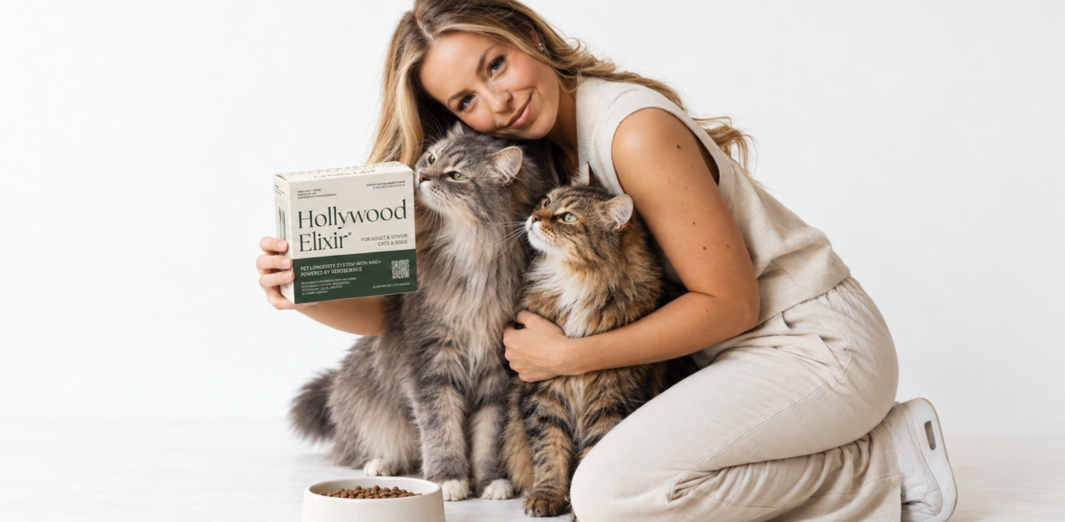
- In Hollywood Elixir: No. Hollywood Elixir has no melatonin and isn't a sleep aid. It's daily nutrition.
What is melatonin, and what do vets use it for in cats?
Melatonin is a hormone that the pineal gland releases after dark. It acts as the body's signal that night has started. The melatonin sold as a supplement is a lab-made copy.
For cats, VCA Animal Hospitals lists three uses: sleep disorders, behavior disorders, and suppressing the heat (estrus) cycle.1 That last one is special to cats. A cat's own melatonin rises as the nights get longer and switches the breeding cycle off, which is why researchers have studied it for fertility control.6
No melatonin product is FDA-approved for cats. The only approved animal use in the U.S. is an implant for mink, so every use in cats is "off label".1 Off-label use is routine in feline medicine. It means the product, the amount and the timing should come from your vet.
Does melatonin help cats sleep through the night?
Melatonin does deepen sleep in cats, but only briefly. In a sleep-lab study that recorded brain waves, melatonin given by mouth increased deep, slow-wave sleep. The effect lasted about two hours, and the smallest amount tested did nothing.4
Two hours covers the start of the night, not the 3 a.m. wake-up.
We found no study of melatonin in pet cats that wake or call at night. If that's your cat, our guide to a cat that's restless at night covers the likely reasons.
Does melatonin calm a stressed cat? What a 75-cat trial found
Melatonin made cats easier to handle in the one controlled trial that tested it. Seventy-five healthy pet cats received 3 mg of melatonin, 100 mg of gabapentin or a placebo by mouth, 60 minutes before a heart exam.3
Both medicines improved the cats' handling scores, and neither interfered with the heart measurements. One cat was mildly sedated after melatonin, against seven after gabapentin.3
The limits matter. These were healthy cats, each given melatonin once, in a clinic. The trial says nothing about travel, fireworks or long-term anxiety at home.
Can melatonin stop a cat's heat cycle?
Melatonin can pause a cat's heat cycle, and that's its best-studied use in the species. Two methods have worked in research colonies:
- By mouth: 30 mg a day, given three hours before lights-off, suppressed the hormone surges of heat after 25 days.5
- Implant: a single 18 mg implant under the skin held off heat for about two to four months, with no side effects detected.7
In both studies the effect was reversible. This is a tool for breeders and researchers working with a vet. For a pet cat, spaying remains the permanent answer.
How much melatonin can a cat have?
No official amount of melatonin exists for cats, because no product is approved for them.1 The numbers below are what researchers gave, for three different purposes.
- Vet-visit stress: 3 mg per cat, once, an hour before the exam.3
- Sleep-lab study: 0.01 to 1 mg per kg of body weight. A smaller amount had no effect.4
- Heat suppression: 30 mg a day for 25 days or more, in breeding research.5
The spread is wide, from a fraction of a milligram to 30 mg.4, 5 That's why the amount should come from your vet, who knows your cat's weight, kidneys and other medicines.
Two hours covers the start of the night, not the 3 a.m. wake-up.
Is melatonin safe for cats?
Melatonin has a good safety record in cats, within the limits of small studies. A veterinary review of the cat research concluded that long-term melatonin, by mouth or under the skin, is safe.6 In the 75-cat trial, no major side effects were seen.3
Poison-control vets see the same pattern in accidents. The ASPCA reports that melatonin alone often causes vomiting, sleepiness or wobbliness, and that severe signs aren't expected.2
Three cautions apply to cats in particular.
- Kidney and liver disease: melatonin's effects can last longer in pets with either one, and many older cats have kidney disease.1
- Hormones: melatonin switches off the breeding cycle, so it doesn't belong in a breeding queen's routine without a plan.5
- Added ingredients: some human sleep aids contain 5-HTP, which is dangerous to cats in small amounts.2
The safety studies used adult cats in research colonies. Nightly use in older pet cats with other illnesses hasn't been studied, so ask your vet to review it at each checkup.
What are the side effects of melatonin in cats?
Melatonin's side effects in cats are usually mild. VCA Animal Hospitals lists three: sleepiness, weight gain and changes in fertility.1
Sleepiness was uncommon in the vet-visit trial, where one cat in the melatonin group showed mild sedation.3 A few pets react the opposite way and become restless or agitated, which poison-control vets describe as rare.2
Watch your cat for the first few evenings. Call your vet if you see vomiting, stumbling, unusual agitation or a cat that's too drowsy to eat. If melatonin on an empty stomach causes vomiting, VCA suggests giving it with food next time.1
Can cats have human melatonin or gummies?
Human melatonin can be used off label in cats when a vet directs it, and it has to be plain melatonin.1 The catch is everything else in the bottle.
Read the label for these before a cat gets any of it:
- 5-HTP, which causes severe, fast-moving signs in pets even in small amounts;2
- Xylitol, which is far more dangerous to dogs but has been linked to stomach upset in cats;2
- "Sustained release", a form VCA says shouldn't be used off label in pets.1
Gummies are a poor fit for cats. The gummy base itself can upset the stomach when a pet eats a lot of them.2
What should I do if my cat ate melatonin?
A cat that ate plain melatonin will most likely be sleepy, unsteady or sick to the stomach. The ASPCA's poison-control vets don't expect severe signs from melatonin alone.2
The ingredient list decides what happens next, so find the package. If it lists 5-HTP, call your vet or an animal poison line right away, even if your cat seems normal. Signs from 5-HTP can come on fast and be severe.2
For plain melatonin, phone your vet with the product name, your cat's weight and the number of tablets missing.1 Keep the cat indoors and away from stairs and high perches until the wobbliness passes.
How fast does melatonin work in cats, and how long does it last?
Melatonin reaches its peak in a cat's blood about one hour after it's given by mouth.5 VCA Animal Hospitals says to expect an effect within one to two hours.1
How long it lasts depends on what you measure.
- In the blood: after 30 mg, levels stayed above normal daytime levels for more than eight hours, even though half of it was cleared about every 45 minutes.5
- On sleep: the deeper sleep seen in the lab lasted about two hours.4
- Overall: VCA says the effects should stop within 24 hours, and can last longer in pets with liver or kidney disease.1
So timing matters. For a vet visit, the trial gave melatonin 60 minutes ahead.3 For sleep, ask your vet when to give it.
A review of the cat research names two limits: melatonin is poorly absorbed by mouth and it clears quickly.6 That fits the short effect on sleep seen in the lab.
The catch is everything else in the bottle.
DVM Voice: Clinical Vignette of a Common Pattern in Senior Cat Aging
Case provided by JoAnna Pendergrass, DVM
Sasha, a 12-year-old cat, was brought in after her owner noticed increased thirst and urination, lethargy, vomiting, and a generally unkempt appearance. Examination showed weight loss, elevated blood pressure, and reduced vitality.
Diagnostic testing revealed elevated kidney markers, poorly concentrated urine, and protein loss in the urine — findings consistent with chronic kidney disease, one of the most common chronic conditions in senior cats.
Her care required a kidney-focused diet, blood pressure management, targeted supplementation, medication support, and regular monitoring — a necessary plan, but one started after clinical signs were already visible.
Clinical takeaway: Sasha’s case reflects why senior-cat wellness should begin before obvious decline. Earlier monitoring, body-condition tracking, hydration awareness, antioxidant support, and daily cellular resilience may help support quality of life as cats age.
Single-case vignette. Not generalizable. Veterinary diagnosis and monitoring are essential for increased thirst, urination, vomiting, lethargy, weight loss, or suspected kidney disease.
Can melatonin be given with a cat's other medicines?
Melatonin can clash with several medicines that cats take. VCA Animal Hospitals advises caution with:1
- amlodipine, a blood pressure medicine;
- sedatives and anesthetic drugs, including benzodiazepines, propofol and succinylcholine;
- warfarin, a blood thinner;
- estrogens;
- cimetidine, ciprofloxacin, fluvoxamine and mexiletine.
Sedatives matter most on a vet-visit day, when a cat may get more than one calming medicine. Tell your vet about melatonin before any sedation or anesthesia, and bring a list of every supplement your cat takes.
Which cats should not take melatonin? Kittens, breeding cats and more
Melatonin isn't suitable for every cat. VCA Animal Hospitals says not to use it in pets that are allergic to it, and advises caution in these groups:1
- queens that are pregnant, nursing or part of a breeding program, since melatonin shuts down the heat cycle;5
- kittens and young cats that haven't reached sexual maturity;
- cats with severe liver disease.
Add one more group from the fine print: cats with kidney disease, where the effects can last longer.1 For all of these cats, the decision belongs with a vet who knows the case.
Is melatonin good for senior cats that yowl at night?
Melatonin is often tried for older cats that pace or cry at night, and we found no study that tested it for that. Cornell's Feline Health Center lists loud night-time vocalizing and a changed sleep-wake cycle among the signs of cognitive dysfunction, which tend to show from age 10.8
The same signs have other causes. Cornell notes that night-time vocalizing is relatively common in cats with an overactive thyroid or high blood pressure, and that arthritis pain builds with age.8 Those need a diagnosis, and no sleep aid will fix them.
Our guide to night vocalization in senior cats walks through the causes.
How do you choose a melatonin product for a cat?
A melatonin product that's safe for a cat is plain and easy to measure. Look for:
- melatonin as the only active ingredient;
- the amount per tablet or per mL printed in milligrams;
- a size small enough for a cat, since 3 mg was the whole amount in the vet-visit trial;3
- no 5-HTP or xylitol anywhere on the label;2
- an immediate-release form, because sustained-release products shouldn't be used off label in pets.1
Quality is harder to judge. The FDA doesn't review supplements for safety or effectiveness before they're sold.1 Choose a brand that publishes third-party testing, or ask your vet which one the clinic uses.
Form matters with cats, because many won't take a tablet. Melatonin comes as capsules, tablets and liquids, and it can be given with or without food.1 Check any flavored liquid made for people for xylitol before you buy it.
Is melatonin different for cats and dogs?
Melatonin is used in both species, with different goals and different evidence.
- Uses: in cats, the listed uses are sleep and behavior problems and suppressing the heat cycle. In dogs, they are sleep and behavior problems and non-allergic hair loss.1
- Evidence: cats have the vet-visit trial and the heat-cycle studies.3, 7 Dogs have their own safety and hair-loss studies.
- Poison risks: xylitol can cause low blood sugar and liver damage in dogs, while in cats it has been linked only to stomach upset. 5-HTP is dangerous to both.2
One practical point follows. In a home with both pets, a melatonin product chosen for the cat still has to be safe if the dog finds it. Our guide to melatonin for dogs covers the canine side.
When should you see the vet instead of trying melatonin?
Melatonin is for mild problems with a known cause. Book a vet visit first if your cat has:
- new night-time yowling, pacing or confusion;
- weight loss or a change in thirst or appetite;
- house soiling or trouble getting into the litter box;
- sudden hiding, aggression or a change in sight.
Signs like these can point to thyroid disease, high blood pressure, kidney disease or pain, which Cornell lists among the conditions to check in an older cat.8 Our guide to when sleep changes signal disease in senior cats explains the warning signs.
What else helps a cat settle at night besides melatonin?
Melatonin is one option for an unsettled cat, and it works best after the cause is known.
- Treat the cause: thyroid disease, high blood pressure and arthritis pain can all drive night-time calling, and each has its own treatment.8
- Make the home easier: Cornell suggests low-sided litter boxes, ramps and a diet rich in vitamin E and antioxidants for aging cats.8
- Prescription options: in the 75-cat trial, gabapentin also improved handling, with more sedation than melatonin.3
A 2010 veterinary review noted that no diet or medicine was approved for cognitive decline in cats, so vets build the plan case by case.9
Is melatonin in Hollywood Elixir?
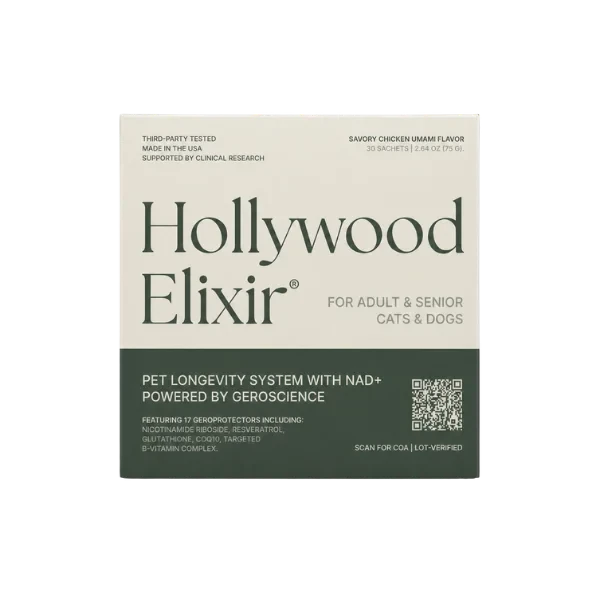
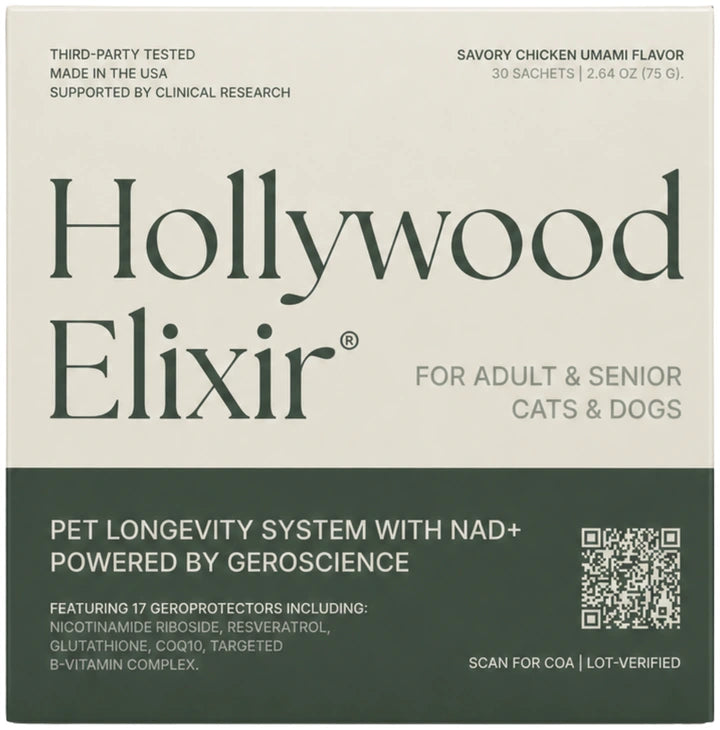
No. Melatonin isn't one of the ingredients in Hollywood Elixir, and the product isn't a sleep aid or a calming supplement. A hormone that a vet times and measures for one cat doesn't fit a formula made for everyday use.
What Hollywood Elixir does cover is daily nutrition for an adult or senior cat. One sachet supplies 60 mg of nicotinamide riboside (an NAD+ precursor), 40 mg of CoQ10 and 25 mg of reishi mushroom. Another 14 actives make 17 in total, each with its amount on the label.
The powder is stirred into food once a day: half a sachet for a cat under 7 lb, one sachet from 7 to 30 lb. Hollywood Elixir is a supplement. Nobody has tested it for sleep, anxiety or lifespan.
Once your older cat's nights have been looked at, daily nutrition is a separate question. Our guide to NAD+ for cats and our guide to the best supplements for senior cats are the places to start. See the full Hollywood Elixir formula and serving guide.
Those need a diagnosis, and no sleep aid will fix them.
Educational content only. This material is not a substitute for veterinary advice. Always consult your veterinarian about your cat’s specific needs. These statements have not been evaluated by the Food and Drug Administration. Products mentioned are not intended to diagnose, treat, cure, or prevent any disease.
Glossary
Melatonin: A hormone released by the pineal gland at night that helps set the sleep-wake rhythm.
Off label: Use of a product in a species or for a purpose it isn't officially approved for.
Estrus: The heat phase of a female cat's breeding cycle.
5-HTP: A sleep-aid ingredient that can cause severe poisoning in pets.
Slow-wave sleep: The deepest stage of sleep, measured with brain-wave recordings.
Feline cognitive dysfunction: Age-related decline in a cat's memory, awareness and sleep pattern.
Related Reading
Aging & Senior Cat Guidance
• Cat Age Calculator: Cat Years to Human Years
• Cat Lifespan by Breed
• Lethargy in Cats
• Senior Cat Not Eating
• Cat Drinking A Lot
• Why Is My Senior Cat Withdrawn?
Healthy Aging Support
• NAD+ for Cats
• NMN for Cats
• Vitamins For Older Cats
• Senior Cat Food
• Longevity Drugs for Cats
References
Numbered references identify the sources used for specific claims. Read the study design, species and evidence boundaries alongside each finding.
- [1]
- [2]
- [3]
- [4]
- [5]
- [6]
- [7]
- [8]
- [9]
FAQ
Can I give my cat melatonin every night?
A review of the cat research describes long-term melatonin as safe. Nightly use in older pet cats hasn't been studied, and the effect on sleep is short. Ask your vet to set the amount and review it at each checkup.
How much melatonin can I give a 10 lb cat?
No approved amount exists for cats of any weight. The one vet-visit trial gave 3 mg per cat, once, an hour before the exam. Your vet should set the amount for your own cat.
Will melatonin hurt my cat?
Plain melatonin rarely causes more than sleepiness, wobbliness or vomiting, and poison-control vets don't expect severe signs. The danger is in sleep products that also contain 5-HTP, which can cause severe poisoning in a cat.
Does melatonin help a cat in heat?
It can pause the cycle. In research, 30 mg a day by mouth suppressed heat after 25 days, and an 18 mg implant held it off for two to four months. That's breeder use under a vet's care, and it won't quiet a cat that's calling tonight.
Can melatonin calm a cat for travel or fireworks?
Nobody has tested that. The only controlled trial looked at a vet exam, where 3 mg made healthy cats easier to handle an hour later. Ask your vet whether that finding fits your cat's situation.
Does Hollywood Elixir contain melatonin?
No. Hollywood Elixir has no melatonin and isn't a sleep or calming product. It's a daily nutrition formula with nicotinamide riboside, CoQ10, reishi mushroom and 14 more actives.
Is melatonin safe for a cat with kidney disease?
Ask your vet first. VCA Animal Hospitals notes that melatonin's effects can last longer in pets with kidney or liver disease. A cat with kidney disease may also take amlodipine, one of the medicines that calls for caution with melatonin.
Can kittens have melatonin?
VCA Animal Hospitals advises caution in pets that haven't reached sexual maturity, because melatonin acts on reproductive hormones. Don't give melatonin to a kitten unless your vet has prescribed it.
Does melatonin make cats sleepy during the day?
It can. Sleepiness is one of the listed side effects, although only one cat was mildly sedated in the vet-visit trial. Tell your vet if your cat seems dull or unsteady the next day.
Discover LPL-01: How This Fits Into a Larger Feline Longevity System
Aging in cats unfolds quietly. It’s not driven by a single failure, but by gradual shifts across interconnected systems — cellular energy, oxidative balance, immune tone, and tissue integrity — each influencing the others over time.
This article explores one layer of that system. To understand what actually shapes long-term health, you need to step back and look at how these layers interact.
Start with the underlying science:
- Feline Geroscience Framework →
A structured view of how aging progresses across cellular energy, inflammation, and resilience systems. - Senior Biological Defense Coverage (BDC) Modeling →
A systems-level map of which biological pathways decline first, and how layered interventions can support them. - 2026 Market Research: Best Cat Longevity Supplements →
A feline-specific review of longevity supplements. 2026 Industry report created by LPL-01 Research. - LPL-01 Standard →
The formulation system that translates these models into real-world supplementation—covering multiple pathways in a coordinated way.
Keep exploring
What would you like to understand next?
Search practical guides about healthy aging, cellular energy, ingredients, and daily support for cats.
Hollywood Elixir®Senior Cat SupplementSenior cat energy, mobility & cognitionFrom$50/moSave up to 47%Save up to 44%Shop Now
Limited time offerEnds Nov 30
Hollywood Elixir®Senior Cat SupplementSenior cat energy, mobility & cognitionFrom$50/moSave up to 47%Save up to 44%Shop Now
Essential Summary
What should cat owners know about melatonin?
Melatonin is a night-time hormone that vets use off label in cats for sleep and behavior problems and to pause the heat cycle.
In a 75-cat trial, 3 mg made cats easier to handle at the vet. Its effect on sleep lasted about two hours in a lab study.
Check every label for 5-HTP, and let your vet set the amount.

Hollywood Elixir® Senior Cat Supplement
17 science-backed actives in every sachet
Supports senior energy, mobility & cognition
60-day first-box guarantee
Hollywood Elixir is amazing! She put back on 5 lbs to a healthy weight, her eyes are shiny, her coat is beautiful!
— Jessie
She hopped up onto the windowsill again for the first time in years.
— Charlie
Thinking about your senior cat's daily care?
Daily nutrition, no hormones.
Hollywood Elixir gives adult and senior cats 60 mg of nicotinamide riboside, 40 mg of CoQ10, 25 mg of reishi mushroom and 14 more actives in each sachet, with every amount printed. It contains no melatonin.

Hollywood Elixir® Senior Cat Supplement
17 science-backed actives in every sachet
Supports senior energy, mobility & cognition
60-day first-box guarantee
Learn about how our DVMs think about cat aging
Dr. JoAnna Pendergrass DVM

Hollywood Elixir® Senior Cat Supplement
17 science-backed actives in every sachet
Supports senior energy, mobility & cognition
60-day first-box guarantee
Explore your cat’s changing needs over time
Related Reading
Vets use melatonin in cats for sleep, stress and heat cycles. See what a 75-cat trial found, the amounts studied, side effects and unsafe human products.